← Determined Society with Shawn French | Adversity & Mindset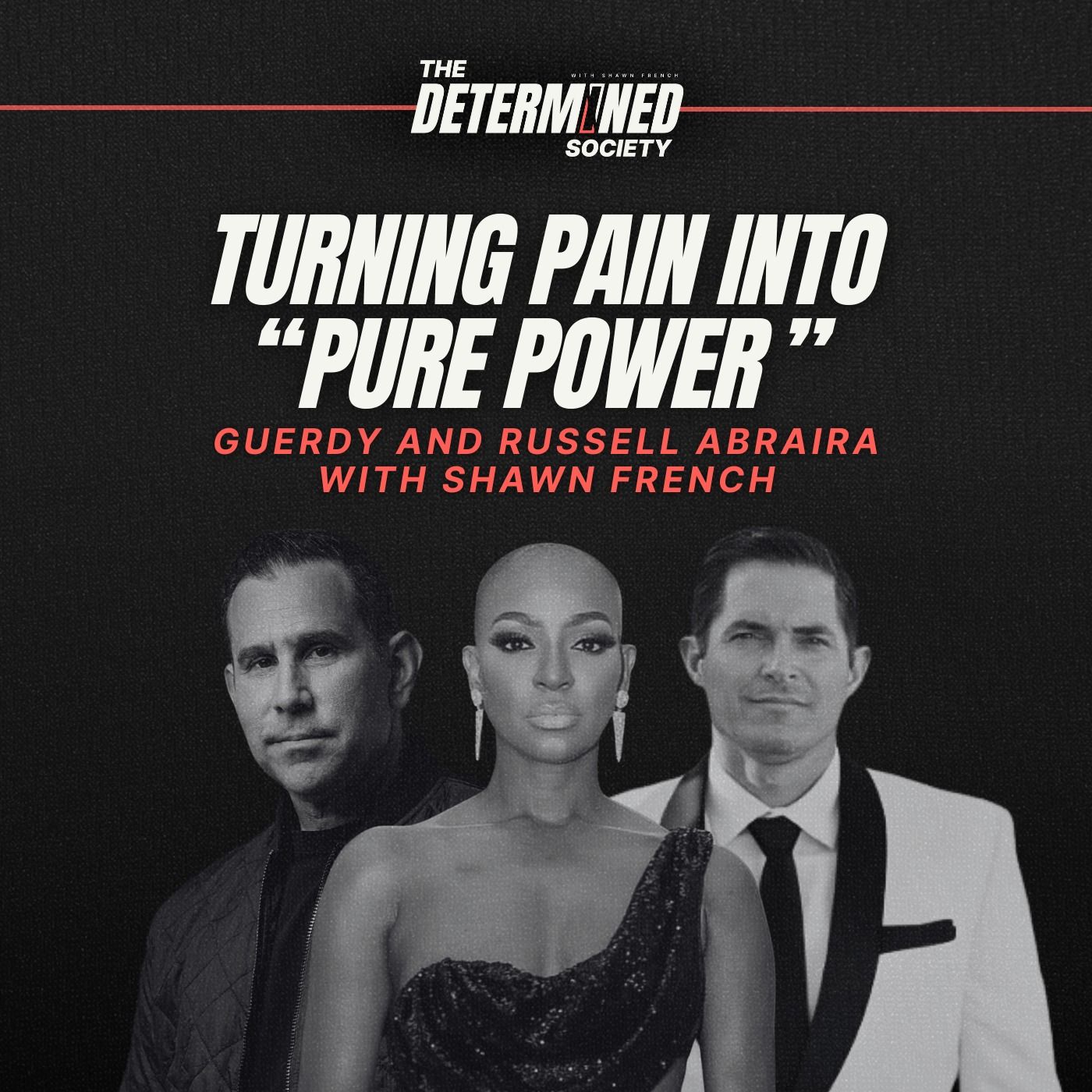
Determined Society with Shawn French | Adversity & Mindset
The Woman Who Refused to Break: Guerdy Abraira on Healing, Identity & Strength
00:55:58
Loading summary
Transcript364 lines
- [00:00]
Interviewer
This is your memoir and it's called From Trauma to Trophies.
- [00:06]
Gertie
Where do I begin?
- [00:07]
Interviewer
I don't know.
- [00:07]
Gertie
This is like the funniest shit ever. My childhood was crazy town, but it was my memory and it's my life and my story. And honestly, writing it was so cathartic in a way, was so healing in many ways, because you have to keep writing and you have to make sure that when you hit that sentence that it's exactly, exactly what you mean. And I'm standing on this book and how I feel right now about everything that you read. I'm a trophy girl because I win. I win at life, man, because of the fact that I have this person next to me who is my ride or die. I say my acknowledgement to him on the books. It's just a one liner. You have seen every version of me and you stayed. Anyways, that's it, man.
- [00:59]
Interviewer
What's up, everybody? Back today here with Gertie and her husband Russell. Gertie has an amazing memoir coming out called From Trauma to Trophies. And in this book, she talks about her whole life. And the one thing that I really love about this book is at the end of every chapter, there's a QR code that you can scan and dive into her story a little bit more, get the visuals and the real feeling behind it. But you, you've gone through so much in recent years and now you're here and you're thriving.
- [01:25]
Russell
Yes.
- [01:25]
Interviewer
And hubby is right next to you, being a part of all this with you. And I'm just so excited to be able to give my audience your story. So welcome to the show, guys.
- [01:34]
Gertie
We're so happy to be here. We're so excited to be here. I mean, this is a big deal. I feel like, you know, I get. I don't belong.
- [01:40]
Interviewer
Well, I. Well, first of all, I appreciate that. I really do. But as big as a deal as it for you and you not feeling like you belong, I am super happy to have you here and you belong. And I cannot wait to get your story out. I'm su. I've been super excited about this specific interview. You know, Matt and I have been talking about it for a couple weeks and you know, he's here. Shout out back there, my guy. And these are the stories I want to tell. These are the things that I really, truly feel that, that your story. There's somebody listening right now that this is going to hit, whether it's a husband or another woman that are dealing with these issues directly. Like, how can you help Them come out of it. You know what I mean? So let's chat.
- [02:19]
Gertie
Absolutely.
- [02:20]
Interviewer
So let's get into it here.
- [02:21]
Gertie
Let's do it, man. I mean, you know, I wrote this book, you know, I. I'm a party planner. Been doing it for 25 years for the best of them on Fisher Island. A little island called Fisher Island. The 1 percenters. And it just took, you know, shape. And my life has been quite a journey and reinvented myself multiple times. And we can get into the, you know, the details, but it just all started in Haiti, where I was born. And what happened after that was an evolution of our family legacy. Moving from Haiti to Paris, from Paris to the US all for betterment of life. Right. And, you know, when you get to a place where you don't belong and, you know, where you feel like, you know, like, and you find your footing somehow. And so from not speaking English to, you know, being bullied, of course, and to, you know, having lots of multiple layers of things happen. I'm still standing. I'm still here.
- [03:14]
Interviewer
Yes, you are.
- [03:15]
Gertie
And I'm a bad.
- [03:16]
Russell
Yeah.
- [03:18]
Interviewer
So there's a. There's something that you call yourself. You're a communion of culture.
- [03:21]
Gertie
Chameleon of culture.
- [03:22]
Interviewer
Chameleon or communion?
- [03:23]
Gertie
Chameleon.
- [03:24]
Interviewer
Chameleon of culture. Talk. Talk to us about that.
- [03:28]
Gertie
It's. It's my superpower now.
- [03:30]
Interviewer
Okay.
- [03:30]
Gertie
As well as my name. So, you know, at first you're like, you. You know, it's so funny how I started with saying I don't belong. And I do belong, obviously, because I've worked hard to belong in this thing. But it's funny how I feel like I don't belong because you also have reached such a higher level. So when I say that, I'm like, I don't know if I'm even worthy to be, like, speaking to you, you.
- [03:48]
Interviewer
Know, different levels, right? It's different. Different silos of what we do.
- [03:53]
Gertie
Yep.
- [03:53]
Interviewer
Right. And I think it's important for everybody to understand that just because one person on this side is escalated to one area, they're probably looking at you as I'm looking at you. I'm like, you've gone here, here. On another. I'm like, wow, that's interesting.
- [04:04]
Gertie
Yes.
- [04:04]
Interviewer
Right.
- [04:05]
Gertie
Yeah, absolutely. So, you know, I feel like my story is very intricate. It has lots of layers, and it definitely will touch someone in some point in their life, whether they're, you know, went through, you know, a loss, whether they went through a divorce, whether they went through a lot of cultural difficulties and for me, that was really the beginning of. The beginning of where I was able to find my ground initially. You. I was born in Haiti. I'm one of six kids now seven. But we moved to Paris. And when you. And this was during the worst political times in Haiti, if you can believe that, because it's already bad now. But it was horrible then. And so we left in fear of political, you know, things happening and violence. And so when you go to France, we were able to get help and so forth. But, you know, that was when I became the Gertie that, you know, now I started to find my footing and I found this amazing confidence not only through my parents, my mother and grandmother specifically, but through, you know, being enabled to be. And then imagine that. So you're now speaking French. You're, you know, you're into the community. And then all of a sudden, I'm at the age of nine. My father makes a decision. We're going to America, people. This is the 80s. America is the. Is the place.
- [05:18]
Russell
Yeah.
- [05:18]
Gertie
And so we're excited at first. Oh, my God. Disney World. Michael Jackson. You think of all the greats.
- [05:23]
Interviewer
Michael Jackson.
- [05:24]
Gertie
Oh, my gosh. You don't understand. We didn't even speak English. We're Twiller. Twiller. That was us obsessed with Michael Jackson and Disney. I only went to one movie as a child in France, and it was Snow White. And when we saw the Disney, you know, castle, it was like, wow. So you come to America, and we're thinking, it's gonna be amazing. However, there's a caveat. My father tells us we're going to America. We're only taking the last two kids. I'm one of them, and my brother. And so we're thinking we. We won the big, you know, the lotto. We won the. We won bingo. And then, so we're bragging in school, the whole thing, and then we get here, and then he's like, okay, I'll be back to, you know, with the rest of the siblings. You guys stay here.
- [06:07]
Interviewer
Oh, shit.
- [06:08]
Gertie
So now I'm nine. My brother's 11. We don't speak any English. We're with relatives. I've never met these people in my life. And we're told we'll be back. Not too sure what that means and how long this means, but it became three months. And so this. Again, they did the best they could at that age. Of course, you're thinking, what did I do wrong? The setting in which we were, you know, left with was not desirable for a child. I Think in a sense of the environment. Right. You know, they took care of us. They fed us the whole thing. But it was just that in my book, I describe a lot of things that gave me a lot of phobias and a lot of trauma. And so through that three months, it's like I shed it all the confidence that I had in France. I was like, I'm a nobody here.
- [06:53]
Interviewer
Yeah.
- [06:54]
Gertie
I don't understand what I'm doing here, and I don't understand what I did wrong. So it was a mindset of this whole, I don't belong here. I'm abandoned, and all these layers of trauma that people can relate with. And then eventually my family came over, and now is when I have to grind. That's all we know. So one step in front of the other, and all of a sudden I start flourishing and becoming that Gertie that was in France again. And, you know, you talk about the cultural chameleon. It's a good thing and it's a bad thing, right? Because you. You could belong everywhere, but then you can belong nowhere. And that's where that.
- [07:26]
Interviewer
Get lost in that shit.
- [07:28]
Gertie
That fine line is so interesting because I could be in a room with you guys and get along with everybody, have the best time, and then I'll be in a group of women or something, which you may have seen on the show. And it's kind of like, wait. I mean, to do good. You're so misunderstood, and you don't understand what. So it's interesting, you know, I'm.
- [07:47]
Interviewer
A couple things I want to address. First of all, you know, you're talking about coming over here when you're nine. My middle daughter is nine. And I can just imagine. I can't imagine.
- [07:57]
Gertie
That's right.
- [07:58]
Interviewer
Like, I just. It breaks my heart, but, you know. But from an early age, because of that, reinvention has been this big thing for you. Without you even knowing it. You've had to. You had to do it your whole childhood, from Haiti to Paris to United States of America. Right?
- [08:11]
Gertie
Y.
- [08:12]
Interviewer
And so there's been a theme of your life. Russell, let me ask you a question. I want to. I want you to chime in here. Sure.
- [08:16]
Gertie
Yeah.
- [08:17]
Interviewer
How would you describe Gertie, your. Your beautiful wife, as a reinvention expert?
- [08:25]
Russell
How would I describe her? It's remarkable that she's done it in multiple phases throughout her life. I think when she met me, it became much easier.
- [08:38]
Gertie
Yeah. Yeah. You give me good, good stuff. To you guys.
- [08:42]
Interviewer
You guys met in high. Is it high school? You guys okay. Wow. Yeah.
- [08:46]
Russell
So 30 years ago, you know, she, I, I.
- [08:49]
Interviewer
So she kept your ass all these years, so you got to be doing something.
- [08:51]
Russell
Yeah. So, you know, there's this little running joke that we have that, you know, she, you know, she. If I do something stupid, she'll. She'll say, who raised you? Because she's, what, are you raised by wolves?
- [09:03]
Interviewer
I go.
- [09:04]
Russell
And, you know, I realized I'm like, we've been together almost our whole lives, so. Yeah, you raised me.
- [09:10]
Gertie
You raised me. The first time he says it, I go, oh, my God. Wait, what are you doing? Who raised you? You? I was like this. Oh.
- [09:17]
Russell
So, you know, there's. There's some truth to that.
- [09:20]
Interviewer
Yeah.
- [09:21]
Russell
But, yeah, that's. That's one of the funny things. And she.
- [09:26]
Interviewer
She.
- [09:27]
Russell
But it's. It's mostly her. She. She's able to, you know, she's. She's been in rooms with, you know, some, some big people, and she's able to, you know, people realize, you know, they just look at her while she's in a room, and it's like, man, there's something about this girl. She has so much energy. And, you know, I'd like to get to know more about her.
- [09:48]
Gertie
Security. Yeah, something about her security.
- [09:51]
Interviewer
Security people.
- [09:53]
Russell
Certain people give off good vibes, and I think, you know, most people are able to see that with Gertie, and I think that's what really gets her through most things, you know? But at the same time, you know, she explains it in her book. Even though that's on the exterior, there's a lot that she was, was suppressing and hiding from, you know, people that they didn't know about her, and they'll get to learn about that.
- [10:19]
Interviewer
You know, I love that because you mentioned when people meet Gertie.
- [10:23]
Gertie
Right.
- [10:23]
Interviewer
I met her out there, outside, and the way she welcomed me in, the way I welcome. I felt like I've known her for my whole freaking life.
- [10:28]
Russell
That's how.
- [10:28]
Interviewer
That's, that's a gift. But you know what the hardest part about that gift is? Yeah. Is the silent struggle beneath it, because I also have that gift. And when you, when you're able to welcome people in that quickly and read the energy, you become extremely exhausted because your energy levels just drop. They did. How do you, how do you navigate that? Because that's something I'm. I'm trying to learn myself how to do.
- [10:53]
Gertie
Well. It's. It's a very interesting thing. And I. I had to do, you know, therapy. Thank goodness. Once a week, of course, and that's helped me now really navigate through the why. The why is so important because I'm like, why do I find this zest to continue to have to. It's not even performing, but to show and tell that I'm excited. Do you need something? And to be service oriented in the fact. Right. That's my love language, obviously. Right. And where does that stem from? So doing the work. It's because of the fact that when you feel like, wait, I've been isolated in a place for some reason and I don't know why, and this psyche has been there for a long time. Because the culture that I come from, my parents don't explain. It's not like in their culture, they say, like, Gertie, this is what's happening. You're going to stay there with your, your cousins. One of them has several policy and it's extreme and she may have a seizure in front of you. And you're only nine. And what you do is you're going to call. You just literally are watching a lot of responsibility. You, you, you have no idea. And you, you're just in a place for three months and the sensory overload and you don't understand what's happening. So then all this stuff is coming at you and you're like, what's going. What's going on? Like, what did I do? You not understanding at that age. And now, of course, I'm understanding that it was for the best for the family. But to get to that point, I had to feel like, what is it that I can do to feel like I'm of value? So when you're feeling like, oh, I can help you with that. I'm of value, I can do this. So why did Gertie become a party planner to the stars? At the highest level, my friend, is because I wanted you to know I am worth it, I am worthy, and I am of the highest value. So it's self worth that I was building when I was, I was just. I think I was good enough just as I was. I didn't know that back then. So all these years, all this work, I just started therapy a year ago, you know, almost, and. And I'm just now realizing all this stuff. And so maybe some people who have been hurt look at me and says, she's doing something. This is a performance and she's fake and there's something behind me and she's going to stab me in the back. It's like, no, no. I literally, like, yeah, I don't read.
- [13:06]
Interviewer
Anything Fake for you at all.
- [13:08]
Gertie
I know, but I'm just saying that when you get into, you know, the thick of things, when he's talking about you, walk. I can walk into him. I'm like, you look amazing. Amazing, whatever. And then there's some people are going to say something's up, and that's their journey. That's their job. It's not my journey. So we'll get into the Let Them theory. Oh, hi. Mel Robbins.
- [13:27]
Interviewer
Yeah. And you. You named that the Let Me theory.
- [13:29]
Gertie
Let me theory.
- [13:30]
Interviewer
Let me theory. And I love what you did there, but I want to. I want to cover some other things first before we get there, because I do want to dive into all that stuff because, you know, as popular as the Let Them theory from Mel Robbins is the Let me era that you've created is also. I think it's. I think it's more empowering, no offense to Mel Robbins. No, it's. It's really think about. No, but think about that, though, because Let them is like giving somebody else power. Let them think whatever the hell they want.
- [13:55]
Gertie
But.
- [13:55]
Interviewer
No, but let me let it. Let's just get into it now because. Because we're invested in it. It's like, let. Let me be me. Let me do this. Let me feel the way I'm feeling.
- [14:04]
Gertie
Walk.
- [14:05]
Interviewer
Walk the audience through that.
- [14:06]
Gertie
So this is very recent, and this was actually the last thing I put in my book literally a couple weeks ago. So I started to try to finish these chapters and I was giving examples, because you have to give examples of the things that you've went through for the reader to understand why you are the way you are, why you where you are right now. And it took a few things that happened with a cast of friends on the show that I'm on that were very big things. It wasn't like, listen, oh, my gosh. She said that, you know, she. She said she worked for, you know, this company and she didn't. Oh, we caught you. Okay, moving on. I'm sorry, I lied. I move on. This is. We're talking about things that related to my cancer journey, so. And also another thing where it was a betrayal and it was done supported by lies about me. And so the old Gertie, people pleaser. Let's just keep the norm. Keep going. I would have just been like, you know what? I'm not going to entertain this. I'm not going to do this. I ended up doing some shit that I would probably never did do before, but through cancer, being a fucking warrior, being this New version of myself that's trying to put up boundaries. I did some things that were like, okay, bold moves. Someone lied on me. I'm going to show you the receipts so that, you know, don't play with me. And those are things that steps that I actually am proud of, because that shows me my growth and that I am moving in a place where it's about me. Cause before, it was always about people. 25 years of people pleasing as a planner and so forth. And so that was very controversial. And I stand by what I did. You know, it's just things around. It wasn't, you know, perfect, but I stand by what I did. And I think that the let me theory came out of the place of like, okay, oh, but they're lying on you. Whatever, Just forget it. Oh, you have cancer. Just be quiet. Just. Just go in the corner. Just like. But no, no, no. Just because I have cancer doesn't define who I am. I'm still going to speak my mind. And I'm. My character as a Capricorn is not one that's going to lay down and say, okay, just let you do whatever you want with me. No, no, no. I built this career and this brand with my bare hands, with our bare hands from the ground up. Okay? We don't have the luxury of having our name, you know, thrown around for play, right? And so maybe some people do, that's great. But I built this from the ground up. And I really care about what my brand, it is everything to me. So with that said, let me take my power back and fight for my brand. Let me not accept your apology if you did three things, but you want to apologize for one and pretend the two didn't exist. Let me do what I need to do to find my peace. And if it's not doing the things that you like, I'm going to let you do it. But I'm going to let me do.
- [16:47]
Interviewer
I'm a do me.
- [16:47]
Gertie
I'm a. Yeah.
- [16:48]
Interviewer
No. And for the people watching and listening, she's referring to the Real Housewives of Miami. And we're not going to get too far into that. But that just for reference and context. That's what she's talking about.
- [16:58]
Gertie
That's right.
- [16:58]
Interviewer
Do you mind talking about the things that went on there? I mean, I don't want to focus on the show, but specifically what you're talking about, what they're relying on you about your disease and things of that nature.
- [17:07]
Gertie
Okay, no. So, I mean, there's a couple of things, you know, one of them. Someone actually outed my diagnosis.
- [17:13]
Interviewer
Oh, shit.
- [17:13]
Gertie
Oh, yeah. So that was. It was one of castmates, and she said, claims that it was out of, you know, goodness and that, you know, she cared and that she didn't. She didn't know that I told her not to tell. And they had to play the receipts, of course, and show that, of course, and. And that I ended up accepting her apology. But it was on the basis, for example, that I tried to do something good for you. So I'm sorry, but I was trying to be a good friend to you. And it was kind of like everyone's like, yeah, she was trying to do something good to you, girl. You're just not. And it was you. When you feel the pressure of, like, you're the problem, if you don't accept the apology, okay, you move on. Right? So, okay, whatever. Okay, I'm going to, you know, whatever. And then this recent season, someone decided to come on this season early on and just completely fabricate an entire situation about a cruise. And I'm like, okay, I was there for you. All the receipts are here. But you want to make it seem like I came under the pretense of I wanted publicity. When I just came back from the same cruise that you're doing and you asked me to get back on the boat to be with you, leaving my husband behind. It was a whole thing, and I'm just kind of like. But it was the lies behind it. It was the layer of, Gertie is not a good person. Gertie didn't even ask about my partner, who I, you know, who couldn't make it on the cruise. Gertie. Gertie makes everything about her. So it was just of like, okay, so that's a brand. That's a.
- [18:31]
Interviewer
That's a brand.
- [18:32]
Gertie
Brand killer potential, so forth. And I'm like, yeah, no, we can't. No, nothing. So I had to make a bold move because after trying to defend myself, no one willing to listen and so forth. Yeah, yeah. And so I did something bold, which was actually expose the receipts that would vindicate me. And so with that said, comes the reunion, which the show always wraps up with the reunion. I think a lot of people on TV are used to the, okay, it's the end of the season. You guys have to make up so that next season we could see smiling faces. And so you're, you know, you think you're supposed to see that. And then this season, I'm like, you know what? Yeah, no, we're going to stand on business.
- [19:09]
Interviewer
Yeah.
- [19:10]
Gertie
So I'm just listening to the apology. For the fifth apology, Gertie, she apologized 16 times. Yeah. But she's apologizing only for the one act. She hasn't apologized for the rest of the things that she's done, which are the lies that started.
- [19:26]
Interviewer
You know, that's amazing.
- [19:28]
Gertie
So people want to be selective, and we could play that game.
- [19:30]
Interviewer
Yeah, I. I think it's real. I think it's super important to be authentic. And that's your point. You're going to stand on your business at that point. You don't have to accept apologies if they are less than ample.
- [19:40]
Gertie
Right.
- [19:40]
Interviewer
You don't have to. You can hear them out and like, okay, cool. I let you say your piece, but I'm not going to accept it. Russell, my question for you is, you know, from your perspective, right. Seeing your wife go through all of this, how did it play on your mental health and how you supported her? Because I know how I feel when I feel like my wife is being wronged. Even in the school, just in the school system, like, whether it's a student lying on her to the parent or a parent getting on to her about not helping. Okay, this is on national tv. How did you. What was your perspective of all this?
- [20:17]
Russell
It was very, very frustrating to see what was going on behind the scenes, knowing the truth about what. What happened, and then have it play out the way people choose to portray it.
- [20:36]
Interviewer
Yeah.
- [20:37]
Russell
So that's the most frustrating part for myself. Knowing all of the stuff that she's been through and having that go on tv, be portrayed a certain way and not have the ability to really defend yourself. And then when you do defend yourself, it's portrayed another way. So. Yeah, very difficult.
- [21:02]
Interviewer
It's hard to please. But, I mean, and. And forgive me if I may, but you seem like a very private and quiet person. Like, outside of what Gertie went through, what. What did you. What are you dealing with? I mean, because it's become more of a public. You're. You're public now. Right. And you don't come across like a guy that's like, all right, here I am.
- [21:21]
Gertie
Exactly.
- [21:23]
Russell
I mean, I mind my business where, you know, love it. My sanctuary is at home. My boys, my wife. You know, I'm. I'm a firefighter, so I'm. I'm still working. I still go to work. I have a, you know, good group of guys that. That I. I work with. So I'm. I'm good. I'm like, you know, I feel good. Like you said, I I don't get into the, you know, all the shenanigans and everything. And I, I don't know, it's just something that doesn't affect me. Yeah, but like I said, going through when it. Last season, it was very frustrating, the whole process that we went through. But like now it's like, yeah, you know, I'm teaching, teaching my, my son how to drive on his own and.
- [22:17]
Interviewer
You know, bless you.
- [22:18]
Russell
You know, it's a bunch of things that, that doesn't concern everything else. It's just what, you know, what really matters is, is what goes on at home.
- [22:25]
Interviewer
See, I love that.
- [22:25]
Gertie
That's important. Important.
- [22:26]
Interviewer
That's a rock right there.
- [22:27]
Gertie
That's it. That's. Honey, that's the whole mountain. Okay. But that is the most important thing that he says and that we believe together. And that's why I'm able to do the let me theory. So the let me theory does have a. Does have. Is this disclaimer because once you say, I am not going to accept this or this or whatever scenarios, the goal is for you to be to find your peace. Right? So it's not like I'm still going to be mad. No, no, no, no, no. The goal is that it doesn't matter to me anymore and that you, you walk away from that situation not letting it affect you because you've built a sanctuary around you where you do find the peace. So I'm lucky. I have my amazing husband for 30 plus years, my kids, I have built what I want around me. So when I go into a situation that is not amicable, that's okay, but that's limited time and I get to choose to walk away to, to not to say no, what, whatever I need to do to find my peace. And, and it's the deliberation process of finding your peace that some people are like, well, she should, you know, she just beat cancer, so she should be grateful she's alive. So she should just like stay quiet and just accept that some shit does one have to do with another?
- [23:34]
Interviewer
No, it doesn't.
- [23:35]
Gertie
She should be lucky that she beat cancer and that she's still alive today. So she should just accept her apology and move on. The moving on thing is really quite interesting.
- [23:46]
Interviewer
That's toxic. That's toxic.
- [23:47]
Gertie
Toxic.
- [23:48]
Interviewer
That's toxic.
- [23:48]
Gertie
That's toxic.
- [23:49]
Interviewer
You know, I want you to address the audience because there's a woman right now, now any, maybe even a young man that just heard you say, be at peace with it. It's not just about hearing them out it's not just about moving on, but it's about truly being rooted in the healing aspect of it. And they don't know how. How would you, how would you help them or instruct them to get through this and actually truly heal?
- [24:16]
Gertie
It's about intention, right? So you have to know in your gut, and it's only your gut that tells you you know how. It's part of your gut. Follow your gut, right? So when the whoever, if it's someone that you're dealing with and you. And you can't get past it, let's say your husband cheated on you, okay? And you're just trying to move on, just get over it. It won't happen again. Is that good enough? First, because you tell me that we're going to have. No, no, it's not going to.
- [24:40]
Interviewer
There's zero ramifications in that, by the way.
- [24:42]
Gertie
That's right. But people, people go day to day. People are so short circuit right now because of the way that the Internet is fast, everything fast. Just move on. Stop it. Let's stop hashing it out. We talked about this already. Just because we talked about it once doesn't mean that it's going to satisfy my energy to say, I know for a fact that we are now on the same page. So that's the problem is like people. So intention is everything. When you're realizing that people are doing things just to tap dance around you, but not really standing in front of you and want to get to the bottom and whatever that means for the two people, what layers or process do you need to be able to say, I'm good now. We never have to talk about this again. Because if you want to move on, it's called resentment. We're playing the resentment game right up, you know?
- [25:25]
Interviewer
You know what I found too? When I'm trying to get through something and I don't know how you guys feel about it, but I always evaluate how I truly feel about it, right? It's like, okay, am I still having this external reaction or feeling because I'm afraid of what somebody else might think or is it truly how I feel? And that's how I work backwards and be like, okay, no, I'm good with this. So then I'm right. Then I got to be whatever they say, whatever they do, whatever their perspective is, can be their perspective. But as long as I'm rooted in my truth and I've worked through the putting myself in their shoes or. And have that conversation with them, right? But if I'm comfortable And I'm standing on my own two feet in that moment ago. Okay, like, I'm good.
- [26:07]
Gertie
Absolutely.
- [26:08]
Interviewer
Like I'm good with this outcome. That helps me.
- [26:09]
Gertie
Absolutely. But. And remember when people say sorry as well, I think that it comes with behavioral changes. So are we sorry for just one thing or are we going to continue to do the other thing? And so you got to balance. It's a balancing act. You know, you have to get through the entire thing and, you know, funnel it until you get to the final outcome of what it is. So if you give me shit here and you filter it, I'm still going to be left with shit. So the question is, are we really filtering it so that we can become like, what are we doing?
- [26:39]
Interviewer
We've become, we've become a society with half assed apologies. Let's just be, let's just be frank, but move on. Yeah, but no, it's just like, I'm sorry, but what are you sorry for? Can you. Do you know why apologizing for this means something to me? And most people can't do that because they can't get out of their own way. They just say, I want to say sorry so I can move on. See, I did something for you. I apologize to you and you know, it doesn't work. Yeah.
- [27:00]
Gertie
And for example, like with my parents, Let me give you an example of something completely different that is very personal and that I do really, really care about is my parents. Right. So I had this resentment build up, you know, till this day I still think, like you said, you look at your son and you're like, I could never do that. I could never. Yeah, it's content. Another continent. Three months and so I have a.
- [27:19]
Interviewer
Hard enough time during the school day without my kids. I know, like, I'm freaking out right now.
- [27:22]
Gertie
So the forgiveness around that. Do you know, number one, my parents won't even watch the show. My parents. I will never. I don't need an apology for them because I understand it was based on, and rooted on good intention, of course. And they want. And look at me now. Yeah.
- [27:35]
Interviewer
Who, who have they not done that?
- [27:37]
Gertie
Who would have Gertie been in France? I mean, I don't know, but I feel like I'm pretty.
- [27:40]
Interviewer
I think you would. I think you would have figured it out. I think you would have figured out.
- [27:43]
Gertie
I don't know. But the point is, is that once you understand the good intention, it was never malicious. It, you know, and then I don't even need to talk to them. I. I'm just Here to give them a hug and say you did the best you could. And I understand that. So I had one of my let me theory thing is about let me relate and release. So I'm like, let me relate. If I was a mother and I had nothing else going on and I, I needed to move on, you know, to. To get the family to a better place. Okay. Sacrifice. Okay. The two will go first. Oh, you know, you understand, I'm relating to her, putting myself in her position. And then I'm like. Because I know it was well intended and did all the deliberation process of what she was thinking, I'm like, now I can release it, dude.
- [28:23]
Interviewer
Intention.
- [28:24]
Gertie
I did this to myself. I'm literally forgiving my parents without them even being in the room. I don't even need to talk to them.
- [28:29]
Interviewer
Yeah.
- [28:29]
Gertie
About it. You know, my wife and I talk.
- [28:31]
Interviewer
About intention all the time. Like if something will happen and, and I will come at her and be like, hey, hey, this is how I feel. Because that wasn't my intention.
- [28:40]
Gertie
Oh, the apology of that. I'm sorry if it was. It was not my intention. So I'm sorry if it hurts you. That kind of.
- [28:47]
Interviewer
She doesn't do that.
- [28:48]
Gertie
Okay.
- [28:48]
Interviewer
She'll say that wasn't my intention. How can we work through.
- [28:54]
Gertie
That?
- [28:54]
Interviewer
But also, she comes from another country too. She's from Ecuador. So she came over here in 96 or 97 when she came to college. And English is her second language.
- [29:03]
Gertie
Yeah.
- [29:03]
Interviewer
So sometimes it does come off like, I'm sorry. But you know, like the whole apology, like, sorry you feel that way, that's. You might as well just tell me to off. And I, but I, but I've expressed that to her and she really works through it and I appreciate it. But.
- [29:15]
Gertie
But this word, I'm sorry, right? This word that I said, that I'm sorry word. Like sometimes it's action just like do, do whatever we talked about, you know, and this run around of this I'm sorry. And people, people are like, but you need to apologize. Like sometimes it's about saying, you know, like, like just telling the, the truth and just like, like explaining how it's gonna get better.
- [29:35]
Interviewer
Yeah.
- [29:35]
Gertie
That's maybe more than an I'm sorry, you know?
- [29:37]
Interviewer
Well, that's the thing too. It's for me to work around, right. Because she goes, my intentions are never this, I'm good hearted, right. My wife's an empath. So now when things happen, right. And I get kind of pissed off about it, go, what are her intentions? And I don't always. And you know I don't always get this, right? Babe, I love you, but I don't shut out. Yeah. Shout out, what's up, girl? Like, I. I fuck up plenty enough. Trust me. And I know you do, too, because you're a man and you. And, you know, it just happens. Or you might be perfect. I don't know.
- [30:04]
Gertie
Russell. Complacency is Russell's, you know, kryptonite.
- [30:08]
Interviewer
Oh, yeah.
- [30:08]
Gertie
Yeah. It's been six weeks. You know that. But I think aside from that, pretty.
- [30:14]
Interviewer
Pretty decency, man. It happens, though, right?
- [30:17]
Gertie
I'm complacent.
- [30:18]
Interviewer
It's just a busy life. Two kids. I have three.
- [30:20]
Gertie
Yep.
- [30:21]
Interviewer
You know, two careers. My wife and I have two careers.
- [30:23]
Gertie
Yeah.
- [30:24]
Interviewer
Sometimes it's hard to make each other a priority, and that's. That's kind of how I want to. I want to ask you, how do you guys make yourselves a priority? Oh, for each other. I'm sorry. Not ourselves. Each other.
- [30:33]
Gertie
Each other. Like, we're.
- [30:34]
Interviewer
I love that.
- [30:35]
Gertie
No, like, it's like. Like we. Like this. We're looking at each other. I'm like, is this real? This is not, like, what's happening? Like, is it still 30 years later, I'm looking and they're looking at him. I'm like, if you walked into the room, I'll be like, I would. I still. I still would, you know, so it's a. It's a. It's an attraction that has layers, I think. Right. Like, would you say physical? Like, I don't even know what comes first as far as. I don't know.
- [30:59]
Russell
I mean, as. As far as making things a priority. It's easy for me since my, you know, I have a schedule that I. I work by. So I go to work and I come home, and it's. They're two totally separate things. So, you know, when I'm at work, I'm, you know, focused on that. Hopefully if I'm not getting emergency calls, you know, this happened. If I have a good day, then I get to focus on emergency.
- [31:28]
Gertie
Comes from me. Over. Okay, emergency calls from work. What do we do?
- [31:31]
Interviewer
Oh, here we go. Let's get into it.
- [31:32]
Russell
Or the kids or whatever it is.
- [31:34]
Interviewer
You know, it's something that you can't do. Do anything about at that moment.
- [31:37]
Gertie
Yeah, exactly.
- [31:38]
Interviewer
Yeah, that happens.
- [31:38]
Russell
Exactly.
- [31:39]
Interviewer
Y' all do do that now.
- [31:40]
Gertie
There's many of them.
- [31:41]
Interviewer
Y' all doing that.
- [31:42]
Gertie
Always an emergency.
- [31:43]
Russell
All the time.
- [31:43]
Gertie
All the time. Especially with this book coming out. Russell was my co author. Pretty much like so good.
- [31:48]
Interviewer
So that.
- [31:49]
Russell
That's my point. When I, you know, I have work and then I. When I'm. When I'm at home, my priority is. Is, you know, Gertie and the kids.
- [31:58]
Interviewer
I love that.
- [31:59]
Gertie
Yeah.
- [31:59]
Russell
You know, like she said with the book and with everything going on, whatever it is, you know, she needs, you know, I'm going to help that. You know, we prioritize that as far as, you know, downtime. We, you know, we try to spend. Spend our nights together, you know, not. Not away from each other, you know. You know, I'm not. Like, when I was a kid playing video games till, you know, midnight. No. Now it's.
- [32:24]
Gertie
We're.
- [32:24]
Russell
We're spending time together. We have to, you know, we're getting older, try to go to bed earlier, but. Yeah, it's okay. Kids. Bye.
- [32:32]
Gertie
We have. You have to put in the time.
- [32:34]
Interviewer
Yeah, I agree with that. Let me ask you this, Russell. What are you attracted to most about Gertie?
- [32:39]
Russell
I mean.
- [32:42]
Gertie
He loves it.
- [32:43]
Interviewer
It does work. It does work. Everything.
- [32:46]
Russell
I mean, you know, obviously, you know, she's. She's a beautiful woman. That's my wife. But I, like, like I mentioned before, is. It's her energy, you know, it's. It's the positive energy that she gives off, and, you know, I feed off of that.
- [33:02]
Interviewer
But I love that you're talking about her soul, and that's who she truly is. This is a shout.
- [33:05]
Russell
Yeah.
- [33:05]
Interviewer
Right.
- [33:05]
Gertie
Yeah.
- [33:06]
Interviewer
I mean, who she truly is is what attracts you most. What about you? What attracts you most about him.
- [33:10]
Gertie
My gosh.
- [33:12]
Interviewer
It's a fireman suit, isn't it?
- [33:14]
Gertie
No, I'm not into costumes.
- [33:17]
Interviewer
Okay.
- [33:18]
Gertie
I don't know if that's a costume party thing that. No, thank you. Keep that at home. Okay, so let me explain something about Russell. Everywhere he goes, everywhere he goes, it's like everybody, like, oh, they want to just be around Russell, and Russell's not even speaking. It's an energy of, like, peace, calm, calm loyalty. Just all of it exudes itself in a second. We'll go to a birthday party for, like, when we have our kids younger. A birthday party, all the kids, like. And it's like, he's like. And I hate. I know you hate when I say this. I know you do. He's not from this. He's not from here. Here.
- [33:57]
Interviewer
He's not from here.
- [33:58]
Gertie
I'm telling you right now.
- [33:59]
Interviewer
He's from another planet.
- [34:00]
Gertie
It's. There's an energy that's very like. Yes.
- [34:06]
Russell
Yeah.
- [34:06]
Interviewer
Interesting. What planet? If you could Pick a planet. Uranus.
- [34:13]
Gertie
I don't even know. I just, he has a very strong presence without saying a word. And that's what I found really attractive, the mystery behind his eyes. I was like, he's fine, but he's not speaking to anyone. Oh, he's going to speak to me. That's how he met, by the way. I was like, oh, hello. Like, I, I, yeah, I kind of cursed out a little bit and I think he liked it.
- [34:36]
Interviewer
Oh, yeah, he's a masochist. Yeah. Let's get back to your journey because I really want, you know, in America and I think, you know, obviously worldwide, people are dealing with cancer constantly, Right? And it's something that. One, that's, I mean, dude, one in.
- [34:51]
Gertie
Three, any type of cancer. One in eight, breast cancer.
- [34:53]
Interviewer
I mean, that's, that's wild. You went through breast cancer and then you had a precautionary cancer related hysterectomy.
- [34:59]
Gertie
Right.
- [34:59]
Interviewer
And it sent you into perimenopause at a very young age. Like, you got the fan Break that out?
- [35:04]
Gertie
Not yet.
- [35:05]
Interviewer
Wait, what is that? Is that a fan?
- [35:06]
Gertie
Okay, yes. I'm turning to.
- [35:08]
Interviewer
There it is.
- [35:10]
Gertie
Louis Armstrong mid concert in three seconds. Watch. Gone in 60 seconds, coming in 62. Okay, how about two?
- [35:18]
Interviewer
You know, this is something that, you know, like you said one in three, you know, any type of cancer, and then one of every eight women you are touched by breast cancer at some point in their life, we're seeing more of this. You know, we're seeing kids, we're seeing young parents. In fact, one of my wife's old friends, her husband just passed. Passed away from some type of rare form of brain tumor. And, you know, there was kids involved. It's like, you know, navigating what could possibly be. I mean, what I do know about you already, you probably just said, no, this is like, I'm good, like, I'm, I'm gonna beat this. We're not thinking about that, but like, talk about that health journey because someone listening right now is going through it directly or having someone in their life that is going through.
- [36:01]
Gertie
That's right. Oh, my gosh. Okay. Where do I begin?
- [36:05]
Interviewer
I don't know. Wherever you want.
- [36:09]
Gertie
First of all, one of my chapters is called Paradise Interrupted. I was in St. Bart's that's it. Oh, having the best time of my life. I was helping a friend do her wedding anniversary. And then I get the call. I'm lucky that I had an, my mammogram done. So I was always, you know, getting my mammograms and so early detection matters because if it wasn't for that mammogram, I wasn't. Wouldn't have gotten the result call. As soon as I saw my gynecologist call me on his cell phone, I was like. I said, hello. Don't say a word. Let me patch and Russell. I already knew it wasn't good. Oh, yeah. And then we get on the call and, you know, and then it's a journey. It started out with just being what's called zero. Stage zero. Dcis. You're gonna be fine. A little lumpectomy. Okay. But it's still the word cancer. So the mental toll on just hearing the word cancer, you've been, you know, you have the plague. And that's that. It got worse and worse and worse, into stage 1B, into invasive, into this, into that. By the time I knew it, I was getting chemo, radiation, and needed full reconstructive surgery. And it was like, what are we talking about getting through the first C word was hell on earth. Now I got another C word, the word chemo. And then they're like, oh, is. You know, hopefully you won't get the red devil. But it's the red devil. Like, what are we talking about? I'm going to hell. Like, you think you.
- [37:30]
Russell
That.
- [37:30]
Gertie
That's a type of chemo, which I didn't get. But, like, everyone's like, you know, hopefully you don't. So you get into this world where it's unstoppable. It's the roller coaster ride that you do not want to get on, but you can't get off, man. You can't get off. And he gets. And then one day, you get the, you know, lumpectomy. Oh, we think we got it. We cleared the margins. We think we got it all. You should be good to go. Three days later, oh, the results came back. We didn't clear the margins. What day can you schedule a second. A second lumpectomy? What?
- [38:02]
Interviewer
Damn. Yeah.
- [38:04]
Gertie
Oh, the first day of chemo. I'm already with my glam. We're gonna beat this big cancer. Wearing pink. Yeah. That's what I saw on tv. Oh, no. I got. I got chemo through the vein because I thought that, you know, I had a choice of, like, put the port.
- [38:17]
Interviewer
Yeah.
- [38:18]
Gertie
Or the vein. But I only had four rounds of chemo, so why create a scar here? Put it through the vein. If you see the photo in my book, it was a snake. It was. Looked like a snake skin that it burned my entire arm. Okay. Wow. So now we need to get a port scar. So you know, we got the port in and did it through the port and it's always something and it's not of a clear road. And that's cancer.
- [38:46]
Interviewer
It's the unknown.
- [38:48]
Gertie
Right?
- [38:48]
Interviewer
And, and my question to you is, you have two beautiful boys.
- [38:53]
Gertie
That's. I was about to say that the trickle down effect, it affects everyone. And the boys just got quiet. That was the way I think it was. Just got silent. They were like little mice in the house. Like, just like, you know, tipping, toeing around while he's like, okay, mommy's coming up, guys. Come say, you know, come say hi, mommy, we're leaving to the hospital. Grandma's coming in now. We'll see you in two days, three days. It was just like, I was like a ghost and a corpse. That's me. And, and boxed in is the last thing this girl wants to, to, to be in. And that's how I felt. I felt boxed in and I, I couldn't do anything. I had to be told when to do this, when to shower, when to do the next surgery, to lay down, to take this pill. Here's your shot. And it was the worst scenario, especially for someone like myself in the state of control. Remember, my trauma came from lack of control. I want control all the time. And now I'm powerless and I have no control. Boxed in. Chapter 17.
- [39:53]
Interviewer
Yeah, man, I just, and again, I don't want to like keep hammering on it, but, but I, you know, again, I have three kids and if something were to happen to me, I worry about that, right? I worry about, like, how are my kids gonna be? You know, like they're little. Are they gonna remember me? Like, are they gonna remember the lessons? Are they going to be okay? Is this going to pretty much fuck them up the rest of their lives? You know, but then you, you know, there's also spouses involved, right? And, and Russell, you, you went through this. You, you went through the stages of her being boxed in, feeling like a ghost and just someone's pin cushion, for lack of a better term. How scary was it for you?
- [40:36]
Russell
Oh, obviously it's very scary at the time. You know, you don't, you know, we had a good prognosis, but.
- [40:46]
Gertie
Right.
- [40:46]
Russell
You know, to get to that good prognosis, you got to go through all the, the steps and you don't know what's going to happen along the way. Every, you know, every surgery, whether it's minor or major, you're getting put under. You know, it carries a Risk. So every step of the way, you know, there's concern. So you just try and, you know, myself, I, like, I always do. I just try to support as best as I can. And, you know, with the kids, I think. I think the way they handled it was when I explained to them, you know, what was going on.
- [41:26]
Gertie
Oh, Liam.
- [41:27]
Russell
They. They. They wanted to know. So is she going to be okay?
- [41:32]
Interviewer
They want. Well, absolutely. So absolutely.
- [41:35]
Gertie
No. Tell them what Liam said. He was only. What, he was 11.
- [41:39]
Interviewer
Yeah.
- [41:39]
Russell
Or 10.
- [41:40]
Gertie
10.
- [41:40]
Russell
He's like, is it contagious?
- [41:43]
Gertie
That was his first question. Is it contagious, Daddy?
- [41:45]
Russell
It's contagious. So, you know, we're going to be okay.
- [41:48]
Gertie
Yeah.
- [41:49]
Russell
But, you know, I think they compartmentalize it. And when I said, you know, ch. You know, it's a great chance that everything's going to be okay. So, like, okay, that's okay. We're cool.
- [42:00]
Gertie
I pretty much guaranteed it. I was like, no, it's fine. You know, like, stage 1B. Like, okay, amazing. But, like, once. Once I got that scare with the chemo, like, and you don't. I was in full shock. The red light started coming on. I was. I was like. Couldn't breathe. It was like a big reaction that I had to the first. First round of chemo. So then I was like, this ain't no joke. They're like, stage 1B. Okay, fine. But, like, this is, like, serious. That's when it was. Got real.
- [42:22]
Interviewer
Yeah.
- [42:23]
Gertie
But the kids, their resilience, and they're very. They're very Russell in their calm. And that really helped me so much. So, so much. If I had a little girl, I don't even know how I would have even done that.
- [42:37]
Interviewer
I got two of them, and I'm gonna tell you right now, there's no shot in hell. My kid. My girls would be calm. My son would internalize it.
- [42:44]
Gertie
That's what the kids did. Yeah.
- [42:45]
Interviewer
And Dan knows my family really well. Like, yeah, you know, it. Bobby would internalize it to the point we'd just eat them up. My girls would be a mess. My daughter. When's your Brie? Said you're a Capricorn. When's your birthday?
- [42:57]
Gertie
January 4th.
- [42:58]
Interviewer
My daughter's is January 5th. She's my youngest, and she's the biggest empath you'll ever meet. And it would just. It would destroy us. Like, those types of things. Like, I'm always interested in. In bringing that part of the story to the audience because a lot of parents listen. Exactly. And there's a lot of you know, 20 year olds that are listening and 25 year olds that are. That are children of parents that are going through this.
- [43:18]
Gertie
I put a lot out there for them, by the way. And I realized that when I was writing my book, I did a lot of research and so I was like, you know, like, how can I help to give back is what I was thinking, right? So first I'm like, my memoir, I want to share. I want to share. And then the book is not a cancer book. It's my memoir. And the cancer really changed me. So it's the journey to me that I had to in my reinvention and so forth. But then I'm like, I want to write a book eventually that talks about those kids or those teenagers. You know, they do a lot of books about like, the kids, like, Mommy's got something called Cat. No, the teenagers right now who are on that Internet who are searching, who was like not telling you that they're already seeing the worst of the worst that could happen to you. It's a whole thing. So I. Everyone needs help and their care. Vipers. That's how I call it.
- [44:02]
Interviewer
I feel like that book for the. For the 20 year olds could be called what the is really going On.
- [44:07]
Gertie
You said it. Right.
- [44:08]
Interviewer
Because, Because I mean, I mean, like, look, they need truth. They're gonna go to the Internet, they're gonna find it, they're gonna hashtag it on social media and get some slant. They're gonna. They're gonna get the worst of it. Right? It just. I just wanted to ask those important questions because, you know, obviously I can look back now and you can look back now. Both of you and your. And your boys too, could be like, that made you even stronger and it made you more of a warrior, right? How. How has your perspective shifted in, in your. In your everyday life when you come up against some type of adversity? When you beat cancer, like, what the fuck? I mean, what can beat you?
- [44:45]
Gertie
Yeah, well, first of all, the thing is that I asked myself, I'm like, wait, I'm writing this book called From Trauma to Trophies, and did I just give my kids trauma? Was that the first trauma? Is that the first core memory of trauma?
- [44:57]
Interviewer
Probably so.
- [44:58]
Gertie
Yeah. Yeah. And so I have to be mindful of that. I got to remember. We got to remember that. Because that could be something, you know, that. That shows itself elsewhere. Everything. Cause re. Reaction. There's always a reaction to something. So. Yeah. So what was the question again?
- [45:12]
Interviewer
I don't know. Oh, how did it make you Stronger. Like, if you beat that. How. How are you. How do you approach things in your daily life now? With a bit more just.
- [45:21]
Gertie
It's.
- [45:21]
Interviewer
I want to say confidence, but, like, maybe, yeah.
- [45:24]
Gertie
Movie, man. I swear. I swear to goodness. I already. I already was walking in a movie. Like, I. I feel like my life is like a music video, and people are always like, how do you pose so well? I'm like. Because, I mean, I'm like, listening. Listening to music, and I'm like, you know, like, see, I can't do that. Oh, that's how you got to do it, baby.
- [45:39]
Interviewer
So I can't do that.
- [45:40]
Gertie
That's it. So.
- [45:41]
Interviewer
So I'm, like, taking pictures, like.
- [45:42]
Gertie
Yeah. So when I say I'm a bad.
- [45:43]
Interviewer
Put my hand where.
- [45:44]
Gertie
Right, Right. When I say I'm a bad is because I am living, like, Kill Bill moment. If I'm gonna be. I need to be furious.
- [45:50]
Interviewer
You're in your Uma Thurman era.
- [45:53]
Gertie
That's my movie. And in the book, his forward, he's like. She literally streams Little House on the Prairie on Tuesdays pretty much. But then on Saturday, she could be watching Kill Bill and the Godfather. That's me. I'm like, Little House of Pray J. Oh, my God. That's my. That's my childhood.
- [46:08]
Interviewer
That's mine, too.
- [46:08]
Gertie
No, no, no, sir. You don't.
- [46:09]
Interviewer
I swear. No. We used to watch all the time.
- [46:12]
Gertie
Nine. Nine seasons. And I just. Like, I'm on still season. I'm on season two now, but I. I just keep rewatching it. Those are. That's my childhood and, like, my favorite Christmas. Tell them about what we have to do on Christmas at least once.
- [46:24]
Russell
Sound of Music.
- [46:25]
Gertie
It's in the book. We were the Von Trapp family. The black version. Swear to God. Swear to goodness. If you read the Rich RE Rules, Chapter three.
- [46:32]
Interviewer
Thank you for bringing her, by the way.
- [46:34]
Gertie
We were the Venture. We didn't even know how to sing. We're like, what are we doing?
- [46:37]
Interviewer
Hey.
- [46:42]
Gertie
It was a nightmare. My father, all of a sudden, one day is like, hey, guys, we're going to create a group to sing in church. Like, what the hell?
- [46:48]
Russell
Hey.
- [46:49]
Interviewer
Oh, my God. That'd be brutal. I couldn't sing.
- [46:51]
Gertie
But. So, anyway, back to the question. I can't sing. You got to act as if, man.
- [46:55]
Interviewer
Exactly.
- [46:56]
Gertie
But the way I come into this world, I wake up and I mean. I mean, my own movie. And it's like. It's not delusional, by the way. It's just kind of like you believe in who you are so much that when I walk into a room, you know, like, I have full conviction and I am going to be present. You know what I mean? So some people call me too much.
- [47:16]
Russell
Oh.
- [47:17]
Gertie
Too extra. And you know what? Thank you. Because at least I'm present. At least you notice me, you know? So the fact is that the way I like to say it is like, you know, I'm. It's a movie, man. It's a movie.
- [47:27]
Interviewer
I love it. I love it.
- [47:29]
Gertie
Make it memorable. Make it count.
- [47:30]
Interviewer
You have to. As it pertains to the book. Right. This is your memoir.
- [47:35]
Russell
Right.
- [47:36]
Interviewer
And as you're writing this memoir, and of course, the cancer story was a part of it, but there's so many other amazing parts of it, just like who you are. The essence of who you are.
- [47:43]
Gertie
Yes.
- [47:44]
Interviewer
And it's called from trauma to trophies.
- [47:48]
Gertie
Trophy girl.
- [47:49]
Interviewer
Trophy girl. Talk about trophy girl. Because it's not what the audience thinks it means.
- [47:53]
Gertie
That's right.
- [47:54]
Interviewer
That's what I love about it. That's why it's genius. But. But I want you to formulate how this. How the writing of this memoir healed you even further and then dive into trophy girl.
- [48:08]
Gertie
I was just on the plane coming back on was Saturday, and I was just finishing rereading the book again. We read it 16 times, you know, and I'm writing it, and I'm on the plane laug laughing so hard in tears that people.
- [48:24]
Interviewer
What's going on with this ground, this plane?
- [48:26]
Gertie
And then there was a fan that came all the way from the back, all the way to the end, to my seat. Girly, I love you so much. I love you so much. I just bought you, and I'm just kind of like. I'm like. I'm reading it right now, and I'm laughing at my own book. And I don't know if this is, like, weird, but this is, like, the funniest ever. My childhood was crazy town, in a sense of the stuff that. That my parents, like, did and made us do. And. But it was my memory, and it's my life and my story. And honestly, writing it was so cathartic in a way, was so healing in many ways, because you have to keep writing and you have to make sure that when you hit that sentence that it's exactly what you mean. So this book is hard because once it goes out there, can't take it back. And so you have to stand on, like, stand on it. And I'm standing on this book and how I feel right now about everything that you read. And there's a lot of really interesting things. There's a. I'm pushing the needle on a lot of thoughts like the, you know, Mel Robbins. And then let them. Let the. Let me. And I'm a trophy girl because I win. I win at life, man. And life is what? The car outside the, the house that can burn down with a hurricane? The what? No, no, no, no. Those are easy. That's why I'm married for. I'm married for love. I could have been. I was Official island, the 1% of the world doing those kinds of parties. I could have been that, you know, kept girl. And that's great. That's a good. That's a professional all on its own. You like it? I love it. But I'm telling you right now, I win is. And this is a win for me because of the fact that I have this person next to me who is my ride or die.
- [50:08]
Interviewer
I love that.
- [50:08]
Gertie
But I can ride or die, you know, And I say my acknowledgment to him on the books is just a one liner. You have seen every version of me and you stayed. Anyways. That's it, man.
- [50:21]
Interviewer
Don't fucking make me cry on my show.
- [50:22]
Gertie
You have seen every version of me and you stayed anyway, so that's that. And then my kids, my health, my soul, like I'm just happy to be. And whoever doesn't get it off, off. Because it's your loss. Big mistake. Like Pretty Woman, you are a beautiful human being.
- [50:43]
Interviewer
Like straight up, I'm. I'm so grateful that you guys are here and making me emotional.
- [50:48]
Gertie
Yeah. But I'm sorry I'm fighting. When I came out, fighting it back.
- [50:52]
Interviewer
But I know, I just. I just value this conversation so much because it's so real, you know, it. It's no holding back. It's real. It's your life and it's. It's giving a value to the audience and, and you getting this out in your memoir, I want to hold it up again.
- [51:08]
Gertie
Yeah.
- [51:09]
Interviewer
From. From trauma to triumph. Sorry. From trauma to trophies. I can't speak the cool thing about this and I want the audience to really look at this. She designed this cover herself. You. So we talked, we joked about it. But you, you know, designing covers for people, you should probably think about that because this is a beautiful cover.
- [51:26]
Gertie
I remember I come from a design event design world. I not only planned event, I have my own design, you know, event planning firm. I also had my own design planning. So we planned and designed everything from walking to the room and it's like, I. It's a gird. If I gratify that shit. I verified everything. And so my name. In speaking about my name, I hated my name, really, because, yes, it was the. It was the icebreaker of the bullying days. It was like. And. And there were two names. So we started out with a big banger. Elisheba. Thank you, Mom. Elisheba was Queen Sheba. It means your name is a queen. Thank you, Lady United.
- [52:04]
Interviewer
It's going to go well.
- [52:08]
Gertie
I was like, oh, my God, please. And I didn't speak English to defend myself. So those were the days. And then I'm like, okay, which part of this name? So Gertie. Elisheba R is my full name. Gertie. Gertie. Gertie. We could say Gertie. Gertie. That's my name. And I changed my name from Elisheba to Gertie because I just wanted it to stop. Okay? But then everything's meant to be. So then the name Gertie was the better of the two. Is he named Gertrude? Is I.
- [52:35]
Interviewer
You know, Yeah, G. Can't win.
- [52:38]
Gertie
But now I get to Gerdify. I. My name is a verb now. When people want to hire me for their weddings, they'll be like, girl, I want you to gify my wedding.
- [52:47]
Interviewer
What does that mean?
- [52:47]
Gertie
What does that mean?
- [52:48]
Interviewer
That's badass.
- [52:48]
Gertie
Taking it to the next level, making it super unique. That's who I am. And you asking me to bring that value into your event space, creating the most memorable event of your life, and my name is what's going to create that for you.
- [53:01]
Interviewer
That's brand, baby.
- [53:02]
Gertie
Do you understand that?
- [53:03]
Interviewer
Damn, that's cool.
- [53:05]
Gertie
And that's priceless. That's not my. There's no physicality to it. It's literally my name.
- [53:09]
Interviewer
I love it.
- [53:09]
Gertie
Who. Who gets to do that?
- [53:11]
Interviewer
You did. You did.
- [53:12]
Gertie
I win it at life. I'm winning at life. And that's. That's the thing about it. So the pleasure of me saying to someone I'm winning, it's not like, look at my. My money, my. No, it's like I. It's invisible. But, you know, it's because it's so. It's all not tangible like that. It's not tangible things at all, man.
- [53:30]
Interviewer
Love it. Well, thank you guys so much for coming. This has been an amazing.
- [53:33]
Gertie
It's been amazing so fast.
- [53:35]
Interviewer
I feel like we're over an hour.
- [53:37]
Gertie
In Stop your lives.
- [53:38]
Interviewer
I'm pretty damn close. 50 minutes. We can keep going yeah, we keep going just like. It's still a good song, man.
- [53:47]
Gertie
Oh, there's some good ones.
- [53:48]
Interviewer
That's some good ones. They need to bring back good music.
- [53:51]
Gertie
AI is going to start singing for us, honey.
- [53:52]
Interviewer
Dude, they have AI actresses now looking for representations. Like, how does an AI actress look for representation?
- [53:58]
Gertie
I don't understand.
- [53:58]
Interviewer
It's just. It's crazy to me. It's nuts, man. There's a lot going on in this world.
- [54:02]
Gertie
I think it's a lot going on.
- [54:03]
Interviewer
It's just so important to. To do things that we believe in. Right. And to. To stay too true to ourselves and to do good works. Like you did with your book. And you're actually going to Bravo Con, right, to talk about that.
- [54:14]
Gertie
The release date of my book is going to be out on the 14th, and I'm going to be launching it at BravoCon. And then I'm going on a press tour. You are my first.
- [54:23]
Interviewer
That's amazing.
- [54:25]
Gertie
I'm excited about that. And then we're just gonna hit the road, baby, and just kind of get this book in the right hands, which is everybody's hands. Everyone wins when they read this book, trust me.
- [54:34]
Interviewer
Where can they go to buy it?
- [54:35]
Gertie
Oh, everywhere. Barnes and Nobles, Shopify, Amazon. So, yes, my website. So it's out there, man. It's gonna be out there on the 14th, pre order now, because the demand is demanding.
- [54:46]
Interviewer
Yes.
- [54:47]
Gertie
Thank goodness. I'm so excited.
- [54:48]
Interviewer
It's great.
- [54:49]
Gertie
And yeah, so. So it's going to be exciting.
- [54:51]
Interviewer
And what's your website?
- [54:52]
Gertie
My website is gertiefy.com. that's G-U-E-R- dash Y-F-Y.com.
- [54:58]
Interviewer
There it is. Yeah, Good stuff.
- [54:59]
Gertie
There it is. I thought I'm.
- [55:01]
Interviewer
I'm so jacked that I was your first stop. I'm gonna apologize for the rest of the stops because it's gonna be like.
- [55:08]
Gertie
This ain't gonna be like that.
- [55:09]
Interviewer
You're gonna be all like, if I can sit like this. This is how we do it here. Okay. This is it. This is it. Thank you guys so much. It was amazing having you on for the audience exclusive.
- [55:19]
Gertie
You get to have R. Russell, by the way.
- [55:20]
Interviewer
Dude, this is crazy.
- [55:21]
Gertie
No, he doesn't. He doesn't do this. So, you know. Yeah, but he's like, you know what? I'll see him.
- [55:26]
Interviewer
Yeah, we're chill. We're chill. Guys, go pick up the book grittify dot com. All the bookstores. Check it out. Follow her on Instagram. What's your handle again?
- [55:35]
Gertie
Dirty design. G U E R D Y D E S I G N I'm still.
- [55:39]
Interviewer
Waiting for a follow back from her, but you know, we'll come off camera. Who that one? Hey, let's, let's blame it on Matt. But anyway, thank you guys for listening. Share this episode with some of, you know, love and trust and please, please, please. Until next time, stay determined.
- [55:59]
Advertisement Voice
Do you ever feel like your ideas just get lost when you're on the go? The truth is, your best thinking won't wait until you're back at your desk. It happens when you're on the Move meets the Remarkable Paper Pro Move, the paper tablet that keeps up with your mind and notes wherever you are. It's like if your favorite notebook could connect to the digital world, Take notes on a display that feels just like paper, and then pick it up later on your laptop. All your work syncs to the cloud. It's effortless, and unlike your other devices, there are no digital distractions that fight for your attention so you can focus on what or who is right in front of you. Remarkable Paper Pro Move is smaller than a paperback and slips right into your jacket pocket. But the battery lasts up to two weeks, so it's ready whenever you need it. There's a better way to capture your thoughts on the Go get your Remarkable Paper Pro move today@remarkable.com.