← Determined Society with Shawn French | Adversity & Mindset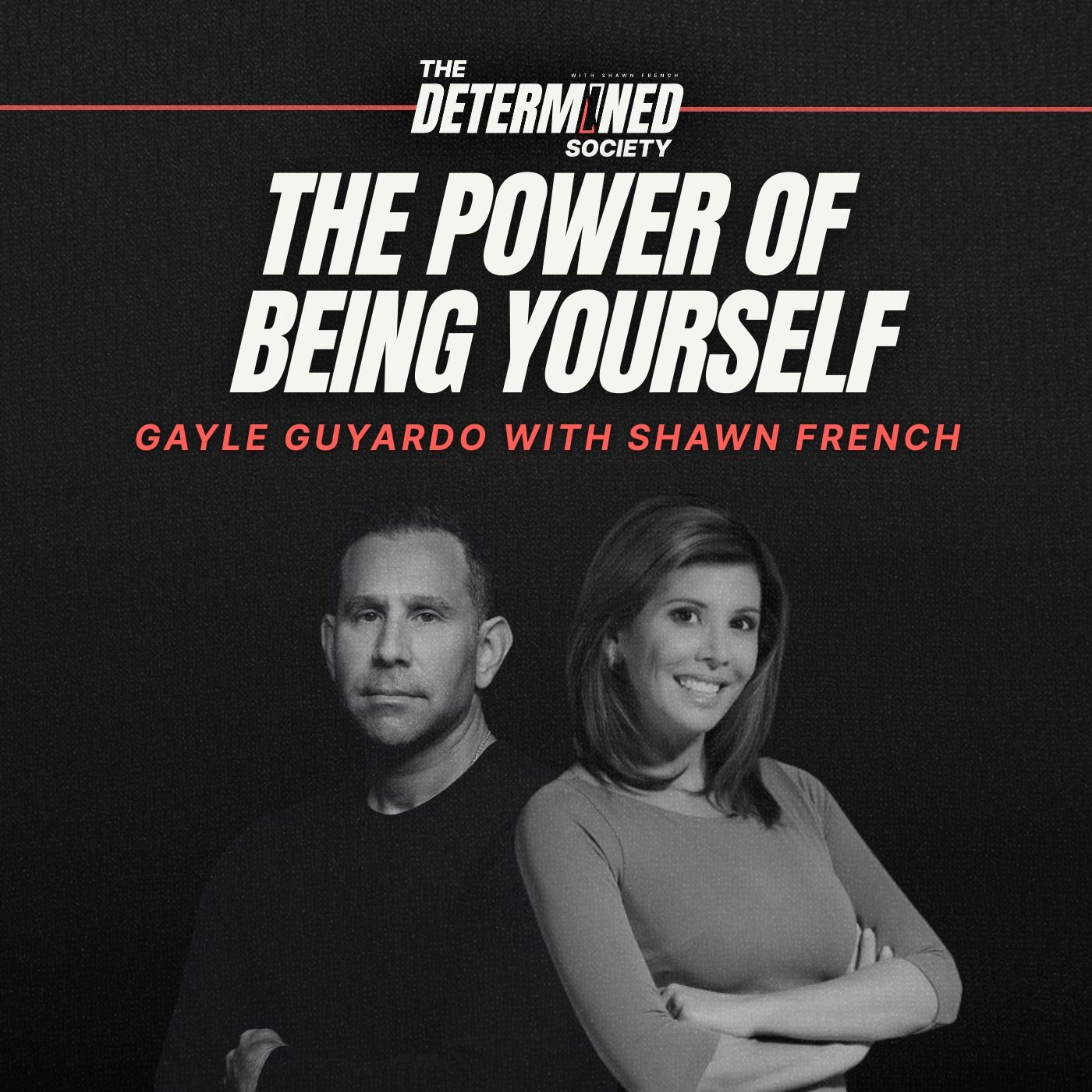
Determined Society with Shawn French | Adversity & Mindset
Why Gayle Guyardo Walked Away From 33 Years in Journalism
01:13:18
Loading summary
Transcript245 lines
- [00:01]
A
Ladies and gentlemen, if you're pushing your limits this year, your recovery has to keep up. Most people train hard but fall short on recovery. That's where therabody plus series comes in. The Jet Boots Pro plus are the first ever multi therapy recovery boots combining pneumatic compression, vibration, and infrared LED light to help boost circulation and reduce soreness in less time. And they're completely wireless. No cords, no hoses, zero hassle. Perfect after long runs, heavy lifts, or game days. They keep your legs feeling fresh even when the training load stays high. Because when your recovery delivers more, so can you. Right now, our listeners get 15% off your entire order. Use code determined at checkout. That's 15% off US only one time use valid until March 31, 2026. Take your recovery to the next level with the Thera Body plus series. Check out the Jet Boots Pro plus at the body.com code word determined. You've had this professional identity for over 30 years, and now, as of February 6th, you're not doing that anymore.
- [01:09]
B
This is the very first time that I have let go of a vine without having a stronghold of what's next
- [01:17]
A
Family curses that everybody thinks are things like, dude, you can stop it.
- [01:20]
B
If you can't take constructive criticism, then it's time to move on in life. Because anything that you do, if you're trying to lose weight or exercise and get in shape, it's gonna hurt a lot. It's gonna hurt a lot.
- [01:34]
A
I chew on it, I feel it, I taste it, and I digest it. And then I ask myself, is it the truth? And if it's true, I have to fix it. What's up, everybody? We're back. I have my friend Gail Gallardo here today. An amazing journalist, just an incredible human being. I had the opportunity of going to visit her in Tampa and being on her segments and then being on her podcast that she was doing, and now she's going through a little transition right now. She did leave the network after how many years?
- [02:12]
B
33 years.
- [02:13]
A
33 years. And built an amazing platform. And I'm just so grateful to have you on the show. Welcome.
- [02:20]
B
Thank you. And I am so grateful that you were part of the grand finale.
- [02:24]
A
Isn't that cool?
- [02:25]
B
Yeah, that was super cool. And I just think very serendipitous. And I'm really honored to be here today. I'm not often in the hot seat. I'm usually doing the questions, but I'm excited.
- [02:35]
A
It's the coolest hot seat on the planet, though, because, you know, we just really like to bring stories. And, you know, we're going to talk about you a lot and your journey and journalism and kind of what you're looking forward to. But before we get to that, you know, I. I was telling Matthew this, and I just really enjoyed being up there with you, and you made me feel very comfortable. And I can tell it was like a genuine thing. Like when I was on set with you and you're interviewing me, like I locked eyes with you, like, I'm locking now, and it was such. Just like this pure soul looking right back at me. And you really. And I was sicker than a dog.
- [03:11]
B
You were. I would have never have known.
- [03:12]
A
Yeah, I was sick. Like, I was down for the next six days after.
- [03:15]
B
Wow.
- [03:16]
A
On the way home, I got a fever.
- [03:17]
B
I. I mean, yeah, you knocked it out of the park.
- [03:19]
A
And. And that wasn't. That was like a B minus performance.
- [03:22]
B
Really?
- [03:22]
A
Yeah, I was not feeling well at all.
- [03:24]
B
Well, you did amazing.
- [03:25]
A
Well, thank you.
- [03:25]
B
I mean, you're pinned at the top of my Instagram.
- [03:27]
A
I saw that. I was like, damn.
- [03:29]
B
I was like, this guy's amazing.
- [03:30]
A
That's a quick turn time right there. No, it was really cool. And, you know, and having the opportunity to be, you know, a part of your last two weeks there and then probably one of your last podcasts that you did.
- [03:42]
B
Yeah.
- [03:43]
A
For that platform. I know there's gonna be more.
- [03:45]
B
Yes.
- [03:45]
A
But was just an honor for me. So I just wanted to edify you to the audience and to you that just. Just thank you so much for that experience.
- [03:53]
B
Thank you. That means a lot to me. And it, you know, you want to end with a bang, and you are definitely that.
- [03:58]
A
Well, thank you.
- [03:58]
B
You're welcome.
- [03:59]
A
And then we got to, you know, I got to spend a little time with Mark and go see your house. And the first thing I told you is funny for the audience here. I walked in to her house and I'm like, your view really, really sucks. And clearly was being facetious. What beautiful home.
- [04:13]
B
Thank you.
- [04:13]
A
Beautiful area. You know, but for the audience. Right. That. That may need to be caught up on your background. You have such an extensive career, over 33 years in television. Walk us through that journey and kind of leading it up to where we're at now. And where are we going?
- [04:30]
B
You know, it's interesting because I grew up in Tampa, Florida, born and raised. And it looked very different. And my parents were kind of Green Acres. My dad and grandfather built a dairy farm what became the largest dairy farm in west central Florida in. And my mom had A manners school, a charm school, and no way. Yeah. And so I think I was her biggest project because I probably was the ugliest little knock kneed kid. And I much rather have been out on the farm with the horses and the cows and that life than to be in etiquette school trying to figure out where to place your fork and where to place your knife. But I always had a love for, you know, even though I was super shy, something about being on a stage or being theatrical meant a lot to me. So I journeyed my way up to Auburn, Alabama.
- [05:22]
A
I did see that. I won't hold it against you, but
- [05:24]
B
I know when I'm from here. But I went to Auburn, Alabama. I graduated, and I got my first job in TV news in Montgomery, Alabama, for $11,500 a year. I mean, in the industry. And the industry really doesn't pay that much more than that, even today. Interesting break into it. It was a small ABC affiliate between. It was an old coffin factory. So I'd go in and I would do the morning news, and I was the weather person at night. And I loved the industry, but I just couldn't get my big break. So my big brother Paul took me, flew me up to New York, where he was working and thriving in life. And he's like, let's get you a coach, Gail. We're going to get you a coach and see if we can break, break the ceiling that you have. So I went and this little Jewish old lady, and she had resume tapes and stacks and files everywhere. And she said, gail, I watched your resume tape and I can tell you why you're not getting a job.
- [06:21]
A
And I please, please tell me.
- [06:25]
B
Because you suck. And so I, I did some coaching there on the spot, and then I put into play what she taught me. And then I got a breakdown in Sarasota, Florida, at a big $14,000 a year. It was my big pay bump running it. And I literally sat in every lobby, I waited for every news director. It took me so much determination to get a break in Tampa, Florida, and I finally got one in my mid-20s. And I started. I built their weekend show, I built their morning show. And then that morning span lasted for 23 years. And it was really incredible. I mean, but journalism has changed so much. You and I have been kind of talking about this off Mike that it's kind of one voice. It did turn into something where you were almost trained to keep people on a heightened alert. You know, it's like, just like it's clickbait it's almost sensationalism. Yeah. If it bleeds, it leads.
- [07:29]
A
And now that's good. Yeah. Wow.
- [07:31]
B
But. And that's not what I. I stand for, and it's not what I signed up for the decades prior. That's not what news was like. It was not one side or the other. You came with a balanced story. It was required.
- [07:46]
A
Yeah.
- [07:46]
B
Now that's not required anymore. And so I. I went through a lot of loss. I lost my. My dad. You know, I come from a very Italian family, and we were so close. So I lose my dad a year to the day, July 8th. July 8th. I lose my mom.
- [08:01]
A
Oh, my God.
- [08:02]
B
Then my dog up and dies. And then over time, calluses started forming on my vocal cords, and I lost my voice. And so everything was gone. And I left the station. I felt like Steve Martin and the jerk with a phone book and a chair. And I leave, and I'm like, man, what's gonna happen next? And after six months of. And Covid hits. So, you know, I had gone through all of this therapy for my throat and all of this treatment, and then they called me up and they're like, hey, we're trying to get a health and wellness show off the ground. Can you help? And that was five and a half years ago. And I literally started this show with another woman and a cell phone. And though that was our resource. A cell phone. And I was out shooting stories, and people were looking at me, Sean. They're like, were you, like, the main anchor? The girl that was, like, the face of morning TV news? And I'm like, and now you're walking around with a cell phone doing stories.
- [09:03]
A
Wow, there's so many good things here. I want to hold on a second because I want to interject, because I want the audience to really take in and learn from your journey. One of the things that I want to speak about first was that moment you went to the coach and said. And she said, I know why you're not getting a job. It's because you suck. You know, a lot of people will puff their chest up. You know, there will be an exorbitant amount of pride there and resist that coaching and push it away. How did you work through that? Because from what I know about you, from. I mean, just even over the last month, is you're very gracious. And I. And I think that you're very open and objective. So I know you probably took that well and probably excited about that feedback, but how did you work through that? What were some of the things that she said, why did you suck?
- [09:49]
B
And.
- [09:49]
A
And how did you, I guess, decide to really, truly dive in and get better? Because the audience needs to hear that professional development is the utmost important, and you need to do whatever you need to do to have a better result.
- [10:09]
B
You're right. And I think that if you can't take constructive criticism, then it's time to move on in life. Because anything that you do is going to. If you're trying to lose weight or exercise and get in shape, it's going to hurt. It's going to hurt a lot. And the same with the coaching. And the way she explained it to me is she said, I like you so much better when you're doing the weather in the evening newscast. And I said, well, I'm just filling in for that. You know, they had somebody take another job. I'm just filling in. I don't want to do weather. She goes, but weather is where you seem authentic. And I really, really like you. You're like this staccato, trying to be something that you're not, which was true. And I think, you know, in that industry. Well, first of all, back in the day, and I date myself, a, women were just getting into broadcast news, first and foremost. And B, if your name ended in a vow, that was unprecedented. I mean, when I went to my. My news director, Matt Carmack in Montgomery, Alabama, hired me. He was like. He said, we can change your name to Gail Green or. Or Gail Garrison. And I called my dad up, and I'm like, I've got a job. I can be Gail Green. I can be Gail Garrison. And he said, don't come home if you change your name. And he hung up the phone. So we left a lot of vowels on the table of my long Italian name, and we condensed it to pronounce it like it is. And I launched my career with that. But I think back to what you asked me in your question is when you become your most authentic self, whether it's your heritage, who you are, where you come from, where your roots are, when that. When that's the person that people get to meet, then they're going to champion you. And that's what I think people don't understand. They're always trying to be something other than who they really are. And I had another coach, and back in the day, media had way more money than it has now, these television stations, and they would give us these coaches. And I remember one of the coaches saying to me down the line, when I was already hired at 8, be you Gail. And if people don't like you, go get a job doing something else, but don't go into this being something that you're not.
- [12:21]
A
I love that because I. I can relate to this. And I think anybody that hops on a mic in front of a camera, doing anything, whether it's a podcast or starting like you did with an iPhone. I also started with an iPhone. And you know that this is so many parallels here. You do what you have to do, right? But one of the first things that. Excuse me. The biggest mistake I made is I thought I had to be somebody else because all the other people were acting a certain way, having a certain speech pattern, a certain strong tone. I'm like, oh, well, this is social media. This is what I have to do. Even to a point. My first coach told me, he's like, whatever you are, dial when that camera comes on, dial that bravado up 10. And that's how you get attention. And it never felt right. And early on, I go back and I look at all my stuff, and I'm like, oh, my God. Like, I got extremely mad at, like, certain people that were for me at that time because I felt that they should have told me I sucked, right? Because I wasn't being me, you know? And I think a lot of being ourselves and being authentically us has to do with a certain level of intrinsic confidence that you can only build by doing hard shit. And once I started doing that, it's like, I can be me. You don't like me. You have something to say about my ears, my eyes, my voice. Like, I talk too much. In my interviews, I have people say, I love the guest, but the. The host has the biggest ego. He needs to shut his damn mouth. It's like, what, bitch? This is my show. Like. Like, that's. But they don't understand the platform because, you know, they don't take time to see what's really going on. We're bringing great conversations, but the authenticity portion, because it's such a buzzword, it's easy to see when someone's truly authentic and when someone's acting authentic. Right? It's amazing to me.
- [14:19]
B
Yeah, it is. And I think, you know, part of being authentic. And this was advice that I got from my late mom. She said to me, and it was the best advice anyone's ever given me. She said, gail, there's so many pretty girls that can read a teleprompter, and news directors are going to widget you in and out. It's like, what tie do you want to wear today. And that's basically what talent is. We're like show ponies. She said, you're from Tampa. You need to get out there and start sharing stories about the people that live in your community. So every day I'd grab a cameraman and we'd run out in the street. We start telling one story after the next, after the next, after the next. And. And I think that's another thing that people need to do. Whatever your field is, is, you know, start building a community and really genuinely get to know the people that you. Your audience is the know your audience. And so I think that that was the other great advice. And all of those stories started to transcend over time into becoming part of the fabric. And when they were making decisions of who stays and who, guess who was there for me? The people. Not the news director. It was the people that were there for me when I was three months on my back at a hospital, you know, with a high risk pregnancy, not able to move, you know, that would be a key opportunity for somebody to come take that slot. But when you start investing time into other people, not for a quid pro quo, just because it's the right thing to do, they come back and they have you.
- [15:59]
A
Hey, guys, we're gonna take a quick break and we're gonna slide into our recovery segment brought to you by therabody. What an amazing technology that therabody has. And it was founded on a really cool story by Dr. Jason Worsland. It was founded on pain. He got into an accident and had this extreme pain in his arm and found that percussive therapy really helped. So he created the very first version of the theragun with the makita drill just to pilot and test to see if his pain could be relieved by percussive therapy overall. And surely it was. So now birth to the theragun and now therabody who has a multitude of products to help you recover emotionally and physically. And some of the products even help with stress, meditation and better sleep and just overall better wellness. And when I had Dr. J on the show earlier in 2025, it really spoke to me because his platform was founded out of. Out of physical pain, and the determined society was founded out of emotional pain. And so it felt natural for us to partner up. So here we are, an official partnership with therabody and I want to talk to you about some of their products today that I've been enjoying that I think you need to understand and know more about so you could potentially implement them. Into your life. And I'm not going to get into a big deep dive of the actual science and everything like that. I'm just going to give you some anecdotal information based on the products that I'm using and that my wife is actually using too. That is helping us out a great deal at home. Because the great thing about these products, guys, is you can use them anywhere. You can use them in the gym, you can use them at home, in your bed, in your living room. Hell, you can even drive with a the Theragun Pro plus in your car and use it on your quads, use it on your arms, whatever that is. The first thing I want to talk about is the Theragun Pro plus. I bring that in my gym bag every day to the gym, and when I'm warming up, I use it to warm up, I put it on my arms. Whatever body part I'm using that day, I activate those muscles. And what I find is I'm able to move my body a lot quicker and I'm a lot stronger on those days that I do actually bring it and utilize it. I just think it's a great way to understand your body and the connection between your strength and your muscles and being warm and being able to perform. Because it's one thing to go work out, but it's another thing to perform while you're doing it. And the Theragun Pro plus helps me do that. Another thing that I really, truly enjoy is that jet boots Pro plus. These things are wire free. There's no hassle, there's no cords, there's infrared LED light, there's that compression therapy. And I've been having bad pains in my ankles, both of them, actually, for about a year. And I don't understand where it's coming from. But when I started using the boots religiously, after a leg day or after a cardio session, I throw those boots on and I find myself a lot looser. Afterwards, I find myself lighter. And then the next day, there's no pain in my lower extremity like my feet. The other thing that I really enjoy is that product really helps me recover a lot quicker. And let's face it, that's the most important thing when we're trying to move our bodies or we're trying to succeed in life, is we want quick recovery emotionally and physically. And these products help me do that, and they can help you do that as well. One of the other things that I really want to go into because it's helping my wife out a Ton with headaches and being able to distract from the noise in her mind. And honestly, it helps me with that too, is the Smart Goggles. Whenever we feel a slight headache coming on or things are getting really heavy, just in our minds, just thinking about all the stressors, all the things out there that we can't control, we throw the goggles on, get in a quiet place, and there's different cycles on there and different intensities of vibrations and massaging that you can either turn it up or turn it down. And what I really enjoy is it allows me to focus on what's going on with just me and I think about things. And the massaging with the Smart goggles relieves either headaches and it relaxes me and relaxes my wife to a point where we can fall asleep better. We are preparing to kind of downshift and shut down and slow down for the evening. So I heavily recommend them. The other thing it's really good for is just creating a peaceful time in your day. And what I found since using the Smart goggles and then the other products is it works for me, it works for my family, and I know it can work for you too. So I want you guys to think about things that you are struggling with. If it's lower back pain or you wake up in the morning, your neck is tight, I'm going to tell you the Theragun Pro plus will help that out. They have cold therapy on it, hot therapy. I mean, think about that when I open that box and realize that I could have heat therapy and cold therapy and a theragun changed everything for me and also really made the thing that I hate doing the most is warmup. Made that very easy for me just by applying it to the muscle group that I'm going to use before I do it and in between sets, which promotes quicker recovery between sets. So if you're looking to go high volume or to lift heavy weights, I strongly consider that all these products are there to help you move along in your day with less pain and recover quicker. So go check it out because now, like I said, the official partnership has begun. And from now until the end of March, in your first order, you get 15% off your first order, not every order. So if you're going to buy some stuff, load up there in that cart for that first time and you get 15% off, go to therabody.com and at checkout the code is determined. So let me know how you guys like it. Until then, stay determined. That that is such an amazing point right there. Because as I'm listening to you, I'm going through my own journey and trying to dissect yours as well. And when you're talking about building community, you're talking about being there for people and telling stories. That's what we do here.
- [22:36]
B
Right?
- [22:37]
A
Because I don't want to have an angle. I love to see how conversations go. I can always pull more out of you or another guest, depending on where you take me. All I need to know is the template. That's all I need to know. I need to know, okay, these bullet points have been done in their life. This is what they do. But what is this really going to be? Because what happens is when you can bring those stories out, whether it's on the news or on, you know, media platform like this, the audience is going to resonate with it so much because wait a second, he or she is just like me. That story that that person just told on the news, I'm going through something very, very similar or identical.
- [23:19]
B
Right?
- [23:19]
A
That's how you build it.
- [23:21]
B
I agree. And you know, there's so much noise out there, and it's just noise, noise and more noise. And I believe by telling stories and really, genuinely getting to know someone, and that's where you can get a stronghold on anything in life because. And again, I'm not expecting everybody to like me or to rally behind me, but it kind of goes back to what the coach has said. Just be yourself, be authentic, and let's see where this goes.
- [23:49]
A
Yeah.
- [23:49]
B
And I think, like, and I love your show and I love that you participate so much. I feel like the more I learn about you, the more interesting it is for me to just see how you interact with your guests. That's all part of it. And people become scared of having conversations, you know, either has to be one side or the other, but nobody really wants to talk anymore, which is insanity to me.
- [24:11]
A
They want to attack.
- [24:12]
B
Correct.
- [24:13]
A
You know, it's amazing to me, you know, in the, in the, in the society we live in right now, you can, you can see somebody on social media say something, right? And you can listen to the whole rant, but most people can't actually get out of their own way and their own beliefs to hear what they're saying. They automatically wanna bite back.
- [24:35]
B
Right?
- [24:36]
A
And to me, it just. That's not normal interaction. No, it is. I don't even wanna say fairy tale. I mean, it's a nightmare. Because if you can't, if you can't see something objectively and be like, hmm, I can see that. Like, oh, I see what you're saying. Like this makes sense. It's like so many people want to have a preconceived notion. Right. And then just speak up on that and it doesn't make any sense because you're not hearing what people actually say.
- [25:08]
B
And you know, not to sound trite and throw everything on social media, but you know, there is a lot to be said about that because we have forgotten how to have a conversation like this because we're too busy, you know, hiding behind a keyboard.
- [25:23]
A
Yeah.
- [25:24]
B
And you know, with my daughter, even though I only have one left in the house right now, which is devastating to me, I am, I am so not looking forward to being empty nesters. An empty nester? Yeah. I mean, my husband's super excited.
- [25:35]
A
I bet you he is.
- [25:36]
B
He is.
- [25:36]
A
Good job, Mars. Yeah.
- [25:38]
B
But my, my rule was we're going to sit at that dinner table every single night. We're going to sit there together and we're going to talk. And as they evolve through life and they have, they start to form their own opin, the six people sitting around the table, then five, then four, then through now three. You know, they tend to have their own opinions and what they think and what they absorb. But let's at least talk about it and, and bring facts to the table, not just opinions. But where are you getting this source from? You know, what do we know here? And so I always try to do that with my kids because I think we've lost the art of this.
- [26:18]
A
I love that. And because what you've done for your children, all four, all four of your daughters is give them a framework of what family time truly is. So because, because, I mean, I grew up, you know, I'm 47 years old and when I was a child, every Sunday night we would be at my grandma's house for family dinner.
- [26:35]
B
Right.
- [26:35]
A
And we're all at the dinner table and we're having conversations and we would sit there for hours. And now, now like even with my wife's family, they're Ecuadorian, you know, 100%. And I'm absolutely in love with every one of my in laws because when I go there it reminds me of my childhood. There's no drama, there's no, you know, anything. Everybody's in a house and we're having this meal and then we'll sit at the table until midnight and we're having real conversation. And to your point about having the rule of the dinner table, it's very simple. In my house, breakfast is at the island. My kids will sit there, all three of them. I make their breakfast every single morning, every single morning, without fail. There's no shortcuts, nothing. I'm making their damn breakfast so they can go to school and feed their brain and feed their bodies, and it'd be something good. And I talk to them. I sit on the other side of the counter. Maybe I'm doing the dishes and I'm talking to them. I'm interacting, but that's time. Weekends, lunch, we're at the table. Dinner, no matter what, everybody's at the table. And dinner time is a little more formal. I'm not in for the audience. Like, don't worry. I'm not talking about, you know, would you please pass the potatoes? No, no, no, no, no, no. It is a formal situation in a sense that it is sacred time. There are no interruptions unless there's an emergency. And we are not allowed to lecture or correct our children at the dinner table. We don't do that there. We leave the dinner table an opportunity for just love. What are we grateful for? What can we get better at today? Who did you help? We want to create this safe space at the dinner table so they know, like, no matter what's going on in their life, the moment they sit down there, they're safe.
- [28:38]
B
Yeah, it's like a sacred time.
- [28:40]
A
1,000%.
- [28:41]
B
Yeah. And, you know, as I look back retrospectively, you don't get those moments back. And, you know, then everybody scatters and everyone's doing their thing. And now I feel like I'm chasing kids around just to borrow some time with them, you know, and hopefully that changes once they come back home. I hope they're like me that loves to be, you know, right there on the apron with my folks. I love spending time with them, so I hope it comes full circle. But I. I think that you give them that gift and you give them a huge advantage in life because so many kids don't get that. And maybe they're overly involved in sports, and that's all cool, too. There's a lot to be learned about that. But, you know, with daughters, I encourage them to do theater, you know, because I think that's really helps.
- [29:28]
A
Really cool.
- [29:28]
B
Whether you're in a boardroom or an attorney, whatever you choose to do in life, being able to communicate and being able to have that confidence to stand out and do things is. Is helpful. And then I think the. The art of communication is. Is dead. And it's important as parents to keep it alive.
- [29:44]
A
You Know, parents. Being a parent is hard. You know, it is. It is very difficult. But the one thing I do know is your hope that your daughters will want to be in the apron next to you. It's all about modeling and scaffolding behavior. You know, these lessons are always caught. They're not taught. So whatever you gave them, they will most likely adopt and then bring it to their children, and then so on and so forth. And then we have these generation after generation of positive experiences within the home, within the kitchen, where people feel safe, and then not perpetuating bad things like those. Those family curses that everybody thinks are things like, dude, you can stop it. You just got to make the choice.
- [30:27]
B
Yeah, that generational trauma is very, very real. But to your point, you got to be the one to pivot.
- [30:33]
A
Yeah, you do. All right, so your career, you've reported on a number of things. And I do want to bring this up because we talked about it a little bit before, if you're okay with it, is you've done a lot of volunteering and a lot of things with human trafficking here and, you know, in the area and probably nationwide. But, you know, I think it's something that, especially in today's climate, we're all talking about the Epstein files, we're talking about all these children, but yet we're so concerned about, you know, someone that speaks Spanish, that is singing at the super bowl, and there's all this other crap going on. The leaders of the world and in our country are participating and potentially, potentially participating in these acts. And it's like, why are we being lied to? Like, why are. Why isn't this such a focus for people like yourself, like you've done, and are government officials to clean this up and save the children?
- [31:27]
B
Well, I can speak for what's going on in the Tampa Bay area, and it's really tremendous of the strides that are happening to help a problem that is way bigger than anyone could ever imagine. And I know the Epstein issue has been going on for many, many, many years, and that dates far back. But human trafficking in general is not just a third world country problem. It's been very prevalent on our land for a very long time. And when I first started doing these stories and shining a light on this problem, I went to my news director so frustrated one day, and I'm like, why is it that we put a dog that's been beaten and battered on the news and everybody's up in arms, but we talk about a child that has been molested or trafficked where's the outcry.
- [32:23]
A
Why.
- [32:23]
B
Why isn't anybody stepping forward? And what he said surprised me. He said, you know, Gail, people know what to do about the dog. You know, they know what. How they can go. They can donate food. They can adopt the dog. Helping the dog is easier than helping the child. And, you know, I also would talk to, you know, forensic interviewers that would talk to these children, and they would say, gail, if you hear what they say, you can't even sleep at night. So party wants to run from the job, but the other part wants to stay, because what these kids go through is so horrific. So I think the big problem and why a lot of people and. And I'm. I'm so grateful because I've been volunteering for these human trafficking foundations for quite some time. And I just went to another one, Lotus, and the. In the Tampa Bay area doing. They're building infrastructures to take survivors out, give them the therapy that they need, keep them for two to three years. That's not trauma that you just get away with. And then we have law enforcement in our area that doesn't blame the victim. We just started making laws where the john gets away with it and the victim gets put in jail, and there's somebody pulling the strings with that. And that just changed, you know, in our state, maybe, what, in the last six years, whenever Pam Bondi was our state attorney, she did make major strides to stop that and turn the narrative on the predator, not the victim.
- [34:03]
A
It just. It's so counterintuitive to me. I'm sorry, I'm having a hard time with that. Right. It's like, of course it should be on the person that's committing the act. The victim's the victim.
- [34:13]
B
Oh, they just a little slap on the hand, and off they go to their family or to whatever they do. And then you have these. Yes, victims come in all shapes and sizes, but a lot are young girls, and they just get caught falling through the cracks. It's really, really, really sad. But having said that, there are some organizations, but there needs to be so much more support and awareness.
- [34:39]
A
I can appreciate, though, the ideal that you said earlier about everybody knows what to do about the dog. You know, a human life, a child, is so hard to wrap your mind around. And for most people, I think it's, like, hard to even fathom thinking about it and having a conversation about it, because it's so triggering, right? Because it's like if you have children, like, I was talking to my wife about it last night, and she Goes, okay, let's just talk in general terms, because I can't. And I think there's a lot of people out there that are just so scared of the conversation because they probably feel powerless over this whole thing. And everybody's doing their best just to survive in this climate right now. But I can appreciate that. I get that.
- [35:27]
B
But you know what's interesting? And bringing it back to our children and how much we love them and how much we covet them. I went in with a group called Created, and I remember my husband and my kids were freaking out. They're like, why are you leaving the house at 11pm to follow a bunch of volunteers into CD strip clubs. And what it is, is they bring them gifts and they have information tucked under there where if these girls. And it takes a lot of touch points to get these girls to trust that if they walk away from a situation that they're actually going to be saved and not thrown back into the fire.
- [36:05]
A
Yeah.
- [36:06]
B
And so I went into the back dressing rooms of these places and these young girls would. I was shocked. They would run up to us, so excited that we were there. And it made me. It gives me goosebumps to tell you the story because it's like I tell my kids every day of my life how much I love them. They are my everything, my four daughters. But nobody tells these girls that they love them and nobody says, I'm going to take care of you.
- [36:33]
A
It's amazing.
- [36:34]
B
And what a sad existence that is. Yeah. So it's. It's a tough situation and I. I don't know if there's a way out.
- [36:41]
A
I don't know either. It's funny you mentioned about your kids. I can't make it through 30 minutes without telling my son or my two daughters. I love them. Yeah, it's. I mean, I probably say it so much, it probably annoys the shit out of them. You know what I mean? But like, I mean, I don't know any other way to be me either. You know, I always wanted to be a father. I wanted to be a husband. It's not. I mean, sometimes it can be inconvenient. Right. I mean, let's be honest. Like, life is hard and it gets. It gets very busy and sometimes you have to shift your focus multiple times per day. But that's just low level annoyance. Right. I was like, oh, I'm annoyed right now. I gotta go do this thing and I really need to be doing this. But this is what I asked for.
- [37:21]
B
Yeah.
- [37:21]
A
You know, and my job is to Protect them and provide for them. And, you know, those types of pressures for a man. Women have a lot of pressure. I mean, I don't want anybody to think that, you know, I don't believe that. I think men and women deal with the pressures a little bit differently, and they have different pressures and it impacts them in different ways. You know, being a man with two daughters is very heavy. Oh, God. I mean, I can't even. I mean, Mark has four. Yeah. I mean, you know, like, it's a very hard thing to deal with. It is a pressure filled situation because in today's world, right, like, we'd go out and play. You're probably, you know, from the same generation. You go out and you play, you're. You're gone. Like, if my kids are outside, you guys can call me helicopter parent all you want, but I got people in my HOA that are driving 50 miles an hour down my goddamn street. So I'm going to be out there, right? But I don't let them just go, no, you can't. You can't. And here's the other thing that's really sad. At a restaurant. Do you think for one second I let my kids go to the bathroom alone?
- [38:27]
B
You can't.
- [38:28]
A
Zero chance. Yeah. Zero. I'm. If I'm close enough, I'm watching. And at times still I will let them walk while I'm watching them. And then when I. And then I'll trail them and I'll stand out right there because you never know. And we live in that world, man.
- [38:45]
B
Yeah. And you think about it, not only do we live in the real world like that, but then they also are in this digital platform where there's so many sickos out there, dude.
- [38:53]
A
And these kids are sharing their locations, like.
- [38:55]
B
Yeah.
- [38:55]
A
Checking in on Facebook. Facebook, or even having their location services on. On Instagram. And if you post something and you put it right there and it's real time, people can see where you're at, right? No, I have my location services off. I will. I won't even check into the gym.
- [39:11]
B
Really.
- [39:11]
A
No, no. Like, I'll check in, like the, the protocol.
- [39:15]
B
All right, Right, right.
- [39:15]
A
But like, you know. Yeah, like, you know, I'm not to the point where I think people would just show up and stalk me, but I've been recording places and people have said, like, I heard Sean was here and I want. I'm here. And they're like, no, you, you can't, you can't. And. And it's, it's starting to happen a little bit, right? But that's some scary stuff.
- [39:36]
B
Very scary. You know, people are wackadoos, dude.
- [39:39]
A
It's crazy, man. I mean, I love the fact that if someone, you know, appreciates what I do, but to just storm in like, hey, I'm here. I'm like, whoa, this is weird, right? But anyway, we're getting off track. You know, it's interesting because, you know, life throws a different things at us. And, you know, I truly believe that you need to be a lifelong learner. There's always identity shifts or identity crisis, however you want to frame it. For me, my first TED Talk I did was identity crisis. Now I would shift. I'd be like, identity shift. And for me, it was massive. When I was getting out of baseball, you know, after I was done at lsu, I didn't know who I was. I was Sean the baseball player. I didn't know who Sean was. So I went through, like, this destruction era. And, you know, here you are. You've had this professional identity for over 30 years, and now, as of, you know, February 6th, you're not doing that anymore. How are you choosing to, I guess, filter through and manage your identity shift now that you're not doing something that used to do for every day for 30 years?
- [40:48]
B
You know, that's a great question, and I appreciate you asking. The way I handled it, because I knew it was gonna be a tough shift, is instead of looking at my contract and saying, okay, I have to give him 60 days notice, that would just be a dirty move, especially with my team is so small. So I went to the management team a year ago and I said, hey, you know, I promised my husband that after 26 years of walking into this particular television station, which has been so good to me and especially the viewers, that I would step away from it. So I gave myself a year of the roller coaster ride. Then they did a national search for my replacement, and then they asked me to train my replacement. And I think part of it was looking at the departure as, man, I love this team. I love these people. I want them to succeed. It took a lot to build a show that started with two minutes. Two women and a cell phone is like two men in a truck. And, you know, we built that show from the ground up into a globally syndicated show that's in millions of households and platforms. Hulu, Apple, all the things I built. Bloom Health Club, the podcast streaming show portion of it. And so I really got into the giving them what they needed to stay afloat. Like, that meant a lot to me. And I feel like if you do constant good and you're constantly feeding, no matter how scared you are, it comes back. And I'm heavy into my faith. Like, I don't worry about things. And I gotta tell you, I was so excited about coming here today, you know, And I know, like, I'm just waiting for wins that come my way. I know they will. I already have Irons in the Fire helping, you know, companies stand out and get their messaging out. So, I mean, I have. I have things on the horizon, but this is the very first time that I have let go of a vine without having a stronghold on something else. What's next?
- [42:53]
A
Yeah, it's hard because everything you're saying is resonating. Right. Like, first of all, I was extremely excited for you to come here.
- [43:01]
B
Thank you.
- [43:01]
A
And, you know, there was no shortage of text messages and, you know, things back and forth. I'm excited. I'm excited, you know, but, you know, the one thing that I always look at, and it's crazy because, you know, when I left corporate America to do this, you know, I had my other hand on something. It wasn't. I wasn't very good at it, but I knew that I could develop. And it's just so hard for that trust fall, you know, to, you know, I'm deep in my faith too, you know, and I do worry about things, but what I'm starting to do is just understand there's certain things that I can control and there's certain things that I can't. I cannot control the overall outcome. I can control how I operate within the process, what is my standard, how do I carry myself, how do I take care of myself? And what am I bringing as far as value to my guests and the audience? And eventually something will happen. You know, you can't do something over and over again for five to 10 years and not have any success.
- [44:03]
B
That's true.
- [44:03]
A
You can't.
- [44:04]
B
You gotta plan, plant those seeds. And I think that's a lesson that I used to be, back in the day, worried about what's ahead of me and maybe worry about what I did behind me, but it's the planting of those seeds and constantly planting them. And then you wake up and. And I do. And I am a big believer. I was talking to my executive producer, who also took another job, Elizabeth, on the way down here, and. And, you know, she would always say, gil, you'd come in and you're like, we're going to go on the major platform. We're going to win this. We're going to do this. I never knew whether that was true or not, but I think when you put yourself in that mindset that I'm going to be back on the WFLA platform, you know, they made us build it on a smaller platform. WTTA Great. 38. And then. And so then they finally shifted us over to the major platform. But I just think you have to believe in yourself and plant those seeds and keep planting and planting and planting. And that was another reason I was excited to be here. Not only because your show is such a mega success, but because when you're shifting in life, you want to be around the energy of other people who have done it, taken the risk, you know, that have. Just to absorb it. Like, I'm a big energy person, too. And I think that when you sense somebody else has that positive energy and they're trying to build something, just being in your presence is going to help me do that. Just watching you in action and.
- [45:25]
A
Likewise.
- [45:25]
B
Well, thank you.
- [45:26]
A
No, likewise. I mean, you know, it's the thing where, you know, I look at the determined society. I think we're just getting started, you know, I mean, but if, if you asked me, and still ask me, what's your end game? I'll give you the same answer today as I did five years ago. I believe it the same. It's this feeling. It's this gravitational pull to what I feel this is going to be. And when you feel that and you embody it, it's very hard not to believe it. And what's even harder is quitting. You just can't quit, you know, and it's, you know, every single time you put something out there, you can't look at it like, what is it going to do, Right?
- [46:07]
B
That's hard. That's hard not to do.
- [46:09]
A
Isn't it, though? Isn't it? Because. Because we're all. I mean, listen, we. We do this because we love it, but also there is a financial aspect of it, right? And this is my only job. This is how I feed my family. And we're doing that. We're good. But do I want more? Absolutely.
- [46:26]
B
Right?
- [46:27]
A
Because if I have more, then my team has more than. My guests have better things, right? My production has better things. Like, we're all growing together. And it's this massive dream of mine to. To be the biggest media company on the planet. And I'm not going to stop until I get there. But the main ingredient is, is I've already seen it, I've already pictured it. I already know what it's going to feel like. So when people say, like, that's impossible. You have Joe Rogan, you have all these other guys. I'm like, yeah, those are the goats. Like, that's who I'm chasing. Like, if I can just get halfway there, then my children's children's children's children have nothing to ever worry about ever again.
- [47:11]
B
Exactly.
- [47:12]
A
Like, there's nothing to worry about. Everything is taken care of.
- [47:16]
B
So how do you get past the. The mindset part of it? The. The. I'm not going to listen to the naysayers. I'm not going to worry about the obstacles. How do you do it?
- [47:26]
A
I, you know, it's hard because you always listen to it. I think when people say they don't listen to it, they're full of.
- [47:32]
B
I agree.
- [47:33]
A
I listen to it and I. I chew on it, I feel it, I taste it, and I digest it. And then I ask myself, is it the truth? Only if I let it be. So for me, it's like, I'm never going to run from these weird feelings of inadequacy, insecurities. I'm going to put my face in it, and I'm going to work through it, and I'm going to do whatever I can personally, to build myself so strong from an emotional. From a faith and a physical standpoint that I can't lose.
- [48:09]
B
I love that.
- [48:11]
A
You know what I mean? It's like to sit there and say, like, yeah, what that person said about me over there didn't bother me. We're human beings with emotions. Of course it bothered me. Am I going to give it power for more than 20 to 30 minutes? Probably not. But if it's something that's valid, and they said something to me, and I asked myself, is it true? And if it's true, I have to fix it.
- [48:38]
B
Exactly. And then that goes right back to where we started of being coachable, being authentic, true to yourself, and. And not giving up and having grit.
- [48:49]
A
Yeah. I mean, it. It is. It is a real thing. Right? Like, and that is such a great question. That's why I love talking to people like you is like, because you're going to hit me back with something massive, like, something really good. Like, how do you deal with this? Because, you know, when. When. When people ask me that and there's a bunch of people that I work with, like, how do we work through this? It's like, well, you just got to build that tough skin. You got to be okay absorbing that and then getting rid of it and asking yourself, is it reality and then control what you can.
- [49:18]
B
And I think too, what I really admire about you is that you both, you and I both, and you left way sooner than I did. But in the corporate world, that's an easy place to live. Yes. Things can get annoying. You don't always get the autonomy that you want. And, you know, you're not always running things according to how you would like to do it because you're answering to someone and someone. But it is easy when something breaks, it's like, hey, Gary, can you come fix my computer? You know, or I can't get this printer to work. Those people don't exist anymore. You are your own island. And I think that for a lot of people is the most daunting part of becoming independent.
- [49:58]
A
It's so scary. Yeah, it's so scary because you talk about corporate. There's so many challenges with it, but it taught me so much. I'm grateful for my time there. But, yes, you know, corporate has certain ways to, like, you know, how can I put this? Okay, so anytime a company says, hey, we're going to use this app to authenticate you, and you know, it's gonna have XYZ on it, they're freaking tracking you.
- [50:33]
B
Really?
- [50:34]
A
Yes, they're tracking you. You know, my, my, my last company in the human resource payroll, I love that company. I was there. I was there for a very long time. But like, anytime someone asks me to download Moss360, like, I know they're tracking my every move. And so I would turn location off and then it would be like, hey, why's your location turned off? I go, because I'm a grown ass man and am I performing right? Like, am I performing right? Like, because if my numbers aren't there, then let me know. But, but like, it's always funny because they always, they always. That you talk about autonomy. And that's what triggered that rant for me. It's like, you don't have any, you know, you, you have someone watching your every move. Where are you at? What did you do today? Hey, give me, give me a call real quick. Let's catch up. It's like, oh, boy. Then you're like, yeah, I'm about to get the third degree here. I'm gonna get the Spanish Inquisition. And I'm like, dude, I'm just trying to do my damn job right. But here's what it also gave me. It gave me a six figure income. It gave me so much experience of how to talk to people and learn about finding out what's truly bothering a company or a doctor. When I was in medical, what is the pain point? And if I could find a solution for it, then I could help them instead of pushing my own agenda and trying to sell, sell, sell. But it made me better here because I understand people now. I understand people so much better because I did that part of my life. And so while the thought of being in corporate America right now makes me just like, sorry, no offense, guys, makes me sick. It. It taught me so much, and I'm so grateful for my time in it.
- [52:21]
B
Me, too. I am, too. I. And I always will be appreciative of. Of the Channel 8 management team for believing in. For me. But to your point, I delivered, too. And we had ratings. It was like a report card every single day. And the pressure of keeping those numbers up. And yeah, you were in a numbers world, too, just different.
- [52:40]
A
Your numbers are on the board for everybody to see.
- [52:42]
B
Exactly. It's. It's sales, it's revenue, it's advertising, it's all the things.
- [52:47]
A
And it's like, I better do really, really well and push myself and kick butt, because I don't want to be. I didn't want to be past number three on the list.
- [52:53]
B
Right.
- [52:54]
A
It's like, no, no, you're going to see my name up there. That's kind of how I run this. Yeah, it's like, yeah, that's right.
- [53:00]
B
I remember you were looking at. You could see the algorithms, the numbers of where you stand, and. And it went from top 1% to half percent.
- [53:08]
A
Yeah. And it's, it's, it's funny because, like, that one there is cool. But, like, I really look at, you know, Apple is so big, right. And there's so many shows. I think there's like 6,7 million in America in all the categories. So what I really pay attention to, and this is something that I'm okay talking about because sometimes I'll put it out there and, you know, for the audience, I want them to understand how my mind works, because I think that they get a great subject from my guests, but they don't ever really get to know me fully. So we're trying to change that. But I look at where do we stack up in. In rankings in all categories, and where do we stack up in our. In categorically. Right. And the other day, you know, someone sent me something like, dude, you're number 21. I'm like, looked at it, and I'm like, yeah, we are. And they're like, that's awesome. And I'm like, thank you. It is in my mind, though. I'm like, you gotta go up. I got 20 people to get to. And so.
- [54:15]
B
But, you know, but that is impressive that when you. When you put it in perspective, how many shows are out there? If you're 21, I love your drive, but you gotta celebrate that a little, too.
- [54:25]
A
It's hard, you know, Like, I do and then I look at categorically and we were number three yesterday. I'm like, what the heck? Like, three. Like, I'll get to one. And then, like, you know, two hours later, I'm back to three. And that's just kind of the volatile, you know, aspect of these rankings. But it's the only way I can judge. I, you know, it's the only way I can see, like, is this working? You know, and if something drops completely, like, I fall out of the top 50, like, to panic about that is kind of ridiculous.
- [54:56]
B
Right?
- [54:56]
A
When you think about how many shows are. But I look at it like, okay, well, what was the guest lineup? Yeah, I'm like, what didn't resonate?
- [55:04]
B
You know, it all. Ma. It's interesting that you would say that, because as I shift into my new career or my new path in life, a lot of it is helping people, coaching them how to get their messaging out. And you'd be interested because I wasn't just the host of Bloom. I would conceptualize, build, stack, look at where the guests like, you come on, Bloom, you're right at the top. Like, you have. You. You check all the boxes of what we need to draw our audience in. And then we have seven guests per show, you know, and then some pre tapes. But it is about, you got to look at those numbers and see what do people want and what's going to spark their interest. And how do you present that? How do you not bury the lead?
- [55:49]
A
Yeah, it's so funny because, like, you're. You'. I want to talk about. Because we've touched on it a couple different times about what you're going to be doing. I want to go deeper into that. But when you were talking, I'm like, wait a second. One of the biggest things that. That I feel that the show is struggling with is we're lost in the white noise of the Internet. And I'm thinking, and I talk to my team about all the time, 2026 is a year of visibility. How do we get, you know, the show in my face on everybody's phone? So that way they become familiar with it and then they run to it.
- [56:35]
B
Yes.
- [56:35]
A
When they want value. And so I think there's going to be an definite off air conversation because I know what you've done and I, and I know the amount of people you know, and I know your contacts and I know what you built, you know, so people that are listening. If you guys are looking to grow something, she'll be linked in this whole thing. You need to reach out to her if something she's about to say resonates with you and you feel she can help you jump on board because she built something very, very massive.
- [57:04]
B
Thank you.
- [57:05]
A
Very big. And that's what we're looking to do. So.
- [57:08]
B
Well, you've done it. I mean, it's incredible. Yeah, you know what you've done. And I think you are a go to because you're filling a void that a lot of people have and that kind of goes back to. No one's really having conversations. Nobody's really having give and take anymore. So, I mean, you're, you're doing that time and time again for us. You know, in, in a world where nobody's picking up their clicker and turning on a TV anymore, everything is on demand. I want what I want, when I want it, that kind of thing. To create a appointment TV where people are like, hey, I'm gonna go turn on this show and I'm going to learn something today and it's going to be something that makes my life a better life to live, which is what you already do. I mean, that's the whole thing. Like, where are people's pain points and how are you there to help them? And I just think having honest conversations, not a lot of people are doing that.
- [58:03]
A
You know, it's fun. I appreciate that and I agree a billion percent. It was funny because one of my partners, Marina, she sent me a text the other day and we had a very long conversation about it and it was a good one. It was, it was such an amazing question. She sent me, she sent me a picture of Netflix with all the new podcasts on it. She goes, why are we not on here and how do we get on here? And I'm like, don't know. No clue. And what I realized is I looked at and I, and I told her, I was like, listen, you know, that's a big distribution deal. That's what that is. And if that ever happens, then we're going to be doing pretty darn good. Because I think a couple people would give it a shot. They'd be curious. I'm like, what is this? Because what I'M seeing is true crime and sports shows and big like Pete Davidson's. He's in his garage and he's speaking to Machine Gun Kelly. I'm not gonna watch it, right? Because I, I don't. I don't know what value it's gonna give me, but, but like, to be on something like that. So for me, it's like, we're doing it, but I'm like, we, we should be there. Like, I want to be there because I, I want more of a. I want more distribution. Because I think that's the name of the game in media, right. Is distribution.
- [59:28]
B
Without a doubt. And that's a tough one. But there, you know, there, there are all these new apps that, like, when we would produce Bloom, it would go out, it would be distributed because of the power of nextstar Nation, our media conglomerate, the largest in the country. They had. They could open those doors. But you'd be surprised about getting in different CTV apps. There's different places that you can. That everyday people can place themselves to be a player in the game. Which is what's so interesting about, you know, streaming platforms and podcasts is you had to put your resume out there and beg and beg and beg and beg to get onto one of these giant platforms. Well, now there's so many pieces of the pie. It's just how do you find your niche and get people, you know, you, you don't need all the viewers, but you need, you need a good portion of them.
- [60:19]
A
Sure.
- [60:19]
B
To come and hear what you've got to say.
- [60:21]
A
Yeah. My question to you is, like, with these things, like the network you were talking in Hulu and Apple tv, you know, there was this channel, I don't know, a while ago, and they're like, hey, come on. And you're going to be on Roku. You're going to be on Apple tv. And then I did it, and then I put my stuff on there, and then people were like, hey, I can't find you on Apple tv.
- [60:44]
B
Right.
- [60:45]
A
You see my point? So how, how does that work? Right? Because if you're on Hulu, you're on Apple tv. You want people to be able to see it. So, like, how do you lead them to that and how does that actually work?
- [60:56]
B
Yeah, you know, that's interesting and that's kind of new territory for me. And it's interesting because I was talking to somebody that's really excels at it, that I met, that lives on the east coast of Florida. And again, I'm like, I just met you. I Loved your energy. I think you're an incredible talent. I love what you're doing here. And I'm like, you guys should meet. I think networking with people that are doing it and doing it the right way, and they're already a proven commodity. There is a lot of people that can put you. Because I told my cousin who lives in South Carolina, I'm like, yeah, I'm on Hulu. I'm on, you know, all these different platforms. She's like, I can't find you. So part of it's a bit of a gimmick of getting people on these platforms, but others are really placing people on a platform and getting them the traction.
- [61:41]
A
Right.
- [61:41]
B
That they need. But, I mean, your social media blows up every time you post something.
- [61:45]
A
Well, you know how social media is, right? I mean, it's just one of those things that if you, if things look good or you post at the right time, which I don't know much is there with that. But, you know, there's a, there's a big network within social media that if you play it the right way and you give to people and you comment, you end up in DMS with people, like in groups of people. And every time you post, people run to it, but you do the same thing for them.
- [62:15]
B
Yes.
- [62:15]
A
Here's the trick with the social media. You can't send the link. Oh, can't send the link.
- [62:22]
B
That's tough.
- [62:22]
A
You, I mean, you, you, you can to a point, but, like, you have to be very careful with engagement groups, because if you send the link, then Instagram knows that you're part of an engagement group.
- [62:32]
B
Wow. But here's a hack.
- [62:33]
A
Here's a hack. If you're in a big group, I'm in one. It's an amazing one. My friend Megan created it and like it. It's nuts, the support in that. But you have to be caught up every 24 hours before you can post and, you know, tell people that you have a new post up. It's three emojis, not pinned. And then people go straight to your profile and they engage and they leave meaningful comments like, these are real people. These are real people. You're forming alliances because if you don't, your posts don't blow up. Because organically now it's very, very difficult.
- [63:15]
B
Oh, it's impossible.
- [63:17]
A
So many people out there trying to sell you some about views, likes, comments, and, and you can tell the ones that are not doing it right. Because you could be saying, you know, it's been five days since my. So my Dog has died, and it's the worst time of my life. Keep going. That's awesome. It's like, dude, I just said my dog died. Like, people. Do you see what I'm saying?
- [63:44]
B
Right, right, right.
- [63:45]
A
You know, social media is. Is just like anything. You know, you're going to be successful if you can network in person, but if you can network online, you can also be very popular and very successful, because there's people that I've never even met in person on Instagram that I know will have my back quicker than a lot of people in town.
- [64:10]
B
Wow.
- [64:11]
A
Yeah. I mean, look, we. We. We had. You know, we were introduced by Matt.
- [64:17]
B
Right.
- [64:17]
A
And he probably sent you my. My numbers. He probably sent you my profile.
- [64:22]
B
No, not to me.
- [64:23]
A
No. Okay.
- [64:23]
B
Yeah. I met you, like, right out of the gate. I love this guy.
- [64:26]
A
Yeah.
- [64:27]
B
I didn't have, like. But.
- [64:28]
A
But my point is, is, like, you know, people. People see things from you, right? And then like, oh, okay, I want to talk to that person. They seem pretty neat.
- [64:36]
B
Yeah.
- [64:37]
A
And then you build this thing. So it's like, I just want to do that on a bigger scale. You know what I mean? Like, I really. I really want to do that because I truly feel. And we were talking about it before is I. I feel like people in this world are. Are living in two different places right now, and the present isn't one of them. You talked about worrying in the past and looking to the future. Like, you're stretching anxiety and depression at the same time. Dude, that's a prison.
- [65:04]
B
It is.
- [65:04]
A
That's so hard.
- [65:06]
B
It's a crazy space to live in your head, too.
- [65:08]
A
Oh, my God.
- [65:09]
B
Yeah.
- [65:09]
A
And I do it periodically, obviously.
- [65:12]
B
Right.
- [65:13]
A
Because we're human. Like, we'll get caught in that, but it's like. I don't know. It's scary. So what. So your plan, right. You're going to be helping people. What is the demographic you're looking for? Are you looking for media professionals? Are you looking for journalists? Are you looking authors? Look, what are you looking to do?
- [65:29]
B
So I'm looking to keep the health narrative alive. I know that, you know, there's. I feel like right now we're on the precipice of something really big when it comes to turning people's health around in this country. And I don't think that a lot of people realize that if they're sick and tired and overweight and they don't feel good, it is certainly not their fault. There used to be a time where it was accountability. You. You had to you know, stop eating the donuts or whatnot. But now it's almost like the. Even if you're eating good food, you're set up for failure. Like, you have to spend your whole time researching what to feed your family and you know what to do, because the cards are stacked against us. So I've met, like, some incredible people in the health and wellness space, like jj, Virgin, all these cool people. So I am going to be coaching companies and people of how to get their messaging and branding out. And then I'm going to do what you're doing. I'm going to keep the conversation alive. I figured if I could build it with just one person and a cell phone, I can do it again. You know, it's.
- [66:32]
A
Yeah.
- [66:33]
B
Because back in the day, there was a weatherman, a sportsman, a co anchor, a meteorologist. You almost like, well, is it my team? Is it them? Is it me? This last five and a half years of my life was the test of true grit, of, no, I got this. I love that. Anything I'm scared of, I've done this before, and I'm going to do it again.
- [66:52]
A
I think you'll do it even bigger because you don't have the framework of corporate it. Yeah, you get to. You get to fully and say what
- [66:58]
B
you want to say, believe what you want to believe. And that is. That's the hard part.
- [67:01]
A
Yeah, it is the hard part, especially when you're under a big umbrella. Right.
- [67:05]
B
Yeah.
- [67:05]
A
And. And though that's kind of the downside. So I don't think you'll just do it again. I think you'll do it bigger because you get to be fully you.
- [67:12]
B
Yeah.
- [67:13]
A
That's exciting, though.
- [67:14]
B
Thank you.
- [67:14]
A
This has been such a fun conversation.
- [67:16]
B
I've so enjoyed it. And back to our buddy Matt. I'm so grateful that he introduced us. My team saw your numbers. I just saw the perfection before me. And you really are. You're amazing. And I know that I'm. I hope you still talk to me when you're the number one chef.
- [67:31]
A
Well, I mean, like, I just think that. I don't think there's a way around that. I. I think that I have too much love for you.
- [67:38]
B
Likewise.
- [67:39]
A
And I. I see us figuring a way to do something together. You know, we'll. We'll let. What. We're gonna go figure it out. We're gonna lunch with Matt after this. We're gonna figure something out, because I don't have any issues with side projects or another project. I would love another project.
- [67:55]
B
I love it.
- [67:55]
A
We, you know, because there's multiple levels to me, and I think that's what is, you know, was so hard for people to grasp at first because, you know, I am very dynamic. I know a little bit about a lot, and I can wear very many different hats. And so at the beginning, I think it was confusing for people, but then I started to be able to tie it in better. So, yeah, like, I really want to explore that, and I definitely want to meet the person that you said that I should meet, like, 1,000%. So what else is coming up? Like, anything?
- [68:30]
B
Well, I mean, the people that I want to introduce you to. And again, I have no skin in the game. I told them the same about you. I'm like, this is just a dynamic person that I met, but they're. They're building a health news network that's cool. And that. And, you know, I was talking about, they were researching you and looking you up, and they're like, you know, mindset is about longevity and your grit is about longevity and how you live your life and how you think, which is what you do. And so. And I still want to be, you know, a health and wellness journalist and host and all of those things. And get. Bring people. There are amazing people doing amazing work that can change your life and my life, and I'm a living testimony of it. I told you that when I started Bloom, I was going through menopause. I was 25 pounds overweight. I was depressed, not because anything was going wrong in my life, but just because my hormones were shot.
- [69:20]
A
Yeah, of course.
- [69:21]
B
And so why does our health have to be directly linked to our zip code? So it's like, what can we do to help everybody feel better? I wish everybody. I feel better today than I did when I was. Was 28 years old.
- [69:36]
A
You know, it's so funny because I just got my blood work done, right? Because I go, you know, I do trt. So every, what, four to six months, I have to get new blood work. And it's the same story every effing time. High cholesterol, high liver enzymes, My testosterone level's too high. I, I can't make this up. And, and, and I look at it. And my point is, I'm really interested in exploring things, you know, off camera with you about the real health industry. It's like, okay, well, my liver enzymes have been high for 10 years. I've gotten CAT scans, MRIs, CAT scans, MRIs with contrast and without contrast. I've done ultrasounds, and I did a trans jugular liver biopsy. And nothing is wrong.
- [70:25]
B
So maybe it's just your makeup. I mean, maybe that's just. Maybe your D. DNA.
- [70:30]
A
Yeah, I mean, but. But you know, the thing is, what's scary is that's what my wife called for before because she saw my. She has. She's logged into all my emails. She. And that's the level of trust we have. It's like, yeah, go ahead. Like, I don't. I don't.
- [70:41]
B
Same with me and my husband because.
- [70:42]
A
Because I'm gonna miss something. I'm gonna miss something for, you know, the kids school.
- [70:45]
B
Right.
- [70:45]
A
Because I'm always busy doing this. And so, you know, she was like, hey, your cholesterol. And she goes, I don't know what's going on with your testosterone? I'm like, it's good. And she goes, it's way too high. I'm like, says you, right? Like you in the industry. But, you know, I look at, you know, the liver enzymes, the cholesterol, my chloride's high, my sodium's high. Those are. Those are the things that are red, right? But if you asked me how I felt, I feel bulletproof. I feel amazing. I don't have any aches and pains. I'm not mentally foggy. I'm physically strong. I'm getting leaner and leaner by the minute, but my blood works back. It's just like.
- [71:36]
B
Are you with a functional health doctor?
- [71:37]
A
No. I need to be.
- [71:39]
B
That's the number one thing. There are people. Like, I'm with one. And I mean, just one glance of looking at numbers, the real way, everything was balanced. I mean, my hair was falling out to the point I had to wear a wig.
- [71:54]
A
No.
- [71:55]
B
Oh, yeah. For years. And they ain't cheap. I'm just saying I had to wear a wig and my hair was falling out. It was terrible. I felt terrible. I was. Waited eight months for a doctor on my plan to tell me I needed cognitive behavioral therapy. I said, thank you for gaslighting me, but I'm pretty sure something's wrong with my thyroid. I know. And so I found this woman. In a week. She had it the puzzle figured out. She started the medication. She said, give me. I don't know, Gil. 30 days, 60 days max. You're going to be a new woman. And, man, am I ever.
- [72:32]
A
Well, I let introduce me to that person because, you know, I want the full story. Meaning I want my blood work to reflect how I feel.
- [72:42]
B
Right?
- [72:43]
A
Because whatever it is, it's not making me feel bad. Like, I don't feel extra tired you know, I don't have any aches and pains. Like I said. Like, I don't have any gut issues. I don't. I'm not bloated. I'm not lethargic.
- [72:56]
B
Yeah, you look great. You have all kind of energy.
- [72:59]
A
Yeah. So it's like, how can this be? So I. I want to get it. I want to get it looked at, you know, I want to really figure out what the hell's going on.
- [73:05]
B
It really only takes one visit, by the way. You don't have to keep going, but, yeah, let's.
- [73:10]
A
Let's get that done.
- [73:11]
B
All right. We got a lot on our to do list.
- [73:12]
A
Well, we do. And I just. I just want to thank you again, Gail. You're an amazing human being. I'm so blessed to have this close relationship with you, and I would. I'm just ecstatic that you came down and I got to share your story and, you know, and really. Just really cool, I think, dialogue for. Because, like, a lot of times I forgot I was actually in front of a camera, and we were just.
- [73:37]
B
Yeah.
- [73:37]
A
And I. And I think that's what people really enjoy, and I. I really appreciate that, and thank you, like, all the good stuff to you, and whatever I can always do to help you.
- [73:48]
B
Likewise.
- [73:48]
A
I'm here.
- [73:49]
B
Like, here.
- [73:50]
A
So for the audience, please go check her out. Her Instagram handle will be in the show. Notes, and anything she does, I will always support. So please, guys, go look into her, and if she is doing something that resonates with you in the next part of her journey and impact in this world, give her a shout. You won't regret it. And until next time, guys, stay determined.