← Determined Society with Shawn French | Adversity & Mindset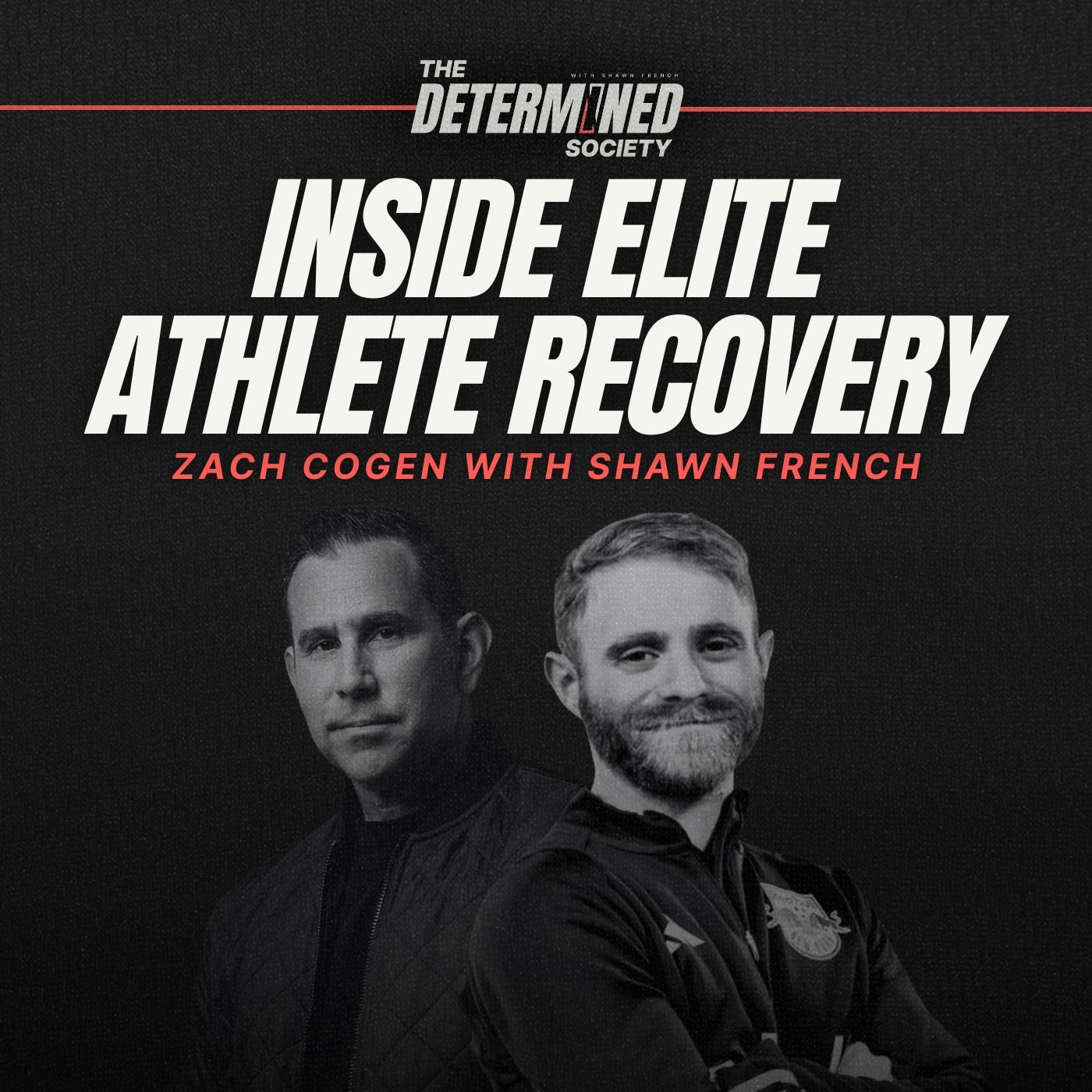
Determined Society with Shawn French | Adversity & Mindset
Zach Cogen on Elite Recovery, Rehab, and Mental Resilience
01:00:29
Loading summary
Transcript81 lines
- [00:01]
A
Ladies and gentlemen, if you're pushing your limits this year, your recovery has to keep up. Most people train hard but fall short on recovery. That's where therabody plus series comes in. The Jet Boots Pro plus are the first ever multi therapy recovery boots combining pneumatic compression, vibration and infrared LED light to help boost circulation and reduce soreness in less time. And they're completely wireless. No cords, no hoses, zero hassle. Perfect after long runs, heavy lifts or game days. They keep your legs feeling fresh even when the training load stays high. Because when your recovery delivers more, so can you. Right now, our listeners get 15% off your entire order. Use code determined at checkout. That's 15% off US only one time use valid until March 31, 2026. Take your recovery to the next level with the Thera Body plus series. Check out the Jet Boots Pro plus at the body.com code word determined. When I hurt my shoulder at LSU, it was like, if you're not ready in eight months, we're going to cut you. And I did that. But my recovery to performance wasn't there. I was never the same guy.
- [01:14]
B
Return to performance means that you're getting to a level of function before you even got hurt to begin with. Let's say You're a top 10 player in the league. We're getting you back to that top 10 level, not just to a level of an athlete in general getting back on the field. The jet boots are my favorite piece of recovery modality out there. Feels like your legs are lighter afterwards. It feels like you're, you're able to kind of go and your legs aren't as heavy.
- [01:39]
A
And I also like that there's that LED infrared light in there too. That is a big component of it.
- [01:45]
B
As well, that LED light that gives it a little bit of heat, much like our infrared saunas. You can get some of the benefit of the infrared lighting that's in there to help with some increasing circulation through the area.
- [01:58]
A
Yeah. So for the audience, if you're going to use them, wear shorts. What's up, guys?
- [02:06]
B
Welcome back.
- [02:07]
A
You're going to be listening to the recovery segment sponsored by TheRabody. Today I have with me Zach Kogan. He's the head of rehab for the New York Red Bulls and he works with athletes on recovery, injury, rehabilitation, and is an overall really amazing professional. And he's done a lot of things, specifically getting these players back on the pitch and getting them ready to play. One notable comeback player of the year, Lewis Morgan, he was at the head of Rehabilitating his hip, hip injury a couple years ago. And you know, Lewis came back a lot stronger because of this guy. So, Zach, welcome to the show, buddy.
- [02:46]
B
John, thanks a lot for having me on. Excited to be on here and, and chat things recovery and rehab and wellness and, you know, just, just excited to, to talk to your audience.
- [02:57]
A
Yeah, man, thank you for coming, man. It's. I'm really excited to have you on. You know, we haven't had someone like you on yet, and it's been something that I really wanted to do because I truly feel recovery and injury prevention and rehabilitation, you know, is applicable for everyday human being as well as an athlete. Before we get into all things Zach and all things therabody and recovery, walk.
- [03:21]
B
Us through your story.
- [03:22]
A
Walk us through the journey of how and why you got involved in this type of work.
- [03:30]
B
Yeah, so as a human, I grew up as an athlete, as a lot of people in my profession, in my field and area get on this track, just because we were, we were once there and typically we're athletes who have had injuries. So I myself grew up as a wrestler in high school and college, and I battled injuries all the time. And I was exposed to the world of rehab and particularly physical therapy as I'm a physical therapist by trade. And, you know, I saw the, the changes that it can do, not just for the body, but also for the mind and how you can teach somebody independence in building robustness and in trying to take care of their bodies. And it just helped me to say, hey, this is what I want to do for a living. This is pretty damn cool. So from then on, it just got me on track, went to physical therapy school. I ended up wanting to specialize in being a practitioner for athletes, particularly elite athletes, and I ended up doing a sports residency after that. I moved way away from family to not just grow as a professional, but as a human as well. The first time I was really away from family and home. So I lived out in LA for about five to six years, did my residency, moved into my fellowship. I worked with UCLA athletics and then onto that I worked as physical therapist performance pt@exos, which is a sports performance company that's globally worldwide that work with elite professional athletes as well as tactical athletes as well in our military and armed services. So I spent a few years with EXOS and then needed to jump over into soccer or football, however we want to classify it depending on where our audience is from. So I moved over to DC and was with DC United as their head of rehabilitation for A few years. And then me being from New York originally, it was time to come back home. So I accepted a role with New York Rebels and currently head of athlete rehab with them. So it's really a long list of things to say that I'm a human who likes working with people and connecting with the actual human behind the face. Understanding what makes them tick, understanding what motivates them to get up in the morning, to go out about their days and to do their jobs and just happens to be that these people have to perform on a field as their job, as their occupation. So teaching them how to take care of their body because that's their livelihood, that's how they make a paycheck, that's how they bring, you know, food home to their families and being able to help in that and see them get back onto the field and perform at what they love doing is what I love to do. So that's, that's just in a nutshell, a little bit behind, you know, what I do, why I do it, and, and where it came from.
- [06:30]
A
Well, I love it, man. Thank you for that, that recap and giving the audience a little context behind your background and what you've done. What I find very impressive is just the trajectory of your career. Again, you know, a lot of people want to be, you know, a physical therapist or head of rehab, right. For, for elite athletes. And not everybody gets to do it, right? I mean, it's not everybody's plan. So like, what was it about you? Because I mean, like you said you, you did, did some things with UCLA, then you went to D.C. united and you've been involved with some elite athletes and some elite athletes within the military as well. You know that that's a big deal. Like, and I don't know if you've ever taken the time to stop and say, man, I'm really actually doing this because there's probably thousands of people that would love to be in the position you're in. So congratulations.
- [07:22]
B
I appreciate that. Sometimes I guess I don't really sit back and look at that. You know, it's something that I'm kind of just buried in the weeds of it. And you go about day to day and I guess when you're in it, you really just view them, they're just everyday people. I mean, when you get to know these people, first name basis, you know, that mop handshakes in the morning and you know, they're just like any patients. As if, you know, when I was working in an outpatient clinic in the Beginning, Beginning of my career. Um, so when you're in it, it just, it's a day to day, but at the end of the day, it's. It's something special for sure that, you know, it's. It's pretty cool.
- [07:58]
A
I definitely can relate to that because, you know, in everything that I do, I talk to a lot of people and at the end of the day, everybody wants to know, what was that person like? What was that person like? You know, what's it like interviewing these types of people? And I'm just. I don't even know how to answer the question because I become friends with them, you know, and I realize and learn that they. They put their pants on one leg at a time, just like I do. And just like you do. And having deep conversations with them is actually enjoyable. And I don't ever stop to think about like, wow, did that just happen?
- [08:30]
B
Yeah, it's hard to. It's hard to remember sometimes when you're watching somebody on a screen that, right, they have a family at home, right. They have three kids. They didn't sleep last night because their child was up crying in the middle of the night five times, you know, so it's just like all of us, even though you watch them behind. Behind the screen. So, yeah, it is unique. But again, they just teaches you that we're all, we're all the same. We're all the same person.
- [08:57]
A
Absolutely, man. Absolutely. I love that. Let's jump in, man. Let's talk about, you know, recovery. Let's talk about rehabilitation. And I want to start with, excuse me, just the lonely person, right? People like me in the audience here. I think it's super important to really focus on not just injury prevention or recovery, but. But proper warmup as well. And some of the things that I've been utilizing is a lot of the. The pro series from Therabody. Like I have the jet boots, right? Like those things are sick and, and you know, after a leg day, I'll throw them on and there's like no wires, you know, and, and nothing like that. And there's a lot of different LED light therapy in there, you know, the pneumatic compression. And it really helps me. Like I did legs yesterday and I pounded them. Like today I recover quicker and I'm not sore, so I'm able to perform better. Have you, have you seen anybody or have you used those things, those jet boots? Because I'm gonna tell you right now, man, like that, that's. That is a pristine recovery process.
- [10:05]
B
Yeah. So I'm not just going to try to plug it right now, but I will say that, that the jet boots are my favorite piece of recovery modality out there. Not just for elite athletes, but for myself and just commonly person. Right again, raw humans compression. Pneumatic compression, just as an overarching theme and principle in the literature and research has found to be one of, if not the best recovery modality out there for a multitude of reasons. So particularly the jet boots. I gravitate towards and I mean it subjectively and I know you know this, it feels good. It feels like your legs are lighter afterwards. It feels like some of the soreness is gone. After a big leg day, it feels like you're able to kind of go and your legs aren't as heavy and sluggish. So that, that is my, my, my go to for myself, but also for other people. When people ask me these types of questions, like what's the best thing I can do for my body? What can I use to enhance rec, kind of get myself going before the, the day starts? And that's usually my go to.
- [11:10]
A
So, yeah, it's pretty interesting. I did, I did a leg day yesterday, like I said, and then I hopped on the, the moving stairs for 30 minutes and then hopped in the sauna for 20, got home, put the boots on and I never really noticed how light my legs feel afterwards until you actually mentioned it. Like I just kind of go through my day and I'm like, okay, cool, I feel better, you know.
- [11:35]
B
Yeah, and it's, that's, that's the big thing is like, how do you feel? Like the subjective part of it, forget the objectivity to it and all the studies, but it's also how does it make the person feel as well? Because our mind is a huge trick that we can plan each other and we can play on ourselves and you know, it's a nice mediator or modulator to how we can make ourselves feel at the end of the day. Because pain is also a subjective thing. So yeah, what we feel matters the most, like physically and then that drives our emotions as well. So that's something that's just nice that can give a little bit of a boost to the human body. Just like feel better in general.
- [12:14]
A
Yeah, it's for the audience though, you know, because the, the word or the phrase pneumatic compressions, they may not know what that is. Can you give them a little bit of background what that actually means?
- [12:26]
B
Yeah, so pneumatic compression is essentially utilizing some sort of modality or device or some sort of garment, something that will give compression to the skin or the layers of tissue in our body. And essentially what that does is it helps move fluid. And it's a bit fluid dynamics. Right. So pressure gradients. We're trying to flush fluid, flush lymphatic drainage, which is kind of our, our, almost our sewage system in our body, trying to flush almost toxins and, and build up and things that kind of just sit stagnant and get fluid moving. Especially in the morning we're laying down, we're not moving, our muscles aren't pumping. You know, we're not getting as much fluid moving from head to toe. So it's a nice thing, especially in the beginning of the day, to get things kind of moving. So compression, pneumatic compression, and using tightness or graded types of amounts of pressure in different parts of the body to help shunt and move fluid up and down.
- [13:31]
A
That's pretty cool. And, and, and thank you for that because that word or that phrase, pneumatic compression, people are like, wait a second, you know, what does that actually mean? So thank you for explaining that. And I also like that there's that LED infrared light in there too. Like that. That is a big component of it as well.
- [13:49]
B
Absolutely. And you know, that LED light that gives it a little bit of heat, that helps to aid in infrared, much like our infrared saunas. So on the skin. So hint, hint, like skin to skin contact, try to have that on skin so you can get some of the benefit of the infrared lighting that's in there, but to help with some increasing circulation through the area. So it's an all encompassing. It also has vibration in it as well, which helps with some of the fluid dynamics and moving some fluid and tissue around. So yeah, it's, it's a nice all encompassing feature in there.
- [14:24]
A
Yeah. So for the audience, if you're going to use them, wear shorts. Wear shorts so you can get that infrared skin to skin. So. Well, thank you for that and giving the audience a background on what the boots can do and how it can aid them in recovery and, you know, feel less sore quicker and recover better. Hey guys, we're gonna take a quick break and we're gonna slide into our recovery segment brought to you by TheraBody. What an amazing technology that TheraBody has. And it was founded on a really cool story by Dr. Jason Worsland. It was founded on pain. He got into an accident and had this extreme pain in his arm and found that percussive therapy really helped. So he created the very first version of the theragun with a makita drill just to pilot and test to see if his pain could be relieved with by percussive therapy overall, and surely it was. So now birth to the theragun and now therabody who has a multitude of products to help you recover emotionally and physically. And some of the products even help with stress, meditation and better sleep and just overall better wellness. And when I had Dr. J on the show earlier in 2025, it really spoke to me because his platform was founded out of out of physical pain and the determined society was founded out of emotional pain. And so it felt natural for us to partner up. So here we are, an official partnership with therabody and I want to talk to you about some of their products today that I've been enjoying that I think you need to understand and know more about so you could potentially implement them into your life. And I'm not going to get into a big deep dive of the actual science and everything like that. I'm just going to give you some anecdotal information based on the products that I'm using and that my wife is actually using too, that is helping us out a great deal at home. Because the great thing about these products, guys, is you can use them anywhere. You can use them in the gym, you can use them at home, in your bed, in your living room. Hell, you can even drive with a Thera Theragun pro plus in your car and use it on your quads, use it on your arms, whatever that is. The first thing I want to talk about is the theragun pro plus. I bring that in my gym bag every day to the gym and when I'm warming up, I use it to warm up, I put it on my arms. Whatever body part I'm using that day, I activate those muscles. And what I find is I'm able to move my body a lot quicker and I'm a lot stronger on those days that I do actually bring it and utilize it. I just think it's a great way to understand your body and the connection between your strength and your muscles and being warm and being able to perform. Because it's one thing to go work out, but it's another thing to perform while you're doing it. And the Theragun pro plus helps me do that. Another thing that I really truly enjoy is that jet boots pro plus, these things are wire free. There's no hassle, there's no cords, there's infrared LED light, there's that compression therapy and I've been having bad pains in my ankles, both of them, actually, for about a year. And I don't understand where it's coming from. But when I started using the boots religiously, after a leg day or after a cardio session, I throw those boots on and I find myself a lot looser. Afterwards, I find myself lighter, and then the next day, there's no pain in my lower extremity like my feet. The other thing that I really enjoy is that product really helps me recover a lot quicker. And let's face it, that's the most important thing when we're trying to move our bodies or we're trying to succeed in life, is we want quick recovery emotionally and physically. And these products help me do that, and they can help you do that as well. One of the other things that I really want to go into, because it's helping my wife out a ton of with headaches and being able to distract from the noise in our mind, and honestly, it helps me with that too, is the smart goggles. Whenever we feel a slight headache coming on or things are getting really heavy just in our minds, just thinking about all the stressors, all the things out there that we can't control, we throw the goggles on, get in a quiet place, and there's. There's different cycles on there and different intensities of vibrations and massaging that you can either turn it up or turn it down. And what I really enjoy is it allows me to focus on what's going on with just me. And I think about things. And the massaging with the smart goggles relieves either headaches and it relaxes me and relaxes my wife to a point where we can fall asleep better. We are preparing to kind of downshift and shut down and slow down for the evening. So I heavily recommend them. The other thing it's really good for is just creating a peaceful time in your day. And what I found since using the smart goggles and then the other products is it works for me, it works for my family. And I know it can work for you, too. So I want you guys to think about things that you are struggling with. If it's lower back pain or you wake up in the morning, your neck is tight. I'm gonna tell you, the theragun pro plus will help that out. They have cold therapy on it, hot therapy. I mean, think about that. When I opened that box and realized that I could have heat therapy and cold therapy and a theragun changed everything for me and also really made the thing That I hate doing the most is warmup. Made that very easy for me just by applying it to the muscle group that I'm going to use before I do it and in between sets, which promotes quicker recovery between sets. So if you're looking to go high volume or to lift heavy weights, I strongly consider that all these products are there to help you move along in your day with less pain and recover quicker. So go check it out because now, like I said, the official partnership has begun. And from now until the end of March, in your first order, you get 15% off your first order, not every order. So if you're going to buy some stuff, load up there in that cart for that first time and you get 15% off, go to therabody.com and at checkout, the code is determined. So let me know how you guys like it. Until then, stay determined. I want to really dive into the story of Lewis Morgan. Right. And now, you know, we have that hip injury that you helped him through. And the video that you sent me, I paid very close attention to this certain point. And I want the audience, and some of the audiences are former, are former athletes.
- [21:23]
B
Right.
- [21:23]
A
So let me give you a little bit of background. When I hurt my shoulder at lsu, my throwing shoulder, I was a catcher, I was in a rundown and I dove and I hit my elbow and it just came up and had a little bit of a labrum tear. And then I already had an acromium, kind of like just, it was hooked. So they had to shave that. And then they heated my capsule up.
- [21:49]
B
Right.
- [21:49]
A
The capsular shrinkage. And back then once they heat that up, it's like you have a 70% chance of coming back. But. And I, and I did that, but performance wise, the recovery to performance of what you spoke about, and I won't steal your thunder here, I want you to explain it. But my recovery to performance wasn't there. I was never the same guy.
- [22:16]
B
Yeah, I'm sorry I have to go through that. It's definitely a tough one. It's a tough one to come back from, especially if you're a throwing athlete. When they shrink that capsule up, your drop gets pretty tight and stiff and that mobility is, is super tough to get back. That's a grind.
- [22:33]
A
The ball never came out of my hand again. The same. Like never.
- [22:37]
B
Like never. Yeah. Yeah. So I guess to, to kind of to define what those two things are. You know, return to play is, is defined as. Right. Something happens and you're able to step back onto the field or the Court or the ice or, or whatever your playing surface is and in your sport, in competition. But there's a difference between just getting back to being safe to play. Because that's kind of what it is is in my profession is my job is to make sure athletes are safe to get back on the field. We're minimizing risk, we're making sure, okay, you can tolerate the forces to the best of your possible ability right now within your body that can protect yourself against contact, against all of the motions you have to do. But return to performance means that you're getting to a level of function and just physical performance metrics that you're putting out before you even got hurt to begin with. So you're getting back to a level of, let's say You're a top 10 player in the league. We're getting you back to that top 10 level. Not just to a level of hey, this is a, a professional athlete getting back on the field or an athlete in general getting back on the field. We need them to perform at a level that right. They're an athlete who's getting paid a certain amount of money. There's an expectation as well from the club in the front office that they need to perform at a certain level. They need a certain amount of goals per year, assists, they need to be running at a certain speed, a certain distance, play a certain amount of minutes in a game. So there are all these different things to be objective about. But at the end of the day to look 10,000 foot is does that looks the same as before they got hurt? Do they look any different? And a lot of people say that when you watch, I'm a big NFL fan, I don't know if you are as well, but when you watch let's say football and someone is coming back from an ACL tear, you always hear that it takes not just someone comes back from 9 to 12 month rehab, which is typical for an ACL re reconstruction rehab, someone's coming back after an ACL then I use that because that's just an easy example. A lot of the times they don't return to a prior performance after two years, which is actually pretty typical because it takes a little bit of time to get some of that power and robustness back. So just to give you an idea that there's an explain to the audience that there's a difference between the two. When you see and you're watching sports on tv, there's someone comes back it not just physically, but mentally as well. And I brought up Mentally several times in this, emotionally as well, it's not easy. I mean, you went through, you went through surgery, you were used to playing at a certain level and you said you never got back to a certain point that you wanted to go to. And I'm sure that was, that was hell frustrating. So it, it lives in these people too, especially some of the top players in the world. And that's tough.
- [25:30]
A
That's tough, you know, for me. And I want to touch on this too because a lot of the athlete recovery, there's even someone that is, you know, in their 40s, that used to be an athlete, but is, is wanting to still train. And when injuries happen and you're not able to move or do the things that you used to be able to do, even on a broader and in a bigger, more actually more pinpointed scale with these athletes when they don't come back, you know, it's that level of performance, it can really impact their mental health. Man. How do you work with them through that? Because not just the return to play or return to performance, but the initial, like let's use Lewis Morgan as an example. I mean for months this guy would, you know, be injured and try to come back and injure it again. There's a big mental issue that can happen with athletes there, you know, because their worth is tied to how they perform. So how did you, how did you work with Lewis on that and what are some of the things that he did to come back mentally strong as well as, as, as well as physically?
- [26:43]
B
Yeah, I think the best way to start with this is that I am lucky enough that I work in a setting that's we'll call like a high performance department where I work alongside multiple professionals that are like minded, that have the best interest in the athlete in mind, who are in the medical field and performance field. Right. So I work alongside a team of people that provide a service to the athletes on our squad and our roster. And you know, us as a collective, we were able to, you know, tap into him as a human. You know, we have performance therapists, we have, or rather say mental performance therapists. We have athletic trainers on staff, we have performance coaches on staff, dietitians on staff. So we have this conglomerate of professionals that we all trust each other's expertise to support the athlete in the best way possible. And I think that's number one. That's the biggest thing to highlight is that this is a team effort. So us together are able to, I guess you, you see somebody every day six to seven Days a week, we're working with these people and you get to know them on a different level and more of an intimate level. And you know their, their unique characteristics and what drives them, what motivates them. When to push on the brakes, but when to, when to actually hit the brakes. I'm sorry, when to push on the gas, when to hit the brakes and when to slow down in a day. And I mentioned this before, like we're all people. If you got into a fight with your girlfriend the night before or your wife and you're not feeling it today, recovery is, let's say you have a six month recovery. That's a long, that's a decent window where you have a lot of time to play with and to schedule things. So if you're not feeling it for that day, let's maximize. Because you have to be there mentally to be able to attack that day and get the most out of it. So if you're not there that day, then that's fine. Now we, we pivot and we reschedule things. And you listen to the athlete because the athlete just, just as much as myself or some of the other people I work with. They're, they're, they drive the right, they drive the car right. This is their body, their livelihood. They're professional. We're there to support them. So, you know, they're, they're essentially running the show as well. So they're such a huge integral part to this. And for. However hard this is, it's building that trust in the beginning for them to trust you and to tell you when they're feeling it, when they're not feeling it, when they're struggling with things. And I think that's the most important thing is just connecting with the human in front of you.
- [29:22]
A
That right there a little bit.
- [29:24]
B
Exactly.
- [29:25]
A
That right there is so important. And I want the audience to really key in on that is focusing on the human being. I can remember when I was coming back, it was like, if you're not ready in eight months, we're going to cut you. And I was forced to come back sooner because I didn't want to lose my position. I didn't want to transfer, I wanted to be at lsu. I didn't want my release, you know, so. But I didn't feel like that was a very humanistic approach that put me in a fight or flight situation while trying to get better. So I didn't have that luxury of I don't feel it today, or hey, my arm hurts a little bit more. I can't really throw 120ft at 80% today. But I was consistently, you know, extrinsically pushed. I kept hearing that voice inside my head of if you don't get better and you're not ready for fall, you're going to have to leave. And I didn't want that. And so the fact that you guys are really dialing into the human being I think is a very important aspect because without that you don't know when to push, like you said, and you don't know when to put on the brakes. So I just think that when we're dealing with athletes and when we're dealing with certain injuries is to understand the person and what drives them, but also what can temper them on days and then just adjust the plan accordingly.
- [30:51]
B
100%. I, I take for granted sometimes how many days a week I see these athletes. Like working with someone six, seven to seven days a week is not of the norm in my profession. I typically in an outpatient environment, a physical therapist is seeing somebody for anywhere from one to three times a week in your typical, you know, insurance based outpatient facility for orthopedics. And they only have a script for three months, not for six to eight months sometimes with what they need. So, you know, I take for granted in that. But also as a practitioner, me being able to do that, I. It's important for me to take advantage of that time to, to really like take the necessary steps of the roller coaster of what rehab should look like. You have big days, you have small days and you need those days looped in. It's not just go, go, go, go, go. There are rest days in there, there are regen recovery days where we utilize our recovery modalities. And that also helps, right? The psychology of the athlete too, where they're not just on the groin every single day. It makes them feel like they have some time to catch up with themselves. Not just physically, but mentally as well.
- [32:03]
A
Yeah, that's difficult, you know, because you have to find that balance, right? It's like, do I really feel like I can't do this today or is it just I don't want to? And so. Yeah, right, because I mean, shoot, dude, that happens in my daily life more than I care to admit. Like, I'm like, I can't do this today. And then I have to ask myself, is it that I can't or I don't want to? And if it's the latter, then I do it anyway. And if I can't, then I adjust. Right? It how, how, how do these elite athletes like Lewis Morgan, how do they filter through that information? Right. Do they ever get honest with them, with you? And like, hey, I just don't want to.
- [32:46]
B
I'm glad you asked that because I was just about to say that. It's also our job to make sure that if they say, you know, I'm not just not feeling it today, me understanding why they're not feeling it today and say, too bad, we're getting after it today or we're doing this, this and this, or maybe I'll pivot away from this if we make sure to get this done. So there are levels to how you can kind of manipulate a session, but really understanding, like what's driving that? Is there something actually going on? Or is it time for me to just kind of step in and say, nope, too bad, we have to get this done. Scrunch time, whatever. It has to happen.
- [33:27]
A
How do you diagnose that you personally?
- [33:29]
B
Right.
- [33:30]
A
How do you counsel the athlete? What are some of the questions that you would ask to kind of see where the root of this I don't want to or I can't is coming from at that given time?
- [33:41]
B
Yeah, I mean, similar to what I said before, they've. How was your night? What'd you do last night? Knowing, is there something personal going on outside of here? Are they, do they have some family issues going on? Did they just have a recent breakup? Do you know there's so many things that go on in this person's life that you know, could be weighing on them. So just conversation. Yeah, simple conversation. And it doesn't even have to be like a line of questioning, like A, B, C and D. I don't have to ask three, these three questions. But the more you talk to these athletes and more you talk to these people on a day to day, the more you'll understand like what kind of mood they're in, what's driving them. Well, okay, they're probably like this because they had a tough day yesterday. Or maybe they're like this because the gym work was too much. Or maybe they're like this because they really slept like three hours because their baby was up keeping them up all night. So it's, it's just you're the nuance of, of knowing and kind of matching, connecting the dots. Not necessarily these three questions, this is how it has to happen, but more so kind of just guiding it because you also don't want them to really feel like they're being like questioned. I want them to feel Like, I care. Yeah, I understand. And I'm listening to them. I'm listening. Active listening.
- [34:56]
A
I think it's important. I think anything, you know, can be solved with an actual authentic conversation. Right? So when we're talking to an athlete, especially an athlete that's always used to getting peppered with questions, whether it's in the media or. Or whatever that might be having a common understanding and just by having a open conversation of, hey, what know, Talk to me, what's going on? You know, was it a rough night? And, you know, or tell me about your night. Well, then they say, like, hey, I didn't sleep and I ate something and it didn't agree with me. Or, you know, like, hey, my baby was up. You know, I. I didn't sleep then. You know that this is probably something that you. You need to pull back on a little bit today because rest is important in recovery. Right. People talk about seven to eight hours of sleep, but if an athlete gets any less, and they are athletes, specifically, like a soccer player that is constantly running and it. And it takes a lot of energy. If. Especially if they're injured, too and not enough sleep, there's the. The recovery process slows. How in your mind, like, do you ever have sleep conversations with them? Or how important is sleep with your athletes?
- [36:13]
B
It's probably the most common question you'll hear me ask an athlete within the first five minutes of talking to them at the beginning of the day is, how did you sleep last night? Right. So, I mean, sleep. I mean, we. I. I can't talk enough about Philippe and. And nutrition. Those are the two. Those are your two money makers. Right? There is. Sleep is. Is so vital to your recovery. And what we do, our bodies do so much when we sleep, and also the fuel we put in our body matters so much. So if I can narrow down two of those things and really, if we can kind of dive into sleep as well, that is the first thing that I ask every athlete that is getting onto the table in the morning and I'm about to work with is, how'd you sleep last night? So I can be kind of a broken record almost. But it is so uberly important to know, like, what. What. What the night was like for them.
- [37:08]
A
I think.
- [37:09]
B
I think sometimes I can even just tell. Yeah, you just tell by looking at them.
- [37:12]
A
Even someone, like, walks in the blank stairs like, yeah, you didn't sleep well last night for sure. And a lot of times, too, man, like you mentioned, like, nutrition, what you fuel your body with matters. And what you Feel your body with does impact your sleep, right? I mean it absolutely does. Like when I eat a certain way and there's no one recipe for everybody, right. There's a lot of misdirection. No, carbs aren't bad. You know, eat your starchy carbs, it's okay. Some people say no, stay away from those. Just eat fruits and vegetables. Like for me, like it's very specific. I feel better when I am eating a high, high protein diet with a lot of fruit. I just, I enjoy it more. I'm never really hungry. If I implement, you know, rice or you know, multiple things like that, I can feel a little bit off at times. So for me I just know what works and so I stand those guardrails. Right. But, but I just think that the most important thing for athletes like you mentioned is the sleep, but also proper nutrition. You know, do. And, and this is a qu. This is a kind of a funny question, but I have a reason I'm asking it. I, I think non athletes have a very hard time managing what they eat, managing what they put in their body every day. Do some of these athletes at times go off track nutrition? You have to recounsel them and let them know like hey, this is why your body's not recovering. You, you are eating this and now you have inflammation and now you have lack of sleep, your cortisol levels are higher and now your information inflammation's even greater because you're not getting proper rest or nutrition. Do you have to have those conversations with these high level athletes?
- [38:55]
B
Of course, similar conversations. And I'm also going to defer to like the experts in this answer is typically when there are issues with nutrition and diet that are almost a little out of my scope of practice. Right. So we have people on staff that are experts in that field too. So I'll also just defer to our dietitian to, to discuss nutrition and eating habits and meal planning and, and those types of things. So I guess it's a luxury to, to be able to do that. You know, when people ask me those questions, you know, I can give only so much information to that. But then it comes to a point when they probably will ask me a question that maybe I can answer the right way, but there's someone that's better that can give them a way, way different and way more clear and concise answer that's going to help them a lot further. So that's, that's typically my, my default and what I would say in that is. But I would also say that for the, the average person is, you know, there, there are people who, individuals consult with all the time and diet and food and nutrition and you know, when you have those questions, it's defaulting to the professionals to be able to help with that because, you know, but I think you hit it spot on, is that it's so person specific. Now I don't think that everybody's body is, you know, I mean, we have people who are, you know, gluten intolerant. You know, we have people who are lactose and that everything is just different for everybody. So it's, it's hard to even just give a general blanket statement of, you know, you need to have this to make sure you can have that. But yeah, so just to, to kind of circle around that. There's a, there's a couple of other things for elite athletes that we focus on post operatively, particularly you mentioned protein intake, but it's also supplementation as well post operatively. If we're looking to get athletes back in time, you know, this timelines we have to meet, we have to make sure that we get muscle growth on time. We have to make sure we get muscle strength and power back. So we need to make sure that they're also getting these, these supplements like creatine and protein and collagen, getting good tissue healing things that are going to support the body from a micronutrient and just, just molecular level. So it goes a little deeper when you're talking about athletes who perform at that level. But at the end of the day the professionals know the best, so it's really defaulting to them.
- [41:14]
A
I really like that. You know, you're, you're, you're really leaning on the different branches of support that you have within the organization of the New York Red Bulls, right? It, it is a team, right? You're helping these athletes get back on track and if you don't know the answer, you're able to pivot to the, the, the dietician. Right. And that helps the athlete truly feel like they're supported because coming back from an injury like, you know, Lewis Morgan had, that is a grind. You know, I believe in the video I watched like some days there, he was doing four sessions.
- [41:48]
B
Yeah, I mean, yeah, he was a machine.
- [41:51]
A
I mean that's a lot, I mean that is a lot on the body, right? I mean it's a tremendous amount of war and terror, physically and mentally. And so when I'm, when I'm watching this video and seeing his comeback story and the role that you and the Red Bulls played in it. One word came to mind, obviously. Well, two words is determination and discipline. And that's what this show is based on, right? So in order to come back from an injury like that, for the athlete, there has to be a high level of determination and discipline. But also, also with the staff, like, you have to be highly determined and highly disciplined in order to get these elite athletes back to performance. Right. It's a big deal. How do you see those two words playing a part in an athlete recovery?
- [42:48]
B
I mean, that's. I like to. So as a. I'm going to default back to, like, my roots as a wrestler and just talk about discipline, determination, just because I'm not sure if you're familiar with the sport of wrestling, but I will talk about it until my last days on earth. You know, I am the human I am today for a lot of reasons, but one of the main reasons is because of the sport of wrestling and the grit and the grind daily, the determination, the weight cutting, the atmosphere of what it's like competing just you in front of a bunch of people and there's no one else to help you. It's not a team sport to a certain extent. There's just so much about the sport that taught me about those two key characteristics and character traits, and that helped me just push me in my career as a human just to the next level. Because there's a lot of adversity that we've had to have had to run through, needless to say, and to continue to do that and to be there for these guys and to wake up every day and getting in early, making sure I'm motivating the individuals. Three to four sessions a day, you know, just takes. It takes another level of. Of determination and discipline and hard work. And, you know, at this point in my life, it just feels a little effortless almost. It's just kind of part of who I am. It's part of me as a human. And it's something that I enjoy. I enjoy putting in energy to help someone achieve their goals. It gives me an endorphin release. And, you know, it's just, you know, anybody I'm sure who comes on the show has had something in their upbringing, in their childhood and their. As they've come through their profession that has taught them a certain level of discipline and determination. So, you know, everybody has their own, but it's. It's something that I. I don't even think twice about anymore.
- [44:56]
A
It was interesting because I look at fighters, right? Whether it's ufc, boxing, wrestlers, anything that's weight based. Right. You have classifications, the ultimate discipline to be in that sport. I mean, I could imagine you in high school and you in college, you know, trash bags, sitting there, you know, with a hoodie on, running around the wrestling mats to make weight, you know, spitting, not drinking a certain amount of water. You know, like a day before you have to be at an event. Like, that takes a high level of discipline, dude. Like, I, I, I, I, there's, to me, there's nothing more discipline being like, okay, like, I'm not even going to drink water for the next six hours. Like, like that is so difficult, man. And, and like, what are your, you're smiling because, like, bring yourself back to those days.
- [45:53]
B
I'd rather not. I'd rather not. No, I mean, listen, it's, it's you against yourself. You're almost fighting. You're like, you're fighting your subconscious, you're fighting yourself, you're fighting your brain. Yeah, it's, it's just getting comfortable with discomfort is. The best way I can describe is like, it's not comfortable. But, you know, you get comfortable with that feeling and it, you learn to deal with it. That's a lot of what the, what these guys, you see these, everybody's cutting. Who is cutting weight and whatever. But even, even the jockey or jockeys cut weight as well. I mean, you have to weigh in for that.
- [46:38]
A
I didn't know that. I didn't know that.
- [46:40]
B
Yeah, it makes sense. Yeah, absolutely. You have to weigh in before you get on the horse. So it's, there's, there's just a certain level that you're, you get to and you have this reaction and you know, you break down a couple of times, but you pick yourself back up and you learn from it and your body learns from it and biologically you learn from it and you adapt. Yeah, so it wasn't easy in the beginning or I, my time doing it, but as I kind of got used to it, it's, you know, I didn't really think about it anymore. It was just kind of used to it.
- [47:19]
A
Do you feel like determination and discipline is a thing that you are born with or a skill you acquire?
- [47:29]
B
It's a great question. I think that I'm going to say it's both. I think that there needs to be a certain software in there to build on. And I think that even if it's like the most minuscule minute of something, that to have that sensation of wanting to push past limits that you're comfortable with. That's kind of how I would define determination or discipline is pushing past our limits physically, mentally, emotionally, and being able to compound that and multiply on that and build on that and become more robust. So I'm going to say both. And I. I truly feel that inside my gut and my soul.
- [48:19]
A
I agree with you 100, dude. I. I really, truly do. I think everybody is born with a certain amount. Like you said. I love how you said software. That's pretty cool, man. Like, to think of. To think of that hardware, software, whatever you're wired at, right? And it's typically, you know, genetic.
- [48:36]
B
Right?
- [48:37]
A
Like, and then you grow up in an environment and you start to learn, like, hey, if I want X, Y, Z, I have to do all these other things and I have to do them consistently. Right? And then you build up that. That callousness to the hard work, right? I. I'm 47 years old, dude. I don't like working out five, six days a week. But I know if I don't do it and if I don't eat right, one, I'm gonna look like hell. Two, I'm gonna feel like hell, and then three, I'm not gonna sleep very well. And then I can't leave my family, you know? So when I go through all that, the. The decision to do things that I said I was gonna do, even when I don't wanna do them, I still complete the task. And I may not be a hundred percent every single day. There's days where I'll go in there, I'm like, my body hurts like hell. I don't want to work out today. So I'll just go in there and I'll do one set. And then I'm like, okay, cool. Then I'll do another one. And I'm like, I'm starting to feel a little bit better. And then by the fourth set or the first set of the second exercise, like, I'm. I'm fully engaged. And I think a lot of people lay off before they can get fully engaged.
- [49:56]
B
Yeah, I mean, I can relate to that for sure. There have been so many days I felt that it's. It's interesting you say that, you know, you do something, you dip your toes in the water and you're. It's almost like getting into a cold pool. It's like, it's freezing. I can't do this. And then as you get in, you kind of get used to it. And then finally when you're all the way and it's like, okay, this is fine. But I'll even, I'll even play devil's advocate. You know, I, for a living, I work with people to try to induce and promote adaptation and change. Right. Whether it's strength or tissue resiliency or healing or whatever. You know, I challenge anybody who maybe feels like they don't even have an ounce of it to try to change because, well, I'll throw another really nerdy and big term neuroplastic. We're all neuroplastic. We all have the ability to change. Our brain can change and grow new neural pathways and things like that. We are neuroplastic and we can change. So why not learn and teach ourselves discipline and hard work? Why not? So I think challenging the norm, you know, my initial gut reaction, but as I'm listening to you and I'm thinking in my own head and yeah, we should be able to change and become more disciplined and determined. And I have no issue with saying that either. So just have to throw that back out there because we are, we're humans and we adapt and that's what we're good at. We're really good at adapting and evolving.
- [51:19]
A
Yeah, I mean, I think I make it my mission every day. If I feel a certain way or I'm weighed down, you know, mentally and emotionally and I don't want to do something, I really focus on just doing it. Because to your point, if I can create a ner, a new neural pathway of when I'm feeling so bogged down and so heavy emotionally that I can't even begin to fathom doing something physical or completing a work task or whatever it is, but then I actually do it. Like you're cre. It's just like. It's just like lifting weights. It's just like anything physical. You build that muscle over time through repetition and consistency. And I think that that is a key to most people's success is like doing the things they don't want to do when they don't want to do them emotionally, but they still complete it.
- [52:14]
B
Yeah, I see it every day. I live it every day.
- [52:18]
A
Yeah, man, it's.
- [52:21]
B
Yeah, it's. You're hitting the nail on the head. That's really what it is on a day to day. And it's. It's a grind. Being a human. It's a grind. Whatever job you got to do and get up in the morning, like dog days, same thing every day. But you know, some people, it's easier than others. But at the end of the day, we all got to try to Figure out a way. Yeah.
- [52:39]
A
I want to ask you a specific question because, you know, in my line of work, I absorb a lot of energy, right? There's days where I have one interview. There's days where I have two, sometimes three. You know, today happens to be a day where I have three. So I'm going to have three different human beings that I'm absorbing energy from, right? And I have to take care of myself. Like, I really have to take care of myself so I can give my all to you and to whomever else the audience. So it hits the audience where it needs to. You have the same demands. You have the same demands. You have this. You know, you have pressures alike, right? You have to get these. Your job is to get these athletes back to performance, right? How do you take care of yourself? Because if you don't take care of you, you can't take care of your athletes. You can't take care of your wife, can't take care of your kid.
- [53:24]
B
I am still, at this point in my career, I'm still trying to find out the best way possible to do that. And I love the honesty, full transparency lay on the line for you. But what I will say is, the. The further I go and down the road as a physical therapist, and the further down the road I go in my career, the more I start to learn how important that really is. And the more I try to start to do for myself, the further down I go. So little things like waking up earlier than I typically would in the morning to take a shower, to eat some breakfast, to get a small workout in, to get myself going before my day really starts and no one, everybody's up and before my family wakes up, before I even get to work, before then the athletes come in in the morning, I'm able to kind of get things done and have my alone time with Zach and check in with Zach before all the chaos starts a little things like that. Waking up an extra hour and a half earlier than I typically would.
- [54:27]
A
I can relate to that, brother. Like, I really can. Like, when I lift her in the morning, I get it done early. I've got that big thing out of the way. But during that time, I'm actually able to check in with me because I can't do that during a day. I can't do that when my kids are home. I can't do that when I'm visiting, you know, with the whole family and, and. And my wife. Like, I just can't. I have to be able to dial into me. And it's almost like when I'm in the gym. That is my active meditation. I learned so much about myself in those moments because I'm pouring into me. And I just think that it's super important for everybody listening and watching on YouTube to really dive into what's going to give you the best insight to yourself. And how do you execute that consistently. That's how you win.
- [55:26]
B
Couldn't have said it better. It's just we gotta. We gotta love ourselves before we can love anybody else. And we make sure we take care of ourselves or else we won't be able to take care of everybody else. Yeah. So it's. It's huge. And I just. The more I go on, the more I learn how important that is.
- [55:45]
A
That's awesome, man. That's awesome. Well, you're doing amazing work, man. You know, you're getting athletes back on the field. You're taking care of yourself and your family, and you've done so many amazing things in your career. Couple more questions. You know, based on that. What makes you different? Right? Like what? There's thousands of you out there, right? And you have been so successful with your athletes and the organizations that you've been in. What do you think the separator is for you?
- [56:18]
B
It's really. It's another really tough question that I. Sometimes I don't necessarily think about a lot. The first thing that comes up into my mind, a lot of people will give this answer, but it's. And I think if you ask anybody who knows me in my life, family or friends or colleagues, co workers, they'll say the word passion. And that drives just almost everything for me in what I do in my daily life, whether it's for my family or my friends or for my career, is passion. And by being passionate about what I do, it makes me care that much more about all of the little things. Have I checked all the boxes? Before this athlete moves forward in their rehab process, can I make sure that I can safely say that they're objectively safe enough to do this next phase of rehabilitation? Have I assessed them? Like, really checking back in with myself? Have I assessed them? Well, instead of just doing, you know, half of what I need to do and kind of just getting done with the day and going home, that I really care and that passion drives how much I actually care and the extent at which I will go to make sure that the athlete no longer feels pain, can perform at an optimal level, can maximally shoot a ball again from 30ft out of goal, can sprint at their Max speed and maybe if not faster, because there's also a passion that I get a hit of dopamine and endorphins when I get to see that person back out in the field doing what they love. So there's also a selfish aspect to it too, because that makes me feel good to see them do what they love to do and why they get up in the morning. What their passion is, is getting to play a sport for a living and what they love. So it's, it's this, this theme of passion. And like, I just, I love to see that and I really do. And I think that's kind of the best way to say it is because I can say, yeah, all the technical things and my hands on skills and my exercise selection and whatever, and it's all driven by this passion and this fuel and like, I just love helping people.
- [58:38]
A
I love that.
- [58:39]
B
I love seeing them succeed. And it just, it makes me feel good.
- [58:42]
A
Yeah. You know, it's you, you say passion, passion drives action. Like that's the thing, right? Like in order to have action or take action in something, you have to be passionate about it, especially at the very beginning. But look, man, I really appreciate you, dude. This has been an awesome conversation. And, you know, after spending the last, you know, 53 minutes with you, I can see why you're so damn good at what you do. You take great pride in it. You work hard for the athletes. You have a overall mission of providing passion into the process with your athletes. And so, you know, again, man, there's. There's no secret or no surprise of what, you know, seeing you do what you've done and all the success you've created, man.
- [59:35]
B
Sean, I appreciate those kind words. No, this has been awesome. It's, it's my pleasure to get to, to share my story, share some experiences and some thoughts with your audience and with yourself. And yeah, this, this was fantastic.
- [59:51]
A
Yeah, man, thank you very much. Where can the audience find you and learn more about you, man?
- [59:56]
B
Yeah, I mean, I'm only active on, on Instagram. That's my, my only social that I'm active on. So it's going to be at the sports physio underscore. Yeah. So you can find me on there. Any questions, feel free to DM me. I try to be as, as, as reachable and as possible and try to answer everybody as I can. So, yeah, please reach out. I have some content on there, some exercises and follow along with some, some of my stops along the way. But yeah, love it.
- [60:27]
A
Hey, guys, it's a cool page. Check it out. I follow them on both my accounts. Really cool page. Great human doing great things, supporting athletes and the preparedness to get back on the field. They, they call it the pitch in soccer, you know, so I'm, I'm learning every day, ladies and gentlemen, every single day. But thanks again, man. And for the audience. Please share this episode with an athlete or someone that's struggling with some recovery, whether it's physical or, you know, mental recovery. And, and don't be afraid to check out therabody.com look at their, their Pro plus series, the Jet, the Jet Boots, the Theragun. And they also have some great sleep aids with the sleep goggles. That way you can get your rest, meditate and all that kind of stuff. And if you go there and you decide to buy something, use code word determine for 15 off, valid through January 1st all the way to the end of March 2026. And with that being said, guys, I love you and thank you. And until next time, stay determined.