← The Digital Executive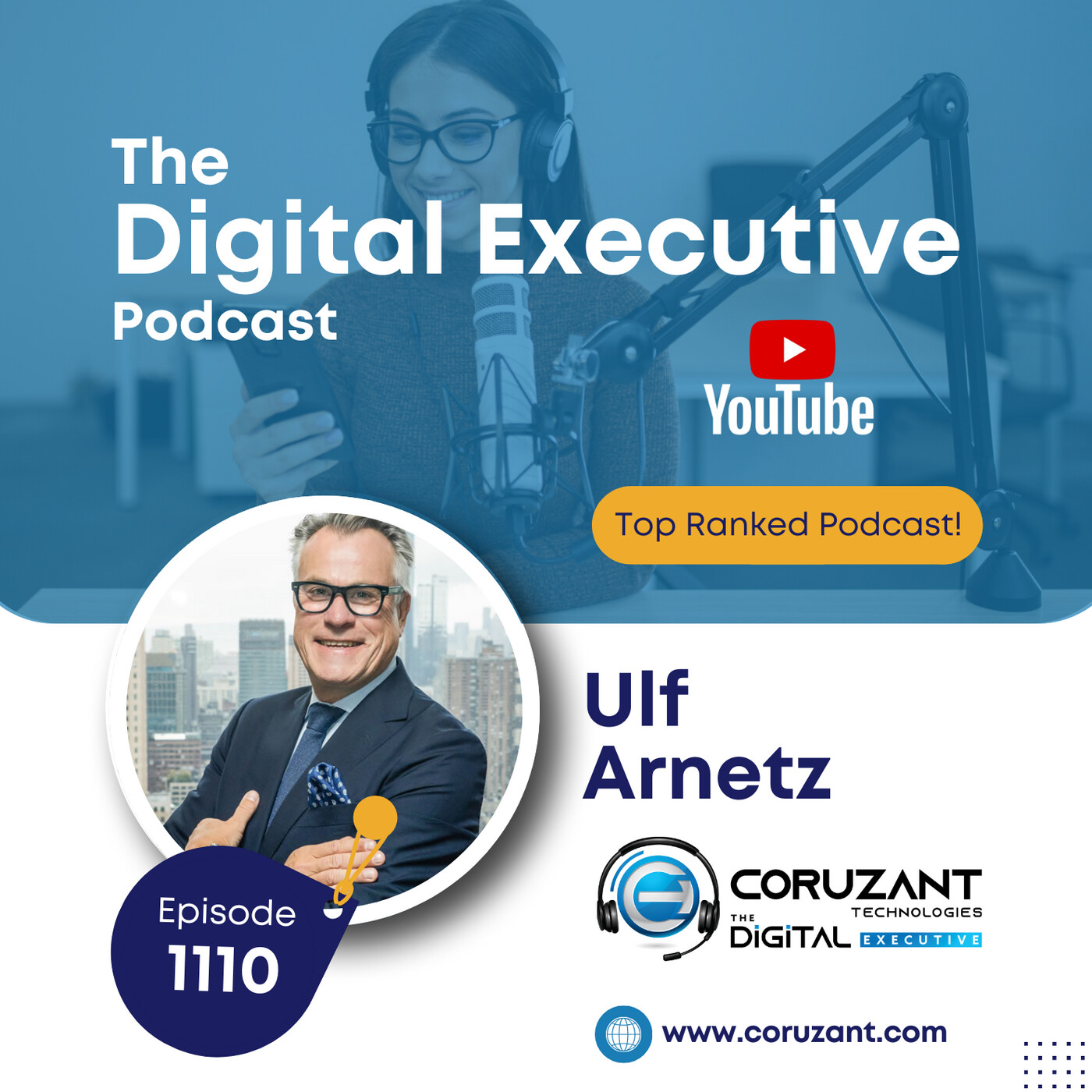
The Digital Executive
Driving Strategy Execution: Ulf Arnetz on Scaling SaaS and Empowering CEOs | Ep 1110
00:08:38
Loading summary
Transcript11 lines
- [00:00]
A
Foreign welcome to Coruscant Technologies, home of the Digital Executive Podcast. Welcome to the Digital Executive. Today's guest is Ulf Arnetz. Ulf Arnetz is the founder and chairman of How We Technologies, a SaaS platform that empowers executives to drive company wide execution of strategic goals. He also leads reeforce New Ventures, supporting growth stage companies with capital and strategic guidance. A serial entrepreneur with decades of experience, Wolf has built and scaled several multimillion dollar companies across global markets. He has successfully completed three strategic exit at NASDAQ listed companies in the US including the sale of corchange to OpenText. Wolf's deep commitment to innovation in the SaaS space has shaped his work as a founder, investor, board member and and mentor. His experience has earned him board roles at Companies such as Dice, Cambridge Technology Partners, Panopticon, iOS Group, MSAB, and the Advisory Board Group at Ciceron Group. Well, good afternoon ul, welcome to the show.
- [01:09]
B
Thank you, Brian. Thank you for having me here.
- [01:12]
A
Absolutely, my friend. I appreciate it and taking the time. I know it's getting later out there in the east coast, out of New York, I'm in Kansas City, we're an hour apart, but I know you had to schedule some things around just to be on here, so I appreciate that. And Ulf, jumping into your first question, you've built and scaled several companies beginning in Sweden and expanding into the US market, founded iOS at age 26, grew its revenues from 35 million to over 100 million, then launched Core Change, which achieved Deloitte's Fast 500 status before being acquired by OpenText. How do you navigate these transitions and what key lessons did you learn about expanding across markets?
- [01:52]
B
It's probably based on the questions later on, but you know, I'm totally passionate about growth, growing companies. I'm doing that in my own companies as well. And Sweden is a great test country, but the US is a perfect base for growing internationally, so that has been key. And the software business is key to take market shares and then it's perfect to do that. From the U.S. what I've learned very much is it's very similar. I think if you're in Sweden or Israel and so on, it's perfect countries to test something. But when you get to the US it's more commercial, much bigger deals, much more fun.
- [02:28]
A
That's amazing to hear that a bigger market is much more fun. That can be fun and sometimes it can be a headache. But I appreciate that that you're so fascinated about the growth with companies experienced in taking market Share which I think is really important. So thank you. Olaf, you've authored three books, most recently Strategy Acceleration and published over 20 thought leadership articles. Besides serving on boards and mentoring future founders. Or what drives your commitment to writing and mentorship and how does it align with your long term vision for impact beyond your ventures?
- [03:00]
B
As I said, I'm totally passionate about what I'm doing and which I actually spend my whole life to. Even in my previous two companies. It's just that the market has changed. So I'm passionated about growth and I've always been developing software, but always focused on software for the executives and this time it's the CEO. And this last book is very much what I found during several years was that companies are doing a strategy or a plan. The CEO are normally communicating this scan and so on and after that it's very much dies. So I wanted to focus on the execution and it's not just coming from me but from other people as well to do the strategy, maybe using McKins or someone that's great but in a disruptive way world which we have today, it's actually the execution that is the challenge and that's what the book is about. How could you increase revenue and profit in a more measurable way and a faster way? How can you get connected to the employees? So you as a CEO not just talk but you actually involve people in the organization to help you to reach these increased revenue goals. Because in every strategy or plan it's always something about increased revenue and profit you in your timeline. And if you could reach those financing goals faster and more measurable in the same time as the employees feels that it's the company becomes better and it's better for me as a person, then you become a much more successful CEO for the company. And that's very much what the book is about.
- [04:38]
A
I really love that and I can tell you're really excited about it. You talked about your entire career being excited, passionate about growth software companies and you delved a little bit in that top leadership roles, you know, maybe like a CEO or even a president, but you're focused on execution which is what the book is about. How to grow, how to increase revenue and leverage talent across the organization is the message I took away. And my follow up question to that ULF is while the CEO leads the company, the CEO can be most disconnected. So how does the CEO handle the challenge to get everybody involved across the company, cross functionally but also get people to follow in those priorities of the CEO?
- [05:18]
B
A great question, but Let me back up to a little bit how it is in mid size and large companies today. You have a CFO or finance, they have a financial application which is business critical. And of course it's very important if you have a CFO just asking for numbers and they could come in in excel or Monday.com or other type of tools, or you have a head of sales which you know continues 35 years ago using Excel in best case, or just talking, that doesn't work, right? So if you are the CEO today, you're the only executive in the company that don't have a digital application. You're not connected with the employees. So you talk, you're trying to communicate maybe through the organization, but it's very difficult. You know that if you have a hundred people in a room and you are whispering, right? They the message will be changed. So the way it works is that the CEO must become more digital. And especially now when we have so much disruption. So where the companies have been very much have been to focus on aggregating KPIs and they have been using Excel or they have been using monthly.com or project management tools or okr, whatever it is. But that is just to aggregate data which is normally one month or three months old. But as a CEO you make decisions from that data. You make decisions and you probably need to change, you probably have to improve, you probably have to accelerate in order to wrap up and you probably have to find a way how you could get your organization aligned and really help you to do whatever you are coming out with. So the way it works is very much how could you shorten the timeline from the CEO's decision until it's reached the employees and they understand what's in it for me? You know it's different type of languages, right? So you need to make this understandable and measurable. The second thing is that when the employees knows what they should focus on according to what's most important for the CEO and the company, how fast would they start to become more proactive, including some sort of role based change? And the third one is how fast and how measurable could it be to increase the revenue profit according to the plan? Can you shorten that time? So that's very much what it's all about.
- [07:39]
A
Thank you, I appreciate that. There's so much to unpack there. But I can see this. I've worked for CEOs and other senior C suite executives. Sometimes the CEO really is the only exec in the company that's not plugged into a lot of the applications where a lot of communication happens. And as you mentioned, the CEO must become more digital, especially in this disruptive period that we live and work in. Kind of the takeaway obviously is some cross functional communication is very important, laterally, vertically. But you know, those three things that you highlighted, was those priorities understandable and measurable, how fast can the team be more proactive, and then obviously how to shorten that time period to reach that goal or to be more profitable. So I really appreciate your insights. Ulf. It was such a pleasure having you on today and I look forward to speaking with you real soon.
- [08:26]
B
Thank you, Brian. Really nice speaking with you as well. Thank you so much.
- [08:30]
A
Bye for now.