← The Digital Executive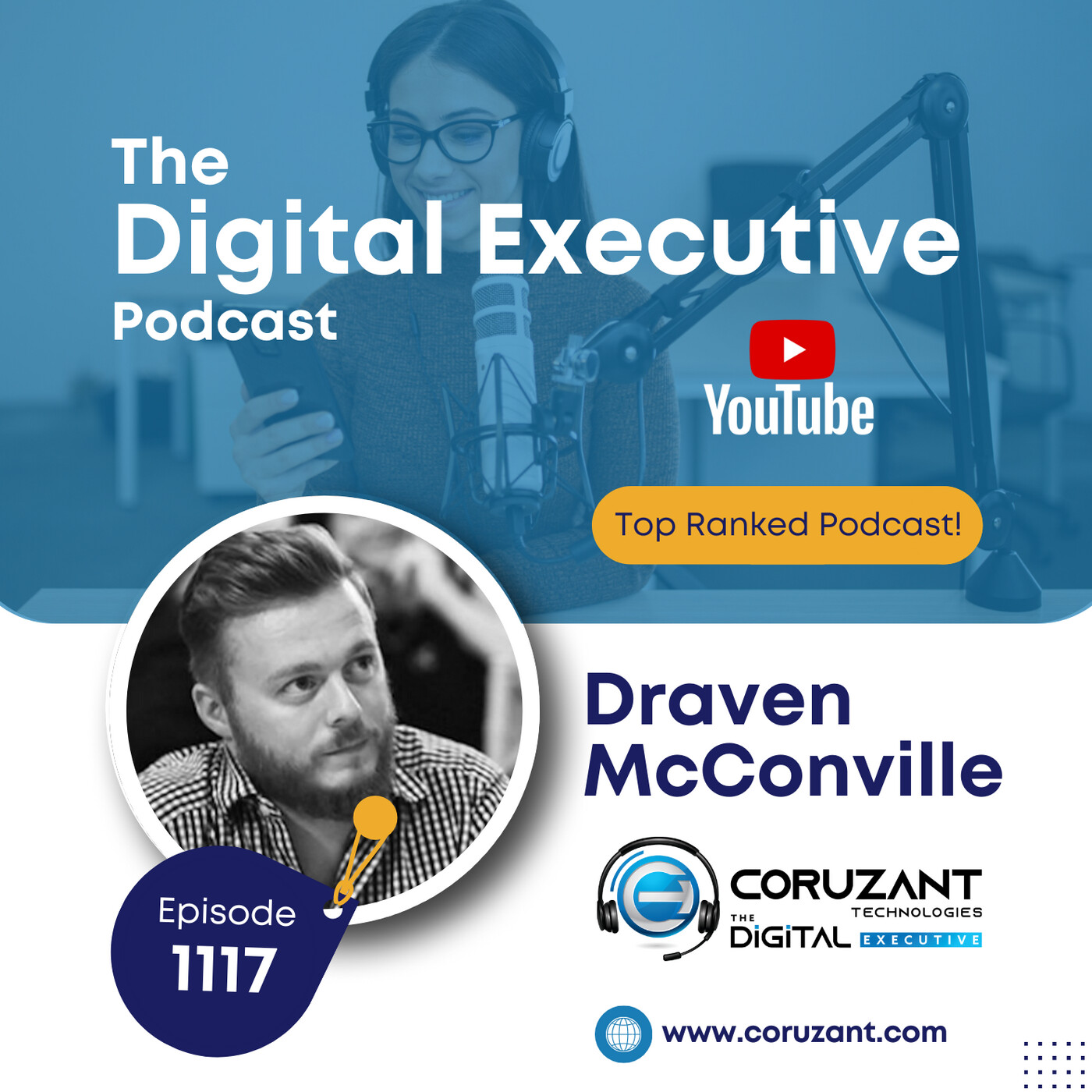
The Digital Executive
From Homelessness to SaaS Success: Draven McConville on Resilience, Disruption, and Building Klipboard | Ep 1117
00:11:55
Loading summary
Transcript15 lines
- [00:00]
A
Foreign welcome to Coruscant Technologies, home of the Digital Executive Podcast. Welcome to the Digital Executive. Today's guest is Draven McConville. Draven McConville is an entrepreneur who transformed homelessness into business success building and ultimately exiting Clipboard, the job management SaaS platform he founded in London. Starting with just 200 pounds and a bus ticket, Draven's path from the streets to the C Suite exemplifies resilience and determination. After experiencing homelessness as a teenager, Draven worked his way up from bartender to CEO, founding Clipboard to help field service businesses, streamline operations and improve customer experience. The company grew to serve customers ranging from subject matter experts to publicly traded enterprises across industries including fire safety, H Vac, facilities management, and healthcare equipment servicing. Well, good afternoon Draven. Welcome to the show.
- [01:04]
B
Thanks Brian. Great to be here.
- [01:07]
A
Absolutely my friend. I appreciate it and making the time. I know you're in England London area and I'm in Kansas City, so we've got quite of a bit of a time difference here, but that's okay. I'm just so glad to get on a conversation with you today. So Draven, your story, from having £200 and a bus ticket to founding a SaaS company is remarkable. How did your early life experiences shape your view of risk, failure and leadership? Are there habits or mindsets from those early struggles that you still lean on today?
- [01:39]
B
Great question, Brian. I think when you've been through real uncertainty in life, you know where your next meal or a roof over your head isn't guaranteed, the risks of entrepreneurship don't feel as daunting. I suppose that period of my life definitely gave me resilience and perspective on the world. And so I learned that failure is in the end it's just feedback. I think that's probably one of the most important things that I learned. I think our perception of failure, how we grew up and what we're told, that failure is such a bad thing that that part of my life really give me insight to failure being a feedback and also I think leadership because it's always been about clarity and empathy for me, leadership so setting a direction but also understanding the human side because fundamentally from that experience I had, I know what it feels like to be overlooked or underestimated. So that was another Learning habits, mindsets. I suppose the habits I still lean on are persistence, resourcefulness, an ability to stay calm in chaos. I think there were all things that I learned from that experience and from a young age going through that that have been incredibly helpful in my my business career. I suppose those are born out of the necessity early on and they've now become the strengths and in my business career and how I've gone on to find a SaaS company, that's amazing.
- [03:03]
A
I appreciate that. I love the story. Generally we start out with these stories on the podcast, but you know, you really are a rags to riches story and that's what I like to highlight here. But you know, the resilience and the persistence and staying calm really stuck out to me. But the big highlight for me is failure is feedback, as you said and not the end story. So I really appreciate that. Great for us to hear today. Draven, what was the tipping point when you recognized that field service management was underserved and ripe for disruption? How did you validate that there was a strong market, especially given entrenched legacy providers?
- [03:47]
B
You know the last part of your question there Brian, in regards to being entrenched and legacy providers, I think I always look at opportunities and see where we can disrupt really and make a natural change. But I suppose the biggest tipping point came from just listening to the frustration of service business owners. So I kept hearing the same repeat themes of complexity and cost and clunky user experiences that legacy systems hadn't moved to the times. And because I had another business prior to Clipboard and we were very early into enterprise mobility, that gave me the background knowledge to look at how we could create a system that's mobile first so these service business owners could empower their field technicians. You know, those businesses are on the ground delivering essential services, but fundamentally they've lacked the software and they've either had software that belongs in another era is supposed to be polite. So we set about validating the market by speaking directly with those businesses, understanding their workflows and spotting the gap between what they needed and what they were getting. Whereas I think the entrance providers had distribution, but they just don't have the agility that we were bringing to to things and being able to ship product faster and better with a mobile first approach. So also, you know, field service industries highly underserved. 51% of field service businesses still don't even have software. So that market research really allowed me to lay the opportunity for Clipboard and build something modern mobile first. I'm much more accessible without the heavy baggage that legacy systems bring and non cloud systems bring.
- [05:34]
A
Thank you, I appreciate that. Yeah, it's amazing how you just dug in and was truly listening to the customer. The feedback, you know, legacy a lot of Times is very clunky, it's not changing very fast. And I know this being in technology for a lot of years, I've seen some of that. But you listened, you saw the gap, the customer experience wasn't being addressed. And that mobile first approach really puts you out there as a leader. And I'm actually shocked to hear 51% of the industry, service providers weren't even, didn't even have software.
- [06:08]
B
Still don't, Brian. So it's such a growing market on the huge white space market for software.
- [06:16]
A
Wow, amazing. Thank you again. And Draven, you've made comments about AI being a transformative shift in how software is created and what competitive advantages are going to look like in the world. What do you see as the fundamental changes coming to SaaS due to AI, both the risks and opportunities and how should current SaaS companies prepare?
- [06:38]
B
I think it's, you know, such a broad reaching question around AI and not just what you're presenting today, Brian, but you know, the reality is I believe that AI is going to flatten a lot of the playing field in SaaS. The barriers to building software are coming down really fast. So you know, that's producing faster prototyping, smarter automation, more intuitive interfaces, writing code. So there's a lot less barriers to creating that software. But that's the opportunity as well. So we can all have the fear side of, and maybe go into a protection mode over things, but there's also the opportunity. So SaaS companies, I believe will be able to deliver value more quickly and in more personalized ways. But there's an inherent risk and I think that risk is commoditization. So if everyone can build those features cheaply, then the features alone really aren't the moat of protection. So the real differentiators will be brand trust, deep domain knowledge and the data. So I think SaaS companies should prepare by asking what unique data do they own, what community do they serve? And I suppose how do they embed AI not just into the product, which you're seeing a lot of at the moment, but into the way they operate as a business. And I think that's where the competitive edge will lie for SaaS businesses going forward.
- [08:06]
A
Thank you. You're absolutely right about AI. It is certainly flattening or leveling the playing field here in SaaS we're seeing a lot of that and just, gosh, the last hundred episodes here we've talked a lot about AI and how it impacts different industries, including SaaS, but it's certainly going to remove some barriers we know that. And as you mentioned, risk is commoditization, I guess is how you said it. So I really appreciate your insights here and it's again going to be very helpful for our audience. So Draven, you speak also about mental well being, authenticity and growth mindset. How have those values influenced decisions you made at Clipboard? You know, hiring, strategy, product direction, even the exit. What role do those non financial dimensions play in a business achieving sustainable success?
- [08:58]
B
I think for me, first and foremost those values weren't nice to haves. They were absolutely central to everything that I was building and creating. Culture is very important to me. You can't build a business without people and people help you do what your vision is and contribute. But we, so we didn't just hire for skills first and foremost and we still do this since the exit. We hire very much for the attitude. Curiosity, that's one big thing, curiosity. And then obviously, fundamentally does it align with our, our culture. So we encourage people first and foremost to bring their whole selves to work. Because I think authenticity create the trust and trust creates performance really. So in strategy and product, a growth mindset meant we were willing to experiment and feel fast. And I know that term's overused by feeling fast. But as I mentioned earlier, failures are learnings rather than being paralyzed by the fear of being wrong about what we're doing. So as I mentioned, even in the exit well being enough authenticity shaped the choice of our partner because we wanted to make sure that we were, you know, actually into a partner that was going to carry forward what we had built. So we wanted a future where the business and the team could thrive, not just the financial transaction. So it's been always very important to me and I think that stems back to, you know, my journey and my career really, because I've always believed that sustainable success comes when the financial comes align with human outcomes. So when people feel value, they'll absolutely create more value.
- [10:42]
A
Thank you. Appreciate that. You're absolutely right. Those values that you talked about are a necessity. Some people might think they're nice to have because I saw somebody speak about it at an event or read a book about it. But culture is the most important. People are central to any business and it's important. And I liked how you looked at not necessarily the experience, but really the eagerness, initiative, curiosity of the individual coming in. And of course you've built trust throughout the organization. And the last thing I just want to highlight, you truly care about the future of this business is you really are. You truly care about during your exit, how the business is going to look in the future. And I think that's important. So really appreciate your story today and it was certainly a pleasure having you on and I look forward to speaking with you real soon.
- [11:36]
B
Thank you, Brian. I appreciate you inviting me on. It was great to chat with you. Appreciate you getting up early morning and mounting the time zone. Thank you very much.
- [11:46]
A
Bye for now.