Loading summary
Transcript13 lines
- [00:00]
A
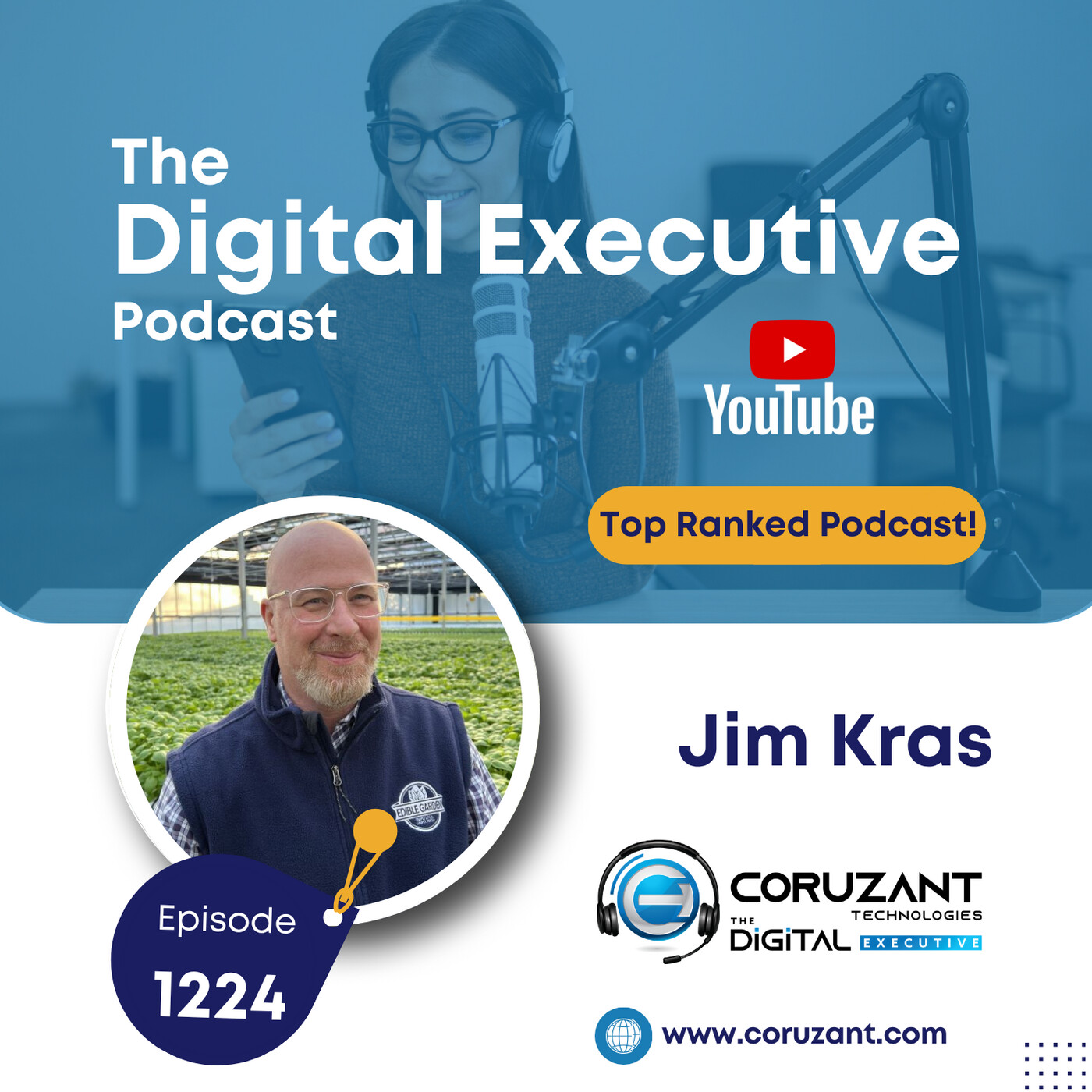
Foreign. Welcome to Coruscant Technologies, home of the Digital Executive Podcast. Do you work in emerging tech? Working on something innovative? Maybe an entrepreneur? Apply to be a guest at www.corazon.com brand welcome to the Digital Executive. Today's guest is Jim Crass. Jim Crass is the co founder of Edible Garden and has served as Chief Executive Officer and director since March 2020. He led the company successful IPO on NASDAQ and brings decades of experience in consumer products and brand development. Previously, Jim was President and Chief Marketing Officer of Edible garden Corporation from 2016 to 2020. He has held senior leadership roles at global companies including Ajinomato, the Nature's Bounty company where he revitalized brands like MedRx, Pure Protein and Body Fortress. Well, good afternoon Jim. Welcome to the show.
- [01:02]
B
Thanks for having me.
- [01:03]
A
Absolutely my friend. I appreciate it. And making the time and calendars, hopping that time zone today. You're based out of New Jersey, I'm in Kansas City. So again appreciate the time. And Jim, if you don't mind jumping into your first question, you've had a diverse career spanning Madison, Avid and advertising global consumer brands and now leading Edible Garden as CEO. What key experiences shaped your journey to where you are today?
- [01:28]
B
Well, it's really starting in advertising and understanding the importance of who you're speaking to and make sure that you have relevancy or at least in advertising make the case for relevancy to the consumer. I think that's really helped me be able to break down what Edible Garden is doing, the importance and how it is relevant, the importance of food safety, quality, controlled environment, agriculture, or CEA as they call it, and how this is going to be, how we feed people in the future and how we fit in both on how we work as a grower, picker, packer for major retailers like Meijer and Walmart and so on, as well as the consumer brands that we are, we're building that are functional in nature and better for you on how we harness and communicate what we do in the greenhouse to like I said once again, make it relevant for people. They want to buy it and it makes sense for them in their life.
- [02:19]
A
Awesome. And I appreciate you talking about relevancy that is so important. That message needs to resonate with your particular audience or consumer. Whoever that is you talked about in advertising, just totally need to understand who you're speaking to, especially in your space. It's important. Food safety, quality tracking, pricing, all that stuff is an important part of what you're doing in your messaging. So people are informed and understand what they're buying. Jim Edible Garden operates as a next generation farming company with zero waste. Inspired mission. What problem in traditional agriculture were you most determined to solve?
- [02:58]
B
We were looking to solve really the issue of two things. One, being able to deliver a product on spec with the consistency and freshness and quality that not only the retailer expect, but consumers expect. So really said this before, treating it like it's more of a widget, understanding the perishability aspect of it. Again, bringing it to market consistently. Where a lot of our, not only traditional advertising but I mean, I'm sorry traditional farms and some of our competitors, where they've fallen down is, is the fact that we're shipping six days a week. We have a joke around the office. We call it an eight week a day business. I'm trying a day a week business and that's because it never stops. And I think that's where we understood the importance of fill rates and making sure that we are in time on full on spec. I mean I'm very proud of the fact that the company has maintained an over 98% chip rate over the last few years, which has driven a lot of opportunity for us with new customers because they want that consistency. If there isn't a product available, it's hard to get a sale and that's every square inch of that space in the store means money to the retailer. So I think we've, we've been able to solve some of those problems that because of the nature of traditional farming, which a lot of it is based on crops and you have crop failure and buyers tend to buy and spot, you know exactly what you're getting when the edible garden truck shows up. And I think that's really helped differentiate us. So we really solve that, that's some of those supply chain concerns by having facilities that are, that are only a few, in most cases a few hours at the most from the, the actual store distribution center for these major players. And that's allowed us to, like I said, just kind of stand out from everybody else that you can count on us.
- [04:52]
A
Awesome. Thank you. I appreciate that. We were looking to solve really those supply chain challenges and we all know what they can be across the spectrum, but especially in produce and that sort of thing where timeliness and freshness is important. Your message has been clear and that's why people understand your brand. Delivering the product on spec, consistency, quality on time, what is expected by the consumer. And because of the consistency, you're a brand that people can trust in. That's Amazing. So thank you. And Jim, with increasing concerns around food safety and supply chain resilience, how is edible garden helping redefine trust and transparency in how food is grown and delivered?
- [05:33]
B
We have, we've invested as much as we're a greenhouse controlled environment farming company. We're really at a core, we're really the technology company, a leader in ag tech with we've got, got seven patents as a company. We have customized patented software that help us helps us manage and track our plants and our goods through our supply chain. Once again, efficiency, traceability, being able, you can, you have transparency into the business all the way, all the way through the journey. And so one of the things that our business, our business tripled during the pandemic because of the fact that we were such a solid provider and we people knew that there was safety with the product, there was obviously security with the product. You understood that it was free of contaminants. We, there's been quite a bit of recalls over the years in lettuce especially. We've been, we've been, we're fully certified, not only USDA organic, we work closely with the epa, we look more closely with USDA to make sure that we're delivering on exactly what we say we're going to deliver on. And once again, not only does it show in our, in our acceptance rate, right which is, which is 98% of what's coming into the D.C. and a highly perishable product, we also make sure that we have all the certifications and inspections needed mapped to the technology that we have ranging from water treatment to software to even indoors to in store displays that address the quality of the plant when it gets there. We take pride on that transparency and I think that's really helped to separate us. And when you look at Walmart, we're part, we were one of the first companies that were involved in Walmart project Gigaton, which is their effort to avoid over a gigaton of carbon from being released into the planet, the environment. And with that comes this critical eye on how you're managing your business for efficiency. And all of that I think kind of mirrors the expectation that we live in and people want to know where the food's coming from and want to make sure that they don't have any worries when they go to eat it. And I think that's something that we do well.
- [07:46]
A
Thank you. I really appreciate that. What I liked when you said at the core of your company you're really a tech company or ag tech company with all the things you do your patented software, you provide that transparency, quality, timeliness, obviously you're certified organic. But what's really cool, Jim, is you built this brand into a reputation that consumers trust and that's what's really important. So thank you. And Jim, the last question of the day. Looking ahead, how do you see the future of agriculture evolving over the next decade? And what role will controlled environment farming practices play in feeding a growing global population?
- [08:24]
B
Well, there's no ignoring climate change, there's no ignoring the volatility in the weather. When you think about where especially produce and so many of our fruits and vegetables come from, they're usually in an area that is exposed to climate change. So that idea of having a secure source of your fresh vegetables with the important, growing importance and understanding of better for you type of products that are coming from a good place, that's why I think he's watched organic become so popular over the years. People want, they want less, want to know that less is more, they know less is more and they want less exposure to harmful pesticides and things that have happened over the years to make sure that you farmers had to, how that farmers were able to ensure crop quality. When you think about it, if you're a, if you're a farmer and you're growing out in Kansas or somewhere in the Midwest or even on the west coast or anywhere for that matter in the world, you've got to, you have, you're challenged by water, you're challenged by bugs or pests, you're challenged by all types of weather and weather concerns and impacts. So controlled environment agriculture is going to be a huge part of how we feed ourselves in the future. And over time it will evolve as growing more and more things indoors. It's just the natural progression. There are some hurdles right now with power costs, costs of energy and heat. So that all impacts unit economics, which makes it in some regards hard to do right now. But we've been able through kind of volume scale the partners and using more existing technology than new technology with the actual greenhouses have allowed us to be able to be a good purveyor of these type of products. But I think in the future you'll see a continued investment. And I think it's only going to behoove retailers and a lot of the other stakeholders in our food ecosystem to make the investment because it's going to have to happen just because of the environmental issues that we have out there and what the consumer is expecting now, which is higher quality, less pesticides. They want a certain spec and the trends are going to force it. And ultimately that's who we cater to, is the person who's buying our herbs or lettuces at the store. And they're demanding higher quality and consistency and safety. And that's exactly what the greenhouses are set up to do. So that's where I see it going. I think it's going to take some time because of the capital expenditures that are involved, but it will happen.
- [11:05]
A
Thank you, Jim. Appreciate that. You talked about building that resiliency into your supply chain food products due to all the challenges globally. Obviously you need to ensure that transparent quality is always there, especially around pesticides, water availability, power costs. There's a lot of economics that go into this, but you're able to achieve a lot of this with technology and great partners which I highlighted here. So I think that's important. But again, appreciate your message, your quality and the transparency you bring around your product. So thank you. And Jim, it was such a pleasure having you on today and I look forward to speaking with you real soon.
- [11:39]
B
Thank you very much. Have a great day. Appreciate it.
- [11:41]
A
Bye for now.