← The Digital Executive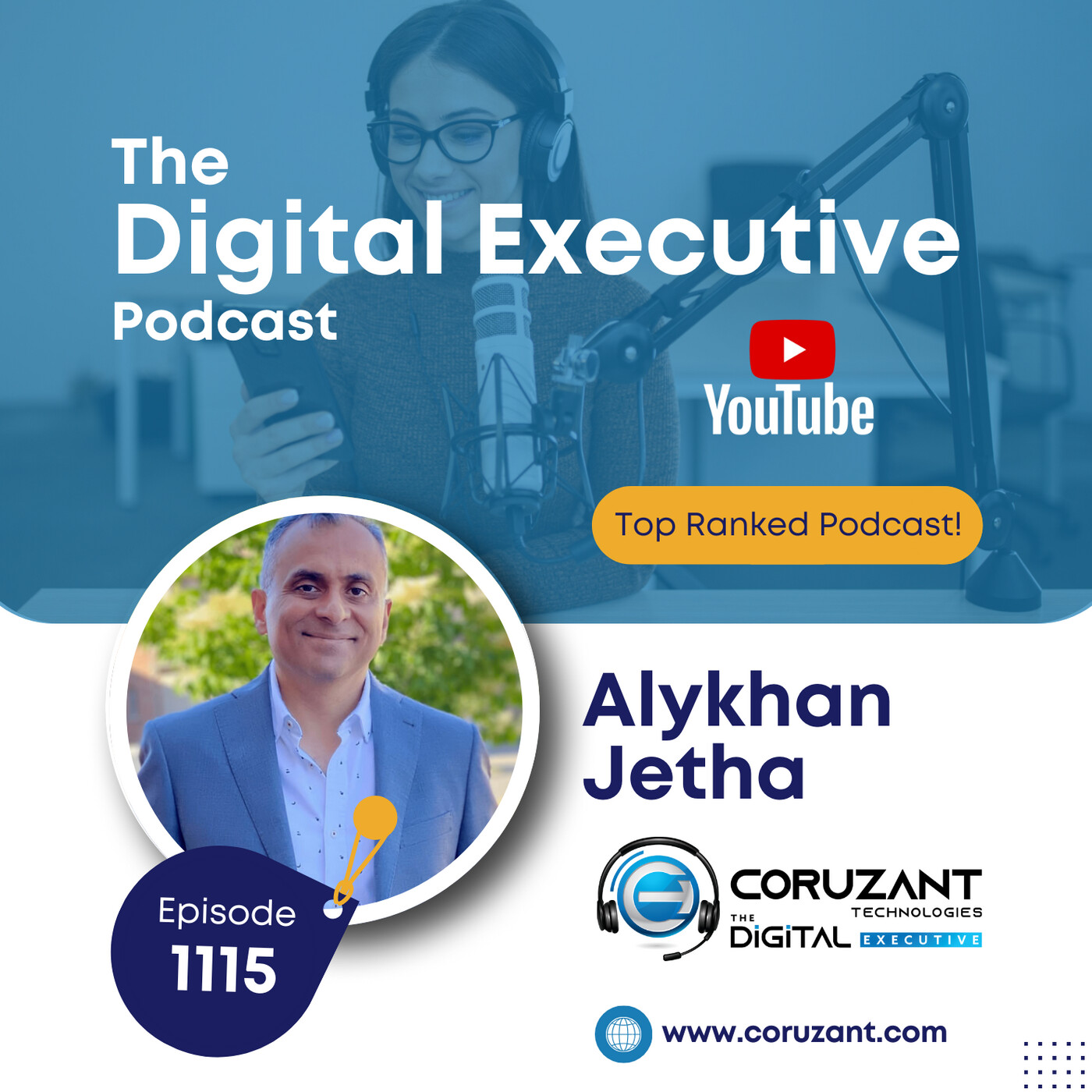
The Digital Executive
Resilience, Values, and Vision: Alykhan Jetha on Empowering Entrepreneurs with Daylite | Ep 1115
00:14:46
Loading summary
Transcript21 lines
- [00:00]
A
Foreign welcome to Coruscant Technologies, home of the Digital Executive Podcast. Welcome to the Digital Executive. Today's guest is Ali Khan Jeddah. Ali Khan Jeddah, or A.J. is the President and CEO of Daylight, an award winning Mac CRM, empowering small business owners, entrepreneurs and bootstrapping builders across the globe. With over two decades of experience building and scaling his software company, AJ has become a champion for small businesses and entrepreneurship. He is an active member of the Entrepreneurs organization and a regular contributor to publications like Entrepreneur Magazine where he shares insights on business growth, leadership and the entrepreneurial journey. Well, good afternoon, A.J. welcome to the show.
- [00:51]
B
Thank you for having me on.
- [00:53]
A
Absolutely, my friend. I appreciate it. And you're hailing out of Toronto, Canada, Kansas City, so we're just an hour apart as far as the time zone goes, but I do appreciate you making the time today. And aj, I'm jumping right to your first question. You moved from the Congo to Toronto at age 5 under very difficult circumstances. How did that early experience of displacement shape your mindset around entrepreneurship, risk, and building something from scratch?
- [01:22]
B
I think it played an important part. And it wasn't really that event that, that was the. The part that made it oscillian. It was a little bit later my father passed away when I. At the same time when we moved, actually. And then after that, it was me, my mom, and my sisters, and we really had to struggle. And what it taught me is, you know, there's that saying, what doesn't kill you makes you stronger. And that saying is, I would say, 100% true, because we had lots of trials and tribulations. But what it taught me was that anytime you have a challenge or problem, it shall pass. You know, it too shall pass. And so you can kind of calm down a little bit and figure out a solution, find a way to move forward. So I would say that was really instrumental in shaping the way I handle stress and stuff thrown at me out of left field and so forth. So I would say it's an important contributor to my success those challenging years.
- [02:23]
A
Thank you for sharing. And that's again, I've heard a lot of tough stories, including yours on this podcast, and it certainly humbles us. It certainly makes me grateful for everything that I've experienced in my life and what I have. Just hearing your story, it was riveting. Your. Your move, your loss of your father, all that coming together is certainly something very, very challenging. But those challenges helped you become resilient. And as you said, this too shall pass. If you can embrace that and learn from it and look on the brighter side of things. That's how you move on in life. So thank you, AJ over more than two decades of scaling a tech company, what have you found to be the most important company values or core values that sustain culture, especially when scaling? And how do you retain these values as the team grows, especially with remote or hybrid work?
- [03:16]
B
So there's a number of values that are important and some of them are a little bit different depending on the phase of the business. So at the beginning, I liken to a business starting to, you know, launching a rocket ship where they're, you're putting a lot of energy right at the beginning to get it off the ground, so to speak. And during that time it's like go, go, go. Like it's take ownership. Ownership is one of the key values. It's move fast, sometimes you throw caution to the wind and you take some chances. And so ownership and innovation and listening, those are key values at the beginning and really ultimately hard work, right, because you are launching a rocket off the launch pad and that's when most of the fuel is expended. So to, to get it into a place where it becomes sustainable. Then once you, you arrive to a more sustainable spot, then I think things like, you know, empathy, ownership, teamwork, kaizen, those kinds of values become more important. And empathy, especially, especially in a tech company, because there are times when you're releasing a feature, you got to move fast, you've got constraints and you know, you write something that may not necessarily be the best and, and somebody comes in three years later, four years later, doesn't have the context and starts criticizing what kind of work is this, what kind of nonsense, et cetera. And we always tell them like, you don't understand the context that it was in at that time or the constraints. So you got to have a little bit of empathy towards who came before you, so to speak. And so empathy is really important. And also other things too, like when, when people are struggling with something, you know, just a little bit of empathy can go a really long way as opposed to making it toxic environment. The pressure is still there, right? We got to hit our goals. You got to take ownership, you got to work with your teammates. That's where the teamwork comes in. You got to constantly improve, otherwise the market will eat you up and spit you out. Right? So those values are really important in my opinion. And that's why we have, that's our core values. And then in terms of remote, it is more difficult. But we've found ways via slack and props channels and, and little events here and there to kind of highlight those values. Our props channel is very important. What we do there is when somebody does one of these things that resonates with the core values. You know, anybody and everybody can put a prop in there for that person and highlighting one of those core values, so we kind of reinforce it that way. And of course people like receiving it and people like also ultimately giving those props. So that's one of the ways we've done that with remote work. It is much more challenging than with in person, but it does work.
- [06:12]
A
Thank you, Appreciate that. And you did mention a number of values. They're all important. But you started that out with having the energy, lots of energy for a startup is like launching a rocket ship. You know, having that innovation, the hard work, ownership, inner listening. And then of course, I think what's really important, and I can hear it from you, lots of years of experience, but that empathy came out very clear in your message here. And it is important that we listen, learn and be empathetic. There's so much more that goes into a business as you know, we could spend probably another hour just talking about that, but I appreciate you sharing that with our audience. And A.J. given how fast technology shifts, you know, cloud, AI, especially remote work, how has Daylite adapted? What emerging trends do you see affecting CRMs and small business software in the next three to five years and how are you preparing so.
- [07:08]
B
Good question. You know, it used to be that every technology changed every seven to 10 years, that, you know, you had to make some kind of drastic change. Like before we were, you know, single user on the Mac. Then we became on premise license based, you know, multi user and then we shifted to the cloud. Like we've had these pivots over the years and we've had to, otherwise we would have died. And so, you know, this is really the leadership's role or job to kind of look at the market a little bit, understand where it's going and how it's going, and then laying the groundwork for the company to be able to adapt. So, you know, I consider that as part of my responsibility. And what I tend to do is I make sure I meet with customers quarterly, I look at the market, I understand the try to look at the competition, what they're doing, et cetera. So that helps me kind of read the market and where things are going. And then I start, you know, laying the groundwork with saying sometimes it's indoctrinating the changes that are coming up with the people you have.
- [08:12]
A
Right.
- [08:13]
B
In some cases, some people may not like the changes that are coming and it might be better for them to, to go to another place. But then there are people that embrace that. Once you kind of lay the groundwork and start, you know, I think Bob Iger says, like campaigning in the company in terms of where you see things going and the changes that we have to make, and when you do that with a little bit of leeway or, you know, looking upfront enough, then it's not a rush, rush, rush. It's, it's a, it's, you know, it's a nice progressive kind of change. So let's talk about AI, for example. With, with us, with AI, we, we've not jumped in right away, but we are, you know, we're watching it very, very carefully in terms of what features are actually useful that we can leverage AI. And we have a number of those that we have under consider, strong consideration. We're looking at the cost, like, for example, if you jump in, we're a bootstrap business, so we can't necessarily throw something and take big gambles. So we were careful in terms of how does it affect our cost. And so we've done that well. And because we're native to the Mac and iPhone and iPad, etc. We, we leverage, you know, we'll be leveraging some of that AI foundation work that Apple has given us. And then on the server side, we, you know, our load would be less, so our cost is more reasonable. So these kinds of things, you know, again, being open, seeing where the market is and starting to plot, understand, you know, understand what the change is really, that's the biggest one. And then starting to plot a way to leverage these new technologies or that change so that your customers can continue to gain benefit from your product. Otherwise they'll go to the competition.
- [10:04]
A
Thank you. Appreciate that. Highlighting a few things here. Obviously, technology has had some major shifts, as you said, every five to seven years. I've been in the tech space for a long time as well, and I would agree with that. But recently tech has shifted much faster, especially.
- [10:21]
B
Yeah, yeah, now it's three to five years, I would say.
- [10:23]
A
Yeah. Oh, easily. Especially with the. Just this proliferation of AI recently. Yeah, it's crazy and it may just end up being much, much faster. But I like how you highlighted leadership is responsible for that vision and that strategy and being prepared to adapt to market changes because change is constant and we need to prepare for it, embrace it, understand it. And I like how you are Leveraging AI, which is so, so important now to gain that competitive advantage.
- [10:51]
B
Yeah, yeah, you need it. You need it. And then, you know, there's the, there's the dark side of it too, where you have to make sure that you don't fall in some of those traps.
- [10:59]
A
Absolutely.
- [11:00]
B
And that's true of any new technology. Right, That's. That's not necessarily unique to AI, it's just true of any.
- [11:07]
A
Exactly. AJ the last question of the day. Your mission is to help small business owners, entrepreneurs, and bootstrapping builders succeed. How do you think tools like Daylight can shift power to opportunity for entrepreneurs globally? What responsibility do you feel as a tech founder for enabling inclusive and sustainable growth?
- [11:27]
B
So, good question. When I go visit customers and I go to conferences and I, and I talk to entrepreneurs, like young entrepreneurs or new entrepreneurs, doesn't have to be young because sometimes you do that later in life. The challenge is always the same that, that there's a very common kind of thing. It's, you know, I have an idea. I, I need to campaign that idea out there to either customers or, or venture capitalists or the bank or, you know, any of those kind of things. And it's always the same thing, like, you know, things falling through the cracks. You have an idea, but you don't necessarily have the discipline to kind of hash out a plan or you've done that, but then you don't follow through. Right. So tools like ours, which is why I love our, you know, doing, continuing to do what we do at Daylight, is that, you know, we facilitate those kinds of things, like, you know, staying on track, following up, you know, managing opportunities. An opportunity can be anything. It could be raising money, it could be, you know, locking in a customer, you know, etc. So, so we, we focus on, on that. And as general as it sounds, our mission is to help small businesses grow. But we, we need to keep pushing that message because the same challenges I saw 10, 15 years ago with, with people starting their businesses or growing their businesses is still true today. It's just the manifestation is a little bit different. You're using maybe different tech, but the challenges are the same. So our, you know, our mission is to kind of help with that. And part of helping with that is to stay current, so to speak, to stay competitive so that we continue to offer things that our competitors would either better or more. More integrated. Like, like that's one of our strengths is, you know, we offer a more integrated kind of system. So, so that's what we do by doing. So I believe that small businesses, startups, et cetera, are the future big businesses. And it doesn't matter who it is or, you know, what background you come from or anything like that. If you build a product that customers want and you're able to service them and you're able to be consistent for them, you'll grow.
- [13:52]
A
Thank you so much. Appreciate the message there. Certainly resonate with a lot of small business owners and entrepreneurs here in our audience. But just to kind of highlight, you know, your constant, you know, you mentioned going to conferences and so forth, constant communication and campaigning, that message, you know, there's little, little details. Ensuring each task is carefully tracked to ensure success for these SMBs. But if you are staying competitive and relevant you so that you can offer that competitive advantage for your customers is so important. And I took that message away, certainly highlighted that. So thank you. And AJ it was certainly a pleasure having you on today and I look forward to speaking with you real soon.
- [14:33]
B
Well, thank you for having me on. I appreciate it. It's a great conversation.
- [14:37]
A
Bye for now.