
Podcast
The Dolphin Pod
Hosted by The Dolphin Pod · EN
Join hosts Dr. Justin Gregg and Laura Teasdale as they talk with scientists and experts about everyone's favorite marine mammal: the dolphin. With a sprinkling of comedy to season the science, The Dolphin Pod is an enlightening and entertaining deep dive into the world of dolphin science. The Dolphin Pod is family-friendly, teen-approved podcast fun!
11episodes
Episodes
Newest firstAll episodes

Anthropomorphism and dolphins (and other animals)
Apr 600:48:39Tap to summarizeKathleen, Kelly, and Justin discuss how animal behavior scientists deal with the cognitive bias of anthropomorphism; the attribution of human characteristics to non-human animals. But this conversation dives much deeper than that; using Justin's new book Humanish as a jumping off point, the trio discuss AI (and how it might or might not be useful in studying animal communication), Duo the Duolingo owl, doggy eyebrows, scary shark eyes, cute dolphin faces, and so much more! Tune in for this fun and eclectic conversation! More on Humanish: https://www.hachettebookgroup.com/titles/justin-gregg/humanish/9780316577588/
Transcribe →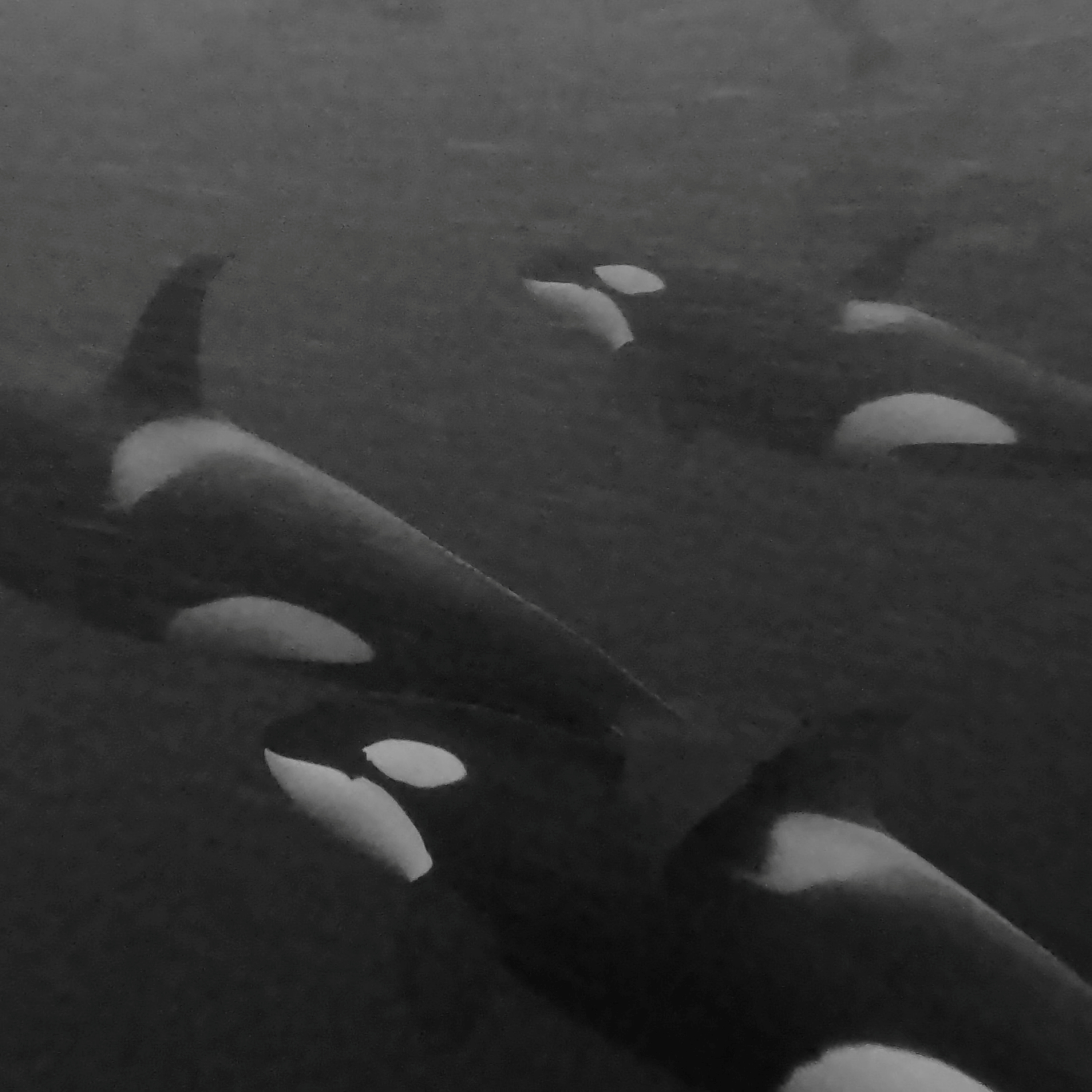
Killer whale research updates and future plans
Nov 2000:36:37Tap to summarizeDive deep into the world of killer whale research on this episode of The Dolphin Pod! Justin Gregg, Kathleen Dudzinski, Manon Themelin, and Kelly Melillo-Sweeting take you behind the scenes of DCP's killer whale studies—from SeaWorld San Diego to the Canary Islands' Loro Parque, and soon to the coast of Gibraltar and the icy fjords of Norway. Discover how these magnificent "big dolphins" use their giant spatula-like pectoral fins surprisingly similar to their smaller cousins, hear of adorable moments of mom Morgan keeping baby Teno in line, and yes—learn about some truly unique male bonding behaviors that definitely won't make it into a children's book. With research spanning four continents and collaborations across the globe, this episode reveals how these apex predators communicate, play, and socialize in ways that are quite similar to their smaller dolphin cousins. Plus, find out why Kathleen has promised her husband she'll never get in the water with killer whales, while Manon prepares to do exactly that in December! Thank you to Loro Parque Fundación for supporting this episode.
Transcribe →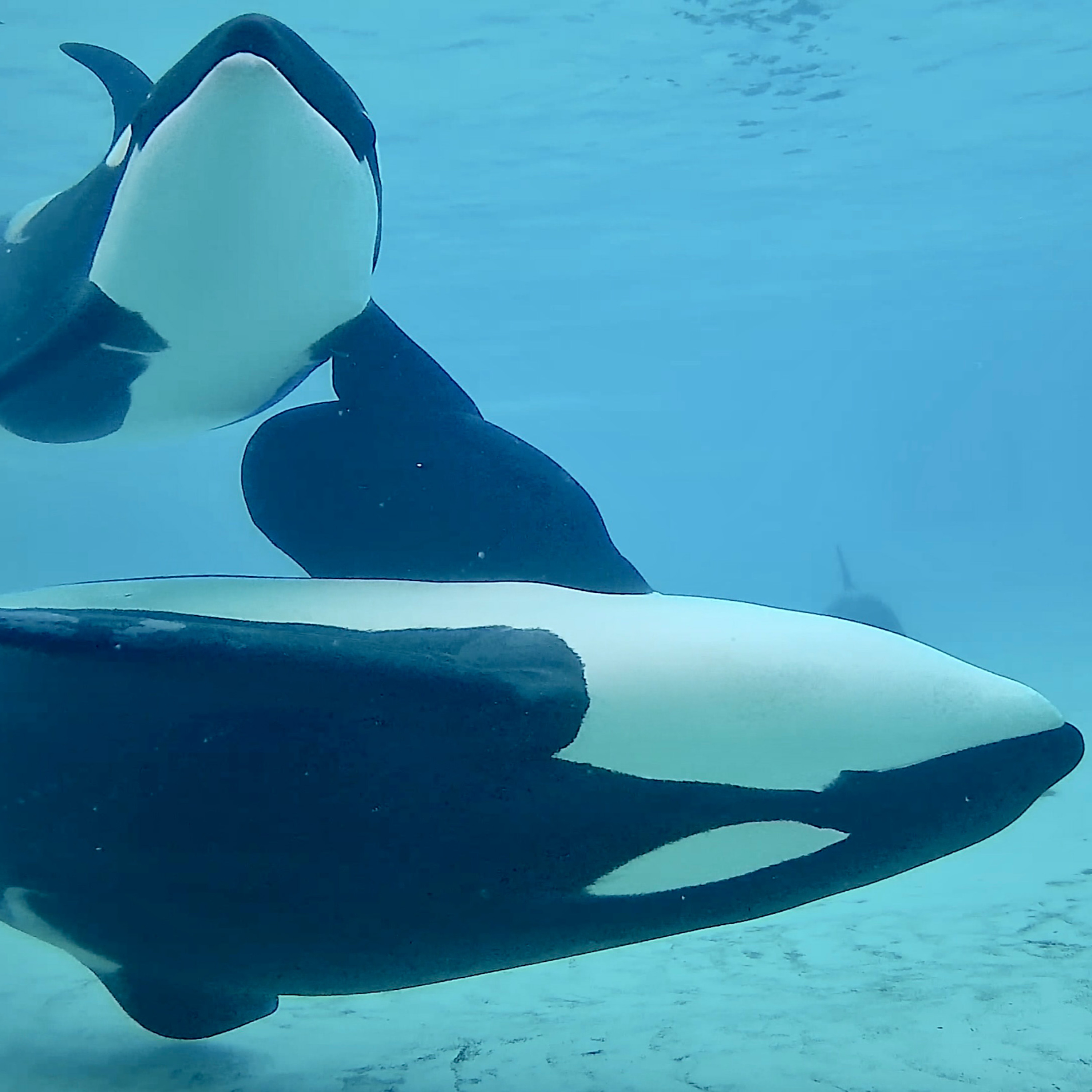
How do killer whales socialize when no one is watching?
Jul 1, 202500:39:33Tap to summarizeThe Dolphin Communication Project has a new paper in review titled "Association and social networks based on proximity and inter-individual interactions in a group of managed care killer whales" and we sat down with three of the co-authors to hear what it's all about: Kathleen Dudzinski, Heather Manitzas Hill, and Manon Themelin. After combing through thousands of hours of video footage of killer whales at SeaWorld California socializing without people around, our intrepid group of scientists made a few interesting discoveries and observed a bunch of natural behaviors. And soon this team will be looking at even more underwater footage of killer whales socializing from around the world to see what else turns up. To hear more, listen to the podcast!
Transcribe →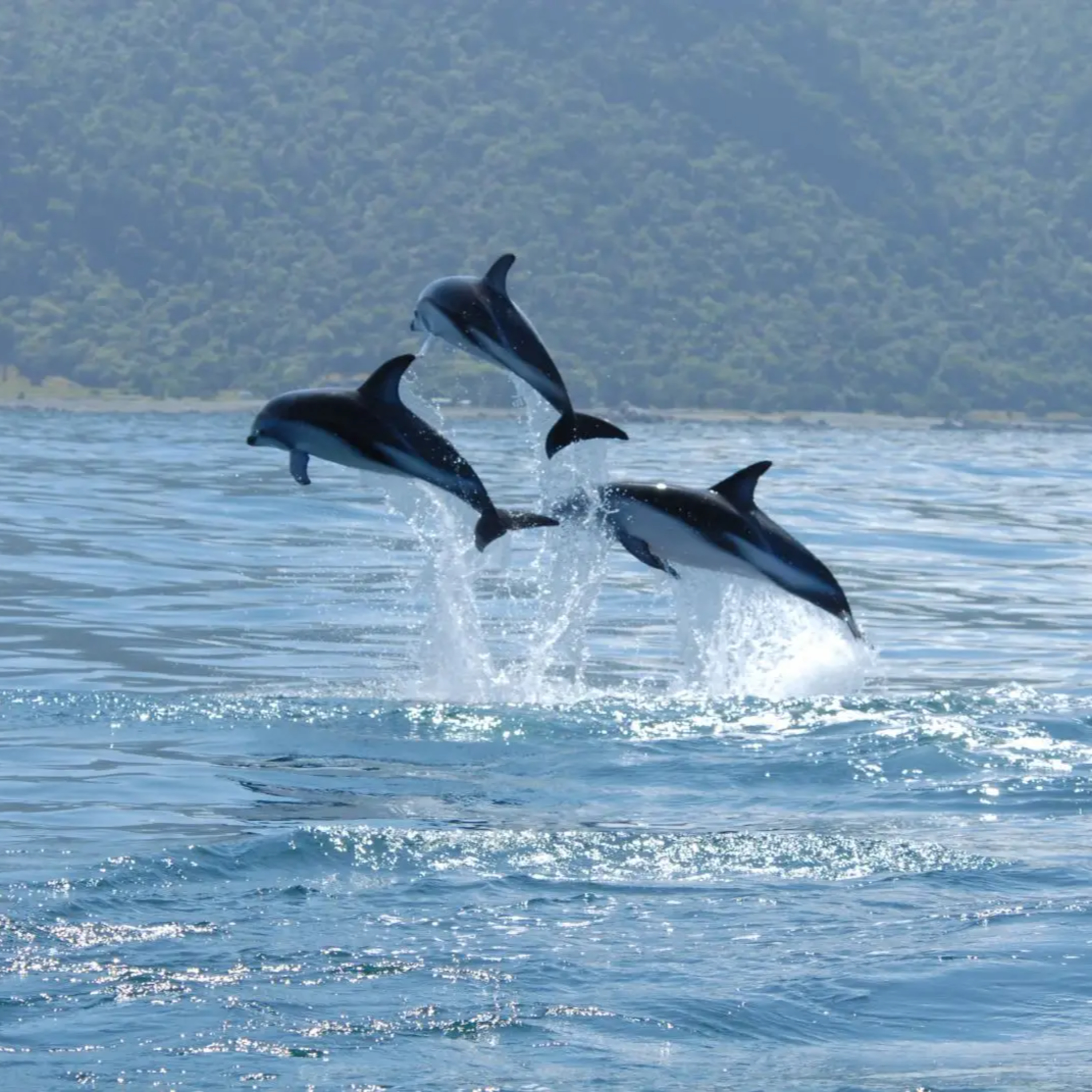
Kid questions! And answers!
Jun 1, 202500:42:24Tap to summarizeIn this special episode of The Dolphin Pod, Kelly and Justin sit down to answer a whole batch of awesome questions from kid listeners! We tackle questions like: Is a whale’s spine hard?Why do whales have blowholes?How long can whales stay underwater for?How high can dolphins jump out of the water?How long do dolphins live?And tons more! Thanks to all the awesome kids who asked, including Arlo, Autumn, Ava, Bohannon, Casey, Christian, Claira, Emmy, Eva, Jahtasia, James, Lane, Lauchlin, Leo, Nate, Noah, Rhylin, Robert, Tristan. This episode was made possible thanks to support from the DiverMojo Foundation
Transcribe →
24: Manon Themelin dives into the complexity of dolphin social relationships
Jun 19, 202300:43:39Tap to summarizeAn interview with DCP Research Associate Manon Themelin and DCP Director Dr. Kathleen Dudzinski. We learn how Manon got started researching dolphins and the exciting discoveries she's made. Manon's research into relationship quality (RQ) shows that the methods we apply to the study of ravens and chimpanzees works just as well for dolphins, albeit with some minor tweaks to accommodate for dolphins' aquatic lifestyle and peculiar ways of socializing. Also, it turns out that the positions dolphin adopt when swimming next to each other and how they navigate each others' slipstreams can tell us a lot about the relationships between individual dolphins.
Transcribe →
23: An interview with Jason Bruck
Apr 12, 202300:58:06Tap to summarizeJustin interviews Jason Bruck, Assistant Professor of Biology at Stephen F. Austin State University. Jason is the head of the Bruck Integrative Biology Lab where he and his students study dolphin behavior and cognition. In this interview, Jason and Justin discuss: · how Jason got into the field · advice he offers to student hoping to study dolphins · his latest research on dolphin signature whistles and urine · his history with Kathleen and DCP · why dolphins are the hardest animals to work with on the planet · his unexpected past as a juggler · his home arcade · the scientists who influenced his career · the challenges and advantages facing young academics · women in the field of dolphin science · the things that people often misunderstand about dolphins · parsimony and the problem of anthropomorphism · his lab's current research on ocean noise and how it affects dolphin cognition and behavior · his research collecting samples from wild dolphins using drones
Transcribe →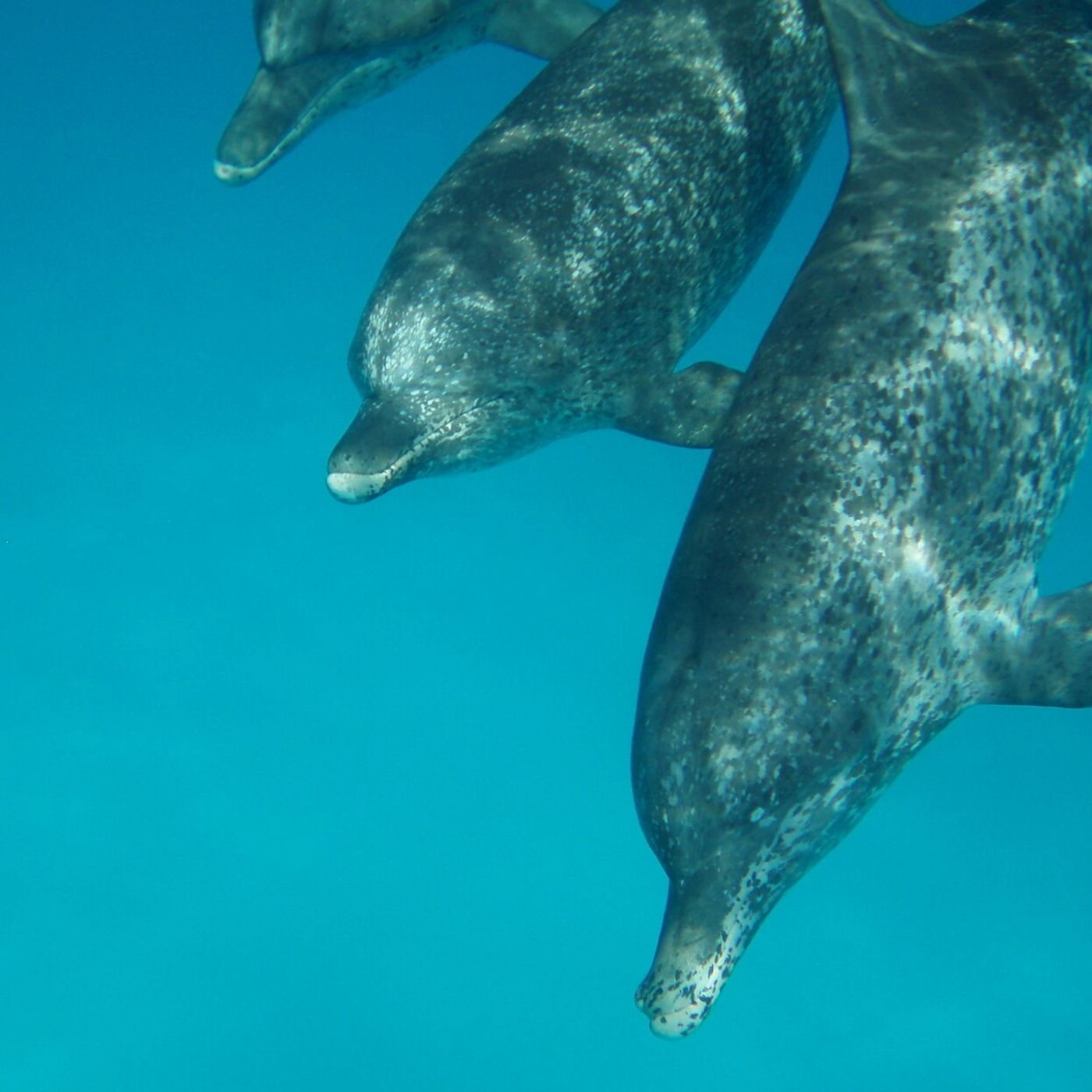
22: Dolphins are unexpectedly tolerant of outsiders
Nov 1, 202201:13:32Tap to summarizeDolphins are pretty strange when it comes to the way they treat strangers. Unlike most primates (including humans,) when two separate dolphin societies (including different species) share the same space, they can integrate their societies without any violence whatsoever. Find out how DCP researchers Kelly Melillo-Sweeting and Nicole Danaher-Garcia discovered that the spotted dolphins living around Bimini are able to live peacefully alongside bottlenose dolphins AND how these Bimini spotted welcomed a group of four dozen "refugee" spotted dolphins into their society without batting an eye. Here are the articles we discuss: Levengood, A., Melillo-Sweeting, K., Ribic, C.A., Beck, A.J., Dudzinski, K.M. (2022). Shoreline distribution of dolphins along North Bimini Island, The Bahamas. Caribbean Journal of Science, 52(2), 162-176. https://doi.org/10.18475/cjos.v52i2.a3 Danaher-Garcia, N., Connor, R., Fay, G., Melillo-Sweeting, K., Dudzinski, K.M. (2022). The partial merger of two dolphin societies. R. Soc. open sci. 9: 211936. 211936. https://doi.org/10.1098/rsos.211963.
Transcribe →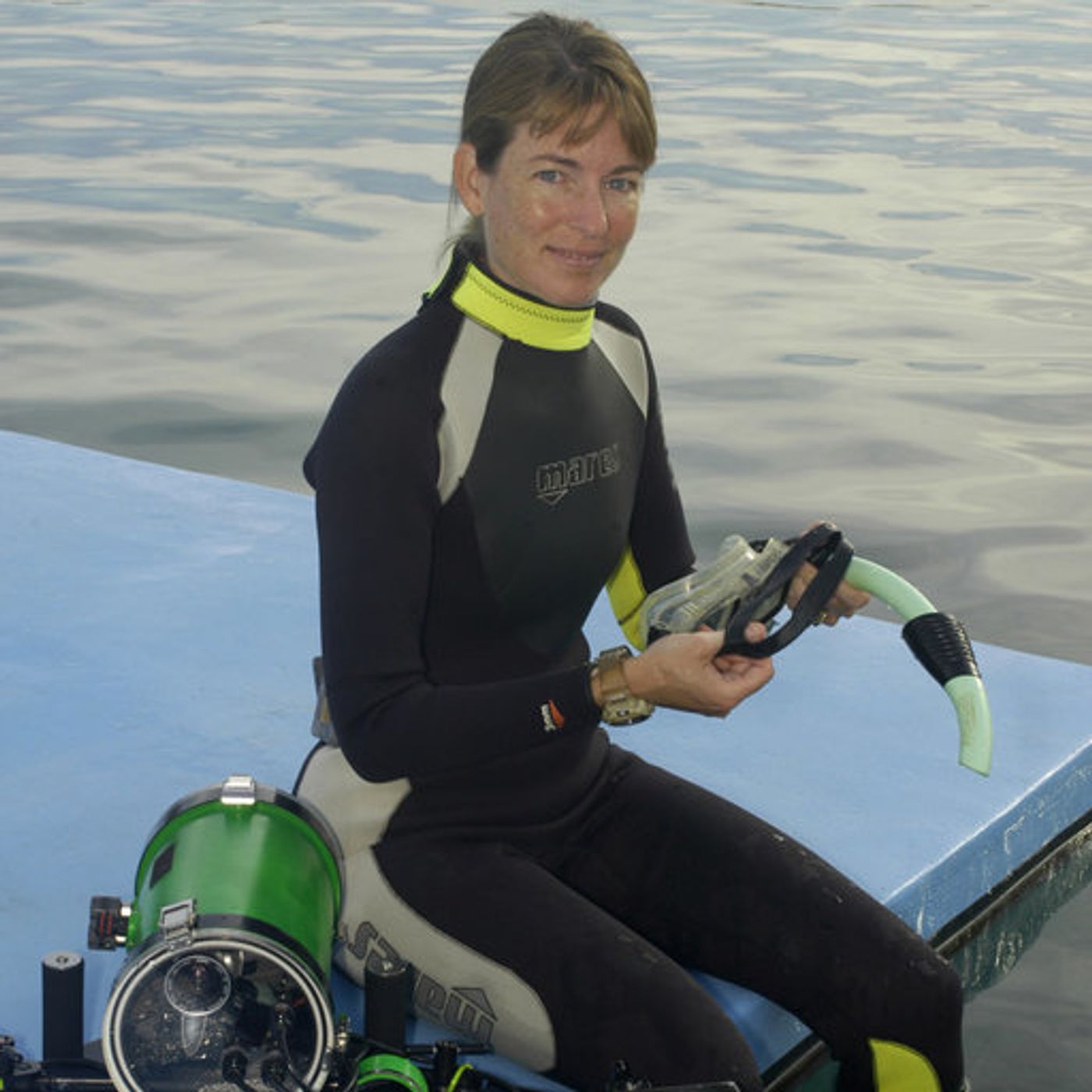
21: An informal chat with DCP royalty
Sep 17, 202000:50:16Tap to summarizeA special podcast celebrating 20 years of The Dolphin Communication Project. In this episode, Justin and Laura interview DCP royalty: Kathleen Dudzinski and Kelly Melillo-Sweeting. Hear how DCP got started after Kathleen’s humble beginnings as a movie star, and how Kelly accidentally stumbled into an 18-year career as a dolphin researcher. Also, listen as Laura asks Kathleen and Kelly a series of awkward questions she had been meaning to ask her Tinder dates. Hey Parents! In this episode, we make references to dating apps and adult relationships. Mostly general dating stuff – nothing explicit. It’s all very kid friendly. But just giving you the heads up!
Transcribe →
20: Dolphins are all right(ies)
Mar 20, 202000:33:11Tap to summarizeIn the episode, Laura goes head-to-head with Kelly Melillo-Sweeting in a science quiz focused on a recently published article on lateral behavior in bottlenose dolphins. It’s going to be an uphill battle for poor Laura since Kelly is one of the authors of the article. Here's the article being discussed in this episode: Kaplan, JD. Goodrich, SY, Melillo-Sweeting K, Reiss, D. (2019). Behavioural laterality in foraging bottlenose dolphins (Tursiops truncatus). Royal Society Open Science. 6: 190929. http://dx.doi.org/10.1098/rsos.190929.
Transcribe →
19: Dolphins in hot water
May 1, 201900:19:51Tap to summarizeIn the episode, Laura and Justin transform themselves into a pair of dolphins and explore the waters of Shark Bay, Australia to figure out what happened when a mysterious heatwave wreaked havoc on the local dolphin population. Rising ocean temperatures pose a serious threaten to marine species, including dolphins. A seemingly innocent, short-term rise in ocean temperature off the west coast of Australia had devastating and long-term consequences for a number of plant and animal species in Shark Bay. The local population of Indo-Pacific bottlenose dolphins saw a drop in their population numbers, as well as low birth rates after the heatwave. Eight years later, the population is slowly recovering. The article being discussed in this episode is: Sonja Wild, Michael Krützen, Robert W. Rankin, William J.E. Hoppitt, Livia Gerber, Simon J. Allen. Long-term decline in survival and reproduction of dolphins following a marine heatwave. Current Biology, 2019; 29 (7): R239 DOI: 10.1016/j.cub.2019.02.047 Here's a link to more info about the article article: https://www.sciencedirect.com/science/article/pii/S0960982219302179
Transcribe →