Podcast
The Dov Baron Show
Hosted by Dov Baron · EN
The Dov Baron Show: Unmasking Hidden Truths for High-Profile Deep Thinkers
This isn't just another leadership podcast. It's a high-stakes exploration into the minds of those shaping the world... minus the usual talking points.
Every episode is a raw, unscripted collaboration between my guest and me, Dov Baron, as we dive into the truths no one else dares to ask about. My guests? Often unknown to the general public but absolute titans in their fields—the kind of people high-profile leaders turn to when they need an edge.
Here, generous curiosity meets bold conversation. Expect a mix of playful irreverence and deep intellectual firepower that forces you to rethink what you thought you knew.
If you're the kind of leader who craves depth over soundbites and insight over ego-stroking, hit subscribe—because this is where real thinkers come to sharpen their edge.
61episodes
Episodes
Newest firstAll episodes
🧠 Polymathic Perspective | Is the Signal Real, or Are the Instruments Wrong? | SEASON 2, EPISODE 9 | Dov Baron
1w ago00:21:39Tap to summarizePicture two circles. The smaller one holds everything science could measure in 1800. The larger one holds everything it can measure today. Between them sits what was mystical in 1800 and is provable now. Real the whole time. Just waiting for the instruments to catch up. This episode is about what sits outside the larger circle.Which is to say: about what you have known your entire life without being able to prove. This is the ninth episode of season two of The Polymathic Perspective, the penultimate episode of a ten-episode investigation into what we want but refuse to accept. This episode is anchored in Robert Zemeckis's Contact (1997), from Carl Sagan's novel. Jodie Foster's character, Ellie Arroway, returns from somewhere real but cannot prove she was there. Not because it did not happen. Because the instruments do not yet reach that far. There’s an image in this episode that will probably outlast most of what you hear this year. An image that profoundly walks you across the paradoxical gap of who your Emotional Architecture says you are and a signal that says it’s not true. That’s what living inside a mismatched field actually feels like. Dov names, on record, what living inside that gap has cost him personally. As a boy who grew up below the poverty line. As the adult who built the life and still sometimes struggles to fully own it. He also raises an open question, which he does not resolve, about whether some of what looks like neurodivergent wiring might be a field agreement made below conscious awareness. He is aware that a man raising that question is not the most immediately credible framing. He raises it anyway. Examined through Einstein's "spooky action at a distance," Rupert Sheldrake's morphic resonance, and the frameworks the series has been building. The question is not whether you can prove your signal. The question is what you do when the instruments say it is not real, and you know it is. IN THIS EPISODE 00:00 Science Circles Metaphor 01:56 Beyond Your Allowed Wants 02:41 Show Intro and Episode Setup 03:56 Contact and The Signal 05:06 Signal vs Instruments Gap 06:34 Entanglement and Fields 09:08 Personal Scarcity Source Code 12:37 Restrictions as Field Agreements 14:26 Startups and Civilizations Signals 16:40 Holding the Paradox 18:06 Renegotiate and Make The Ask 20:02 Wrap Up and Call to Action THE SERIES: What We Want But Refuse To Accept is a ten-episode arc. Next episode is the series finale: The Ask. Follow the show to receive it as it releases. ABOUT THE POLYMATHIC PERSPECTIVE We don't collect ideas here. We examine the emotional logic beneath power, culture, identity, and meaning.ABOUT DOV BARON: Dov Baron has spent more than thirty years inside the rooms where leaders, founders, and executives make the decisions that shape organizations. He is the creator of the Emotional Meaning Architecture and Emotional Source Code frameworks. 🔔 Subscribe to follow the series finale. 📩 Work with Dov: dov@dovbaron.com 🌐 More at: https://dovbaron.com Carry one question with you from this episode. Where in your life have you been trusting the field's instruments over your own signal, not because they were right, but because they were louder? Sit with it. If this episode resonated, please rate and review on Apple Podcasts and follow on Spotify. Connect with Dov Baron:https://DovBaron.comdov@dovbaron.comRate, review, and send this episode to the most thoughtful builder you know. That is how the algorithm finds the people who still ask why. Hosted by Simplecast, an AdsWizz company. See pcm.adswizz.com for information about our collection and use of personal data for advertising.
Transcribe →
The Story His Editor Would Not Let Him Publish | Gabriel 'Orpheus' Harrison
2w ago00:59:51Tap to summarizeWhat Happens When the Story You're Reporting Is the Story You're Not Allowed to Tell? Gabriel Harrison was 30, working as a journalist in Tunisia, and had been handed the story that would end his career. It described a specific mechanism operating across North Africa in the years after Gaddafi's fall, one whose implications did not align with the version of that region most Western audiences had been given. His editor said the story was "not relevant to Libya." He understood immediately what that meant. Three months later he quit. Two years of a dark night of the soul followed. Then he moved to South America to join what he was told was an autonomous community, which turned out to be a sophisticated scam whose leaders are now being searched for by Interpol. Gabriel is known online as Orpheus. He crossed 65,000 Instagram followers in four weeks by saying, publicly, the things he had spent years being told he could not. He is the founder of Aquari, a bioresonance jewelry brand backed by peer-reviewed cell research. He is a student of Rupert Sheldrake's work on morphic resonance and formative causation. He thinks seriously about what he calls the fork between transhumanism and ultrahumanism, and whether the next chapter of human civilization merges us with machine systems or takes us in the opposite direction entirely.Topics include: What two years after Gaddafi actually looked like from the ground The story his editor would not let him publish Belonging to yourself at 33 The autonomous community in Paraguay and the four-year legal battle it produced Transhumanism vs ultrahumanism Morphic resonance and the hundredth monkey Why attention is currency, and most people are spending it without knowing.CONNECT WITH GABRIEL HARRISON Instagram: @disco_orpheus Bioresonance jewelry: aquari.storeWORK WITH DOV Website: https://dovbaron.com Email: dov@dovbaron.com Please rate, review, and subscribe wherever you listen. It helps the show reach the leaders it was built for. Connect with Dov Baron:https://DovBaron.comdov@dovbaron.comRate, review, and send this episode to the most thoughtful builder you know. That is how the algorithm finds the people who still ask why. Hosted by Simplecast, an AdsWizz company. See pcm.adswizz.com for information about our collection and use of personal data for advertising.
Transcribe →
🧠 Polymathic Perspective | Is AI The Mirror We Refuse to Look Into? | SEASON 2, EPISODE 8 | Dov Baron
2w ago00:26:39Tap to summarizeA listener sent Dov a message. He said he loved the podcast. He also said he could not listen to it anymore. The writing had become unlistenable. Dov wrote back six sentences with no framework and no protection. Then he sat with what the listener had actually given him. This is the eighth episode of season two of The Polymathic Perspective. It is not another AI take. Not the "AI will save us" version. Not the "AI will end us" version. Both are exhausting, and both are doing the exact thing this series has been examining for eight episodes. They are running their own code. Anchored in Peter Weir's The Truman Show (1998). Christof was not a villain. He was a man who built the world Truman inhabited from his own unexamined code. That is what we are building now. At civilizational scale. In hiring algorithms. In visa flag systems. In performance review engines. In every mirror we build without first looking at the glass it is being built from. Dov also names, on record, where he found the mechanism running in himself. In real time. In the making of this series. The question is not whether AI is dangerous. The question is whether you can look at what the mirror is showing you. Or whether you would rather argue about the quality of the glass. IN THIS EPISODE00:00 Ego Punch Feedback 01:39 Why Talk AI 03:04 Show Intro Lenses 04:18 Truman Show Mirror 07:23 AI Human Problem 09:03 My Script Case Study 12:17 Assumption Of Correctness 12:38 Truman World At Scale 15:15 Fitting In Reward Loop 16:40 Counterarguments Answered 18:12 Quinn And Belonging 21:04 What Actually Helps 23:18 Series Mirror Montage 24:23 Carry The Question 25:11 Outro And Next Episode THE SERIES What We Want But Refuse To Accept is a ten-episode arc. Next episode: Quantum Uncertainty and the Physics of Wanting. Follow the show to receive each episode as it releases. ABOUT DOV BARON Dov Baron has spent thirty-plus years inside the rooms where leaders, founders, and executives make the decisions that shape organizations. He is the creator of the Emotional Source Code and Emotional Meaning Architecture frameworks. CONNECT WITH DOV: Website: https://dovbaron.com Email: dov@dovbaron.com Carry one question with you from this episode. Where in your life are you looking at output that approximates the real thing and calling it the real thing? Sit with it. If this episode resonated, please rate and review on Apple Podcasts and follow on Spotify. #EmotionalSourceCode #TrumanShow #TheMirrorProblem #AI Connect with Dov Baron:https://DovBaron.comdov@dovbaron.comRate, review, and send this episode to the most thoughtful builder you know. That is how the algorithm finds the people who still ask why. Hosted by Simplecast, an AdsWizz company. See pcm.adswizz.com for information about our collection and use of personal data for advertising.
Transcribe →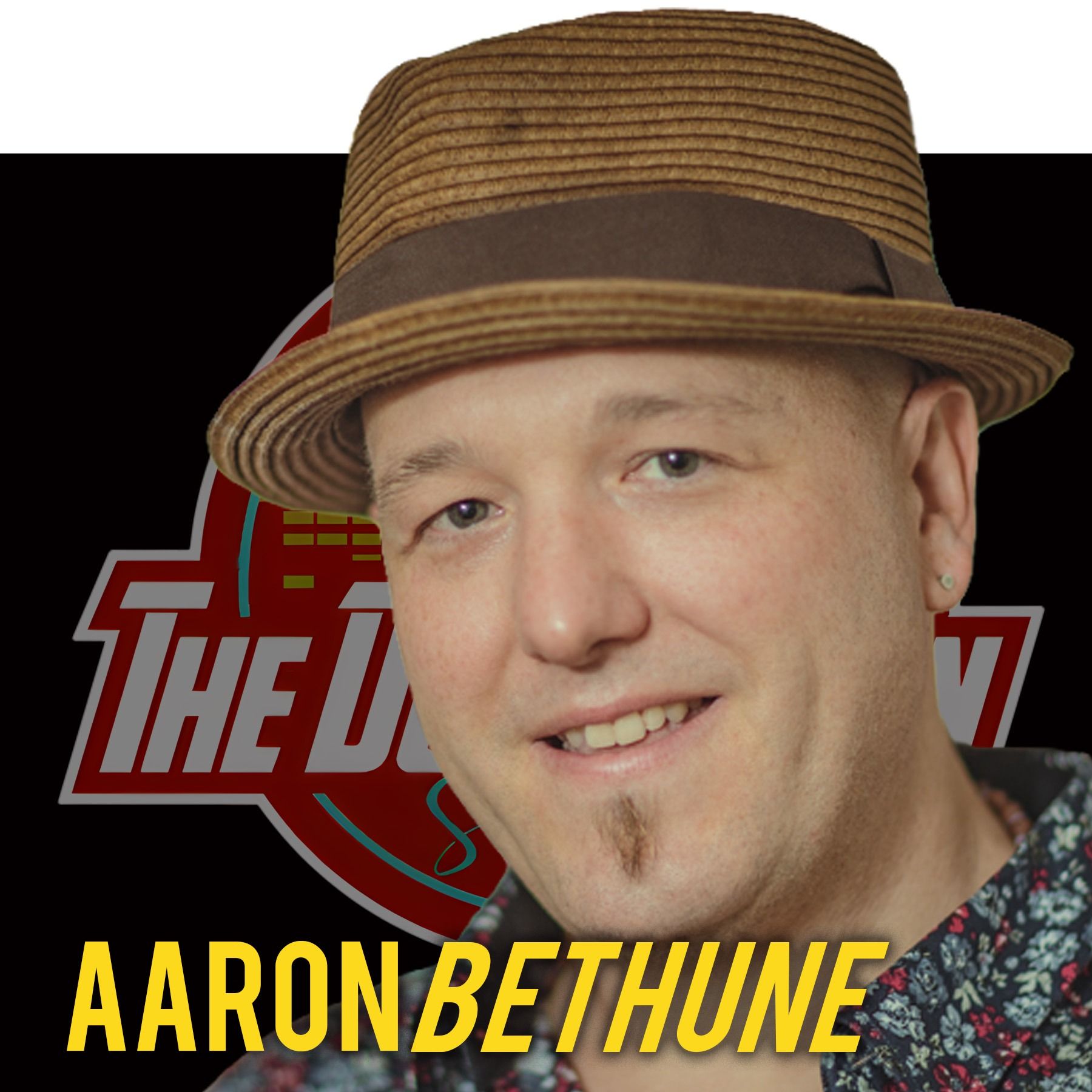
Why He Turned Back 200 Meters from the Summit | Aaron Bethune
3w ago01:01:44Tap to summarizeWhat if the most important thing you'll ever know about yourself has never actually been said out loud? Not because you're hiding it. Because somewhere along the way you built a fortress around it, and the fortress has no windows. Today's guest understands that fortress from the inside. At 19 years old, a week after his birthday, Aaron Bethune stood 200 meters from the summit of Aconcagua, one of the world's Seven Summits. He turned back. Not because he could not make it. Because he realized he had never once visualized the descent. On the way back down, alone, he found an Everest veteran named Mike lying in the snow, lost and frostbitten, meters from a three- thousand-meter drop. Aaron gave him his food and water and carried him down. He has never seen Mike since. He has been looking for him for twenty-six years. Aaron Bethune is the founder of We Write Stories, author of Musicpreneur (now used as a university textbook), and a musician since age four who has worked with Showtime, Spotify, MTV, and the Grammys. He led a project for the Gwich'in First Nations to help protect the Arctic National Wildlife Refuge. In this conversation, Aaron and Dov unpack why the most capable leaders spend their entire careers focused on the ascent, and have no strategy for the descent when it inevitably comes. They examine Aaron's philosophy of doneness, why it is not spiritual bypassing, and how leaders who have hit every mark of success often plateau because they cannot access the multidimensional range that got them there in the first place. The conversation closes on the survival story most people have never excavated and why naming it may change the trajectory of a life. Topics include: Why standing in a stadium of strangers dissolves loneliness Why Patagonia stays true to one thing Why AI can only look at the past The spruce tree branch that went through Aaron's leg at a monastery. Jumping into the cold water as far as you can throw yourself Panic attacks and the path to understanding how the mind works The fortress with no windows. CONNECT WITH AARON BETHUNE Website: https://aaronbethune.com Company: https://wewritestories.com Aaron's Book: Musicpreneur WORK WITH DOV Website: https://dovbaron.com Email: dov@dovbaron.com If you found this conversation useful, please rate, review, and subscribe. It genuinely helps the show reach the leaders it was built for. #WeWriteStories #AaronBethune #DovBaronShow #leadership #meaningarchitecture Connect with Dov Baron:https://DovBaron.comdov@dovbaron.comRate, review, and send this episode to the most thoughtful builder you know. That is how the algorithm finds the people who still ask why. Hosted by Simplecast, an AdsWizz company. See pcm.adswizz.com for information about our collection and use of personal data for advertising.
Transcribe →
🧠 Polymathic Perspective | What if Nations Are Running the Same Code That Runs You? | SEASON 2, EPISODE 7 | Dov Baron
3w ago00:23:17Tap to summarizeIn this episode, we ask: What if Nations Are Running the Same Code That Runs You? Examined that question through history, geopolitics, and the Emotional Source Code framework. Anchored in Kubrick's Dr. Strangelove and the Marshall Plan as the two possible answers a system can give when the ledger comes due. IN THIS EPISODE (time stamp) 00:00 Bomb Rider Cold Open 01:00 Why Strangelove Matters 02:00 Series Context Zoom Out 03:49 Four Lenses Setup 04:42 Deserving Ledger In Strangelove 06:45 Mechanism Behind The World 08:06 Versailles Arithmetic 10:26 Marshall Plan Worth 12:50 America Turns Transactional 14:29 When Ledger Becomes Identity 17:10 Personal Mirror Confession 19:02 Precedent And Personal Practice 20:06 Mutual Assured Destruction 21:19 Carry This Question 21:59 Outro Stay Curious Six episodes ago, we sat with a man in a quiet room after a standing ovation. In the last episode, we found George Bailey standing on a bridge, having concluded, with an accountant's calm, that he was worth more dead than alive. Here's what nobody warned any of them about. The deserving mechanism does not stop at the individual. It does not stop at the organization. It does not stop at the nation. Today we zoom all the way out. Stanley Kubrick made Dr. Strangelove in 1964 because someone needed to say out loud that the same code running inside individual human beings was running the room that could end the world. He was right. In this episode, we watch the mechanism run at civilizational scale. In 1919, at a table in Versailles, the Allied powers opened a ledger, made Germany pay, and produced the Second World War. In 1948, when George Marshall stood before Congress and made the case for something the deserving logic of every preceding civilization would have called irrational, and produced seventy years of peace. And in the room where the successor to the Marshall Plan is being decided right now, as the same nation that authored the greatest act of geopolitical generosity in modern history converts every alliance it has into an invoice. Not partisan. Mechanical. Dov also names, on record, where he has watched the same mechanism run in himself. Including in the making of this series. The question this episode carries is not what has gone wrong with the world. Everyone has a theory about that. The question is: what mechanism is running beneath the decisions that shape it? And whether the same mechanism runs beneath the decisions that shape a single human life. THE SERIES What We Want But Refuse To Accept is a ten-episode arc. Next episode: What AI Refuses to Accept About Itself. Follow the show to receive each episode as it releases. ABOUT DOV BARON Dov Baron has spent thirty years inside the rooms where leaders, founders, and executives make the decisions that shape organizations. He is the creator of the Emotional Source Code and Emotional Meaning Architecture frameworks.CONNECT WITH DOV Website: https://DovBaron.com Email: dov@dovbaron.com LinkedIn: https://www.linkedin.com/in/dovbaron Carry one question from this episode with you. Where in your life, your organization, your relationships, are you riding something down to destruction and calling it doing your job? Sit with it. If this episode resonated, please rate and review on Apple Podcasts and follow on Spotify. Connect with Dov Baron:https://DovBaron.comdov@dovbaron.comRate, review, and send this episode to the most thoughtful builder you know. That is how the algorithm finds the people who still ask why. Hosted by Simplecast, an AdsWizz company. See pcm.adswizz.com for information about our collection and use of personal data for advertising.
Transcribe →
The Man Who Taught Simon Sinek to Find His Why | Mark Levy
4w ago00:57:18Tap to summarizeWhat if the reason you can't articulate what makes you different isn't a communication problem, but a nervous system trained by decades of fitting in? Today's guest is the man Simon Sinek credits with helping him find his why. Mark Levy has spent 25 years uncovering the ideas hidden within people that make them not just different but unmistakable. He went from a bookstore clerk in Queens to a publishing executive who moved over a billion dollars in books, to a New York Times contributor, to the author of Accidental Genius (translated into eleven languages), to a co-creator of Chamber Magic, New York City's highest-rated live show. In this conversation, Mark and Dov unpack why the most capable people in the room so often have the hardest time saying what makes them unmistakably themselves, and what it costs them in fees, impact, and meaning to keep it all buried. Topics include: The Leaning Tower of Pisa and the economics of anomaly Why passion blinds you to what you are looking at. The four-into-four technique that unlocked a New York Times bestseller. Why marketing works better without hyperbole. The actual origin of the elevator speech. How one client went from lighting himself on fire in theme parks to building courage in Fortune 500 organizations. How a magician became the Millionaire's Magician. The single concrete action Mark gives listeners to start pulling their real ideas to the surface. CONNECT WITH MARK LEVY Website: https://levyinnovation.com Email: mark@levyinnovation.com LinkedIn: https://linkedin.com/in/marklevy WORK WITH DOV Website: https://DovBaron.com Email: dov@dovbaron.com If you found this conversation useful, please rate, review, and subscribe. It genuinely helps the show reach the leaders it was built for. Connect with Dov Baron:https://DovBaron.comdov@dovbaron.comRate, review, and send this episode to the most thoughtful builder you know. That is how the algorithm finds the people who still ask why. Hosted by Simplecast, an AdsWizz company. See pcm.adswizz.com for information about our collection and use of personal data for advertising.
Transcribe →
🧠 Polymathic Perspective | When What You Want Arrives. Can You Take It? | SEASON 2, EPISODE 6 | Dov Baron
Jul 1500:23:01Tap to summarizeYou've been very clear about what you want, but when what you want arrives, can you accept it? Between the ask and the acceptance stands a story about deserving, written by a child, balancing books that were never real. That story ships in one of two editions. This episode names both, and reveals why they are the same program despite looking like opposites. Dov names his own edition of the ledger on record for the first time. Forty years teaching leaders and speakers to do the very thing he could not do himself. Examined through behavioral economics, moral psychology, the impostor phenomenon, and the Emotional Source Code framework. Anchored in George Bailey standing at the table in Bedford Falls, at the bottom of his own ledger, being handed a fortune he does not know how to receive.The question is not what you have earned. You have the receipts. The question is what you actually deserved. IN THIS EPISODE: George Bailey at the table, unable to receive The other half of the work nobody warns you about Welcome to The Polymathic Perspective Five lenses on the deserving story Earning versus deserving The question this episode is built around The thesis Richard Thaler, mental accounting, and the impostor phenomenon What your hands and mouth do in the first three seconds Three postures, one program The final entry: both editions arrive at Deserving as the most abused word in the language Where this episode actually comes from What actually helps, in this order Six episodes in, the series turns its title over The question to carry He was the richest man in town for years THE SERIES: What We Want But Refuse To Accept is a ten-episode arc. Next episode, what your ledger is costing the people you love and lead. Follow the show to receive each episode as it releases. ABOUT DOV BARON: Dov Baron has spent thirty years inside the rooms where leaders, founders, and executives make the decisions that shape organizations. His clients hire him for what he can see: the patterns that have stopped being visible to the people inside the system. He is the creator of the Emotional Source Code and Emotional Meaning Architecture frameworks. 💬 What did you actually deserve? Drop your answer in the comments. 🔔 Subscribe to follow the rest of the series. 📩 Work with Dov, dov@dovbaron.com 🌐 More at: https://DovBaron.com Carry one question from this episode with you. Not what you earned; you have those receipts. What did the unedited version of you actually deserve? Sit with it. If this episode resonated, please rate and review on Apple Podcasts and follow on Spotify. Connect with Dov Baron:https://DovBaron.comdov@dovbaron.comRate, review, and send this episode to the most thoughtful builder you know. That is how the algorithm finds the people who still ask why. Hosted by Simplecast, an AdsWizz company. See pcm.adswizz.com for information about our collection and use of personal data for advertising.
Transcribe →
The Childhood Question That Shapes Your Entire Life | Paul Davis
Jul 1200:47:47Tap to summarizeWhat if your purpose isn't waiting somewhere in your future? What if it's been quietly shaping every major decision you've ever made since you were a child? You've been told your purpose is something you'll find. Paul Davis believes that's the biggest lie in personal development. For 43 years, Paul carried a question he never spoke aloud. During that time, he built a successful career, turned struggling businesses around, accumulated the external markers of success, and became the person everyone believed had figured life out. Yet behind every achievement was the same unanswered question he first encountered around the age of ten. In this profound conversation, Dov Baron and Paul Davis explore why so many successful leaders reach the top only to discover the view isn't what they were promised. Together they challenge many of the most popular ideas in personal development, including finding your passion, discovering your "why," and searching for purpose. Instead, they propose something far more confronting: Your life may already be the answer to a question you don't yet know you're asking. Paul shares the deeply personal story behind decades of hidden suicidal ideation, the emotional cost of performing success while hiding his authentic self, and how finally confronting that childhood question transformed not only his life but the way he now helps leaders and organizations. In this episode: Why purpose is discovered by answering a question, not finding a destination. The childhood experiences that silently shape adult leadership. Why high achievement often masks a hidden emotional struggle. The difference between passion, purpose, fulfillment, and quest. How intuition and logic can work together rather than compete. Why so many leaders unknowingly build lives around unresolved childhood questions. Paul's Four Elements of Genius framework and how it helps uncover your authentic path. The one question that may have been directing your life for decades. About Paul Davis Paul Davis is a business growth consultant, executive advisor, author, and founder of Davis Business Consultants in Dublin, Ireland. Drawing on more than four decades of business transformation and personal exploration, Paul developed the Four Elements of Genius framework to help leaders uncover the deeper question shaping their lives, leadership, and purpose. His books include Winning the Snakes and Ladders Game of Life and Genius Unlocked, and his work bridges business strategy, psychology, intuition, and human potential. Resources Website:https://davisbusinessconsultants.com LinkedIn: https://www.linkedin.com/in/pauldavisdublin/ Books: Winning the Snakes and Ladders Game of Life Genius Unlocked If this conversation changed the way you think about purpose, leadership, or the hidden questions shaping your life, follow The Dov Baron Show and share this episode with someone who's searching for more than success. About Dov Baron Dov Baron serves elite leaders shaping industries, cultures, and nations. Creator of the Emotional Source Code®, bestselling author, keynote speaker, and host of The Dov Baron Show, Dov helps leaders uncover the hidden emotional architecture driving performance, belonging, culture, and long-term impact. His work bridges neuroscience, psychology, leadership, and meaning, helping organizations build fierce loyalty by transforming how leaders understand themselves and the people they serve.Find Dov on LinkedIn: https://www.linkedin.com/in/dovbaron/ Work with Dov:https://dovbaron.com Connect with Dov Baron:https://DovBaron.comdov@dovbaron.comRate, review, and send this episode to the most thoughtful builder you know. That is how the algorithm finds the people who still ask why. Hosted by Simplecast, an AdsWizz company. See pcm.adswizz.com for information about our collection and use of personal data for advertising.
Transcribe →
🧠 Polymathic Perspective | How 'Fitting In' Crushes ADHD, Nuance, and Paradoxical Thinking | SEASON 2, EPISODE 5 | Dov Baron
Jul 800:31:32Tap to summarizeYou've been fitting in for so long, you've started to wonder if the full version of you was ever real. That is not a character flaw. It is a code, running underneath everything you do, protecting you from a threat that no longer exists in the room you are actually in. This is the fifth episode of season two of The Polymathic Perspective. There is a moment in this episode where a man sits across from Dov. Head down. Jaw tight. He is trying to find the words to admit he used to be a neo-Nazi recruiter. A true believer. A man who had stood in front of cameras advocating for the removal of Jews from the world. He does not know yet that Dov is Jewish. He looks up. And Dov is smiling. That moment is what genuine belonging looks like. Not agreement. Not forgiveness handed across a desk. A room where the worst of you is already on the table, and the other person is still there. Most of us have never had that kind of room. So we learned to fit in instead. And the code kept running. The same code crushes three entirely different things in three entirely different kinds of people. It crushes the ADHD mind, which spent its life in environments designed for a system it does not have, and learned to edit its own operating system into something the room could accommodate. It crushes nuance, in the tribally loyal person for whom exclusion registers as existential danger, and in every conversation flattened into a loyalty test at the moment nuance was needed most. It crushes paradoxical thinking, in the mind that can hold two truths simultaneously as a genuine cognitive achievement, and that learned early this complexity was too much for the room. Different neurologies. Different histories. Same code underneath. Same ask unmade.IN THIS EPISODE Oppenheimer at Trinity, at the peak, alone What the last four episodes were mapping Welcome to The Polymathic Perspective Five lenses on fitting in versus belonging Why belonging is not the problem The question this episode is built around The thesis, three minds, one code How the code runs through ADHD, loyalty, and paradox Which of the three landed in your body Personal scale, the ask that requires the unedited self Nokia's touchscreen prototype and the culture that could not receive it Intelligence, flattening, and the rooms that need clear eyes What happens to a person after years of fitting in Contextual adjustment is not the same as fitting in Tony McAleer and the impossible moment of belonging What actually helps, in this order Oppenheimer at the peak of his fitting in What to carry into your week Did he ever know who he actually was? THIS SERIES What We Want But Refuse To Accept is a ten-episode arc. Episodes one through three mapped the phenomenon and the cage. Episode four named the operating system. Episode five shows what the system crushes in three different kinds of minds. Next episode: Luck, Merit, and the Stories We Tell About Deserving. 💬 The question to carry in the room where you most need to show up fully: are you belonging or fitting in? Do you know the difference in your body, not just your mind? Drop your answer in the comments. 🔔 Subscribe to follow the rest of the series. 📩 Work with Dov, dov@dovbaron.com 🌐 More at https://DovBaron.com ABOUT THE POLYMATHIC PERSPECTIVE We don't collect ideas here. We examine the emotional logic beneath power, culture, identity, and meaning. We discover how psychological, cultural, and geopolitical patterns drive behaviors, not just in people, but in systems. ABOUT DOV BARON Dov Baron has spent more than thirty years inside the rooms where leaders, founders, and executives make the decisions that shape organizations. His clients hire him for what he can see, the patterns that have stopped being visible to the people inside the system. He is the creator of the Emotional Source Code and Emotional Meaning Architecture frameworks. If this episode resonated, please rate and review on Apple Podcasts and follow on Spotify. Share this with someone who has been fitting in for so long they have started to wonder if the full version was ever real. SOURCE "The Role of Psychological Safety in Fostering Creativity and Innovation in the Workplace," Review of Education, Administration and Law (REAL), Volume 7, Issue 4 (2024). #SeasonTwo Connect with Dov Baron:https://DovBaron.comdov@dovbaron.comRate, review, and send this episode to the most thoughtful builder you know. That is how the algorithm finds the people who still ask why. Hosted by Simplecast, an AdsWizz company. See pcm.adswizz.com for information about our collection and use of personal data for advertising.
Transcribe →
What If Our Biggest Problems Were Designed Never To Be Solved? | Jamie Arbib
Jul 500:56:05Tap to summarizeWhat's been true since Sumer, 5,000 years ago. It is still true today. But something structural is changing. Solar, wind, batteries, AI, and robotics share a property no previous technology has had: they require resources only to build, then produce output indefinitely. Like a star. When AI reaches the point of self-improvement, the growth imperative that drove every civilization in history loses its advantage. And when that engine stops, who we are changes with it. This is a conversation about civilization, meaning, leadership, and the three levels of change that are either going to take us somewhere new or leave us blindly racing toward a dystopia where all the technology is captured by the extractive ownership structures that already exist. Dov pushes on the contradictions: batteries built on conflict minerals, political resistance to clean energy, human beings conditioned by extraction for millennia, and the meaning crisis that arrives when work and accumulation no longer provide identity. Jamie answers every challenge with nine years of research and a framework built on intellectual rigor, not optimism. Key themes: Civilizational phase change, extraction economy, stellar technologies, distributed energy systems, AI and labor disruption, meaning and identity beyond accumulation, the edge as origin of systemic change, antifragilityIn this episode: Why the problems we've been trying to solve for 50 years are features, not bugs, of the extraction system The Neolithic Package: why private ownership, hierarchy, and inequality keep recurring across every civilization Why solar, wind, and batteries are structurally different from every previous energy technology The three levels of change required: technological, systems, and human Why AI being embedded in the old extractive system produces exactly the problems we are seeing now What a stellar energy system actually looks like built from scratch vs. shoehorned into existing infrastructure Ukraine as a real-world case study for distributed energy resilience What changes in human behavior when the fear of scarcity no longer has a structural advantage Why meaning extracted from accumulation and status becomes a crisis when the extraction system ends What 2036 could look like in a city or region that chose to build differently How change historically comes from the edge, not the center, and what that means for leaders now Jamie Arbib Resources:https://stellarworld.com | https://rethinkx.com Book: Stellar by James Arbib and Tony Seba Connect with Dov: https://DovBaron.com | dov@dovbaron.com Please rate, review, and subscribe. It makes a significant difference. #Leadership #CivilizationChange #Extraction #AIFuture #DovBaronShow Connect with Dov Baron:https://DovBaron.comdov@dovbaron.comRate, review, and send this episode to the most thoughtful builder you know. That is how the algorithm finds the people who still ask why. Hosted by Simplecast, an AdsWizz company. See pcm.adswizz.com for information about our collection and use of personal data for advertising.
Transcribe →