← The Downfall Of Diddy | The Case Against Sean 'Puffy P Diddy' Combs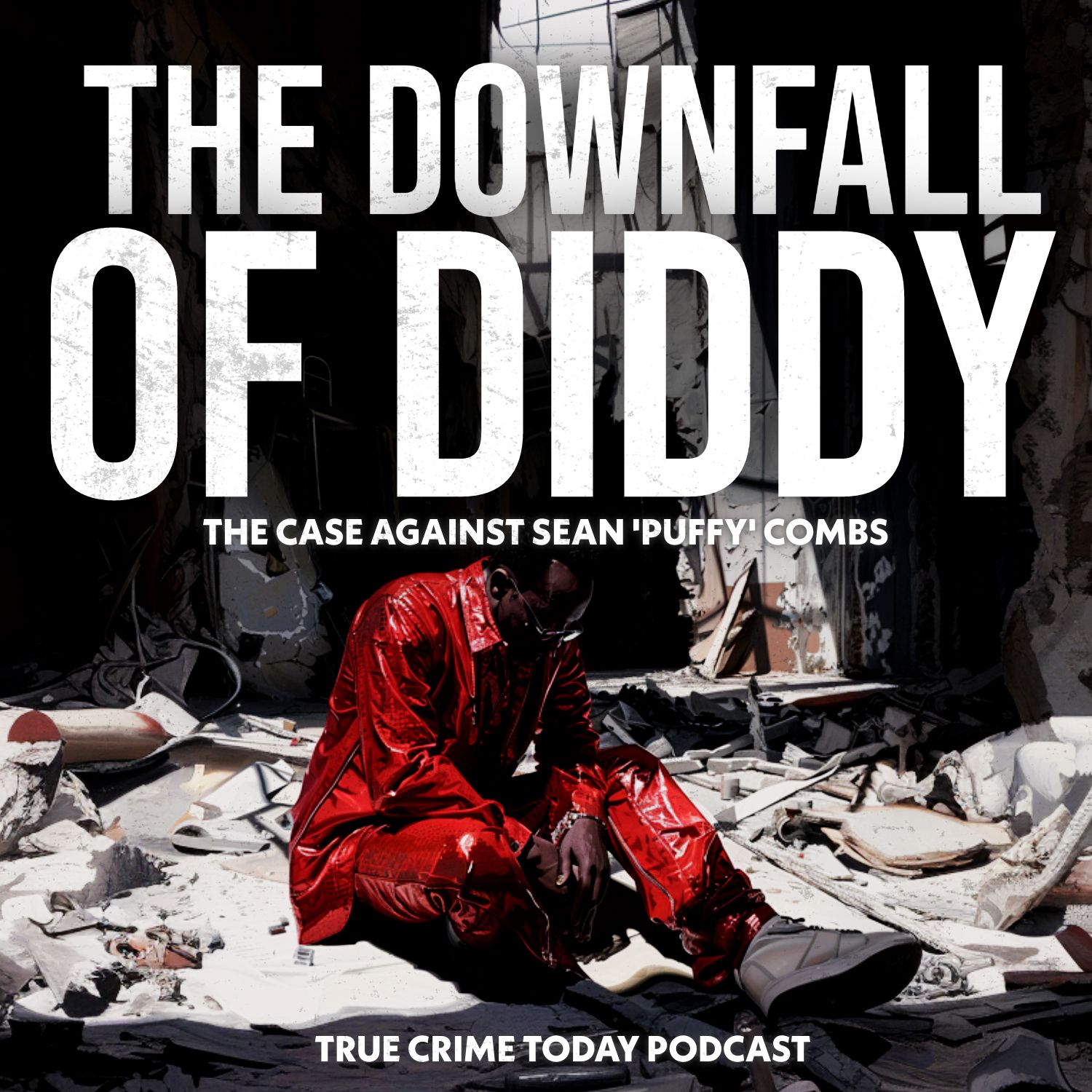
The Downfall Of Diddy | The Case Against Sean 'Puffy P Diddy' Combs
70-Year NDA's - How Diddy's Legal Empire Allegedly Silenced Victims Beyond Death
00:17:48
Loading summary
Transcript35 lines
- [00:00]
Host 1
We're shipping Father's Day gifts with a rapid fire round of questions.
- [00:03]
Host 2
Ready?
- [00:03]
Caller 1
Yes. My gift. Can you pack it?
- [00:05]
Host 2
Yep.
- [00:06]
Caller 1
Ship it?
- [00:06]
Caller 2
Yes.
- [00:07]
Caller 1
Guarantee it?
- [00:08]
Host 1
Of course.
- [00:09]
Caller 1
Oh, send a set of golf clubs.
- [00:10]
Host 1
Oh. Hole in one.
- [00:11]
Caller 1
Protect electronics. Dog. Proof it. Return it if they hate it.
- [00:14]
Host 1
Yes, no and yeah.
- [00:16]
Caller 1
Are you the UPS store?
- [00:18]
Host 1
Hey, we have a winner.
- [00:20]
Caller 1
Visit theupsstore.com guaranty for full details. Most locations are independently owned. Products, services, prices and hours of operation may vary. See Center FOR details. The UPS Store Visit US Store today.
- [00:32]
Advertiser 1
Craftsman days are here at Lowe's with big savings on the tools you need right now. Get a free select tool when you buy the Craftsman V22 pack battery kit. Whether it's the backyard, the bathroom or beyond, Craftsman has the tools to help you power through and get the project done right because DIYing is unpredictable. But your tools shouldn't be. Shop Craftsman at Lowes today. Valid thru 618. Wall supplies. Last selection varies by location.
- [01:00]
Podcast Host
This is continuing coverage of United States vs Sean Diddy Combs from the Hidden Killers podcast and True Crime Today.
- [01:11]
Host 2
Picture this. You're a successful recording artist who survived years of alleged abuse in the music industry. One day your former boss offers you exactly $300.30 to sign away your right to ever tell your story again. Not 300,000. Not even $3,300.30. That's what Sean Diddy Combs allegedly offered Aubrey O' Day of Danity Kane in September 2023, just two months before his world would come crashing down. That insulting offer tells you everything you need to know about how non disclosure agreements have been weaponized in the entertainment industry. It's not just about the money. It's about the message. The message that your trauma, your truth, your entire experience is worth less than what most people spend on groceries in a week. Welcome to the dark world of NDAs as weapons of silence, where legal documents designed to protect trade secrets have been twisted into sophisticated tools of intimidation and control. If you've ever wondered how powerful people in entertainment get away with alleged abuse for decades, this is your answer. It's not just about money or influence. It's about a legal system that's been gamed to perfection, turning victims into prisoners of their own experiences. Let's start with the basics. Because NDAs weren't always the legal equivalent of duct tape over someone's mouth. These agreements actually started in the 1940s in maritime law. Think shipping companies protecting their routes and cargo secrets. Pretty boring stuff, right? By the 1980s, Silicon Valley had turned them into the standard way to protect intellectual property. When your startup is developing the next big app, you don't want your competitors knowing your secret sauce. When the entertainment industry first adopted NDAs, they made perfect sense. Movie studios needed to protect plot details from leaking before release. Record labels wanted to keep their artists personal drama out of the tabloids. Celebrity managers used them to maintain their clients privacy. These were legitimate business tools doing legitimate business things. But then something sinister happened. In the 1990s, some very bad people discovered that NDAs could protect more than business secrets. They could protect predators. The transformation really accelerated through what became known as the Harvey Weinstein model, where NDAs evolved into what his company's board literally called his secret weapon. Think of it like this. If NDAs started as locks on filing cabinets, they became chains on people's voices. The 1998 case of Zelda Perkins and Rowena Chu represents one of the earliest documented examples of this dark evolution. These were Weinstein's former assistants, and after Chu reported an attempted rape, both women received about $168,000 in exchange for signing NDAs. That prevented them from discussing the incident with anyone, and I mean anyone, not family, not friends, not even therapists, except under impossibly strict conditions. Imagine being traumatized and then being legally forbidden from seeking help or support. It's like being injured and then having your access to medical care controlled by the person who hurt you. By the 2000s, NDAs had become what lawyers call standard template language. In 95% of civil settlements, they grew increasingly broad, often lasting forever, with no exceptions for criminal conduct or public interest disclosures. The entertainment industry's hierarchical structure and normalized culture created the perfect environment for this abuse to flourish unchecked. Now the Sean Diddy Combs case reveals just how extreme this system became. Court documents and witness testimonies paint a disturbing picture of NDAs allegedly used to as instruments of terror at Bad Boy Records. Lajois Brookshire, former publicity director for Bad Boy Entertainment, describes an environment where employees lived in constant fear. She said she didn't recall reading in the employee manual that dodging bullets was part of her job description. Referencing death threats during the east coast west coast rivalry, she witnessed parties where there was allegedly no safety after a certain hour and sensed something sinister happening behind closed doors. But that $300.30 offer to Aubrey O' Day? That's where the cynical calculation becomes crystal clear. In September 2023, Diddy allegedly offered to return publishing rights to former artists. But with a catch. O' Day was offered that insulting amount in exchange for signing a comprehensive NDA that would release him for any claims or wrongdoings for and prevent her from ever disparaging him, Bad Boy or any associated entities ever in public. As o' Day put it, a few hundred dollars to sign away my rights to ever tell the story of what I went through ever again. She publicly rejected the offer, later revealing on a podcast that there was no MeToo movement for them. They signed millions of NDAs and contracts that took away their rights. Mark Curry, another Bad Boy artist, alleges Diddy distributed publishing rights strategically, giving all the artists back their publishing rights in exchange for NDAs not to talk about him because he allegedly had some idea that trouble was coming down the pipeline. It's like a criminal trying to buy silence before the police show up. Perhaps most disturbing is the case of Rodney Lil Rod Jones, whose $30 million lawsuit includes his actual NDA as evidence. Attorney Gavin Tudor Elliott called it the broadest non disclosure agreement that I have ever seen and terrifying, noting that any reasonable person reading it would think they would just need to shut up. TMZ obtained NDAs from Diddy's alleged empire, revealing extraordinary terms 70 year duration clauses that remain in effect for the life of Diddy himself, plus a period of 20 years after his death. Let that sink in. These agreements allegedly prohibited signers from speaking on social media and other outlets about anything witnessed explicitly banning books, interviews or any form of disclosure about experiences with Diddy or anyone affiliated with him in any shape or form. It's like signing away your voice not just for your lifetime, but potentially for your children's lifetimes too. Legal experts have identified exactly how these abusive NDAs are structured to maximize victim silences sentencing while appearing legitimate. According to research by the Human rights law center, 75% of sexual harassment settlements include what they call strict NDAs blanket confidentiality clauses preventing victims from speaking to anyone about their experiences. Professor Julie McFarlane, a legal expert and co founder of Can't Buy My Silence, explains the psychological manipulation perfectly. The constant fear of breaching your NDA and being sued is stressful and doesn't allow the person to put the sexual harassment in the past. These abusive NDAs share common characteristics that distinguish them from legitimate business agreements. Think of legitimate business NDAs like a reasonable lease agreement. They have clear terms, reasonable duration and protect specific business interests. Abusive NDAs are more like hostage contracts. They feature indefinite duration. Unlike standard 2 to 5 year business NDAs. They have overly broad definitions of confidential information encompassing any workplace interaction. They include severe financial penalties designed to terrify rather than compensate. Most insidiously, they use isolation tactics, preventing victims from seeking support from family, friends or mental health professionals. The psychological impact of these agreements extends far beyond the original trauma, creating what mental health experts call a secondary trauma of enormous import. Research shows that silence intensifies the impact of trauma, and trauma that goes unspoken and unwitnessed too often manifests as more violence to self or others. Zelda Perkins, who broke her Weinstein NDA after 20 years, describes the profound psychological damage it me into my 24 year old self and made me believe that I was wrong and I was stupid. It took away any belief or confidence I had in myself. The 20 years following her NDA were distressing, where she wasn't allowed to speak and wasn't allowed to be herself. Imagine being frozen in time at your most vulnerable moment, legally prevented from growing or healing. The Can't Buy My Silence campaign found that 95% of people who signed NDAs experienced enormous mental breakdowns and significant impacts on physical health. One survivor shared that they were naive enough to think the NDA might even help them move on. But in reality, it just created distance and isolation and prolonged the trauma. Mental health professionals emphasized that trauma recovery requires the ability to to speak about experiences, connection with supportive others and restoration of power to the survivor, all of which NDAs systematically prevent. Some NDAs even prevent survivors from seeking therapy without their therapist also signing an NDA, creating additional barriers to mental health care. It's like being injured and then being told you can only see a doctor if the doctor promises never to discuss your injury. The Systematic abuse of NDAs in entertainment represents a comprehensive institutional failure spanning legal, economic and cultural dimensions. This abuse became normalized through what experts call the Sex Case Industrial Complex, a network of lawyers, agents, managers and executives who prioritize profit and reputation over victim welfare. The UK Parliament's 2024 Misogyny in Music report identified NDAs as frequently used to silence victims of harassment and abuse across the entertainment industry. The economic coercion is sophisticated and multilayered. In the music industry, NDAs are tied to ongoing royalty payments, creating permanent financial leverage. It's like having a loan shark who owns your voice instead of your money. Film industry workers find future project participation contingent on maintaining silence about past abuse. The practice of cross collateralization uses success from one project to silence victims about abuses on others. But here's where the story gets hopeful. The landscape began shifting dramatically after the October 2017 Weinstein expose, when multiple women broke their NDAs to speak publicly. This watershed moment catalyzed a reform movement that has achieved significant legislative victories. The federal Speak out act, signed by President Biden on December 7, 2022, prohibits enforcement of pre dispute NDAs in sexual harassment and assault cases. The bipartisan law passed unanimously in the Senate in 315 to 109 in the House, demonstrating broad recognition of the problem. State level reforms have gone even further. California's Silence no More act from 2021 prohibits NDAs for all forms of workplace harassment and discrimination. Washington state's version is the most expansive to date, including a $10,000 penalty for violations and retroactive application to existing agreements. Key advocacy organizations have driven these changes. Lift Our Voices, co founded by Gretchen Carlson and Julie Roginski, successfully advocated for the federal Speak Out Act. The Can't Buy My Silence campaign, led by Zelda Perkins and Dr. Julie McFarlane, has gone international, with the Canadian Bar association voting 94% to restrict NDA misuse. Corporate responses have been mixed but increasingly positive. Microsoft eliminated NDAs for their global workforce, while Google and Apple committed to silence. No more protections for all employees. However, implementation remains inconsistent, with many employers still unaware of of new legal requirements. As of 2025, the NDA landscape has fundamentally transformed. Courts increasingly view broad confidentiality agreements with skepticism, particularly in cases involving public policy concerns. Social media has created a court of public opinion that often proves more powerful than legal enforcement, with companies reluctant to pursue NDA violations due to reputational risks. The Diddy case represents both the apex and, hopefully the end of an era where NDAs could allegedly shield serial predators from accountability. Federal investigations have shown that NDAs cannot prevent cooperation with law enforcement, and recent legislation makes it illegal to enforce NDAs preventing sexual harassment and assault victims from speaking. Yet challenges remain post settlement, NDAs are still largely unregulated, enforcement resources are limited, and fundamental power imbalances in the entertainment industry persist. The movement's next phase must address these gaps while building on the foundation of recent reforms. The weaponization of NDAs in the entertainment industry represents a cautionary tale of how legitimate business tools can be perverted to serve harmful purposes. What began as reasonable protection for trade secrets evolved into sophisticated silencing mechanisms that allegedly enabled decades of abuse. The Sean Diddy Combs case exemplifies the most extreme form of this alleged abuse NDA's lasting 70 years covering anyone affiliated with him designed to create total silence around alleged criminal behavior. But here's the thing that should give us all hope. The tide has turned. Legislative reforms, brave survivors breaking their silence, and sustained advocacy have created a new paradigm where victims rights increasingly supersede employers interests in confidentiality. The era of NDAs as broad silencing tools is ending, replaced by a more nuanced legal landscape that protects both legitimate business interests and fundamental human rights. The key takeaway is NDAs don't just hide the truth. They allegedly create ongoing psychological trauma that can last decades. The real story isn't just about the original abuse, but about how legal systems can be weaponized to create lasting harm. Understanding this helps explain why survivors struggle to come forward and why breaking these agreements requires extraordinary courage. The future points toward a world where silence can no longer be bought, where survivors can speak their truth, and where the powerful can no longer hide behind legal documents. The culture of silence that allegedly protected predators for decades is finally breaking. And that breaking sound, that's the sound of justice. Long delayed, but finally arriving. The $300.30 offer that started our story represents the last desperate gasp of a system that's finally being dismantled one brave voice at a time.
- [17:26]
Podcast Host
In a world where the darkest secrets lie just beneath the surface.
- [17:31]
Host 2
They said it was an accident, but the evidence says otherwise.
- [17:35]
Podcast Host
Where hidden killers roam unnoticed in the shadows.
- [17:39]
Expert 1
I think you would definitely be looking at a blend of toxic, very bad, narcissistic personality traits. And they will be vengeful and possibly resort to violence.
- [17:49]
Podcast Host
Join Tony Bruski as he uncovers the truth behind the most chilling cases.
- [17:54]
Host 2
They said it was an accident, but the evidence clearly says otherwise.
- [17:58]
Podcast Host
Each episode, we dig deep into the minds of those who commit the unthinkable.
- [18:02]
Host 1
To your point of narcissism, he thinks in his own mind how witty he is. But he lost that jury. I. I was. I was done with him in two minutes.
- [18:09]
Podcast Host
From unsolved mysteries to infamous crimes.
- [18:12]
Expert 1
Geez, you've just talked about how you're talking yourself. How to do everything under the sun. I bet you did a YouTube video. How to best kill somebody with a knife.
- [18:21]
Podcast Host
Hidden Killers with Tony Bruski takes you where few dare to go.
- [18:24]
Host 2
How does someone with such a dark secret go unnoticed for so long?
- [18:28]
Podcast Host
With multiple new episodes every single day.
- [18:31]
Host 2
We'Re not just telling stories. We're seeking justice.
- [18:35]
Podcast Host
Listen now on Apple Podcasts or wherever you get your podcasts, just search for Hidden Killers with Tony brewski.
- [18:49]
Advertiser 2
The new McCrispy strip is here. Dip approved by Ketchup. Tangy barbecue. Honey mustard. Honey mustard, Sprite, McFlurry. Big Mac sauce. Double dipped in buffalo and ranch. More ranch and creamy chili. McCrispy strip dip now at McDonald's.
- [19:04]
Caller 2
What if I told you that right now, millions of people are living with a debilitating condition that's so misunderstood many of them don't even know that they have it. That condition is Obsessive compulsive disorder or OCD. I'm Dr. Patrick McGrath, the Chief Clinical Officer of NOCD and in the 25 years I've been treating OCD, I've met so many people who are suffering from the condition in silence, unaware of just what it was. OCD can create overwhelming anxiety and fear around what you value most, make you question your identity, beliefs and morals, and drive you to perform mentally and physically draining compulsions or rituals. Over my career I've seen just how devastating OCD can be when it's left untreated. But help is available. That's where NOCD comes in. NOCD is the world's largest virtual therapy provider for obsessive Compulsive Disorder. Our licensed therapists are trained in exposure and response prevention therapy, a specialized treatment proven to be incredibly effective for OCD. So visit nocd.com to schedule a free 15 minute call with our team. That's nocd.com.