← The Downfall Of Diddy | The Case Against Sean 'Puffy P Diddy' Combs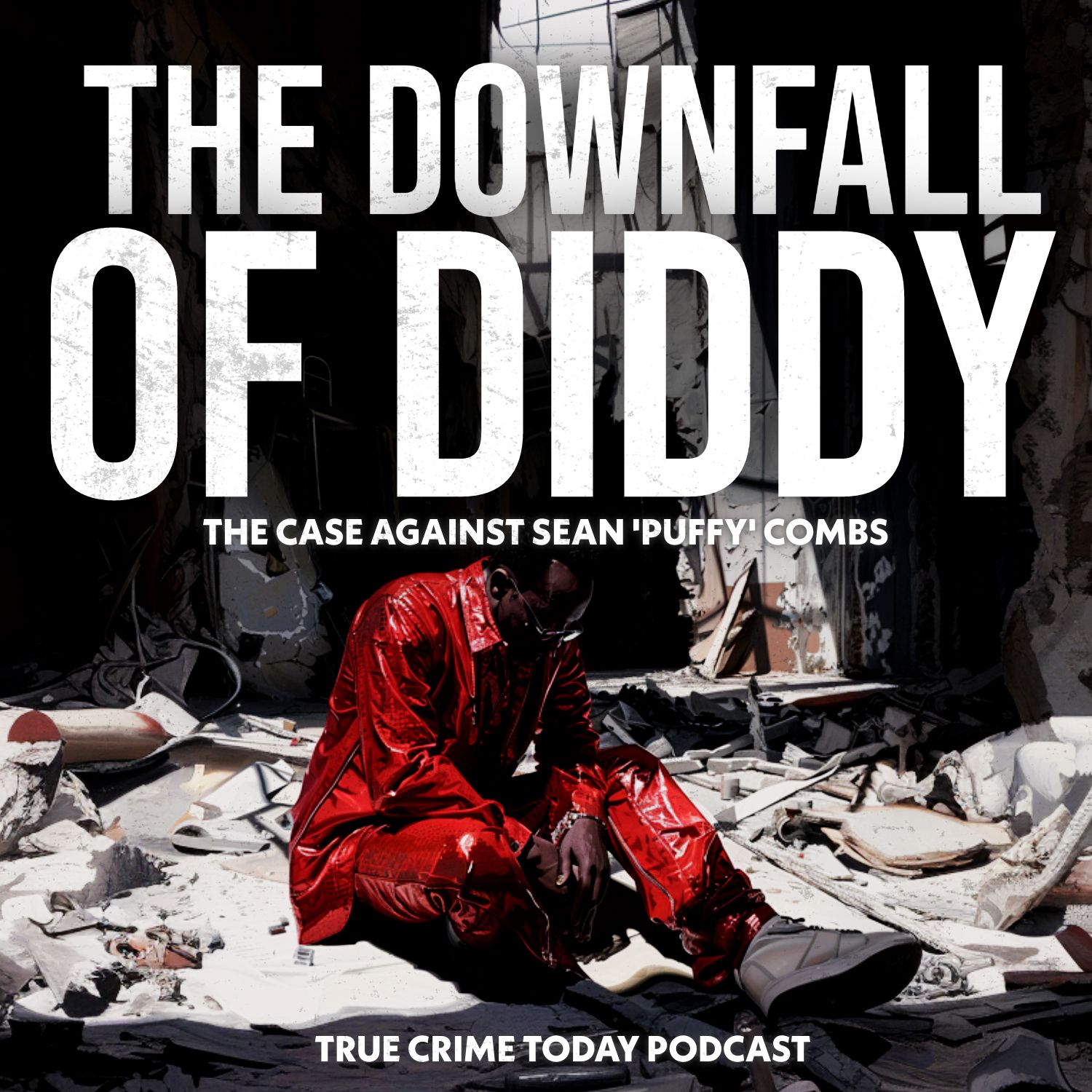
The Downfall Of Diddy | The Case Against Sean 'Puffy P Diddy' Combs
Diddy Drama: 'Are We Going To Start Finding Bodies?' Ret FBI Behavior Analyst Wonders Too
00:10:26
Loading summary
Transcript36 lines
- [00:00]
Tony Brewski
This is Hidden Killers with Tony Brewski here now, Tony Bruski.
- [00:07]
Unnamed Guest 1
Yeah, it seems like a lot of people saw firsthand what a monster he was. That, yeah, that just didn't say a word. It wasn't all just behind closed doors. In fact, it seemed to be pretty much out in the open. There always had been some rumblings, but he always, I mean there's rumblings about everybody in Hollywood and it always just kind of felt like that's where it ended. But to hear like, oh my God, like all these people were witnessing this sort of stuff from him and not doing anything. And I get that, well, what do I do? But what then makes me wonder even more is, well, who else is doing this, that this is so normal? I would think it would be an outlier. If Diddy's the only one doing it, maybe people would be more apt to speak up about it. But who else is like this over there?
- [00:52]
Unnamed Guest 2
I don't think any. So an outlier would be someone that has a healthy balance. No, that's true. You really think a healthy, balanced individual is going to make it inside that inner circle?
- [01:00]
Unnamed Guest 1
No, no, that's true.
- [01:02]
Unnamed Guest 2
Because those people are already walking away.
- [01:04]
Unnamed Guest 1
Yeah.
- [01:05]
Unnamed Guest 2
And so it's only the unhealthy that make it through the door to that level. The broken or, or the, the breakable is a good way to put, I won't say anyone's broken, you know, before they did this, but the breakable made it through that door so they could be un groomed into it.
- [01:21]
Unnamed Guest 1
I mean, with all of these things that are, are coming out now and we haven't seen a lot public celebrities involved with the actual abuse, maybe we will, maybe we won't, I don't know. But the fact that so many names are being named just being present or these things. Do you think that this has changed something in that world? So many people just dead silent on this whole case or even like leaving the country. It's. Do you think people are having a reckoning with this behavior or just, well, that one got caught.
- [02:03]
Unnamed Guest 2
Or a short time period maybe. But at the same time though, human beings are still human beings. We've been evolving for hundreds of thousands of years and you're not going to undo our brokenness in a, in a ditty case. So it might ebb away for a short time as it's heightened and more sensitive, but as time passes and the memory of it fades, power will always corrupt. You know, abhorrent, unhealthy behavior will always be there. People willing to victimize Others, for their own gain will always be there. You know, we're not going to wipe it out. All you can do is try to have great systems of legal justice systems in place so you can try to overcome these things when they do happen. Because it will happen again. Just, it won't happen anytime too soon. But the seeds are always there because people are people and there's always going to be someone who want to take advantage of you.
- [02:53]
Unnamed Guest 1
Yeah. One more take on this. The mother of Cassie Ventura, she, in this case, she knew that Cassie was being abused and to make him stop abusing, he demanded that she give him $20,000. And she paid it. It's like, right, it's extortion and it's, but it's almost in reverse. You would almost be thinking it'd be the other way around, of, I'll give you $20,000 not to tell anybody that I'm doing this, but it's more like you're gonna give me that money. I mean, that's, that's very sadistic in terms of a power grab. And that takes a, that takes an evil type of person to do that sort of shit.
- [03:40]
Unnamed Guest 2
No, the form of control.
- [03:41]
Unnamed Guest 1
Yeah.
- [03:43]
Unnamed Guest 2
Do you really think he needed $20,000? No, no, it's, it's a, it's a form of control.
- [03:48]
Unnamed Guest 1
Yeah.
- [03:48]
Unnamed Guest 2
So he now own. That's it. And she, she paid to be owned by him.
- [03:53]
Unnamed Guest 1
Yeah. That's what makes it like so horrific.
- [03:57]
Unnamed Guest 2
Yeah. So I, again, I don't know these people, but we know patterns when, when, when, when people that are, are struggling with, with life, with healthy behaviors, their decision making process on how to fix problems and problem solving is also a bit off and a bit broken and also fear, you know, so the mother's got fear factor involved there too. So she's doing the righteous thing that she thinks to try to save her daughter and she doesn't know what to do because of fear, most likely fear of reprisal, fear of this. And if a powerful guy says, all you got to do is give me this money to save your daughter, you're going to consider those things because you don't think there's another option in there. Because, you know, if I can imagine the insinuations that people in Diddy's circle could be making of, hey, well, you might as well do this because you know what? We got the cops on the payroll. If you saw that last case, see how it went, nowhere, wink, wink. Well, because you got no recourse. So I guarantee there's a lot of that going around too. Because we've seen it. You know, we saw a lot of his accusations. How come this wasn't more investigated thoroughly? How come this. How come this? Because there was no law but Diddy law.
- [05:10]
Unnamed Guest 1
Yeah.
- [05:11]
Unnamed Guest 2
And so that's when you understand that and you understand him as a pure predator, it makes it all kind of fall into place. And if you fell into that, that circle of evil, where do you go? Because you really feel like there's again, that analogy of being in the middle of a. Of a. Of a hurricane. You think all there is in life is a hurricane. You don't see there's a path out. Meanwhile, if you just took two steps in this direction here, it's calm air, but you didn't know what direction to walk in.
- [05:41]
Unnamed Guest 1
I'm wondering if we're going to start finding bodies. Pure conjecture. But I mean, because not necessarily. I mean, I know the whole Tupac thing and who knows, maybe that will be something. But I'm wondering more like about, you know, people who aren't famous, just people who went against the grain of Diddyland that were employees and they said, I'm gonna, like. There had to be some in this amount of time that thought that they were going to go out and expose him. I would imagine just in sheer numbers, there'd have to be a small percentage that did that and they got stopped.
- [06:17]
Unnamed Guest 2
Because maybe, you know, I really think that the shields of their screening process of who to accept in were very good. And, and here's how they're good. If you had any semblance of moral reservation at the very first steps and you weren't willing to focus on things over than healthy relationships and good, healthy dialogue. First of all, they self selected out before it even got. I mean, because I always try to. I always do that empathy thing where I place myself in those shoes in different positions. I can imagine. Because I mean, I've seen really unhealthy people in, in the organizations and things that I've done. Dude. I just don't go around crazy people.
- [06:55]
Unnamed Guest 1
Yeah.
- [06:56]
Unnamed Guest 2
So I would never. And so the healthy ones that could have done that, that would have been bumped off wouldn't have been engaged necessarily. They wouldn't have made it through that first level that they'd have to be. I think it was a really. It was a. It was a large. It was a. It was a large nation state of Diddy.
- [07:12]
Unnamed Guest 1
Yeah.
- [07:12]
Unnamed Guest 2
But I think a very controlled nation state of Diddy where you had a lot. A lot of group think. And once you made it to the, the. The white party invite. I think that's, that's it. And then again when you're talking about the celebrities, the thing I thought about this, I wonder if there's any repeat shows of celebrities or were they one offs or make one and a halfs. Yeah, because they saw it the, again the healthy ones, the ones that are actually good actors, good musicians and all these things that are legit. They show up and they show up for a while and then, and then when he says it's time for the kids to go to bed or something like that and then it all kinds of takes that shift and then, and then, then either they left at that point too or their eyes were open. They're like oh, we're gonna walk away from this nut. Well, this nut house. So yeah, I think it was just really, really isolated. It was, it's a way kind of. It just all the elements of culture there's. With the exception of he. He's not, he's not making money the same way the cults are. He's got a different business model.
- [08:10]
Unnamed Guest 1
That's true. Yeah.
- [08:12]
Unnamed Guest 2
All the elements are there though.
- [08:13]
Unnamed Guest 1
Yeah. I mean it, it, it really is. It, it. And it, it seems so chaotic but it had to have been very organized for it to survive as long as it did.
- [08:24]
Unnamed Guest 2
Chaos is an interesting thing about that too. I don't, like you said, I don't think it was chaos. I think it was nature. At a certain point. I don't think it took a lot of thought. I think they just knew how to react to every situation, to every person. There was just a, there was a method of operation and again it wasn't. They didn't go from zero to, to Diddy world. They. This was, this was evolved over time because again you start out with talent. You start out with being able to do things and having success. And then as it was slowly morphing because of his own, his own crap and his own own unhealthy behavior, without a check and balance in there, it evolved into this. And over a period of time it just became a natural state of being. Again, not, not putting claiming anyone involved here has got psychopathy. But remember psychopaths and pure predators don't think about how to be that. They just are that. And I think that's what evolved in here. They didn't have to think about how to run the Diddy empire. That just was being.
- [09:20]
Unnamed Guest 1
Yeah.
- [09:20]
Unnamed Guest 2
You know, if a problem comes up, here's what we do with problems. If a problem, you know, if some if we want someone on staff, here's our process for doing that. It just became a replacement when you had a. When you have 20 or 30 years of reps down, you don't really think about how to do it. You're just doing it. The people know their roles because the people around him that were close, they've been there a long time. They don't think about how to do things, they just do them. You know, just think about all the movies that we've seen about the Godfather and things like this. Are people given specific instructions or you given a look, a nod, and you know what to do?
- [09:51]
Unnamed Guest 1
Yeah.
- [09:52]
Unnamed Guest 2
Someone presents you with information, data looks at you, looks at his buddy, goes like this and it's done. See what I mean?
- [10:00]
Unnamed Guest 1
Yeah, it's just same thing. It's. It's a language of its own, really. In a lot of ways, it is.
- [10:04]
Unnamed Guest 2
Just responding to the unhealthy environment around them to solve the problems that they pop up craving.
- [10:11]
Tony Brewski
Non Stop True Crime Updates Press subscribe now and get the latest cases, analysis and expert commentary delivered straight to your feed only from the Hidden Killers podcast and True Crime Today.