← The Downfall Of Diddy | The Case Against Sean 'Puffy P Diddy' Combs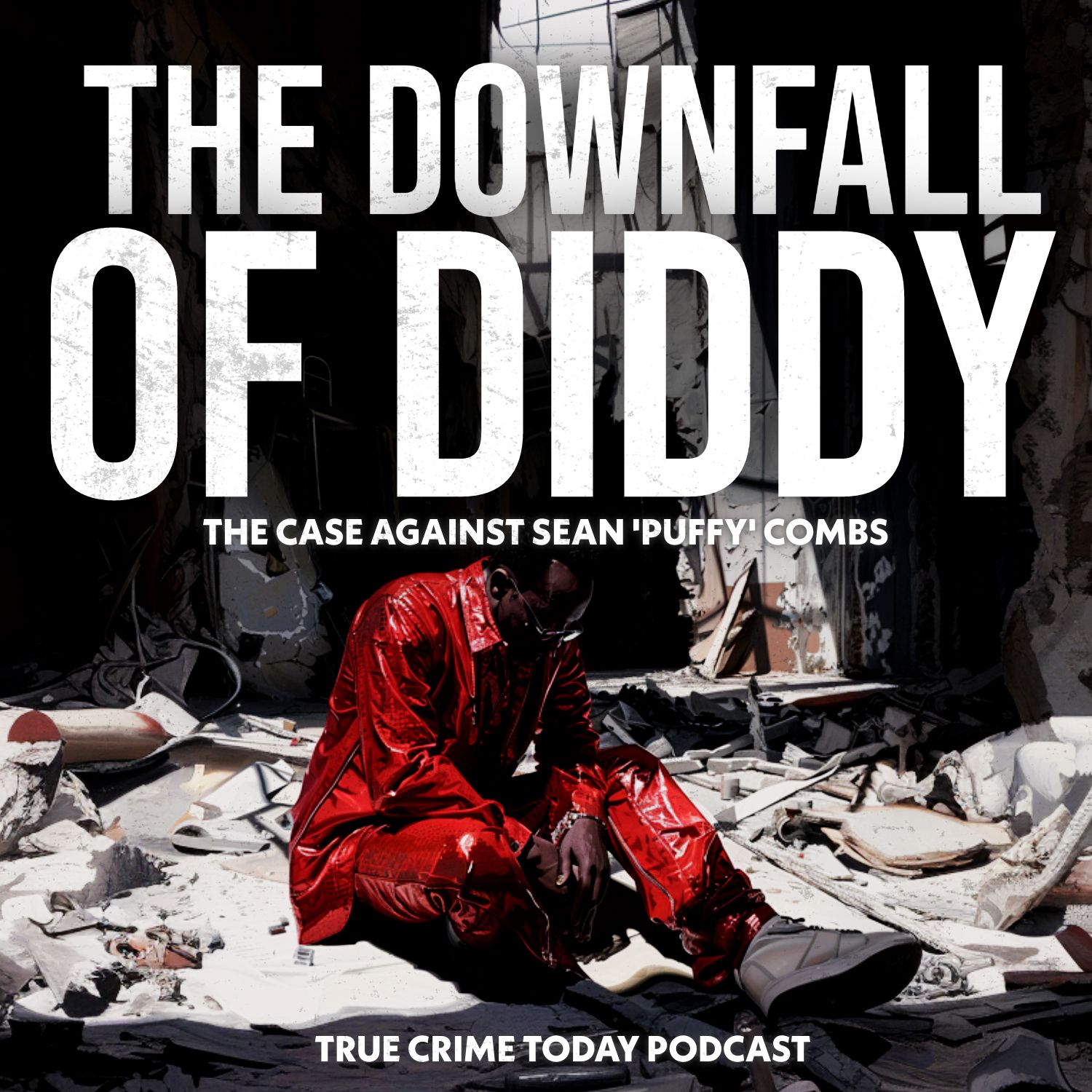
The Downfall Of Diddy | The Case Against Sean 'Puffy P Diddy' Combs
FBI Profiler Exposes Diddy’s Alleged Psychological Warfare Tactics
00:12:16
Loading summary
Transcript14 lines
- [00:01]
A
This is continuing coverage of United States vs Sean Diddy Combs from the Hidden Killers podcast and True Crime today.
- [00:09]
B
Well, things are not going well for Diddy, to put it lightly. There's been a lot of testimony, a lot of people with a lot of stories, and it's all coming to light. Joining me to discuss the latest in the case, Robyn Dreek, retired FBI special agency for the Counterintelligence Behavioral Analysis program. Goodness. We've learned more about what's happened with Cassie. We've learned more about what her mother has said about it. We've learned about Diddy allegedly blowing up someone's car. I mean, this is the stuff, I mean, it feels like it's from a bad rap music video where like there's flames and they're walking away from the car and then they start dancing. But this is real life. I mean, this is real extreme life where art seems to kind of take over their life. But it wasn't art, it was abuse. What's been your reactions this last week?
- [01:03]
C
Yeah, definitely all that. And you know, it's interesting too, that incredible testimony. And at the same time I'm still waiting for the trafficking stuff to get in here. I, I, I think this is, this is hard hitting, very graphic, very granular and emotional testimony. But at the same time though, I'm waiting for and hopefully get to the hard hitting stuff which is really going to start really making an impact and starting helping people move down a path for healing. Because I think he had a massive negative, negative impact on a lot, a lot of people. And so I want people to be able to feel safe to come out and say something and testify.
- [01:42]
B
I hope they do because we still, we already have one witness that's missing, a big one, Jane Doe number three that's supposed to testify the government's witness. I mean, you know, of all of the people that have now made claims against Diddy, there's hundreds of civil lawsuits going on. The government didn't just grab everybody and say, okay, you're all in this case. They really picked very specific ones that they knew they had the receipts on the goods of what actually took place. And now we don't know where the hell she is and her attorney's not getting back to anybody. I, I, I, I, I don't want to speculate too much, but I don't, I mean, in a case like this, I, I, I, I'm gonna guess somebody got to her or she, or her fear took over and she just said, this is not worth it to me to to be out there. I don't know, what are your thoughts?
- [02:31]
C
Yeah, you hit that key word fear. You know, you and I were talking before the show as well, and I, I, everyone in my own life, you know, we look at fear as one of the greatest motivators for human actions. Because when someone is threatening in your own perception, your safety, security and prosperity really is going to influence the decisions you make. And so what has basically transpired, his number three did not feel safe and she feared testifying. Now where that threat came from, whether it's self inflicted, whether it' internal force or individual somewhere else, because what the prosecution basically do, what the government was unable to do, was allow her to feel safe testify. And that's the bottom line.
- [03:12]
B
And there's only so much they can do to help someone feel safe. I mean they're not gonna give you 24 hours security. That's up to you at some point. But it doesn't mean it's gonna stop somebody who has a vendetta. And the difference with Diddy too, these aren't just oh my gosh, I'm going down, I'm gonna start threatening people. And it's like some completely one off behavior. Like he's never threatened anybody in the past and you can kind of take it lightly. This is decades of influence, of inflicting fear on people, of threatening people of exposure or even possibly death. It seems in some of these cases this is a long term thing with him, with his power and his, you know, what he wants to hold people accountable for if they turn on him. He's had this for quite some time. Let me ask you this. When you have something like this, long term patterns of abuse while being surrounded by enablers, which clearly he's had assistance loyalists, they've normalized this kind of behavior. When you deal with individuals in powerful positions who evade accountability for years, you know, what are some of the markers that indicate someone's power has, you know, eroded their capacity for empathy or self reflection or realizing hey there, there just seems to be, there's no self awareness. It seems with Diddy, the way that he was treating people. From what we've been learning, you know.
- [04:45]
C
If you, if everyone listen and watching just kind of rewinds that what, what did it sound like you're describing was a complete dictator of a nation state. Because really that's what's going on here is the dictator doesn't even have to say what to do. You know, the implied actions against the state, which is the dictator himself, you know, has consequences without the dictator even saying so. And so the way this impacts is that over a long period of time, there's just this inherent fear. And you have a lack of understanding of where that threat's going to come from and by who. And so it, it just places a large number of. A large amount of fear on everyone involved.
- [05:23]
B
And that's the thing with this. It's everyone involved. It's a whole environment. It's not just one person. And yeah, I mean, that's what a dictator does. It's a government. So you got all these people around you. And that seems to be kind of what he did. I mean, they described him not just intimidating the partners that he's had, but assistants, drivers, hotel staff to basically anything he wants, whether it be don't tell anybody about this security video, to don't tell anybody about the 50s, 58 bottles of baby oil that I just poured in a bathtub and expect you to go in. Everybody and everybody who's involved in the staging of all these things, they're all in on it, I guess. Let's speak to that for a little bit. And how someone gets there and how you can get that many people on your side to go down the road of bad behavior, even if it's not to benefit you, it's to benefit this sick guy over here.
- [06:22]
C
So again, pure conjecture here, but you start with a lever of influence of the Cult of More where you're enticing people into the cult by promises, by expectations of something better, something more. And so people are looking to better their potential for careers or looking for more monetary gain. And so you get sucked in by the cult of More, and then the lever of influence of fear starts taking effect. Whether that fear is losing the more you have, or fear of reciprocity, or you start seeing weird behaviors around you of people just disappearing. That's an implied threat. I mean, there's all kinds of ways that that that manipulation starts happening. And there's only the very close ones that actually understand exactly what's going on. You know, the dictator's chief of staff in this, in the, in the really small cabinet around them. And the challenge here is, is that everyone to Diddy is nothing but a screwdriver, a tool to serve him. Some screwdrivers are a little rusty and they're at the bottom of the totem pole. Some are like golden plated, but you know what? That golden plated can be melted right off and thrown. Right, throw away as well. And so I think everyone is disposable once you've reached that certain level because when you're caught up in that cult of more and that disease of comparison, um, the levers are very powerful. And since this is a dictatorship without a rule of law, you have no. There's such unexpected reciprocity and you don't know what the rules are oftentimes except stay silent, stay safe. And the only way to do that is to keep to yourself. Don't share anything, disappear, don't ruffle feathers, you know, so that's what fear does when you don't have an actual law system in place of reciprocity. And that's why everyone also did abhorrent things that were against the law, that were illegal, that were heinous towards other human beings because they were living in their own mini nation state. I mean, it really just, it's just do that thought experiment of what the size of this was, how long it took place. He had his own little mini nation going on here, slash cult, but same sort of result.
- [08:29]
B
And that's the really creepy thing about this is that it was that, that mini nation. I mean, it's kind of amazing how quickly people can be influenced to follow something that they otherwise know is inherently bad. Where three weeks before meeting Diddy, if someone said, okay, you're gonna go and you're gonna be cleaning up these hotel rooms after he's done these horrible things, you go in and you just see utter destruction. And you see people that have been beaten. You see people that are literally on IVs to survive and keep going. And this is your new job. This is your job to help to pick up after this. How do you normalize something like that? How does, how do you think he normalized something like that? Because I would think on day one, if that's your job, you'd be like, I'm out. But it's got to be a slow build. It must not be day one. You're in there cleaning up the freak offs. Maybe you're, I don't know, cleaning the kitchen or something. And then it just, it just slowly goes to, to that. I don't know. I mean, it goes to such extremes. It seems very quick for a lot of these folks, but they seem to be able to, to mold themselves around this job. Is that because it's the excitement of. Well, it's Diddy, you know, in the, the aura of. I get to be close to Diddy, it doesn't matter what he does. I mean, does celebrity play a role in that? And the image that he had and what he Commanded was that star power just something where people are ready to say, well, screw the rules of human beh, I'm gonna go along with this.
- [10:03]
C
Yeah, I definitely think that this is a part of it. I think every individual responds to it differently as well. But in general, I mean, just think about this a lot of times, so the people that were first indoctrinated, that come in at the lower levels of his nation state of his dictatorship, you know, you're slowly indoctrinated, possibly or potentially. And then a lot of them are aspiring stars, aspiring risers, or. Or people that want to be part of that circle of. Of celebrity. And so when you have someone at the top or the people around the person at the top where he has this massive reputation, I mean, he is known as Diddy. And if Diddy or his circle says, this is the way it's done, you now have massive group think and social proof saying, huh, Everything I read and everything I saw about and every dream I had of this utopia of how the music industry worked was completely wrong. And so you don't want to go against our own. Our own mindset of what is, is and what we wanted to be and aspire to in life. And so I was wrong. These people must be right in order for me to move forward and not be counter to things I believed in, the things I wanted to do for my own life, my career, my music career, all these things I must adapt myself to. What the group says is normal in this environment. And so it's. It's a choice, but it's. You can see social proof is extremely powerful with people, especially when you've already decided in your mind that you want to be part of this kind of organization, part of group and part of industry. And when that industry then tells you en masse, because Diddy was the industry for. For a lot of people, the industry says this is the behavior you have to have. This is what you have to do to be part of this group. You're going to comply.
- [11:53]
B
Yeah, because it wasn't just him that was saying it. I mean, he had his little army, his enablers enabled new enablers. He didn't even have to do it. Half the time.
- [12:01]
C
It was just dictators very rarely get in the weeds.
- [12:04]
A
Want more on this case and others? Then press subscribe now. And don't miss a moment of true crime coverage from Tony Bruski and the Hidden Killers podcast.