← The Downfall Of Diddy | The Case Against Sean 'Puffy P Diddy' Combs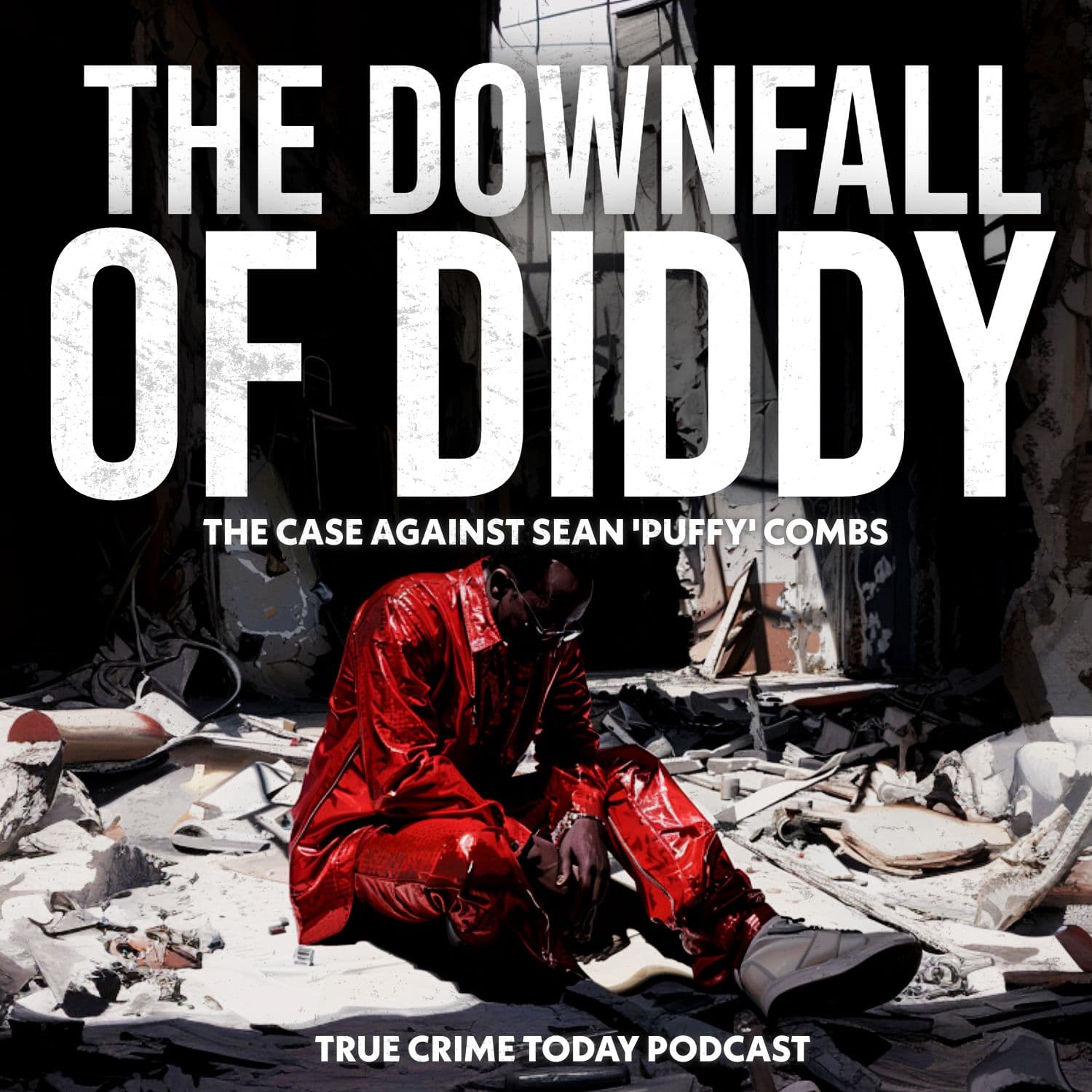
The Downfall Of Diddy | The Case Against Sean 'Puffy P Diddy' Combs
Inside Diddy's Raided Mansions: What the FBI Discovered
00:17:44
Loading summary
Transcript16 lines
- [00:02]
Lowe's Advertisement
Lowe's knows you take pride in every project. So take on what's next today with a free select Craftsman hedge trimmer or leaf blower. When you buy a 20 volt push mower, that's a $119 value on reliable high performance Craftsman tools you trust for the power to do it all. Build, repair, restore, maintain, go with Craftsman available at Lowe's, we help you save. Valid through 521 while supplies last. Selection varies by location.
- [00:30]
Tony Bruski
This is continuing coverage of United States vs Sean Diddy Combs from the Hidden Killers podcast and True Crime Today.
- [00:41]
Unnamed Analyst
It's not every day you see federal agents roll up to a celebrity mansion like they're reenacting a scene from a Michael Mann film. Armored vehicles, agents and tactical gear, and the kind of perimeter lockdown usually reserved for drug cartels or terror threats. But that's exactly what went down on March 25, 2024, when the Homes Diddy combs were hit with simultaneous FBI raids in Los Angeles and Miami. And this wasn't some knock and talk. This was a full scale coordinated operation. The kind that only happens when the government already thinks they know what they're going to find. In Los Angeles, agents descended on his sprawling Holmby Hills estate. In Miami, they rolled up on his Star island mansion. These aren't exactly modest crash pads. They're multi million dollar compounds equipped with security systems, private staff, and more cameras than a Vegas casino. But that didn't slow the agents down. They secured both sites at the same time, blocked off surrounding roads and began what turned into a forensic sweep of nearly everything with a plug or a password. And it didn't stop at the properties. That same morning, federal agents intercepted one of Combs private jets at a Miami executive airport. He was reportedly preparing to fly out to the Bahamas, which, let's be honest, is just the kind of timing that raises every possible red flag. On board or nearby was Brendan Paul, a longtime associate who was allegedly carrying both cocaine and THC edibles. He was arrested on the spot. The messaging from Homeland Security was loud and clear. This was a dragnet. No one was slipping out the back door. But the real story isn't just the drama of the takedown. It's what they found once they got inside. According to federal prosecutors, what was seized from Combs, homes and devices could fill a small Data Center. Over 100 electronic devices, everything from smartphones and laptops to external hard drives were boxed up and tagged as evidence. That number isn't exaggerated. Just eight of those devices taken from the Miami Property contained over 90 terabytes of data. That's not a typo. 90 terabytes. To put that in perspective, it's more digital storage than most small cities use to archive every official document, photo and video file for a year. We're talking tens of millions of emails, messages, photos, videos, and encrypted chats. That's what's now in the hands of the federal government. And they didn't stop with the hardware. Investigators also served warrants on at least five iCloud accounts tied to combs. Think about the level of access that gives them. Full message histories, location pings, app data backups, contact lists. All of it is now part of the evidence pool, and it's still being processed months later. Prosecutors have described the review of this material as voluminous, and that's putting it mildly. They even told the court that some of the devices were so new, or in some cases so old, that they were having technical problems just trying to extract the data. Some were encrypted, some damaged, but they're working through all of it methodically now. Let's talk about what else they found. Because it wasn't just devices inside the homes, agents discovered over a thousand bottles of personal lubricant and baby oil. Yes, over 1,000. You don't need to be a detective to understand that's not for personal moisturizing. Prosecutors connected this find to the freak offs. Cassie and others described those allegedly drug fueled sex marathons with multiple participants, some hired, some coerced. This volume of supplies wasn't just a curiosity. It was treated as direct physical evidence of how those encounters were facilitated. Then there were the guns. Multiple firearms were seized, including AR15 style rifles with their serial numbers removed. That last part matters. Removing or defacing a serial number is a felony by itself, and it's often done when someone doesn't want a weapon traced back to them. These weren't hunting rifles. One of them had a high capacity drum magazine, a feature that has no practical use other than to suggest someone anticipated needing a lot of firepower quickly. The presence of these weapons, stored in a residential setting and connected to a man accused of trafficking and intimidation, added serious weight to the charges already on the table. Alongside the weapons and the electronics, investigators pulled paper records, too. Travel logs, handwritten notes, business documents, and what prosecutors later called materials supporting the organization and logistics of repeated sex based events. In plain terms, they weren't just looking for evidence of past crimes. They were piecing together how, if proven, a whole network may have functioned, including scheduling, transportation, communications and payments. But here's where things get even more guarded. The exact reasons why these raids were greenlit. The search warrant affidavits themselves remain sealed. Combs attorneys filed a motion challenging the legality of the searches. But the supporting materials are so heavily redacted that the public doesn't know what specific evidence was presented to the judge beforehand. We don't know what witnesses were cited, what tip offs led to the timing of the raid, or whether informants were involved. All we know is that a federal magistrate agreed there was probable cause to believe that evidence of criminal activity was could be found in those locations. The secrecy doesn't end there, because even after months of review, much of what was seized still hasn't been described in open court. That includes any footage recovered, any chat logs, any private recordings. Some of the seized material may never see the light of day unless it's introduced at trial. Prosecutors have asked the court to issue protective orders over parts of the digital evidence, especially anything involving non consenting participants or potential victims. So while we know what categories of evidence exist, we don't yet know what any of it actually shows. The raids themselves were a turning point in the investigation. Up until that moment, this was largely a story told through lawsuits, interviews and claims. Disturbing claims, yes, but claims nonetheless. When federal agents showed up with warrants, kicked in doors, and walked out with mountains of hard evidence, it signaled that this wasn't just about accusations. It was about what could be proven. And it's worth noting that nothing seized has been excluded yet. Combs team is pushing back, trying to suppress the evidence by arguing the warrants were overly broad or obtained through questionable means. But until a judge rules otherwise, everything collected, every device, every message, every shred of physical evidence is on the table. The government now holds the receipts. But collecting the evidence and proving what it means in court are two very different things. It's one thing to seize a phone. It's another to show what was on it, who used it, and how it ties into a federal case involving trafficking, coercion, and possibly racketeering. That's where the real battle begins. When federal agents pulled over 100 devices from Sean Diddy Combs homes, along with stockpiles of lubricants, illegal firearms, and a personal archive's worth of business records, they weren't just building a case around individual moments. They were tracing the shape of something much larger. What the government now frames as a criminal enterprise. That's the language they're using. Not misconduct, not impropriety, but enterprise. A coordinated system allegedly designed to exploit silence and control let's start with what might seem like the strangest piece of the puzzle at first glance. Those 1,000 bottles of personal lubricants and oils pulled from various spots across combs properties. To the average person, that could sound like a joke. But prosecutors aren't laughing. They see it as logistical support material infrastructure for what multiple women have described as orchestrated multi participant sex acts held at Combs homes and in hotels across the country. Cassie Ventura and other accusers referred to these gatherings as freak offs and not in a casual way. The government's claim is that they were repeated deliberate events involving paid participants, coerced victims and a controlled environment, one that included drugs, surveillance and emotional manipulation. The presence of these items in such excessive quantity supports that narrative. It's not about the bottles themselves. It's about what they a routine. Next comes the issue of travel. What investigators are looking for and what they believe they found in part is documentation that people weren't just showing up at these events by coincidence. They were being flown in. Travel logs, subpoenaed jet manifests and hotel receipts appear to show a pattern of cross state transportation, which under federal law is a central component of sex trafficking charges. If a woman is moved across state lines for the purpose of a commercial sex act, especially under coercion, fraud or force, that fits squarely into the statute. And in this case, prosecutors say the digital evidence backs it up. They're not relying solely on statements. They have calendar invites, flight bookings and communications allegedly setting up the entire operation. And then there's the money trail. Part of what makes a case like this prosecutable under racketeering or trafficking laws is proof of organization evidence that the activity wasn't random or casual, but structured. Prosecutors have hinted at financial records that tie Combs to payments for sex workers, including through intermediaries. If those payments were laundered through companies or masked as business expenses, they may also speak to concealment. And that's where things start to edge into conspiracy territory. Because now it's not just about what happened. It's about who else knew, who helped make it happen and who tried to keep it quiet. Control is the second prong, and here digital surveillance is key. Among the seized materials, prosecutors say they've found communications suggesting Combs tracked the whereabouts of women in his circle, monitored their phones and in at least one case accessed private medical records. Cassi Ventura testified that after undergoing an mris for memory issues, her results somehow ended up in Combs hands. That's not a casual detail. If prosecutors can prove he had insider access to her healthcare data without her consent. And it could demonstrate not only a gross invasion of privacy, but a calculated effort to monitor her psychological state. That kind of control isn't just possessive. It's weaponized. Seized footage, if it exists in the form prosecutors describe, could take that one step further. Multiple accusers say they were recorded during sex acts, sometimes without consent, and that Combs later used those recordings as leverage, Implying that if they spoke out, the videos would find their way to the public. That's the blackmail component. And if prosecutors can tie recovered video files to these accounts, if metadata shows they were stored, accessed, and perhaps even shared, it becomes more than abusive behavior. It becomes a coercive tool, a mechanism of silence. Which is exactly what federal sex trafficking and obstruction laws were designed to prevent. The firearms are another anchor in the case. When the FBI found AR15 style rifles at Combs property, the issue wasn't just that they were there. It was that their serial numbers had been removed. That alone is a federal offense. But prosecutors are using it to argue something broader. That Combs maintained the capacity to intimidate allegations from accusers, claim that weapons were shown or brandished during arguments, and that bodyguards in his employ used fear and sometimes violence to ensure compliance. If the presence of those guns can be tied to any of those incidents, even circumstantially, it supports the government's framing of Combs as someone who didn't just control with money or status, but with the implied threat of force. So that brings us to the drugs. Cassie and others have testified that they were given MDMA and other substances before and during these freak offs, Sometimes knowingly, sometimes not. One woman described being so disoriented she could barely walk. Another said she took the drugs just to psychologically get through what was being demanded of her. When agents seized controlled substances during the raid, and when Brendan Paul, Combs associate, was caught with narcotics at the airport that same day, it added more than just account of illegal possession. It bolstered the claim that intoxication was part of the system. The drugs weren't for pleasure. They were a means to an end, keeping people compliant, vulnerable, and unable to consent. If prosecutors can show a pattern of that behavior, especially with documentation or testimony that Combs supplied or directed it, they're building a foundation for claims that the women involved were victims of chemically assisted coercion. Obstruction ties all of this together. There's the widely reported $50,000 that Combs allegedly paid to a Beverly Hills hotel to suppress surveillance footage of an assault. That video eventually surfaced, showing him Kicking Cassie in a hallway. But the alleged bribe to keep it buried adds a new layer. It's not just violent behavior. That's an attempt to erase it. Then there's what was found later, after Combs was already in custody. Handwritten notes in his jail cell that, according to prosecutors, contained instructions or strategies aimed at influencing witness testimony. His attorneys say it was just legal prep. Prosecutors say it looks a lot like witness tampering. That legal fight is still playing out, but it underlines how much of this case is about not just what happened, but. But what was allegedly done to hide it. Finally, not everything seized has been accessed yet. Some of the digital evidence remains encrypted. Some devices were damaged and are still being repaired or unlocked. The FBI has said that technological limitations have slowed down their review process. But what's clear is that the data is still coming in. And prosecutors have already stated that a superseding indictment could be filed, that there may be more charges, more people involved, and more to uncover. Because once you have this much material, this many terabytes, this many logs, this much documented behavior, you're not just looking at isolated incidents. You're mapping out a structure. You're showing a pattern. You're drawing the outline of something that didn't happen by accident or in a vacuum. That's the framework the government is building. Whether it holds up in court depends on how all these pieces connect. Whether the evidence seized isn't just damning in quantity, but in clarity. Whether it tells a story of an operation, not just a man built on coercion, control, and silence in a world.
- [16:53]
Tony Bruski
Where the darkest secrets lie just beneath the surface.
- [16:57]
Unnamed Analyst
They said it was an accident, but the evidence says otherwise.
- [17:01]
Tony Bruski
Where hidden killers roam unnoticed in the shadows.
- [17:05]
Unnamed Analyst
I think you would definitely be looking at a blend of toxic, very bad, narcissistic personality traits. And they will be vengeful and possibly resort to violence.
- [17:15]
Tony Bruski
Join Tony Bruski as he uncovers the truth behind the most chilling cases.
- [17:20]
Unnamed Analyst
They said it was an accident, but the evidence clearly says otherwise.
- [17:24]
Tony Bruski
Each episode, we dig deep into the minds of those who commit the unthinkable. To your point of narcissism, he thinks in his own mind how witty he is. Yeah, but he lost that jury. I. I was. I was done with him in two minutes. From unsolved mysteries to infamous crimes.
- [17:38]
Unnamed Analyst
Geez, you've just talked about how you've taught yourself how to do everything under the sun. I bet you did a YouTube video. How to best kill somebody with a knife.
- [17:47]
Tony Bruski
Hidden Killers with Tony Bruski. Takes you where few dare to go.
- [17:50]
Unnamed Analyst
How does someone with such a dark secret go unnoticed for so long?
- [17:54]
Tony Bruski
With multiple new episodes every single day.
- [17:57]
Unnamed Analyst
We'Re not just telling stories. We're seeking justice.
- [18:01]
Tony Bruski
Listen now on Apple Podcasts or wherever you get your podcasts, just search for Hidden Killers with Tony Bruski.