
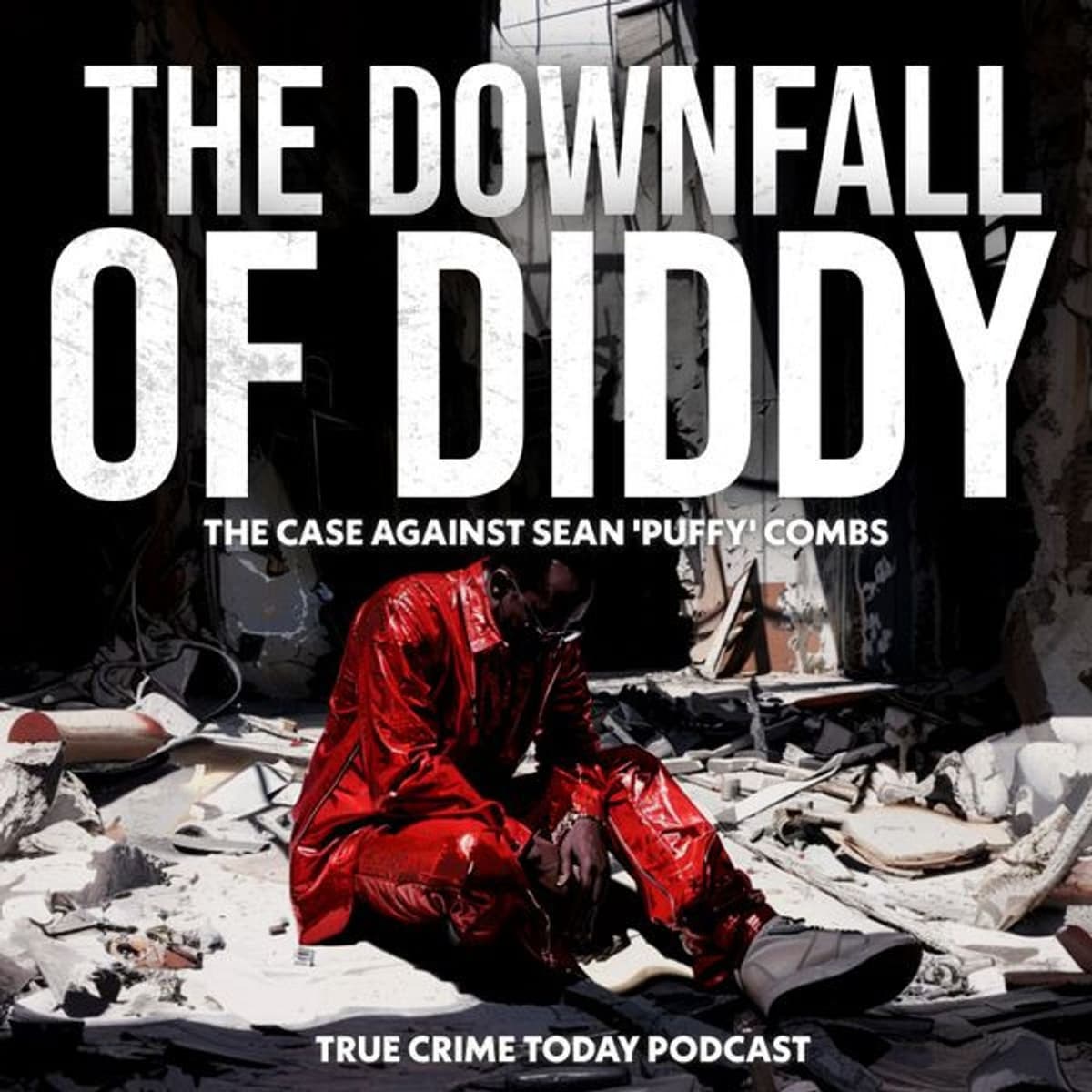
Podcast Summary: "Inside the Mind of Sean 'Diddy' Combs: Power, Control & the Psychology of Alleged Abuse"
Podcast: The Downfall Of Diddy
Host: Tony Brueski
Guests: Siobhan Scott (Psychotherapist, Author), Robin Dreek (Retired FBI Special Agent)
Date: November 27, 2025
Episode: 2025 Year in Review
Overview
In this gripping episode, Tony Brueski is joined by psychotherapist and author Siobhan Scott, and later by retired FBI Special Agent Robin Dreek, to dissect both the criminal case and psychological profile of Sean "Diddy" Combs. With mounting civil and criminal allegations—from sexual abuse and manipulation to violence, intimidation, and the alleged bombing of Kid Cudi’s car—the episode peels back the layers of celebrity power, psychological deviance, and the machinery of enablers that shielded Diddy for decades. The hosts explore how power, money, and social dynamics create fertile ground for abuse, and what this says about both the perpetrator and the star-struck society that allowed it to flourish.
Key Discussion Points & Insights
1. The Extent and Nature of Diddy's Alleged Abuse
- Regina Ventura’s Testimony (Cassie’s Mother)
- [03:46]: Regina recounted paying Diddy $20,000 to avoid him leaking Cassie’s tapes or physically harming her.
- Siobhan Scott identifies this as "sadistic" behavior:
"There's a lot of elements to him that are so cruel and sadistic... to exploit someone in this way, it's almost sadistic, isn't it? It's horrifying." ([04:41])
2. Sexual Deviance and Psychological Patterns
-
Discussion of Diddy's Sexual Proclivities
- [06:16]: Scott explains that Diddy exhibits a "bundle of paraphilias"—clinical term for abnormal, harmful sexual behavior.
- Noted behaviors include voyeurism, violence, urination, mask-wearing, and forced acts.
- Consent vs. Harm: Scott distinguishes consensual roleplay from Diddy’s actions, which were clearly coercive and traumatizing.
-
Development of Deviant Behavior
- [08:00]: Scott posits that a combination of genetics, environment, and early exposure to abnormal sexual material can influence such development.
- "Some people are more pre-wired out of the shoot for being a bit off sexually... As he became more powerful, it progressed to where it's like an addiction. I need more and more and more to feel satisfied." ([08:00])
3. Psychopathy, Narcissism, and Lack of Empathy
-
Psychopathy & Manipulation
- [12:16]: Scott asserts Diddy fits the profile of a psychopath—sadistic, manipulative, with no empathy.
"Psychopathic people see other people as objects... they really do not care. And that's what makes them so dangerous." ([12:16])
- [12:16]: Scott asserts Diddy fits the profile of a psychopath—sadistic, manipulative, with no empathy.
-
Ability to Mimic Empathy
- [13:10]:
"The smart ones fake it very well." — Siobhan Scott ([13:13])
- Developed as a childhood coping or manipulation strategy for personal gain, not genuine caregiving.
- [13:10]:
4. Rage, Power, and Celebrity Culture
-
Violence as a Form of Narcissistic Injury
- The alleged car bombing of Kid Cudi reflects both psychopathic disregard and narcissistic rage at losing control of an "object."
"She's not a person, but she belongs to me. And how dare you." — Scott on Diddy’s mindset ([15:05])
- The alleged car bombing of Kid Cudi reflects both psychopathic disregard and narcissistic rage at losing control of an "object."
-
Toxic Passion and Power
- The show questions the glamorization of rage and intimidation as "passion" in powerful celebrities.
"It's appalling to me that we make awful people famous..." — Siobhan Scott ([16:25])
- Celebrity Enablement: High-profile enablers normalize and justify abusers, versus benevolent celebrities using their influence for good.
- The show questions the glamorization of rage and intimidation as "passion" in powerful celebrities.
5. Weapons, Security, and Displays of Dominance
- Diddy's Arsenal
- Regularly displayed large, often illegal firearms in his home as a display of power and possible security blanket.
"When somebody is... collecting this many big guns... it's a sense of, look what I can do. And look how powerful I am." — Scott ([18:32])
- Regularly displayed large, often illegal firearms in his home as a display of power and possible security blanket.
6. The Family’s Response and Impacts
-
Family Denial & Allegations Against Sons
- The hosts express shock that Diddy's family continues to support him despite overwhelming evidence.
"It doesn't speak well of the family culture... The fact that they can remain supportive... makes me wonder how many qualities of his that they share..." — Scott ([20:57])
- The hosts express shock that Diddy's family continues to support him despite overwhelming evidence.
-
Potential for Rehabilitation
- Counsel for his sons: Try to develop empathy or at minimum, pragmatic self-preservation to avoid following in his path.
“[If you can't learn empathy]… treat other people decently. It’s going to work better for you.” — Scott ([22:15])
- Counsel for his sons: Try to develop empathy or at minimum, pragmatic self-preservation to avoid following in his path.
7. Intimidation, Testimony, and the "Dictatorship" Around Diddy
-
Trafficking Charges and Missing Witnesses
- Government selected only cases with "receipts" for trial, yet key witness (Jane Doe #3) has disappeared.
"His number three did not feel safe and she feared testifying... the government was unable to do, was allow her to feel safe." — Dreek ([27:56])
- Government selected only cases with "receipts" for trial, yet key witness (Jane Doe #3) has disappeared.
-
Atmosphere of Fear and Cult-Like Power
- Dreek likens Diddy’s operation to "a mini-nation" or dictatorship:
"Everyone to Diddy is nothing but a screwdriver, a tool to serve him... everyone is disposable once you reach that certain level." ([31:47])
- "Cult of More": Followers are slowly sucked in by promises, fear, implied threats, and loss of self.
- Normalization of Abuse: Abuse and depravity are normalized through gradual exposure and group dynamics—celebrity is the carrot, fear is the stick.
- Dreek likens Diddy’s operation to "a mini-nation" or dictatorship:
8. The Duality & Compartmentalization of Diddy
-
Public Saint vs. Private Monster
- Diddy displayed philanthropy and family devotion publicly, yet compartmentalized his criminal actions.
"When people don't see what's going on behind the scenes... there's leakage... from the incongruencies." — Dreek ([42:23])
- Diddy displayed philanthropy and family devotion publicly, yet compartmentalized his criminal actions.
-
Breaking Free from the Cult
- Escape requires a critical event, realization, or intervention by a “loving critic” who can provide objective perspective.
"Having loving critics in our lives that can be objective... is really key and critical... If they say something's off, you have to listen." — Dreek ([45:08])
- Escape requires a critical event, realization, or intervention by a “loving critic” who can provide objective perspective.
Notable Quotes & Memorable Moments
- "It's almost sadistic, isn't it? It's horrifying. And it also shows the degree of trauma..." — Siobhan Scott ([04:41])
- "There's a lot we still don't know and we'll never know, but I just see a bundle of paraphilias." — Siobhan Scott ([06:16])
- "Psychopathic people see other people as objects... they really do not care. And that's what makes them so dangerous." — Siobhan Scott ([12:16])
- "The smart ones fake it very well." — Siobhan Scott ([13:13])
- "It's appalling to me that we make awful people famous and how other famous people will validate, justify, and go along with this kind of extreme behavior." — Siobhan Scott ([16:25])
- "Everyone to Diddy is nothing but a screwdriver, a tool to serve him... everyone is disposable once you reach that certain level." — Robin Dreek ([31:47])
- "When people don't see what's going on behind the scenes... there's leakage... from the incongruencies." — Robin Dreek ([42:23])
- "Having loving critics in our lives that can be objective... is really key and critical." — Robin Dreek ([45:08])
Timestamps of Key Segments
- [03:46]: Regina Ventura's testimony and power dynamics of abuse
- [06:16]: Analysis of Diddy’s sexual “paraphilias”
- [12:16]: Psychopathy, manipulation, and lack of empathy
- [15:05]: Narcissism and violence: The Kid Cudi car bombing
- [16:25]: Celebrity enablement and justifying abusers
- [18:32]: Diddy’s gun collection and its psychological significance
- [20:57]: Family support, denial, and generational trauma
- [27:56]: Fear, missing witnesses, and power structures
- [31:47]: Diddy as a dictator in his “mini-nation”
- [42:23]: Compartmentalization, duality, and leakage
- [45:08]: Breaking free: the role of loving critics
Conclusion
This episode paints a chilling portrait of Sean "Diddy" Combs, not simply as a once-celebrated mogul, but as the center of a dark storm of abuse, intimidation, manipulation, and systemic enablers. It blends expert psychoanalysis with real-world law enforcement insight to expose how fame, unchecked power, and group dynamics converge to shield and sustain the worst kinds of secrets. Finally, the hosts urge listeners and society to ask uncomfortable questions about who and what we idolize—and at what collective cost.