← The Downfall Of Diddy | The Case Against Sean 'Puffy P Diddy' Combs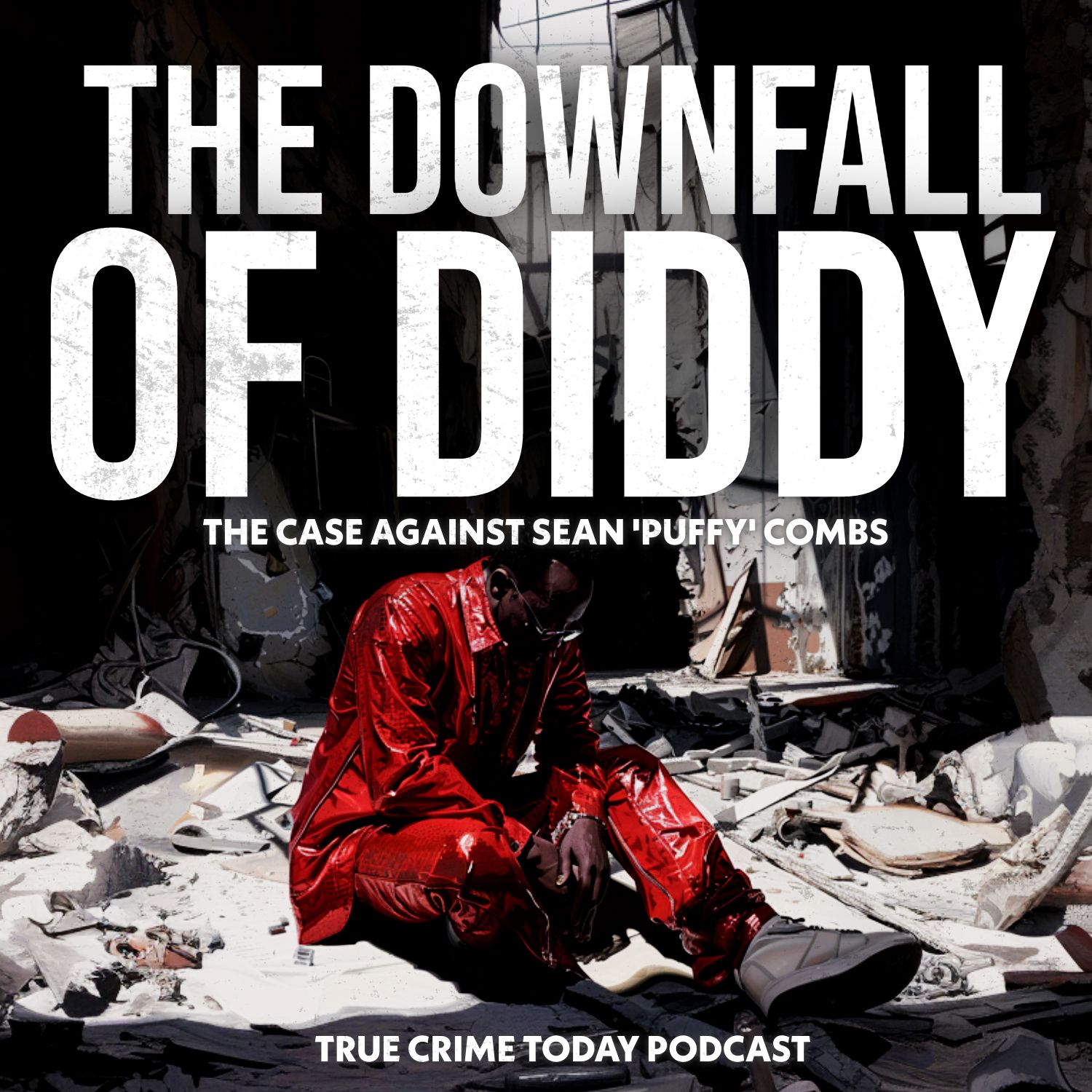
The Downfall Of Diddy | The Case Against Sean 'Puffy P Diddy' Combs
Kid Cudi Testifies - Inside the Firebombing That Rocked Diddy’s Trial
00:16:45
Loading summary
Transcript73 lines
- [00:01]
Amica Insurance Representative
At Ameca Insurance, we know it's more than just a car. It's the two door coupe that was there for your first drive, the hatchback that took you cross country and back, and the minivan that tackles the weekly carpool for the cars you couldn't live without. Trust Ameca Auto Insurance Amica Empathy is our best policy.
- [00:30]
Ryan Seacrest
Hello, it is Ryan. And we could all use an extra bright spot in our day, couldn't we? Just to make up for things like sitting in traffic, doing the dishes, counting your steps, you know, all the mundane stuff. That is why I'm such a big fan of Chumba Casino. Chumba Casino has all your favorite social casino style games that you can play for free, anytime, anywhere with daily bonuses that should brighten your day a little. Actually, a lot. So sign up now@chumbacasino.com that's chumbacasino.com no.
- [00:58]
Chumba Casino Announcer
Purchase necessary vgw or void prohibited by law. See terms and conditions 18 +.
- [01:01]
Amica Insurance Representative
At Ameca Insurance, we know it's more than just a car or a house. It's the four wheels that get you where you're going and the four walls that welcome you home. When you combine auto and home insurance with Amica, we'll help protect it all. And the more you cover, the more you can save. Amica Empathy is our best policy.
- [01:31]
Godfather Casino Announcer
Step into the world of power, loyalty and luck.
- [01:35]
Marlon Brando (as Don Vito Corleone)
I'm gonna make him an offer he.
- [01:36]
Godfather Casino Announcer
Can'T refuse with family. Cannolis and spins mean everything.
- [01:41]
Marlon Brando (as Don Vito Corleone)
Now you want to get mixed up in the family business.
- [01:43]
Godfather Casino Announcer
Introducing the godfather@champacasino.com test your luck in the shadowy world of the Godfather slots.
- [01:50]
Marlon Brando (as Don Vito Corleone)
Someday I will call upon you to do a service for me.
- [01:53]
Godfather Casino Announcer
Play the Godfather now@chumbacasino.com Welcome to the family.
- [01:57]
Chumba Casino Announcer
No purchase necessary VGW Group void We're prohibited by law. 21 plus terms and conditions apply.
- [02:01]
Godfather Casino Announcer
This continuing coverage of United States vs Sean Diddy combs from the Hidden Killers podcast and true crime today.
- [02:12]
Tony Bruski
It's not every day you hear a Grammy nominated artist take the stand in federal court and say, more or less, yeah, my car exploded in my driveway and I think it was revenge. But that's exactly what happened on May 22nd when Scott Mascudi, better known as Kid Cootie, walked into a Manhattan courtroom and calmly unraveled a story that sounded more like a psychological thriller than a witness testimony. Let's back up. The reason Kid Cootie was called to testify in the ongoing federal trial of Sean Diddy Combs wasn't about music. It wasn't about royalties or contracts or hip hop beef. It was about fire, fear, and the kind of personal warfare you can't chart on a billboard. Cootie took the stand to support the government's argument that Diddy didn't just run an empire. He allegedly ran it through fear and retaliation. And sometimes that retaliation came in the form of literal flames. Back in late 2011, Cootie had been dating Cassie Ventura. Cassie at the time, was believed by many, including Cutie himself, to have broken things off with Diddy. According to testimony, she told Cootie they were done and he believed her. What he didn't realize was that he was stepping into the middle of what prosecutors are now portraying as a deeply coercive relationship. One where Diddy allegedly wasn't letting go even if Cassie said otherwise. Cootie told the court that sometime during that period, he got a call from Cassie, then a second call from someone associated with Combs. Both had a similar message. Diddy knew about the relationship, and he wasn't exactly thrilled. Moments later, Cootie learned that Combs had allegedly shown up at his Hollywood Hills home. Cootie rushed back, only to find his place ransacked. Christmas gifts he'd bought for family were torn open. His dog was locked in the bathroom. A security camera had been tampered with. No forced entry was reported, but the message was loud and clear, even if no words were spoken. Someone had been there. Someone who wanted him to know they could get in. This wasn't a burglary. It was a statement. What followed didn't look like a simple vendetta. It looked like something straight out of a Cold War psychological operations manual. A few weeks after the break In, Cootie's Porsche 911 convertible was parked quietly in his driveway when it exploded into flames. The fire wasn't accidental. The roof had been slashed. A Molotov cocktail was reportedly found on the passenger seat. When Cootie got the call from his dog sitter saying the car was on fire, he raced home and saw the charred remains of what had once been his pride and joy. It was torched beyond recognition. And this wasn't just some out of control act of destruction. According to prosecutors, it had all the markings of symbolic violence. You date the wrong woman, your house gets hit, your dog is messed with, and then your car, the thing that screams success and freedom in Los Angeles and is turned into a pile of ash. This wasn't about hurting him physically. It was about putting a thought in his head. I can get to you, and I already have. This is where the psychology gets layered. Because if the allegations are true, this wasn't about losing control. It was about asserting it. Robin Drake, a retired FBI behavioral expert who spent years decoding manipulation and power dynamics in counterintelligence, described this kind of act as something far more calculated. It's not rage. It's not passion. It's strategic fear. It's a performance for an audience of one. Cootie's testimony added weight to something Cassie herself had told the court earlier, that Diddy had allegedly threatened to blow up Cootie's car and that it would happen while Diddy was conveniently out of the country so there'd be no easy way to tie it back to him. Cootie's car did in fact catch fire while Combs was traveling overseas, prosecutors say, and the eerie synchronicity of Cassie's warning and the actual event wasn't lost on the jury or anyone else in the courtroom. But the real kicker came later, because even after the smoke had cleared and even after the relationship had ended, Cuddy told the court he met with Diddy at a Soho house in Los Angeles. It was one of those clear the air meetings. People in Hollywood like love. No lawyers, no press, just two men allegedly on opposite sides of a power imbalance, having a drink and pretending things were normal. Cootie said Diddy seemed calm. Too calm, according to him. Combs stood with his hands behind his back like a Marvel super villain. And when Cootie brought up the Porsche, asking plainly, what are we going to do about my car? Combs looked him in the eye and said, I don't know what you're talking about. Flat, cold. No bluff, no hesitation. Just plausible deniability served straight. And what do you do with that? Cootie said. He walked away from the encounter more convinced than ever that Combs had orchestrated the fire, not because he admitted it, but because he didn't need to. That's the thing about psychological warfare. It doesn't require confession. It just needs to leave you unsure, paranoid, off balance. Years later, in a more relaxed setting again at Soho House, Cootie says Diddy finally apologized. There were no fireworks, no camera crews, just an offhanded, hey, man, I just want to apologize for everything. Cootie said he appreciated it, said it gave him peace. But the question lingers. Was it closure or cleanup? Dreek, in his behavioral analysis, pointed out that apologies like that can be weaponized. They can neutralize potential threats, soothe public image, reinforce the illusion of benevolence Sometimes they're just good pr. Through all of this, what stands out isn't just the testimony itself. It's the way Cutie delivered it. Calm, measured. At one point, he yawned, not because he was bored, but because, as one observer noted, that kind of traumatic memory delivered years later can drain a person in unexpected ways. There was no grandstanding, no tears. Just a man talking about firebombs, break ins and veiled threats, like he was reading from a script he'd memorized long ago. He wasn't the first to describe this pattern, and he won't be the last. What makes Cootie's story so important isn't just the allegation itself. It's the psychological outline. It sketches a story of boundaries crossed without a word, a retaliation that never needed to be acknowledged, to be understood. It fits, prosecutors argue, into a broader narrative of control and retaliation. One that goes far beyond music, beyond celebrity, and into the realm of power dynamics that echo through every corner of this trial. As the court recessed for the day and Kid Cootie left the witness stand, the air in the room was noticeably different. Not because there had been a big reveal, but because something quiet had settled in, something hard to shake. A sense that this wasn't just about one man and one car and one bad breakup. This was about a system, a method, a mindset. And as the prosecution continued building its case, the next phase of testimony would begin to peel back the layers of that system. Not just how someone like Combs allegedly lashed out at outsiders, but how those closest to him kept the machinery moving. George Kaplan didn't start out thinking he'd be testifying in federal court. In fact, when he first landed the job as Sean Diddy Combs personal assistant in 2013, he probably thought he'd hit the jackpot. Jet setting across continents, being in rooms most people only dream of, brushing elbows with celebrities and power brokers. It was, in his own words, like stepping into a world the size of earth. But on May 22, Kaplan sat before a federal jury under immunity, pulled back the curtain, and revealed what it actually meant to serve inside that world. Kaplan wasn't a bitter ex employee looking to settle a score. He was careful, measured, even nervous. Before his testimony began, he invoked his Fifth Amendment rights. It wasn't until he was granted immunity that he agreed to speak freely. And when he did, he didn't paint a picture of spontaneous outbursts or isolated bad nights. What he described was routine, systematic. His job, as he told it, wasn't just to keep the schedule and fetch the coffee. It was to clean up the messes. Specifically the ones that happened after what were allegedly referred to as freak offs. Diddy's term for drug fueled sexually explicit encounters that often left hotel rooms trashed and women disoriented. Kaplan testified that he was regularly instructed to dispose of bottles, drugs, baby oil and other items so hotel staff wouldn't get the wrong idea, or maybe exactly the right one. He said it became a kind of code, a procedure. When the chaos ended, he'd be summoned to erase it. Sanitizing the space was part of the job. Not just to protect the image, but to maintain the illusion that everything inside the ditty machine was functioning as intended. Then came the incident on the private jet. Kaplan described a flight in 2015. Mid Air and unremarkable until it wasn't. According to his testimony, Combs became enraged, picked up a glass of whiskey and smashed it into Cassie Ventura's face. Kaplan said he looked away instinctively as the situation spiraled. He heard crashing sounds, furniture, maybe bodies, and the noise of something that didn't sound like conversation. When he finally looked back, he saw Combs walking away and Cassie sitting silently with visible swelling on her forehead and around one eye. Kaplan didn't call anyone. He didn't ask questions. He didn't even offer an ice pack. He just kept his head down. That decision, or the inability to make a different one, hovered over his entire testimony. When asked why he didn't report the assault, Kaplan explained that at the time he felt trapped. He described Combs as a God among men and said he idolized him. The job was too big, the world was too powerful, and more importantly, the system around Combs didn't allow for dissent. Everyone knew what they were supposed to do and even more importantly, what they weren't. Robin Drake, the retired FBI behavioral expert analyzing these proceedings, said this kind of psychological environment isn't all that rare in counter intelligence or organized coercion. You build a bubble around a central figure, remove accountability, and reward silence with proximity to power. Over time, the people inside that bubble stop questioning the morality of what they're witnessing. They start justifying it or ignoring it altogether. Kaplan didn't just describe events. He described a culture. One where fear didn't always come from direct threats, but from knowing what stepping out of line could cost. That same fear was echoed later in the day when Mila Morales took the stand. Morales wasn't an assistant or an employee of Diddy. She was Cassie's makeup artist and had been for years. In early 2010, during Grammys weekend Morales and Cassie were sharing a suite at the Beverly Hills Hotel when everything changed. Morales told the court that she was in the room when combs burst in unannounced, screaming, asking where Cassie was. She recalled him tearing through the suite, enraged. Cassie had been napping in the bedroom. Morales didn't go into what happened behind the closed door, but she did describe what she saw afterward. Cassie came out of that room with a swollen eye, a busted lip, and what she described as knots on her head. She was disoriented, shaken, and clearly in pain. Morales said she immediately took her away from the hotel and brought her home to recovery. For the next few days, she hid Cassie from the public eye. A doctor friend of hers offered to examine her and recommended Cassie go to the hospital. Cassie refused, and Morales didn't call the police. When asked why, Morales said she was scared. Scared of Combs, scared of what he might do, and just as importantly, scared of what might happen to her own life if she stepped into that storm. Her loyalty, her safety, and her silence had all been co opted by fear. It wasn't just the violence that left a mark. It was the knowledge that nothing would be done about it, that no one would stop it, and that those who tried would be cast out of the system. Dreeke often talks about this kind of psychological infrastructure as internalized threat conditioning. You don't need someone to threaten you directly if they've already conditioned you to fear the consequences of stepping out of line. Neither Kaplan nor Morales presented themselves as victims in the traditional sense. But their stories painted a disturbing picture of what it means to be orbiting someone powerful. Someone allegedly capable of operating above consequence. They weren't dragged into anything. They walked in fully aware of the perks. But once inside, they said the exit signs disappeared. And it's this system, this invisible scaffolding around a celebrity empire that now sits under a spotlight. These aren't just stories about a man who allegedly committed acts of violence. These are stories about the people who stood nearby, who knew, who stayed silent, and who now, years later, are testifying because the silence finally became heavier than the risk. What makes their testimony so important isn't just the content. It's the context. These are people who had access. Not strangers, not gossipers, assistants, stylists. The people you don't think twice about, but who see everything. The ones backstage, in the cars, on the flights. If Kid Cootie showed us how retaliation could be delivered and fire and silence, Kaplan and Morales showed us how it could be buried in loyalty and fear. In the end, what they described wasn't a man out of control. It was a man in control of everything, allegedly. And more importantly, it was a system that enabled it. A culture that required people not to care, not to ask, not to act. Because if you did, you might lose access, you might lose protection, or you might become the next target. As their testimony wrapped and the court prepared for what's next, it became clear that this case isn't just about the alleged acts of Sean Combs. It's about the infrastructure that allowed those acts to occur and continue. And it's about the people who, for a long time, kept the machine running.
- [17:24]
Godfather Casino Announcer
In a world where the darkest secrets lie just beneath the surface.
- [17:29]
Tony Bruski
They said it was an accident, but the evidence says otherwise.
- [17:32]
Godfather Casino Announcer
Where hidden killers roam unnoticed in the shadows.
- [17:37]
Tony Bruski
I think you would definitely be looking at a blend of toxic, very bad, narcissistic personality traits, and they will be vengeful and possibly resort to violence.
- [17:47]
Godfather Casino Announcer
Join Tony Bruski as he uncovers the truth behind the most chilling cases.
- [17:52]
Tony Bruski
They said it was an accident, but the evidence clearly says otherwise.
- [17:55]
Godfather Casino Announcer
Each episode, we dig deep into the minds of those who commit the unthinkable.
- [18:00]
Tony Bruski
To your point of narcissism, he thinks.
- [18:01]
Godfather Casino Announcer
In his own mind how witty he is.
- [18:03]
Ryan Seacrest
But he lost that jury. I. I was. I was done with him in two minutes.
- [18:07]
Godfather Casino Announcer
From unsolved mysteries to infamous crimes.
- [18:10]
Tony Bruski
Geez, you've just talked about. About how you've taught yourself how to.
- [18:12]
Ryan Seacrest
Do everything under the sun.
- [18:14]
Tony Bruski
I bet you did a YouTube video. How to best kill somebody with a knife.
- [18:18]
Godfather Casino Announcer
Hidden Killers with Tony Bruski takes you where few dare to go.
- [18:22]
Tony Bruski
How does someone with such a dark secret go unnoticed for so long?
- [18:26]
Godfather Casino Announcer
With multiple new episodes every single day.
- [18:29]
Tony Bruski
We'Re not just telling stories. We're seeking justice.
- [18:33]
Godfather Casino Announcer
Listen now on Apple Podcasts or wherever you get your podcasts, just search for hidden killers with Tony Brusky.
- [18:47]
Amica Insurance Representative
At Ameca Insurance. We know it's more than just a car or a house. It's the four wheels that get you where you're going and the four walls that welcome you home. When you combine auto and home insurance with Amica, we'll help protect it all. And the more you cover, the more you can save Amica. Empathy is our best policy.
- [19:17]
Ryan Seacrest
Ryan Seacrest here. When you have a busy schedule, it's important to maximize your downtime. One of the best ways to do that is by going to chumbacasino.com Chumba Casino has all your favorite social casino games like spin slots, bingo, and solitaire that you can play for free. For a chance to redeem some serious prizes. So hop on to chumbacasino.com now and live the Chumba Life. Sponsored by Chumba Casino.
- [19:41]
Chumba Casino Announcer
No purchase necessary VGW Group Void where prohibited by law 21 plus terms and conditions apply.
- [19:46]
Amica Insurance Representative
At Ameca Insurance, we know it's more than just a car or a house. It's the four wheels that get you where you're going and the four walls that welcome you home when you come. Combine auto and home insurance with Amica. We'll help protect it all. And the more you cover, the more you can save. Ameca. Empathy is our best policy.
- [20:16]
Ryan Seacrest
Hello, it is Ryan and I was on a flight the other day playing one of my favorite social spin slot games on jumbaccasino.com I looked over the person sitting next to me and you know what they were doing? They were also playing Jumba Casino. Coincidence? I think not. Everybody's loving having fun with it. Chumba Casino's home to hundreds of casino style games that you can play for free anytime, anywhere, even at 30,000ft. So sign up now@chumbacasino.com to claim your free welcome bonus. That's chumbacasino.com and live the Chumba life.
- [20:43]
Chumba Casino Announcer
No purchase necessary VGW Revoid prohibited by law. See terms and conditions 18+.
- [20:47]
Amica Insurance Representative
At Ameca Insurance, we know it's more than just a car or a house. It's the four wheels that get you where you're going and the four walls that welcome you home. When you combine auto and home insurance with Amica, we'll help protect it all. And the more you cover, the more you can save. Ameca. Empathy is our best policy.
- [21:17]
Ryan Seacrest
Hello, it is Ryan and I was on a flight the other day playing one of my favorite social spin slot games on jumbaccasino.com I looked over the person sitting next to me and you know what they were doing? They were also playing Chumba Casino. Coincidence? I think not. Everybody's loving having fun with it. Chumba Casino's home to hundreds of casino style games that you can play for free anytime, anywhere, even at 30,000ft. So sign up now@chumbacasino.com to claim your free welcome bonus. That's chumbacasino.com and live the Chumba life.
- [21:44]
Chumba Casino Announcer
No purchase necessary VGW Revo prohibited by law seat terms and conditions 18 plus.
- [21:48]
Amica Insurance Representative
Every day our world gets a little more connected, but a little further apart. But then there are moments that remind us to be more human.
- [22:01]
Godfather Casino Announcer
Thank you for calling Amica Insurance Hey.
- [22:03]
Tony Bruski
I was just in an accident. Don't worry. We'll get you taken care of.
- [22:07]
Amica Insurance Representative
At Ameca, we understand that looking out for each other isn't new or groundbreaking. It's human. Amica Empathy is our best policy.
- [22:17]
Godfather Casino Announcer
Step into the world of power, loyalty and luck.
- [22:21]
Marlon Brando (as Don Vito Corleone)
I'm gonna make him an offer he can't refuse.
- [22:23]
Godfather Casino Announcer
With family. Cannolis and spins mean everything.
- [22:27]
Marlon Brando (as Don Vito Corleone)
Now you want to get mixed up in the family business.
- [22:30]
Godfather Casino Announcer
Introducing the godfather@chopacasino.com test your luck in the shadowy world of the Godfather slots.
- [22:37]
Marlon Brando (as Don Vito Corleone)
Someday I will call upon you to do a service for me.
- [22:39]
Godfather Casino Announcer
Play the Godfather now@shambacasino.com Welcome to the family.
- [22:43]
Chumba Casino Announcer
No purchase necessary VGW Group void We're prohibited by law 21 + terms and conditions apply.
- [22:48]
Amica Insurance Representative
At Amica Insurance we know it's more than just a house. It's your home. The place that's filled with memories. The early days of figuring it out to the later years of still figuring it out. For the place you've put down roots. Trust Amica Home Insurance. Ameca Empathy is our best policy.
- [23:18]
Godfather Casino Announcer
Step into the world of power, loyalty and luck.
- [23:22]
Marlon Brando (as Don Vito Corleone)
I'm gonna make him an offer he can't refuse.
- [23:24]
Godfather Casino Announcer
With family. Cannolis and spins mean everything.
- [23:28]
Marlon Brando (as Don Vito Corleone)
Now you want to get mixed up in the family business.
- [23:30]
Godfather Casino Announcer
Introducing the godfather@champacasino.com test your luck in the shadowy world of the Godfather slots.
- [23:37]
Marlon Brando (as Don Vito Corleone)
Someday I will call upon you to do a service for me.
- [23:40]
Godfather Casino Announcer
Play the Godfather now@Champacasino.com Welcome to the family.
- [23:44]
Chumba Casino Announcer
No purchase necessary VGW Group Void we're prohibited by law 21 plus terms and conditions apply.
- [23:49]
Amica Insurance Representative
Every day our world gets a little more connected, but a little further apart. We but then there are moments that remind us to be more human.
- [24:02]
Godfather Casino Announcer
Thank you for calling Amica Insurance.
- [24:04]
Tony Bruski
Hey, I was just in an accident. Don't worry, we'll get you taken care of.
- [24:08]
Amica Insurance Representative
At Ameca, we understand that looking out for each other isn't new or groundbreaking. It's human. Ameca Empathy is our best policy.
- [24:18]
Ryan Seacrest
It is Ryan Seacrest here. There was a recent social media trend which consisted of flying on a plane with no music, no movies, no entertainment. But a better trend with be going to chumbacasino.com. it's like having a mini social casino in your pocket. Chumba casino has over 100 online casino style games, all absolutely free. It's the most fun you can have online and on a plane. So grab your free welcome bonus now@chumbacasino.com sponsored by Chumba Casino no purchase necessary.
- [24:44]
Chumba Casino Announcer
VGW Group Void where prohibited by law 21 + terms and conditions apply.
- [24:49]
Amica Insurance Representative
At Ameca Insurance we know it's more than just a car or a house. It's the four wheels that get you where you're going and the four walls that welcome you home. When you combine auto and home insurance with Amica, we'll help protect it all. And the more you cover, the more you can save. Amica Empathy is our best policy.
- [25:19]
Ryan Seacrest
It is Ryan Seacrest here. There was a recent social media trend which consisted of flying on a plane with no music, no movies, no entertainment. But a better trend would be going chumbacasino.com it's like having a mini social casino in your pocket. Chumba casino has over 100 online casino style games, all absolutely free. It's the most fun you can have online and on a plane, so grab your free welcome bonus now@chumbacasino.com sponsored by Chumba Casino.
- [25:44]
Chumba Casino Announcer
No purchase necessary. VGW Group Void where prohibited by law 21 + terms and conditions apply.
- [25:50]
Lowe's Advertiser
Lowe's knows that no matter your paint or stain project, saving is at the top of your to do list. Save now with Buy one, get one half off. Select paints, stains and primer from top brands like Valspar, hgtv, Home by Sherwin Williams and Cabot via Visa gift card Rebate. Find more Memorial Day deals now at Lowe's. We help you save. Selection varies by location while supplies last. Discount taken at time of purchase. See Sales Associate for details. Offer valid 515 through 5 28.