← The Downfall Of Diddy | The Case Against Sean 'Puffy P Diddy' Combs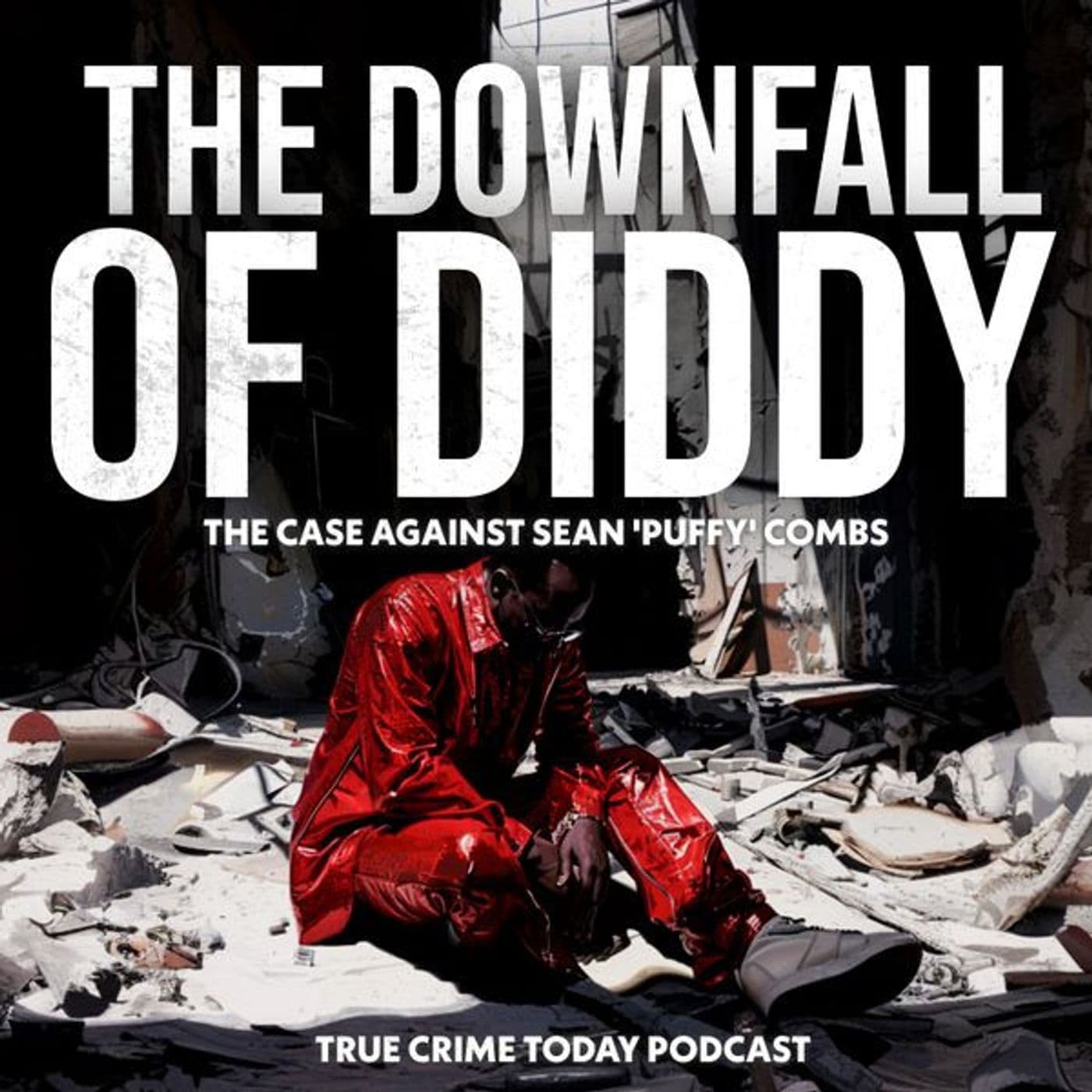
The Downfall Of Diddy | The Case Against Sean 'Puffy P Diddy' Combs
New Criminal Charges Coming For Diddy After 2020 Assault Allegations Surface?
00:19:37
Loading summary
Transcript45 lines
- [00:00]
AMPM Spokesperson
What do you think makes the perfect snack?
- [00:02]
AMPM Customer
Hmm, it's gotta be when I'm really craving it and it's convenient.
- [00:06]
AMPM Spokesperson
Could you be more specific?
- [00:07]
AMPM Customer
When it's cravinient.
- [00:08]
Podcast Host
Okay.
- [00:09]
AMPM Customer
Like a freshly baked cookie made with real butter, available right down the street at a.m. p.m. Or a savory breakfast sandwich I can grab in just a second at a.m. pM.
- [00:16]
AMPM Spokesperson
I'm seeing a pattern here.
- [00:18]
AMPM Customer
Well, yeah, we're talking about what I.
- [00:19]
AMPM Spokesperson
Crave, which is anything from AM pm.
- [00:21]
AMPM Customer
What more could you want? Stop by AM PM where the snacks and drinks are perfectly craveable and convenient. That's cravenience. AM PM Too much. Good stuff.
- [00:31]
AMPM Spokesperson
Hey, this is Sarah. Look, I'm standing out front of a.m. p.m. Right now and well, you're sweet and all, but I found something more fulfilling, even kind of cheesy. But I like it. Sure, you met some of my dietary needs, but they've just got it all. So farewell oatmeal. So long, you strange soggy.
- [00:49]
AMPM Customer
Break up with bland breakfast and taste AM PM's bacon, egg and cheese biscuit made with K tree egg, smoked bacon and melty cheese on a buttery biscuit AMPM Too much Good stuff this is.
- [01:02]
AMPM Spokesperson
The story of the 1. As a custodial supervisor at a high school, he knows that during cold and flu season, germs spread fast. It's why he partners with Grainger to stay fully stocked on the products and supplies he needs, from tissues to disinfectants to floor scrubbers, all so that he can help students, staff and teachers stay healthy and focused. Call 1-800-GRAINGER Click grainger.com or just stop by Grainger for the ones who get it done.
- [01:31]
Grainger Maintenance Supervisor
This is the story of the One As a maintenance supervisor at a manufacturing facility, he knows keeping the line up and running is a top priority. That's why he chooses Grainger, because when a drive belt gets damaged, Grainger makes it easy to find the exact specs for the replacement product he needs, and next day delivery helps ensure he'll have everything in place and running like clockwork. Call 1-800-granger. Click granger.com or just stop by Granger for the ones who get it done.
- [02:01]
AMPM Customer
This is Hidden Killers with Tony Bruski here now.
- [02:05]
Podcast Host
Tony Bruski. There's a moment in every story involving a powerful man where everything starts to shift. And it rarely begins with a dramatic courtroom showdown or an FBI press conference. It usually starts with something far quieter, far simpler, and far more consequential. One person walking into a police station deciding they're done carrying the weight of what happened to them. One statement, one report, one willingness to confront something the world had long treated as untouchable. And that's what we might be looking at right now. Or not. We don't know. Because these piles of allegations just, you know, here's another one. What makes this one different? Because there's. You keep hearing a lot of allegations against Sean Diddy Combs, or as we affectionately call him, Dipshitty. What makes this one different here that we're about to talk about. It's a criminal one. The type that could keep you behind bars even longer than you already are if it pans out to have any sort of truth to it. A man in Florida believed publicly to be music producer Jonathan Hay has filed a complaint saying Combs allegedly sexually assaulted him in 2020. Not 20 years ago. Not during the height of the Bad Boy Records era, not in some distant, murky stretch of time where memories fade and evidence goes foggy. But 2020, a time when digital footprints exist everywhere. A time where investigators can reach back and pull phone data, travel logs, hotel records, surveillance clips, location pings, tools that don't. Didn't even exist during many of the earlier allegations orbiting Combs world. And that alone, it, it changes the landscape a little bit in this one. Because the complaint didn't stay in Florida, it didn't get dismissed as a civil spillover, someone chasing headlines. It was transferred directly to Los Angeles County Sheriff's Department detectives and LASD didn't sit on it or quietly file it away either. They went on record and said they're investigating it. Anyone who's ever covered these cases knows that's rare. It is. There's a lot of cases where it just kind of bounces or bounces back or nothing happens. Especially in in allegation type cases where it does start civilly. Law enforcement does not step out publicly to confirm an active SA investigation on a global celebrity unless they believe, well, there might be something weighty enough to justify the scrutiny. Doesn't mean there is, but it means we're gonna look. They say nothing at all unless they absolutely have to. And in this moment, they chose to. So read the tea leaves as you will. So now we have a new criminal allegation entering a legal ecosystem that is already burning on multiple fronts. Com is already in federal custody, already serving a sentence for prostitution related charges, already under the microscope for alleged trafficking related conduct, already the subject of multiple lawsuits suits already having his homes raided and electronics seized, already surrounded by people in his inner circle who are either distancing themselves or publicly revealing details no one ever imagined would see daylight. So when a new criminal allegation lands in the middle of all that, it doesn't really fall quietly. It. It reverberates a little. It touches a dozen other ongoing issues, and it raises questions that investigators, prosecutors, and, frankly, the public can't ignore again. But before we walk into the implications, it's important to ground ourselves in what's actually been reported in this one. I know. Buckle yourself in. It's more allegations. Let's see what they're saying. A man claims Combs assaulted him five years ago. He went to police. The report was taken, the case was transferred. LASD is now investigating. Combs is not charged with this. He's not convicted of it. He's not legally guilty of it. But this isn't about guilt, not yet. This is about credibility patterns, opportunity, and whether investigators believe there is enough substance to dig deeper. And right now, they are digging. And this is where the timeline becomes so important. Most powerful men accused of this type of misconduct over the last 20 years have faced allegations that were decades old, including him. Stories from the 90s, stories from the early 2000s, stories that lived in the shadows because victims feared retaliation or dismissal or the crushing weight of going after someone with serious financial and social clause out. But a 2020 allegation, that's a little different. It's recent lives in the digital age. And law enforcement tends to view recent allegations as more fertile ground, not because the details are automatically more accurate, but because the world now produces evidence consistently, without us even thinking about it. Phones track everything. Cars track everything. Hotels track everything. Security systems track everything. This is the era where you can reconstruct entire nights based on metadata alone. And unlike cases from 30 years ago, investigators actually have the ability to test these timelines against real, objective records. But the real weight of this moment doesn't come from the allegation itself. It comes from where it landed. Because Combs is not a man standing outside the storm looking in. He's already in the eye of it. Federal agents have raided homes linked to him. Boxes of electronics, hard drive, servers have been hauled out. Civil suits have surfaced detailing behavior that, whether proven or not, follow disturbingly similar patterns. Former associates have begun speaking publicly. Some have filed lawsuits. Some have given interviews. Some have hinted they know far more than they've ever said. And if you've watched these kinds of stories unfold long enough, you know this phrase. Well. This is. This is the phase where survivors who stayed silent for years watch the tower wobble still and it's still wobbling. They see that maybe for the first time the power imbalance is not as insurmountable as it once felt. They see that maybe other people have spoken. They see that maybe the police aren't looking the other way anymore. They see that the fear of not being believed is slowly starting to flip into the fear of continuing to carry something alone. And this is the exact pattern we've watched in every major case involving a powerful man accused of long term predatory behavior. Survivors don't run to the police when the man is on top of the world. They run towards the police when they see the first cracks. The cracks are no longer subtle. The narrative around Combs has fundamentally changed in the last year. He's not on tv, he's not being celebrated. His businesses are pretty much gone. His properties have been searched. His international movements have been restricted. His reputation, once bulletproof is gone. People who protected him for years are feeling the heat too. And that is exactly when long silence victims step forward. Not out of opportunism, but out of recognition that the thing that once felt impossible finally feels survivable. There's another layer here that often gets lost, and that's the psychology of power. Men who operate with the kind of influence Combs wielded for decades don't navigate the world like everyone else. They develop a worldview where the rules apply to other people. They become insulated, they become worshiped. They become protected by people whose livelihoods depend on keeping them happy. And over time, their sense of consequence erodes. They start to believe they control every environment they walk into. They start believing they can bend people to their will simply because they want to. And when someone lives in that environment mentality long enough, it doesn't just distort their behavior, it destroys their sense of boundaries entirely. The moment accountability enters that world, everything implodes. You can track this pattern across nearly every disgraced public figure. Once the shell cracks, they lose control of the narrative, they lose control of their environment. They lose access to the resources that insulated them. They lose the adoration that kept their ego infl and the psychological collapse begins. The anger, the paranoia, the loss of self regulation, the rule breaking which we are seeing, the inability to adapt to constraints. It's predictable. And for someone like Combs, who spent decades living in a world where every space bent towards him, being confined, even though it's temporary, is devastating in ways most people cannot fathom. That's important because someone in a destabilized psychological state is far more Likely to make mistakes, lash out, break rules, and expose behaviors they once kept hidden. People watching him closely will see those cracks. They'll report them. They'll adjust their own loyalties accordingly. And law enforcement watching from outside will take note of that behavior, too. Let's talk about what it means on the legal side, this new charge, or this not charge, but this new investigation. Just gotta make it clear he has not been charged with anything on this one yet. When LASD says publicly that they're investigating an SA allegation against someone already under federal custody, the stakes multiply. Investigators will interview the person filing the complaint. They'll examine the timeline, the surrounding details, the communications, the travel records. They will cross reference those details with any evidence already collected from earlier raids. They will look for consistency with other accounts in civil suits. And even if a small portion of the timeline lines up with independent evidence, they will escalate the case. Yeah, he's already in custody. You have people criminally looking at another possible case. I said this would happen. We knew it was going to happen. And when they already know. You got a track record of making poor choices. And, hey, there just happens to be more people saying that. Here's some more of those choices that may have been made. They're really going to look close. Essay Cases involving powerful men often hinge less on physical evidence and more on patterns. Patterns of behavior, patterns of grooming, patterns of coercion, patterns of how victims describe similar dynamics independent of one another. Prosecutors look for those patterns because they establish intent and opportunity, and they help jurors understand the larger ecosystem. They turn isolated allegations into recognizable structure of conduct. And whether people like it or not, that structure is already forming around Combs. That does not mean he is guilty. It means investigators have enough reason to believe something might be there to warrant serious attention. And now that the allegation lives inside California's legal system, the consequences are very real. California prosecutors are not intimidated by celebrity. They are not swayed by fame or wealth. If they believe there's a prosecutable case, they pursue it. They've done it before. They have the institutional muscle memory for it. They understand the optics, the cultural stakes, and the importance of holding the powerful accountable when the evidence leads them there. And here's the part most people miss. Even if LASD does not immediately pursue charges, the mere existence of the investigation can trigger a chain reaction. Other victims may come forward. Other witnesses may volunteer information. People once terrified of retaliation may realize the man they feared is no longer untouchable. And when multiple people start speaking, investigators Listen differently. So if you have a story, if something happened to you and you have a vested interest in him, maybe not coming out again, now might be the time to share. The case is going to continue to build. This is how cases like this turn. They don't hinge on one allegation or one lawsuit or one news story. They hinge on accumulation, on stories that begin to echo one another, on timelines that overlaps, on witnesses who suddenly remember things they once buried, on individuals who were once cogs in the machine deciding they don't want to go down with the ship. And speaking of the machine, it's important to recognize something about the world that surrounded Combs for years. These systems don't operate on accident. They involve inner circles, outer circles, handlers, security personnel, managers, assistants, publicists, legal teams, business partners, financial stakeholders. They involve layers of people trained explicitly or implicitly to prioritize the success and protection of the central figure at all costs. They enable behavior. They rationalize it. They minimize it. They hide it. And when those networks fracture, as they are beginning to, it exposes the actions at the center in a way that was never possible before. So if you thought the show was done with Diddy, it might really just be beginning. Now let's talk about where this actually goes from here. L A. S D Investigators will take their time. They're not gonna rush this. They will not make premature statements. They will quietly pursue facts, interviews, and corroboration. Hopefully, they'll build a case file. Meanwhile, federal authorities already holding seized electronics will keep doing what they're doing. They'll examine communications, backup files, hidden folders, encrypted data. And if any of that aligns with new allegations or even vaguely supports the surrounding timeline, it becomes a problem for Combs that no PR team and no attorney and no army of longtime enablers can fix like that. And if charges come, state or federal, they will not just be about one incident. They will represent a pattern. They will represent a structure. They will represent the collapse of. Of a myth even more than we've already seen. Will we get there? I mean, look where we're at today. Because this is what people don't fully understand. When powerful men fall, they rarely fall alone. The entire ecosystem collapses with them. And that collapse uncovers far more than anyone expected. This new allegation is not just another headline. It's a signpost. It signals where this story may still be heading. It signals that the people who once stayed silent are no longer silent. It signals that the world Combs lived in, a world where power insulated him has begun to fade. And it signals that if investigators find even the smallest shred of corroboration, the consequences could be catastrophic. Because once once law enforcement steps into the arena, the game changes. Image no longer matters. Legacy no longer matters. Influence no longer matters. Only evidence matters. And if the evidence leads them to a place that demands charges, well, Things might be going back in time again for Combs back into a courtroom. And he'll be even more not defined by his music, by his celebrity, by his myth, but by the truth that finally came out when people decided they weren't afraid to speak anymore. Where does this go? Is this just another one along the way? I don't know. You tell me. Give me your thoughts in the comments section on YouTube if you're not already there. Search Hitting Killers with Tony Brusky Love to get your thoughts. Press subscribe wherever you're watching us. We're trying to get to a hundred thousand on YouTube by the end of the year. We'll see if we do. We're getting close. We're a bit over 81,000 now, so if you you don't mind, if you're not there already, please do hit subscribe on YouTube. We do greatly appreciate that. Until next time, my name is Tony Bruski. We'll talk again real soon. Want more on this case and others? Then press subscribe now.
- [21:29]
AMPM Customer
And don't miss a moment of true.
- [21:31]
Podcast Host
Crime coverage from Tony Bruski and the Hidden Killers Podcast.
- [21:36]
AMPM Spokesperson
This is the story of the One As a custodial supervisor at a high school, he knows that during cold and flu season, germs spread fast. It's why he partners with Granger to stay fully stocked on the products and supplies he needs, from tissues to disinfectants to floor scrubbers, all so that he can help students, staff and teachers stay healthy and focused. Call 1-800-GRAINGER Click grainger.com or just stop by Grainger for the ones who get it done.
- [22:06]
Grainger Concert Hall Head of Maintenance
This is the story of the 1. As head of maintenance at a concert hall, he knows the show must always go on. That's why he works behind the scenes, ensuring every light is working, the H Vac is humming, and his facility shines with Grainger's supplies and solutions for every challenge he faces. Plus 24. 7 customer support, his venue never misses a beat. Call quickgranger.com or just stop by Grainger for the ones who get it done. This is the story of the One as head of maintenance at a concert hall, he knows the show must always Go on. That's why he works behind the scenes, ensuring every light is working, the H Vac is humming, and his facility shines with Grainger's supplies and solutions for every challenge he faces. Plus 24. 7 customer support his venue never misses a beat. Call quickgranger.com or just stop by Grainger for the ones who get it done.
- [23:06]
Grainger Maintenance Supervisor
This is the story of the One As a maintenance supervisor at a manufacturing facility, he knows keeping the line up and running is a top priority. That's why he chooses Grainger. Because when a drive belt gets damaged, Grainger makes it easy to find the exact specs for the replacement product he needs. And next day delivery helps ensure he'll have everything in place and running like clockwork. Call 1-800-GRAINGER Click grainger.com or just stop by Granger for the ones who get it done.
- [23:37]
Grainger Concert Hall Head of Maintenance
This is the story of the One as head of maintenance at a concert hall, he knows the show must always go on. That's why he works behind the scenes, ensuring every light is worked, the H Vac is humming, and his facility shines with Grainger's supplies and solutions for every challenge he faces. Plus 24. 7 customer support his venue never misses a beat. Call quickgranger.com or just stop by Grainger for the ones who get it done.
- [24:07]
Grainger Maintenance Supervisor
This is the story of the One As a maintenance supervisor at a manufacturing facility, he knows keeping the line up and running is a top priority. That's why he chooses Grainger. Because when a drive belt gets damaged, Grainger makes it easy to find the exact specs for the replacement product he needs. And next day delivery helps ensure he'll have everything in place and running like clockwork. Call 1-800-GRAINGER Click grainger.com or just stop by Grainger for the ones who get it done.
- [24:37]
AMPM Spokesperson
This is the story of the One As a custodial supervisor at a high school, he knows that during cold and flu season, germs spread fast. It's why he partners with Grainger to stay fully stocked on the products and supplies he needs, from tissues to disinfectants to floor scrubbers. All so that he can help students, staff and teachers stay healthy and focused. Call 1-800-GRAINGER Click grainger.com or just stop by Grainger for the ones who get it done.
- [25:07]
Grainger Concert Hall Head of Maintenance
This is the story of the One as head of maintenance at a concert hall, he knows the show must always go on. That's why he works behind the scenes, ensuring every light is working, the H Vac is humming, and his facility shines with Grainger's supplies and solutions for every challenge he faces. Plus 24. 7 customer support his venue never misses a beat. Call quickgranger.com or just stop by Grainger for the ones who get it done. This is the story of the One as head of maintenance at a concert hall, he knows the show must always go on. That's why he works behind the scenes, ensuring every light is working, the H Vac is humming and his facility shines with Grainger's supplies and solutions for every challenge he faces. Plus 24. 7 customer support his venue never misses a beat. Call quickgranger.com or just stop by Grainger for the ones who get it done.
- [26:07]
Grainger Maintenance Supervisor
This is the story of the One As a maintenance supervisor at a manufacturing facility, he knows keeping the line up and running is a tough top priority. That's why he chooses Grainger because when a drive belt gets damaged, Grainger makes it easy to find the exact specs for the replacement product he needs and next day delivery helps ensure he'll have everything in place and running like clockwork. Call 1-800-GRAINGER clickgrainger.com or just stop by Grainger for the ones who get it done.
- [26:38]
Grainger Concert Hall Head of Maintenance
This is the story of the One as head of maintenance at a concert hall, he knows the show must always go on. That's why he works behind the scenes, ensuring every light is working, the H Vac is humming and his facility shines with Grainger's supplies and solutions for every challenge he faces. Plus 24. 7 customer support his venue never misses a beat. Call quickgranger.com or just stop by Grainger for the ones who get it done.
- [27:08]
AMPM Spokesperson
Shoe shopping should be fun and full of surprises. DSW has never ending options for every style, mood and occasion. All it really really great prices. From sneakers to boots and everything in between, DSW makes it easy to discover the styles you love and maybe even a few you didn't expect. Whether you're shopping in store or online, you'll always find fresh looks at prices that make sense. Find the shoes that get you at prices that get your budget at DSW stores or dsw.com what do you think makes the perfect snack?
- [27:41]
AMPM Customer
Hmm, it's gotta be when I'm really craving it and it's convenient.
- [27:44]
AMPM Spokesperson
Could you be more specific when it's cravenient?
- [27:47]
AMPM Customer
Okay, like a freshly baked cookie made with real butter available right down the street at am, pm or a savory breakfast sandwich I can grab in just a second at a.m. pM.
- [27:55]
AMPM Spokesperson
I'm seeing a pattern here.
- [27:56]
AMPM Customer
Well yeah, we're talking about what I.
- [27:58]
AMPM Spokesperson
Crave which is anything from AM pm.
- [28:00]
AMPM Customer
What more could you want? Stop by AMPM where the snacks and drinks are perfectly craveable and convenient. That's cravenience AM PM too much good stuff.
- [28:10]
AMPM Spokesperson
Hey Mrs. Sarah. Look, I'm standing out front of AM PM right now and well, you're sweet and all but I found something more fulfilling Even kind of cheesy. But I like it. Sure, you met some of my dietary needs but they've just got it all. So farewell Oatmeal so long you strange soggy.
- [28:28]
AMPM Customer
Break up with bland breakfast and taste AMPM's bacon, egg and cheese biscuit made with K tree eggs, smoked bacon and melty cheese on a buttery biscuit. AM PM too much good stuff.
- [28:39]
AMPM Spokesperson
What do you think makes the perfect snack?
- [28:41]
AMPM Customer
Hmm, it's gotta be when I'm really craving it and it's convenient.
- [28:44]
AMPM Spokesperson
Could you be more specific when it's cravenient?
- [28:47]
AMPM Customer
Okay, like a freshly baked cookie made with real butter available right down the street at a.m. p.m. Or a savory breakfast sandwich I can grab in just a second at a.m. p.m.
- [28:55]
AMPM Spokesperson
I'm seeing a pattern here.
- [28:56]
AMPM Customer
Well yeah, we're talking about what I.
- [28:58]
AMPM Spokesperson
Crave which is anything from AM pm.
- [29:00]
AMPM Customer
What more could you want? Stop by AMPM where the snacks and drinks are perfectly craveable and convenient. That's cravenience AM PM too much good stuff.