← The Downfall Of Diddy | The Case Against Sean 'Puffy P Diddy' Combs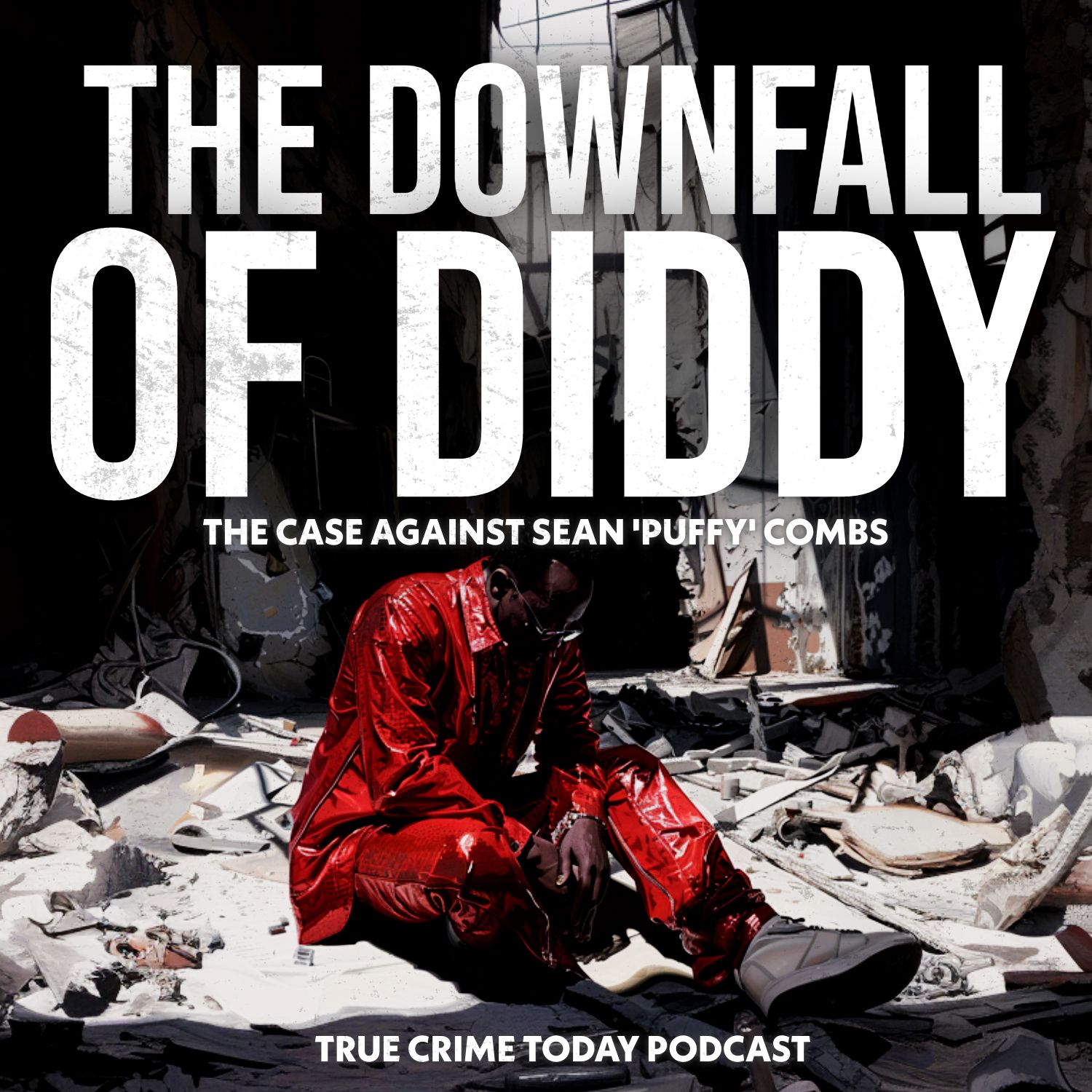
The Downfall Of Diddy | The Case Against Sean 'Puffy P Diddy' Combs
Sean Combs' Trial Secrets: Why Some Charges Suddenly Vanished
00:15:21
Loading summary
Transcript19 lines
- [00:01]
Tony Bruski
This is continuing coverage of United States vs Sean Diddy Combs from the Hidden Killers podcast and True crime. Today we are diving back into the tangled web of Sean Diddy Combs federal trial, where the lines between power, consent, and coercion have become seriously blurred. At the heart of this courtroom spectacle is a complex legal framework known as rico, the Racketeer Influenced and Corruption Organizations act, usually associated with organized crime or R. Kelly. But here, prosecutors are using it to argue that Diddy's lavish lifestyle wasn't just questionable, it was criminal, involving sex trafficking, drugs and abuse, all neatly bundled into a criminal enterprise. But here's where things get tricky. Is feeling trapped in a toxic and abusive relationship the same as legally proving that someone actively forced another person into committing criminal acts? Joining me to break down this crucial distinction and the prosecution's overall strategy and how it may play out here in the trial of Diddy is Eric Faddist Fadis, a seasoned defense attorney and former prosecutor. Eric's going to help us unpack exactly what prosecutors need to show to meet the threshold for coercion under these serious charges. Is a jury allowed room for sympathy? Or does the law demand something colder and cleaner? And more importantly, does the evidence truly support these heavy allegations? Or is the prosecution's case weaker than initially appeared? Let's get right into it, Eric. How exactly does a jury determine whether what happened here meets that strict legal definition of coercion, rather than just reflecting deeply regrettable circumstances?
- [01:51]
Eric Faddis
Without question, there are a series of unfortunate circumstances. Clearly, some trauma was inflicted. People were victimized, abuse was going on. That seems pretty evident. That being said, a person who is an alleged victim getting on the stand and saying, hey, I was affected by all of these circumstances, and so I felt I didn't have a choice. I felt I couldn't leave. That is certainly regrettable, without question. Is that the same thing, though, as did City forcing someone to engage in a sex act because of those circumstances? That's a question that's separate and apart from these sort of sociological considerations that are clearly at play here, and the court looks at things a little bit more coldly, I would say. And the jury instructions don't allow for, you know, if you felt sorry for Cassie and you think she truly believes she didn't have a choice, you got to find him guilty. There's a lot more that has to be proven for a charge like this.
- [02:53]
Tony Bruski
Yeah, I mean, I would. I would certainly think so. Obviously, jurors are human, though, so if they were affected by this, you know, maybe they'll Lean more in that direction. But, yeah, I mean, yeah, it is a colder lean because it's. It doesn't take all those factors into consideration. The fact that we also didn't see evidence of co conspirators. I mean, that's usually part of a RICO case. We maybe we do have coconspirators, but they took plea deals. I mean, does that still mean there's co conspirators? They said at the beginning and opening we're going to see co conspirators. We didn't see any coconspirators, like explicitly named here. We saw, you know, some assistance that probably should be getting charged, but probably are not right now for their testimony. Is that. Was that showing co conspirators? I guess.
- [03:46]
Eric Faddis
You know, I thought it was a severe misstep by the government to not identify and charge co conspirators because we're talking about a criminal enterprise that's multiple people, that's affiliates, that's sort of a gang of folks who are doing crime together. But here we only have one person charged with a crime. So undercuts just our general understanding of what a criminal enterprise might be. Now, certainly there were some folks who are engaged in some underhanded activities with drugs and arrangements and texts and everything else, but, you know, do they appear to be criminal agents of Diddy who are all acting in concert to pull off this massive sex trafficking? That's a bit of a stretch.
- [04:31]
Tony Bruski
Yeah. Certainly had people who were complicit in doing it. But were. Did they believe they were engaging in something that was illegal too? Or did they think this is just really, you know, just extreme behavior by one of the richest people out there that seems to like this stuff. You don't know, you know, how other than having to clean up some really messy rooms, I don't know that they would have known what exactly was going on behind closed doors. Or did they? I mean, there is. There was testimony. Not testimony, but we heard stories from people who had been out and claimed to have seen, uh, Diddy being very abusive to Cassie. Actually, there was testimony about that in this trial. I forgot. Um, so it does make you wonder behind closed doors at the house, assistance, things like that, if. If Diddy is willing to be abusive in public at restaurants towards the person he's with, I would think maybe behind closed doors, it wouldn't be a far stretch to wonder if they were doing the same thing there.
- [05:33]
Eric Faddis
Very fair point. And there certainly was testimony about public assaults and that kind of thing.
- [05:39]
Tony Bruski
So.
- [05:39]
Eric Faddis
So what that means Is that perhaps some of the bad boy entertain of folks had knowledge that there was at least some criminal activity like an assault going on. But, but, but another layer, another question is did they materially aid in bringing about further crimes with the knowledge that they're doing crime? That that's really what Rico contemplates. Like you said, think about the Mafia for example. Those are all folks who, they know what they're doing. When you know, five of them stop a retail or a bus with retail items, chocolate retail items and, and stick them up here. It's just a different scenario.
- [06:14]
Tony Bruski
Yeah, I mean it really is. Let's talk about the charges here for a moment and what specifically they are and what if convicted Diddy could be facing the charges carry minimum starting at 15 years and could result in life if certain allegations are proven. We have the racketeering conspiracy. Accused of running a criminal enterprise under federal racketeering laws. Prosecutors allege he orchestrated legal activities including sex trafficking, kidnapping, arson, bribery, forced labor, obstruction of justice and more as part of the long term scheme to control and exploit women and conceal his wrongdoing. To you. Guilty. Not guilty. What are your thoughts?
- [06:58]
Eric Faddis
I'm thinking not guilty on this one. I've heard stories that the government's gonna focus on the forced labor piece as a predicate. You know, that is just not the most compelling aspect of this trial at all to try and prove rico. And, and the government has limited the bases on which a jury could find that Diddy is. Is guilty of RICO by limiting kidnapping and arson. So I think that that charge is pretty shaky. I'm going not guilty on it.
- [07:26]
Tony Bruski
The next one that we're looking at. Sex trafficking by force, fraud or coercion. One count pertains to alleged coercion. At least one woman victim. One who prosecutors say was recruited, harbored, transported and forced into commercial sexual acts using threats, psychological manipulation and possibly violence. So we do have one that is. Is there. I was expecting far more honestly. And it certainly doesn't discount that one is having had this experience and is talking about it, while many more maybe are just afraid or just don't want to be thrown into that world further than they actually were. What are your thoughts on the sex trafficking by force, fraud or coercion?
- [08:03]
Eric Faddis
Sharjah, you know, these are the most, arguably the most serious because they do carry up to life in prison if convicted. One of the charges pertains to Cassie, the other one pertains to Jane. And it's really going to come down to was there force or coercion and did that directly cause these alleged victims to engage?
- [08:30]
Tony Bruski
Sorry, I didn't realize my mic was on.
- [08:35]
Eric Faddis
Oh, no problem. Okay, so it really comes down to whether the force, fraud or coercion, whether did he use that to knowingly cause these alleged victims to engage in commercial sex acts against their will? And on that part, there is conflicting evidence. There's certainly testimony under oath that they didn't want to do this and they felt they had no choice. There's other text messages where they're seemingly pretty open and into the. The freak offs. And so this one could go either way. I'm. I'm leaning towards not guilty on these ones as well.
- [09:12]
Tony Bruski
Okay, number three, we go to Diddy, accused of moving individuals across state lines with the intent to engage in prostitution. Part of the alleged pattern of orchestrated travel for freakoff parties involving escorts. Eric, what say you?
- [09:30]
Eric Faddis
This one's pretty strong. I think this one is hard to defend against. The defense might say that, hey, Diddy was just paying for these folks time and not sex, but common sense, and the testimony would tell us otherwise. I think he's going down on these ones. But the thing is, these are the least severe, and he could even just get time served on these charges.
- [09:53]
Tony Bruski
What do you think? And this is a fun one. If Diddy were to survive all of this, which there's a possibility, you know, I mean, egotistically survive and, you know, PR Survive is one thing I think that's been destroyed. But if he were to, you know, have freedom again, whether it be 15 years down the road or a few years down the road, do you think he can reinvent himself? Do you think Diddy is done? Is he going to go the way of Ike Turner where it's just like, yeah, we remember you. Or do you think there's any path where Diddy can be redeemed or that he's going to attempt to go down at least, and he'll probably get some people if he takes a certain route.
- [10:36]
Eric Faddis
You know, it's a really interesting question, and I think that in our modern era, society is kind of fed up with a bunch of rich people mistreating folks, and especially in a criminal fashion and a sexual fashion. And I think we're kind of sick of that. We're not really going to look the other way anymore. On the other hand, in America, we love a story of redemption. And so is it at least theoretically possible that. That he could make some kind of comeback? You know, you think about Louis CK who's made quasi comeback after some controversy and and other folks, you know, redemption, I don't think is out of the question in America.
- [11:14]
Tony Bruski
As we wrap up another revealing chat with Eric Faddis, one thing is clear. This case against Sean Diddy Combs is anything but straightforward. Sure, at first glance, the allegations are shocking enough to send chills down your spine. But proving these charges in a court of law, especially rico, might not be as simple as prosecutors initially thought. Eric underscored the complexity of establishing coercion, pointing out that juries aren't just asked and tasked with feeling sympathy for the alleged victim. They have to decide if the prosecution has convincingly shown Diddy actively forced these women into criminal acts. It's a tall order when the evidence, as disturbing as some of it clearly is, leaves room for ambiguity, ambiguity, ambiguity. There we go. I'm having a hard time this week saying words. I got to look off camera sometimes when I'm singing. Ambiguity and doubt. Eric has highlighted a potentially serious misstep for prosecutors, the absence of named and charged co conspirators. Without clearly implicated accomplices, the jury could have trouble envisioning a criminal enterprise necessary for RICO charges to stick. And let's not forget, the prosecution has narrowed the playing field dramatically by dropping serious allegations mid trial, potentially weakening their broader narrative and leaving jurors kind of puzzled. We also touched briefly on the cultural ripple effects this trial might have. Eric posed a fascinating question. Even if Diddy manages to dodge serious jail time, can he ever truly bounce back? Is society finally done looking the other way when powerful men abuse their positions? Or could Combs, armed with charisma and resources, find a path towards redemption down the line? Whatever verdict the jury reaches or maybe has reached by the time you're watching it, it'll speak volumes not just about Combs, but about how our legal system and society at large deal with celebrity misconduct, power abuse, and the complexities of proving coercion. Tell me what you think in the comments section of this video. Did they prove it? Is Diddy going down or should he be going down if they proved it? Or did they not prove enough? And did he's just really into freaky dark shit and abusing women? That's very much established. Let me know your thoughts in the comment section on YouTube. Just search hidden Killers with Tony Bruski if you're not already at our YouTube channel. If you're on a podcast platform, hit subscribe there. Please do that. And also do check out the YouTube channel search hidden Killers with Tony Brusky so you can join in the conversations. You can start in like any conversation on any video you want. Now if you are a Premium member on YouTube, we have a separate premium subscription program on YouTube that we just launched. You can get in on it and you can start watching all of our videos as we release them way before other members of the public. You'll find a whole boatload of advanced videos just waiting for you when you become a supporter of our program on YouTube. So if you like what we do and you appreciate it, and please do consider doing that and supporting the program on YouTube and becoming a premium member, getting access to all that stuff in advance, we're have other extras for you as well. Exclusive conversations, exclusive lives, all that sort of stuff. So get in on that so you can be there when we start doing that stuff as well on YouTube. Until next time, for all of us here at True Crime Today and the Hidden Killers podcast, my name's Tony Bruski. We'll talk again real soon. If true crime is your obsession, we've got you covered. Press subscribe now to the Hidden Killers podcast and True Crime Today for non stop coverage, expert insights and in depth analysis.