Loading summary
Transcript27 lines
- [00:01]
Dr. Steven Gundry
Welcome to the Dr. Gundry podcast, where Dr. Steven Gundry shares his groundbreaking research from over 25 years of treating patients with diet and lifestyle changes alone. Dr. Gundry and other wellness experts offer inspiring stories, the latest scientific advancements and practical tips to empower you to take control of your health and live a long, happy life.
- [00:24]
Podcast Host/Announcer
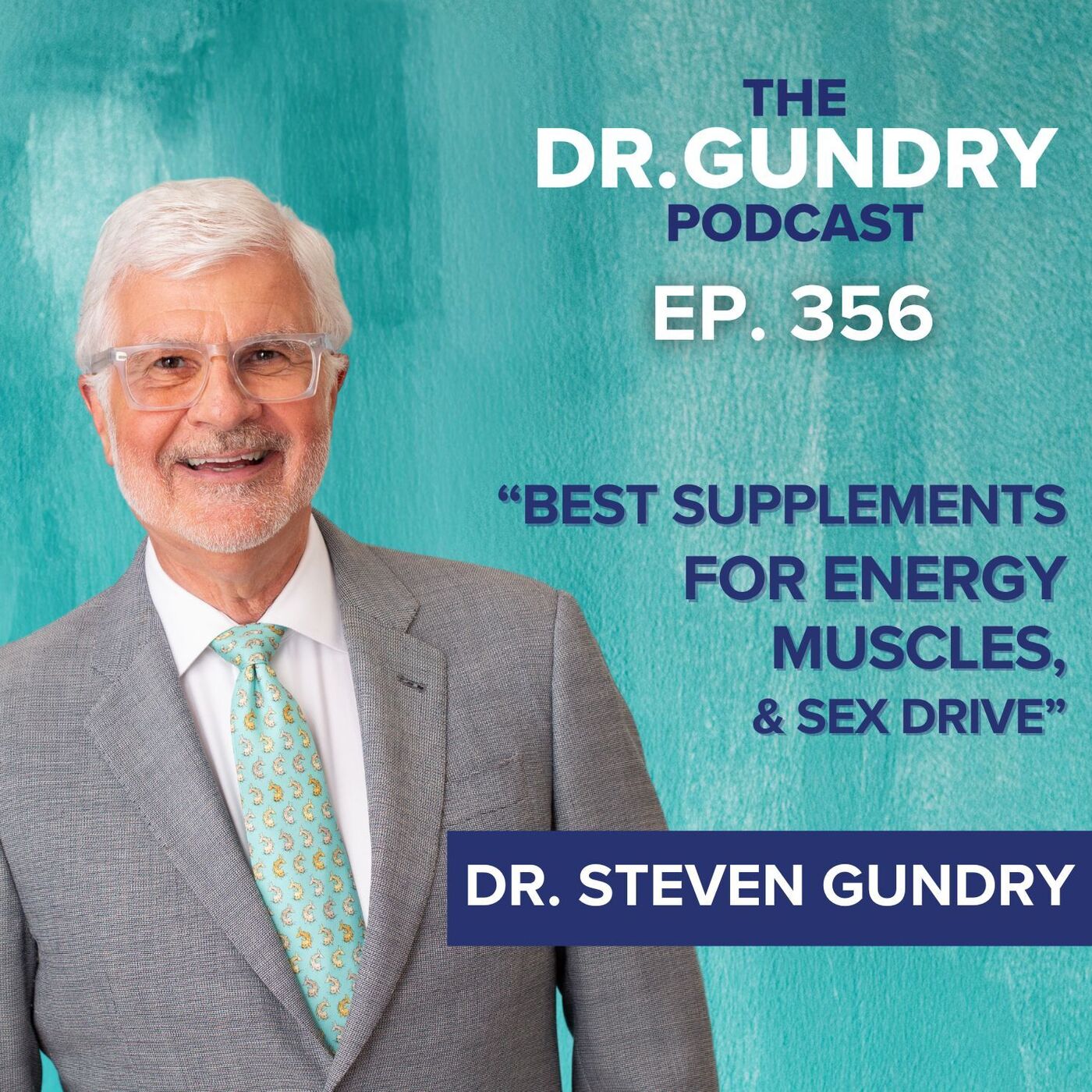
Not all protein powders and supplements support your health. Some could be quietly working against you. That's why in this episode I'll break down down how to choose a protein powder that truly supports your goals, plus the key red flags to watch for on the label. You'll also learn how to spot a hidden vitamin B12 deficiency before it drains your energy and discover the often overlooked benefits of Ashwagandha. Whether you already take supplements or are just getting started, this episode will help you steer clear of common pitfalls and make smarter, more effective choices for your health. Your gut cares about quality, not just where your food comes from. That's why I use Thrive Market for my favorite Lectin free staples like Miracle Noodles and Primal Kitchen Mayo. It's easy, affordable and delivers right to your door. When you join Thrive Market today with my link, you'll get $80 in free groceries. That's T H R I v e market.com gundrypodcast to get $80 in free groceries.
- [01:31]
Dr. Steven Gundry
The Truth About Protein Powder and Protein in General all right, first off, you gotta realize that protein powders are an incredibly new invention. Well, high protein diets have been around for a very long time. Certainly the Atkins diet was a high protein diet and it's been a trend in the nutrition world and it comes and go goes. Currently the Carnivore diet is a high protein diet. But in working out world gym world personal trainers will try to convince you that you have to get more protein in your diet and thus protein powders have exploded in popularity. After all, just look at Costco or your local health food store. The shelves are lined with with tons of them. Why? Because protein is essential. Well, I want to take a minute and tell you where this idea came from. First of all, let's agree that protein is essential. Protein is essential for muscle building. It's essential to build connective tissue and for wear and repair of cells. How much protein is essential will shock you. There have been some studies done in multiple institutions. The ones I like best have been done by Professor Christopher Gardner at Stanford, who's a protein expert. You should know how the recommended daily requirement of protein comes about. They take a bunch of people, a bunch of volunteers and they put them in a laboratory setting, and they look at what's called nitrogen balance, and they find the estimated average requirement of protein to maintain a neutral nitrogen balance. Nitrogen is what makes protein different than, say, fat or sugar. So when they find the estimated average.
- [03:52]
Requirement, 50% of people will do not.
- [03:58]
Well with that estimated average daily requirement. They'll need more, but 50% of people will actually need less. This was the average. So the government says, well, we don't want people to miss out on any necessary protein, so we're going to cover our bases. So we're going to actually quadruple the amount of protein that the average person would require, so that 98% of people, if we recommend this much protein, will get their daily requirement. So the average daily requirement, the recommended daily requirement, is 40 to 60 grams of protein per day. That's not what most people need. That's two to four times more than what most people need. Another way to think about it is if you actually ate the recommended daily amount, 40 to 60 grams, 98% of us would be eating more protein than we actually needed. Stop and think about that again. If we ate the recommended daily allotment of protein, 98% of us would be eating too much protein. Well, so what? As Professor Gardner likes to explain, and I've explained as many times as I can, we have no storage system for protein. We have a storage system for sugar. It's either in glycogen in our liver or our muscles, or we can store it, convert it into fat in our fat cells, and we have unlimited storage capacity for fat. We have no storage capacity for protein. So unless you are actively making muscle, you can eat all the protein you want, and it's not going to make more muscle. It's going to be converted into a storage form of energy, which is either glycogen, and you fill up your glycogen stores very rapidly, or fat. And here's the bad news. Looking at radioactive labeled nitrogen in human volunteers, the average protein meal, whether it's 25 grams or 50 grams or 100 grams, only about 13% of that meal goes to your muscles only. The rest is either burned as energy, nothing wrong with that, or stored as fat. You have such little requirement for protein. And these experiments have been done in volunteers, looking at plant proteins, looking at animal proteins, looking at whole proteins, looking at proteins that have been broken down. And I'm sorry, the vast majority of protein that you eat does not become protein in your muscles. You could eat all the protein you want. You will not build more muscles Unless you are actively trying to build muscles. But then, guess what? You're getting so much extra protein in your diet if you're eating the US Recommended daily amount that you'll always be able to build more muscle. And this has actually been shown in people who have been given minimal amounts of protein and put on an exercise program. And they still do superbly well compared to people who are put on a high protein diet. Because most of it doesn't go to your muscles, folks. Most of it is converted to sugar and fat. Sorry about that. So does eating protein help you build muscle? No, it doesn't. Unless you're actively building muscle, but you've already in a regular diet getting more protein than you actually need. Does it build strong bones? You're already getting enough protein in a regular diet to build strong bones. And if you really want to build strong bones, then you need to seal leaky gut, because leaky gut is the cause of weak bones. How about it helps you lose weight or maintain a healthy weight? No, because most of the protein you're going to eat is converted to sugar or fat. Now that doesn't sound like a good plan for losing weight. It lowers blood pressure. No, protein converts to sugar or fat. And the fatter you get, the higher your blood pressure goes, reduces cravings, promotes satiety. No, the problem with powders in protein is you instantly absorb that protein instead of. If you ate a piece of fish or a steak, it would take you hours and hours to break that fish or steak apart into individual amino acids. So quite the contrary. Protein powders are the worst way to cut your appetite because they'll be absorbed instantly and you'll go looking for more. Helps you stay fit as you age. Prevent sarcopenia. I'm sorry, the vast majority of sarcopenia comes in older age from people living alone and not participating in a family gathering of eating and they forget to eat. So why are protein powders so bad? Well, they're certainly not there to build muscle. You got to remember the protein. Protein powder is a pre digested food. Now what do I mean by that? The more enzymatic digestion, bacterial digestion that happens to break your food apart into amino acids in the case of protein, into glucose in the case of carbohydrates, into free fatty acids in the case of fat. The slower you absorb these foods and the slower you can distribute them to your cells. But when you pre digest these things, it's instantly absorbed and affects your insulin levels. And there's no place to put this. So it Goes right into your fat. Believe it or not, Kellogg's Corn Flakes were advertised as the world's first pre digested food, which unfortunately was a harbinger of all the awful things to come. So if you see any processed food or ultra processed food, just realize that what's happened to this food is it's been pre digested for you. So a pre digested protein is the last thing you want to eat. A new study looked at people who ate ultra processed foods were linked to a 50% higher risk of dying from cardiovascular disease. Why? Because of exactly what I said happened. This excess protein gets turned into sugar, which in turn gets turned into fat. Now finally, most protein powders are either way protein or casein protein powder base and they're loaded. Spoiler alert with gut busting artery busting neu5GC so that's that miserable sugar molecule that attacks your gut. It attracts your blood vessels, your joints and your brain. And you don't want that. What you want to eat is whole foods and you want to eat them whole like our great great grandparents always did because there was no pre digested food. And that's how you want them to trickle in. Now is there a healthy way to use protein powder? Well, yes, but 99% of people aren't using it the healthy way. If you're actively strength training, you want to wait about 30, 10 to 20 minutes after you complete your workout and then take your protein powder with a small amount of carbohydrate to have the muscle cells hungry and take delivery of the protein. And this has been shown over and over again in clinical studies. I personally prefer plant based proteins. Why? Because the proteins in plants will not stimulate mtor which will age you, I guarantee you. But key about plant proteins is they're usually available with tons of fiber so that you will slow down the absorption of those plant proteins because of the fiber. For instance, hemp protein is also loaded with fiber, so it's a very good option. Now there's things to avoid on plant proteins. If you see plant proteins that are made with pea or soybean, there are a ton of them out there. Those are loaded with lectins and my patients react to them. On the other hand, if you see pea or soy protein isolate, the lectins have been removed. But remember, those are still pre digested. It's still a whole lot better to eat the whole food. Now also beware that tons of these protein powders have added sugar and they're often concealed in the form of agave. Nectar or coconut sugar or maple sugar. And that is not the way to do it either. Finally, the beauty of my product Pro Plant is it combines plant proteins, hemp, spirulina and flax proteins with fiber and no added sugar so that you get the plant proteins you need. But the fiber slows down the absorption. So it's a win win. You feed your gut buddies and you get the adequate amounts of protein you're looking for. That's it for today. Sorry about that. Protein powder is not your friend.
- [15:15]
Commercial Announcer
Big news. Wayfair's end of season sale is here. It's Wayfair's Labor Day clearance. Right now you can score up to 70% off everything home at Wayfair. Plus amazing doorbuster deals and 24 hour surprise flash deals on home buyings in every style. This is your last chance to score end of season savings and it's happening now. Did we mention fast shipping on everything? Don't wait. Head to Wayfair.com today to score up to 70 off now through September 2nd.
- [15:42]
Sarah James McLachlan
Wayfair Every style, every home.
- [15:47]
Dr. Steven Gundry
What is vitamin B12? It's sometimes called the energy vitamin. Now its real name is cobalamin, but let's just save that for later. Now, it's an essential nutrient in general, we need to obtain it from an outside source, although there's actually exciting news from microbiome studies that there are bacteria that are capable of producing vitamin B12 for us, but in general, we have to acquire it in our diet. Now, B12 is critical for red blood cell formation, it's critical for brain function, and it's critical for heart health. Now unfortunately, there are many signs that are overlooked from a B12 deficiency. First of all, psychological problems such as low mood or impaired memory, even problems with attention deficit disorder, even problems with bipolar, can be traced to low B12 levels. I'm not saying there's a cause and effect, but many of my patients have low vitamin B12 with this. Now, more commonly is a feeling of fatigue. Now, fatigue covers lots of bases, but vitamin B12 is called the energy vitamin for a reason and it really is essential for the production of ATP. So a deficiency in B12 can absolutely manifest as fatigue. If you get routine blood tests, hopefully your physician or provider is measuring a amino acid in your blood called homocysteine. Now, we won't have a physiology lecture or a biochemistry lecture, but vitamin B12 in its proper form lowers homocysteine levels in your blood. Now why is that a good thing? Homocysteine can damage your blood vessels. Homocysteine can damage your brain, and for many of us, it's a good marker for how fast or slow you're aging. And it's a good marker for how efficient your energy production is. So most healthcare providers do don't measure vitamin B12 levels, but if you have an elevated homocysteine above 9, then you need to investigate your vitamin B12 levels. Finally, skin and hair issues. Multiple times we see people with pale skin, with dry skin, with flaky skin, with hair that's thin, that hair that's brittle. And yes, thyroid issues should be evaluated, but frequently B12 levels are missed in the work of this issue. So make sure on your annual physical to ask for a B12 level if your homocysteine level, and make sure they're measuring a homocysteine level. Another way to spot this is hopefully your healthcare provider is getting a complete blood count on you once a year. And that complete blood count should include the size of your red blood cells and how much hemoglobin is in your red blood cells and the volume of your red blood cells. And one of the tip offs of a folic acid or B12 deficiency is that you're not anemic, but your red blood cells are too big. And that's a classic finding of either a B12 or a folic acid deficiency. And it's sometimes the only way anybody ever spots it if they're looking for it. Okay, so where does B12 come from? Well, most of the time, a omnivore or a vegetarian gets their B12 from animal sources. It's very present in liver. It's present in fish, seafood, present in shellfish. It's present in fortified food. Many of the B vitamins in grains have been stripped off and the B vitamins are put back in in fortification. Many milk products are fortified with B vitamins, and there are supplements that contain B12. Now, here's the problem. Half of us are born with a genetic mutation, one or two mutations that are laughingly called the mother effer genes. Now, how did that name come about? The gene is called the MTHFR genes, and if you said that word out loud, you would be bleep from network television. The mother effer gene makes enzymes that convert vitamin B12 and folic acid into their active forms by attaching a methyl group. And there won't be a test. A methyl group is a carbon and three hydrogen atoms which make them into methylcobalamin and methylfolate. Now, again, half of us lack one of those Genes, a number of people carry two copies. Now, if you look at people with these mutations and look at their family histories, there's an interesting either personal or family history of anxiety, depression, adhd, bipolar, schizophrenia, drug abuse, alcohol abuse, and suicide tendencies. Hence the name the mother effort gene. Now, it's an easy fix. You don't even have to be tested for this gene because half of us carry that mutation. The easy fix is to take methyl B12 and methyl folate. But it gets a little more interesting than that. In order to absorb vitamin B12, you have to have a receptor in the lower part of your small intestine that's called intrinsic factor. And it basically allows B12 to be absorbed from your intestine. And a lot of people either are insufficient in intrinsic factor or simply lack it. So you could swallow all the vitamin B12, even the active form, and you still might not absorb it. Now, the great news is there is a workaround. If you take a methyl B12 and put it under your tongue, you will bypass the whole problem. And there are a Number of methyl B12 supplements in sublingual form. Costco even sells one. Now, I'll tell you a hilarious story relating to this. I send my patients out to have them get methyl B12. And I had a patient with this mutation, and he had a low B12 and he had a high homocysteine. And I saw him back, and his homocysteine was still high and his B12 was still quite low. And I said, you're not taking your B12. He says, oh, yeah, I use it every day. I said, no, you're not. He says, yes, I am. And I said, and you're putting it under your tongue, right? He looks at me, he says, no, it's so sweet. I use it to sweeten my coffee. I went, for crying out loud, you can't do that. Put it under your tongue. Next time I saw it, lo and behold, his homocysteine was normal, his B12 level is normal, all because he didn't sweeten his coffee with it and he put it under his tongue. Now, there are a number of companies that make a chewable tablet of methyl B12 and methylfolate. And there's nothing wrong with those, except I found that if you just chew it and swallow it, it doesn't work very well. But if you chew it and then take all the little bits and stuff it under your tongue, it'll work just fine. Now, what about B12 shots? Well, B12 shots came about long ago because certain people lacked intrinsic factor and they couldn't absorb B12. And half the people in the world didn't make the right kind of B12 because they didn't have the enzymes. So there was a useful need for B12 shots in those individuals. But now that we know the mechanism and now that we know the mutation, there is no need for a B12 shot. You can bypass that person by putting a methyl B12 and a methylfolate under your tongue. Problem solved. In fact, we joke in medicine now that the only person who benefits from a B12 shot is the person's wallet who is giving you that shot. Go to Costco, go elsewhere, get methyl B12, put it under your tongue. One last proviso. Some people who particularly carry the double mutation of the mother effort gene, note that they get more anxious or more agitated when they start taking methyl B12. And I've seen this in my patients. If that happens to you, there's a workaround. You can take vitamin B3, which is niacin, or niacinamide, which is the milder form, and you just take like 250 milligrams of niacinamide for a week or so and then slowly reintroduce the sublingual B12 and it blocks the effect. It's actually very effective. Now, it doesn't happen very often, but if you're one of those people who say, Gee, B12 really agitates me, really, I don't feel good about it. Try the niacinamide trick and you'll be surprised how well it works. Europe supplements have become quite popular and it seems like every day I see people taking new ones. So today I'm going to talk about one that's recently become quite trendy and I take it myself, it's got some incredible health benefits. I'm talking about Ashwagandha. Now, there's nothing new about ashwagandha. It's an ancient medicinal herb that's been around for centuries. It's actually an evergreen shrub that can be found in Africa, India and the Middle East. Now, it has multiple benefits that have actually been well documented in animal and human trials. First of all, it's associated with stress reduction and improved mental well being. It's been known for its adaptogenic properties, which means it helps the body adapt to stress and promotes a sense of balance. It's been used for centuries to reduce stress, anxiety and symptoms of depression. Now, one of the ways it does this is by regulating cortisol levels, a hormone related to response to stress, thereby producing a calmer state of mind and overall mental well being. But listen up guys. In a double blind placebo controlled study, Ashwagandha improved sexual performance and testosterone levels. Now that ought to get your attention. Now it's also very good in improving sleep quality. The reduction in cortisol levels actually improves sleep. And Ashwagandha has been shown over and over again to improve sleep. And if you've listened to me on my other podcasts, getting a great night's sleep is one of the best things you can do to improve your overall health, improve your longevity, and we'll get to longevity in a little bit. Now number two, it enhances physical performance and endurance. Now Ashwagandha has been traditionally used to boost energy levels and enhance physical performance, but it actually research shows that it improves cardiovascular endurance, increases muscle strength and reduces exercise induced muscle damage. It also improves exercise recovery time, reduces fatigue and aids athletes or those engaging.
- [30:10]
Podcast Host/Announcer
In regular physical activity.
- [30:12]
Dr. Steven Gundry
Now it also has anti inflammatory and immune boosting effects. Ashwagandha contains compounds that improve anti inflammatory properties. These reduce inflammation in the body and can support a healthy immune system. Now Ashwagandha's immune enhancing ability is attributed to its ability to enhance the performance of immune cells and promote overall immune function. Now, on top of all these incredible benefits, Ashwagandha can also uncouple your mitochondrion. Now those of you who don't follow me know that in my opinion and others, uncoupling mitochondria is the ultimate way of improving health span, lifespan and muscle performance. And it does this by improving mitochondrial biogenesis, making more mitochondria and improving the ability of mitochondria to repair themselves and clean up their act without damaging themselves. In fact, studies show that Ashwagandha given to animals increase animal lifespan by over 20% compared to animals that are not given Ashwagandha. So let me answer a few of the questions that I get from my patients from the audience about Ashwagandha. First of all, it's important to realize that the dose is very variable depending on who you're getting the supplement from. Some people talk about extracts which are much more potent than the ground up forms. So it's very hard to give a milligram dosage that's effective. I've never seen a side effect from Ashwagandha, just haven't seen one. Are you going to notice an immediate difference? Are you going to notice calmness? Are you going to notice your stress levels? You're not going to find it from the first dose in General, this is a cumulative effect. But the exciting thing is that in studies, again, this is in men. Men noticed in a placebo controlled trial, double blinded. The researchers did not know who was getting what. The people taking it did not know who was getting the active ingredient. The people who got the active ingredient, the men, had more sexual desire, better sexual performance, and a statistically significant increase in their testosterone level. Why is that important? If you follow the news, men's testosterone levels have been dramatically falling over the last 20 to 30 years. It's multifactorial. I've written a lot about why that happens. But if there's just one simple agent that can reverse that trend and you're a man, why wouldn't you take advantage of that? So, in conclusion, better sex for longer.
- [33:30]
Podcast Host/Announcer
What's not to like?
- [33:32]
Dr. Steven Gundry
Get yourself some Ashwagandha today.
- [33:37]
Podcast Host/Announcer
Now it's time for the question of the week. The question of the week comes from Jeff's 8970 on my vitamin B12 video. They ask, what about the other forms of B12? They are also sublingual. Well, yes, there are multiple forms of sublingual B12, but here's the deal. Since at least 50% of people carry one or more mutations of the MTHFR gene and cannot adequately methylate the regular form of B12, I recommend my patients take the methylated form of B12. There are certain people that are very, very sensitive to B12, either methylated or the regular, and in them I try additional adenosyl B12 and oftentimes that makes the difference. So those are primarily the three forms. Now why should you do it sublingually? That's because a number of people lack a cofactor for absorbing B12 from the intestines and it's called intrinsic factor. The reason most people end up getting B12 shots for energy is that they've been swallowing B12 and they lack intrinsic factor. The good news is that by putting the B12 sublingually, you bypass the need for intrinsic factor and absorb it directly. Great question.
- [35:09]
Dr. Steven Gundry
Now it's time for the review of the week.
- [35:11]
Podcast Host/Announcer
The review of the week comes from Angelo Castellana, 1610 on my Ashwagandha YouTube video. They said, I've been taking Ashwagandha for over three years now and I'm sleeping better and my Testosterone is almost 1100 and I'm 59 years old next month. I've also been implementing Dr. Gundry's Plant Longevity Energy Paradox program and have never felt better. Over 90 pounds lost over that time and have maintained my new weight effortlessly. Thank you, sir, for your insights. Well, thank you, Angelo. You know, this is why I do this every day, every week. I learn from my patients. I put patients on supplements and look at the results on blood work and, of course, how they feel. And so I pass that knowledge that I gain six days a week from.
- [36:06]
Dr. Steven Gundry
My patients on to you. So don't just thank me.
- [36:09]
Podcast Host/Announcer
Thank my patients.
- [36:14]
Sarah James McLachlan
From the waters of Lake Erie.
- [36:16]
Dr. Steven Gundry
It was raising flags and he said there's no way that that fish should weigh 7.9 pounds. It's just not big enough.
- [36:24]
Sarah James McLachlan
To a nondescript office building in Richmond, Virginia, home to a $700 million fund for children with special needs.
- [36:32]
Dr. Steven Gundry
If there was a cliche list of.
- [36:35]
How to blow money that you just stole very quickly, this guy did all of them.
- [36:39]
Sarah James McLachlan
To the ski slopes of Salt Lake City, where a former Olympic snowboarder landed on the FBI's movie Most Wanted list.
- [36:47]
Dr. Steven Gundry
Ryan James Wedding is one of those interesting Norcos who have had two very.
- [36:51]
Successful careers, one legal and one illegal.
- [36:55]
Sarah James McLachlan
We're pulling back the curtain on a fresh lineup of opportunists who stopped at nothing to get ahead. These are the stories of people who saw a loophole, a moment of weakness, a chance to get ahead and took it. I'm host Sarah James McLachlachlan. Join me for a new season of the opportunist on May 19th. Follow now wherever you get your podcasts.
- [37:29]
Dr. Steven Gundry
I hope you enjoyed this episode of the Dr. Gundry podcast. If you did, please share this with family and friends. You never know how one of these health tips can completely transform someone's life when you take the time to share it with them. There's also the Dr. Gundry Podcast YouTube channel, where we have tens of thousands of free health insights that can help you and your loved ones live a long, vital life. Let's do this together.