← The Dr. Gundry Podcast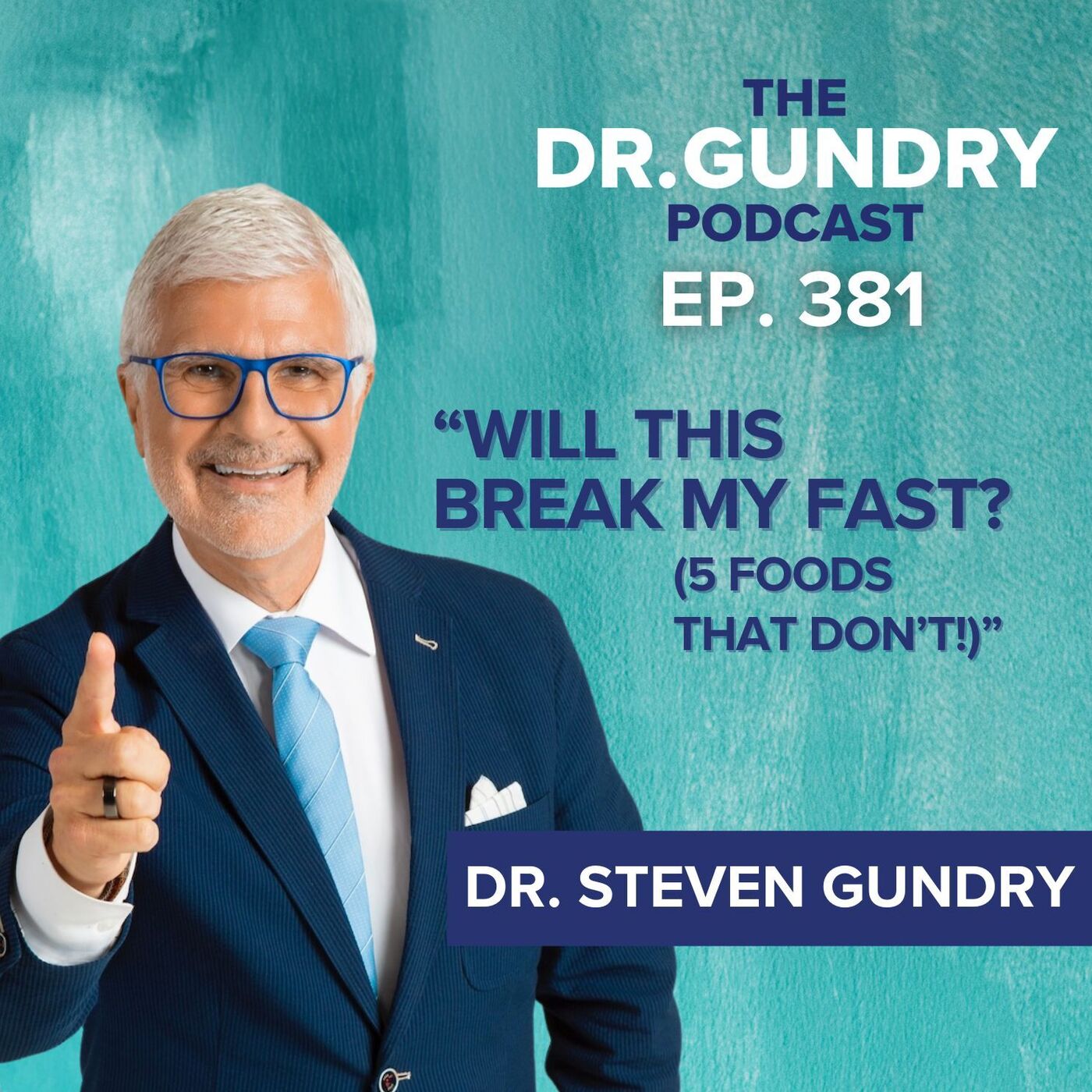
The Dr. Gundry Podcast
Feeling Hangry While Fasting? Here’s Why (and how to make fasts easier) | EP 381
00:51:45
Loading summary
Transcript46 lines
- [00:02]
Dr. Steven Gundry
Welcome to the Dr. Gundry podcast where Dr. Steven Gundry shares his groundbreaking research from over 25 years of treating patients with diet and lifestyle changes alone. Dr. Gundry and other wellness experts offer inspiring stories, the latest scientific advancements and practical tips to empower you to take control of your health and live a long, happy life.
- [00:26]
Podcast Host / Narrator
Today, we're diving in one of the most powerful and surprisingly simple tools for boosting your energy and supporting your overall health. Intermittent fasting or time restricted eating. If you've ever wondered what's happening inside your body during those fasting hours, you're in the right place. I'll walk you through the metabolic shifts, the cellular cleanup, and the natural repair processes your body switches on when you give it a little space from constant eating. We're taking on the question everyone debates what doesn't break your fast. Coffee? Tea? The Internet is full of mixed messages. I'm going to clear that up so that you can fast confidently without obsessing over every drop. And of course we can't ignore the big fasting mistakes people make. These slip ups can drain your energy, stall your progress, or turn fasting into something stressful instead of supportive. I'll show you the easy fixes that make fasting feel smooth, balanced and way more effective. Stay tuned. We'll be right back.
- [01:32]
Podcast Co-host / Announcer
If you enjoy learning about the latest breakthroughs in gut health, longevity and nutrition, then you'll love my free weekly newsletter. Every week I share exclusive tips, new discoveries and personal insights I don't always.
- [01:44]
Podcast Host / Narrator
Get to cover here on the podcast. It's your direct line to staying ahead.
- [01:48]
Podcast Co-host / Announcer
On the science of feeling your best. From foods that heal your gut to little known tricks for better energy and aging. So if you haven't yet, go sign up right now. Just check this episode's description description for the link or head to drgundry.com it's free.
- [02:07]
Dr. Steven Gundry
What happens to your body when you start intermittent fasting for a week? Well, the answer is going to come as a surprise. So here's the thing. The vast majority of people in this country have such high insulin levels have such insulin resistant levels are so metabolically inflexible that they absolutely do not do well with intermittent fasting. Shocking but true. You've seen in my last book and heard me talk that 50% of normal weight individuals in the United States are metabolically inflexible. Now just to review very quickly, normally our mitochondria should be able to take sugar glucose and turn it into ATP, our energy currency. They should also, when the need arise, instantaneously switch from burning sugar as a fuel to burning free fatty acids and ketones as a fuel that come from our fat cells and from our liver. And that switch should happen instantaneously, very much like a hybrid car can switch from gasoline powering the engine to the battery powering the motors. And that switch can happen instantaneously. But 50% of normal weight individuals can't make that switch. That means when they stop eating, they can't switch over to immediately drawing on battery power or releasing fat from their fat cells. And I'll talk about why that is in a second. If you look at overweight people, and the vast majority of Americans are overweight, 88% of overweight people can't switch between burning sugar and burning fat. And 99.5% of obese individuals, and that's a ton of us in the United States cannot make that switch. Okay, so why is that so important? Well, when you have high insulin levels, insulin is a fat storage hormone. And insulin's job is to take any extra food that you eat and store it for harder times. That makes sense. But insulin is going up and up and up in our bloodstream. As we eat more and more processed.
- [04:54]
Foods, we exercise less.
- [04:56]
So the vast majority of Americans have elevated insulin levels. So not only is insulin a fat storage hormone, but when insulin is elevated, it prevents fat from leaving the fat cell. It's literally blocking the exit. And until insulin levels fall, all that fat that's in all of our fat cells is literally locked in there. And you could stop eating, but you will not release the fat until your insulin levels begin to fall. And here's the bad news. It may take two to three to four weeks of dramatically reducing your food intake or your carbohydrate intake for insulin levels to fall enough to start releasing fat from fat cells. Number two, Ketones are made in the liver from free fatty acids that are released from fat cells. Ketones are designed to age your brain and your muscles in times of starvation by keeping the brain and muscles functioning. But if you can't release fat from from fat cells, then there's no free fatty acids going to the liver to make ketones. So what happens? You don't have any sugar in your blood, you don't have any free fatty acids in your blood, you don't have any ketones going to your brain. And what happens? You crash, you get headachy, you get weak, you get hangry. You just do not feel well. And that's your body saying, hey, I can't make this switch. So when people start trying to cut out a meal, cause they heard, oh, you know, I need to have my.
- [07:08]
Podcast Co-host / Announcer
First meal of the day at noon.
- [07:11]
Dr. Steven Gundry
And you're used to eating a breakfast at 7 o' clock in the morning. That's five hours of going without fuel, coupled with what you went through in the night, where you don't have any chance to keep your brain happy, much less your body happy. And that's why this is so difficult to do. I can't tell you the number of people, and I've written about this, who fail a ketogenic diet or an intermittent fasting diet because they just have too high an insulin level to access what they really need to do. And 60% of people who try a ketogenic diet, a low carb, high fat diet, quit after a month. And it's obvious why they quit because they, quite frankly feel miserable. Now this will happen if you are insulin resistant, I guarantee it. I like to use the example.
- [08:20]
I could have King James LeBron teach me how to dunk a basketball. And as much as he would show me over and over and over again, I am height impaired compared to King James. And as much as I would like to replicate exactly what he was doing, I can't do that. So when you see influencers, particularly young influencers, who tell you how easy it is to do an intermittent fasting program, these are people who start with metabolic flexibility. And they're right, it's really easy. Once you have metabolic flexibility, this is easy. But most people are starting from a place where they, with all the instruction in the world, with all the, here's what you should do. Can't get off the dime because they can't break their metabolic flexibility. All right, so how do we do it? Well, as I've talked about in my last two books, there's actually a fairly easy way to get metabolic flexibility and rather jumping in the deep end of the pool and trying to push out your fasting period. What I ask you to do is one hour a week extend when you're going to have breakfast. So if you have breakfast at 7 o' clock in the morning this week, we're gonna have it at 8 o' clock in the morning and then take the weekend off, relax. The following week we're gonna extend another hour. We're going to go to 9 o' clock in the morning and so on each week rather than going, oh, you're not going to eat until noon and you'll fall on your face. Any of us can make it for one hour. And even that one hour change, going slowly week after week, will start to lower our insulin resistance. And, and I see this all the time now, there's places where people kind of run into a brick wall. Let's suppose you made it to 9 o' clock and you're pretty good at that, but then pushing to 10 o', clock, then you go, oh, you know, I'm hungry or I'm feeling weak. That's actually telling you that this is, you still have insulin resistance and this is where you're running into trouble. And as I talk about in the books, we got lots of tricks. One, get yourself a handful of nuts, it won't break your fast. Have a teaspoon or a tablespoon of MCT oil, have a bar that contains MCT oil. These are really easy tricks. And just hold it at nine o' clock for another week and then try for nine, 30, lots of different ways. The other thing that I think is important that I've talked about before is when you break your fast, the first meal of the day, make it what's called a mono meal. Make it either mostly carbohydrates or mostly protein or mostly fat. That actually makes it much easier for your mitochondria to power up and make energy. Now how do you know when you're metabolically flexible? Well, quite frankly, the longer you can go without these feelings, the more you're becoming metabolically flexible. So long story short, for most of us, please, please, please do not jump off the deep end and try time.
- [12:17]
Podcast Co-host / Announcer
Restricted eating of six to eight hours a day.
- [12:20]
Dr. Steven Gundry
It's going to not work. Instead, try time restricted eating on a variable schedule of just extending your eating period one hour a week and watch what happens. The point of this is doing intermittent fasting for one week. You're going to see some most likely bad effects. But if you slowly but surely, week after week, extend your intermittent fasting period, you're going to feel the benefits, you're going to see it on the scale. And that's what I'm looking out for you to do.
- [12:58]
Podcast Host / Narrator
This time of year, the kitchen becomes the heart of the home. Holiday dinners, family recipes, last minute meals, it all happens there. And if you're cooking more than usual, it's the perfect moment to take a closer look at what you're cooking with. Because here's the truth. Most nonstick pans still contain Teflon and, and pfas, those forever chemicals that can get into your food and your home. That's why I switched to our place. Their cookware is completely toxin free, beautifully designed and incredibly easy to use. Their four piece cookware set replaces a whole cabinet you can fry, saute, steam, roast and bake with just four pieces and clean up. Practically effortless. If you want to upgrade your kitchen or give someone a gift they'll appreciate all year long, now is the time. Our Place is having the biggest sale of the year with savings up to 35% off site wide through January 12th. Just head over to from our place.comgundry and no code needed. Make this holiday season cleaner, safer and so much easier. With Our Place.
- [14:11]
By the time December rolls around, most of us are running on fumes. Events, travel, family, work. It adds up. And honestly, the thing I crave most at the end of the year is simple rest. That's exactly why I love Cozy Earth. They're Vicose from bamboo sheets and that unbelievably soft bubble cuddle blanket transforms your home into the place you want to be. These aren't gifts that get tossed aside after Christmas. They become part of your daily wind down routine. And with a 100 night sleep trial and 10 year warranty, cozy Earth stands behind every bit of comfort they create. So if you want to give someone or yourself the gift of a real reset this year, go to cozyearth.com and use code GUNDRY for up to 40% off. Just order by December 12th for Christmas delivery. And don't worry if you're listening after the 12th, the code still gives you 20% off all year. Start the new year Cozy.
- [15:13]
Dr. Steven Gundry
Now. Fasting is all the rage, but it doesn't have to mean total deprivation. In fact, there are a few smart things you can consume that won't break your fast and may even make your fast more effective. Whether you're fasting to support your gut, burn fat, improve mental clarity, or extend your health Spanish this episode is for you. I'll walk you through the surprising foods and drinks that won't disrupt your fasting window, and a few sneaky ones that might just break your fast. Plus, I'll share some tips on how to fast smarter, not harder. But before we get into it, please don't forget to like this video. Subscribe and share it with someone who needs a little fasting clarity. Now a big question is, does whatever you're going to put in your mouth stop ketone production? And quite frankly, that's all you should be paying attention to. The reason you're doing a fast, an effective fast, or what I call time restricted eating, is to spend more time in a 24 hour period where you're producing ketones. Now, ketones are a fuel for cells, but ketones really are useful for one thing and one thing only. Ketones tell your mitochondria your energy producing organelles in almost all of your cells to waste calories, to uncouple, to repair themselves, and simultaneously to make more mitochondria to help with the efforts. So anything that we can do to produce ketones for a longer period of time during a 24 hour period is a good thing in my and many other people's opinions. And that's where the entire idea of time controlled eating or time restricted eating came about. So here's the good news. Black coffee or tea with no sweeteners are the real deal. These can actually help with energy and mental focus while fasting. Black tea and coffee have polyphenols, which actually helps further mitochondrial uncoupling without being in ketosis. So black coffee, black tea, green tea, Great. Now, the problem with milk in your coffee or tea is that milk contains sugar. But good news, heavy cream has no sugar, and heavy cream will not break a fast. But unfortunately, heavy cream cancels out the polyphenol availability. And you can add allulose or monk fruit. That doesn't break the fast either. Just remember, in general, fats do not spike insulin. Fats have no effect on insulin production. And just as a refresher course, sugars promote insulin production and proteins promote insulin production. And anytime your insulin rises, that shuts off the flow of free fatty acids out of fat cells. And with rare exception, it shuts out the production of ketones in your liver. Now, there's one exception, MCT oil. But the great news is that MCT oil, unlike any other fat, is absorbed directly through the wall of your intestines and goes directly to your liver, where it actually promotes ketone production, regardless of what your insulin level is. Now, this is in a way miraculous because adding MCT to your regimen will guarantee that you will manufacture ketones. Now, what I like people to do is stick with small amounts. Initially, you want to start with a teaspoon and work your way up to a tablespoon. And preferably, you want to have about 3 tablespoons of MCT oil per day. And particularly look for MCT C8 MCT. That's the most ketogenic of the MCT oils. Good news, my very popular product, MCT Wellness, doesn't break your fast. But we'll discuss more about that in a minute. Basil seeds. Now, while I haven't seen any research saying they won't. I suspect basil seeds will not break your fast. Now, here's why. Basil seeds basically expand in water very much like chia seeds, but they have even more fiber, meaning that when you eat basil seeds, they're great for making you feel full and staying hydrated. The great thing about it is that basil seeds are eaten by your gut microbiome, the good guys, and they actually tell your brain that they're getting what they like to eat, and you don't have to be hungry. You don't have to look for anything more. Similarly, psyllium husk. Now, psyllium husk is basically pure soluble fiber. Now, this supports digestion without breaking your fast, so it's easy to use. Put it in water or tea, please don't put it in juice or use sweeteners. It will absolutely keep you feeling full and curb cravings. Now, there's a study that I've mentioned in the last couple books that is really exciting to me. And there's a theory called the gut centric theory of hunger. The Chinese took volunteers and put them on a water fast for two weeks. All they got was water. Half the group got 100 calories per day of non absorbable soluble fiber. We can't digest it, we can't absorb it as a fuel, but our gut buddies think it's delicious. That's their fuel. The group that just had water were obviously very hungry. The group that got the hundred calories a day of, like, psyllium powder had no hunger for two weeks on a water fast. Why is that? Because their gut buddies got what they wanted to eat, and they literally sent text messages up to the brain. Like, for instance, GLP1 that says, hey, our needs are met. You don't need to go look for anything else. We're fine. And the more we study the really deep connection between the good guys in our gut and our hunger centers in our brain, we realize that it's the gut bugs that are driving hunger. Not stretching out your stomach, not bulking up. It's what these guys want to eat. So if you're struggling with going a longer time between meals, don't be afraid. Please add these soluble fibers. They won't break your fast, and they'll support that you're not hungry. Okay, what else works? Nuts work. Now, this is controversial, but my friend Dr. Valter Longo's research in humans show that in small amounts like a handful of pistachios, macadamias, or Brazil nuts are okay during fasting, mimicking protocols. Now, he gave People who were fasting one of his nut bars and it's called the fast bar for their morning meal. The other group had to wait until lunch for their first meal. And he studied ketone production and that bar did not break ketone production. Now that's the only study that I know that's ever been done in humans, so you can decide if that's enough. But please avoid flavored nuts like salt and pepper or chili nuts or sugar nuts. Almost all of these have hidden sugars in the ingredients. And remember, sugar and or protein will break your fast. It will stop ketone production. All right, let's talk about supplements now. I love hearing from you. I get these questions all the time about what will break fast, what doesn't. Now supplements like electrolyte powders are great and they do not break a fast. But please avoid anything sweetened with sugar or oftentimes fake sugars. Now my MCT Wellness or Vital Reds which I'm drinking right now are just fine. If you're using another brand of powder supplement, here's what to watch out for that will kick you out of a fasted site. Just look for hidden sugars or proteins. I get asked all the time about gummy supplements now for the most part you should skip these as a majority of them have sugar in them. Now I'm happy to say that our Gundry MD gummies do not break a fast because they use prebiotic fiber as their sweeteners and that gives your gut buddies something to eat. Now natural sweeteners like stevia or monk fruit probably don't break a fast, but it's always something to watch for other things to watch out for. Chewing gum? Yes, even sugar free activates digestion and actually may pull you out of a fasted state. And be wary of healthy fasting drinks that contain collagen, protein or flavor boosters with sugar or amino acids. You have to remember that not only does sugar up your insulin production, but also protein consumption ups your insulin production. And once insulin rises, insulin shuts off release of free fatty acids from cells. And without the release of free fatty acids from cells, you're not going to make ketones with the exception of if you're consuming MCT oil. So use these fasting safe options strategically to help you push through your non eating window, especially if you're doing longer fasts like 16 plus hours.
- [26:02]
Dr. Anurag Singh
Our cells are constantly renewing themselves, but as we age they start to need help keeping up. That's where Urolithin A comes in. I'm Dr. Anurag Singh, MD, PhD and Chief Medical Officer at Timeline. I've spent years researching this remarkable nutrient and what I have learned has the power to change the way we age. Urolithin A targets common signs of aging at the root. By revitalizing the mitochondria, the bottom battery packs of the cells for the first time, you can easily incorporate it into your routine. With Mitopure, the only clinically proven urolithinase supplement on the market. One daily dose of Mitopure boosts energy production, improves muscle strength and enhances endurance even without a change in exercise. It's so powerful that it's the number one doctor recommended longevity supplement trusted by elite athletes and health experts. Empower your cellular health with Timeline, powered by Mitopur. Visit timelinenutrition.com gundry10 and use code GUNDRY10 for 10% off your first order. That's timelinenutrition.com GUNDRY10.
- [27:19]
Dr. Steven Gundry
Now these tricks I found with my patients really help first time time restricted eaters ease into the habit of shortening their eating window and lengthening their non eating window without crashing or stressing the body. And please remember, fasting should support your health, not stress your system and you really need to adjust when needed. Now I just want to reiterate what time controlled eating or fasting actually is. Remember, the object of the game is this is not personal suffering. You're not going on a religious quest. What I get from my patients is not about being hungry or being a monk in a monastery. Fasting means that you are going to limit the amount of time during a 24 hour period where you're not eating. That's what that means. Means going 24 hours without eating, going 48 hours without eating, going two weeks without eating more and more. We're realizing that's not a good idea for reasons that I've gone into on other podcasts. But the more we can stay in a continuous period of fasting beyond about 12 hours, the more benefit we get from mitochondrial uncoupling, which may be the greatest healthspan longevity trick there is. The good news is that once we stop eating about eight hours later, if you are metabolically flexible, you will start making ketones as a natural process of not eating. So that means let's suppose you stop eating at 8 o' clock at night and you go to bed at 10. About 4 o' clock in the morning you will start making ketones and you will start uncoupling mitochondria and you'll start getting the benefits that Ketones give, but if you start eating at 8 o', clock, you only got about four hours of benefit. If you start eating at 9 o', clock, you get five hours of benefit, 10 o', clock, six hours of benefit, 11 o', clock, seven hours of benefit, noon, eight hours of benefit of being in ketosis. So the longer I can push that out, the better you're going to do. And this has been confirmed in human studies, particularly the Italian athlete studies who a seven hour window had remarkable benefit from in reducing insulin like growth factor in improving performance. So the more I can get you to a six to eight hour eating window, the better you're going to do. And again, you don't want to do this overnight. You don't want to dive into the deep end of the pool without learning how to swim. And that's why taking baby steps of pushing break fast a little farther each morning, each week, it's going to make a big difference. And know the tricks when you're not doing well, when your brain isn't working well, when you're getting hangry, you can give your gut buddies what they want to eat and keep going. And so these tricks that we've just talked about are a good way of getting food into your stomach that isn't going to break your fast. So if you really want to do Dr. Longo's fasting mimicking diet, you know that a week long vegan fast once a month works wonders compared to daily time restricted eating. And I have that vegan week long fast in multiple of my books. You just have to eat vegan for five days. That's pretty doggone easy. So with the right tools, you can make fasting more sustainable and more powerful. So stick to this list, listen to your body and as always, let your gut be your guide.
- [31:28]
Podcast Co-host / Announcer
The three worst fasting trends. All right, fasting is the health trend to juror, no doubt. And that's why there's a lot of misinformation out there about this ancient health practice and a cornerstone of almost every religion to achieve enlightenment everyone is talking about. But not everyone knows the dangerous side effects if you don't fast correctly. Now don't get me wrong, fasting is.
- [31:56]
Dr. Steven Gundry
One of the keys to longevity and vitality.
- [32:00]
Podcast Co-host / Announcer
But you need to know how to do it properly in order to reap the maximum benefits. So today I'm going to address the top three fasting trends to avoid at all costs and what you can do instead. All right, number one, cutting your window of eating too drastically. Now, if you read any of My books, my favorite way to fast is intermittent fasting or time controlled eating. Now that basically says that we're going to shorten the period of time during the day that we consume our food. That's intermittent fasting. Time controlled eating means we shorten that window, preferably down to about six to eight hours a day. Now, as I talk about a lot in unlocking the keto code, unfortunately, if you're eating used to eating 12 to 16 hours every day, and the average American, believe it or not, eats 16 hours a day, literally from the minute they get up to the minute they go to bed. And as I show in my last two books, most of us are insulin resistant and metabolically inflexible. That means when you stop eating normally, you should be able to, instead of using glucose as a fuel, sugar, use free fatty acids. Fat is a fuel. But the vast majority of us can't do that. And when we stop eating within a few hours, our glucose stores fall dramatically. That could be compensated by using fat as a fuel. But most of us can't use fat as a fuel. So we crash, we get headachy, we get grouchy, we get dizzy, we get worse. And that's why so many people fail at time restricted eating. Now, as I talk about in my last few books, what I want you to do, if you want to do this, is gradually decrease the amount of time that you eat your food. So for instance, if you eat breakfast at seven o' clock in the morning this next week, let's eat breakfast at 8:00 in the morning. I just want you to wait one.
- [34:28]
Dr. Steven Gundry
More hour, accomplish that, take the weekend off.
- [34:32]
Podcast Co-host / Announcer
The next week we'll do nine o' clock in the morning. That's just one more hour. Gradually work your way out to about a 6 to 8 hour eating window. That means eat breakfast at 11 o' clock in the morning, finish dinner at 7 o' clock at night, that's an 8 hour window. Want to compress it to 6? Eat breakfast at noon, finish dinner at 6 o'.
- [34:56]
Dr. Anurag Singh
Clock.
- [34:57]
Podcast Co-host / Announcer
Fantastic health benefits, but you don't jump off a 10 story building to do that. I've seen it fail so many times. Just avoid that at all costs. All right, how about a prolonged water fast?
- [35:12]
Dr. Steven Gundry
Now of course, this is the most.
- [35:14]
Podcast Co-host / Announcer
Well known historically speaking approach to fasting. Even Jesus is said to have done it for 40 days and 40 nights. And almost all great religions have some form of prolonged water fasting. There's clearly benefits in ancient times to water fasting, but not so fast. Excuse the pun. Most of us store our heavy metals and organopesticides in our our fat cells. So when we stop eating anything for a continued period of time, we release not only fat from our fat cells, but those heavy metals and organopesticides. We have a horrible detoxification system in our liver to eliminate these problems. In fact, Ray Walford, the famous UCLA professor who was the doctor on the Biosphere 2 experiments in the Arizona desert, documented, in that group of people who literally starved for six months, their levels of heavy metals and organopesticides went up dramatically and remained dramatically high for a year following re eating. That's because they put them into their bloodstream and they couldn't get rid of them. So right now, for Americans, water fasting is dangerous because of that fact.
- [36:55]
Dr. Steven Gundry
Now, if you want to do that.
- [36:57]
Podcast Co-host / Announcer
Understanding the risk, you want to absorb those heavy metals and organopesticides by taking chlorella tablets and activated charcoal that will bind those heavy metals and prevent them from being reabsorbed into your system. But you don't need a prolonged water fast. Instead, time controlled intermittent fasting will have just as good an effect on or as my friend and colleague Dr. Walter Longo has shown, a fasting mimicking diet which uses a five day low calorie vegan fast once a month, has been shown to duplicate the ability of a water fast in terms of health benefits without the danger of the heavy metal and organopesticide release. So lot better and safer ways than a water fast. All right, and the drum roll please.
- [38:07]
Podcast Host / Narrator
For the worst fasting mistake that I.
- [38:10]
Podcast Co-host / Announcer
Have seen, the fruit fasting detox diet. Most of you have heard of this. It's basically all you do is for three to seven days, drink or eat.
- [38:26]
Dr. Steven Gundry
Lots and lots of fruit, lots and.
- [38:28]
Podcast Co-host / Announcer
Lots of fruit juices. I know it's touted to clean out your system, help you lose weight and reset your digestive system, but I think this is actually the worst idea. Just remember, fruit is loaded with fructose, fruit sugar. Fructose is the best way to cause uric acid to increase in our blood, which causes gout and kidney stones and high blood pressure and diabetes. I've had several patients recently go on these fasts for fun as an experiment. And we looked at their blood work before and after and they were shocked, every one of them. To look at their triglyceride numbers, go sky high. To look at their liver enzymes, go sky high. These were liver detox diets and yet their liver enzymes got worse, their uric acid levels went sky high. And one of them doing it for a month became a diabetic.
- [39:43]
Dr. Steven Gundry
So please, you do not need a fruit detox.
- [39:49]
Podcast Co-host / Announcer
This is the worst way, in my opinion, to toxify your diet. If you want to do a vegan fast, like I write about in all my books, you're going to be much better off and much safer.
- [40:05]
Podcast Host / Narrator
Most people think they're drinking enough water, but if you're still feeling tired, foggy or crampy, you're not actually hydrated. You're missing electrolytes. That's why I'm such a big fan of Element. Element is a zero sugar electrolyte drink mix designed to give you a meaningful dose of electrolytes. No artificial jug, no weird colors, none of the usual dodgy ingredients you'll find in sports drinks. And just in time. There once seems seasonal lemonade. Salt flavor is now permanent, bright, tangy, refreshing. It's become my go to. It's no wonder Element is used by everyone from Olympic athletes and Navy SEALs to high performers and busy parents because it just works. And I've got a special offer for you. Get a free 8 count sample pack with any purchase when you go to drink lmnt.com gundry try every top flavor, find your favorite or share with a friend. If you don't love it, Element refunds you no questions asked. That's drink l m n-t.com Gundry Stay hydrated the right way.
- [41:23]
This episode of the Dr. Gundry podcast is brought to you by Progressive Insurance. Do you ever think about switching insurance companies to see if you could save some cash? Well, Progressive makes it easy. Just drop in some details about yourself and see if you're eligible to save money. When you bundle your home and auto policies, the process only takes minutes and it could mean hundreds more in your pocket. Visit progressive.com after this episode to see if you could save Progressive Casualty insurance companies and affiliates. Potential savings will vary. Not available in all states.
- [42:02]
Podcast Co-host / Announcer
Today, it's all about mct. If you've ever wondered why MCT oil is praised by biohackers, keto fans and longevity researchers alike, why it might have sent you running to the bathroom, don't worry, we're going to clear things up today and you'll have the knowledge to determine if it's right for you. So what are MCTs and why are they so special? MCT stands for medium Chain Triglycerides, a unique class of fat that behaves unlike any other fat in your diet. Now, these fatty acids are instantly absorbed without the aid of digestive Enzymes. And even more impressively, they don't need any special molecules to help them cross the gut wall. What that means is that unlike other fats, they go straight to the liver where they're rapidly converted into ketones. Now, the cool thing is that this process happens regardless of your carbohydrate or protein intake, which makes mcts a nutritional powerhouse. You can generate ketones as you would through fasting or a strict keto diet, but while still enjoying a plate full of plant based foods. This is why I call mcts the goat of this program, the greatest of all triglycerides. So are all MCTs the same? Well, unfortunately, no. Now, MCTs include valeric acid, caproic acid, C6, caprylic acid, C8, and capric acid, C10. Now, these names actually come from capra, the Latin word for goat, because C6, C8, and C10 are all found in abundance in goat's milk.
- [43:55]
Dr. Steven Gundry
Now, just make sure you have your.
- [43:57]
Podcast Co-host / Announcer
Goat dairy products fermented, please. Like yogurts, like cheeses, like kefirs. And when it comes to helping your body melt fat, see, C8 is the star. Why don't you see a lot of C6 MCT oils out there? Well, quite frankly, C6 is a really good ketogenic MCT oil, but it smells goaty, and so it's not included in most products because most of you really don't want that goaty flavor and smell. So when it comes to helping your body melt fat, C8 is the star. It's the most efficient at converting into ketones, helping you give clean cellular energy fast. Now, coconut oil does contain MCTs too. In fact, most MCTs are made from coconut oil. But there's another MCT called lauric acid, which is C12. But despite its height, lauric acid acts more more like a long chain fat and has little to no ketogenic effect. Also, in my practice, coconut oil is not good for APOE4 gene carriers, which is about 30% of the population. For those of you who don't know, it's labeled the Alzheimer's gene. So if you want real results, pure C8MCT oil is the way to go. Also, taking MCT oil while you're fasting is a great way to extend your fasting window and calm any cravings that you may be having. However, even the best MCT oils can be rough on your gut. Some of my patients, particularly women, experience bloating, cramping, or emergency bathroom runs. That's because most MCT oils are unbuffered. And absorbed so quickly that your system may not be ready for them. Now, interestingly enough, I learned firsthand from my patients that women tolerate powdered MCTs much better than liquid MCTs. And in fact, that's why in my product, MCT Wellness, we use powdered MCTs. And luckily, that's a real winner. Now here's where it gets interesting as to whether mcts versus olive oil is going to help people lose weight. In a 2008 study from Columbia University, two groups of overweight participants were fed the same number of daily calories. One group used olive oil, the Mediterranean diet superfood, which I love. The other used MCT oil who lost more weight. The MCT group. They actually generated more body heat, burned more oxygen, and lost more weight than the olive oil group, not because of eating fewer calories, but because of how their bodies used those calories. In another study, the MCT group lost an average of 3.7 pounds more than the olive oil group, thanks to what I call wasting calories or caloric bypass. And you do this by uncoupling mitochondria through metabolic and heat activity. Okay, so where else can I find MCTs? Well, you can find MCTs in MCT oil, MCT powder, and in goat, sheep and water buffalo milk products like yogurts and kefiras or cheeses, which naturally contain up to 30% MCT. But if you're looking for a gentler, more efficient way to get your mcts daily, that's where MCT Wellness comes in. I wanted a better solution for my patients, one that delivered the clean energy of C8 without the digestive distress. So I formulated Gundry MD MCT Wellness, a powdered product that combines C8, MCT oil, acacia fiber for gut supplies, support polyphenol rich extracts like red currant and grapefruit. And it comes in three delicious flavors, from watermelon to blueberry to lemonade. And you can add it to your water or for something different, add it to your coconut yogurt for breakfast for a yummy treat. It mixes easily, tastes great, and gives you all the benefits of mcts without the bathroom drama.
- [48:38]
Podcast Host / Narrator
Now it's time for the review of the week. The review of the week comes from ikekenny 1947 over on YouTube. On my episode with Ben Azadi, he said, I found Dr. Gundry's approach, got some of his products. Ten years later, my A1C has gone to five and I weigh 50 pounds less. Thanks, Dr. G. It's not just your content that saves lives. It is your Core Calm Encouragement. Well, thanks very much. Mike Kenney, 1947. You know, I've been learning from my patients for 30 years now about what works and what doesn't work. In fact, just yesterday I learned from several patients that what they thought would work, in fact didn't work. And so we both learned from that experience. And I'm happy to pass it on to you. And you're right. Let's stay calm and carry on. Time for the Question of the Week the Question of the week comes from stewart100 over on Instagram about the benefits of mushrooms. They asked, what do you think of mushroom coffees and mushroom chai tea beverages? Well, as you know, mushrooms have a lot of important compounds like ergothionine, like bdna. And equally as important that we tend to forget is that the mushrooms themselves are composed of long chain polysaccharides. Polysaccharides means lots of sugars, and those polysaccharides are some of the favorite foods of our gut buddies. So while I'm impressed with the ability of mushroom coffees or mushrooms powders to put in your coffee, let's not forget that mushrooms themselves give an added benefit. So load up. Now, in the question about chai tea, remember that polyphenols are usually bound by dairy products, so putting a dairy product in a mushroom coffee, or regular coffee for that matter, probably negates the benefit you're trying to have. Even though it tastes pretty doggone good.
- [51:02]
Podcast Co-host / Announcer
Holidays are brutal, so if you're feeling.
- [51:05]
Dr. Anurag Singh
Frugal string pluto tv stream pluto tv.
- [51:15]
Dr. Steven Gundry
Stream blockbuster hits like 21 Jump Street Ted, the Expendables, and so much more.
- [51:19]
On Pluto TV stream now pay Never.
- [51:24]
I hope you enjoyed this episode of the Dr. Gundry podcast. If you did, please share this with family and friends. You never know how one of these health tips can completely transform someone's life when you take the time to share it with them. There's also the Dr. Gundry Podcast YouTube channel where we have tens of thousands of free health insights that can help you and your loved ones live a long, vital life. Let's do this together.