Loading summary
Transcript160 lines
- [00:02]
Ed Milan
Now at Lowe's, faster quotes start at the Lowes Pro desk. Got a material list handwritten on a sticky note or saved as a photo. Perfect. Bring it to us and get a quote in minutes. And if you don't see what you need on the shelf, we'll help you get it. You can access thousands of products beyond what's available in store or on lowe's.com right from the Lowe's Pro desk. Build quotes faster and source the materials you need to keep your jobs moving. Just like that at Lowe's.
- [00:31]
Hear that? That's now crispy and McCrispy strips meeting creamy Caesar sauce. Sounds extra crispy caesar sauce at McDonald's for a limited time.
- [00:50]
This is the Ed Milan show.
- [00:53]
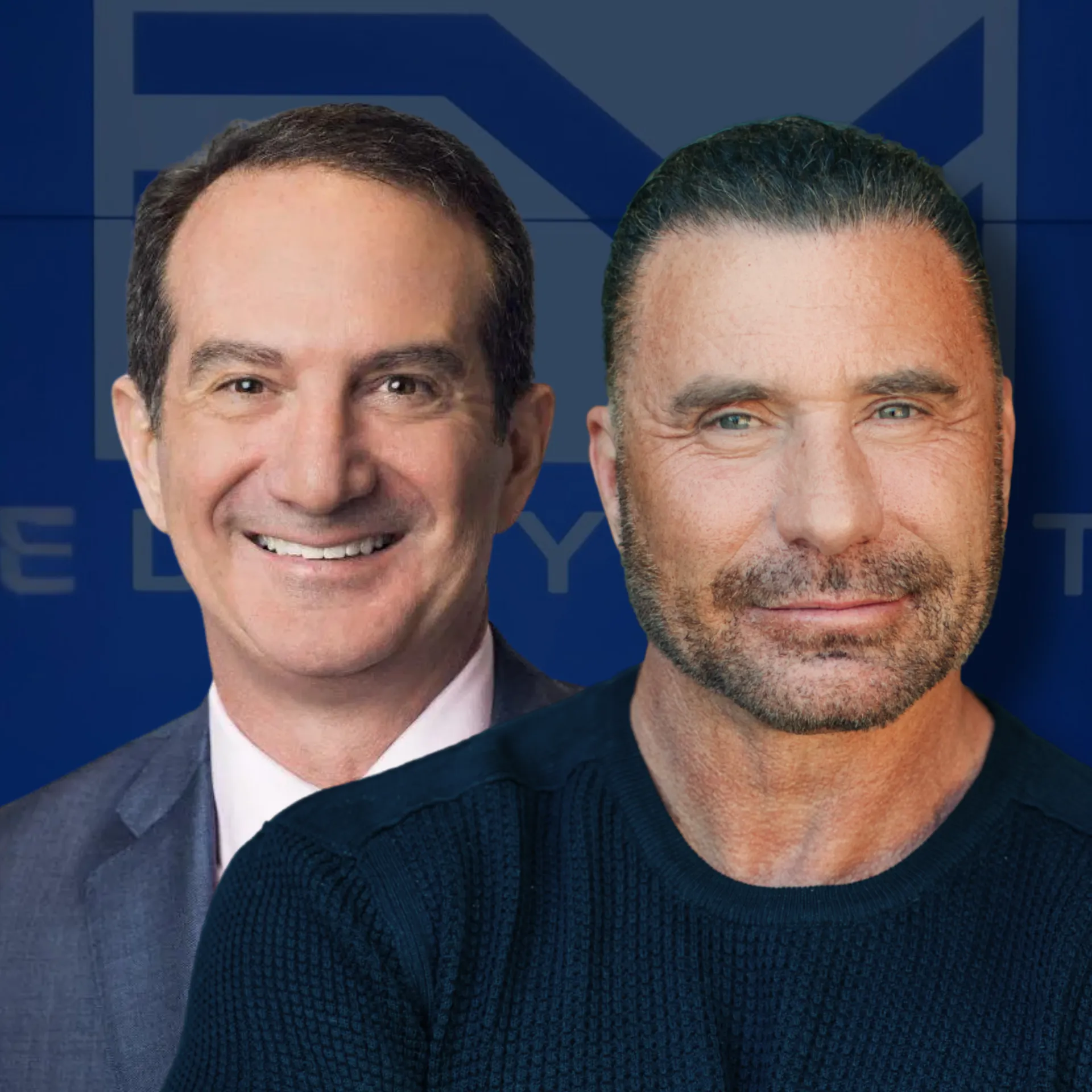
Welcome back to the show, everybody. I am really grateful my guest is here here today because I have to tell you his work has made a huge impact on me. I was telling him off camera, I want him to hear it on camera during the interview. But what we're going to talk about today, you guys, is money, is financial peace, is freedom, is having a system to get your act together financially. And I can tell you that I'm not going to be the one giving the financial advice today. He will be. But it's something you should lean in and listen to very closely. You're going to learn a bunch of things. Today he's a 10 times New York Times bestselling author. But more than that, he's a tremendous financial educator. And the things he teaches are time proven. They're not just for the last two or three years. They're not the most recent flashy thing that you should do with your money. They're time tested principles. And I want you to know I attribute what he teaches the vast majority of any wealth I've accumulated and the financial freedom in my family. And a book I read about 15 years ago is called the Automatic Millionaire. And he sort of, it's, it's, it's have a renew. It's having a resurgence now as he's sort of like, I guess you'd call it a re release. But it's always been out. But there's been some updated data in it and this is going to be outstanding today you guys, with David Bach. David, welcome to the show.
- [02:07]
David Bach
Wow, Ed, thank you. I'm, I'm super touched because I'm a fan of yours. So you had a huge impact on my son as I was telling you before this show. Yeah. And I'm just grateful to be with you. So thank you very much for having Me. I know you have a huge audience. People love you, and it's an honor to be with you.
- [02:22]
Ed Milan
Oh, thank you so much, brother. Like I told you, right. When we were. Before we recorded, I said some of my concerns are the things we're going to cover today, ironically, are almost counterculture now. And I have to tell you guys, the things that David teaches in this book, I started doing before I read the book, but it validated what I was doing. And then I took it to a new level after I read the book. I want to start with just some context. I want to lean right in. You updated the book a little bit, and so the beginning, there was a stat in there that sort of blew my mind, because this idea of becoming a millionaire for most people, including me, when I was younger, that's just impossible, Right? I'm just trying to pay my bills every month, and if there's something left over, I would go to a nice dinner, which is a lot of the mistakes people make. You say in the updated version of the book, this is staggering. Just to kind of demystify the concept, there are 24 million millionaires just in the United States today. Is that correct?
- [03:15]
David Bach
That's correct. And the number is higher now, right? Because I just. The book just came out in January as an update. But the reality is that number just keeps growing. And we're about to go into the greatest decade of wealth building that we've ever seen in our lifetime.
- [03:30]
Ed Milan
Right.
- [03:30]
David Bach
The ability to make money is just getting easier and easier and faster and faster. And so millionaires are being created at a record number. But, like, you have to be honest, Dad, I launched this book 20 years ago on Oprah, and there were about a little over 7 million millionaires in America. So to go in 20 years from 7 million millionaires to 24 million millionaires, and that number is expected to double in less than 10 years. What's happening is when you look around is. And not everybody's there, right? Not everybody's millionaires, but as you look around, it seems like everybody's getting rich, except for a lot of people feel like everybody's getting rich but me. And the reason I decided to put this book out one more time is I've got young kids. I know Max, who's producing your son. You've got two kids that are similar ages. And I wanted to make sure that my kids learn the same lessons that I learned at their age. And I wanted to make sure the next generation learns, because I know you have a lot of people listening to you. Between the age of 25 and 35. And that's like the golden decade for many people. Because if you can start investing and saving and doing all the right things automatically when you're young, the rest is easy.
- [04:42]
Ed Milan
Yep.
- [04:43]
David Bach
And I'm worried that we're leaving people behind. I think we're leaving a generation behind right now.
- [04:47]
Ed Milan
We are.
- [04:48]
David Bach
That's a problem.
- [04:49]
Ed Milan
There's no question about it. And one of the biggest culprits of it. There's a lot of good things about social media, but everyone's driving a Lambo. It feels like everyone's on vacation in the Caribbean. And even this idea of being a millionaire, you know, guys, David and I, at our age, being a millionaire was a pretty good thing and a big deal 25 years ago. 20 years ago. It's not that big a deal now. It's meaning that I'm not saying it's not an achievement, but it's sort of a minimum. If you're ever going to get free is to get to that status and beyond it for most of you. And so I want David to kind of COVID some of the things I learned in my life young that most people. It's just not taught anymore. So the first thing, David, that is in the book that stands out to me, this is huge. Everyone, because you're. Most of you aren't doing it. And I love you and I want you to begin to live like this or at least begin to teach your children this. Okay? And that is the notion. When I was young, my first job out of getting blown out of baseball was I went to work at an orphanage, a group home, a big one on, like, a campus called McKinley Home for Boys. David. And I was making minimum wage, but I had just been introduced to the concept of paying yourself first. And so what I did was I had an apartment that I had to pay rent on. At the time, I was not living at home anymore. My dad had sort of said, get out of the house, you got a job now. So I'm paying rent every month. I had a car that I had to take care of. I had. First time in your life, you know, you're out of college. I'm responsible for my auto insurance. I'm responsible for car repairs. And I was on minimum wage, but I started a $20 a month automatic payment into a mutual fund when I was 22 years old, starting to pay myself first. I want you to talk about that concept and what it means and why it's so important to do even when you're not making a lot of money.
- [06:33]
David Bach
If I were there with you live, I would just, I would high five you right now.
- [06:36]
Ed Milan
Right.
- [06:37]
David Bach
Because the secret to building wealth, and it's really not a secret, it's a system, is those three words. You have to pay yourself first when you get a paycheck. And you have to understand how money actually flows in the real world. So in the real world, when you earn a paycheck right. Now, who normally gets paid first is the government. Uncle Sam. Right. So you go to work. If you have a job, you go to work at 9 o'. Clock. And most Americans pay pay taxes on the first three hours a day of their income. They actually work until 12 o' clock for taxes. Makes you kind of want to come to work after lunch, Right. I always joke about this. Then you pay everything else. You pay your, your rent or your mortgage. You pay, you know, eating, health care, car bills. And what happens is most people hope that there'll be a little bit of money left over at the end of the day to then save and invest.
- [07:29]
Ed Milan
Correct.
- [07:30]
David Bach
And what happens is the end of the day, there's not anything left to save and invest. And then they live paycheck to paycheck. So the secret to building wealth, and it's not a secret, it's a system, is that on any income, you have to make a decision. And that's the key. You have to make a decision that the first person who gets paid is you.
- [07:52]
Ed Milan
Yep.
- [07:53]
David Bach
That single decision changes your whole life. Now when I go, now when I break it down, you're going to break it down like what that looks like?
- [07:59]
Ed Milan
Yeah, sure.
- [08:00]
David Bach
You know, you, you saved $20 out of each paycheck. Typically what I teach is you need to keep the first hour day of your income. So whatever you earn an hour, it could be a minimum, it could be minimum wage. You could be making $20 an hour, $30 an hour, $50 an hour, whatever you make an hour, the first hour day of your income's got to get saved right off the top. Now the, the, the best way to do that, to get paid, pay yourself first, is that you automate it. So if you have a job with a 401k plan, you automatically move and the percentage is 12 and a half percent of your gross income. That's one hour a day of your income. I let my kids, I don't want them to save 12 and a half percent. I actually want them to save 15% of their gross income. But at a minimum, you need to save at least 10. Right. So keep it simple. One hour day of your income automatically goes right off the top into a 401k plan or retirement account. Now, this is super important. It's all about automating it, meaning the money has to move automatically from your paycheck into these retirement accounts. And you talked about mutual funds into mutual funds into investments. Because if you require discipline, if you need a habit, if you need psychology, these things don't work. These things don't work long term. What works long term is automation. So when you look at how are there 24 million millionaires in America right now? Here's the next number that's staggering. And there's $45 trillion now, that's with a T in retirement accounts. That's all got there in the last 40 years. Now, the bulk of it's got there in the last 20 years. It all got there through automation, meaning people aren't thinking, they're not spending time on this. Money's being moved in the background while they sleep, while they work is being moved without them touching it. And here's, you know, I'll hold my phone up here and I don't know, you know, this will be on YouTube but also on, on audio. What I talk about today and I talk about in the update is that we are living in an automatic economy. Okay? An automatic economy. It has never been easier to automate your financial life in a matter of minutes. Today you can open up an app with a financial service company. We can list a whole bunch for you, and you can automatically save for retirement, save for emergencies, save for a dream. And you can save your change today automatically. When you went to save $20 a paycheck, it was actually not that easy to find a mutual fund that could take $20 a paycheck.
- [10:34]
Ed Milan
Correct.
- [10:35]
David Bach
You know, he had to find the few funds that would take a small amount of money.
- [10:38]
Ed Milan
That's right.
- [10:39]
David Bach
Today there are firms that are designed to help you invest your change. One of them is a company called Acorns. You can literally open up the app in less than 10 minutes, automate everything. You go to Vanguard, Schwab, Fidelity, Coinbase, Robinhood. Like, I'm giving all these firms names because people, I don't know what to do. I don't know where to go. There's no excuse anymore to not get saving and investing. But when I held up the phone loan, what you need to know is this. Everyone is taking money from you automatically. Everyone. The government takes your taxes automatically. Every single bill you have today is automated Netflix. Let's Use Netflix as an example, because so many. Everybody's got Netflix, right? Netflix doesn't say, hey, Ed, pay us today. And then in 30 days, if you want to watch another show, then write us a check. No, they debit your credit card. Everybody's taking your money automatically because it's all about the lifetime value of a customer. So everyone's on your payroll but you. You have to let that, like, sit and sick. You know, let that sit for a second. Everybody's on your payroll, but you pay yourself first. Says, wait a minute, hold on, hold on, hold on. I'm not doing this anymore. Yep. I'm not paying everybody else first. You know, you're gonna open up, open up your phone if you got an iPhone, go to Settings, click on Settings, go to subscriptions, and look at how many people you're paying right now automatically for stuff. You don't use your lotions and your potions and all your. On all your subscriptions. I just did this on another show. I won't say who the host was. Very big show. And I brought my son to go see this show. And he does it. He goes. He starts scrolling through his phone because I walked him through how to do this. He's scrolling in. Eddie's scrolling, and he's scrolling. I'm like, how many subscriptions do you have? He's like, I have 23. I go, okay, how. How many do you use? He goes, scrolls back and just. David, I'm only using three of these.
- [12:45]
Ed Milan
Yeah, yeah.
- [12:46]
David Bach
And I go, how many of these? But what are the ones that you're using, cost that you're not using? He's like. Gets like four to five hundred dollars. So then. So then while we're on the air, he starts running the numbers on what this would be worth in 20, 30 years. And he. And he's like, it'll be worth millions of dollars. And I get back in the car with James, and I go. Because he was in the studio area watching this. And I said, did you catch that? Yeah, that was. That was the money shot. He goes, if that shot gets put
- [13:14]
Ed Milan
on clips, that's the clip.
- [13:15]
David Bach
That's. That's the clip. It's going viral. He goes, well, why would it be put on clips? I'm like, because you never know until the show airs. You could edit it. You know what he did? He edited it. Now he left it in, but he changed the math because he didn't want everybody to be mad about the fact that he had 23 subscriptions.
- [13:31]
Ed Milan
That's so.
- [13:32]
David Bach
So he did. So he did. He did simpler math. Yeah, but you know, the message is we, not everybody. But for the most part, Ed, lots of people are spending money unconsciously. And someone has signed up for your paycheck and shouldn't you need them, you need them off your payroll. You do.
- [13:47]
Ed Milan
And can I add one thing to this, everybody? And then I want to. I, I know some of you are listening, going, okay, wow, 20 bucks, 30 bucks, 40 bucks. That's not going to do anything. Hang on. You might be surprised. We're going to talk about compound interest and the rule of 72 here in a second. But before we get there, guys, I know what you're thinking. See it, which is that when I make another, if I get my next raise, then I'm going to do that. Or if I get my next. This here's what I have found with my friends. Now that I'm an old guy, right? I'm 55. My friends who didn't develop this automatic quote unquote habit. See, habits are what get you wealthy. I don't believe it's your income. I don't believe it's hitting the holy grail on, ooh, I bought XYZ at 12 and it's now a hundred dollar stock. Or I timed the market on bitcoin. I don't think it's any of that. I think it's habitual. And what you're going to find is, is that if you can't do it on your small income now, you won't do it on the next raise and you won't do it on the next one. You, you're going to want a little bit larger latte, you're going to want a little bit nicer pair of shoes, you're going to lease a little bit more expensive car, you're going to upgrade that apartment or that home you're in. And you never get around to this habit. So it's more important that you establish the habit than even the dollar amount for right now or even, even the vehicle if you just start the habit. Let me prove to you how small. Well, David, you were on another show friend of mine, I won't say who, and this clip came to me and I should know this math, but I didn't talk about the power of $27.40 a day.
- [15:13]
David Bach
So let's talk about this. What does it take to blow $10,000 in a year per day?
- [15:20]
Ed Milan
Just blowing it. 10 grand. Yeah.
- [15:22]
David Bach
What does it take to go through $10,000 in one year? What kind of spending does it take a day? And the answer is $27.40 a day.
- [15:32]
Ed Milan
Shocking.
- [15:33]
David Bach
So, like, if you do the math one more time, 27. $27.40 a day at the end of the year is $10,000. Now, why is that such a. An important number to look at? Well, the math is. And I have, you know, I don't know if we sent you the latte factor month, but the math in the book is if you saved $27.40 a day, and I started with the big number, in 40 years, if you invested in the stock market with reinvested dividends, you could potentially have over $4,424,000. And that's in 40 years. If a person did this over 30 years, they have $1,644,000. It's an astronomical amount of money. And now the question I ask anyone who's listening is, do you know somebody who's wasting $27.40 a day on nothing? Like literally eating out Uber one cocktail at the hotel bar. Look at. Think about, where are you spending your money? The Average person's got 2, 3, $400 a month now in subscription fees. The average American's car payment is $700. Is it possible. Not everybody, but is it possible that there are tens of millions of people that are wasting $27.40 a day and they're not investing? Yes. What do you think?
- [16:49]
Ed Milan
1,000%? Yes. Including 93% of my beautiful friends that are listening or watching you and I right now. Yes.
- [16:56]
David Bach
And actually on another show, I was on another show I was on, the host chatgpted because he asked the question, how many people do you think could afford this money? And you know what? The number came back. Somewhere between 45 to 55 million Americans.
- [17:09]
Unidentified Guest or Producer
Yeah.
- [17:10]
David Bach
Have the. Have a disposable amount of money that they could actually save $27.40 a day. Now, why did I use that math of $10,000? The reason is what I've seen, having done this for 33 years, is that most people think they need a million dollars to change their life. And in fact, for most people, the beginning step is 10,000. Because when a person has saved nothing and you get them to save 10,000, it's like going to the gym. You've never gone to the gym, and then you finally start working out, and then at the end of the year, your whole body has changed. When a person goes from zero to saving $10,000, they realize, like, this is totally doable.
- [17:47]
Ed Milan
Yes.
- [17:47]
David Bach
I actually can make this happen. And that's what changes their life. Also, it gets the average American out of credit card debt. It helps people leave jobs that they don't, that they don't want anymore. It helps people get out of abusive relationships. It is a number that is a great starter number. And you know, you keep saying the word habits, but if it's automatic, correct,
- [18:09]
Ed Milan
it doesn't have to be.
- [18:10]
David Bach
You have to make a decision and then the habit's over, you're done. You have to make one decision.
- [18:15]
Ed Milan
Really valid point, by the way. What I love about the book too is it's a powerful one step system. One step system. You can implement a one step system. And I know everybody listening going, ed, I know this sounds easy at your stage of your life or whatever. Well, guys, I'm just telling you that when all the different stages of my life, I found a way to pay myself first. That's all I can tell you. And it was a mindset and a way I looked at the world and it was automatic. I had it on automatic deduction, just like what David's describing. This episode is sponsored by RO. A lot of people assume GLP1s cost a fortune. And that assumption keeps them from even looking into the treatment. But the reality is there may be more affordable options than people realize. Ro helps people find the lowest cost path FDA approved GLP1 treatments, whether that's through insurance coverage or cash pay options that are more accessible than you'd expect. Getting started on a GLP one can feel unnecessarily complicated. You got insurance questions, pricing uncertainty, no clear starting point. RO simplifies all of it by helping patients understand their options up front. And the lowest cost way to access FDA approved GLP1 treatment, whether covered or pay in cash. Ro wants to help people lose weight. That's why they have the lowest cost options out there. I use this. And you should too. You can join over 1.5 million other people who trusted Ro. Here's how you do it. Go to Ro Co Mylet to see if you qualify. That's R O Co Mylet to get started on ro. Go to RO forward slash safely for box warning and full safety information about GLP1 medications. Listen, I've been taking IM8 for a while. Like a couple years. Feel great. Then we moved and I stopped taking it for a little bit. Huge mistake. I could almost feel it immediately. My energy dropped. My focus was gone. It reminded me just how much it had been helping me keep my stuff together. IMH is the way to simplify your supplement routine. Once and for all, 16 supplements replaced 90 ingredients across nine major organ systems in one drink. IMH's daily Ultimate Essentials has 16 supplements all in that drink for $2.61 a day. I use this and you should, too. Go to im8health.comed right now or click the link in the show description and use code ED for a free welcome kit. Five free travel sachets plus 10% off your order. That's code ED@IM8Health.com ED code ED@IM8Health.COM ED these statements have not been evaluated by the Food and Drug Administration. This product is not intended to diagnose, treat, cure, or prevent any disease. You know, it's counterculture, what we're talking about right now. And what's more vogue right now. There's two paths to getting wealthy. Well, there's multiple ones. You could exit your company, you could make a fortune. But the one that's promoted most of the time right now is a little bit anti this in the sense that, hey, you got to use leverage. You got to use debt. You know, so and so became a billionaire by leveraging debt and going into debt. And I want you all to know something. I do have friends who have utilized debt to become wealthy. I do. And they've become very wealthy doing it. I have more that went broke though doing it that way. I just want my audience to know I have more that lost everything doing it that way. And when your way of getting wealthy is leveraging debt. And by the way, I've leveraged debt before, but I want to be really clear with all of you. Most of my friends who tried that path flamed out and went broke. It works until it doesn't. It works until the market goes crazy the wrong way. And then you hear all these people, oh, oh, wait, I got wiped out, but I'm back now. Oh, nine, 11. I got wiped out, but I'm back now. Oh, 2,000 Covid. I got wiped out, but I'm back now. You only have so many of those. But let me tell you this. The process of saving money, eliminating consumer debt, reducing your household debt, saving money in a systematic monthly deposit type fashion. I've had no friends go broke doing that.
- [22:11]
David Bach
And then people, no friends will ever go broke doing that.
- [22:13]
Ed Milan
They can't.
- [22:15]
David Bach
It's not possible.
- [22:15]
Ed Milan
That's right.
- [22:16]
David Bach
If you, if you live below your means, you can't go broke.
- [22:21]
Ed Milan
Do you think, David, I want to, I want to kind of lean in. By the way, me tell the other thing. People will say, well, that's how you become like the millionaire next door. I watched a clip yesterday, a guy say well I don't want to be the million next door. What's the point of having a million bucks if I still drive a seven year old truck? I still live in a average home and I'm like it's a huge difference dum dummy. Because you'll be free living in that place as opposed to someone else owning that place. It's a huge difference. Just so you know and the vast majority of people aren't going to be billionaires and don't even want to be their priorities, their family or making a difference or their vocation or their church or their hobby. But what they would like to be able to do is to get financially independent, maybe not totally wealthy, whether we're 50 million or 100 million but I also want you all to know and I'm going to ask David a question, I promise. I become mega wealthy, hundreds of millions of dollars of wealth this way without using debt. In fact the times I've used debt I've lost money most of the time because I understand the process and something called dollar cost averaging out the time the market. Would you at least explain to them why just get started is most important in your mind as opposed to timing when they start making these automatic payments?
- [23:31]
David Bach
Absolutely and I want to talk about, and I'll come back to that, the biggest myth is if I make more money then I'll be rich, right? Right. If I make more money then I'll be rich, then I'll stay, invest, then I'll make, then I'll do the things I'm supposed to do. It's just not true, you know, I didn't when I, when I came out of college I wasn't like you, I didn't actually save $20 a paycheck in my first job.
- [23:53]
Ed Milan
Most don't.
- [23:54]
David Bach
I was, you know, I was making $50,000 a year and I had never made any money and I thought oh my God, $50,000 a year, I'm rich. And then I spent more. I wasn't rich so I thought I need to make $75,000 a year. Spent more, wasn't rich, thought well I'll make 100, 100 is the number everyone thinks there's always a number. It was at $150,000 a year in income when I met the McIntyre's, Jim and Sue McIntyre that the automatic millionaire book is based on. This ordinary couple comes into my office able to retire at 52 having never made that year they made a little over $50,000. Their average income had been $40,000 a year. And he comes into my office and he's able to retire. He has two homes paid off, and his net worth was $1.8 million. And I was so blown away by this that I asked them, well, what, what did you do? Right? How did you do this? And they looked at me, you know, in my office and Morgan Stanley like, David, we did all the stuff you talked about in your class because they had taken a four week class of mine, and I'm a young kid. Then I go, well, not everything like you talked about. Budgeting. Budgeting totally doesn't work. We tried to budget. We almost got divorced because we were fighting over the budget. You talk about discipline. We got rid of this, but we just automated everything. We did the pay yourself first thing. We just put everything on autopilot so that we didn't have to put time into it. We didn't have to have discipline. We just automated it and it just worked in the background. But they said we had a goal, and our goal was to be free in our 50s.
- [25:26]
Unidentified Guest or Producer
There you go.
- [25:27]
David Bach
And they lived in a neighborhood called San Leandro, California. It gives me chills. And they said, you know, we live in a blue collar neighborhood and, you know, a lot of our friends are policemen and they're teachers and they're garbage men and. And we have a lot of really good friends on our street. And we all had this goal to be free in our 50s when our kids went off to college and not need to work and hang out together. And they're like, we had mortgage burning parties, you know, and I'm, what's more, you know, back. Because this is, you know, we're, we're old now, but this is a while ago. They were, they were our age. And they're like wonderful mortgage burning parties where you like, you're done with your mortgage and you actually burn the last statement and you throw a party.
- [26:07]
Ed Milan
Wonderful.
- [26:07]
David Bach
And I was like, wow. And they left my office and I said to myself, I want that.
- [26:14]
Ed Milan
Yeah.
- [26:15]
David Bach
I want, I want the freedom that they have.
- [26:18]
Ed Milan
Yes.
- [26:19]
David Bach
And I realized at that moment in time, Ed, that I was one of these, you know, today, one of these people, like I was trying to look wealthy before I was. I mean, I tell these stories in the book. I have my Jaguar convertible, my gorgeous apartment in San Francisco. I have my Rolex watch, but I have assets. And I didn't want to be a big hat. No, no. Cattle guy.
- [26:39]
Ed Milan
Yeah, yeah.
- [26:41]
David Bach
And so that meeting Changed my life. That's because they left my. Left my office. And I'm like, I went home. I opened up a journal. We talked about Tony Robbins before this got on your live. I went to a Tony Robbins seminar. I have my journal. I opened up my Tony Robbins seminar. I'm like, today is the day I changed my life. When I go back to the office tomorrow, I'm going to change everything. I went back into the office. I signed up for my. I was already using my 401k plan. But like so many people just putting 2 or 3% away, I ripped off the band aid and increased it to the maximum. I started forcing money into a stock purchase program. I started building that worth. And, you know, fortunately, then I started making more money too. And by the time I was 30, I was financially free by 30 now. Financially by 30 now. Financial freedom is relative. Right. Because you can always keep spending more.
- [27:31]
Ed Milan
That's right.
- [27:33]
David Bach
But I made a decision, and I still make this decision. I want the feeling that comes with being free. I don't need the stuff.
- [27:43]
Unidentified Guest or Producer
Yep.
- [27:43]
David Bach
Like. And you know, once you get to a certain age and certain level of success, you actually realize you don't need the stuff at all. It's ironic.
- [27:49]
Ed Milan
It's really ironic. Can I jump in and say something? What you just said, I want everyone to rewind about 40 seconds ago. I want you to have the feeling of being free financially. I don't know that I care whether or not you own an island or a jet or any of that. A lot of the times, everybody, those things begin to own you when you have too many things. What he said, though, about being free, you know, it makes me emotional because the world is so counter this right now, and the work you do is so profound. David, I just want to acknowledge you because we need your voice in the world. You know, just for my audience's edification. I grew up when I was really little poor. We were on welfare then. We were kind of lower middle class, and I think we probably made it to middle class. And then personally, I got to where I live paycheck to paycheck. And then I got to the stage of being financially free, and then I got to extremely wealthy. And I can tell you extremely wealthy is overrated. Right. It's not that more complicated. It's more complicated. But, you know, if you can get there, do it. Being poor is really terrible. It's hard to live that way when you can't help and you live in fear and you've got anxiety and what is underrated more than anything on this planet right now is getting financially free. That tear up your mortgage, party, that be free in your 50s or 60s. That is the most underrated thing in the world. David. Right now, you guys is doing this podcast from Florence, Italy, and what appears to be a very nice place. And he got to make the decision, if you don't mind. It's not bragging, but when you're financially free, you also get choices and freedom, choice. And so how'd you end up there, just for the record?
- [29:26]
David Bach
Well, consciously, right? Like you live a conscious life or an unconscious life. And I was building another financial service company, so I was. I was. I built. It's still there. It's called a wealth management. It's one of the largest registered investment advisors now in America. And I committed three years to my. My two co founders to get the business up and off the ground. And I came home one day and I said to my wife, you know, at the end of three years, we've got one chance to take these kids abroad, our kids to live abroad before they go to college. And if we don't go on at this specific point in time, we'll never do this. So let's move abroad. Let's take these kids and put them in international school, and let's go live abroad for a year. And she's like, where do you want to go? I'm like, well, let's just play the game. Where do you want to go? And so I'm like, I love Florence. Let's. Let's start in Florence. Let's take a look at Florence and see if this could be the right city. And we landed in Florence and we walked. I live actually right by the Ponte Vecchio. So we walked on the Pont Vecchio on a perfect night. There's a color to the sky in Florence. It's unlike anything you've ever experienced. This is pink color. On the perfect night. It was a perfect evening. And my wife turned to me. We have a picture of this. It gives me chills. And she's like, this works for me. Does this work for you? I'm like, totally. So she's like, so if the school looks good tomorrow, then let's just. We don't have to go look at some other things. Let's just come here. And we did. So we planned it out two years in advance, and we worked with the schools and we moved our kids, and we came for nine months. And here, this is actually an interesting thing. So we came for nine months. That was the intention. And because that was the intention, we moved to an apartment with basically two bags each. Right. Just clothes. Furnished apartment, Plug and play. Dropped our bags and started being tourists. Only tourists for nine months. Right. And ended up having the absolute time of our life. And 90 days in. My older son Jack said, God, this is incredible. Like, do we have to go back to New York City? Like, could you run the business from here? Because I'd like to stay.
- [31:27]
Ed Milan
Yes.
- [31:28]
David Bach
And I walked into my wife's bedroom. I'm like, honey, Chuck wants to stay. She's like, well, I want to stay.
- [31:34]
Ed Milan
Oh, great. And it's six years later. It's in six years, right?
- [31:38]
David Bach
It's six years later. And I'll tell you a funny story. It's just. It's a random story to tell you at the moment, but it happens to be related to yesterday.
- [31:45]
Ed Milan
Okay.
- [31:45]
David Bach
There's an article in the Wall Street Journal yesterday about the storage industry. How much. How. How insanely large store the storage industry has become in the United States. And I think it's like 16% of Americans, I'm trying to remember the quote, have stuff in storage. And I talk about this all the time. Like, people have got so much.
- [32:06]
Ed Milan
Yes.
- [32:06]
David Bach
That they had to put it in storage. And now they're paying 2, 3, 4, 500, $1,000 a month. And the article starts off with this guy's story about how he spent $100,000 on storage over 20 years, I think it was. And how he finally just threw in the towel and was like, I don't need this stuff. And. And so, again, people are just not always protecting the wealth that they're earning. And I've fallen into this. When we moved to Florence, we stuck our stuff in storage.
- [32:37]
Unidentified Guest or Producer
Yeah.
- [32:37]
David Bach
Because. And so the next thing I know, we're staying. And I'm saying, I said to my wife, because the bills are coming in. What are we gonna do with this stuff in storage? She's like, well, I don't know. Maybe we'll go back to New York eventually. But, like. Like, it's too much work to figure out what to do with it. Like, now the bills are going up. They're going up. They're going up. I finally go, honey, I don't care anymore. I want you to throw everything in storage away. She's like, it's everything we had in New York. I'm like, I don't care.
- [33:01]
Ed Milan
Don't need it.
- [33:01]
David Bach
She said, okay, I'll have somebody go through it. She had stuff sent here. And then we closed out the Storage. But like if you've got storage, yep, storage could help. Just cutting out your storage bill could help you start saving and investing.
- [33:14]
Ed Milan
All the reason I wanted you to tell that story is that's what freedom can give you. The freedom of choice. I mean, yours is extreme. Let's go visit Florence for nine months. But it might give you the choice, everybody at some point in your 50s to go visit Florence for two weeks or just to have some experiences of your life. And so if you get an automatic system in place, you can begin to live like this. Here's the hard question and I don't have the answer to it, so I'd love to hear yours. Someone's listening to this and they're not in their 20s or 30s or their parents aren't who haven't done this. And they're 46. They're 46 or 56 or whatever it might be and they really feel behind. What do you say to them, David? And I don't, I don't have the answer for that one, so I'm hoping you do. August is the perfect time to hit reset before the autumn rush begins. And honestly, I can't think of a better place to start than my closet. And I'm getting compliments. You guys listen to the show. You're like, hey, where'd you get the shirt? Mylet looks good on you. I got it. At Quints, their clothes are made with premium materials but built to last and designed to become the ones you reach for every day. Quint specializes in everyday staples that work harder like their ultra soft organic cotton tees which I'm wearing right now, and premium Mongolian cashmere sweaters. Everything at Quint's is priced 50 to 80% less than similar brands, which is why I go there. No markups, no middlemen, right to the dealer. And it's not just the clothing. Quince has my go to for everything from hotel quality bedding, bath essentials, premium cookware, travel must haves. So upgrade your everyday. Download the Quint app for exclusive offers or go to quint.comed get free shipping on your order and 365 day returns now available in Canada and the UK. That's Q U I N C e.com ed. You know, on Wayfair, I found the perfect outdoor planters for our house and a garden bed for my wife. On Wayfair, you can find quality materials that stand up to real life shop furniture and decor that's built to last. With Wayfair verified, your shortcut to durable pieces. Hand Vetted by product specialist using a 10 point quality inspection test. They test things like materials, the functionality, features, even how long it takes to build. It's really cool. Wayfair Rewards members get 5% off every day, helping you get even more value from your Wayfair purchases. You can find options that fit your style and your budget and create a home you love without overspending. Shop across a wide range of price points to find what's right for you. Wayfair has more than 20 million verified 5 star reviews from real shoppers, so it's legit. Join Wayfair Rewards today to get 5% back on every purchase and start saving on your next home Upgrade. Head to Wayfair.com to shop all things home. That's W-A-Y-F A I R.com Wayfair everything style, everything home.
- [35:57]
David Bach
So I was telling you about this podcast that went, this clip that went viral in the last 24 hours. So I did something you're probably never supposed to do. I started reading like the 4,000 comments and, and then I also started doing, you know, started engaging in some of them. But because I really, I really care. I know you and I, and I tell you this because there are a lot of people hurting and there are a lot of people like, you know, David, I'm 50 now. It's divorced. I have nothing. What do I do? I don't have 30, 40 years. And my answer is, you start today. You start today with wherever you are. Where are you? Can you save $5 a day? Can you save $10 a day? Can you save $20 a day? You start where your feet are planted. Now, one thing you can do because you got to find the money is you can start by looking at where does the money go.
- [36:49]
Ed Milan
Yes.
- [36:50]
David Bach
Most people have no idea. You know, it's, it's fascinating to me, 33 years of doing this. Like people tell me, how'd you track your expenses? Well, no, not really. Well, what do you spend a month? Well, I'm not really sure. So how about you start there, Go. Go through your credit card, go through your checking account, track your expenses for a week. Every time you go somewhere, carry a pad of paper, write it down what you're spending. Okay. Get a handle on where you're spending money. Open up your subscriptions on your iPhone, cancel some things. Today. I would tell you that Today, if you're 50 years old and you're starting at nothing, you have a job, the first thing you should do is sign up for your Form K plan if you. If you have a 401k plan, because the laws have changed now. 401k plans now based on the new Secure 2.0 act, are supposed to be automatically enrolling you in a 401k plan. And most cases, about 60, 70% of plans are doing that today. But, Ed, what they're doing is they're automatically enrolling you at a 3% savings rate. So there a lot of times someone who's 50 is like, oh, yeah, I'm using my 401k plan. Well, how much are you saving? Oh, I don't know. How do you not know? Let's Open up your 401k statement right now and let's look at what you're saving. Oh, I am saving 3%. That's not enough. You have to up that right now. Well, how much should I up it to? Well, you should up it to 15%. Am I going to do that? Well, if you can't go from 3 to 15, can you go from 3 to 5? Can you go from 3 to 4? Can you go up 1% every 90 days? Do something, but do it today. Like. Like, if you're still listening to us, do it today. Like, when it shows over, don't scroll to the next show. Write down the three things you're going to do as a result of this show and go do it. Because when you do that, that's how your life changes. The other thing is when you make one decision to make a change and you do it, you will instantly feel better. You will feel better because you've done something. And last thing I'll say, because I know you're such a big identity guy, and then I'll shut up so you can talk.
- [38:56]
Ed Milan
I want you talking.
- [38:57]
David Bach
You know, people have these identities where they will come up to me and they will say, I'm not good with money.
- [39:03]
Ed Milan
Right? Yes.
- [39:07]
David Bach
Wait, stop that. You're not good with money. Are you good at spending money? Everybody's good at spending. Well, yeah. Okay, so you can make money, you can spend money. So what are you not good at? Well, I don't know. What you're saying is you're just not good at investing yet because you haven't started because you don't know how. I mean, automatically, I wrote the book, so it could be super simple. You could read in a couple hours and it could tell you 99% of everything you need to know to build wealth or life. And I just think there's no excuse anymore today to not get started today. There's no friction anymore. Yeah, but you have to start. So change your story to yourself. If your identity is I'm not good with money. That was the old you. That was the you before. You listened to Ed's podcast today, and the last thing I'll say is this. Please think about this. Imagine you're seeing yourself in 10 years. You're literally meeting yourself in 10 years or 20 years or 30 years. You're meeting an older version of you. Do you want to have to explain to yourself in 10, 20, 30 years why you didn't do anything? Or do you want to meet yourself in 10, 20, 30 years and go, good job. You took care of us. You did it. You took care of us. Thank you, David, for doing this at 30. Because now you're 60 and you did it on 59. Actually, I didn't want to. I didn't want to meet myself at this age having not done it.
- [40:33]
Ed Milan
I hear you.
- [40:33]
David Bach
I didn't want to be that person. Right. And. And I think for anyone who also is older, if you have younger kids and maybe you're not where you wanted to be and you're meeting yourself at 16, you're like, oh, I didn't want to be here. You've got kids. Then tell them. Tell them what you did wrong so that they don't do it, too. Because kids learn by what they see you do. Not just what you say, but what they see you do.
- [41:01]
Ed Milan
That's right.
- [41:02]
David Bach
And then let them see you make changes. You can change it. You know, you have a whole audience that's over the age of 52. I've seen your audience. That's broken into two pieces. And. And the beauty of being in your 50s and your 60s is you're smarter. You don't care anymore what people think, and you can start over. You can start over today, David.
- [41:27]
Ed Milan
This is so good. Yeah. Stuff with your kids is caught, not taught almost all of the time. How do you know? Tough question. Someone's listening to this, and they are 30 or 40 or 50, and they're like, I would like to get to where I'm financially free. Do you have a formula or a strategy, a methodology where you can calculate that you have enough to make that decision, that I am going to retire. I'm not going to work anymore. In other words, even for me, my homes are all debt free. I have substantial amount of cash, but my burn rate's pretty high because of the properties and different things that I own. And it's hard for me to know what's the dollar Amount where I'm free because I'm not even sure how long I'm going to live with the way technology is now, right? Like I'm 55 now. If I were to stop earning income today, I know what I've got saved. But what if, you know, planning on living to what, 85 or 90? But what if I live to 105? What if I lived 110? So I think people also have a hard time knowing when they actually are financially free. Did you?
- [42:31]
David Bach
Oh, you're so right, right.
- [42:32]
Ed Milan
So how do you know?
- [42:34]
David Bach
Well, so it's interesting because how you know, meaning you specifically Ed, right, this high net worth individual and somebody who's just saving one hour day of their income for 30 years. How, how they know and you know, it's the exact same formula.
- [42:49]
Ed Milan
Correct.
- [42:50]
David Bach
And the formula, and the formula is you do a financial plan, right? So like you know, you, you should, you go and have a financial plan done. Now technology is making it today so that you can basically do a financial plan even on chat, GPT or Claude. But you, there's a zillion different software programs out there and you can go meet with a financial advisor. And what are they going to do? They're going to run all of your assets, they're going to make a net worth statement. What do you own? They're going to go through everything. What's in a retirement account, what's in taxable accounts, what's in bank accounts. You're going to add everything up. How much equity do you have in your home? They're going to add that up. Then they're going to look at what do you spend a month and a year and what do you need the portfolio to produce to create enough income for you to live. Now most people don't actually live just off their portfolios. They do use Social Security. They may have a pension plan and they've got retirement savings and they may have equity in their home. So it's, it's just a mathematical formula. And these numbers today used to be you going to financial advisor's office. They would print these 40 page binders with these complicated plans. Clients hated these plans by the way because they were so complicated. These plans have gotten simpler. Today you open up your dashboard. I mean I can see what we've spent, I can see what the portfolios produced. So I would tell anybody who's in their 40s and their 50s, go meet with a financial planner. And today you can hire financial planners by the hour, you can hire a CFP by the hour. Or you can buy software programs. It's not software anymore. It's all online. And you can start to play with this by yourself. I think for somebody who's not super into money, that's complicated for them. It can be nice to sit down with somebody and pay them by the hour and say, I just want you to run a basic financial plan for me and tell me, like, do I have enough money set aside to stop working? And I think there's something I really want to make sure I don't forget to talk about, which is what surprised me when I updated the Automatic Millionaire. Aside from the fact that there was so much wealth that's been created, the number that blew my mind away, because I had not, I had not heard this before I learned about this thing called health expectancy. So health expectancy is not the same as life expectancy. Health expectancy is the age that the World Health Organization and every government around the world knows. What age on average is someone going to get sick in a country and have a permanent disability that affects the rest of their life? And in the United States, the age is 63. Wow,
- [45:41]
Ed Milan
wow,
- [45:43]
David Bach
wow. Right now we ranked 72nd in the world. So the other thing I talked about on some of these other shows, I'll talk about it here, is that that's. Everybody thinks, you know, you said we're going to live to be 110. The data doesn't actually, you know, if you're into health hacking, some people are going to live that, maybe live that long. I don't know.
- [46:05]
Ed Milan
I don't know.
- [46:07]
David Bach
The reality is life expectancy, United States is going down, not up. So life expectancies is 76 right now. It's the worst it's been in 20 years in America and it's worse for men than women. So I think that people should work on trying to retire sooner versus later.
- [46:24]
Ed Milan
I totally agree with you.
- [46:25]
David Bach
I think, I think too many people have put off their whole life and they may retire at 65 and they're not even healthy enough to enjoy their retirement years. You're totally right, and I think it's tragic.
- [46:34]
Ed Milan
I agree with you, by the way. I can't believe that it's 63. I have to say something to everybody. There's something else in the book. Get the book, by the way, guys, get the book. There's something else in the book, though, for this idea of projecting. Because first off, I don't know how long we're going to live either. But my friend, I have a lot of these you know, David Sinclair's and Huberman's and those guys on the show. And they tell me, depending on, there may be a huge difference between how someone, how long someone's going to live who's listening to this, that is 30 is going to live compared to like you and I with technology, AI and, and you know, all the different stuff they're doing on Gene Expressions now. And so they may actually live that long. Right. But one other thing, this may seem like a technical thing towards the end of a podcast, but I want you guys to have a gift of all of it, especially if you're new to this. But there's a, there's such a thing as risk assessment based on your financial situation. And in the book you have the automatic, I think you call it like financial pyramid of rate of return and risk relative to age. You know the part that I'm talking about, of the book.
- [47:32]
David Bach
Yeah.
- [47:33]
Ed Milan
Can you address that?
- [47:34]
David Bach
The investment pyramid.
- [47:35]
Ed Milan
The investment pyramid. The reason that this matters, everybody, it may seem kind of like, you know, low vibrational stuff here is. But when you are making those calculations at 55 or 60 years old, that 10 number that David referenced earlier should not be your expected rate of return. More than likely because of some risk assessment as you get older, you may be more conservative with your money. So at least address the concept of rate of return based on age and all of that other stuff that's in that pyramid.
- [48:02]
David Bach
Yeah, and so the other thing is that what I talked about in the book, and maybe a lot of your listeners have heard of this, but in case they haven't, it's called a target dated mutual fund. So inside most 401k plans, and every firm has these, a target dated mutual fund basically is divided among a lot of different asset classes, but it's between stocks and bonds. And you'll have global investments, you'll have large company stocks, medium company stocks, small company stocks, and you'll have fixed income. And the way it works is as you get older, it, you know, when you're young, you have more of your money in stocks, and as you get older, you have less of your money in stocks. And so it automatically does what's called rebalancing each year as you age. And so really, people don't have to make this complicated. You can just pick a target dated mutual fund. And if you're going to retire in 2050, you pick that fund and everybody's got them. Vanguard, Fidelity, Schwab, everyone's got them. And that fund will automatically change the asset allocation as you age, you don't have to do anything. It's all done for you. It's automatic, by the way, trillions of dollars now on these accounts. And they were great. Like they were great because people leave them alone. You asked me earlier about dollar cost averaging and I got sidetracked. Dollar cost averaging means that you're putting money in, in the market, in the bond, whatever you're putting in, putting it in every time you get paid, right? So every two weeks or every 30 days, you're investing. The key to dollar cost averaging is that sometimes the market goes down and you're buying it cheaper. Sometimes the market goes up and you're paying it more expensive. But the reality is over time, because of the consistency, the money will compound and compound and compound. What you don't want to do is try to time the market. When the market goes down, you don't want to go, wait a minute, this is it, we're going to war with Iran. I'm going to get out of the market and I'm going to go to cash. And then when the war is over, just example, because there's always things like this, when the war is over, then I'll invest. Yeah, like three days ago, the market went up a thousand points in one day. If you miss the best days of the stock market, you only need to miss a handful of them to miss almost all the returns of the stock market. Like there's a statistic, and I might, might get this wrong, but I just read the statistic again, like over 20 years that if you miss the top 10 days in the market, you're going to get rate of return that's 5% instead of 10%. I'll go back and fact check that for you later. But you know the point of the time in the market, timing the market just doesn't work. You have to figure out be right twice. You have to figure out when to sell, you have to figure out when to buy, you have to pay taxes, you need to invest and leave it alone. And then we haven't even talked about home ownership. I don't know if we have time to talk about.
- [50:41]
Unidentified Guest or Producer
We do.
- [50:41]
Ed Milan
I actually, I got two, I got two more questions. One is home ownership too. But before we do it, I'm gonna. These are the. Where the hard questions start coming in late in the interview, everybody. So those of you that are still here. So if I don't ask you, because you know this, I'm sure you do, you've recommended 401k a bunch of times. In the interview. Right. And so I know, you know that a lot of advisors are going to be going, wait a minute, he hasn't talked about taxes at this retirement stage. And so if you're in a 401k or a traditional IRA and you've accumulated that money and you go, oh, I've got a million five in my 401k, I'm going to retire. You have taxes to pay when you get to the end there. So I'm wondering about your feeling about tax deferral accumulation and then the taxes on the back end, because you'll have people say, well, wait a minute, do you think taxes are going up or down? And if they think they're going up, they don't know that they want to defer that money to the end of the 401k and then pay ordinary income when they pull the money out on a larger number. So when you're recommending 401ks, I just want this to be, you know, advisors that follow me go, you should have asked them about the tax thing. So I'm asking you about the tax thing. What are your thoughts on that?
- [51:53]
David Bach
So let's, let's talk about the two different options that people have when it comes to a 401k plan. Because the world has changed. Like this is totally different from 20 years ago. Most people today will have a choice to either do a Roth or traditional. Meaning that in their 401k plan, they can elect to put money into a Roth 401k plan, which is after tax dollars.
- [52:13]
Ed Milan
Correct.
- [52:13]
David Bach
And that money will grow tax free forever and come out tax free. Or they can elect to have a deductible investment. Right. They don't pay taxes up front and then it grows tax free until they take it out. But when they take it out at the age over 59 and a half, it comes out at ordinary income, which is better. Well, a lot of people today like the Roth IRA because they don't want to pay taxes later. Right. Makes a ton of sense. However, you're having to save more because you're not getting a tax deduction. So I recommend a lot of times for people to split the baby, but half of what they're going to put into a Roth IRA and half what they're going to put into a deductible, deductible 401k plan. The key thing ultimately is that you just do one of the two or you do both. Okay, so once. But there is a problem. Let me tell you what, because this is the problem that I've identified, we've got $45 trillion in retirement accounts right now. And what is shocking to me, and I also learned this when I updated the book with all the research, people are not taking money out of the retirement accounts who have done a good job saving. They're not using the money. They're waiting to take money out of the retirement accounts until what's called rmd, Age Acquired Minimum distribution age, and that is the age of 73 or 75. Like for you and I, it's going to be 75. We won't have to take $1 out of our retirement account until 75. And by the way, we won't because we've got money outside of our retirement accounts. This is a problem that's massive because 83% of Americans aren't taking money out of their accounts until they're forced to by the government. I think there's actually a solution to this. In fact, I'm working on the solution. I think the government should change the tax laws on IRA distributions to a flat tax. And I think if the government were to change the taxes on IRA accounts after the age of 60 and make, pick a number, 10%, 12% or 15% more people would access their retirement accounts sooner. They could then enjoy the money. It would go into the economy and the government would get tax dollars sooner because the government's waiting for all these RMD distributions. So I actually have a website and a white paper and a Google Notebook. LM on this@iraflattax.com and I'm starting to share this idea. I have no vested interest in this. I just think we need to think about ways in which we stir our economy, get the GDP of America up, bring in tax revenue, and help baby boomers and retirees live their best life. And so I think it's time to have this conversation because the money, some of this money's, a lot of this money is just sitting there because no one wants to pay taxes.
- [55:02]
Ed Milan
Okay, I want to finish with. This has been so productive and fruitful and detailed. I'm really grateful that we started kind of on the surface, but we've gone really deep here. And so you mentioned homeownership. And I'm just a huge fan and I've heard so many things online who go home, owning your own home isn't an asset. You shouldn't buy a house. And I'm the complete reverse. And just it doesn't matter what I believe. It matters what you believe. But one of my great concerns for this generation now that's in their 20s is ever having enough access to buy their own home. And I watched that be the centerpiece of my parents, at least financial strength was that they owned a home and, and paid that home off eventually and had that asset. I've watched that in my own life, fortunately on multiple homes. And, and I worry for my kids and young people listening to this that they may not. They're. It's so difficult to get homeownership now for young people based on how much homes are and lack of income growth, etc. So saying that, that's how valuable I think owning a home can be. What's your advice or your counsel around homeownership just in general for someone listening to this today?
- [56:11]
David Bach
Well, you and I are on the same page and I think what happens, this is what I've experienced with this book launch. I've always talked about the power of homeownership, always for 33 years, right. Because all my, I worked at Morgan Stanley, all my clients who came in, who built their ordinary millionaires, right? They built million dollar wealth on an ordinary income. All they did was two things. Bought a home, paid it down and paid themselves first automatically using their 401k plan. That's all they did those two things. And they live below their means in order to do that. Today, young people are being told, and there's a lot of financial influencers telling you your house is not an asset asset. It's cheaper to rent than own. You should take all that money that you're going to waste on buying a house and you should put it in the stock market. You should put it in Bitcoin or whatever they're telling you to put it in. And what people don't realize is that you can't live inside bitcoin. You can't live inside a mutual fund.
- [57:06]
Ed Milan
Right.
- [57:07]
David Bach
You have to live somewhere as long as you're alive and rent, even if it's cheaper. Today, I promise you, in 10, 15, 20, 30 years, it's not.
- [57:17]
Ed Milan
Yep.
- [57:17]
David Bach
Rents have skyrocketed across the United States and so has the value of homeownership. So, you know, 20 years ago, homeowners were worth 40 times more than renters. Today, homeowners are worth 43 times more than renters.
- [57:32]
Ed Milan
Wow.
- [57:32]
What a stat. Wow.
- [57:33]
David Bach
You know, you know, the average renter is worth less than $10,000 and the average homeowner is worth over $430,000. There is $37 trillion in home equity. Like, like people go success. These clues. Yeah. You want to know where the wealth is. You can see where it is. It's in two places, homes and the stock market. Those are the two primary escalators to wealth you have. Ideally, you're on both. Now, the problem is the average age of Homeownership today is 40. First time home buyers are now 40. Why is that? They've got student loans. They're living, you know, a lot of people making $100,000 a year still living paycheck to paycheck. Yeah. How? And people think, oh, it's, it's so much harder to buy a home. The Wall Street Journal did a study on this too. Like, is it, is it actually harder for people today than it used to be? And one thing they talk about is like, in the 80s, you know, mortgage rates were 18%. People talk about mortgage rates being high right now at six and a half to 7%. There was a time they were 18%. So I know homes are harder to buy today than ever. And yet there are lots of places you can buy them. Someone will go say, you know, the top 50 markets aren't affordable. Well, then you'd have to go live in one of the markets or not on the top 50 markets. You just have to realize that if you don't buy, really, one of the things you need to know, and here's the truth, here's what's happening. You don't create generational wealth unless you own a home. Generational wealth is created through homeownership. When you look at who doesn't own homes, it's family after family where they didn't buy a house. Renters stay in a rent trap. So what's going to happen actually is there's about $120 trillion is talking about being transferred from one generation to the next. Ultimately maybe depends on the baby boomers that spend their money and the wealth's going to transfer to the next generation. And those people, the first thing they're going to do who are renting is they're going to go out and buy a house. That's right.
- [59:30]
Ed Milan
That's exactly right.
- [59:32]
David Bach
Everybody's like, I don't want to buy, I'm going to rent. But as soon as mom and dad die and they hopefully leave them some money which came out of their house, then they're going to go buy a house. I think I would do it sooner than that. I think I would really. In my 20s and my 30s, it's less important to own at our age, ironically.
- [59:46]
Ed Milan
It is.
- [59:47]
David Bach
Right? Because if you, because once you Build your wealth. You don't need to have the equity in your house. You can put the equity in all the other assets.
- [59:53]
Ed Milan
That's right.
- [59:53]
David Bach
But when you're starting, home ownership is forced savings.
- [59:58]
Unidentified Guest or Producer
Yes.
- [59:58]
David Bach
Because you're spending money every month to pay your mortgage. It's paying your mortgage down. And you just turn around and, you know, 10, 15, 20 years later, you built huge equity in your house.
- [60:09]
Ed Milan
Yeah.
- [60:09]
David Bach
And I get these stories all the time from people like, you know what, I saw you on Oprah 20 years ago and I went and bought a house and I got three of them. And just like you said, I'm set.
- [60:18]
Ed Milan
You're, you're, you're. I'm so glad someone's on my show saying this because I, I understand the argument, you guys. Your home is the one asset you have that you also get to use, as David said earlier. And I know the argument well. You got to pay property taxes and repairs. Yeah. You do need to do all that. And at the same time, that usually adds value to the home when you're making the repairs or the improvement to the home. And so I just want you to know, I don't have a lot of wealthy friends that don't own a home. And I have a bunch of wealthy friends who do own their home. And there's a reason why BlackRock's buying all of them. Because it's a great investment and where they're doing it, maybe you could get your hands on one. So please listen.
- [60:53]
David Bach
Also, what you just said about BlackRock, and there are a lot of companies doing this, they're actually creating a generation of renters intentionally.
- [60:59]
Ed Milan
They are. That's right.
- [61:01]
David Bach
Right. You've got an entire generation that, that are being misled that renting is the solution because it's the ultimate way to build wealth. I just looked at some investment properties yesterday. What's the first thing I want to know? What are the expenses? What's it going to cost me to buy this property? What am I to rent it for? Right. And anything any investor is going to buy to rent. I'm not taking anything less than a 4 cap. Like those 4 cap, 5 cap, 6 cap. So people who buy homes and rent them or apartment buildings, they're not doing it for charity.
- [61:31]
Ed Milan
That's right.
- [61:32]
David Bach
And the first thing. And the first thing they're going to do is raise the rents when they can raise the rents because they want to return on their money.
- [61:36]
Ed Milan
Exactly.
- [61:37]
David Bach
It's not a gift to you.
- [61:38]
Ed Milan
It's not a gift. By the way, everybody, success leaves clues. And just think about this. If let's just take BlackRock, they can deploy capital anywhere they want. Why are they choosing to own homes? And so they could. It ought to tell you what a good investment it can be if you do it correctly. If a firm that behemoth in size is deploying their capital part of it there. So you ought to get a little bit of yours there as well. Don't listen to someone who'll tell you you shouldn't own a home. It's silly advice in my opinion. This is one of the best conversations I've ever had on money. Like in my life. Not just recorded, but in my life. And the reason is is because these are principles and it's automatic and it's a one step system. And I know when we do this there'll be comments saying that you and I are two older guys with old information and all that other stuff. What it is, you guys, if you just really want to know the truth, is just two men who have accumulated wealth that would love to help you and have no vested interest otherwise and believe strongly in a lot of these principles. I just think it's cool that I agree with you on it. Now the tax thing on the 401k, that's all for you to do with your advisor and all that, you guys. But this idea of being an automatic millionaire, of owning a home, of not being stupid with your money, of having it come out automatically, of understanding your risk assessment of all the things we've talked about today, of compound interest, of paying yourself first. These are time tested principles from the beginning of time. If you don't agree with David, ask Warren Buffett. He'll give you the same exact advice that we've talked about today. So David, thank you for today. It was awesome, like truly awesome.
- [63:09]
David Bach
Thank you. I really, really enjoyed this. I appreciate you. This has been great.
- [63:13]
Ed Milan
It has been so good. The Automatic Millionaire David Bach everybody. Share this episode. Anybody you care about in terms of their money and their financial peace. God bless you. Max Out.
- [63:25]
This is the Ed Milan show.
- [63:32]
David Bach
I see you.
- [63:33]
Ed Milan
Avatar Fire and Ash is now streaming on Disney+ it's the film critics are calling the best avatar yet. A true epic and completely jaw dropping.
- [63:44]
David Bach
This is the only pure thing in this world.
- [63:47]
Ed Milan
Return to Pandora on Disney.
- [63:49]
It will be an adventure for the whole family.
- [63:51]
And watch the Oscar winning phenomenon at home.
- [63:54]
David Bach
This is sick.
- [63:58]
Ed Milan
Avatar Fire and Ash now streaming on Disney. Rated PG 13.
- [64:02]
Unidentified Guest or Producer
The Right Window treatments change everything. Your sleep, your privacy, the way every room looks and feels@blinds.com, we've spent 30 years making it surprisingly simple to get exactly what your home needs. We've covered over 25 million windows and have 50,000 five star reviews to prove we deliver. Whether you DIY it or want a pro to handle everything from measure to install, we have you covered. Real design professionals, free samples, zero pressure right now. Get up to 50% off with minimum purchase plus get a free professional measure@blinds.com rules and restrictions apply.