← THE ED MYLETT SHOW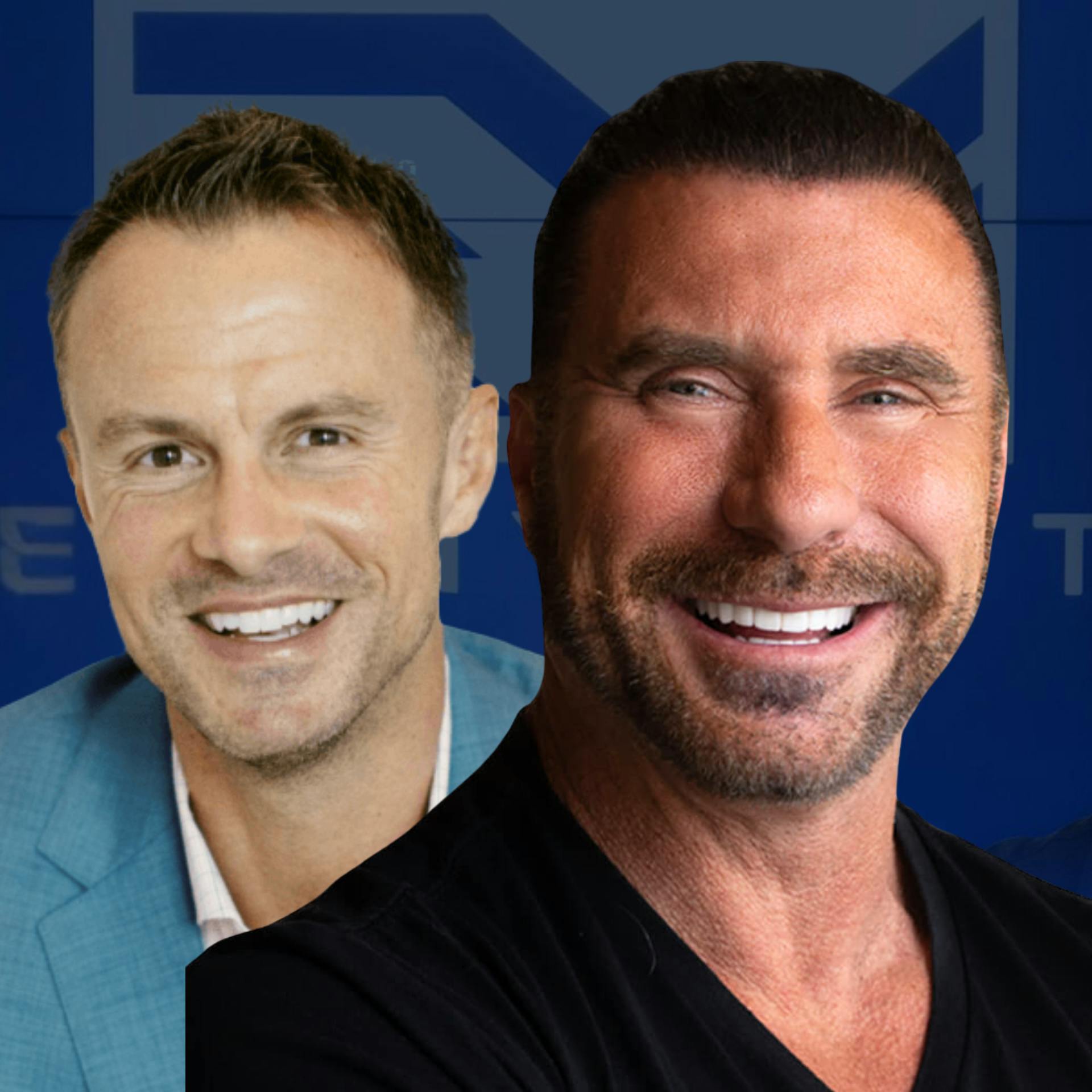
THE ED MYLETT SHOW
How to Build Unshakable Confidence When You’re Losing Feat. Alan Stein Jr.
00:51:25
Loading summary
Transcript114 lines
- [00:00]
Ed Mylett
We heard you.
- [00:01]
Alan Stein
Nine years of bring back the snack wrap and you've won. But maybe you should have asked for more. Say hello to the hot honey snack wrap. Now you've really won.
- [00:12]
Ed Mylett
Go to McDonald's and get it while you can. Ugh.
- [00:16]
Depop Advertiser
You said you were over him, but his hoodie's still in your rotation. It's time. Grab your phone, snap a few pics, and sell it on Depop. Listed in minutes with no selling fees. And just like that, a guy 500 miles away just paid full price for your closure. And right on cue.
- [00:33]
Ed Mylett
Hey, still got my hoodie?
- [00:34]
Depop Advertiser
Nope. But I've got tonight's dinner paid for. Start selling on depop. Where taste recognizes taste list. Now with no selling fees, payment processing fees and boosting fees still apply. See website for details.
- [00:48]
Alan Stein
This is the Ed and Mylan Show.
- [00:50]
Ed Mylett
All right, welcome back to the show, everybody. So today I've got a guest back on that all of you told me is one of your all time favorites. So the downloads were through the roof because when you do a podcast with Alan, you get value out of every single minute. So we're going to really talk about your mindset winning, the philosophies that make people fulfilled and successful. And he's just great at it. He's got a new book out, by the way. I want to make sure that I get the book in here first, which is called Next Play. And I already know what the meaning of the book is, so we're going to get into that. But just so you know, his background, he's a guru in NBA circles. He's a mental coach. He's helped a whole bunch of different NBA players. Just think Kevin Durant. Let's just start with that name alone, with their mental games, with their shooting games, with high performance techniques. And we're going to get into a lot of that stuff that applies to you directly in your business, in your life. Today with Alan Stein. Welcome back, brother.
- [01:40]
Alan Stein
It's so good to see you. Thank you so much. You're the best hype man in the world.
- [01:43]
Ed Mylett
Well, it's a fact.
- [01:44]
Alan Stein
If I ever become a boxer or a rapper, I'm taking you with me, man. You're the hype man.
- [01:47]
Ed Mylett
I'm big in the rapping circles.
- [01:49]
Alan Stein
I figured you were Coach K, the legendary basketball coach from Duke, was the one that came up with the concept. And I read about it in his book in the early 2000s. But I didn't have the emotional maturity to actually implement it consciously. It made sense. And I thought, yeah, this would be very helpful. But I allowed myself to be emotionally hijacked all of the time, and I allowed myself to get frustrated and disappointed by things that had happened in the past. And it took me away from being present. It wasn't till 10 years later, when I was working at DeMatha Catholic High School with the basketball program there, that I saw it put into practice with the head coach, Mike Jones, and that's when I started to implement it. And everything in my life changed afterwards. And I now look at next play through a few different lenses. The ones we're most familiar with is in the micro, is in the moment. You know, it's next pitch, next play, next sale, next conversation. It's when something doesn't go your way in the micro. Can you quickly refocus the lens on what's happening now, which is the ultimate premise? Don't focus on what just happened, focus on what's happening now. But as I age, get closer to age 50, I'll be turning 50 in a couple of months. I also zoom out and I use next play in the macro and go, all right, what's going to be the next play of my life when my three children leave the house and I'm an empty nester? What's going to be the next play of my life when unfortunately, my. My aging parents who aren't in great health, they're not going to be around very much longer. And, you know, I've identified as being the. The son of two parents for 50 years, but that's going to shift and change at some point. And what's, what's the next play that I'm going to step into? And, you know, I'm. I'm divorced, so I had to find a next play after marriage. So there's. There's these big macro transitions that we all experience in life that I want folks to be very proactive in figuring out what's their next play going to be instead of reactive when it happens.
- [03:33]
Ed Mylett
That's. I'm thinking about the people that I know that struggle in life, and in both the micro and the macro, they struggle with this.
- [03:39]
Alan Stein
Yes.
- [03:39]
Ed Mylett
In other words, they missed a sale call, and now they're dragging the pain and the frustration from that into the next one. And then they're not on their A game there. I also think of all the setbacks in life and not having a plan for that next play. Like, it's really profound. I was thinking of Belichick with we're on to Cincinnati.
- [03:56]
Alan Stein
Absolutely.
- [03:57]
Ed Mylett
That game's done. We've Already played the game. That's famous NFL coach Bill Belichick. They just got, I think was blown out by Kansas City. I think it was. And they're asking him all these questions, are you guys done for the year? And he's like, no, we're on to Cincinnati. In other words, that game's over. Next play.
- [04:11]
Alan Stein
Yes.
- [04:11]
Ed Mylett
How's it, let's, let's go to the micro first.
- [04:14]
Alan Stein
Sure.
- [04:14]
Ed Mylett
So how, how do you do this strategically? Like I'm thinking of, thinking of, you know, Kobe, you know, who you've worked with and been around Kobe, you know, he misses his first eight shots. A lot of guys, the difference that separates Kobe Bryant, you tell me if I'm wrong. A lot of guys pucker up and now they're passing. They don't want to take the shot, they don't want to have another next miss. So they become hesitant in the next thing. What is something strategically that you have in the book that you, that helps someone transition to the next play? What do you do?
- [04:44]
Alan Stein
Well, we call it a whiteboard memory. It's as if whatever was written on the whiteboard, we just erase it immediately. You know, great shooters like Kobe, for example, they don't allow the negative energy from the first eight misses to affect the ninth shot. They shoot the ninth shot as if they had made the first eight. And you can only do that if you have a very short term memory, which is, which is incredibly important. The other thing is we can't let our feelings and our emotions dictate our behaviors and actions. If we do that, we become inconsistent. By definition, we're human beings and we're going to experience every single emotion under the sun. And I'm of the belief there are no bad emotions. Every emotion serves a purpose for us. But we have to be very careful in letting our emotions drive the car and letting them dictate how we behave. If I'm only kind and thoughtful and generous when I'm in a good mood, well, that means probably half of my life I'm going to be the exact opposite of those things. So I want to make sure that I'm not allowing my emotions or how I feel in the moment to dictate my behavior and actions. And it's the same thing. I would want a player to be disappointed that they missed their first eight shots. I mean, let's not forget the name of the game is put the ball in the basket. And as much work as they've put in, it's okay if they're disappointed that they missed those Eight shots. But they can't let that disappointment dictate their behavior. They can't let it dictate their actions. They can't let it dictate how they shoot that ninth shot. Ability to separate how we feel from the standard of how we perform and the standard of how we show up. To me that's a crucial component of next play.
- [06:15]
Ed Mylett
Is it like the fragility of some people's identity and confidence that causes this to be the case, in other words? Because I think even if you transition out of sports, I just think of business people that I know. I've just been around people like they've missed three or four sales in a row. They're almost like, well, odds are I'm getting the next one. But a lot of other people like, oh, I've lost momentum, maybe I was a fluke. Most people's confidence or their identity is very fragile. It's predicated on results all the time.
- [06:42]
Alan Stein
Yes, that's what. Oh that and you're so insightful. And that's where the pitfall is. We cannot attach our self worth and our self belief to the outcomes because by definition we don't control outcomes. Now you know me, I'm a process oriented guy. I would much rather my identity be tied to, to the process, to my effort, to my attitude, to the things that I have control over as opposed to outcomes because we don't control those. You don't control the sale. What you do control is did you put yourself or your product and service in the best position to be of service to someone else? Did you qualify the right prospect and you're asking the right questions of the right people. If you do that, you will tend to get more sales than not, but you still don't have ultimate control over it. And once again, I'm all about consistency. If I'm only confident and have self belief when I'm getting the outcomes I want, then when I don't, then the confidence goes down. And I want confidence to be a controllable factor. And I'm a believer that confidence comes from a few different areas. The one that I've learned from you is it comes from keeping the promises we make to ourself. You know, if you tell yourself you're going to get up at 6am and go for a jog, if you wake up and do that, your confidence starts to build. If you hit the snooze and you pull the covers over your head, your confidence starts to erode. Confidence also comes from demonstrated performance. You know the reason Kobe was such a confidence player is because he put in more work during the unseen hours than arguably anybody else on the planet. He's seen the ball go through the basket when no one else is watching, which that demonstrated performance then carries over when the lights are on. And then the last one is the little voice that we have inside of our head, our self narrative and our self talk. And if anyone watching or listening right now says, I don't have a little voice in my head, well, who do you think just said that to you? It's the little voice in your head. So we all have it. And do you talk to yourself in an empowering, constructive way, you know, with compassion? Or do you talk to yourself in a very critical and judgmental way? And how we talk to ourselves dictates how we feel about ourselves. So if we can do those three things, and those are all controllable, we can build confidence.
- [08:45]
Ed Mylett
Let's talk. You did this in the last show, but just. It was a long time ago and people might not have heard it. I think, I think I work pretty hard, but I would agree. And I think in the business sense that I do, but I also thought I worked pretty hard in the gym. And then I went and trained with a couple guys that are former Mr. Olympias and it was like, oh, there's levels to this thing. Yes, right, there's levels. And I don't. I mean, just flat out, I couldn't hang.
- [09:11]
Alan Stein
Sure.
- [09:12]
Ed Mylett
And I think a lot of times you think you're working hard if you're listening to this. Compared to what? Compared to the three people in your cubicle or compared to the greatest of all time in your craft? Like, compared to what? And. Or compared to your capacity. And so I think this Kobe story that you told me on the last show is just indicative because I think a lot of athletes that are. This is athletes, but they think they work hard. And then there's guys in the NBA that work hard. Then there was Kobe. Tim Grover told me on the show. I said, what was the difference between Kobe and Jordan?
- [09:43]
Alan Stein
Yeah.
- [09:43]
Ed Mylett
And he goes, two hardest working guys by a mile I ever had. He goes, I could actually persuade Michael at some point to leave the gym. And he said, in Kobe's case, I'd persuade him to leave and then I'd find out he'd come back. Yeah. Like, he was just a level that was just beyond. Tell him the Kobe story. Do you remember the story you told me about getting to the, you know, this story?
- [10:01]
Alan Stein
Do I remember it? Yeah, I almost, Almost every single keynote that I've given in the last 10 years. I start with the Kobe story because it was such a fundamental experience for me. Ye and how it shifted my perspective. And what I'll do is I'll. I'll give you the abbreviated version of the Kobe story and then I'll tell you the part two, which I know we talked about last time, but it's one that I rarely tell. But it really glues everything together. So in 2007, Nike hired me to work the Kobe Bryant Skills Academy. Nike was starting a series of events where they wanted their flagship athletes to be able to have an impact on the top high school and college players. And I got a chance to watch one of Kobe's really early morning workouts. I mean, he was in the gym at 3:30 in the morning. I mean, keep in mind, for most NBA players in the off season, 3:30 in the morning is when you're coming home from the club, from something from the club or from the bar. Yeah. And that's when he's starting his day. And, and. But the most impressive was not just the wake up time and the start time, but it was his relentless obsession and commitment to the fundamentals. Like he was working on moves that, I kid you not, I had taught to middle school age players. Now he was doing it with an unparalleled level of intensity and just an incredible level of detail and precision and is. But it wasn't the stuff that he was doing that was remarkable. It was the way that he was doing it. And he always knew that working on mastery of the fundamentals was the foundation to which everything else was built. And when I asked him about it later at camp, that's when he said something that, I kid you not, still puts the hairs on my neck, makes them stand up and it changed my life forever. I said, kobe, you're the best player in the world. Why were you doing such basic drills this morning? And he smiled and he winked and he said, well, why do you think I'm the best player in the world? It's because I never get bored with the basics. And that line of I never get bored with the basics changed everything for me as a young coach. Honestly, I had the arrogance to think that there were things that were beneath me, things that I didn't need to do. And then here I meet someone who's world class at his craft, and if he can tell me that the reason he's world class is because of his attention to the basics, then who am I to ever skip them? So for me right now, in every area of my life that I aim for excellence, whether it's being a father, being a speaker, being a friend, being a business owner, I identify the four or five key fundamentals that will allow me to be excellent in that area, and I work relentlessly towards mastery of them. Now, with that, I can say with a huge smile, I'm not coming from a place of mastery on any of that stuff. But what I can say with an equally huge smile is I'm making progress and I'm moving in the right direction. And I can sit here with you right now and tell you I am a better man in every area of my life than I was the last time I saw you a couple years ago on your show. So I'm going in the right direction. I'm not there yet, and truthfully, I never will be, but I'm moving in the right direction. But the second half of that Kobe story, which I rarely tell, is the reason Kobe decided to get up so early in the morning, was he had already identified that his competition in the NBA, if he took the upper 10% of players in the NBA, that they were going to work out twice a day during the off season, the mediocre players in the NBA are going to work out once. The really dedicated ones work out twice. And Kobe said to himself, well, if I only do what everyone else is doing, how will I create any separations? How will I create, you know, improve above them? So he said, if they're going to work out twice a day, I have to work out three times a day. And he said the only other way I can fit that in is by getting up extra early. So in his mind, he said, when I'm coming home from workout number one, you're getting to the gym for your workout number one. I'm always one step ahead of you. But the part that I loved, he said, in one off season, that might not create much separation, but you start to stack years and in his case, played almost 20 years, you create separation that no one can ever catch. And the most important part, though, that I want to make sure your listeners and your viewers understand, I'm not saying that more is always better. In fact, more is rarely better. Better is better. So it's not just that Kobe did more work. It was also his attention to detail and the quality of the work that he put in. An hour for him is not the same as an hour for other players. It's kind of like at work, the average person works an eight hour workday but how much are they actually working? Studies show you're working like three hours out of eight because the other five is fluff.
- [14:10]
Ed Mylett
So you know what, guys? When I started this podcast, I was new to the business. My son was actually the editor and he was 14 years old. And I had all this doubt sinking in. I really didn't know what I was doing in terms of running a business. How are we going to sell our merch? Did we need a website? How are we going to do marketing? What if it doesn't work out? You know, and that's where Shopify came in. I'm going to tell you guys something. If you see me doing something online, Shopify is involved, as is true for most entrepreneurs, from household names like the Ed Mylett show to people that are just getting started. 10% of all commerce online e commerce is done by Shopify. They're involved. So you can get started with your own design studio. With hundreds of ready to use templates, you can accelerate your efficiency whether you're uploading new products or trying to improve existing ones. Just go check it out. There's so many different things they could do for you. I can't put it all in this one minute conversation with you. It's time to turn those what ifs into with Shopify today. Sign up for your $1 per month trial today at shopify.com/my left that shopify.com/my let shopify.com/mylet.
- [15:16]
Alan Stein
Kobe. 60 minutes of dedicated work is 60 minutes of dedicated work. And when you can pack that kind of punch, then I mean your efficiency and your effectiveness is just unmatched.
- [15:26]
Ed Mylett
I can see the work you've put in, by the way. Thank you. Your children are here with you today. And I believe you about being a better man than you were the first time I met you. But I could tell you this. Your. Your communication through the roof.
- [15:36]
Alan Stein
Thank you.
- [15:37]
Ed Mylett
You're at a whole different level, by the way, if you're looking for a great keynote. Alan's unbelievable. But I can see it on you right now. I was wondering, you know you say in the book about operating systems.
- [15:48]
Alan Stein
Yeah.
- [15:48]
Ed Mylett
You know what, what do you mean when you say that? What does an upgrade your operating system, what does that mean?
- [15:54]
Alan Stein
Well, I don't know if you have an iPhone. I have an iPhone and many people do. And every couple of months there's an upgrade to the operating system. And it usually says, we're working out some of the bugs. We're going to make this more efficient, more effective. They want your Phone to be as helpful of a resource as possible. And I believe as human beings, we all have our operating systems and mine has radically changed over the years. I mean, when I think of the operating system I was using in my 20s compared to now, as I'm knocking on the door of 50, it's radically different. But it's small incremental tweaks, none of this stuff. Same thing with your iPhone. It doesn't make these big colossal changes every time there's an upgrade. It just makes some slight changes. And for us as human beings, it's the changes we make to our perspective, to our approach, to our belief system, to what we choose to feed ourselves with. I mean, obviously you are in incredible shape. So I know that you're very careful with what you put in your body as far as nourishment. But you know as well as anyone, we also have to be very careful with what we feed our brain, what we feed our emotions. You know, the people we choose to associate with and hang out with. You know, never spend extensive time with someone you don't want to become. Like, how basic of a premise is that? But that is a huge one because when I look at times in my life where I wasn't performing at the level I think I was capable of, I was also hanging around people that were more of an anchor than uplifters. And I have to switch my environment. I'm a huge believer in environment. So we want to create the environment that's going to allow us to be successful. And what environment could be better than trying to spend time with people that. I mean, I have so much admiration and respect for you and what you've built. You know, I want to step into the opportunities and things that you've been able to do. So in order to do that, I read, watch and listen to everything that you put out because I want to surround myself with what I need to up level. And it's the same thing. I try to model for my children and model for everyone. Whether I'm talking on stage or writing something on page, that's what's most important.
- [17:47]
Ed Mylett
You know, I think I like being around you. I'm thinking, I just, I'm watching you and I'm like, what is it with this guy? Like every time I've been around you and then I'm thinking about all the winners that I know and I want to just ask you this, this is in the book, but kind of not sure I want you to just speak to this. I'm just thinking about it. As we're talking, like what you just said previously about the attention to detail with Kobe. I'm blown away by people that say they want to be multimillionaires, but they don't refine their craft with such specificity. Or I meet speakers that they're not watching the nuanced, specific things I do when I speak. They don't. They're understanding of what the level needs to be to be great at something they're oblivious to. They actually think, if I'm gonna be pretty good, then I'll just get. You have to be great at what you do. You gotta be the best at what you do. And you can hear my intensity change. And this is the thing that I see with you and this is the thing I want to ask you about. It's in the book, but it's not. But I want to touch on it. Hey guys, it's always interesting when you stop doing something that you realize, you know, I probably should have kept doing it because it mattered so much. I had been taking IM8 for a while, feeling awesome. Then life got a little bit busy over the holidays. I skipped some days. Huge mistake. My energy dropped, focus was gone. And honestly, it makes sense when you look at what's in it. IMH's daily Ultimate Essentials drink brings together 92 high quality nutrients and I don't know what they all are, but I can tell you this, you feel great. You got high energy when you're on them. What I do know is in it vitamins, minerals, adaptogens. So give your body what it deserves with IMA. Go to im8health.comed and use code ED for a free welcome kit. Five free travel sachets plus 10% off your order. Seriously, this is one of those offers you'll wish you jumped on Sooner. Go to im8health.comed and use code ED for a free welcome kit. Five free travel sachets plus 10% off your order. Imaidhealth.com ED code ED these statements have not been evaluated by the Food and Drug Administration. This product is not intended to diagnose, treat, cure or prevent any disease. So you know what everybody? I really appreciate the comments about, you know, I've gotten a lot leaner and built more muscle this year and it was really intentional. And I was thinking, how can I get ahead, you know, on my fitness? Because I'm already pretty fit and worked out and it was how I'm eating and that's where Factor came in. Factor doesn't ask you to meal prep or follow recipes. It just removes the entire problem. Two minutes, real food. Bam. Done. And so once I started eating healthier and using factor, not only did I get a lot leaner, but I built more muscle. And the truth is, guys, I had more energy. And what I love about factor is it's already made by chefs, designed by dietitians and delivered to your door. You should be in factor's world just like I am. Head to FactorMeals.com MyLet50OFF and use code MYLet50OFF to get 50% off your first Factor box. Plus free breakfast for a year offer only valid for new customers with code and qualifying auto renewing subscription purchase. Make healthier eating easy with factor. You know, it's just true when you're around major players. I mean, a great mom, an unbelievable school teacher, a world class athlete, incredible business person, great sales. There's a level of intensity about these people that when you're around them, you flipping feel it. You have a level of intensity about you. I do. Like I'm an intense man. Like I'm a nice guy, but I don't play around. Like, if we're doing something, I'm here to win. I'm here to take over. I'm here to dominate. I'm here to do something great. You've been around all these great athletes. Would you agree with me that the Kobes or the Curry's or there's just a switch. There's a level of intensity, frequency, vibration, passion that they have that they've developed. I believe you have, Tim Grover has. That's just, it's just a different level and I don't know that it's one of these things ever talked about in personal development and success. It's just intensity.
- [21:44]
Alan Stein
Yeah.
- [21:45]
Ed Mylett
What do you think about that idea?
- [21:46]
Alan Stein
Well, I love it. I think you're right on point. And the way I would define it, it's the ability to focus and it's the ability to be in the present moment. Ultimately, that's what defines intensity. We'll all express in different ways. I consider myself incredibly intense, but I also, I don't think I come across as like the typical alpha male, like trying to dominate situations and dominate conversations. That's not my style.
- [22:08]
Ed Mylett
Agreed.
- [22:08]
Alan Stein
But what I can do is I have the ability to focus, which by definition means block out all of the distractions and black out everything that is unnecessary or unessential and focus on what matters most, which is the premise of the book is focus learning. First of all, you have to identify what matters most and Then you have to be able to focus on it. But all of this comes back to the ability to focus on the present moment, to know what you have control over and let go of the things that you don't. And to me, that's the level of intensity. You know, that's a reason why a Kobe or a Steph Curry have that intensity, is they can block out everything that's going on in the world and focus on the task at hand, what's right in front of them. And they also have the masterful ability to literally just focus on the step that's right in front of them. This possession, they're not worried about winning the game, not at that moment. They're worried about just winning this possession, whether it's on offense or defense. And being able to micro that down is incredibly important. And yes, from a speaking standpoint, I study that craft relentlessly.
- [23:06]
Ed Mylett
I know you do.
- [23:07]
Alan Stein
I want to be the best speaker that I'm capable of because I believe it's an opportunity for me to share a message that I'm passionate about. And certainly I study other speakers like yourself. And here's a helpful tip for someone that wants to become a better speaker, a better communicator. I'll take a clip of you and watching you speak, and I'll watch it in three different ways. One, I'll watch it with absolutely no audio. I just watch you now. I see your mouth moving, but I don't know what you're saying. But I watch your mannerisms. I watch your physicality. I watch. I can see the intensity on your face. Second, I'll only listen to the audio, so I won't watch anything that you're doing and only hear your tonality, your ability to pause, because we know there's a power in the pause. Your inflection, your volume, and I'm going to hear how you're manipulating your instrument, which is your voice. And then the third time I watch it, I'm going to watch the whole package together, and I'm going to watch the entire thing, and I'm going to look at you from a delivery standpoint, from a content standpoint. Now, when I'm doing that, my goal is to not be you. There's only one you, and you're doing it better than anybody else. But my goal is to be able to say, what are some things that Ed is a master of on stage, that if I work hard enough and I add to my speaking game, I can start to emulate and make a part of what I do. And then I also make sure that I study things outside of keynote speakers. I made a kind of a joke earlier, but I'm really serious. I study hip hop and I study standup comedy because those are two forms of spoken word that first of all I enjoy. So I actually like both of those art forms. But there's so much that you can learn from hip hop artists and from stand up comedians on how to tell story, on how to sway emotion. So I try and study those. Not because I want to be either, and don't worry, I couldn't be either, but I can take things from those. So I take that holistic approach. And then I constantly iterate, you know, I tell many of the same stories and I have been telling them for years, but my overall program has really grown and it iterates and I'm not afraid to try new stuff. Here's another one that I think you'll appreciate. And I learned this from a good friend of mine who's a brilliant speaker. He does what's called the new two. In every single talk he gives, he does two minutes of brand new material that he has never shared publicly. He's never, never done in front of anyone. But he's not afraid to try it and he tests it out. And if it goes really well, that new two might turn into a new seven. If it doesn't go well, he asks himself two questions. Can I try and tweak it and iterate it and try it again? Or sometimes, you know, in baseball, sometimes we just swing and we miss and that's okay, but either one. So for a guy like that who gives 80 keynotes a year, that's 160 minutes of brand new material that he gets to try in front of a live audience. And I've tried to work that in. So every single talk I give, I integrate something new in. And it's amazing how quickly you can iterate and grow when you're willing to just inch by inch kind of step into that next play.
- [25:53]
Ed Mylett
Brother, I'm loving this. I have to tell you that by the way, on the speaking part, mine is standups as well. And actually for years I'd watch pastors, people that just speak in a different type of environment. And the tip of here's the point, everybody, let's say you don't want to be a speaker. Are you trying to be that great at what you do? Do you view what you do as a science and an art both, and really begin to study the people that are exemplary at it? Like in my Point of my life. Business is important to me. But, like, in my life the last five, 10 years, you know, I feel like my passion play has not been business or speaking or podcasting, even though it's something that I do. It's been more like, what kind of a father am I? And so. But I study. I study. I brought people into my life, men into my life that I think are great fathers to your previous point. And I study them. Like, I'll give you a Kobe story. That wouldn't be the story I may have told you. I don't think I've told you this. So our daughters played volleyball in the same league, same together. And I was with Kobe two days before he was taken from us, and we were at a volleyball tournament. And I'm in this dad mode of I'm watching great dads. I'm gonna tell you something about Kobe, you guys. I don't know all of his personal life, but I could tell you this. I watched him as a father. It's incredible. And I'll give you a little thing that I noticed. This is the smallest between you and I podcast. Sometimes people listen to we're at the gym. If you're a volleyball dad, you'll know this. These are long, noisy days.
- [27:26]
Alan Stein
Yeah.
- [27:27]
Ed Mylett
So we had got there about 8 o'. Clock. The last match was about 10pm that night. There's like 3 dads left in the gym. Yeah, me and Kobe were two of them. And the match ended. And I'm over with my daughter, and she's picking up her gear, and I'm over there talking to her about the match. And Kobe was holding his little girl, and he was at the other end of the gym, and for some reason, I'll never forget it, he had this black and white sweat. I watched Kobe walk out of the gym that night. I don't know why. I've been around him a bunch of times. For some reason that night, I couldn't take my eyes off him. And it wasn't that he was Kobe. I was watching him as a dad. Let me tell you what he did that I just little nuanced. It's the little nuances, Alan, what you just said about watching it with the sound off or whatever it might be, at your craft, at what you want to be great at. Everybody. And so I watched Kobe and I'd got Bella's bag and good job, honey. Kobe, with his daughter, had the baby in his arm. His daughter packed her bag and he hugged her for a minute. He hugged her. And then as they started to walk out of the gym. He put his arm around his daughter and they walked out of the gym together as he, like, caressed and embraced his daughter. And I stood and watched him walk out, and I went, I don't hug Bella enough. I don't physically hug her enough. And I do a better job of that now. But it was just watching that little nuance. You know, it's interesting. I was thinking, what if someone had told Kobe as he walked out of that gym tonight? Alan, Kobe, you have two more days. Make sure you really hug those little girls. Tell Vanessa how much you love her. Call your dad. Make it right. You know, what if we knew time was running out on us? Because I don't know if it's two days or 200 days or 2,000 days, but there's time running out on us.
- [29:12]
Alan Stein
Yes.
- [29:12]
Ed Mylett
Anyway, my point is my. When you want to be great at something, study the greats and look for the nuances, the small things. That's so profound, what you've said. I just want to give you my Kobe story.
- [29:22]
Alan Stein
I love that.
- [29:23]
Ed Mylett
Which is a dad story, not a basketball one.
- [29:25]
Alan Stein
That's gonna make me emotional.
- [29:26]
Ed Mylett
What about you said earlier about the process? So I'm gonna want to push you on this. You said, I'm a real process running guy, but nobody's so addicted to it. What if someone right now, they're listening. I'm gonna give you just the hard question. Someone right now is like, I need the next play. I just had my business fail. I just got replaced by AI. My relationship just ended. I mean, I'm. I'm. I'm on the turf, man. I'm knocked down on the canvas right now.
- [29:51]
Alan Stein
Yeah.
- [29:51]
Ed Mylett
What's. Would you describe to them how to get into the next play? What would you say to that person?
- [29:56]
Alan Stein
Well, the very first thing I'd say is it's okay to not be okay. And whatever you're feeling right now, all that means is that you're human, that that's part of the human experience. And. And when your business fails or your relationship fails or you've taken one on the chin, it's okay to be upset. It's okay to be disappointed, it's okay to be frustrated. It's okay. Any of those things, like we said earlier, I don't believe that there are any negative emotions. I believe every emotion serves a purpose. Now, there are certainly ones that aren't very pleasant and we'd prefer not to feel them, but we have them for a reason. So the first thing is give yourself the compassion to be okay with not being okay and know that what you're doing is human. Don't resist it. Don't suppress it. Don't ignore it. Embrace those feelings. Then you have to say, well, what is the next step that I can take? The next play that is within my control, that can at least inch me in the right direction? Inch me in the direction of feeling a little better or more confident or more optimistic. Inch me in the right direction of maybe picking up the pieces of my business, either repairing that relationship or acknowledging that I'm going to start a new one. But just take the very next step that you can take, because once again, we want to make sure that we're in control of our actions and our behaviors and our decisions. We're not letting the emotions drive that car because the emotions will tell us. I just give up. I don't even want to try. This is awful. This is the worst thing that ever happened to me. And if you're willing to do that, then the cool part about when we look backwards, when we have the gift of hindsight, we can change our relationship with the past. We can't change the facts of the past, but we can change our relationship of the past. But a perfect example. And my three kids are sitting here watching this. I don't even know if they've heard me say this before. When I went through my divorce 10 years ago, at the time, I thought it was the worst thing that had ever happened to me. Now, looking back, it was one of the best things that's ever happened to me because of the path that it puts me on. And I have a great amicable and civil relationship with their mom. She's a fantastic mom. Have a wonderful relationship with my three kids. But I didn't see any of that when I was in the middle of it. You know, you can't see the picture when you're in the frame, so sometimes you got to be able to step outside of that. And now when I look back, I can say that that's one of the best things that ever happened. So the other reason I say that is whatever someone is going through right now, this failed business, this failed relationship at the moment, it's okay if it feels like it's the worst thing that ever happened to you, but you can change that perspective. And one day you're going to look back and say, this was the conduit that sparked greatness. This failed business is what put me on another track to start an even better business. This failed relationship, which didn't work actually allowed me to attract and meet the person I'm with now, which is the best it's ever been. So. So just understand that we're all in this for the long game now. Time is not promised, as you just said. Like, I'm not guaranteed that my flight will even land from Tucson. I certainly hope that it does, but we're not promised any of it, so. But we just want to make sure that we have that perspective that as long as I am going to be here, like I am in control of these, these the way that I'm going to approach this. And that's really powerful to me.
- [32:55]
Ed Mylett
So last week I'm on stage speaking, I got a new shirt on, got a bunch of DMS from my friends over there going, you looking pretty fly, Mylett. You're looking pretty sharp. Then I get off the stage and the producer says, hey, I like that button up look on you. Guess where I got it all from, Quince. It's true. It's a great place to buy clothes that look good, feel good and it's affordable. And here's the biggest thing, I'm not breaking the bank this year on clothes and I'm probably sure you don't want to do that either. So that cashmere sweater you're looking at, you can get it there. Ridiculously soft, doesn't cost a fortune. The button up shirt I was wearing last week, that's where I got it. Let me just tell you something. I also like this. If it doesn't fit, send it back. They'll send you the one that does. They're awesome. I'm getting, I don't know, 50% of my wardrobe now. All from quints. So refresh your wardrobe with quints. Go to quint.comed for free shipping on your order and 365 day returns. Now available in Canada too. By the way, that's Quince Q U I n c e.com ed Free shipping and 365 day returns. Quince.com ed My day kicks off with a refreshing Celsius energy drink. Then straight to the gym. Pre K pickup back home to meal prep. Time for my fire station shift. One more Celsius. Gotta keep the lights on when the three alarm hits. I'm ready. Celsius Live fit. Go grab a cold refreshing Celsius at your local retailer or locate now@celsius.com. i really enjoy talking to you.
- [34:20]
Alan Stein
Same.
- [34:20]
Ed Mylett
Thank you. I really do. You're so good. Yeah. If I ask the average person listening to this right now, you know what they would say? They would say, I said, what do you want to be the average person? Well, most people, in fact, maybe I would say this. They'd say, I want to be happier. But in the book, you go, eh, not so fast. To quote Lee Corsa, you go seek what, not happiness. I know what you say, but I want you to tell them.
- [34:46]
Alan Stein
And I'm also like you, I study language. And to me, the issue with happiness is happiness is an emotion, and all emotions are fleeting. So there's no single person in the world, myself, at the front of that line, that is happy 24 7. So happiness ebbs and flows. In fact, I can be happy in one moment, receive a text from someone else, and all of a sudden be immediately unhappy based on what that text said. So I don't really have control over my happiness because we, contrary to popular belief, we don't control our feelings. We control what we do with them. We control whether or not we listen to them and how we use them. But we don't necessarily control our feelings or our thoughts. To me, I'm much more in pursuit of fulfillment because to me, fulfillment is a joy and an enjoyment of who I'm with, what I'm doing. And that is much more within my control because there can be times where I can still have a really solid sense of peace and fulfillment, even if I'm not happy in the moment. So to me, fulfillment is less of a feeling and it's more of a state. It's more of a how we're experiencing life. And to me, that's more important. You know, a lot of times as parents, people say, well, I just want my kids to be happy. Well, of course, in general, I want my kids to be happy. But you know what I want more than I want my kids to be happy. I want them to be resilient. I want them to have the ability to manage their emotions. I want my kids to be able to take one on the chin and still be able to pick themselves up and move forward with optimism and confidence. So I don't wish for my children to have fewer problems. I try to teach them how to build the strength to overcome whatever problems they're going to have. And to me, that's way more important than them always being happy. So as a father, and they would even tell you this, I don't bend over backwards to try to make sure they're happy 24 7. Like, I let my kids experience sadness, experience disappointment. I want you guys to sit with it. I don't try to, you know, anesthetize them to those types of feelings. I want them to experience life and I want them to do it at a young age. So when they're older, they have the ability to regulate their emotions, which I believe is arguably the most important skill that any of us can develop as humans. And the most important skill we can teach our children is the ability to understand, manage, process and use your emotions. And if I could give my kids any gift, it would be that it would not be happiness or rainbows and ice cream all of the time.
- [37:08]
Ed Mylett
How do you do that? So I agree with you, by the way, emotional regulation and emotional, like what I look for in friends.
- [37:13]
Alan Stein
Yeah.
- [37:14]
Ed Mylett
Leaders oftentimes. One of my criticisms of some of the leaders we're subjected to in the world regularly is their lack of emotional maturity and emotional regulation. And so I totally agree with you on that. And it's something. By the way, I think you pick up a lot of your emotions. Like, I grew up with a kind of. I sometimes feel bad that I. My dad was like my favorite human being ever. But when he was drinking, anger was a big thing. Worry was a big thing. As a consequence, I think a lot of things with our kids are caught, not taught. Right. We catch it. I caught, hey, when things don't go right, anger, you know, I caught worrying, I caught anxiety. I caught these things and they became patterns in my life. I had to become self aware that these are the emotions. They're not good or bad as you said, but the quality of your life is the quality of your emotions. And so if I'm regularly experiencing anger, worry, frustration, angst, fear, that's my life.
- [38:07]
Alan Stein
Yes.
- [38:08]
Ed Mylett
And I don't want that life. So I become aware of it. So let's just run a scenario out.
- [38:12]
Alan Stein
Sure.
- [38:12]
Ed Mylett
You two stud sons over there and your daughter, one of your sons comes home, says, I got an F on my test. I got. God forbid I got caught drinking at school and my girlfriend broke up with me. I'm talking the trifecta, quite a day stuff. What do we do to help him move to the next play and emotionally regulate?
- [38:32]
Alan Stein
Well, certainly before I can say or do anything, it would be helpful if I've modeled all of this beforehand. And that's where you're caught, not taught. I say that all the time. I probably owe you royalties on that statement.
- [38:44]
Ed Mylett
Probably not.
- [38:46]
Alan Stein
So I want to make sure that I've modeled for them in the times where those types of things have happened to me that I've been able to model the Emotional regulation skills and the ability to, you know, so I've planted those seeds and I've always believed it's never too early to plant seeds. I was planting seeds with them before they even knew it. And now at their current age as a father, there's nothing that brings me more joy than seeing a seed that I planted 10 years ago when they didn't even know it come to fruition now with something they say or do. And it's the most fulfilling feeling as, you know, as a father. But the next thing I would say is I'm a big believer in accountability. So in any of those situations the f the caught drinking or the girlfriend broke up, the first question I would ask is, well, what role did you play in that? How were you complicit into those things happening? Because I understand as teenagers.
- [39:32]
Ed Mylett
How about counterculture? Beautiful, very good.
- [39:35]
Alan Stein
But as teenagers, their default will be what my default was as a teenager, which is to blame, complain and make excuses. All of those, it wasn't my fault, I got an F. The teacher's an idiot. They didn't teach us what was going to be on. It wasn't my fault my girlfriend broke up. She's crazy. She didn't, you know, the drinking thing, like they'd find a way to make an excuse on why that happened, even though they were the ones that actually.
- [39:54]
Ed Mylett
You'Re right, by the way. I don't think it's teenagers. I think it's human.
- [39:56]
Alan Stein
Yes. So I would not. We don't allow blaming, complaining or making excuses. I would say ask yourself, how were you complicit and what role did you play? That's the very first step. And then figuring out, all right, well, we're going to use this, we're going to use this pain, we're going to use this disappointment. We're going to use whatever the consequences are as a catalyst to grow and to move forward. Because this is not a death sentence. You just made three boneheaded mistakes or three things that happen to you that happen to most teenagers. And I understand that it's painful right now and I'm not going to trivialize it. I'm not going to say like, well, don't worry, it's just your high school girlfriend, you might not even remember her name in 20 years. Even though the 50 year old Alan knows that. The 15 year old Alan certainly didn't. So I'm going to make sure that they understand that I have nothing but compassion and understanding for what they're going through and that it is a Big deal to them at the moment, but I'm going to hold them accountable to it, and then I'm going to make sure they understand, well, if you want a different outcome in the future, then how will you behave differently in the future? Like, let's not let this adversity go to waste. Let's not let these experiences go to waste. Let's pull something from them so that the next time you have a test or someone asks you if you want to drink or you're in a new relationship, how can you behave differently? Because if you keep behaving in the same manner, you will keep getting what you're getting. And if you don't want to keep getting what you've been getting, then you better change what you've been doing. So I would do all of that, but I would also do it in a compassionate way. I would do it without judgment. I'm not going to. You know, I'm not. You didn't study for your test. Of course you got an F. What are you, an idiot? What do you think? No, I would just say, hey, there have been times, too, where I haven't studied for tests. And guess what? I got burnt just like you did. So you know what I learned to do? I learned to improve my study habits. So next time that doesn't happen. And I know what it feels like to have someone break up with you. And your heart's aching right now. It's not a great feeling. But you will get past this, and let's be here together. Because as their father, the most important thing I want them to know, obviously, is that I love them. But I believe in them, and I've got their back, and I know that this will be okay. But I'm gonna walk through the mud with them, and I'm gonna walk through the mud with my arm around them. I'm not gonna put them on an island. I'm not going to judge them. I'm not going to make assumptions. But that would kind of be the collective cocktail of what I would do with them.
- [42:05]
Ed Mylett
The reason I asked that everybody is so you can now go back in three minutes and listen to that again. I wanted you to have a blueprint for when someone you love needs a next play.
- [42:13]
Alan Stein
Yeah.
- [42:13]
Ed Mylett
And he gave it to you. He said, look, I got to let them know I love him. I got to let him know I believe in them. We got to make these decisions. I got to put my arm around them and walk through the mud with them. I got to let them not be a victim and blame. They got to take accountability. These are. That's the blueprint to help someone you love around you, friend, family, etc. Who's going through something where they need a next play. All right, last thing I want to ask you about, by the way, have everybody go get next play. You hire Allen as a speaker. You can just tell, right?
- [42:39]
Alan Stein
Thank you.
- [42:40]
Ed Mylett
He's outstanding. Tell you a story that I want to ask you about. I think all this next play stuff, what you said earlier, is true. It's got to come down to your belief that you can hit that next shot.
- [42:50]
Alan Stein
Absolutely.
- [42:50]
Ed Mylett
That you can turn it around. So I'm young guy, and I'm in my mid-20s, and I won a trip, one of my first incentive trips ever to go to Hawaii. First time I'd ever been to Hawaii. My family had never been there before, and I'm staying at the Ritz Carlton Kapalua. And I remember I was so broke when I went Alan, that the hamburgers were like 22 bucks back then. I went to the grocery store, bought all my food. I'm walking through the Ritz Carlton with a brown bag of groceries, you know, so I could eat for the week. And a lot of guys didn't train and work out back then. I'm so old. So I get up the next morning, go for a run. It's dark out. As I'm running back, running down the beach, I know, you know, this coming by me. There's. I got a Sony Walkman on. It's that long ago. This dude's running by me, and it's a bald guy, and he's all sweaty. He's got a hairy back, but the tide's high, so, like, the beach is like this wide, so I don't want to bump this dude and get his sweat on me, you know? So he's running by me, and I avoid him, barely. And I look, and it's Wayne Dyer.
- [43:46]
Alan Stein
Oh, my goodness.
- [43:47]
Ed Mylett
One of the godfathers of all time of personal development and a hero to me. And he runs by, and I yell to him, and it's cool nowadays, even sometimes people will say this to me. And I go. I go, Dr. Dyer, you changed my life. And he had a deep voice, you know, like, similar to my voice. And he goes. He stops running. He turns around, pulls his headphones off, and he goes, I doubt it. He goes, I bet you changed your life. But how did I help?
- [44:12]
Alan Stein
Yeah.
- [44:12]
Ed Mylett
And he walks towards me, and we sit down on the beach together. And for an hour and probably a half, I watched the sun come up with Wayne Dyer at the end of the hour and a half, bro. And this is what I want to ask you about on next play.
- [44:27]
Alan Stein
Yes.
- [44:27]
Ed Mylett
And confidence. He goes, ed, you're going to change the world. Now, to me, I thought he had never said that to anybody before. Maybe he said it to everybody, but to me, I was like, oh, my gosh. And he said, you're a powerhouse. And he said, would you do me a favor and never attach your self confidence to this amazing ability you have? I said, ability is all that voice and your mind and your ability to. He goes, ed, if you. If you're gonna chase your confidence based on your results, you'll be chasing that tail all of your life. It'll be a roller coaster of life. And I said, well, then where do I get my confidence from? I want to get good, you know? And he goes, I think you're going to change the world because of your intentions. Oh, I love that. You have incredible intent. Now, what I didn't know is at that time, he was writing a book called the Power of Intention. He goes, you're a good man. You're a good man and you care about people and you want to make a difference. Now, here's why that mattered. He told me something that I intuitively knew to be true about myself. I'm not that talented, I'm not that smart, but I do think I'm a decent guy. And for the last 35 years of my life, bro, before I speak, before I do a podcast, before I've walked into a business meeting, I connect with my intention. I go, I deserve to do well. I'm trying to help. So I connect to my intent. It's been this barometer almost of my life. Don't you believe that part of turning the page to the next play? Someone needs to remind themselves, I intend to do good. I intend to make a difference in people's lives. And so my confidence hasn't been that fragile because you're not going to get me to believe I'm a bad guy.
- [46:09]
Alan Stein
Right?
- [46:09]
Ed Mylett
Right. You might say I'm dumb or I say something stupid or I'll make a mistake or. I agree with all of that, but I think in my gut, I'm a pretty decent person.
- [46:19]
Alan Stein
I would agree.
- [46:20]
Ed Mylett
What about intention in terms of making that next play and reconnecting with your intent? Reconnecting with what your dreams and goals are as well in terms of making the next play? I know it's a wide road to get you there, but I want to ask you that? No.
- [46:33]
Alan Stein
Well, I mean, first and foremost, you know, as we say, the conversations we have with ourselves are the most important conversations we'll ever have. So we have to make sure that that's how we're talking to ourselves and that we remind ourselves of our intent, that we have big hearts and we're here to be of service and. But then we also need, as we said with environment, we need to insulate ourselves with people that also remind us of that very good that can see that in us and want to champion that, but also care enough about us to help us see our blind spot and to see if we start to go a little bit off course. And then we also need to be that light for others. You know, I'm a huge believer that a compliment unshared is an act of selfishness. If I have something nice to say and I choose not to say it, that's being selfish. So what Wayne Dyer did, he didn't have to say any of that to you. He didn't have to even acknowledge you were on the beach. But he did and he did because he wants to be that light shining with somebody else. And I know I said this quote at the end of our last interview a few years ago, and it's what I got more DMs about than anyone. And that is a candle loses nothing by lighting another candle. And that's really what we're in the business of. We're in the business. It doesn't matter if you're in the podcast business, the speaking business, the parenting business, whatever business you're in, it's our job to light other people's candles. But we can only do that if we light ours first. And then just remember that if my light is bright, then I can share that with as many people as possible. So we have to remind ourselves of those things and not let ourselves off the hook. I'm just like you. I believe I'm a good man with a good heart, but, boy, have I said and done some really boneheaded things in my life. But those are outcomes, and those are not a reflection of who I am. They're a reflection of maybe making a poor decision in the moment. And just like with the example of talking about my children, I've had to unpack that stuff. I've had to own it, understand my role in it, in many cases apologize for it and make amends. But then I move to the next play and I let that go. What I'm most proud of in my life, there's two things One of all of the boneheaded decisions I've made in my life, and I've made so many of them. I've made them out of impatience. I've made them out of fear. I've made them out of ego. I've made them out of insecurity. I've forgiven my previous self for all of those things because it doesn't do me any good to hold onto them. So I've dropped that anchor and I've moved to the next play. The other thing is, and I have the optimism, and some people think that the healthy delusion to believe that my next play is always going to be my best play. Ask me the best speaking engagement I've ever done. It's the next one I've got. And I really believe that. I believe the best relationships of my life are still in front of me. My best earning opportunities and business opportunities are still in front of me. My best friendships are still in front of me. And that doesn't mean that I'm degrading or trivializing the ones that are in my life now. They're incredibly valuable. But I have the optimist to believe that my best are still in front of me. I also have the optimism to believe at 50 years old, I'm still going to live another 50 years on this planet. So I'm at halftime right now. And, you know, being a sports guy, great sports teams and coaches and players always play a better second half than the first half because they make the adjustments that they need. So I'm going to take all of the lessons I've learned in the first half of life, all of those boneheaded decisions that I've made, and I'm going to apply them to the second half. And the phrase I use with myself is my next 50 will be my best 50. And I can't wait to experience life as a father, as a friend, as a business owner, as a speaker, applying all of these lessons that I've learned, like, watch out, world. This next 50 years is going to be off the charts.
- [49:54]
Ed Mylett
Well, that was okay. Let me tell you what you all just listened to. You just listened to a great podcast. Like, this is why this podcast exists. Excellent, Elite. Outstanding. Exemplary. Tremendous.
- [50:07]
Alan Stein
Like, bro, you make it fun and you provide a safe environment to come here and just talk about things I'm passionate about. And I appreciate you.
- [50:14]
Ed Mylett
I'm a big believer of you, bro. I'm a big believer of you. And you know what? What you just said there at the end, one of my favorite things ever I used to take all the boneheaded things I've done, stupid decisions, choices, mistakes, and use them as a weapon against me to lower my identity and frequency so that I'd make more of them. And at some point, I decided to do what you did. Is I forgiven myself for my stupidness and I've connected to my intention. And that was one of my favorite things that's been said on the show in 10 years, what you just said there at the end.
- [50:43]
Alan Stein
Well, think about this. Those mistakes that both you and I have made, the man I am today is not in spite of those mistakes. It's because of those mistakes. That's who I am. That's part of the collage. A lot of people ask me, I've got some ink, I've got full sleeves, and I've been collecting tattoos, if you will, for 30 years. And the ones that start at the top of my shoulders, I got when I was 20 years old. It's respectfully to the artist that did them. It's not the best artwork I've ever seen. But you know what? My arms are kind of a collage of everywhere I've been and who I've been at that point in time. And I'm actually proud of my artwork. If I started with blank skin right now, and I were to go get two brand new sleeves, I would not get the same stuff that I have now. But I'm also not the same man I was when I got these, when I originally had. So I'm okay with that. So I'm these. They're kind of a living symbolism of who I am at different stages of my life. And that's how I look at all of this stuff. I'm not bashful about talking about the mistakes that I've made in the past. Were they painful at the time? Extraordinarily. But I've used that to then propel forward. And I also know too, in the next 50 years, even though it's going to be a great life, I got a lot more mistakes left in me. Here's the promise I try to make to myself. Just stop making the same ones. I'm going to make a fresh batch. I've got 50 years of a whole bunch of mistakes and boneheaded decisions coming up, but I'm not going to keep making the same ones over and over. And to me, that's the most important part. So let's go out and make some mistakes, but let's make some new ones and some fresh ones, bro.
- [52:06]
Ed Mylett
So good. One thing was not a mistake is having you back on the show.
- [52:09]
Alan Stein
Thank you.
- [52:09]
Ed Mylett
Really, really great stuff today, Alan. You guys. His next book is right now. Next play. You can go get that. This has been Alan Stein and it's been a great podcast.
- [52:18]
Alan Stein
Thank you brother.
- [52:19]
Ed Mylett
Share this episode with people that you love and care about. God bless you everybody and max out your life.
- [52:26]
Alan Stein
This is the Ed and Milan show. Lifelock. How can I help? The IRS said I filed my return, but I haven't.
- [52:37]
Ed Mylett
One in four tax paying Americans has paid the price of identity fraud.
- [52:41]
Alan Stein
What do I do? My refund though.
- [52:43]
Ed Mylett
I'm freaking out.
- [52:43]
Alan Stein
Don't worry, I can fix this.
- [52:45]
Ed Mylett
Lifelock fixes identity theft guaranteed and gets your money back with up to $3 million in coverage.
- [52:50]
Alan Stein
I'm so relieved.
- [52:51]
Ed Mylett
No problem.
- [52:52]
Alan Stein
I'll be with you every step of the way.
- [52:54]
Ed Mylett
One in four was a fraud paying American Hurricane. Not anymore. Save up to 40% your first year. Visit LifeLock. Com. Podcast terms apply.