← THE ED MYLETT SHOW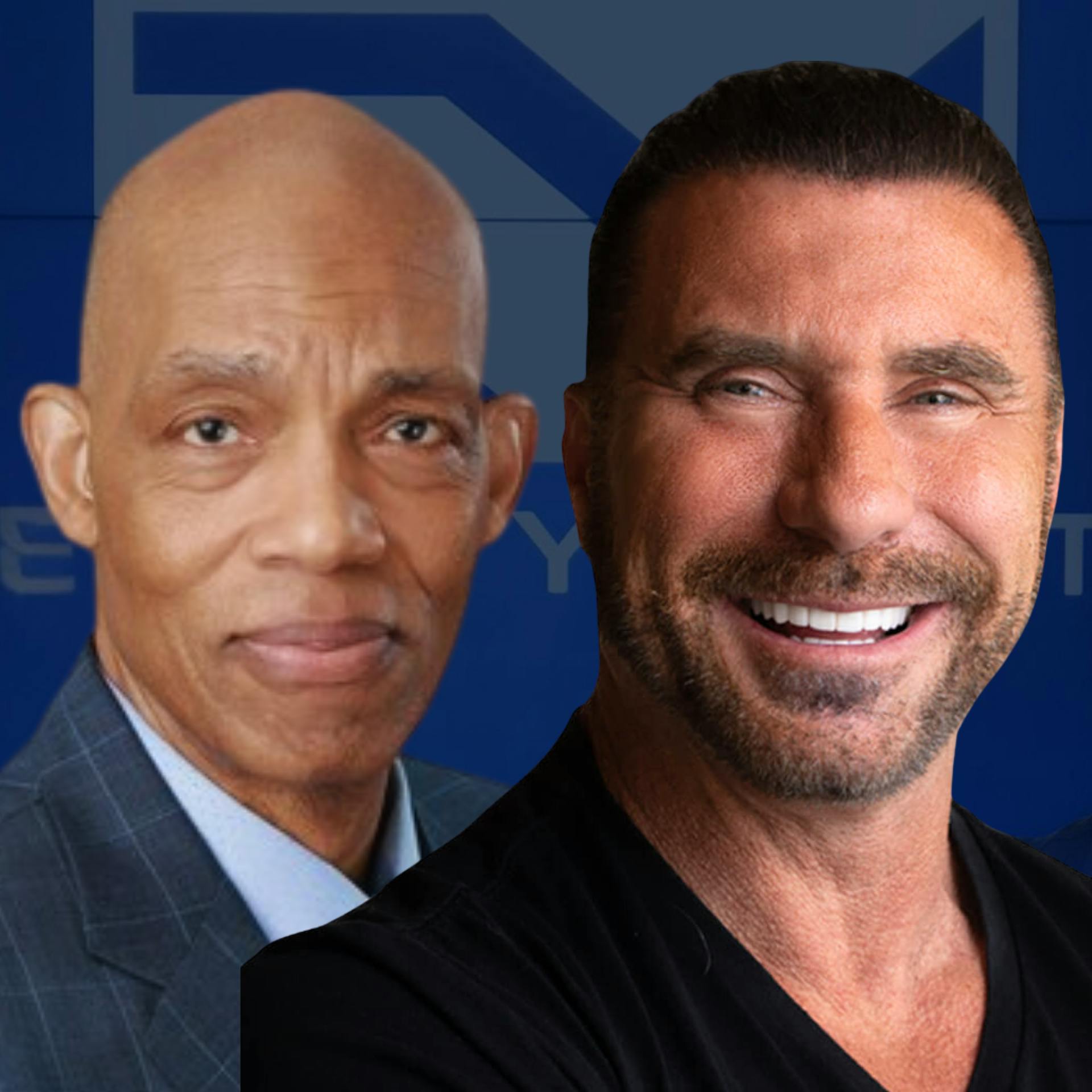
Loading summary
Transcript125 lines
- [00:01]
A
So good, so good, so good. New spring arrivals are at Nordstrom Rack stores. Now. Get ready to save big with up to 60% off rag and bone, Marc Jacobs, free people and more. How did I not know Rack has Adidas?
- [00:15]
B
Cause there's always something new.
- [00:16]
A
Join the Norty Club to unlock exclusive discounts. Shop new arrivals first and more. Plus, buy online and pick up at your favorite Rack store for free. Great brands, great prices. That's why you rack. Hey, it's Sterling K. Brown from the Hulu original series Paradise. The next chapter begins as Xavier's search for his wife takes him above ground. And what he finds will change everything. It was never just about the bunker. Tune in and discover the truth lies outside Paradise. The official podcast is now streaming and stream paradise on Hulu and Hulu on Disney plus. This is the Ed Milan Show.
- [00:58]
B
Welcome back to the show, everybody. So, you know, this year you're going to see some enhancements to the show that I'm really excited about. One of those things you're going to see is we're going to add additional content to the channel, meaning you're going to see a few other hosts on the show that have been friends of mine for a long time and that I think will bring things to the table potentially that I can't. And so you're going to get extra stuff this year on the show. And I know a lot of you have been excited about that. And so I'm officially announcing that today. And for one of the shows that he did this year, I wanted to do something where we talked about leadership, but that's sort of a topic that gets beaten up an awful lot, particularly in the social media age. So today's not about the type of leadership you see on Instagram, where it leads to a Lamborghini or a Ferrari or some, you know, big house you own, but the type of leadership that really matters, which is servant leadership. And I want to talk about leadership in the context of valor and service, dedication to a mission greater than yourself. And so I asked a good friend of mine, Michael Savage, who's to my left, and I know a lot of you, when you hear that name, you're thinking of some political host on the radio. This is not that Michael Savage. This is a different Michael Savage. This Michael Savage has been involved with Tony Robbins for the last 20 years, working side by side with Tony. He's one of the great minds in personal development and leadership. And when I told Michael I want to do an early show this year on leadership, valor, dedication to serving Other people, he said, I have the gentleman for that. So, Michael, I wanted to introduce you first. And let's you introduce your good friend here today who we're going to visit with for the next hour or so.
- [02:22]
C
Thanks, Ed. You know, leadership, valor, like you said, it doesn't come with flashiness all the time. Instagram gives us that. But real leadership is about servant leadership. And I'm extremely honored to have Vice Admiral James Crawford, who's now the president of Texas Southern University, to join us. I had the privilege of meeting the Vice Admiral a little over a year ago when I was visiting Texas Southern and spent some time with the Board of Regents there. Got to go to the Battle of the Bands, which was an amazing experience to be guided with the president of the college through. It was awesome. And, you know, I asked some friends about Crawford, and I have some friends that we've discussed that are years and years of decorated service in the Navy. And everyone said he exemplified leadership at its core, servant leadership. And I think what we're going to uncover today in our conversation is an interesting grouping of choices that someone's made to continue to serve.
- [03:24]
B
Yeah, I agree.
- [03:25]
C
And I. I think there's going to
- [03:26]
A
be a lot of value.
- [03:27]
C
And I'm very honored that you've joined us today.
- [03:29]
A
It's a great pleasure. Thank you so much for having me here. It's an honor to be with you.
- [03:33]
B
Told you. I feel pretty underdressed. If you guys are watching this on YouTube. He showed up perfect. And Michael and I are in jeans and old T shirts. So. Anyway, I'll let you ask the first question of the admiral.
- [03:43]
A
So.
- [03:45]
C
And do you prefer to be called James?
- [03:46]
A
Well, thank you. For President, you know, Admiral, President. Those are things I do or did. That's not who I am. My name is either. Please refer to me as Jim or James. If you use James, thought may hesitate, because that's the name that my mother would use when I might not have been in the right place.
- [04:06]
B
It's got the wrong connotation.
- [04:08]
A
I love it.
- [04:08]
B
We can go with Jim if you like. I. I just want to say anything. It's hard for me to do that because most of you might not know what all this terminology means, but in the military, in the Navy, you understand something. This is the highest ranking attorney in the entire military that he was in the number, you know, highest ranking man. So to call him Jim is a little bit awkward. And thank you for your service in advance.
- [04:28]
A
Thank you.
- [04:29]
B
But I know we got so many things that the audience wants to know about real leadership, authentic leadership, and your life story embodies that. So I can't wait to get into this stuff.
- [04:38]
A
Yeah.
- [04:38]
C
I think my first question leans into the values that you've chosen through leadership in your career. You know, as, as Ed mentioned, JAG in the Navy.
- [04:49]
A
Yes.
- [04:49]
C
You know, you served for years through some difficult times in the country, but then you've also chosen to lead in education. And most people make those decisions based on a core set of values. And I'm curious, what are the, the values that drive the decision making in your service that are still continuing, continuing to drive the decisions you make today?
- [05:09]
A
Well, I was, I've been blessed from birth, frankly. And that first blessing was the family I was born into, born into a family of believers. And I learned early on the three pillars that should guide my life are faith, family and service. And so I've tried to live up to those standards that my mother and my father set. We weren't, didn't have a lot of resources, but what they delivered was a sense of being, recognizing what's important in life. What's important is your fellow man. What's important is how you carry yourself. What's important, what you leave behind others when you depart. Did you do something that made that place better than when you arrived?
- [06:01]
C
Right. Jim, I want to ask you about a specific time in your career where your leadership was likely tested. You were at the Pentagon at a time where our nation fell under attack in 9 11. And that obviously shaped a good portion of how your career looked moving forward. Can you speak to that?
- [06:20]
A
Sure. So before 9 11, I had been the Judge Fleet Judge advocate for the US 7th fleet out in the Pacific. In Japan. Yeah. And I was transferred to the Joint Staff to be a deputy legal advisor to the Chairman of the Joint Staff. There's only one legal advisor and that's the captain, the principal, now flag officer position. And I had been at the Pentagon three weeks and I was sitting in my office. I was, I was the lead operational lawyer. I had a partner with me. My partner was off in Europe with the head of Operations. The J3 was a Marine three star at the time and they were in London. And so I'm in the office and I'm looking at the television where the planes have just hit the towers in New York. And so I turned it off and I started looking at things. The books on my shelf. I said to myself, this is going to get hot fast. What do I need? And so I was looking at that and then the sergeant came in the army sergeant came in, he said, did you feel that? I said, what are you talking about? I said, something just happened, I'm going to go and see. And so as soon as he opened the door, all the alarms in the building went off. The plane had hit the building.
- [07:48]
B
You were in the building in the Pentagon when it got hit?
- [07:50]
A
Yes, sir. And plane aided building and they called for the evacuation of the building. But some of us were asked to stay and go and go to the National Military Command center to augment the watch. The watch is constant, but an event like that required we augment that watch section. So I was one of the folks that was asked to go and I took up the legal station in the nmcc. And we've got the firemen in the building. They're trying to contain the fire on the building. The construction of the building is a difference. That was a 50s era construction, sturdy, but it had wood on the top of the building. And so that was their challenge, dealing with that aspect of it. They had carbon monoxide monitors inside the NMCC which was self contained, but they had to monitor that to make sure. And the question was, would we be able to sustain, maintain operations there at the Pentagon? That was obviously an important thing that really wanted to be done. Leaders really felt that that was critical that the Pentagon stay in operation. There was a team that was sent off to the alternate location immediately, just in case. And what I saw that day was remarkable. I saw people, just as I said, in times of challenge, you either become who you are, truly you revert to your training. Yeah. And those women and men were remarkable. The NMCC has led the ddo. The one star is the leader of that watch section. And everyone fell in on that, this standing watch. And it was just, it just. I've always been asked from time to time, what's your favorite duty station? Where have you been? And people think I'm gonna say like Singapore or Hawaii or this or that. And being in the Pentagon that day is the thing that I am so thankful that I was able to be there because I was where my country needed me to be, to serve at that moment with those incredible, incredible women and men that I was in there with. And it was just a blessing to have that opportunity and to provide the information that needed to be provided, to offer the advice that needed to be offered for our senior leaders to make decisions on something that was really very critical. And that just changed the entire next trajectory of my, the rest of my career in the. On active duty because we remained, we were in Conflict and so attacked by that and then ended up later in my career as on the ground in Afghanistan, in command. It all started with that day and then so many, many years later there. So that was a turning point for me.
- [11:15]
B
Yeah, you can see it on your face even right now. My gosh. So in addition to the moment of being in the Pentagon when the plane hit, you were also in the White House situation room. I know you can't talk in detail about this when they finally got Osama
- [11:29]
A
bin Laden, so let's get this. I was in the, the Pentagon room where we were monitoring those operations with myself, the General counsel, the Secretary's chief of staff and the variety of folks in there. And we were monitoring operations because I was one of four executives level counsel that were read into the planning, that were involved in the planning, the preparation for that, and the only uniformed member of that group. The other three were civilian lawyers, two political appointees. And so it's not a lot I can say about that, but the privilege of being trusted with that mission, with those three brilliant legal minds, another one of those points where you felt like you were where your nation needed you to help, hard decisions to be made in providing input that went directly to the President for decisions.
- [12:41]
B
You do that for a long time though. And so I just wonder, there's had to be a temptation you're going to now leave the military. You've got a lot of choices. So this is really important because I think type of people that listen to the show, you know, they're looking at entrepreneurship, obviously their financial status in life matters to them. I also think sometimes people in this world today, ironically are like guilted into not pursuing wealth, not pursuing affluence. Right. And so you, you've left the military. You could have gone on to choose a career after that post the military, doing all kinds of things that made you seven figures. You could have sat on a bunch of boards, you could have. But you then chose to eventually become the president of an HBCU and be in service still, did it factor in your mind at that time, these different lanes? And why did you make the choice you made?
- [13:26]
A
You know, I, I felt that when I was, when I was about to retire, when I was thinking about retiring, I thought about, I started with not where I wanted to go, but with what brought me to where I was. Why did I join the military? Why did I wear that uniform? You know, I've, every day that I got up to put that uniform on was a good day. It didn't matter what was going to happen, just putting that uniform on, wearing the colors of our nation, being entrusted with the responsibility to offer input for important decisions, to be entrusted with the welfare of our wonderful women and men. And so I wanted to, as I looked to the next step in life, I wanted something like that to continue to motivate me. Because my dad always said to me, you know, fathers think their sons are the most talented people in the universe, right? And so he says to me, son, you've got the talent to have the sort of rich and vibrant life that you may want to have. But I will ask you to think about this. That's great, but think about how do you enable others to have the same rich and vibrant life that you want to have. And if you're doing that, then you're doing something of value, something that lasts, something that matters. And. And I had been able to have been blessed and allowed to serve this country for a long time. And so I wanted to continue that, do something that mattered. And so higher education felt like the right space because one of the things, one of the most significant things a senior officer does is educate and train those to come behind him or her and do it better than they did. Not do it like them, but do it better than they did. Where else can you go to have that sort of influence than an education at some level? And I selected higher education and I wanted to start with a faith based institution because that's so important, has been an important component of my life. When it's difficult, I know where I can turn. And so the Felician University, those sisters gave me an opportunity, and I will be forever grateful for that opportunity to step into something that I'm not a lifelong academic. And they gave me that opportunity. And a lot of lessons that I learned there I've carried with me to Texas Southern University. That's wonderful.
- [15:56]
C
And I'm really curious about that. So you were the first male president of a female Catholic medical school. Nursing. Nursing school. What were some of your takeaways from your experience at the school? I want to leave this pretty open because you mentioned that there are some things that you took from there that you're now obviously still moving forward with at Texas Southern. What were the takeaways from working with that fine group of young ladies?
- [16:23]
A
So every organization, you know, it is shaped by the ethos of the founders, right? So the foundress of Felician University are the Felician Sisters. They are Franciscan third order, and they're obviously committed to Christ, committed to God, and they are committed to the School was started as a place to educate young women and that were going to go into that life and it evolved into a university over time. And so what I took from that is the commitment of those sisters. And I have a background with nuns. You know, I grew up, I wasn't. I'm not a cradle Catholic, and maybe we can talk about how I came to that. But nuns have been a huge part of my life as a youngster. A huge part. I loved them. I loved them dearly. And so it was a great opportunity to work with those, work for those nuns and try to carry on the values that they held dear within their university.
- [17:32]
B
So people ask me often, like, what are some of the biggest challenges that you've dealt with in business? And I can tell you one of the biggest ones is hiring, finding great people. Whether you're a founder, a CEO or an HR leader, building a global team usually means deciding to set up a big local entity over there, spending a bunch of money. And that's why pebble exists. You don't have to do any of that stuff. Stuff. Are you hiring another country right now? Because once you do, things can get very complicated, very, very fast, as you know. And pebble can help. Pebble helps you hire, pay and manage talent in over 185 countries with fast onboarding that can be done in minutes. It's all done by them for you. One thing I can tell you about pebble is that it's an AI powered global human resources platform built for founders. It's so good, you guys. Our new standard discounted pricing at US$399 per, per month per employee helps you contain costs. Go to H, I, P, E, B, L, A, I, forward slash to get a free estimate. That's high. P, E, B, L, AI for a free estimate. So, hey guys, new year, new systems, right? You know, it's the time of year, probably. Like you, I'm looking at my business and trying to find out how to get an edge any way that I can. And, you know, a lot of times I'm looking at my business going, there's got to be a better way. And that's why I'm so excited that today's episode's brought to you by Quo. It's spelled Q, U, O. It's a smarter way to run your business communications. For me, I don't want to miss any opportunities this year. And one of the things that I love about Quo is I've been leaving money at the door. Quo helps you and your team Share 1 business number Reply faster and stay on top of every customer conversation. No more missed messages, disconnected conversations, or any of that stuff that kills productivity. Everyone stays the full thread all the time, making replies faster and customers feel genuinely cared for. I really love quo. Look into them. Make this the year where no opportunity and no customer slips away. Try quo for free. Plus get 20% off your first six months when you go to quo.commylet that's q u o.com mylet quo no miss calls, no miss customers. Yeah, I want to ask you some hard stuff on leadership. I'm just curious, why get a chance to sit in front of someone who's had the breadth of career that you've had? You've consulted with the Joint Chiefs. I mean, you've got all these things you've done in your life. So your degree, your humility obviously shines through. But I just hope everybody has some context as to what we're talking about here. And I get asked a lot in the entrepreneur space, in the business space about what I'd call like leadership fatigue. And I just wonder. You've been a leader for a long time and there's an emotional burden that comes with leadership, particularly somebody as dedicated as you are. You carry that with you all of the time. I'm wondering how you've navigated carrying the, what I call it, carrying the emotional load of an organization over and over and sometimes maybe even reporting to somebody who you didn't align with. I'm sure that had to have happened in your career at least once where you have to name them by name. But how have you dealt with that? You've been in leadership for a long time. Did you feel an emotional burden when you did it and how did you deal with it?
- [20:33]
A
Well, it's all about values, right? So leadership is an amalgam of many, many, many things. Right. Three critical things to your point that I look to is character, humility and authenticity.
- [20:50]
B
Humility.
- [20:50]
A
Interesting. And so humility is the leader's greatest shield against the leader's greatest enemy. And the leader's greatest enemy is that leader's ego and the arrogance. Because that when you have an authority like that, you have a position like that, you can easily allow that, as they say, go to your head and make it about you. But it can be about you. It must be about the mission, it must be about the people. And humility is your shield against that. And humility allows you to recognize and embrace the self awareness that there's a lot you don't know and what you do know may not always be relevant to the point that you're dealing with. And when you embrace that, you're able to open yourself to solutions that appear around you. You don't have to be the architect of the solution. You open and you encourage others. You have to give the folks that you work with, and I like to refer to working with, instead of people who work for you, you work with people, and you have to give them the space, the freedom to think, the freedom to initiate, the freedom to innovate. And so if you think about leadership as a job or the position as a job, as opposed to an opportunity to embrace, to do something, as I said going back to my dad, something that has value, something that you want to. You feel deeply, then it. It doesn't feel like a burden. Are there trying moments? Certainly. But when you. I was blessed to be mentored by some incredible women and men both in uniform and out of uniform. And they say there are 16 different personality types. And I will tell you, I experienced
- [22:43]
B
all
- [22:46]
A
for the good and for the ill. But they all had one thing in common. They all did it differently, but they had one thing in common. And this is something a lot of what I've thought about over time and how I've tried to pattern myself in this space of leadership is from what I've learned from them and things I've read. And one of the folks that I try to read about is Mr. John C. Maxwell. And he said something very simple but very profound. And he said, leadership is a power, and for people. Now, that doesn't sound like a lot, but that's a big deal. And every leader professes to do that, but they don't do that because it's not easy. As a very, very, very young lieutenant, there was a senior leader of the Navy who was asked a question that I think the journalists thought was going to be a got you question. And they asked him, and he was the head of the Navy, and they asked him, and I won't use his name because I don't want to name drop, but they asked him what's most important? Is the mission most important or the people most important? And I, and I would think, I think in my mind, the journalists think there's no good answer to this. Right, I've got him. However he answers this, if he says the people are more important, then they'll say, well, he doesn't get the priorities. You know, you don't understand what priorities are because the mission's more important than he didn't really care about People. And without missing a beat, this admiral said, mission first, people always. That has stuck with me. And that's why it's not a burden, because that's what it's about. You can't accomplish the mission without the people.
- [24:30]
B
Very good.
- [24:31]
A
And it's about finding a way to integrate it and not seeing your people that you work with as chess pieces on a board to accomplish the end game. Because you have to see people, you have to hear them, and you have to feel them, and you integrate the two, the mission and the people to be successful. Sustained success was important. Sustained, sustained success.
- [24:57]
B
So, hey, guys, New year, new systems, right? You know, it's the time of year, probably, like you, I'm looking at my business and trying to find out how to get an edge any way that I can. And, you know, a lot of times I'm looking at my business going, there's gotta be a better way. And that's why I'm so excited that today's episode's brought to you by Quo. It's spelled Q U O. It's a smarter way to run your business communications. For me, I don't want to miss any opportunities this year. And one of the things that I love about Quo is I've been leaving money at the door. Quo helps you and your team share one business number, reply faster, and stay on top of every customer conversation. No more missed messages, disconnected conversations, or any of that stuff that kills productivity. Everyone stays the full thread all the time, making replies faster and customers feel genuinely cared for. I really love Quo. Look into them. Make this the year where no opportunity and no customer slips away. Try quo for free. Plus get 20% off your first six months when you go to quo.com mylet that's Q U O.com mylet quo. No missed calls, no missed customers. I can ask one. Follow up on that and I'll let you back in this. The third thing you said there was authenticity. And I think for myself, you know, Maxwell's a good friend, by the way, of both Michael and I. If there is an area there that I have probably, I'm sure I've struggled with my ego plenty. I should say I've struggled with all three. Having said that, the authenticity piece, there's these two camps in leadership. Some say get as close to your people as you possibly can, because the closer you are more like family or friends. You can lead them. The other camp, as you know, is keep some distance there. So there's a level of whatever respect. And that distance creates a tension, a Dynamic tension that causes you to lead people. And I'm curious as to where you fall on that and what authenticity meant to you when you said it.
- [26:42]
A
Well, I would offer that that perspective also depends upon where you are leading. Let's take the military. There are hierarchies. There's a hierarchical organization for a reason, for a very good reason. And so, and there are rule sets around how you relate as how an officer relates to enlisted personnel. And there's a reason for those rule sets. But you have to see people. You have to see them and understand that they are more than the person walking around in that uniform performing a task. They're more than that person walking around in your classroom, that faculty member, that biology professor. There's more to them than that. And you have to see them for the wholeness of the person that they are. And that allows you to sort of on that tether about how you, how you engage with them day to day, point to point. But you have to always be authentic. And this is why authenticity is important. And I go back to value based decision making. Leadership is so important because you can't fake it. You can only fake it for so long, right? So if you are not in times of simplicity, when things are easy, everything's smooth, there's no issues. But if you watch how a person leads, it tells you a lot about who that person is, what they value, what's important to them. And in times when the institution is under stress or the organization is under stress, it will reveal who that person is. Power also reveals who a person is. Lincoln said, you know, we can all deal with stress, but the people that can deal with power, those are the ones that you can trust to lead.
- [28:44]
B
This is so good. This is so good.
- [28:47]
A
And so if you are just, I just give you an example. So I would, when I was on active duty, I would, when I was the Jag, I would travel around and go to different commands and different locations and speak with our folks. And so I would say this to them standing on the stage, right? I said today, wore my best uniform, made sure my ribbons were measured properly. They're in the right order and the right place. Shoes perfectly shine. My gig line straight, nothing out of order. Just had a haircut, you know. And so I did all that because I'm sending a message. There's a message in that if this is what I expect of me, this is what I expect of you. If I do it, so can, so should you. So, and then I'm. And I've prepared to speak to you about these various subjects. And I'm going to articulate them and give you my vision of how we should. How, what my expectations are and how to be respectful and how to treat each other and how to carry yourself in that uniform. Because when you're in that uniform, you're more than yourself. And. But then if I leave the stage, you've taken those lessons. I leave the stage and I go into what I like to call an unguarded moment when I think I'm unobserved. And leaders must know you're never unobserved. Someone's always watching you. Someone's always watching you because many people are watching you because they want to be where you are. They want to see how did you achieve that? How can I aspire to be that and be better than that? And if you go into that unguarded moment and you are berating someone and you're acting completely 100, 360 degrees away from what you just articulated, there's a lesson there too. But that lesson is so much more powerful than the scripted lesson you just delivered. And you undercut that. And so if you're not authentic, when you really need your team is in times when the organization is under stress, that's when the leader has to be at their best. And you can't then begin to gather people around you. People have to already be gathered very. And if they're trusting you because they can trust, you've created that consistency, that sense of reliability.
- [31:12]
B
Yes.
- [31:13]
A
Then it. Minimize. It takes away some of the auxiliary stress. Right. The unnecessary stress. So that's why authenticity is so very important. Yeah, that's.
- [31:25]
B
These are my thing. Every one about. Every once in a while, there's moments where, like, it reminds me of why I started the show. That was one of them right there. That was just outstanding. An unguarded moment. And by the way, I relate to having those unguarded moments where I wasn't consistent in the things that I've said from the front, behind the scenes. And you're 100% right. The idea that they have to be gathered around you prior to the stress hitting too. These are, these are.
- [31:51]
A
And I want to be clear here. I don't always get it right. I want to be clear. I mess up just like the next guy. But as long as you think like that, as long as you try to keep that as your guiding, as your guide post, then you're, you'll, you'll stand there. It'll pull you back on track. Very good.
- [32:07]
C
You mentioned something when, when you were talking about, you know, presenting yourself in front of your team and standing in front of them, not only to share a message, but sometimes to share vision. And very often, I think the idea that a leader has to hold a vision for their team, for their organization, in your case, for higher education at this point, even when things aren't working well, you know, Steve Jobs said, it's one thing to have an idea or vision, it's another thing to make it real.
- [32:36]
A
Correct.
- [32:37]
C
You're holding this vision for what you'd like to do in higher education. And I don't know if we mentioned this. My brother and my sister and myself all went to Norfolk State University, so I've received education at an hbcu. My brother and sister both played athletics for them, and so it was extra special to be able to come and visit Texas Southern. But you're holding this vision for a school, one of the most important schools in our country, for a number of reasons that needed a lift. If I can be really frank, absolutely. How do you hold vision as a leader when things are so far away from the vision that you're looking to create, how do you manage the gap between the vision that you hold for what you're looking to create, translate to that, to your team under stress, and when it's far away, where do you go for that?
- [33:26]
A
A lot of people talk about trust, but it starts with belief. It really starts with belief in my mind.
- [33:33]
B
So you know what, everybody? I really appreciate the comments about, you know, I've gotten a lot leaner and built more muscle this year. And it was really intentional. And I was thinking, how can I get ahead, you know, on my fitness? Because I'm already pretty fit and worked out, and it was how I'm eating. And that's where Factor came in. Factor doesn't ask you to meal prep or follow recipes. It just removes the entire problem. Two minutes, real food. Bam. Done. And so once I started eating healthier and using Factor, not only did I get a lot leaner, but I built more muscle. And the truth is, guys, I had more energy. And what I love about Factor, it's already made by chefs, designed by dietitians, and delivered to your door. You should be in Factor's world, just like I am. Head to factor meals.com/my let50off and use code my let50OFF to get 50% off your first factor box. Plus free breakfast for a year offer only valid for new customers with code and qualifying auto renewing subscription purchase. Make healthier eating easy with Factor. So I just did this retreat at my house for four days where I had four different groups come in. But one of the things I kept hearing at the retreat was hey man, where'd you get that shirt? And I'm like Mizzen and Maine. And I got to tell you, picture anything. You want to wear your go to shirt, you want to feel sharp, look sharp, dress sharp and you want to do it affordably. When you put their clothes on, you feel like a million bucks and you act like a million bucks. They're also wrinkle resistant. So when you travel or you pull them out of the washing machine, they're ready to go. You don't have to iron them or dry clean. Mizzen and Maine is a veteran led organization and proudly give back to veteran based causes. Right now, Mizzen and Maine is offering our listeners 20 off your first purchase and mizzeninmain.com promo code mylet20. That's Mizzen spelled M I Z Z E N and main m a I n.com promo code mylet20 for 20 off mizzeninmain.com promo mylet20 and if you'd rather shop in person, you can find Mizzen and main stores and select states.
- [35:36]
A
You know, when you, when I did not have the opportunity to go to an hbcu, my parents, however, my dad didn't graduate. He went off to the Korean War. My mother graduated, was a teacher for 37 years in the Charlotte Mecklenburg School system in North Carolina. So it's very interesting experience to have teachers in school and teachers at home. But I'm very, very happy about that today. Yeah, but so I, but because of their experience, I had a connection to hbc, although I didn't go to one in that era, in the era that they grew up in, that's where they essentially their opportunities were.
- [36:18]
C
Right.
- [36:19]
A
And so that's where so many talented African Americans were educated. Whether it's sports, whether it's entertainment, whether it's academics, whether it's governance, whatever, you may be those very talented people. And I was exposed to those folks who were, who carried themselves with dignity. Dignity, who were respectful. My dad used to say, if you expect respect, treat others with respect. And I saw all of that. And the thing about HBCUs, it's. So it's such a, such a family, such a sense of creating success for each other.
- [36:59]
C
Yes.
- [37:00]
A
And so when, as I, when you try to create this vision, if you will, and sometimes that word's overused, I think the first thing you have to Be is very precise about what it is.
- [37:13]
B
Yes.
- [37:13]
A
What it is that you're looking for, what it is that you're looking to do. And the belief that. That yes, it can be done. You know, we graduated 820 plus candidates yesterday from the university and through bachelor degrees, master's and doctorates. And one of the things I said to them is that education is more than the accumulation of knowledge. It's about the culturation of good character and personal excellence. So you have to get people to believe that there's. There's that whisper that they hear in the back of their heads that you can't do it, you can't do it, you can't do it. And it sounds like a roaring lion. It's really just a whisper and you can't let that deter you. Yeah. That you will face defeats. Maya Angelou I love this. I say it over and over to what people like. Can start quoting it before I finish it. As she said, you will face many defeats in life, but you must never let yourself be defeated. In fact, those defeats are important so that you can see what you can get up from and how far you can reach and what a leader is trying to show we can reach. Don't allow theoretical limits to be the barrier to where we can go because there is no barrier. So being precise about what it is helping them see themselves as in that picture. Modeling it yourself. Communicating. And communicating is about not just transmission but receiving and then providing that feedback so they know you have received it. For setting the conditions for them to do. You can't ask people to do something if you don't set the conditions for them to do it and give them the tools to do it right. Then you have to be strategically patient. And I say strategically patient means you can't expect newness to occur tomorrow. But it can't take all, it can't take forever. So you have to. Strategic patience means there must be a sense of urgency that yes, we will get there and we can't. Time is not our friend. And then everyone has to be accountable and the leader is the person that must be most accountable.
- [39:27]
B
I'm curious about education in General. Not just HBCUs. Do you. It's a two part question. One, are we developing leaders? I don't know because I haven't been on a college campus other than my daughters in a long time. Do we. Does the traditional education system encourage free thinking and diversity of thought? Tough question. And number two, what's the future of it? I just look at. I wonder with AI and the advent of, you know, people are no longer like they used to go into brick and mortar businesses. Does that eventually make an impact in higher education as well as. So just your overall thought about higher education in general.
- [40:05]
A
So I mentioned the graduation yesterday, the commencement, the fall commencement, and I referred to that in the President's charge. I said, you're. The marketplace that they're going into now is dramatically different than it was when they just started their educational journey.
- [40:21]
B
My goodness, it is. Yes.
- [40:22]
A
So what they were learning as freshmen is so much different. The job that they're looking to go into now didn't even exist probably when they were freshmen. And we, as the administrators of education and the deliverers of education, we have to understand that. We have to understand that the world moves so much faster than it ever has before. That change is so rapid. And it's not just the speed, but it's the pace of change that's really the key. And so we're sending our young women and men into a world of smart machines, artificial intelligence. So we have to enable them to be agile. Right?
- [41:07]
B
Right.
- [41:07]
A
So they will have a major right area where they, they are leaving as a journeyman, entry level expert, so to speak. Right. They learn their craft in the doing of that craft, but we also have to teach them those aspects. Everybody talks about STEM today. Liberal arts remains very important because the core of liberal arts is developing an educated person, a person who can think.
- [41:33]
C
Yes.
- [41:34]
A
Who analyzes and questions, who thinks about artificial intelligence and says, how should I apply that? What's the effect it's going to have within my organization? What's the effect it's going to have the populace with my customers, you thinking people. We have to graduate thinkers, thinking leaders, feeling leaders, not bleeding, you know, as they say. But you, you, you have to understand that change requires you to change. And we have to equip them to be agile.
- [42:07]
B
What a perfect word. I'm blessed that someone just follow up on that like you give advice to young people right now. So I'm, I'm just crazy. They selected me of all human beings, but I'm a member of the College Football hall of Fame, the National Football foundation board. And so we're dealing with all these graduating athletes all the time and we're trying to equip them to go out into the marketplace. And I wish I would have thought of the word agility and telling them how to pivot. But if you were to give advice to somebody right now that say 25 and under and they're looking ahead with A vision for their future. And they're scared. You know, there are, I think there's actually more fear in the marketplace right now about what is all of this going to mean? 2, 3, 4, what industries will even exist any longer? Just curious, because you're, you're right in the middle of all this stuff every single day. What would your advice be to a young person who's looking ahead at their future and what should they continue? Education past graduation? Maybe it's not formal education, but it's reading and listening to things all the time, etc.
- [43:08]
A
You hit it. The capacity, the human capacity is unlimited. And what we should be doing as educators is helping to unleash that human energy. And they have to be constant learners. They can't see themselves graduating as, okay, I'm done with that now I'm going to go out. They have to be constant learners because that job today, processes may affect it, technology may affect it. So you have to be. That's what I said to the, to the graduates yesterday. You have to be attuned to external trends. And external trends are those things that people are talking about, things that people are investing in, things that people are spending their time on. And you have to be attuned to that in your area of endeavor. What is happening? Because if you embrace external trends, and this is really. I've read this about thinking about an organization. That's why I think about this. But it's true with people organizations. Jeff Bezos talked about this years ago about being a day one organization versus a day two organization, having a startup mentality versus having that I've got it made mentality, which is which day two is on your way out at some point in time. And what I said to the graduates is this. You have to have the sense of constantly learning, recognizing external trends, because if you embrace external trends, there will be a tailwind for you. Just like an organization, if you fight against internal trends, it's going to be a headwind and you're going to have a problem. So those who don't embrace AI in the classroom, don't embrace it. And the delivery of learning and how you shape your learning environment, you're not preparing your students, your graduates for the world that they're going to face.
- [45:06]
B
So good. I might let you jump in. I just want to second that. Just for the audience, too. That's sort of been my own mindset in my life, is like, what do I identify as a human? I'm a learner.
- [45:17]
A
Yeah.
- [45:17]
B
And I could tell you of the 850 guests that have been on the show. And I sense this with you as well. If you asked me what's a through line, not of all of them, but of the majority of them, it's that no matter what level of success you think they've attained, they are still grinding and learning. I remember the first time I had my, you know, Alex Rodriguez has been on the show before, but post his career. First time I met with Alex, we were at a home and he literally brought out a yellow tablet. And I thought, you're, you're Alex Rodriguez. I'm just me writing notes after guests that have been on the show. Whether it's, you know, McConaughey or even a guy like David Sinclair, who's a professor at Harvard, asking questions of me or other guests and constantly learning, I think that can eliminate a lot of your fear as well. So I love that agility and the idea of learning. Didn't mean to interrupt you.
- [46:03]
A
Fear is important. I'm glad you mentioned that. Because you can't be afraid of taking that first step. And you have to encourage, we encourage our students, don't be afraid of taking that first step. Because every journey, no matter how long or how short, starts with that first step. And if you don't take that first step, you never know what that destination could look like. So you can't allow fear to freeze you.
- [46:30]
B
So people ask me often, like, what are some of the biggest challenges that you've dealt with in business? And I can tell you one of the biggest ones is hiring, finding great people. Whether you're a founder, a CEO or an HR leader, building a global team usually means deciding to set up a big local entity over there, spending a bunch of money. And that's why pebble exists. You don't have to do any of that stuff. Are you hiring another country right now? Because once you do, things can get very complicated, very, very fast, as you know. And pebble can help. Pebble helps you hire, pay and manage talent in over 185 countries with fast onboarding that can be done in minutes. It's all done by them for you. One thing I can tell you about pebble is that it's an AI powered global human resources platform built for founders. It's so good, you guys. Our new standard discounted pricing at US$399 per, per month per employee helps you contain costs. Go to H, I, P, E, B, L, A, I forward slash to get a free estimate. That's high PBL AI for a free estimate.
- [47:27]
C
Yeah.
- [47:28]
B
So good.
- [47:29]
C
You know, we bet. Through our good friend Brandon Simmons.
- [47:34]
A
He's a good man.
- [47:35]
B
He's.
- [47:35]
C
He's a really good guy. And. And I have this curiosity, I mentioned this to you, which is, you know, you're both lawyers and very good at what you did in terms of law. And then you come in as president of the college, having had a military career and been in another institution, and Brandon's very entrepreneurial, and you're working together to create this change. What was it like having the. What I would call a more structured background and working with someone who's a bit more entrepreneurial? And what has that done, do you believe, for the relationship the both of you had with the school in terms of change?
- [48:12]
A
Well, you know, with anyone, I had to listen. That's so important, listening to understand how Brandon thinks. Yeah. And it doesn't take long, because once you listen to him, you see his heart is about doing good for people, doing good for others. It was never a conversation that he and I had about that university where it wasn't about, how do we make good things happen for these students? How can I take the relationships I have, the contacts I have, how can I take that and turn that into something that creates benefits for these students? Never a conversation that did not involve. That I kind of had with him. What made the relationship and continues to make the relationship with him so easy is that he's an honest person. Yeah, he's just a sincere, authentic, honest person. And so I can trust what he says, and I hope he feels he can trust what I say. And that's why I feel that our partnership worked. Yeah. Because I respect and admire his achievements. And he. Sometimes I felt like Brandon, stop. And he would never stop talking about how happy he was that brought me to the university. And so I think it's just a mutual admiration society between he and I. I just. I love the guy. He's a wonderful person.
- [49:43]
B
I wonder.
- [49:44]
A
And has a beautiful family.
- [49:45]
C
I'm happy to hear you say that. And, you know, a lot of the audience that Ed has that listen to the show regularly, the clients that I've worked with for years are entrepreneurs. And there's a stigma sometimes in entrepreneurship that it's hard to have a partner in business. And I'm happy to hear you say that because you're both partnered in supporting all these students.
- [50:04]
A
Right.
- [50:05]
C
In a leadership capacity, solving a problem for them, giving them a better education. And I found in my years as an entrepreneur that it's not always horrible to have a partner. You just have to Find that trust and be able to listen to each other and get curious about each other to make it work. And I think for the audience, sometimes they hear, no, you've got to go it alone. You've got to hustle if you're going to build a business. It's hard to rely on other people. Even in. In the book E Myth, you know, Gerber says that people will disappoint you, and people quote that all the time. And I think that's true in some senses. Right. You build your systems and then you find great people that can work the system. But I think there's times where partnership is actually the valuable thing to do, and it's just encouraging that, that partnership.
- [50:49]
A
You know, it's funny you say that people disappoint you. You know, I had the pleasure to work in the Navy, to work with some really, really incredible human beings and also see and observe really good commands and see and observe commands that weren't that good. But the through line of that was that the people, whether they're in a good command or in one that's not performing where it perhaps is expected to perform, they all want to do well.
- [51:24]
C
Yes.
- [51:25]
A
People. People at their heart, most people at their core, want to do well. They want to be valued, and they want to be delivering something of value in what they're engaged in because they want to see that they are actually doing something that matters. Yeah. So I think, you know, you guys know where. Where I'm going to, where I took this from. Excellence breeds character, and character breeds excellence. Yes. And if you expect excellence of your folks, the ones you work with, they will soon begin to demand excellence of themselves and those around them. Yeah. And when that happens, you've got something that's so good.
- [52:05]
B
So I know the humility button was number two there, but just for a second, try to step out of that, because I want people to live through you for a minute. I imagine your life's been remarkable. I mean, your resume is so long that I wanted Michael to do the introduction because it's just. There's too much.
- [52:21]
A
So.
- [52:22]
B
I understand the humility hat, but I. But I want you to take people on a journey with you. I have to imagine as a little boy, if I had asked you what your life was going to turn out. I'm sure you had big dreams, but it's been one remarkable life that you've led. What is that like? I mean, there's a lot of dreamers and people with hopes and dreams that listen as well or are watching and they don't ever really get. I think if you can, you know, there's this great Chinese proverb that says, if you want to know the road ahead, ask those coming back.
- [52:51]
A
Right.
- [52:51]
B
And you've been down a long road in your life. Did you ever suffer with imposter syndrome? Like, I'm not prepared for this, or I'm not equipped or I'm not ready or whatever it might be. I don't come from. You know, your family seems remarkable, but, you know, you were the highest ranking military officer in the Navy who was an attorney. I mean, that's a pretty significant achievement. Did you ever get out over your skis? A little bit. And if you did, how did you handle it?
- [53:16]
A
Every position that I was blessed to take, I was like, really? You know, am I capable of doing this? I mean, it's a lot. I was an athlete for many years. I went. My family, as I said, modest financial resources. So my dad told me at an early age, I can't send you to college, but you need to go. So you need to figure out how you're gonna get there. Be really smart. I'll be really good at something. And fortunately, jeans and I grew and I loved running up and down hardwood floors. And so that paid my way through college. That's awesome. And, and so every before every game, I was always nervous, but once the ball went up, those nerves went away. And you just perform. You know, you, you either in times of. Of stress or in times of performance, you become who you are or you revert to your training or to how you practice. And that's. And so I think it's important to always, as I say, when you look in that mirror, be astounded. When, when I would look in the mirror and see in my uniform and see those three stars, I would be astounded. Is that really me? Wow. And not to see that as, of course, that's me. I never saw it like that because I was like, really? I was a little kid who literally lived on a dead end street because you couldn't go through the street on that end. And I had a lot of dreams, but I wasn't certain how those dreams were going to come true. And one of the first things I said to Brandon, which he has repeated from time to time, is that I love Texas Southern University because these students are just like I was. They don't know how they're going to get there, but they really want to get there badly. And I want to be the one to help them. Just like so many Helped me get there. So I think having that sense, whatever that position you have of significance. Having a sense of being astounded.
- [55:33]
B
Yeah.
- [55:33]
A
That it's you. Because those three stars could have been on any number of my peers, because those folks were so very good.
- [55:41]
B
All right, I'll give you one more question, then I get one to finish.
- [55:44]
C
You know, in preparing for this, I read a little bit about you growing up and working on your grandfather's tobacco farm. My grandfather's a World War II Korean War vet. He was in the Army Air Corps, you know, before it became the Air Force. And he lived with us for six months out of the year. And some of the best lessons I took away in life on leadership and character came from my time with him. I'm curious, what. What did you take away that you still, you know, live or breathe or use in your leadership today from your time on that farm with your grandfather?
- [56:20]
A
You know, that was such wonderful times. I grew up in Charlotte, North Carolina. That's where I went to school. I wasn't a cradle Catholic, as I said. I was born into an African Methodist Episcopal family. And through the week, I went to Catholic school because my dad worked out a deal with the nuns at that Catholic school and said, if you let my son, I can't afford your tuition, but if you let my son go to school here, I'll develop a sports program for you.
- [56:55]
C
Yeah.
- [56:55]
A
The mother's parent shook his hand. Got a deal.
- [56:58]
B
It's coming together for me.
- [57:00]
A
So I would spend the week in Catholic school, going to Mass on Fridays and then the weekend in the Methodist Church. And I had the greatest benefit of faith raising because I had the best of the Protestant development and came to embrace the Roman Catholic liturgy. And so it's been such a remarkable journey for me. And I would go down to eastern North Carolina, Clinton, North Carolina, in the summer, spend two months every summer on the farm working with my dad, my grandfather's tobacco farm. He had been a sharecropper and then had started farming on his own. And that was perhaps the most impactful classroom than any that I would ever attended. Because working with those folks who were. You hear the term salt of the earth.
- [57:56]
C
Yes.
- [57:56]
A
They were authentic, genuine people who it was. Neighbors. How do you. They. They expected that they need. They would have to, at some point in time, help their neighbor. If you were someone that could create job opportunities, like my granddad, working history, working in tobacco, you did that. And those folks were constantly teaching me, constantly teaching me something, constantly talking to me about things. Helped me Understand what life's about. And their expectations of me because I was getting an education. Right. And their expectations of me like they didn't want to see me in that tobacco field. They had much higher expectations. Now, don't get me wrong, sure, farming is one. Farming is such an important capacity that we have in this country. The best farmers in the world, we can feed the world from this nation. That's something to be extremely proud of. But in that subsistence farming that he was engaged in, they had such greater. Such higher aspirations for me, and that motivated me to. I can't let these people down. They're investing in me. And so that's what I try to do. I try to invest in those that are around me. You asked me a question earlier about why did I take one direction versus another after retiring. When I retired in 2018, my sons. I have twin sons. They were 18 on the 4th. And so it's hard to believe. And. And they were 11 years old and had seen me. All they knew of me was wearing a uniform, being gone, doing things and serving. And I had always talked to them about the same way I was spoken to, about services, faith, family service. Those things are so important. What are you giving back? What are you giving? What are you contributing into your community? How large or how small it is? What are you doing? So I didn't want them to take the lesson, okay, now they design a uniform that none of that matters anymore. That was just for them. That's not real. So I wanted them to see that service can continue and it doesn't have to be in uniform. You don't have to be in uniform to serve this country or your community. Service is so many different. Comes in so many different forms. And so it was. I wanted them to see that that is something that is value to your community, of value to your state, value to your country.
- [60:33]
B
I think you're doing that today. By the way, compliment about sons. I was thinking about halfway through this. I can't wait for my son to listen to this one. Yeah. I really can't.
- [60:41]
A
Yeah.
- [60:41]
B
I mean that. Let me ask you one last question. We. I. First off, you could. You can come back anytime you want because we go hours.
- [60:47]
A
You guys are great.
- [60:48]
B
This flew by.
- [60:49]
A
I love hanging out with you guys. Well, I'm.
- [60:50]
B
I'm loving this. I'm honored I just got a chance to meet you today, so thank you so much. Thank you for your service as well. Is there something. It's a hard question, but it's just like, if I ask it, something I could just tell there's a treasure chest in there. Something's going to come out when I ask it. So I'm going to open up right now. Is there something that you used to really fundamentally believe about leadership that you no longer do? Something changed? You went, I used to think this and now I think that.
- [61:17]
A
So I used to think that it was, was really the leader had to be the sharpest tool on their given subject, right? So law was mine, right. So I really had to, you know, I got to know my stuff. Now you, you do need to have a level of competence in your, in your area. But that's really not the most important thing. Showing that you know most. Are you the best flyer? Are you the best ship? Trust. I don't think that's the key. And I no longer believe that. Particularly in an age when you can ask Siri anything and Siri can give an answer. I really don't think that's the key anymore. So that's something that I would say has changed because I think it's more important to understand where you. What's your reservoir of strength? Where do you draw? What do you draw on? When you have to be the, when you're the person, when things are challenging, all eyes turn to what is it that you're going to draw on? If all you have to draw on is that your talent or your intellectual, you are eventually going to come into a situation, a storm of such magnitude that you're going to be unmoored and you're going to be adrift and rudderless because talent and intellect is not going to be enough. So you have to. And it will be different for everyone. But you have to understand as a leader, what is my reservoir of strength? For me, it has, it's faith. I don't get it right, I get it wrong. I'm an unfinished vessel. I'm like that piece of clay on the sculptor's hands that's being shaped by the vagaries of life. But if you have, once you've figured out what that is for you, then you can withstand whatever that storm maybe whenever it comes. And my dad said to me, you do not get to choose your time of testing, but you do get to choose how you're going to respond at that moment of testing. And do you. And do you just turn into yourself and make it about you? Or do you turn out when all those eyes are looking at you and you're ready to lead forward?
- [63:58]
B
This has been like a master class today. I'd love to meet your father, too. My goodness.
- [64:03]
A
Jim, thank you.
- [64:06]
B
This was extraordinary.
- [64:07]
A
Thank you for having me. It was. It was so much fun. It flew by.
- [64:11]
B
Michael, thank you so much for organizing this. And that was Admiral James Crawford, everybody. By the way, he's the president of Texas Southern University. You should go check out that university. You're thinking of sending your kids somewhere because you can obviously tell they'd be in great hands with this leader, with this man. Thank you so much.
- [64:27]
A
Thank you. A pleasure.
- [64:29]
B
Today was tremendous. Everybody, God bless you. Share this episode with anybody who wants to lead better, who wants to strengthen their faith or wants to know anything about their education in their life. All right, you guys, God bless you. Max Out.
- [64:43]
A
This is the Ed Milan Show.