← THE ED MYLETT SHOW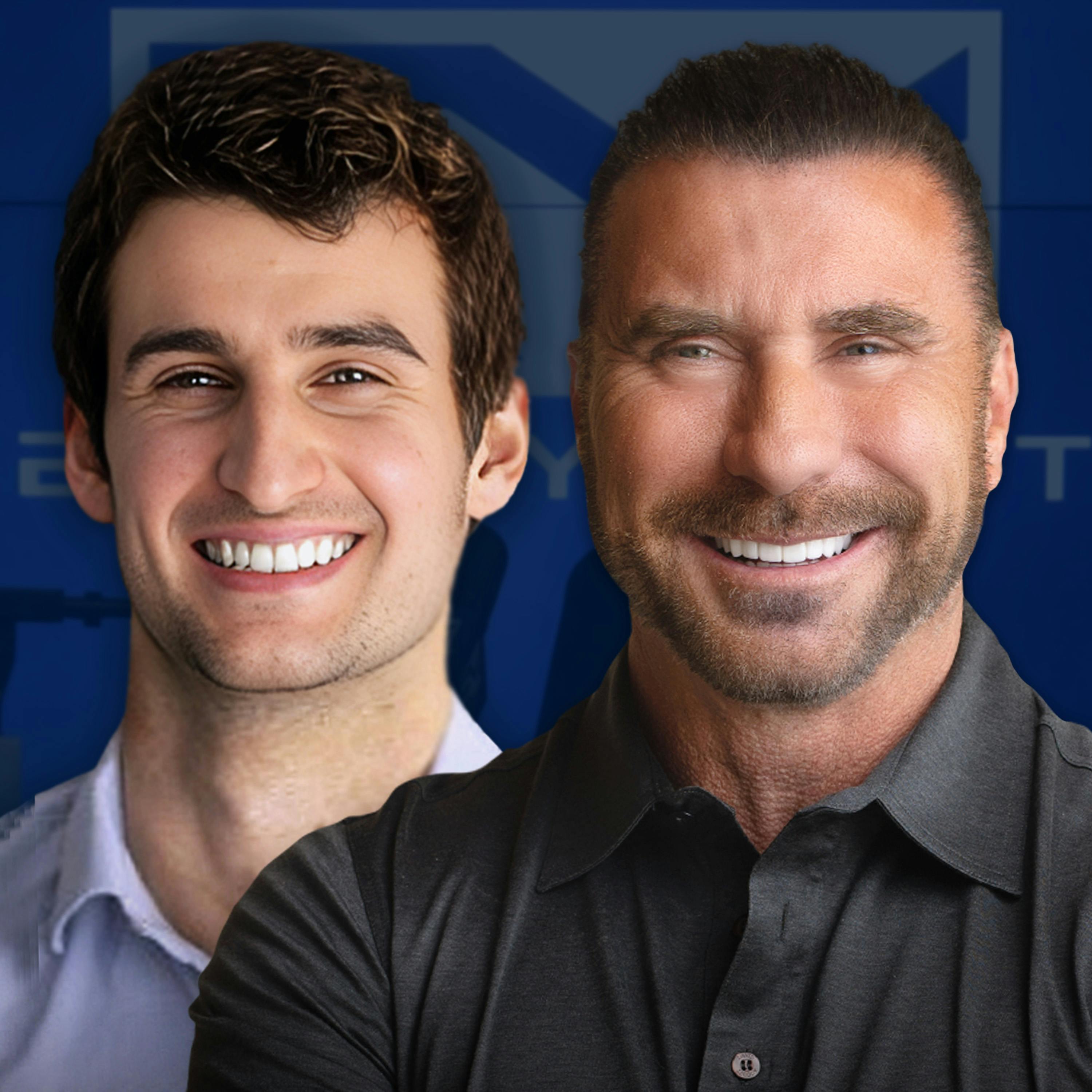
Loading summary
Transcript89 lines
- [00:00]
Prime Video Announcer
Thursday Night Football is back and it's only on Prime Video. This week, the Washington Commanders take on the Green Bay packers, with both teams determined to prove their worth. Coverage begins at 7pm Eastern with football's best party, TNF tonight presented by Verizon. Not a Prime member, Not a problem. Simply sign up for a 30 day free trial. It's the Commanders and the packers Thursday at 7pm Eastern or only on Prime Video. Restrictions apply. See Amazon.com amazonprime for details.
- [00:35]
Progressive Insurance Advertiser
This episode is brought to you by Progressive Insurance. You chose to hit play on this podcast today. Smart Choice. Progressive loves to help people make smart choices. That's why they offer a tool called Auto Quote Explorer that allows you to compare your Progressive car insurance quote with rates from other companies so you save time on the research and can enjoy savings when you choose the best rate for you. Give it a try after this episode@progressive.com Progressive Casualty Insurance Company and affiliates not available in all states or situations. Prices vary based on how you buy.
- [01:21]
Austin Hatch
This is the Ed Mylan show.
- [01:26]
Ed Mylett
All right, welcome back to the show, everyone. Everybody. So this week you're going to hear a story that it's really unbelievable except it actually really happened in this young man's life. So I just want you to sit back and take this all in. You know, there's some shows where, you know, I do a lot of preparation and I'm ready to go. This is one of those shows, to be honest with you, everybody, I don't know how you prepare for it and you certainly can't prepare in the real world for what happened to this young man. Let me just set the stage, but I'm going to let him, you know, explain the story to you. Can you imagine being a plane crash with your family and you live, but several of them don't and you have to carry that with you. Just imagine that for a second and then it happens again. Did you hear what I just said? It happens twice. You're in two plane crashes where you lose family members and somehow you end up living. What does that teach you about life? What does that teach you about your faith, Grit? Resilience? How to move on grief? We had a lot to talk about today with this young man and he's really the only person on the planet qualified to take us through this because I've never heard of anything like this in my life. He also then went on to play college basketball, everybody, and has become a mega achiever and is living out his dreams. Austin Hatch, it's really an honor to have you on the show, young man. Thank you for being here.
- [02:53]
Austin Hatch
Yeah, thank you, Ed. I really appreciate the opportunity to contribute to the podcast. Really, really grateful.
- [02:58]
Ed Mylett
When I say what I just said, like I introduce it that way, is it almost an outof body experience for you, no pun intended, when you hear that this is the now the story of your life? Because at one point it wasn't the story of your life. Right. You were just a young man with a wonderful family with some dreams and basketball and all that. When you hear it, what dawns on you, even when someone else describes it? I'm curious.
- [03:22]
Austin Hatch
Yeah. Sometimes hard to believe that, you know, that actually happened to me in my family. It's like. Like you think about it, you know, it's like you see in a movie or something, Right. And it's sometimes hard to put yourself in the shoes of somebody else that you see a story that's so crazy hard to believe that could ever happen. But, you know, obviously, God forbid, it did happen to me and my family and stuff. How do you respond? Right. What are you going to do about it? And I think in life and business, we all face challenges all the time. We usually can't control them, but we always have a hundred percent control of how we choose to respond. And that's basically my model for life. Can't always control what happens to us, but we can always control how we respond.
- [04:01]
Ed Mylett
Certainly want to talk about that, but I want to set the stage a little bit too. So when you said, like a movie, no one would believe this if it was a movie. If someone said to me, I was in a plane crash and I survived and I lost some family members. And I'm gonna have you walk everybody through that in a moment, if you don't mind. You go, okay, that's a crazy movie. But then you said it happened again twice. That's not a movie. That's like, okay, turn it off. That's not true. That never happened. There's no way. So how old were you? The first experience. And for what you're comfortable with sharing, take us through what happened so everyone understands the depth of the loss here that took place in your life.
- [04:40]
Austin Hatch
Yeah. Well, first of all, I've got an incredible family in heaven, and I'm so grateful for them and their impact on my life and their continued impact on my life. I'm just truly, truly blessed to have them. Amazing mom, Julie. She was an incredible homemaker, everybody's best friend. You know, she was kind of woman that lit up the room. Wherever she was, she was the life of the party, wherever she was. And, you know, I think that kind of brings up the whole idea that there's people in the world that brighten up a room when they enter. Like, they just bring some kind of energy, right? But then, you know, unfortunately, there's also some people that brighten up a room when they leave. Right? So. So I guess, you know, my mom was obviously that first person who, who she. She brightened up the room wherever. She was an amazing woman. And I had a older sister, Lindsay. She was three years older than me. She was an incredible look, incredible girl, too. And obviously, like any siblings do, you know, you have your fair share of, you know, disagreements and battles and stuff, but it's. That's normal. That's how it should be, right? And I had a little brother, Ian, three years younger than me. So when I was born, I was nine. Nine, 24 and a half inches long. So I was a big baby. My brother was a little smaller, but he had a big heart. He had a big heart. So we called him. We called him Mr. Big. So I'm six. Six. He probably would ended up six, you know, six, two, six, three, which is not short by any means, but, you know, not as tall as me and. But yeah, it was awesome. We had an amazing family. My dad, Steve, was a doctor in Fort Wayne, Portland, Indiana. And, yeah, we had the real, you know, had the. Had the dream. The dream childhood. We all did. And my grandparents had a place in Northern Michigan where they retired up there, and we'd go visit them all the time in the summer, and we were flying back home. My dad was a doctor, as I said. Also, we had a small family plane that we'd fly. And so Labor Day weekend, 2003, September 1, 2003, we were flying home from Northern Michigan to Fort Wayne, Indiana, where we lived. And as you're preparing to land, tragically, the airplane crashed and it took the life of my mom, Julie. She was 38 at the time. Dad's high school sweetheart. My sister Lindsay, as I said, was three years older than me. She was 11 years old, about to turn 12 the next week. And my little brother, Ian was only five. Devastating loss, obviously incomprehensible loss. But, you know, my dad and I did our best to rebuild our life. And obviously, you know, that's not something you ever get through, so to speak. It's never. That kind of a loss is never in the rearview mirror. It was with us every single day. But we just did our best to keep moving forward and try to honor Them with how we lived our life every day.
- [07:18]
Ed Mylett
You know, the reason I admire you so much, it's beyond words, but a lot of people listening to us, they're going through a hard time in their life. Life is very difficult. I'm going through a hard time. And then as I hear you talk, I'm like, compared to what? Like, that's hard. This young man wakes up and his mom and his siblings are gone. I'm putting myself really with you right now. Obviously, there's the loss, there's the fear, there's whatever the horror of the experience of. Of being in a plane crash in and of itself is like, there's probably watching your dad deal with his grief. Did you have any, like, survivors guilt at that time? Like, why'd I live? And they went, I wonder if any of that ever entered the equation in your mind.
- [08:02]
Austin Hatch
Yeah, you know, it probably did at some point. But, I mean, I'll be. I was 8 years old, about to turn 9, and I was so young that I don't think emotionally I wasn't really there yet to think that way. And I followed my dad's example so close. My dad was my hero. Right. And I saw how he responded to that. And I was little, whether or not I actually knew it, but I was paying very close attention to him.
- [08:32]
Ed Mylett
Yeah.
- [08:33]
Austin Hatch
And how he responded. Because if he scribbles up in a hole and stops living his life, and what example does that set for me? Like, what am I going to do if I don't see him bounce back? Get back to practicing medicine. Get back to doing triathlons and running and biking and swimming and doing all like he. Obviously, we were impacted tremendously by the loss, but you got to keep living, you know.
- [08:56]
Ed Mylett
Yeah.
- [08:57]
Austin Hatch
Got to keep your own.
- [08:58]
Ed Mylett
I want to go a little deeper on that. What did you learn? Let's say someone listening this has had a tragedy. Their spouse just left them. Boyfriend, girlfriend, broke up with them. Job loss, financial loss, anything? Health issue? What did you learn from your dad? I know you're eight, but you did learn. You had to go through this twice yourself. What advice would you give to somebody? Is it like, hey, take a moment and pause and heal a little bit and reflect or get right back up, you know, Is there an appropriate time when you're knocked down literally in life? Because there's different theories about it. You've actually lived it, so it's not a theory. What would you say? What's your best advice?
- [09:34]
Austin Hatch
I think it's very healthy to. To grieve a Little, like, for not like, the negative emotion or not let the frustration or any. Any of that consume you completely. Yeah, but I think it's very healthy to have a, you know, have a reasonable amount of it, because it's like you can't just, like, keep all your emotions inside you forever. You gotta eventually express yourself, because if you keep it all inside you, at a certain point, it's like a balloon. Like, you can't just keep blowing up the balloon for decades and expect it to never pop. You know what I mean? So it's like, yes, using that balloon analogy, like, when the balloon starts to get a little full, like, you need to let it pop a little bit and, like, express yourself. Right. Like, you don't want to let it just get so big and bottle up so much emotion that, like, when you let it out, it's like the whole world comes down. It's like friendship. Like, you don't want to wait till your friend is driving you completely, completely out of your mind crazy to confront him or her about it. Right. Or your spouse. My wife. Hey, honey, you're an incredible mom. You're an amazing wife, but this thing you're doing is really bugging me and let people know, like. Like, if this is an issue. Because if an issue goes underdress, it becomes like a cancer. No, I agree.
- [10:44]
Ed Mylett
It's one of those nuances of life that is. You know, if I've counseled people that have gone through grief, I don't know that I've counseled someone who's gone through. Well, I know I haven't counsel. Someone's gone through the double whammy, so to speak, that you had. Okay, so stay with us, everybody. I know you're going, oh, my gosh, this is actually real, everyone. And you can see how we're going to get to the good part in a minute because Austin's built an amazing life. There's some dad gum lessons from it, and he's good at teaching them, and we're going to get into them in a minute, but so, Austin, you watch your dad grief, you grieve, probably shock. Take us through where dad ended up and then what happened, inevitably, with your dad and you on the plane again. Once again.
- [11:28]
Austin Hatch
Yeah. So. So a couple years later, dad was remarried, met an amazing woman named Kimberly, or three kids of our own. We had a great blended family. Awesome to have a mom and siblings at home again and didn't replace what we lost, obviously, but it was great to have a mom and siblings at home again. And we Were a family. Right. And life was good. And I was. My dream was always play basketball for Michigan. Yeah, I was working every day to make that dream a reality. And life was good. I mean, we were going on family trips. We were going. We're doing, you know, doing all the great family stuff that, you know, what most families do. And I was working on my game. And freshman year had a good season. Sophomore year had a better one. And Coach Beeline from Michigan, former coach, came to see me play sophomore year, had a good game, beat a rival school from across town, and was a big upset. And it was, you know, he was a good game for him to see because that played well. And after, you know, a couple months later, after he saw my transcript from sophomore year, so I had good grades, he offered me a scholarship to play for him. June 15, 2011, 1:45pm Remember the call, Clear as day. Yeah, it was a dream come true. You know, my mom was. Went to Michigan, graduated in class of 87. My grandpas went to Michigan. You know, we grew up going to football games in Ann Arbor in the fall. And Michigan's biggest. As big a part of my family as anything.
- [12:49]
Ed Mylett
I think a lot of people may not know. Like, I just want to interject those of you that aren't sports fans, it's almost religion if you're a Michigan grad. Like, it's. It's a huge deal to get a chance to go to Michigan and then to play and to get offered a scholarship when it's your dream. It was a. It was incredible achievement on your part. And I just want to make sure they understand the magnitude for your entire family honoring your mom's legacy after she had passed. I know the depth of emotion and pride you had in achieving that, but go ahead, keep going.
- [13:21]
Austin Hatch
Yeah, so it was amazing, and I hope to have a great career. I think I could have been pretty good there. Had to get a lot better, obviously. Had to get a lot better. But nine days later, June 24, 2011, my dad, Steve, my second mom, Kim, and I were flying to Northern Michigan. This time, the San Francisco returned from the first plane crash in 2003. And it's in bad weather. I had to go to a different airport. And as you're preparing to land again, the airplane tragically crashed and took the life of my dad, Steve, my second mom, Kim, and it should have killed me too, man. By the grace of God, I'm here. And, you know, I was in a coma for a couple months and came out of it. Had to relearn how to do everything. And yeah, I had a long road to recovery, but I think we made a pretty good comeback despite the circumstances.
- [14:06]
Ed Mylett
God bless you, bro. Just God bless you. First off, you've eventually come out of the coma and now you realize I've now lost my dad and my new mom. This can't be real. So what did that look like? What did, what did you have to relearn to do? I have to think. You almost had to relearn to think, bro. Relearn to believe. I have to imagine everything you thought you knew. You probably really doubt it. And I bet as I said that sentence, there's a lot of people right now driving or they're running on the treadmill, they're listening, going, you know, in a different way. I'm right there right now. Everything I thought I knew, maybe I didn't know. I'm wondering all of it. Rebuilding your mind, your body, your ability to walk, everything talk. Take us through that.
- [14:52]
Austin Hatch
Yeah, well. And yeah, I came out of that coma, you know, late August, early September 2011. And it's not like I came out of the car, was in a coma, and then I opened my eyes and everything was good. Like, the waking up process took a few weeks. I had to get re acclimated to real life. Right. I kind of understood the severity of what happened, obviously, but yeah, it was a kind of a rude awakening, obviously. Right. And realizing what I had lost. And yeah, man, it was. But I believed there was a way I was going to find a way. And I would say that one of the most incredible moments for me between obviously, all the amazing support that I had, I had so many people and all my family, all my friends from Fort Wayne, like, I had so many people there to support me out of the goodness of their heart, you know, they just did it for me, obviously. Probably made them feel good to be there for me in a tough situation, but they were just there, my friends, my family. Like, I had so many people that, that were there for me, which is incredible. Another big thing for me was Coach Beeline. He got a special clearance from ncaa because. Because at that point, when I'm. When you're, when you're an unsigned recruit, just verbal commitment. I could only see him on, on campus at Michigan, at my high school. Yeah, obviously unique circumstances. So he got a special waiver from NCAA to come see me in the hospital. And he. This is not verbatim, but he basically said, austin, man, I can't wait to coach you someday. I can't wait to have you on my team whenever you were to come play for me at Michigan. Man, I can't wait to coach you. I can't. I couldn't walk, right. They didn't know if I was ever gonna walk ever again. But yeah, just that belief and obviously all the doctors and people that took care of me and helped me recover and stuff. And I look at my life like this is what I went through. You could argue that's the worst case scenario, right?
- [16:39]
Ed Mylett
Oh, gosh, yeah. I'm. What was. Yes, bro, yes.
- [16:43]
Austin Hatch
Like. But what I was going to say is like, I've had the best case scenario of all the amazing support and people and love and. Yeah, I'm just, just very grateful for it all.
- [16:51]
Ed Mylett
Yeah. And you're also incredibly humble. Part of that's that Indiana upbringing probably. But let's just be honest, bro, you're special.
- [17:00]
LinkedIn Ads Advertiser
This episode is brought to you by Progressive Insurance. Do you ever think about switching insurance companies to see if you could save some cash? Progressive makes it easy. Just drop in some details about yourself and see if you're eligible to save money. When you bundle your home and auto policies. The process only takes minutes and it could mean hundreds more in your pocket. Visit progressive.com after this episode to see if you could save Progressive Casualty Insurance Company and affiliates. Potential savings will vary. Not available in all states.
- [17:30]
Prime Video Announcer
Thursday Night Football is back and it's only on Prime Video. This week, the Washington Commanders take on the Green Bay Packers. With both teams determined to prove their worth. This should be a terrific game. The Washington Commanders going up to Green Bay trying to get a win up there. Jordan Love, the quarterback for the Green Bay packers, had a subpar year last year. Can he shake it off and show his true talent against the Washington Commanders? Coverage begins at 7pm Eastern with Football's Best Party TNF tonight presented by Verizon. Not a Prime member. Not a problem. Simply sign up for a 30 day free trial. It's the Commanders and the packers Thursday at 7pm Eastern only on Prime Video. Restrictions apply. See Amazon.com Amazon prime for details.
- [18:18]
Ed Mylett
By the way, God chose you for some reason to live this life, right? He holds you in the palm of his hand. There's something special about you. And I love that you give credit to Coach B Line. What a wonderful man with that, that job, everything pulling at him. To spend that time with you is remarkable. All the people around you. Absolutely.
- [18:38]
Austin Hatch
But.
- [18:39]
Ed Mylett
But you are the one who rebuilt your life. You didn't do it alone, but you did. Really hard question here. What was Harder believing in life again and building your thoughts or learning to walk.
- [18:57]
Austin Hatch
Definitely the thoughts. Because all the physical stuff, like, as far as, like, the basics of it, like relearning to walk. Relearning how. Like that. Obviously it took some time. I'm not gonna say it came easy, but it. Like, that wasn't. That wasn't the hard. I mean, it was difficult, but it wasn't. It wasn't hard. It was difficult, but it wasn't hard. And, like, the. The hard stuff was, like, what I lost and, you know, believing that, like, getting like. Like trying to, you know, wrap my mind around what happened and then still convincing myself or, like, believing that, you know what? I'm gonna find a way. I'm gonna find a way. I don't know how. Don't know how. I want to get to Michigan. I don't know how. I'm in a coma. I'm coming out of a coma. I'm in a wheelchair right now. I can't walk. I can't really walk, but I'm going to find a way to make it to Michigan and join the team and get a great education. And I think the biggest thing and what was so impactful for me is I had so many people there who believed in me and were positive, and they. Because it's like, I think. I think our mutual friend John Gordon, I think. I think he's a guy who says no positivity is a competitive advantage, right? And, like, in a positive. Being positive doesn't mean we ignore the negative, but, like, obviously we acknowledge it. But it's like, you know what? We're gonna find a way.
- [20:26]
Ed Mylett
I actually think that it's acknowledging the negative, and I think that that way, you know, you're telling yourself the truth. And we're gonna get into grit and some other things here in a minute. Some of your strategies. Do you still live in a lot of fear, Austin? I would think that if you do not.
- [20:43]
Austin Hatch
Wow.
- [20:44]
Ed Mylett
Why? Like, I. I would think I've had two experiences. I live afraid now. I would think the life has taught me to be afraid. It's taught you a completely different lesson from your experience. The most definitive answer of the show so far was right there when you just said no immediately. Why?
- [21:02]
Austin Hatch
Because if you think about it, like, I had to take stats in college, didn't do very well, but, like, one of the things is, like, past causation doesn't predict or increase the probability of future causation. Right? Like, you think about it from, like, that standpoint just because I was in these two really bad accidents before. Doesn't mean that I am somehow more likely to get in a third one. It doesn't. Like, sometimes we let our mind tell us things that aren't true, you know, And I just think that. And also, too, like, for me, like, and this is a whole nother issue, but, like, I don't fear dying. I don't want to die. Obviously, I've got a wife and two beautiful kids. Like, obviously not. But, like, if it's my time to go, man, it must be my time to go.
- [21:48]
Ed Mylett
Why? Why are you that way? Is it. Would you have been this way before both experiences? Did this teach you something about life and death that you didn't know before? Did it alter your faith? Like, why are you not afraid to die? Most people are. Most people, it's their greatest fear.
- [22:01]
Austin Hatch
I don't know for a fact where I'm going, but I think. I think I'm doing things the right way. God willing, I'll make it to heaven and, you know, honor him with my. Continue to honor him in my life. I'll get to see my family again. Right? Like, I believe that. And, you know, I haven't seen my mom and siblings in 22 years. I haven't seen my dad and dad and second mom in 14. I'm obviously, I'm excited to see them someday, but, God willing, it's 70 years from now. My wife and I have, you know, a lot of kids, as many as she wants, and a lot of. A lot of grandkids. So, you know, one thing I've learned in marriage, let's just say I wanted three kids, she wanted six. We're going to compromise and have six. Right? That's good.
- [22:42]
Ed Mylett
One more thing, and I want to go to all the strategies. Everyone's like, all right, I'm ready to write some notes here in a second, too, because they're all, you know, moved. I want to ask you something personal, and you can share with me as much of it as you want to or you don't. One of the things that happens in the work I do when someone's experienced some type of trauma. And by the way, trauma can be everything from, you watched your mother and siblings die in a plane crash, and that's severe trauma, clearly, to, you know, your parents didn't love you enough. There's a spectrum of trauma in life. It could be one bad experience where you got laughed out of a classroom or the breakup. One of the challenges that a lot of people have. And I'd like you, to be as honest as you're willing to be about this, is they replay the video of their mind of the incident. They replay it over and over, and even if someone's left them, they replay them with this new person over and over. And so they're almost tortured with the thought of an event that took place once that they then put themselves through thousands of times. It was bad enough once, but they put themselves through thousands of times. And when I really get to the heart of the work of what's still causing them to be held back, it is often this video in their mind of the incident or the imagined incident. You've had two horrific videos that you've experienced. Do you still see them? Did you do something to not see them? And what attention do you pay to it?
- [24:08]
Austin Hatch
The second one, I was. I had such a bad head injury. I don't remember, like, a couple months before that crash. I remember stuff if I see pictures or I see a video of it. Like, if you ask me about something I. Like, I don't remember, like. Like, for example, like committing to Michigan, June 15, 2011. I don't remember that when I see the footage of it. Okay. Like. Like, it's like on a test. You take a test, you don't know the answer, but then when someone tells you the right answer, oh, I knew that I just didn't think about at the time. So it's like that. So I don't remember the second one at all. They had a really bad head injury, which is a blessing to not remember that first one. I unfortunately do a little, like, you know, you know, more than. More than I. More than I'd like to. And. Yeah, I just. I don't know. Not that I like, you know, you know, suppress it or. Or try to ignore it, but it's like. Yeah. As devastating it is as it is, as tragic as it is. And, you know, I miss my whole family every day, obviously. And I think about, you know, our kids now. My mom, she'd be an amazing grandma. Yeah. And. Yeah, but it would just be incredible. But the cool thing is, for me, Ed, like, I don't have to wonder what life would be like now if they were here. Like, I know what it'd be. Obviously not, like, in detail, but I know how involved they'd be. I know they would be coming up here all the time and.
- [25:33]
Ed Mylett
Yeah.
- [25:34]
Austin Hatch
You know, like. Like, I know the kind of grandparents they'd be. I know, like, how my sis. How my siblings, Ian and Lindsay, what kind of aunts and uncle. Like, what they'd be like. Right? And. Yeah. It's just. I mean, and one thing that I found is I'm. I'm very grateful. Yeah.
- [25:51]
Ed Mylett
I know it.
- [25:52]
Austin Hatch
The life. For the life that I have. I'm just so grateful, Ed. I mean, I can't believe it, like, that I married the girl in my dreams. We have. We live in. I just can't believe it. Right. And can I tell you something about you, bro?
- [26:03]
Ed Mylett
One thing I want to tell you, like, I study patterns in people, and I was going to say before you said that, I just want to acknowledge something because I think sometimes people do things well unconsciously. Almost everything I've asked you, you've immediately gone to. But you know what I'm grateful for. But you know what I'm grateful for. But you know the people around me. But, you know, my wife, what I'm grateful for. And I think what you do is you do see that video, and then you immediately begin to replace it with gratitude and gratitude videos and gratitude thoughts. And you. You've built a massive superpower muscle of giving yourself the gratitude dose that is greater than the grief dose because you've done it repetitively, and you're bigger. I just want to tell you what I see in you that is part of your greatness, and just speak it to you, because it is you. You almost struggle to tell the hard parts of the story because you're so wired with the gratitude of where you are now.
- [27:04]
Austin Hatch
Yeah. And, well, thank you for your kind words. I appreciate it. One thing that I found, it is it's. I don't know, neurologically, you know how this works. You know, my best friend is a neurosurgeon, and Charlotte. So maybe you should ask him about this. But, like, it's a. It's. It's literally impossible to be truly grateful and very negative at the same time. It's literally impossible. Right. Like, those two emotions can't coexist. And like. Like being. I'm not saying we should ignore all negative emotions and only think about the positives. We should think we should acknowledge the negative.
- [27:37]
Ed Mylett
Yep.
- [27:37]
Austin Hatch
Like, I acknowledge what I've lost, obviously. Like I said, like, obviously terrible losses, losing my family and the plane crashes and stuff. But it's like, look at the life we built and we're continuing to build every day, and it's just like, man, like, how can you. Again, not that. Not that. Not that all the great things now, like, make all the. All the tragic losses, like, disappear. Obviously not. But it's just. It Just makes for a better experience in life just to be positive and be grateful and focus on the good.
- [28:08]
Ed Mylett
You know, I admire you.
- [28:10]
LinkedIn Ads Advertiser
Does it ever feel like you're a marketing professional just speaking into the void? But with LinkedIn ads, you can know you're reaching the right decision makers. A network of 130 million of them. In fact, you can even target buyers by job title, industry, company seniority, skills and. Did I say job title? See how you can avoid the void and reach the right buyers with LinkedIn ads? Spend $250 on your first campaign and get a free $250 credit for the next one. Get started@LinkedIn.com Campaign terms and conditions apply.
- [28:41]
Austin Hatch
Listen.
- [28:42]
Prime Video Announcer
That's the sound of the fully electric Audi Q6E Tron. The sound of captivating electric performance, dynamic drive and the quiet confidence of ultra smooth handling. The elevated interior reminds you this is.
- [28:59]
Austin Hatch
More than an EV.
- [29:01]
Prime Video Announcer
This is electric performance.
- [29:03]
Austin Hatch
Redefined.
- [29:05]
Prime Video Announcer
The fully electric Audi Q6E Tron.
- [29:10]
Ed Mylett
I admire you a great deal. The more I talk with you, the more my admiration grows. Yeah, it's true. You're a tough dude. I want to get into some of the things you've done to build your life because it's a remarkable life. And we'll take them through little Michigan stuff here in a second too. And then the amazing speaking career you've built. And you need a great speaker. Guys, this is your. I got to be honest with you. The last few weeks, multiple people have reached out to me and said, just saw this guy, Austin Hatch, man, he's unbelievable. And I evidently is about to go do your show. So that's real feedback behind the scenes about him.
- [29:44]
Austin Hatch
Thank you. I appreciate that.
- [29:45]
Ed Mylett
It's a fact. You're tough, but you also, you're gritty. You've actually kind of got a formula on grit you share. This is where the notes start kind of getting taken everybody on what this man did to build a life from not one, but two just unimaginable tragedies in his life. Take us through grit a little bit. Your thoughts on it.
- [30:04]
Austin Hatch
A lot of people talk about grit as, you know, working hard for the long term goal. The toughness, the all that, that's great. And being persistent, perseverance, obviously that's all true. But I think grit isn't just about working for the long term goal. I think grits every day. Grits every day. And I think about my recovery journey. You know, I was blessed to make a good comeback. Had an incredible support team who, who helped me make it but you know, I was trying to get to Michigan, but grit wasn't just Michigan. Grit was every day. Grit was getting out of bed, Grit was walking the hospital floor. Grit was learning how to jog again. Grit was, you know, grit was learning how to get back in school. So I think grit's more specific than just working hard for that long term goal. So I think it's. I'll give you the, the two minute spiel, please. And so it's four letters. I think there's four key components to it. Really believe that. But I think it's driven by a greater purpose. I think we need to be driven by something bigger than ourselves. Whether that's your faith, your family, your teammates, your colleagues, the organization, whatever your purpose is, I think we need to be driven by something bigger than ourselves. Because if it's just for us, it'd be nice if I overcame this challenge or achieve this goal in the face of these trials, but it's only really for me. So it's going to require too much time and effort and sacrifice. Not really sure that it's worth it. All right. But if it's for something bigger than yourself, for your family, for your friends, for, you know, for your, for your teammate, like, if it's for something bigger than yourself, I think we're always going to be willing to. We're always going to be willing. And that's what I think a lot of life and business comes down to. Like it, obviously the, the best business plan or the best, you know, like, like the team in sports, the best game playing the, the best prepared team is probably going to be successful. But a lot of the time it's the team that's the most willing. Like, are, are you willing to compete as hard, are you willing to compete as hard as you can for the whole game or just for the first half? Like when you're tired, are you, are you willing to find a way to keep competing, to keep giving a little more than you think you can? So I think if you have a greater purpose for what you do, whatever you do, sports, business, family, anything, if you ever get a purpose, we're always going to be willing. So very, very good. Purpose drives grit. The g. The growth mindset. Growth mindset views adversity as opportunity. I really believe that challenges are opportunities. Not the challenge itself, not the adversity itself, not the loss itself, but the opportunities in how we choose to respond. Right? It's a choice to have the growth mindset. It's a choice. It's also a choice to have the victim mindset, right? Feel a little sorry for ourselves. Well, I didn't deserve this, man. How did it. Why does this happen to me and not the other people, not them? Why is it easy for them and not like. Right. It's easy to think that way. How much easier would life be if this didn't happen? But why not just have the growth mindset? Okay, this happened. So what now? What? Right? Like at coach B, at Michigan, Coach B line, we lose the game. And he would say every time, we're going to watch the film of the game and find a way to get better from it. We're going to watch the film and get better from it. And like, I think that's an idea in life too. Like, not get better because we lost, but look at our mistakes, look at why we lost and then turn those into learning opportunities so that we could be better forward in the future. So I think if you just have that growth mindset all the time, it's not if we overcome our challenges, not if we achieve our goals in the face of adversity. I really believe it's when. So the R is the decision to be resilient. And I don't think you're resilient if you bounce back from challenges and achieve your goals. Like, I don't think I'm resilient because I made it to Michigan after being in two plane crashes. That doesn't make me resilient. I mean, I understand people who think that way, but I think I'm resilient because I took action every day. I took massive action every single day. And I think achieving your goals is the result of that. Like, if you take. If you're disciplined and committed to the. To the journey and take massive action every single day, there's almost no way you don't get to where you want to be. Right. And I. I think just. Just showing up every day ready to go, ready to compete, ready to take action. That's what resilience is to me. Very good. That's what resilience is to me. And what's the I? The I, the I? It's the big one. They're all big, but I think it's the big one. The eye, the eyes. Integrity and of course, integrity, you know, doing the right thing and nobody's looking. Very important, obviously, going about a business the right way. Act, you know, in the financial services space, you know, however the language reads, you know, we have a fiduciary responsibility to act in the best interest of clients or however the how, whatever integrity means to you, that's great. You know, like my school growing up, the school model was integrity in all things. Integrity and all things. Right. Because like if you don't have integrity, nothing else matters. But in addition to that, I think integrity includes following through on our commitments, especially when the circumstances change. Right. A lot of people make commitments when everything's all good or when circumstances are stable, but then when things change, yeah, sorry, you know, I made this commitment to you and everything was all good, but sorry, now that I'm dealing with this other issue, not sure I'm gonna be able to follow through on, on my commitment to you. Have. It's pretty common. Happens all the time, unfortunately.
- [35:21]
Ed Mylett
Sure does.
- [35:22]
Austin Hatch
But like most, most college coaches, when they recruit a player to come offer him a scholarship to come play, that, that's normal. They're gonna follow through if, if you know the player is going to come play and contribute to the team. Right. But if they get hurt, I think or something happens, it like they follow through on the commitment whenever, when they get what they thought they're going to get right from the player. Coach Beeline didn't get that from me, but he still followed through on his commitment. He said, I made a commitment, so I made a commitment. I made a commitment, so I made a commitment. And the follow through was a no brainer. And he said, it's just, it's just what we do at Michigan. Of course I'm gonna follow through. I made you a promise, man. Of course I'm gonna keep it. I gave you my, I gave you my word. And I think, you know, like, like from an organizational, cultural, collaborative, team, family perspective, right? Like if we can all do that, man free, if we can all have our father and our commitments not be based on circumstances. If everybody that we work with, everybody we interact with every day knows you have Austin, Ed, Abby, Sarah, Susan. Yeah, if they made a commitment, yeah, they're going to get it done. She what they do. Of course they're going to follow through.
- [36:36]
Ed Mylett
Yeah. Yeah. Most people's integrity, commitment is conditional. If you deliver on what you said, I'll deliver on what I said. If circumstances are great, I'll give you everything I got. But when circumstances and conditions change, most people's effort or commitment changes. What you're saying is it's non conditional, non circumstantial, unconditional integrity, keeping your word and that's what you've done. That's how this life we're talking about has been built. This is so good that's why I'm letting you go.
- [37:03]
Austin Hatch
What's t the last time? I'll go real quick. T team, don't go quick.
- [37:07]
Ed Mylett
Take your time.
- [37:08]
Austin Hatch
Team first mentality. Every person on every team has a role, Ad and that role is very important. We don't have the same role now. I'm not saying that, but every person on the team has a role and the roles are very important. So, you know, I've got about eight teams in, in the NBA now. Some of you probably know, you know Jordan Poole, the Wagner brothers, Charis Levert, you know DJ Wilson, you know, like these guys are Duncan Robinson, my buddy in Miami. Like, these guys are really good players. They're really good players. They were the best on my team. You know, my wife was a three time all american volleyball player at Michigan. Yeah, so she was the best on her team. She was the best on her team. I. I wasn't. I'm in the record books at Michigan as the all time lowest scoring full scholarship athlete in program history. I scored one point in four years. 1.4 years. But I was on the team, so I had a role, right?
- [38:05]
Ed Mylett
Yep, yep.
- [38:07]
Austin Hatch
So be a great teammate. Shag balls in practice, help with drills, rebound and shoot around before games. Bring positive energy to the gym. Mercar to be the best that I could be and you're a stud, dude. What I learned, man, is that, is that yeah, you may not be the best on your team, but you could be your best four of the team. And whatever your role is, you can be. We could all be our best four of the team. And that's just kind of how I looked at it. And I'm like, man, I wanted to find some way to contribute to Michigan. I scored one point. But if I could contribute by being positive and bringing energy every single day, if that's what I could do, it's what I could do, you know.
- [38:45]
Ed Mylett
So listen to what you're doing right now. There's millions of people hearing this.
- [38:48]
Austin Hatch
By the way.
- [38:49]
Ed Mylett
I didn't even know this when I asked you the question. If you're on YouTube, you see this, but a lot of you listen on audio. Over his right shoulder right now is the word grit. I didn't even see that when I asked you the question earlier. It's all over you. You know, you said something about massive action and how do you know when you're doing that? How do you know when you've taken enough or it is enough or it's too much, you know? Because I say that too. Immediate massive action. Right. It's hard to define that. How do you know? Like, when you were going you through your rehab, how do you know?
- [39:21]
Austin Hatch
Well, I think, you know, my dad, my hero, he always said us, whatever you want to do in your life, man, be a doctor like me, go to Michigan, have a family, whatever you want to do in your life. He said, go big or go home. To go big or go home. And I think, you know, when you've gone big enough, I think, and, and not to, not, not to focus on the results. But, like, if you're not getting the results you want, if you're not getting to where you want to be, kick it up a notch and go bigger, right?
- [39:52]
Ed Mylett
Like, what if you're in a spot like you were Austin, I'm gonna. I want to challenge you on something. What if you're in a spot where you are. Where you're in a wheelchair? Someone's listening to this right now. They're like, man, I just don't have. I. I'm on the canvas, bro. Like, I'm. I'm just thinking for this person right now, if anybody can relate to this, it's you, right? Like, you. You. This is a dude who's, you know, he's being humble. He was an. You don't get a full boat scholarship to Michigan basketball when you're still a junior in high school if you're not unbelievably great, okay? And now you're. We're like, I can't stand up. I can't tie my shoes. I can't. So what about small actions? So it still can be massive, but it's small. So there's the big. And by the way, you know how much I agree with you on that. But what about the person who goes, like, is there any credit, any worth to just doing something towards my goal? Something to get up, just metaphorically tying my shoes? Like what you wanted to do at one point?
- [41:00]
Austin Hatch
Well, that. That's what it was for me, Ed. That's where it started. Like, I couldn't walk. I couldn't. Like, I. I did. As I was rebuilding my strength, I started in the hospital. I was doing wall push ups, like standing up, pushing against the wall. So I was. I was 225 when the second plane crash happened. I was strong. 6, 6, 2, 25. You know, I was a sophomore in high school, So I was 16 years old. And then when I came out of the coma, I was like 160. So I lost 60 pounds of muscle, right? Like, wow. Like what? Like. And you Know, people are like, oh, you know, pretty good recovery and come back and stuff. It was one day at a time, man. It was one day at a time. It was three really hard years of recovery. But you just take, take massive action. Like, you know, the whole, the whole thing be where your feet are. Like, take massive action today and where wherever your feet are today, like, okay, can't really walk right now. Can't really do like much right now. Okay, I'm gonna do, I'm gonna do Matt. Because I think massive action is relative, right? Yeah, like you can do what you can do, right? Like you can't ask more of yourself than what you're capable of. And I think. Not to say people know. We don't know our potential, obviously, but like, like I said, like with resilience, like, how do you, how do you know if you've gone big enough? You don't know. But I think most people at the end of the day put their head on their pillow and say, yeah, we went big today.
- [42:31]
Ed Mylett
I think you're right. I think you know when you don't.
- [42:33]
Austin Hatch
Hey, it's Ryan Reynolds here from Mint Mobile. Now I was looking for fun ways to tell you that Mint's offer of unlimited Premium Wireless for $15 a month is back. So I thought it would be fun if we made $15 bills, but it turns out that's very illegal. So there goes my big idea for the commercial. Give it a try@mintmobile.com Switch upfront payment.
- [42:55]
Progressive Insurance Advertiser
Of $45 for three month plan equivalent to $15 per month required new customer offer for first three months only. Speed slow after 35 gigabytes of networks busy. Taxes and fees extra. See mintmobile.com I think we, I think.
- [43:04]
Ed Mylett
You know, inside when you put your head on that pillow at night, I left a little bit in the tank. I left some on the field. You know, I know I have. I know in my baseball career I left a lot there. I could have done more. I could have worked harder. And when I got into business, I was like, I'm never gonna have that feeling again. If I lose, I'm going down with my A game. I'm going down with everything. I got guns blazing. What I found out was winning is actually inevitable. If you don't quit and you go guns blazing, like it just. You just outlast everybody, even if you're not the best player on your team. And if you're not the best. I got an interesting question for you. I want you to really think about it. We got a few More left. And by the way, I've enjoyed this today. I just, it's a remarkable honor of mine that I get to meet people like you and get inside their heart more than their head. You know, your head's one thing, but your heart's much bigger. If you could go grab.
- [44:00]
Austin Hatch
I appreciate it.
- [44:01]
Ed Mylett
Well, it's just true, brother. It's just, it's obvious you're strong, good, capable man. If you could grab that 16 year old that was getting on that plane with your dad, if you could get on there with Kim and you grab you before you get on. Knowing what's about to happen in this young man's life, I wonder what you would tell him to never forget. Like, what would you want him to know? If you could grab him now, knowing what you know right before that experience was going to happen, what would you say to him?
- [44:44]
Austin Hatch
Don't forget how you worked to get to Michigan. Don't forget it about, you're gonna have to work a lot harder to rebuild your life. Like, so it's the same, it's the same mentality though. It's, I mean, it's no different. It's. I think sometimes what we, what we think is that, you know, what we offer. A lot of people who are listening to this like you, you already done great things in your life and if you're going through something right now or you're dealing with some issue, like I'm not belittling it by any means, but I'm saying like have the same mindset to over, to overcome your challenges that whatever you're dealing with that you had towards achieving your goal, whatever your, whatever goals you had in the past, whether it's going to, whether it's playing sports and when you're younger or getting a career, getting achieving X X position or what are getting this promotion or that or whatever, like remember, remember the work and remember the mindset you had when you're going after that and now that you're dealing with this other issue, it's, yeah, it's, it's a different, it's a different problem. You can approach it very similarly.
- [45:54]
Ed Mylett
Last question, last question for you. Let me ask you this. Be as candid as you, you could be. You, How'd this make you look at your faith, your life? When I say this like, those are two incidences of this man's life, but he's had an entire life also, he said the birth of his own children, he's had his own wedding. He said other setbacks, other hurts, other traumas. Other victories, quiet moments of doubt, whether he'd ever play basketball again, whether he'd ever get to Michigan, whether he'd ever be a father, whether life is fair. All of the, this is just two incidences of a life, right? And people forget that. How has it impacted your faith? Like, like, if you said, I'm mad at God, I think there would be people that wouldn't blame you. Or I was, or I questioned my faith, or I still question it. I, I, I really wonder where it's caused you to land in what I think is the most important decisions and areas of life.
- [47:03]
Austin Hatch
100. It's, it's actually, it's strengthened my faith because I've realized that, like, God's been there, he's been there with me through it all, every step of the way. And, you know, I think there's a couple verses I just want to talk about real quick. So James 1, 2 and 3 says, consider pure joy when you face trials of many kinds, because, you know, the testing of your faith produces perseverance, Right? Consider it pure joy. Now, nobody's, nobody's happy when they go through stuff. But I think joy is a more permanent thing, right? Like, joy makes us more like Christ. Like, because I think the joy is, like, it's going to make me more like Christ by going through stuff and overcoming this, getting the opportunity to respond to it. So consider pure joy when you face trials of many kinds, because, you know, the testing of your faith produces perseverance. And then a couple verses later, James 1:9 says, Blessed is the one who perseveres under trial because, having stood the test, that person will receive the crown of life that the Lord has promised to those who love him. It says, you're going to be blessed if you persevere under trial, right? Like, not. And I hope my life is not that my life is proof of the Bible being true. But it's like, man, look at my life now. I am so blessed. I'm so, like, I, I have, I'm not gonna say I have everything that I have, what everybody, everybody wants. But, like, I have an amazing family, amazing extended family, amazing in laws, and amazing. Like, I'm just so blessed. Like, I can't believe that I'm that, like, we have this life. I can't believe this is real life, you know? Yeah. And then so blessed is the one who perseveres under trial, because that person will receive the crown of life The Lord has promised those who love him. Last verse, Ed. Believe. It's Philippians 1:6. He who has begun a good work in you will see it through to completion. Right. And I, and obviously my, my, my, my place to, you know, break that verse down and like, you know, translate it or whatever. But, like, I don't think it says, he who has begun a good work in you. If everything stays simple and easy, then he'll see you through to completion. It doesn't say that. It just says, he who has begun a good work in you, he's going to see it through to completion. Like, I don't think that's. Again, I don't think like, kind of like the massive action wasn't a conditional thing or the integrity. Was it conditional? Like God seeing it, Seeing good works through to completion is not conditional. Doesn't seem like it. This is my. Again, this is my understanding or my perception of the verse. But I think, you know, if he's begun a good work in you, and if you stay committed and faithful and honor him, he's going to see it through the completion.
- [49:44]
Ed Mylett
Amen, brother. I just, I don't know. It's just times in your life where you sit with somebody, they've got so much humility, as you all can hear from this young man. And you want to be more like them. Like right now, I could tell you my emotion is I'm a little bit emotional, but I'm grateful for the time with you. I'm grateful that I got to share you with the world, but I want to be more like you. I'm humbled by you, and you've had that effect on me today. Like, you're a good man. You're a good man.
- [50:20]
Austin Hatch
You're appreciate it.
- [50:22]
Ed Mylett
It's true. Your parents. Your parents are very, very proud of you, bro. And it's so obvious why you were chosen to live this life. And you won't accept that because you're too humble, you know, you're too humble of a guy. The praise is what I mean. But you're the right man for this existence. You're the right man to deliver this message. And, and I want to, on your behalf, tell everybody that if you want to have a great speaker come into your business or your company or your organization, you just heard from him, and here's why. A lot of people are good at talking about theories and philosophies and concepts and strategies. Very few people live it and have lived it. And so this is a real story. It's not a movie, even though it sounds like it. It's a real story. And he's a real person and he can. He can really move your group. He moved me today and I hope that he moved all of you. Austin Hatch, thank you sincerely for being here today and God bless you, brother.
- [51:23]
Austin Hatch
Thank you again for having me. I had a really appreciate. God bless you as well. Look forward to staying in touch. Yeah, let's keep getting after.
- [51:29]
Ed Mylett
I'm always here for you and I'm taking these lessons of grit and action and toughness and faith from you into my journey, brother. It added to my life and I know it added to millions of other people's. All right, everybody, if you enjoyed today's show, and I know you did, or it moved you or it affected you or you think it could affect or help someone else, please share it on your email, your text, your social media. I'd be grateful if you did that just so that more people are affected and go follow Austin on social media as well. God bless you, everybody. Max out.
- [52:01]
Austin Hatch
This is the Ed Milan show.