Loading summary
Transcript112 lines
- [00:00]
TJ Watt
This is pro linebacker TJ Watt. And I'm back with YPB by Abercrombie for another activewear drop. My second co design collection has new shorts and tanks that keep up with all my in season workouts. And their new Restore collection is a game changer off the field too, because even pro athletes like me need rest days. Shop YPB by Abercrombie in the app, online and in stores because your personal best is greater than anything.
- [00:31]
Jason Redmond
New year. Same extra value meals at McDonald's. So now get two snack wraps plus fries and a medium soft drink for.
- [00:39]
TJ Watt
Just $8 for a limited time only. Prices and participation may vary. Prices may be higher in Hawaii, Alaska and California. And for delivery.
- [00:46]
Ed Mylett
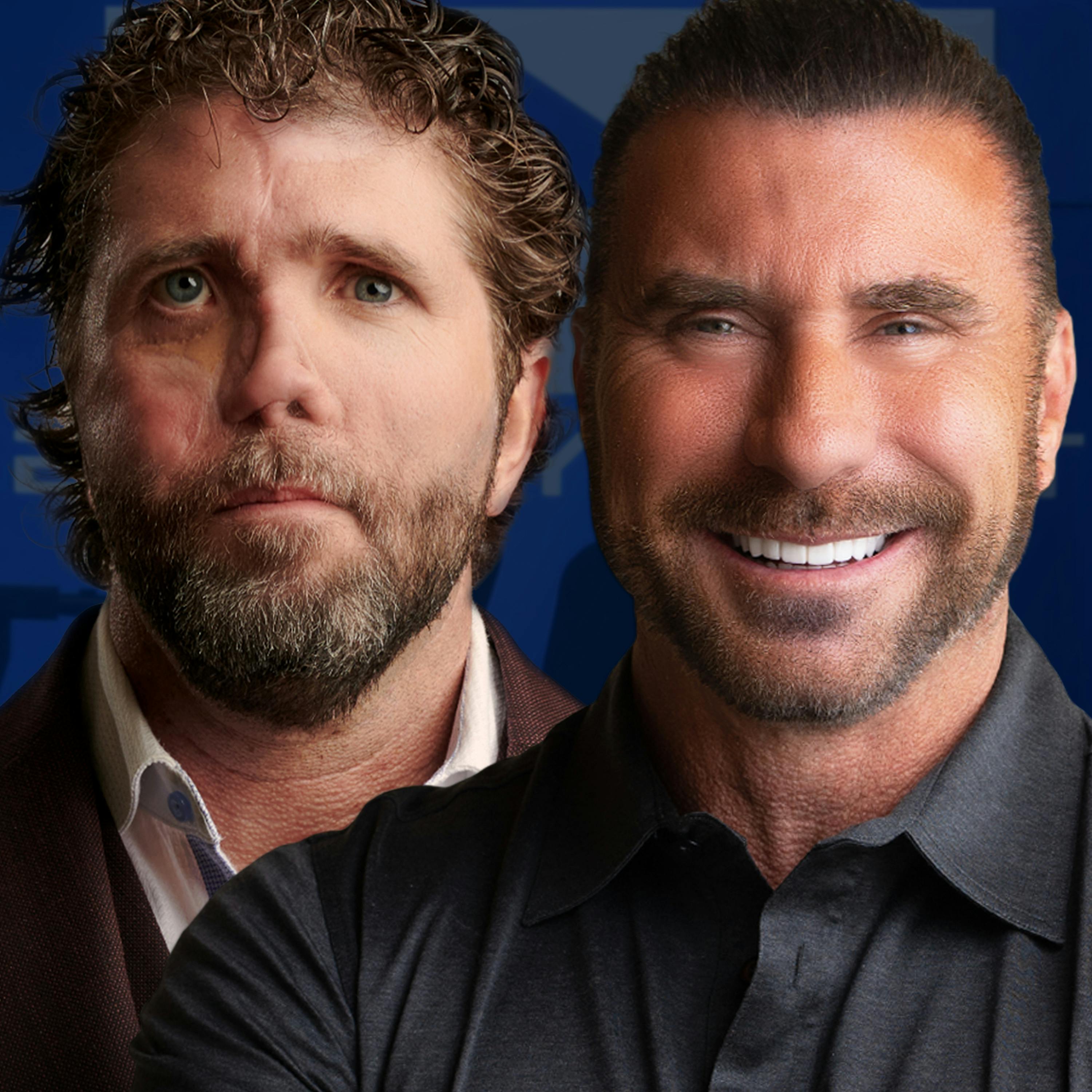
Welcome back to the show, everybody. This week's an honor for me because I've known of this man for probably a decade and we've sort of circled each other. I wanted him to be on the show. I had him come in and speak to one of my companies and he did so well. We end up bringing him back every single year. He's just, he's really an incredible man. A remarkable story. So just imagine this, 21 years as a Navy SEAL. Just take that right away. So I know I got your attention early. His insights into leadership, mindset, overcoming trauma. It's just there's so many topics that we can go with today. But if you're watching on YouTube, you can see that Jason had an injury to his face. And so one of the reasons that he came on my radar is he was shot. I believe it's eight times in a firefight. And that obviously is not something that you just wake up the next day and have breakfast. It's a life changing event. And so we're going to talk all things trauma. We're going to talk about relationships, believe it or not, with the Navy seal. He's got a new book out right now called Mission Invincible Marriage. It's out right now. You can get it. And it's really a book that he's done with his wife. And so we got a lot of things to cover here in about 55 minutes. So, Jason Redmond, welcome to the show.
- [01:50]
Jason Redmond
Dad. Honored, honored to be on.
- [01:51]
Ed Mylett
I wanted to talk to you for a long time because I think a lot of times in our life, like we think we're going through tough stuff and in our own world we are. Right? Like maybe someone listening to this just went through a breakup or they've had a financial setback. And I've sort of said this to my kids over the Years. You're having a bad day compared to what? Right, right. You had a bad day compared to anything. Would you mind, just for my own edification, it's taking us back to the day where really your life, I guess, had to change the most dramatically. Was that day or is that not the day that that happened?
- [02:22]
Jason Redmond
That is not the day. And oftentimes a lot of people think that, that, you know, the day that I was wounded was probably the worst thing that ever happened to me. It's not. And I'll be honest, I want to unpack even a little more. Let's step back for a second. So many people get confused in this life and they define things that happen to them as a bad day. And I have a slogan, there are no bad days. If you woke up this morning, it's still a good day because that means you have the ability to deal with whatever problem or challenge you're facing. Real bad days leave permanent scars. Physical, mental, emotional, financial. And sometimes they'll, they'll cost people their lives. They are opportunities though, to grow. Most people who use that very trite phrase, oh, I'm having a bad day, it's merely a scheduled disruption. That's all it is. Their day did not unfold in the manner that they thought it was going to. But they allow those negative thoughts to just carry with them and then they project it on the people around them and it impacts their business, it impacts their family, and most importantly, it impacts their mindset. And they're just scheduled disruptions. Welcome to life. Things don't always go according to plan. Our ability to flex and be positive and drive forward for me once again, going back to the day that I was wounded, God prepared me for that day. And I often try and tell people, be thankful for the true bad days that come along. I call them life ambushes. I survived a vicious enemy ambush, but everybody gets ambushed in life. You talked about people define bad days. You know, the endings of relationships, financial crisis, life threatening illness or injury. All these different things can be bad days. But when you go through them and you're successfully, when you navigate to the other side, that is where we build our overcome muscles and it prepares you for future ones. When we wrote my book Overcome, we interviewed a bunch of people and we came up that the average human will go through about six, six bad days in their lifetime. True bad days. Things that will forever leave physical, mental, emotional or deep financial scars. If you navigate through them though, they make you better. I failed as a young leader. I was a enlisted SEAL who Did really well and unfortunately grew arrogant. And it led to my downfall through a whole bunch of different things. It was a slow erosion of my credibility as a leader that was culminated with a bad call on a mission in Afghanistan. And even that might not have been totally my downfall if I had owned it. When my leadership said this was a terrible decision, if I had owned it and said, wow, you're right, this was a terrible decision. But I didn't. I fought against it and said, you know, I did the right thing. You're just throwing me under the bus. I took this victim mindset, which is frequently what happens in life when we mess up. And it led me. God took me on a journey to rock bottom. I almost got myself kicked out of the SEAL teams. I had my brothers totally ostracize me and say, that guy's dangerous. We don't want him here. I ended up in a chair in Afghanistan with a gun in my mouth and almost took my life. Thankfully, God kind of slapped me in the back of the head and said, what are you doing? You know, what message do you send to your wife and kids if you were to take your life in Afghanistan? You know, you need to navigate through this. And I met. I went and sought help. I met a chaplain, and I'll never forget. He said to me, you know, I don't know what's going to happen tomorrow, if they're going to kick you out or not, but right now, this is the end. And he said, so often in life, we're going to hit these the end moments. So often true bad days in humans lives are the end of something. They may be the end of a business, they may be the end of a relationship. They may be at the end of our health, but it also becomes a new beginning. He said, no matter what happens, whether you get kicked out or not, tomorrow's a new beginning. You're either going to have to figure out your path forward, because they're going to call upon you. If they do keep you, it will be a journey for you. And he was absolutely right. The next day, thankfully, my commanding officer believed in me. He said, I've seen you do some good things. He said, we need to help you grow up. We need to humble you. And that started a journey for me to truly grow up, to humble myself, to understand that I wasn't as great as I thought I was, wasn't even close, that I wasn't living as a leader should. And it became the foundation of everything I teach today. It's everything I write about. My book, it became the way I tried to lead myself and carry myself and deal with adversity and positivity. So much so over that, that multi year journey, that fast forward to that day that I was wounded, don't get me wrong, in the beginning it was very hard, but I looked back on that and I was like, you know what, man? You have already walked the hardest path you've ever walked. You climbed out in the deepest, darkest hole from a chair in Afghanistan with a gun in your mouth to where you are today. You know what you need to do. You know all the tools that you had to build within yourself to overcome that are the same tools you're going to need for this. You're going to lead yourself, you're going to lead others, you're going to lead always. You're going to, you're going to, you're going to have this overcome mindset. We're going to continue to grind, we're going to get off the ax and not feel sorry for ourselves. All these things that I had built and that God walked me through that path, that's a lot of the things that I'm going to talk about today. So often when bad things happen, when we have true bad days, we're like, why God? Why would you allow this to happen to me? Well, I think it's because God's pushing us to become the next elite version of ourselves.
- [08:02]
Ed Mylett
And you need that, what you just said, so profound. What's the. I always think when someone's talking, what's the application for someone listening. And one of the applications is if you're going through one of those hard times and if you're not, you're going to. You have six of them, evidently, at least. Right. So why not when that's happening, have some approach like this is building me for something better or I have been prepared for this. I want to ask you something about that time where you kind of lost your way as a seal. He said you got a little arrogant. There's a really unique nuance. I've only asked a few people this question, but there's this unique nuance of leaders that I respect and that I love. Also. Just really good friends of mine have this very unique thing that I think I see in you now that I've met you in person. And here's what it is. And I want you to talk about this if you could. It's not in your book. I just want, I want your opinion about it. It's that they have a lot of confidence combined With a large amount of humility, they tow this very unique nuance between. I am a confident person, but I also have humility. Where I'm learning, I'm humble, I don't have all the answers. Because in life, if you have somebody really close to you that's a leader, that has a ton of confidence but no humility, they eventually flame out, they make a mistake, they think they're special. On the other side of the coin, even if you have a friend like this, they just have tons of humility but no confidence. You're dragging them through life all the time, right? They're always having to pick them up. You're always pouring into them. Do you see that in leaders that you've admired and respected too? Like, and how do you find that? Like, how do you find that balance of I'm confident, I know what I'm doing, I know the direction I'm heading. But humility, to know that really God's in charge, he's laughing at some of our biggest plans. I'm just curious your thoughts on that.
- [09:40]
Jason Redmond
So a lot of people bring that up to me. They're like, man, you've had so many successes, but when we meet you in person, you're so humble. Number one, first and foremost, that rock bottom moment for me in Afghanistan taught me no one is ever as great as we think we are. And not only that, it can all be gone in a second. I live my life. I'm so thankful for the life that God has given me, the gifts he's given me, the successes he's given me. But I also recognize they all could be gone tomorrow in a second, in the blink of an eye, something could happen and they could be gone. So I'm confident in my ability because I've had successes, I've been through hard things I've learned through this amazing journey of. I think where it becomes arrogance is people will think it'll never go away. And they actually start to almost.
- [10:27]
Ed Mylett
You're right.
- [10:28]
Jason Redmond
Look down on other people. Like, hey, why would you ever question me? Or why would you think I can't do this? Or you're not at the same level I am. That's arrogance. And if you honestly think that bad things happen to good people every single day on this planet, people who have the most perfect plan in life get knocked down and fail, crash and burn, fail. And. And I live my life this way. I'm thankful. I feel like I'll pick myself back up and I'll drive forward. Will I get back? I often talk about the overcome mindset, driving forward and having that confidence. It doesn't mean you're going to fix what's broken, and it doesn't mean that you will be able to replace what's lost.
- [11:08]
Ed Mylett
So what does it mean? So let's talk about this. So I think I love a lot of your work, but the overcome mindset, to me, like, when I think of you, that's actually the work I think of. Probably because it was like the foundational stuff where you came on my radar. Right. So what does it mean? Let's unpack this a little bit. Because, you know, it's easy saying, but it. There's strategy to this as well. So blend these two things together. You, you've now been shot. Okay, it's eight times. It is a. It's not a good day. It might not have been your worst day, but I think everybody driving in their car on the treadmill right now would prefer they don't get shot eight times in the face.
- [11:40]
Jason Redmond
I don't recommend.
- [11:41]
Ed Mylett
Right.
- [11:41]
Jason Redmond
Yeah. Anybody looking for a path to build an overcome mindset, getting shot in the face by a machine gun is not it.
- [11:47]
Ed Mylett
Probably not it. Right. And so what did that recovery look like? If you could take us through a little bit of it? And how did that morph into this, which you'd already been developing this overcome mindset, if you could give us like the actual practical things that happen and then the application of the thought process.
- [12:02]
Jason Redmond
So an overcome mindset is an idea that bad things are going to happen. Bad things happen to good people. I don't care how well you plan. And a lot of this is built in the, the culture of the SEAL teams. I think out of any special operation unit, we are probably some of the best. And not to knock, I mean, all of our soft forces, our Green Berets, our Rangers, marsoc, Air Force, all of these great people, they do an amazing job training. They're some of our most elite out there. But there's something about SEAL training. I've witnessed it, I've been a part of it. I went through Ranger school. I work with Green Berets, I've worked with all of them. We were almost sadistic. And how we come up with the way we train and try and decide, like what is the worst case scenario we can come up with. And then we'll try and 10x it to make it even more painful and miserable. Thinking that way gives you this, this appreciation for most of the time when we conduct operations, things go according to plan or at least according to plan how we train. And it's kind of rare. It's only a 10% thing where they really go off course, where, you know, we're getting all shot up or obviously things get shot down. So I, I've applied that mind to life and it's built on three principles. I tell people the overcome mindset is built on these three things and getting wounded. There were three things that I already knew, so it was hard in those moments. But number one, awareness. Awareness that things can go wrong. If you think you're never going to be knocked off your pedestal if you think that, you know, maybe you're running a billion dollar business or maybe everything's perfect in your family and you think that nothing's ever going to go wrong. You, you're living in la la land. There is the chance that things can always go wrong. There are just things that we cannot plan for. So number one is awareness. Number two is preparation. And this can be all the way to the level of we're physically training or we're putting financial safeguards in place or we're doing whatever we can to prepare for the awareness that this could go wrong. And the last component is action. Oftentimes when catastrophic true bad days happen, no different than a gunfight ambush, people are so overwhelmed by the pain and the misery, the bullets and bombs of life that are occurring, people freeze up and they're not able to function. So if you haven't developed a level of awareness and done it, at least some level of preparation, you're unable to take action. I often give the example of for all of you out there that have teenage kids, when we put them on the road, how terrifying is that?
- [14:28]
Ed Mylett
Terrifying.
- [14:29]
Jason Redmond
Every single day In America, young 16 year old drivers get in fatal accidents because they're driving outside of their capabilities. And I knew that. I put three teenagers, my kids on the road and, and I was aware that this is a true statistic. And I tried to do everything I could to teach them and, and give them the tools when I taught them to drive and like, hey, you can get killed in this vehicle. Then became the mental preparation. There wasn't a whole lot of physical preparation I could do. Oftentimes it's merely mental preparation. Like God forbid this happen if a law enforcement officer shows up at my door when my kid is out. Like, I need to be mentally prepared for this because I need to take action. I need to be. Now it goes back to the leadership principles I live by. I need to lead my family. I have a amazing spouse, I have Two other kids, if I was to lose one. And guess what? I need to take action and lead them through this crisis that is coming. Thank God it didn't happen. Yeah, but that is the overcome mindset at work. And, and when I got wounded, there was no. It's. I actually, it's kind of a funny story. Several weeks prior to me being wounded, we had a night off and we were all sitting around playing poker because that's what we like to do in our night offs. And I, you know, I like to give my money away to the guys. The guys say that I was a bad poker player, but that's not true.
- [15:51]
Ed Mylett
You're just being generous.
- [15:52]
Jason Redmond
I'm a giver. So anyways, we're, we're playing and somehow we came up on the conversation of were going to be shot. Where would you want to be shot? And I'm not a big guy, so I remember saying, and most of us all agreed lower leg. If you were to lose a lower extremity, prosthetics are so amazing now. Gosh, the conversation, you know, you could continue to function. We all are like, yeah. And I definitely, I. I said it in this meeting. I was like, I sure want to get shot in your arms. I got these little toothpick arms. I don't want to be shot in the arm. Definitely lower leg. Leg fine with me. Oh, my God. None of us said, I don't want to be shot in the head.
- [16:28]
Ed Mylett
Right.
- [16:29]
Jason Redmond
You know, I mean, no one's going to say that. But I also was aware this is a dangerous job. I had lost friends. I did not live in this false reality thinking I could never be shot or never be injured. So when I was wounded, I was aware. I was prepared. I had not gotten as deep into the level of injuries that I had, but still, I was mentally prepared. And everything that happened to me before. I tell people, your past life ambushes, your past bad days prepare you for the future. And that enabled me to take action because I said, hey, man, you've been through this before.
- [17:03]
Ed Mylett
Wow.
- [17:03]
Jason Redmond
Now let's go. It's time to put your money where your mouth is. You have built this framework of leadership and this resilience and overcome mindset. Now's the time. Let's go.
- [17:15]
Ed Mylett
So, hey, guys, when you're in that level of mindset for your business, it's wild how much the basic stuff matters, like how you talk to customers, how you communicate, how your team, team interacts, how you follow up with leads. Look, we're in an AI era, and if you don't have a system that's helping you communicate. To compete with the competition, you're going to be in a tough spot. A cleaner, more modern setup can make everything smoother in your company. Which is why today's episode is sponsored by Quo, spelled Q U O. The modern alternative to run your business. Communications. Quo is a number one rated phone system on G2. It isn't just a phone system, it's a smart system. Quo's AI automatically logs your calls, generates summaries, highlights next steps, and so nothing gets lost. It can even qualify your leads. It can respond after hours, ensure your business is open and responsive even when you're not, even when you're offline. Make this the year when no opportunity and no customer slips away. Try quo for free plus get 20% off your first six months when you go to quo.commylet that's quo.commylet quo. No missed calls, no missed customers. Isn't it easy once you stop doing something to realize, oh, that was working and you don't realize it until you've stopped. And so if you've been looking for something easy to stick with, that actually makes you feel better, this might be for you when you look what's an Imate's Daily Ultimate Essentials drink? It brings together 92 high quality nutrients. What's wild is it actually replaces 16 different supplements. So you don't to juggle all these pills and stuff. You get it in one IM8 drink. So give your body what it deserves with IMA. Go to IM8Health.com ED and use code ED for a free welcome kit. Five free travel satchels plus 10% off your order. Seriously, this is one of those offers you'll wish you jumped on sooner. That's I M8Health.com ED and use code ED for a free welcome kit. Five free travel satchels plus 10% off your order. Im8Health.com ED code ED. These statements have not been evaluated by the Food and Drug Administrations. This product is not intended to diagnose, treat, cure or prevent any disease.
- [19:15]
Jason Redmond
Wow.
- [19:16]
Ed Mylett
How do you. When you've gone through trauma and and obviously yours is was severe, but people listening this have had trauma, they've lost a loved one. Like we've said, relationship setback. They've just even done something that was just embarrassing, right? Or something in their childhood. How do you. Or maybe you didn't. How do you not. How did you not find yourself living in fear? Like I think had I been through what you had been through, I would have lived as a very fearful person after the injuries. Yeah.
- [19:44]
Jason Redmond
So.
- [19:45]
Ed Mylett
Well, just in life in general, like, not, you know, you go through something and thinking, well, I'm due for another one. This is just what's going to happen.
- [19:52]
Jason Redmond
Yeah. It's funny. Humans were like this, and. And I don't. I'm. I guess I'm a pretty pragmatic person. Like, I build frameworks we did in the SEAL teams. We had standard operating procedures, and I. I built those things into my own life and how I live my life and how I try and coach other people. And. And so there were things that I noticed. I have a principle called living great. It is, how do we become the elite and best version of ourselves, despite the fears and doubts that we have in this life, because we all have them. We used to. So when I ran my nonprofit, we used to take wounded warriors, and we did all these different things. We ran different events. One of the events we ran was called jumping for a purpose. And we would take wounded warriors and families of the fallen and we would throw them out of perfectly good airplanes, and people would be like, oh, my God, why would you do this? And oftentimes, I mean, these are individuals that have been wounded or they've lost a loved one in training or combat. Those are our gold star families. And there's a lot of fear when we've been through something. So many people live their lives like, hey, if I failed in business, I'm never doing that again. I'm never going to start my own business again. That was too painful. Emotionally, mentally, financially, you know, we. We end a marriage, we're like, oh, I'm never doing that again, because that was too painful. I don't want to take that chance, whatever it is. It's a natural human thing. Like you said to, well, I'm not going to put myself out there. But you're limiting yourself, right? You're constraining yourself from being the best person and truly living your life to the highest level. And as a guy who faced death in the end, in those final moments when I thought I was bleeding out, I wasn't gonna come home, I had regrets. I had. Like, I wish I had done these things. I wish I had spent more time with my family. I wish I had gone and gotten my degree, you know, or whatever it was, you know, the things that I thought about, I wish I had done these different things, different things. And it made me realize that so often we live our lives in fear and doubt, and I think God wants you to be like the highest, best version of yourself. He wants you to overcome that fear. So come back to us getting these individuals to jump. You have to face fear when you jump out of the back of an airplane. I don't care who you are, if you no longer have fear, you probably shouldn't be jumping anymore. Because fear makes you make sure you check your gear, you do everything possible. And we would send these individuals out and, oh, my God, the joy and elation they would have. And I think it reminded them that their story still alive. Every jumping for a purpose event we did, it never failed. We would always have at least one person that would get up and they'd look out the back of that plane before they connect to the tandem master. And they'd go, I can't do it. And I'd be like, are you sure you don't want to jump? And they'd say, no, I can't do it. And I'd say, no big deal. Just sit back down, like, ride it back to the ground. You know, I wouldn't try and push them on the plane or anything like that. And we jump out. And I never gave much thought to this. We stopped running that event maybe in 2017. I think in the seven years around Virginia Beach, I have run into four individuals who did not jump, who stood in that door and were afraid to jump. Every single person came up to me and said, I wish I had jumped. That's life. So often we stand on the ramp of life and we have these hopes and goals and dreams and we're afraid. We're afraid of failing again. We're afraid of what is somebody going to say? We're afraid of. What if this business doesn't go well? Or what if people make fun of me or whatever it is? Jump. Yeah, jump. Because I tell you what it is. That action is that step off the end of the ramp that enables greatness. And even if you fail, so what? Because I'll tell you, you'll get to the end of your life like I did when you face those moments and you'll be like, you know what? I went after every hope and goal and dream, and even if I didn't make it, at least I know so you don't get to the end and you're like, Like I was where I was. Like, what if. What if I had done this? What if I had spent more time with my kids and family? So God gave me a second chance. You have to live greatly. God wants you to be the best version of yourself. Don't get to the end of your life and be like, what if I was too afraid to go after him?
- [23:56]
Ed Mylett
Jump, dude. That was outstanding.
- [24:00]
Jason Redmond
Living greatly, baby.
- [24:01]
Ed Mylett
That was one of my favorite things we've said on the show in a long time, actually, right there. Okay, that was so good.
- [24:05]
Jason Redmond
Can I add one last thing? Because there's one additional part of this that I see a lot. An additional part of living in fear or doubt or pain. We lose people in this life. It is an unfortunate part of this life. All of us are going to die someday, and we're going to lose mom and dad and friends. The greatest husbands and wives, greatest life ambush I see is the loss of a child. And there is this tendency. I've witnessed this so often in the military community. I've buried over 50 friends since 9 11, including my best friend who took his life. And I meet so many individuals who have lost someone like this, and they're afraid to live. Not only are they afraid to live, they feel guilty to live. So they live their life in this sadness. And I'm like, I feel like God gave me a second. I can't explain why God allowed me to come home. And so many of my friends who are far better seals than I was. But I feel like it's my duty to be, like, the best version of myself, to not be afraid to go after it, because I hope that. And I would say this to anyone that's out there, that is how you honor your parents who are no longer here. If you lose a friend or a child or a husband or a wife, honor them by being the best version of yourself. So that when they look down, they're like, oh, my gosh, I'm so proud of them despite this pain and loss. Look at who they are. And I think that's how we honor the people that are lost while we're on this earth.
- [25:31]
Ed Mylett
It's amazing you're saying that. It's part of a talk that I give at the event that you and I are recording at right now. I'm about to say that sentence on stage. By the way. I didn't come to it through as traumatic of an event as you did, Nor am I the caliber of man you are for what you. You've gone through in your life. But I do completely share that sentiment because I'm about to say it in about 40 minutes on stage. So I totally agree with that. We got to put the sign on the door.
- [25:52]
Jason Redmond
Yeah.
- [25:53]
Ed Mylett
This is a story that I know, and it's resonated with me, but I just Want to, like throw that at you and get. You give it to them and just go. Because this is. You guys will. You'll remember a lot of things from podcasts, but I think there are certain stories that people go boom. I think sign on the door is probably going to be one of an all timer.
- [26:08]
Jason Redmond
So, you know, the first week or 10 days in the hospital, I won't lie, it was, it was tough. I mean, here I am, I'm, I'm. I am blown apart. I took two rounds in the left elbow, so eight bullets total crossed the body armor. Two rounds in the left elbow, rounds off helmet gun, left night vision tube, shot off right side plate. And then I caught that round in the face. That blew out the right side of my face. I was wired, shot, I was trached. My vision was messed up. I was. They were feeding me through a stomach tube and I had no use of my left hand nerve damage. And the doctor's initial plan was to amputate my arm above the elbow. And so I'm facing all of this really struggling. And I think when people go through really traumatic events, I tell people it's common. I don't know as humans why we do this, but we'll place them in the victim box, like, oh, this is so terrible, Ed. It's terrible that you lost your company, or it's terrible that, you know, you got in a divorce or whatever it is. And we feel sorry for people and, and wrongly, in my opinion, almost give them an excuse to feel sorry for themselves and justify not getting off that X and driving forward. And that's what happened to me. I had some individuals that came in the room and they were overwhelmed by being in the military hospital. And it's a hard place to be during the time of war. And I know I, I know I was very overwhelming to look at in the beginning. A nurse came in and they stepped off to the side of the room and they started talking about, what a shame. This is so sad. All these wounded warriors that are blown apart. Like, what a waste.
- [27:53]
Ed Mylett
You could hear this?
- [27:53]
Jason Redmond
Yes, I could hear it. And they were talking off to themselves, but I could hear it while this nurse worked on me. And they said, what a waste. Like, we, we sent all these young men and women to war and they're never going to be the same. It was like this broken veteran narrative that they had. And they left. And I remember laying in that bed, like, thinking to myself, like, is that me? Is that who I'm going to be? And I was like, no, that Is not me. I will not be that. As a matter of fact, I said, from this moment forward, I refuse to feel sorry for myself. And when my wife came back in, I told her, I said, no one's allowed to come in this room feeling sorry for me again.
- [28:31]
Ed Mylett
You said that?
- [28:32]
Jason Redmond
Yeah, I wrote it to her because I couldn't talk. All I could do was write. And I wrote out that sign. And it wasn't literally. That period of time was maybe 15 minutes. There wasn't a whole lot of thought. It literally was a stream of consciousness, and it said, attention to all who enter here. If you're coming in this room with sadness or sorrow, don't bother. The wounds I received. I got in a job that I love, doing it for people that I love, defending the freedom of a country that I deeply love. I will make a full recovery. What is full, that's the absolute utmost. Physically, I have the ability to recover, and I'm gonna push that about 20% further. Through sheer mental tenacity. This room you're about to enter is a room of fun, optimism, and intense, rapid regrowth. If you are not prepared for that, go elsewhere. And we jokingly signed it the management and. And I told my wife to put it on the door. And as amazing, supportive wives, her initial response was, are you serious?
- [29:26]
Ed Mylett
Of course.
- [29:27]
Jason Redmond
And I was like, yes. Put this on the door. Make sure everybody reads it.
- [29:30]
Ed Mylett
Can we go to something he said there?
- [29:32]
Jason Redmond
Yeah.
- [29:32]
Ed Mylett
I want to ask you. And then we're talking about the relationship piece for the book, too, but with you and Erica. But you said something there I've not ever heard before, but I think it's worth, like, just unpacking this a little bit, which is that a full recovery. But then you defined what that meant, which was. I'll say it the way I heard it. Then you correct me to the maximum of whatever that capacity is, my maximum. And then push it 20% past that. And I think maybe that's important, that I think some people think need to get back to who I was before. Why don't you talk about that for a second?
- [30:03]
Jason Redmond
Yeah. In my book Overcome, I write about this, and I think it's normal. All of us. I did it too. Even though I wrote it on the sign. I wanted to get back to the Jason Redmond, who I physically was prior to my injuries. But the reality is, when you've been through trauma, physical, mental, emotional, the parts that are part of the human spirit, you will never be back to the same as you were, because you have been Forever altered period. But what you can be is the new 100%. And that I realized that as I started to work out. Originally I thought I could get back operational. I sought out doctors to put me back together so that I could continue to be an operational seal. And the damage to my arm was too great. Even today, I can't bend any further than this. I'm limited to this, and I can't extend any further than this. And I still have nerve damage. I have to use straps when I'm deadlifting because I can't hold more than about £55 for a very short period of time. And I wanted that back. Like all of us in life, I want back where I was, you know, physically, mentally, emotionally.
- [31:09]
Ed Mylett
Right.
- [31:09]
Jason Redmond
It's never going to happen. Emotional trauma in our mind, I had to deal with that also. I carried a lot of demons, and it took me years to come to grips with that. And I think people think that they'll just overcome and the trauma will just go away and they heal it. It's really not true. You learn to live with it. You learn to tame it. You learn it's still in your mind. You just learn the tools to deal with it. And so you own it, and it doesn't own you.
- [31:33]
Ed Mylett
But in many ways, you come back better in certain areas, like I imagine your ability even to. I mean, I'm picking up little things when I'm watching you. Obviously, this dude was a complete stud, a seal. For 21 years. There's this version of you, but now there's this version of me in front of me who's like this exemplary communicator. I would bet that that part of you that even the day before you were wounded, you couldn't communicate like you do now. In other words, you came back different than you. But sometimes that sounds like, well, I'm limited. You're actually, in many ways, your faith, everything about you has exponentially changed since that time. So you can come back better, just in different versions of you and in different facets of yourself that didn't exist before.
- [32:12]
Jason Redmond
You agree with that 1000%. The end moments become new beginnings. And so often, if we're willing to embrace that new beginning for a lot of people, including me, yes, what I've been through is hard. But God gave me an every time it's been an opportunity to level up in my life. And I think for many people you will meet that go through some horrendous thing, some traumatic life ambush, as I call them, the ones that embrace it and embrace the new beginning. Frequently, they become a better version of who they were. And so often, people always like to ask me, you know, oh, if you could go back and that day would never happen, would you? And I think the answer is no. As hard as it was, God gave me a new path, a new beginning that I'm impacting millions of people now. There are amazing young SEAL officers who are killing it. They're incredible. They are the future of our nation, and they're probably doing it much better than I ever would have. But instead, God gave me this new path and this new beginning, and I tell people, like, hey, be thankful and navigate through that hardship, because it will make you better. You don't know what that new beginning is going to be until you start to walk that path.
- [33:21]
Ed Mylett
You're a remarkable guy, bro.
- [33:23]
Jason Redmond
Well, blessed. I've lived it. Everything that I speak on isn't.
- [33:26]
Ed Mylett
Well, that's what's special about you. There's nothing theoretical about you. Yeah, you've lived it. And so this isn't some philosophy you came up with when you went to a seminar. You've lived it. And I think there's some authenticity there that you can't replace with just, you know, scholastic understanding. You've lived it. There's something else that stood out. And then we're going to talk about the relationship stuff at the end. But there's a term I believe I'll get right, and, you know, like, sometimes I'll be reading something, I go, gosh, I wish that was mine, because it's so good. And. And I want you to elaborate on this concept. I also like to pull things out for the podcast where people go, I remember this phrase, and then this man talked about it, which is suffering productively. Never heard that before.
- [34:04]
Jason Redmond
Yeah, I think it comes back to seal training, and it is part of the overcome mindset that I try to talk to people about. You cannot build an overcome mindset or overcome muscles, as I like to say, or grit or resilience by doing easy things and by constantly embracing comfort. It's a problem we're having in America. I mean, if you look at the foundations of our country, if you go back to the beginning, we were really a country that was built on sacrifice and grit. I mean, people spread out all across the country, and, you know, they had to down forests to build houses, and it was very hard, grueling work. And you get into the Industrial Revolution, and often that times, it was very hard, backbreaking work. And I think that built just a natural grit and resiliency in our people. Well, now we're into the information age where people aren't having to do hard things. We can live our entire lives without doing that. And if you don't play sports or if you don't do something that forces you to do these hard things, when you are finally hit with something traumatic and very hard, there isn't some magic switch that you turn on and do it. You have to have done hard things before. So suffering productively means the greatest desire in, in a human being is to reduce pain and suffering that they're going through and discomfort. It's why SEAL training has an 80% attrition rate. It's because they do everything they can to make us as uncomfortable and cold and miserable. And what enables guys to make it through training is the ability to suffer through that but still be able to function, to still be able to motivate and do the things that need to be done despite that pain, despite that cold, despite that suffering. What that builds is this overcome mindset is the core of the SEAL teams. You don't have to be a SEAL to do that. There are many things in life you can do get. You know, working out is probably one of the biggest things that you can do that pushes you to have to get out of your comfort zone. Do things that you're afraid of, do things that you don't like. If you're afraid of heights, go climb, go jump out of a plane. If you're afraid of speaking, join Toastmasters and start speaking in front of people. Because that, that fear and that discomfort makes you stronger and better.
- [36:20]
Ed Mylett
Let me ask you about timeframes on this stuff. I want to be granular for a minute. I was going to quit business. That ended up making me a pretty wealthy guy at one time. And I had every reason to quit it. I sucked at it. I was suffering, I was broke. I was making tons of mistakes. And I went to my dad who had, you know, that you know the story. But in case someone has it, my dad ended up getting sober. And my dad, his. My dad, when he got sober, I said, dad, are you never going to drink again? He said, I can't tell you that, Ed. Well, I'll tell you, I'm not going to drink for one more day at a time. And my dad stacked up those one more days the rest of his life for 35 years. One day at a time. My dad didn't drink. So I was going to quit the business. And my dad says to me, why don't you just do this, by the way, maybe you should, I don't know. Just don't quit for one more day.
- [37:00]
TJ Watt
Chronic migraine is 15 or more headache days a month, each lasting four hours or more. Botox Onobotulinum toxin A prevents headaches in adults with chronic migraine before they start.
- [37:10]
Ed Mylett
It's not for those with 14 or.
- [37:11]
TJ Watt
Fewer headache days a month.
- [37:12]
Ed Mylett
It prevents on average eight to nine.
- [37:14]
TJ Watt
Headache days a month versus six to seven for placebo. Prescription Botox is injected by your doctor. Effects of Botox may spread hours to weeks after injection causing serious symptoms. Alert your doctor right away as difficulty swallowing, speaking, breathing, eye problems or muscle weakness can be signs of a life threatening condition. Patients with these conditions before injection are at highest risk. Side effects may include allergic reactions, neck and injection site pain, fatigue and headache. Allergic reactions can include rash, welts, asthma symptoms and dizziness. Don't receive Botox if there's a skin infection. Tell your doctor your medical history, muscle or nerve conditions including als, Lou Gehrig's disease, Myasthenia gravis or Lambert Eaton syndrome and medications including botulinum toxins as these may increase the risk of serious side effects. Why wait?
- [37:55]
Jason Redmond
Ask your doctor.
- [37:55]
TJ Watt
Visit botoxchronicmigraine.com or call 1-800-44-BOTOX to learn more.
- [38:00]
Ed Mylett
Just don't quit for one more day. See how you feel tomorrow. And I would get up the next day and still wanted to quit, but not quite as much. And those one day stacked and all of a sudden at some point I didn't want to anymore. At least not as much. I've asked other seals this Rob o' Neill is a friend and he said bro, like I'm paraphrasing. But he goes, I shrunk my time frames down. Meaning I was just trying to get to like to the next meal, the next hour, the next thing is part of when you're really going through suffering. Do you think one of the strategies is you can have a big vision for your life, but maybe just shrinking the time frame. Get through the hour, get through the day. Is that part of what you did to put yourself back together both emotionally and physically?
- [38:37]
Jason Redmond
Absolutely. No. It is a key strategy they teach you in SEAL training. I've applied it to my life going through surgeries. It would be get through this surgery, recovery and now we get to the next one. Now it starts over. I got really sick in 2020 and it was, I just, I need to keep driving forward and push. You know, let's go for the next couple of weeks. Let's get to. I couldn't even speak now. Thank God. And thank God Covid happened, and it actually gave me time to recover. But I had to figure out what was wrong with me. The doctors, that took a while to do that when I messed up as a young leader. Yeah, you talk about taking it evolution by evolution. Many of the guys when I was assigned to a new troop did not want me there. And I heard that on a regular basis. Yeah, my nickname was Rambo Red, which was not a compliment. And I had to take every evolution at a time and hear the naysayers say, yeah, it's only a matter of time before he screws up again. And I just focused on, okay, just try and crush this evolution. And it doesn't mean that you're. You're not going to waver and you're not going to stumble.
- [39:40]
Ed Mylett
I.
- [39:41]
Jason Redmond
A lot of people, if they've never read my book, don't know. I quit in Ranger school. True story. I quit in Ranger school. I got into one. I hadn't quite hit rock bottom, navigating through the journey of becoming a better leader. And I failed the land nav course. And I still had a chip on my shoulder. I still had that victim mindset. And I got into the Ranger instructors were giving me grief about failing, and I let them. I told them exactly what I thought and where they could take that course. And they said, are you quitting? And I said, yes. We feed ourselves lies when we're struggling. I'm sure in those moments in business, you were like, I suck at this. I'm never going to be good at this. I tell people, it's never too late. If you're still alive, that means it's not too late. And I fell victim to this when I was in Ranger school. I was like, it's too late. The guys will never follow me again. And thankfully, I had the Ranger Colonel, KK Chen, huge shout out to you. He retired a two star general. I'm still friends with him to this day. He happened to be friends with one of our most senior respected seals. And he said, I got a young guy in here. He's really struggling. He's like, I think we need to talk to him. They got on the phone and this very respected SEAL leader, I said to him, it's too late. I'm never going to be able to recover. The guys will never follow me again. And he said, red, people will follow if you give them a reason to. That's all leadership is. He said, I don't care how Bad. You messed up. He said, go crush this course and then come back and give the guys a reason to follow you.
- [41:12]
Ed Mylett
You.
- [41:13]
Jason Redmond
And. And that's what I did. He motivated me, gave me a second chance. So I tell people that it's so easy to listen to the lies. It's too late. I'm no good. I can never do this. My family is better off without this. One of the lies that takes you down the deepest, darkest holes. And I'm like, that's not true, man. Just as you said, you take it one day at a time. You keep pushing. And that's what I had to do to rebuild my credibility. And it's what I had to do to rebuild my body both times. You know, once wounded, once sick. It's what I had to do when I had to rebuild our business, when I got sued and accused of something I didn't do. I just had to keep driving forward, ignore the naysayers, Focus on that tight group of people you have around you and God, Bob, and it will be amazing what you.
- [41:59]
Ed Mylett
Oh, he's so good. I want to finish with something. So I was thinking, get this guy as a seal. He's obviously one of the baddest men in the world. He's been shot, you know, was 21 years. I'm like, is that the guy I want to take marriage advice from? You know? And then I read the book, and I was like, actually, it might be perfect because you are bringing bags into a relationship, theoretically, right? Like, we all bring our bags into the relationship. And what you've gone through several traumatic events. You bring in some real bags with you, with you and Erica, by the way, the name of the book, by the way, is Mission Invincible Marriage. Let's just talk about this just for a second. What was harder to heal, like, your relationship, like, with Erica, with the trauma that you'd been through. And I assume, you know, there's one way that you speak to fellow SEALs, and that's probably not the same way that we would interact with our spouse all the time. Like, what made you write this book? And, like, how did you end up rebuilding an even stronger relationship with Erica? That it sounds to me from reading, Wasn't always perfect all the time.
- [43:01]
Jason Redmond
It wasn't always perfect, but we had a good marriage. We had a strong marriage. It got tested to the highest level with my injuries. And I think, you know, there were a lot of things that led us to write this book. I told one of the things when I wrote the Trident, my first book, I wanted to share the story of what our spouses went through because of what Erica had gone through. I mean, our military spouse is such a huge shout out. And I'll even take that further. To our law enforcement and fire spouse. To marry someone who is a natural protector. We are mission driven. We have this tendency. We're the individuals who want to write to where we want to run to where everything's burning down, where everybody else runs away. And to be married to someone like that is difficult because we want to help people, sometimes even at a sacrifice to our own families. And finding someone strong enough to understand that is really difficult. In America, we're at over a 50% divorce rate now.
- [43:58]
Ed Mylett
And you said seals are 90.
- [43:59]
Jason Redmond
We're 90. We're the winners. We're the winners in the military at 60 to 70%, that's pretty common with law enforcement and fire. Special operation gets up to about 80%. Across soft seals, we're at about 90%.
- [44:11]
Ed Mylett
My goodness.
- [44:13]
Jason Redmond
It's just a really hard job. And I don't know if we always do such a. We also are not. Our courting period is very short frequently because we met it. We meet women in bars no different than I did with Erica. And sometimes we're just constantly on the go. So you're not able to build a strong foundation. And now you're continuing a job that's dangerous and hard. You're gone all the time. Eric and I were able to build a strong foundation. Once again, I'm about frameworks. I'm about like, what are the systems I can put in place to make this work? And there were things Erica and I did. One, building the strong foundation. There were also several other things that occur. Eric and I both came out of bad relationships. When we met. We also both came from broken homes. Both our parents were divorced. And a little bit of divisiveness between our parents that we witnessed all the time. We both came out of these bad relationships. So when we met and we decided we were going to get married, we were like, this is it forever death. That's the only way out of this. So that was kind of the initial thing. And it was also understanding where we wanted to go both in my marriage.
- [45:16]
Ed Mylett
And how do you do that? Do you guys talk about it?
- [45:18]
Jason Redmond
Oh, 100%. You have to communicate throughout the book. You will see communication is number one thing. You must be constantly communicating because you will change. Years will go by, and you will change. The Ed Mylett today is different from The Ed Mylett 10 years ago, who's different from the Ed Mylett, 20 years ago.
- [45:35]
Ed Mylett
Yes.
- [45:35]
Jason Redmond
No different for me and my wife.
- [45:37]
Ed Mylett
Would you also say, I just want to jump in. Would you also say, because people that listen to this type of work, my show, are typically growing people, meaning they're embracing growth. And I think when you're in a relationship with someone who is a grower, not everybody is. Everyone changes. But as a real grower, you got to even be more vigilant about this stuff because this person is changing year to year, month to month, decade to decade. You got to really have it together in relationships when you're with a grower, because their life and personality is going to adjust and change over time.
- [46:09]
Jason Redmond
That's right.
- [46:09]
Ed Mylett
Yeah.
- [46:10]
Jason Redmond
So that's why the communication is critical. No different in business. I mean, we must be communicating our team where. Hey. Our strategy and vision and where we're going to go. We broke the book into three parts. It was built on a foundation of mission and values. Most critical thing, your mission for Erica and I, it was we wanted kids. We wanted a level of success. For me, in 20, in that period, I had been in for eight years. So I told her, I'm doing 20 years no matter what. Like, you're. You have to be on board with this because this is my mission and part of my values. Her mission was she wanted a level. She was always a natural entrepreneur. So there were some entrepreneur goals she had. And it was also to be a mom and have kids and do these things. It gets down into vacations and how we spend money and how we save. All these things are part of your mission. The second component becomes training. No different. In the SEAL teams, we're constantly training to do different missions. And the training changes over time based on what's happening in the world around us and what we see. You need to be doing the same in your marriage. How are you training? Well, it's. You're going out and you're talking and you're doing things and you're going through the finances together and you're understanding what's happening in your spouse's life and what's happening in your life, and you're. You're communicating through these things and navigating through them. That's training.
- [47:25]
Ed Mylett
Wow.
- [47:25]
Jason Redmond
And then the last one is under fire. How do you deal with crisis and adversity? And how do you fight? Eric and I have rules of engagement. No different than in a. No different than a military unit.
- [47:37]
Ed Mylett
It.
- [47:37]
Jason Redmond
Eric and I, from a very early phase, said, hey, there's no ultimatums. There's no name Calling, you can't bring up the past, and, well, you don't do it.
- [47:47]
Ed Mylett
So that's good.
- [47:48]
Jason Redmond
Yeah, I think that was it. Yeah. So those are our rules of engagement. That being said, by having those things when you listen better. So coming full circle to you, asking me about how did you guys heal yourself emotionally? I. I kind of went off a cliff like many wounded warriors about three years after I was wounded, maybe four years, and started pushing everybody away. I wanted to fix it myself, but I was breaking. I was the mental demons. That dragon in my head was eating me. And like many protectors and type A's, I didn't want to admit I was the sign on the door guy. I'm the overcome guy. Like, I don't have these problems, but I was. And I started nursing it with alcohol and really spiraling down. And one day, Eric and I were driving to an event, and she shocked me because we had our rules, we had our training, we had our framework. And she said to me, you know, this, the way we're going, this could be the beginning of the end.
- [48:51]
Ed Mylett
A warning of an ultimatum.
- [48:52]
Jason Redmond
And it was so shocking to me because we had agreed we never bring this up, up. It was like a punch in the face. And I said, what are you talking about? And she said, if you do not get help, we are not communicating. We are not following the rules and the framework we laid out in our marriage. If you cannot do this, we are moving down a path to the beginning of the end.
- [49:14]
Ed Mylett
Wow.
- [49:15]
Jason Redmond
And it was a shock to me. And it was enough for me to recognize it jolted me out of the depression and being on that X to say, I got to go get help Once again. In life, so often you don't. You don't have to do it alone, man. And I did. Same thing I did when I was sitting in that chair. I went and found a chaplain. I went to our command where we had chaplains, the psychs. And that started me on this path of all these different modalities that we can do to heal trauma.
- [49:43]
Ed Mylett
You impress me with your vulnerability. I think it's one of the signs of a strong man is that he's willing to reveal his imperfection, you know, And I got lots. Well, so do I. Right. And. And I appreciate someone who's willing to share that. I want to finish with one question with you, by the way. I've enjoyed today.
- [50:00]
Jason Redmond
Yeah.
- [50:00]
Ed Mylett
Like, this is like a conversation, you know, I prefer we had a cigar and a little, you know, I would agree.
- [50:06]
Jason Redmond
Tasty beverage.
- [50:07]
Ed Mylett
Little beverage.
- [50:08]
Jason Redmond
Yeah.
- [50:08]
Ed Mylett
But, but that's what I feel like this conversation's about.
- [50:10]
Jason Redmond
And everyone's got a rain shack for another time.
- [50:12]
Ed Mylett
I would, I would really love that.
- [50:14]
Jason Redmond
Yeah, me too.
- [50:14]
Ed Mylett
I don't get out of the interview that I asked you because you've mentioned chaplains a couple times and you and I are actually sitting right now backstage. We're recording this at a faith based event that we're both going to be speaking at here me in about eight minutes. And I just want to know how all of this journey of your life has affected or made an impact on your faith. One of the things that I see on you is like God's given you a lot of grace in your life. You not only have other people, but you're blessed. You've got a beautiful family, you know, you've got a career that's flourishing. You've got success. You're jacked. You seem to really have a self awareness about you that very few people reach in their life. So when I see that on a man, also a man that's strong but has a gentleness to him, I usually think that's the Holy Spirit. There's, there's something on this dude that, that I want more of and that I really admire and appreciate. So anything you wanted to add on your faith is kind of a final question.
- [51:09]
Jason Redmond
Yeah, I'm a walking miracle. That night on the battlefield, I was bleeding out and dying, there's no doubt in my mind. And I called out to, to God and I suddenly had energy and I went from not being able to move a muscle to getting up and walking 75 yards and getting on that helicopter under my own power. The doctor said it's a miracle. They said you lost almost half of your blood supply. Like you should not have survived. God enabled that. And I'd love to tell you that I'm like the strongest Christian that I'm so convicted. And I never have doubts. And that's not true. I'm very analytical. Faith is a hard thing. There are times where I'm like, God, where are you? Like when my best friend died and took his life, I was like, why? And I'm going to talk about that today. And that's okay. I sometimes feel bad, like maybe I'm a terrible Christian because I doubt you. You gave me this gift, this miracle, and I doubt you sometimes. But where I have solace is the fact that Jesus own disciples who walked with him were like, you know, he was like Oprah, like throwing out miracles.
- [52:10]
Ed Mylett
Like you get a miracle and you.
- [52:11]
Jason Redmond
Know what, you want to walk? Walk. You can walk and have some sight. And like, you know when he was. When he was captured and taken to the cross and then died? All those dudes doubt it. You know, he even told Peter, like, you're gonna die me. You're gonna deny me three times. And. And he did. And. And Thomas. So I have. There's a Roman guard. The story, I think it's in Matthew where the guard comes up to Jesus and says, please help my. My son or daughter. I can't remember which it is. And Jesus says, all you need to do is believe. And the guard says, please help me with my unbelief. So I live this and I. And I talk about it because I think sometimes in churches they're afraid to talk about this. Like, oh, no, we're never going to talk about. But I'm okay with this. Like, I'm man walking miracle. I still have doubts. It doesn't make me a bad Christian. I just. I pray the Lord, I pray that prayer a lot. Lord, help me with my heart, brother.
- [53:07]
Ed Mylett
I love that answer. We have a relationship with God, and relationships go through their ebbs and flows. I was thinking earlier about what you said, by the way. Thank you. What a great answer, by the way. But I have to tell you about what you said in your relationship with Erica. That there's training, and training for me is reading my scriptures and then there's rules of engagement, which is what those scriptures teach me. And so that is a relationship. There are ups and downs. I think when you have doubts and those questions get answered, your faith is deepens. And if you don't have any ever, where are the opportunities to deepen your faith? So my relationship with you is deepened today. I've really enjoyed this, brother. Yeah, very much so. I want you guys to go get the book because we didn't get a chance to cover as much. It's actually really good for you because you get this killer podcast, but that the book hasn't been covered, so they got to go get it. So Mission Invincible Marriage. Go get it. It's by Jason Redmond. Jason, this was a great convo, bro. This was outstanding. Yeah, I'm so glad we finally did it.
- [53:59]
Jason Redmond
We finally got together and I would. Would love to take that rain check for that cigar.
- [54:03]
Ed Mylett
But we're doing the cigar. We're doing that for sure. All right, you guys. God bless you. Max out your life.