
Podcast
The Enneagram in the Narrative Tradition
Hosted by Enneagram Europe · EN
The Entertaining, Educating, and Expert Enneagram Podcast in the Narrative Tradition is your go-to for engaging Enneagram discussions.
Hosted by leading experts in the Narrative Tradition, Peter O'Hanrahan from the USA and Jeanette van Stijn, the driving force behind Enneagram Europe since 2004, the podcast explores the Enneagram through the Narrative Tradition lens.
With frequent guest experts, this podcast offers an unparalleled exploration of the Enneagram, bringing insights and perspectives never before made so accessible to the public.
13episodes
Episodes
Newest firstAll episodes
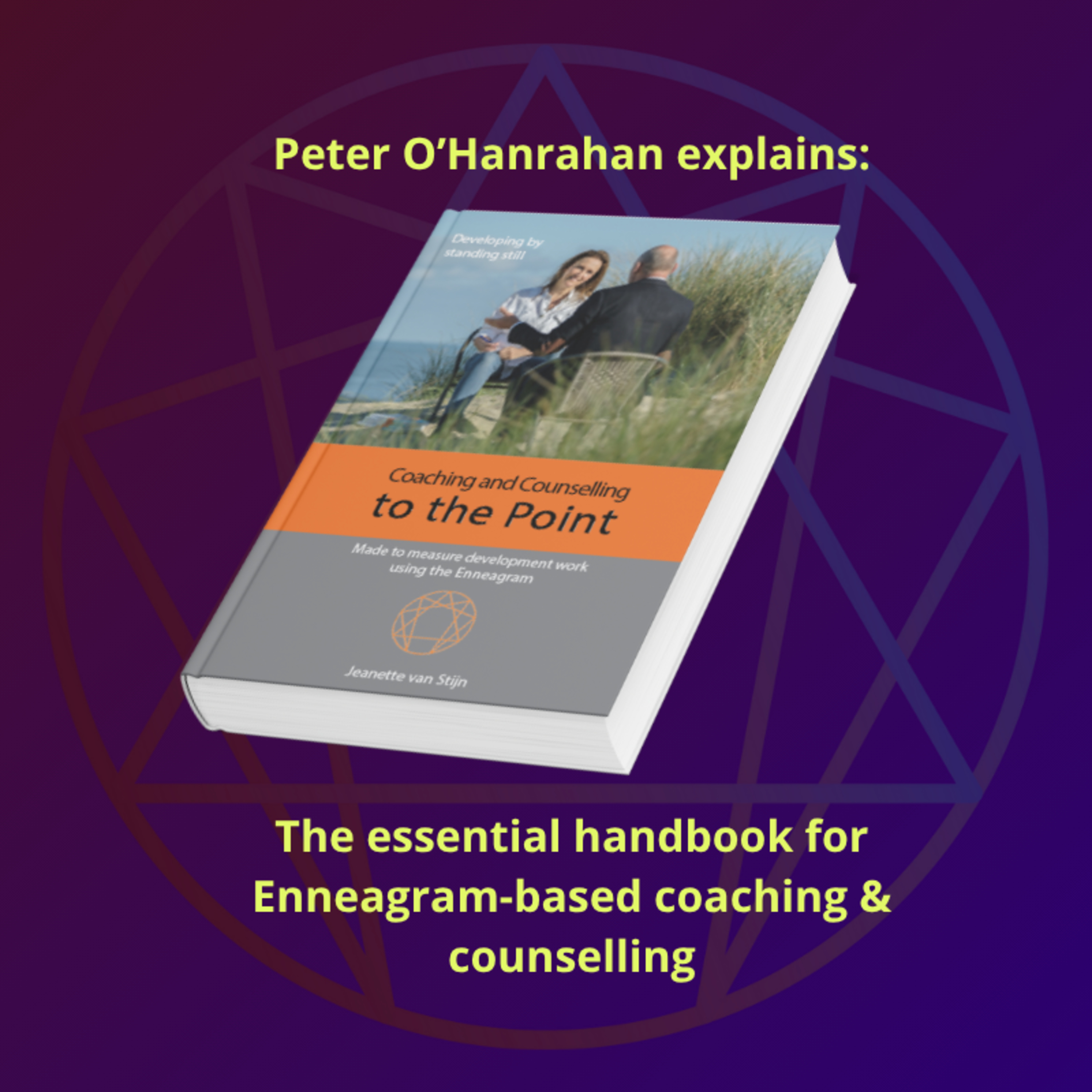
Peter O'Hanrahan Recommends 'Coaching and Counseling to the Point'
Oct 2700:00:47Tap to summarizeIn this clip, you'll hear Peter O'Hanrahan's powerful recommendation for the book Coaching and Counseling to the Point. If you're a coach, counselor, spiritual director, or manager working with the Enneagram, this book is an invaluable resource.
Transcribe →
Enneagram 18: Wake Up – Discover Jeanette’s Transformative Map Hidden Within the Enneagram
Apr 23, 202500:53:23Tap to summarizeMost people know the Enneagram as a system of nine personality types.But what if that’s only half the story?In this episode of the Narrative Tradition podcast, Peter O'Hanrahan interviews Jeanette Van Stijn, a pioneer in the Enneagram field. They discuss Jeanette's EnneaFlow Transformative Process Model, which outlines the ten phases of each completed transformation. Jeanette shares insights on the importance of waking up to oneself, the cathartic process of facing one's contributions to problems, and the significance of community in personal growth. The conversation emphasizes practical applications of the Enneagram in coaching and counseling, as well as the upcoming Enneagram Summer School.TakeawaysThe EnneaFlow Transformative Process Model maps the ten natural phases of a complete transformation.This map — developed by Jeanette van Stijn — might just change how you see and work with the Enneagram forever.Waking up to oneself is crucial for personal growth.The catharsis involves digesting pain and letting go of illusions.Transformation often gets worse before it gets better.Resistance can arise when facing simple solutions to problems.Community support is vital in the transformative process.The Enneagram provides a map for personal and professional development.Practical application of the Enneagram is essential for effective coaching.The Enneagram Summer School offers experiential learning opportunities.Sound Bites"When you don't wake up, nothing happens.""It gets worse before it gets better.""You really step forward, you're ready for it."KeywordsEnneagram, EnneaFlow, process model, transformation, inner healing, personal growth, coaching, counseling, Jeanette Van Stijn, Peter O'Hanrahan, narrative tradition, spiritual development.
Transcribe →
Enneagram 17. The Embodied Enneagram: The Neurobiology of the Nine Types - Part 3
Mar 3, 202500:16:55Tap to summarizeIn this third episode on the Embodied Enneagram, Peter O’Hanrahan takes a deep dive into the somatic patterns and neurobiological characteristics of the nine Enneagram types. He explains how each type has a unique bodily response and defense mechanism, rooted in deeper emotional layers. Understanding these patterns is essential for personal growth, psychological development, and even somatic therapy.Peter emphasizes that the three centers (body, heart, and head) are not just a conceptual model, but that each type has specific tension patterns and survival strategies embedded in the body. He walks the listeners through all nine types, revealing how these patterns influence behavior, emotions, and even physical health. Type 1 (The Reformer): High muscle tension and top-down control. Anger is often suppressed, leading to chronic physical tension, especially in the diaphragm and abdomen. Their self-discipline can be both a strength and a source of rigidity. Type 8 (The Challenger): High-intensity responses to life, whether positive or negative. Eights experience strong physical assertiveness, often reacting with anger when faced with control or restriction. Their challenge is learning to regulate this intensity without suppressing it. Type 9 (The Peacemaker): A natural ability for self-soothing, often through deep belly breathing. This can lead to a tendency to retreat into comfort and avoid confrontation, which sometimes results in low energy levels or a lack of assertiveness. Type 2 (The Helper): A high number of mirror neurons make Twos extremely attuned to others' emotions. Their instinct to move toward people and offer help makes it difficult for them to set boundaries or prioritize their own needs. Type 3 (The Achiever): High-energy, action-oriented individuals who are strongly attuned to external expectations. Their constant drive can lead to physical burnout if they don’t learn to slow down and reconnect with their own needs. Type 4 (The Individualist): Highly sensitive to emotional and aesthetic stimuli. Fours tend to take in emotions deeply, which can lead to intense artistic expression but also emotional overwhelm. Type 5 (The Observer): An extremely sensitive nervous system that often withdraws into the mind to avoid overwhelm. This can manifest as a sense of physical detachment or dissociation, requiring intentional effort to reconnect with the body. Type 6 (The Loyalist): The most sensitive alarm system of all types. Their fight, flight, or freeze response is highly active, leading to either cautious avoidance (phobic Sixes) or bold confrontation (counter-phobic Sixes). Understanding this neurobiological response explains the wide behavioral range within this type. Type 7 (The Enthusiast): Physically active, fast-moving, and always seeking stimulation. Sevens experience a deep-seated fear of limitation, driving them to avoid discomfort. Their challenge is learning to stay present and embrace stillness without feeling trapped.Peter concludes that the neurobiological structures of the Enneagram types are not problems to be fixed, but existential challenges to be understood. Recognizing these bodily patterns offers a powerful pathway to self-awareness and transformation. He emphasizes that the Enneagram is not just a psychological tool—it is to be integrated with body-based healing methods like breathwork, creating deep, lasting change.
Transcribe →
Enneagram 16. What's the Embodied Enneagram and why is it important
Feb 23, 202500:19:26Tap to summarizeWhy is the Embodied Enneagram essential for true healing,mgrowth and transformation? In this episode, we explore the deep connection between neurobiology, the body, emotions, and personality, revealing why real change requires more than intellectual understanding.Key Insights: The Enneagram is more than personality – type is rooted in neurobiological patterns. Our typological structure emerges before psychological coping mechanisms, shaped by innate temperament and body patterns. Wilhelm Reich’s concept of body armoring explains how breath and muscular tension influence our type and personal limitations. Three centers of intelligence – Gurdjieff’s teachings, now supported by neuroscience, show how the heart, head, and body function as distinct yet interconnected systems. The impact of bodywork: how breathing, movement, and somatic methods contribute to personal growth and deep healing.This episode is essential for Enneagram teachers, coaches, therapists, and anyone seeking a deeper, more embodied approach to self-development.In Part Three, we explore the Embodied Enneagram patterns of each type and their real-life implications.Listen to the full episode now and gain a new understanding of how the body shapes who we are.
Transcribe →
Enneagram 15. How the Embodied Enneagram Was Born - Peter O’Hanrahan’s Journey
Feb 9, 202500:29:08Tap to summarizeIn this episode ofThe Narrative Tradition Podcast, hostJeanette van Stijn interviewsPeter O’Hanrahan, a leading authority on theEmbodied Enneagram.With a career spanning over46 years in body therapy and Enneagram education, Peter has played a pivotal role in integratingsomatic psychology with the Enneagram.From his early work incrisis intervention to hisdeep dive into holistic bodywork, Peter shares how hispersonal transformation as a Type Eight led him to develop abody-based approach to Enneagram work.He discusses thehistorical roots of body therapy, his training inReichian bodywork, and how he merged this knowledge with the Enneagram after encounteringHelen Palmer, David Daniels, and Kathleen Speeth.Peter why he saw the need to develop aholistic, embodied approach that addresses bothemotional and physical holding patterns.He also shareshow different Enneagram types respond to body-based work and theimportance of balancing containment with emotional expression.This episode is essential forcoaches, therapists, and Enneagram practitioners who want to deepen their understanding of howthe body holds our patterns, defenses, and potential for healing.Key Takeaways🔹The Origins of the Embodied Enneagram – How Peter’s background in body-based therapy led to integrating somatics with the Enneagram.🔹Why Talk Therapy Alone Isn’t Enough – The role ofbody armor, emotional containment, and physical release in deep transformation.🔹How Each Enneagram Type Holds Tension Differently – Why some types needdirect challenge (Eights) while others needgentle trust-building (Fives).🔹The Role of Emotional Expression – Why simply sensing the body isn’t enough—true transformation requiressafe, guided expression.🔹The Pitfalls of having a Great Method🗣️"The Enneagram is not just about psychology; it’s about how our character structure is literally shaped in the body." – Peter O’Hanrahan🗣️"For years, Enneagram teachers focused on the mind and emotions. But the body has a memory of its own, and if we ignore it, we miss a huge part of the healing process." – Peter O’Hanrahan🗣️"I was very happy for about two months… and then the other shoe dropped. There was a lot of work to be done."🗣️"Different Enneagram types have different physical defenses—anger, withdrawal, control. The body holds it all."🗣️"Some things need to be discharged from the body—breathing issues, emotional repression, deep-seated tension. It’s not just about self-awareness; it’s about release."
Transcribe →
Enneagram 14. Trauma work and the Enneagram - Part 2
Feb 9, 202500:34:13Tap to summarizeTrauma and the Enneagram: A Crucial IntersectionIn the latest episode of The Narrative Tradition Podcast, we explore further the critical intersection between trauma and personality structure with Sharon K. Ball.The conversation highlights how trauma influences personality structures and why understanding trauma is essential for therapists, coaches, and Enneagram practitioners.Whether you're a therapist working with trauma or an Enneagram teacher or coach helping clients navigate their inner world, this episode is packed with insights that will transform your understanding of personal healing and growth. “Some patterns we see in the Enneagram are not just type-related—they are trauma responses.” – Sharon K. BallMany trauma therapists already understand that healing cannot happen through words alone.Trauma-informed Enneagram work allows practitioners to differentiate between type structure and unresolved trauma, offering clients a deeper level of healing.Big T and Little t TraumaA crucial discussion in the episode is the differentiation between Big T and Little t trauma:* Big T trauma includes extreme events such as war, natural disasters, or abuse.* Little t trauma refers to more subtle, chronic experiences such as emotional neglect, unhealthy relationship patterns, or societal discrimination.Many individuals fail to recognize their own trauma because they compare their experiences to more severe cases.As Sharon explains, trauma is not only psychological but also physical, affecting the nervous system and shaping behavior over time. Takeaways🔹 Recognize trauma responses vs. type patterns – Not all reactions are “just the personality.”🔹 Use the body as a diagnostic tool – Where a person holds tension can reveal hidden emotional wounds.🔹 Understand ‘big T’ vs. ‘little t’ trauma and stress – Even subtle life experiences can shape the way we relate to others.🔹 Emphasize co-regulation – Trauma healing requires another human being walking alongside us. Trauma isolates us. Healing reconnects us.” – Sharon K. BallMasterclass: Healing Trauma, Repairing RelationshipsSharon will expand on these topics in a three-day masterclass at the Enneagram Europe Summer School. The workshop will cover:* Identifying different types of trauma.* Distinguishing trauma responses from Enneagram type patterns.* Understanding how trauma is stored in the nervous system.* Practical tools for trauma healing.Sharon’s approach integrates both theoretical knowledge and experiential exercises to help participants apply trauma-informed practices in their personal and professional lives.
Transcribe →
Enneagram 13. Sharon K. Ball - The perfect fit between Trauma Recovery and The Narrative Approach
Feb 4, 202500:22:56Tap to summarizeIn this conversation, Sharon K. Ball discusses her book 'Reclaiming You', which explores the intersection of trauma recovery and the Enneagram. She emphasizes the importance of understanding trauma before applying the Enneagram, sharing her personal journey and how the Enneagram has transformed her both personally and professionally. The discussion highlights the role of storytelling in therapy and the significance of authenticity in overcoming personal challenges. Sound Bites "It made me a better therapist." "I became a human being and not that human doer." "I was just so wore out from pleasing everyone." Keywords Enneagram, trauma recovery, resilience, personal growth, storytelling, mental health, psychological approaches, compassionate inquiry, narrative tradition, self-discovery. Takeaways Understanding trauma is essential before applying the Enneagram. The Enneagram can aid in trauma recovery by providing insights into personal responses. Sharon's journey with the Enneagram began at a Richard Rohr conference. The importance of compassionate inquiry in therapeutic settings. How crisis can lead to personal growth and authenticity. Self-compassion is crucial for therapists to connect with clients. The Enneagram helps in understanding different responses to similar traumas. Sharon emphasizes the need for safety and security in trauma recovery. The Narrative Tradition focuses on storytelling as a healing tool. Personal experiences shape professional practices in therapy.
Transcribe →
Enneagram 12. Spotlights on Islam Abokandil
Jan 19, 202500:35:26Tap to summarizeKeywords Enneagram Summer School, Systemic Work, Family Constellations, Narrative Tradition, Mr. Gurdjieff, personal growth, Teaching Team, coaching, transformation, embodiment. In this conversation, Jeanette and Peter, explore with Islam Abokandil the profound impact of the Enneagram on personal growth and its application in various contexts, including organizational settings and family systems. They discuss the importance of time in learning, the holistic nature of the Enneagram, and the significance of support in personal development. Islam shares his journey with the Enneagram, highlighting its transformative power and the need for deeper understanding beyond cookie-cutter solutions. The discussion emphasizes the Enneagram as a system that integrates various aspects of human experience, inviting listeners to engage in their own personal work. Takeaways The Enneagram is a holistic system, not a tool. The Enneagram offers a deep understanding of personal motives. Personal growth requires time and commitment. Systemic work enhances the application of the Enneagram. Support from others is crucial in personal development. Embodiment practices are essential for transformation. The journey of self-discovery is ongoing and requires patience. Teaching the Enneagram can change lives and organizations. Connection with oneself leads to positive outcomes.
Transcribe →
Enneagram 11. Spotlights on Ginger Lapid-Bogda - Part II
Jan 9, 202500:33:00Tap to summarize🎙️ New Episode Alert: Enneagram in the Narrative Tradition Podcast – Part 2 with Ginger Lapid-Bogda "Ethics and Integrity in Enneagram Teaching" In this highly anticipated follow-up episode, we continue our captivating conversation with the incredible Ginger Lapid-Bogda, diving even deeper into her invaluable perspectives on the Enneagram. 🌟 Highlights from Part 2: Ginger reflects on the legacies of Don Riso and Claudio Naranjo, emphasizing their concerns about ethics, superficialization and the commercialization of the Enneagram. The rise of Enneagram tests: the good, the bad, and the ethical dilemmas surrounding their accuracy and application. The importance of deep learning versus superficial knowledge in teaching and practicing the Enneagram. Why in-person training and community support remain essential for true inner work and growth. Ginger shares personal stories from her extensive experience, offering wisdom, humor, and a heartfelt call to preserve the depth and integrity of the Enneagram. This episode also offers a glimpse into Ginger’s role at the upcoming European Summer School, where she joins forces with Peter and Jeanette to provide immersive and transformative Enneagram learning experiences. 💡 A Thought to Reflect On:“The Enneagram is bigger than any of us.” – A timeless reminder from Don Riso, echoed by Ginger in this episode. Tune in to discover why Ginger’s teaching and storytelling continue to inspire Enneagram enthusiasts worldwide. 🎧 Listen now and share your thoughts!📩 Connect with us: connect@thenarrativetradition.com ✨ Educating ✨ Inspiring ✨ Enneagram Experts ✨
Transcribe →
Enneagram 09. Just between the three of us
Jan 9, 202500:06:57Tap to summarize"We hit the parenting jackpot." "I benefited from your family." "It felt like a gut feeling that I knew." In this extended conversation, which continued after the formal recording of the interview, Jeanette, Denise, and Peter dive even deeper into their shared passion for the Enneagram. With permission from Denise and Peter, Jeanette felt this part of their discussion was equally compelling and worth sharing with the audience. Denise speaks candidly about her personal journey as a scientist working with the Enneagram, offering unique insights into its transformative power. Throughout the conversation, Denise, Peter, and Jeanette openly share their personal experiences and perspectives, creating a heartfelt dialogue that explores the profound connections between emotional intelligence, relationships, and the scientific exploration of human behavior through the lens of the Enneagram. Takeaways * We hit the parenting jackpot. * I feel so blessed to have David as my father and Judy as my mother. * I benefited from your family, your parents, and they were part of my coming into a new experience in life. * It felt like a gut feeling that I knew that this was important for me. * Your father taught what he learned from you too about the nine temperaments in the trainings. * What really drew me to the Enneagram were the mathematical laws. * These reliable patterns kept showing up for thousands of years. * The quote, objective science was completely biased by the enneagram type. * We are being taught to become very aware of your type of bias as an Enneagram teacher. Tune in and reconnect with the Narrative Tradition community! Don't be shy to share your thoughts, questions and comments and connect with us at: connect@thenarrativetradition.com ✨ Educating ✨ Entertaining ✨ Enneagram Experts ✨
Transcribe →