← The Everyday Millionaire and Mindset Matters Podcast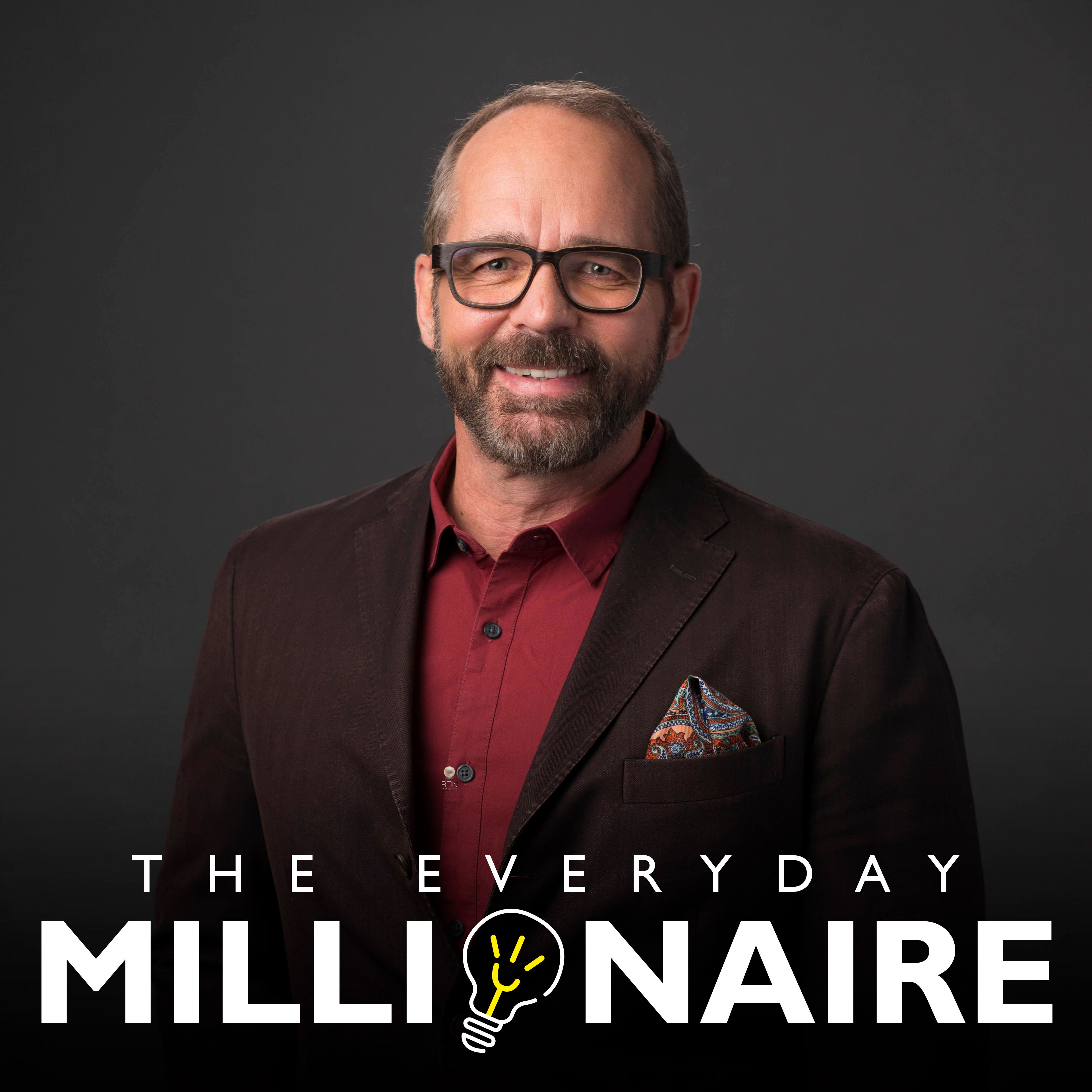
The Everyday Millionaire and Mindset Matters Podcast
Mindset Matters - Episode #210 - Why Doom Scrolling Is Destroying Your Focus
00:40:26
Loading summary
Transcript39 lines
- [00:00]
A
Foreign. Welcome to this episode of the Everyday Millionaire Mindset Matters podcast where I'm joined by my wife, Olympic mental performance coach Stephanie Hanlon. Francie. In these episodes, Stephanie and I have a conversation about the different aspects of what we refer to as Mindset Matters because we believe that for those who are awake, we are living in and through the most impactful time in history. Your view of the world is the filter for how you will experience the evolution and changing dynamics of it. Our intention is to provide you with ideas, nutritious food for thought, and some tools that you can use to help you in being your greatest self and living your best life. Listen in, Enjoy. Doom scrolling doom surfing brain rot infodemic. Welcome to the Everyday Millionaire podcast. Stephanie.
- [01:04]
B
Hey hon.
- [01:05]
A
So what do you think of all those terms? What do they mean? So think about it. Doom surfing doom scrolling brain rot infodemic. Seems to be a lot of that going on these days.
- [01:21]
B
I would have to agree. You know, I'm pretty addicted to doom scrolling my recipes in the morning. So I do, I do get that.
- [01:27]
A
Okay. But there is a fundamental difference. So let's open with this. You know, this conversation really is about all of the information that is coming at us. And you know, after coming off an event that I spoke at and called Expand in Toronto, I presented on how to get the most out of an event. And it's a presentation I've done before within the context of this content. Without context is just more information. So we think about all of the information coming at us. You doom scrolling what you call your recipes. Got it. But you have a context for your recipes because you are in fact preparing meals. You love chefing and love learning and love putting it to work. So you have a context for the information that you refer to as your doom scrolling. That's not the norm. So we come at this with all this information, yet we don't have a place for it. We blow two hours gathering all this information, but without a context it just goes away. So it's just a big fat waste.
- [02:45]
B
Of time is what it is.
- [02:46]
A
A big fat waste of time and brain power and horsepower. Because most doom scrolling is on negative stuff. I mean, certainly there's the cat videos and the dog videos and the dog talking videos and they're all fun. But you can get caught and go down this path of eating up time, energy. And a lot of the doom scrolling is based on a lot of negative information. And the next thing you know, you're living in this world where it seems to be coming to an End the world, that is, because that's what the information is and how do we digest it? What is the impact on our psyche and our consciousness and what does it do? And next thing you know, we've normalized it. And I speak to this with some authority because of all of the research that I'm doing with what's going on economically. So I do look at the macro, I look at the micro, I look provincially, nationally by city, and there is no good news. So it does feel a lot like doom. Scrolling. Sometimes I look for good news. Hard to find any. And now I'm starting to second guess. Is it because that's the world I'm in or is that really what's happening? You follow what I'm saying?
- [03:54]
B
I do. Or do we know enough about how the AI and the algorithms are working so that the more you linger on something or the more you focus on something for more than a second and a half, you know, supposedly the algorithm sends you and shoots you a whole bunch of more of the same stuff. Right. My question is, what's the point? Like, you wouldn't sit there. I mean, my dad back in the day and my mom used to read a minimum of three newspapers in the morning before 7am, right? They would just scroll, you know, see the headlines or whatever, and. And then they would walk away and then they'd get on with their day. But I'm seeing people sitting at Starbucks by themselves or wherever, just on their phones, just scrolling and scrolling and scrolling. And I mean, I don't judge it because I don't know what it is that they're scrolling. But I think there's more of that now. I think even since 2020, but even now, where people are isolated and they're more in their own bubbles and they're creating their own, like, feedback loops in some ways to get whatever dopamine hit or some sort of experience that is. I don't know. For me, it's a big fat waste of time. But what are people getting out of it? That's my question.
- [05:04]
A
Well, I don't know that any. Of course we know that the physiology shifts because you get those dopamine hits. That is a dopamine addiction. And we're all at the effect of what's going on in the world. But there's another side of this, which is the psychology of it. So before we get into this, I'm going to add some context to this conversation. There's a fundamental understanding that content without context is just more information. I use the analogy if you will that. If you have a water hose and you start bringing water and that water is information and you're just really putting a bunch of water onto the ground, it spreads out, it dissipates and then it evaporates. There's no context for it, there's no container for it. Take that same water, that same information, put it in a container and now you can manage that content. In this case, you can manage that water. So when you just throw water on the ground, it dissipates, evaporates, put it in a container and you can take it and do with it what you want. You can use it in other glasses, you can drink some and not all of it, but there's a context for it, a container for it. So when we think about container or context, we're thinking about we have a framework or a purpose for the information that we have. And we're going to take that information, we're going to use it the way we want, as much as we want. We can go back to it later, gather more information because we have a context and we have to have a subject matter to create the container so that we're not just taking information, we're getting information that we need within the context of that conversation. So that's the fundamental, you know, explanations. Keep it simple in terms of content and context and how important it is, the psychological impact we have content coming at us, we don't even necessarily want it. But when you think about what we're exposed to on any of the many social media platforms, whether it be Facebook or X or TikTok or Instagram, it's all out there. The challenge that some of or many are facing and we're actually hearing about it. When we recently launched the Mind Shui Beta program, one of the topics or one of the conversations that came up around was it not it was about context, et cetera, was that the next thing you know, you find yourself comparing yourself to what you're seeing, those moments in time. So without context, all that information can psychologically beat you up, bum you out. And so this is also part of what we have to deal with. And then the highs and lows of the dopamine and the come down from the dopamine like it's like heroin, you go through withdrawals. I just recently saw somebody mention a friend say I took a two week holiday vacation, shut down all social media, did not go on it at all for two weeks. And he found himself going through a process of what do I do with my time?
- [08:14]
B
Hmm. Some withdrawal.
- [08:15]
A
He's going through withdrawals. Admittedly, he said there was one aspect of it I felt better. I didn't have all the doom scrolling, the doom and gloom news which is just rampant out there. And some of it's very real. But again, what can we control? What can't we control? So what's the point of consuming it unless you're actually got a context for it where you're going to do something with it? So then it bums you out, it creates some level of anxiety, perhaps even some level of depression. So how do we deal with all this? What's your thoughts, coach?
- [08:54]
B
Wow, you know, it's so true. I mean, I do these seminars for athletes and their parents and one of the very first ones I do is having the conversation with them about, you know, you don't have to come to a power skating camp, you don't have to do mental training. You can all get all this information on the Internet. You don't have to come here. What we're providing is the context and how it relates to your child or to yourself as an athlete. So what we've done is we've taken all the information that we have and put it in containers so that it can be digestible in smaller bites and it will make sense. And when I explain that to parents especially, they're like, oh, you're right, I could just get all this on the Internet. I said, then you'll be what, teaching your kid how to skate from the Internet? Or, you know, what is it that you're trying to do to. So when I handed it back to them and said, okay, so you've, you've signed up for this program, let's say, and I'm giving you a context for how I'm going to work with your child. I'm going to container this one called Technique. I'm going to container this one called Power. I'm going to container this one called Speed. This one's called Mental Training. This one's called Dry Land. This one's called, you know, and I give them boxes or chapters or something for them to put their information in. And it's almost like that's been a lost art. And they're like, oh, that's fantastic, what a great idea. Because I think people are used to this fire hose, you know, not just a garden hose, but like this fire hose of information coming at them. Because you can get anything that you want on the interweb. You can get anything you need, whether it's positive or negative. And to Your point? That whole dopamine thing actually kills serotonin. And serotonin is the happy hormone, right? So we have to be really, really careful because without the context and without a beginning, a middle and an end, or a process of consuming the information and having an end place or a place to close that particular loop, then it just continues to drag on. And I think that's where a lot of people get in trouble, is that they just. There's no break between the things that they're consuming. And some of it may not make a lot of sense because some of it's not even connected. You've got politics on one hand, you've got the economy on the other hand. You've got ostriches over here, you've got vaccine stuff over there, you've got all the stuff coming in, but without a way to frame it in a way that has a beginning, a middle and an end. I think what we're doing is we're really damaging our psyche and we're training ourselves not to have that mental and emotional regulation and resilience that is so important, I believe, to any type of moving our lives forward with any kind of resilience or success. So I don't know, that's a lot of words to say that in order for us to be able to be consuming the information, I think we need to be responsible and build the context or build the containers that work for us in our lives at whatever stage we are in our lives right now.
- [11:48]
A
Well, let's continue to unpack this because it is, to me, an interesting conversation. When we look at, and we of course, talk about mind shui, feng shui for the mind. In other words, clearing the clutter of the mind so that we can in fact, see what's missing, so that we actually have a vision, so that we can get rid of the distractions. But there's something under all of that that is the context for this conversation is shining a light on how we consume, absorb information, and really, it doesn't serve us. Now, let me work backwards from that a little bit. So at the event, there was probably, I don't know, arguably 50, 60 speakers through the course of the weekend. And all real estate related in this case, so an audience of several hundred people. And so when I did that presentation, I said, you know, you're not. All of these speakers are coming at you. They've got great content, they've got some degree of expertise in whatever area that they're talking about, in different strategies, different tactics, philosophies, etc. But it's not all going to apply to you. So if you showed up at the event without a context for why you're here, what is the purpose of you attending the event in how it shapes your future, accommodates your goals, gives you insights into how to achieve the vision that you have, then you're just consuming information, but you don't have a reason for it, you don't have a context for it. So let me just back up one other step. It's interesting to note our good friend jg, as you know, is a very, very focused dude. Like he's, I tease him about being rose colored glasses guy but he's not. He's. He just looks at the world through a different lens. He does not consume very much social media stuff at all. He's often as, and he's astute in the world of marketing but he spends very little time in terms of consuming. He uses the social media platforms his team does to get his message out. The reason I bring that up is that he's very successful because he's also very focused. So in other words, any information coming at him has no place to land if it doesn't have a meaning for him in terms of his vision. Which is all to say this. Do you think that the over consumption, the doom scrolling is really a testament to the fact that many, arguably most people don't have a clear vision so they're consuming everything and going nowhere without that vision. And that's a pretty high level. But what's your thoughts?
- [14:46]
B
Yeah, wow, that's really well said. I, you know, I haven't actually thought of it that way but it's true. You know, I've always been pretty focused on what it is that I want to be the best in the world at and you know, what that needs to look like and who I have to become to do that. I mean it takes things out of the realm of possibilities like I don't get distracted maybe as much as somebody else would, you know, when it comes to, to certain things. But when you have a vision and goals and you have some clarity, then it's true that becomes your filter. Whether it's a values conversation or you're, you've got some competing values or whatever and you have to decide on what it is that's most important to you at that time. But to your point, just to be consuming this fire hose of information and not having a place for it to, to support your goals, I mean what a waste of time or what a. What I. Unless you're just using it as a break. You know, I used to schedule social media in the morning, what I could, you know, 10 or 15 minutes. So I could actually go online or go on Facebook and, you know, reply to some of my friends or whatever. I don't even do that anymore because it doesn't serve what I'm trying to do in our life. Whether it's creating the Mind shui program or traveling. It's an Olympic year right now, so I'm pre Olympic. It's like maybe being premenstrual or something, like everything's coming at y', all, right? It's just pre Olympic, everything. So the intensity and the urgency is coming at such a pace that I don't have time to waste a whole lot of time. There's some things I care about that like I care about, you know, the, the economy and I care about the, the animal welfare of the ostriches that are going on right now. I care about, you know, what's happening. I know I can't control certain things in the media. So when it comes to politicians and politics, I don't have a place for it because it doesn't affect me currently, I don't believe any of it's real, so I don't spend any time on it. So for, for to your point, how do we decide and what is the filter that we choose to get this information and where does it land and if it doesn't have like when you think about Mind shui, I think about moving things around in my mind so that the containers make sense and there's a little bit more clarity. You know, it's no different than when you bring a feng shui master into your house and they help you rearrange your furniture and the just calm down. And I really love that. But I don't see the purpose of this fire hose of information coming at people if they don't have it aligned with their goals and their values.
- [17:11]
A
I just don't see it 100%. So what's the cure? What's the answer to how to bust through the doom scrolling? I think part of it has got to be that what are you doing with your time? Do you have a vision, a clear vision? Do you have timelines? Is there urgency around it? And I think that what may be missing for many is the fact and especially if you don't have a big vision, you know, what is the purpose? What are you doing on a day to day? So does what you're consuming support a vision? But if you don't have a vision. You're not going to have the discipline to just stay focused on the content that you need because you don't have a context for what it is you're trying to achieve. And that also speaks to the time that you spend and saying, well, I don't have time to look after myself. I don't have time to be healthier, go for walks, work out whatever other excuses we might use for not looking after ourselves. Yet everyone seems to have time to look at their phone. Now, I'm really guilty of it, but my observation of it is I'm being more conscious of it as I was flying back from Toronto and just observing the airport. I mean, people are literally watching videos as they're walking and down through the airport. I'm just observing it and everybody's got their head down their face in their phones. And I'm consciously not doing that. I'm consciously choosing not to be that guy. And I'm observing just how common it is and acceptable it is. I don't even know that many notice it. I'm sure some do. And so what is the solution? What is.
- [19:04]
B
I don't know if it's a solution. I'm sorry to step on your words, but I do notice that and I'm wondering is if, to your point, if you don't have a reason or a goal or a vision or something that you're focused on, what if the only other answer is that most people that, you know, I'm seeing around, maybe they're just in survival and this is just how they get by and they just go, you know, I just want to be entertained or I just want to not worry about my life or my bank account or, you know, not having a job or three jobs to buy groceries right now. Maybe there's just a place where it's an escape or a survival instinct or whatever. I remember back in the day, one of the most powerful lines I've and the reason one of the things I filter my social media consummation or whatever it's called consumption is you're either creating or you're consuming. And if I'm going to be spending some time on social media, I want it to link to something that I'm creating. So hence the recipe doom scrolling or looking at things from a mind shui. Like I'm following all these mindset people now and these gurus and learning about, you know, music and Megahertz and, and transformational sound and like I'm, I'm actually seeking that out and it's starting to show up in my algorithm. But I bet if I was focused on, you know, heavy metal and drugs and rock and roll, that's what show up on my right. So we keep getting reinforced with what it is, what we're interested in. So I don't know if there's a solution. I think you have to be aware and to slow down for a second and ask a question. What is the purpose of. I just lost two or three hours just looking at my phone when I could have been out with the dogs or something. What is the purpose? And I just think not enough people may not be asking themselves that.
- [20:58]
A
Well, I think there's one question that kind of shows up for me. Are we looking for information or are we looking for emotion? And we may not consciously be looking for emotion, although I will intentionally on a pretty regular basis. I don't know about daily, but pretty regular I look for comedy because I just want to laugh, so I'll listen to a good comedian. So I guess I'm looking for an emotion. I'm looking for a break that shifts to make me at least chuckle and think something's funny that's emotional and takes me out of the doom scrolling in terms of consuming bad news information, if you will. So there is a part of it is what are we consciously seeking at some point, maybe even the psychology of it is some validation that misery loves company and. Or some people have it worse that may make us feel good or if we get caught comparing ourselves to the person leaning against their rented Lamborghini as opposed to their real Lamborghini, you know what I'm saying? There's so much, I think, emotion attached to it, either consciously or subconsciously. My point of all of this is that if we can at least consider that content without context is just more information when we create the context called mind shui. Clearing the clutter of our mind so that we can actually have creativity, so we can tap into what a vision even might be for our life. Think about the clutter that we're adding to an already cluttered brain. And I think it's important, you know, we know that anxiety for most or for many is pretty high. It's rampant. There's a lot of fears of the future. And we know that, we know that future is future. It's not here. It is a story we're telling ourselves about what could happen, what might happen, the possibilities, but in a negative sense. So we have fear around it and that's what creates the anxiety we're telling Ourself a story. And then of course we're using our history to validate it all to say this, think about the clutter in our mind and how that's going to shut down any creativity, it's probably going to shut down communication and fuel any anxiety that you might already have. Like do you literally walk away from doom scrolling go wow, now I feel better. That just totally eliminated my anxiety. Or is it in the moment your anxiety goes away because your brain can only consume one thing at a time. What's your thoughts?
- [23:48]
B
Yeah, it's true. But don't, don't step over the fact that there's also the other side of that is the, at the, the elimination of the, of the happy hormones is the depression as well. Right. Like there can be a moment of, of just really feeling down. Whether you're consuming negativity from the, you know, mainstream media or whatever. I'm seeing all these, you know, strikes and union this and da da da and politics that. And it's so much that I don't think as humans we're built, I don't think we're built to handle all of this. Back in the day when I started studying NLP and performance psychology years ago, they were saying that our brain, our capacity, we can only really focus on one thing at a time. And people that think they can drive and put their lipstick on and drink coffee at the same time, they're fooling themselves. It's not true, it's dangerous. Stop doing that. But we used to have between five plus or minus two containers or capacity in our brain that we could not necessarily multitask but we could shift from one thing to another. Now you think with all the onset of the Internet and the smartphones and all the information that's coming at us, you think that would expand or get bigger, Right? The truth is it's not. It's gone down to 2 plus or minus 1. We as human beings are losing our capacity to, to absorb information, to process information and I believe to make higher level decisions about moving our lives forwards. And that's what I'm seeing. And to be really honest, it's also partly why I'm still working in with world class athletes and high end net worth business people and people in the rain community is because that inspires me to keep focused and gives me an excuse and a reason to focus on what it is that I'm consuming. Because if I didn't have that commitment and especially when I'm working with athletes that want to be Olympic champions, they don't just want to go to the rink and skate around, you know, so we have to find containers and eliminate distractions for them. And you know, some of them want to be social media influencers so they're on the, you know, they're online and doing things on TikTok, which is fine, but it's part of their goal to build their brand so everything has a context. So that to me, maybe it's selfish or maybe it's just my, my, my hack to stay focused is that I put myself in environments where I'm going to be challenged and forced to learn and keep growing. And I don't want to be that person that sits on the couch and just, you know, gets depressed or feels anxiety about what I can't control. I think what I'm trying to do as a coach and as a person who believes in the opportunities that are still out there for people is to help people clear their clutter so that they can get back to their heart centered space where they can feel that joy and the choices that it makes and that they can make to move their lives forward in alignment with who they say they are and the, what they want. Because man, life is still short. And we're finding that every single day.
- [26:46]
A
It's interesting as we're kind of talking through this, you know, my own realizations, you know, I call myself out on it, is that I, all my life have been an avid reader. Like literally all my life, when I was, you know, when they, when I, like I remember back in the days when I was in elementary school and they were doing these comprehension tests and all the rest of it, I was always off the charts. I was literally on the far right hand side of the bell curve in terms of my comprehension, the speed of which I read, the degree of comprehension when I was tested. I don't know if they still do those tests. My point is, my whole life I've read as you know and as you've known me. I mean, I read a lot. Here's the thing, there's some stat out there and I don't know if it's true. I mean, I don't know how you measure it, but apparently we have the attention span of a goldfish. Three seconds or something like that, whatever the number is. I don't know how you, how do you measure the attention span of a goldfish anyways? Okay, put the stopwatch on it, you know, where you hold two fingers up. I don't know. Anyways, my point is this. I have noticed myself that Reading is of less interest to me, number one. Secondly, I don't have the patience for it. It's too slow. That's how my brain is processing what I'm reading. Like I need to read faster. I can put on a video and listen to it at one and a half speed or two speed. I often, I will literally go and listen to stuff at 2x. I mean some speakers speak very slowly and so it's okay to speed them up, but I'm doing it because I want to hear it faster.
- [28:25]
B
Oh wow.
- [28:26]
A
Is that because my brain is processing faster? I don't know like, but I feel like I'm broken because I'm not reading as much as I once was. I'm having to actually force myself to read and consume real information that matters to me and pull the nuggets out of it, if you will, that I want to use. And man, oh man, it's a real challenge. So. And I'm pretty darn disciplined and I, and I hold myself as being quite aware of myself. So that's what I'm going through and I have an awareness around it. I'm thinking about the many who have nowhere awareness around it aren't reading, aren't consuming information that supports a vision because they don't have a vision. So I think about that and the one thing that the reason I came to that conclusion as we've been talking and I've been thinking it through is think about self mastery. Think about and the program that we're launching. It's like we have a vision of bringing mind shui to the world to invite people to clear the clutter of their mind using it. That's the context. That's what mind shui is about. That's what self mastery is about. Which in our definition is different than personal development. So all to say this is that because we have a vision, when I'm researching, when I'm listening to others, when I am reading writing, there's a real purpose which is to support a grander vision. And without that, holy cow, it's just doom scrolling and man, I feel broken some days.
- [30:07]
B
Yeah, you know what? I think you're so right. I mean with the onset of even audiobooks, I love my Kindle. We go on vacation, I'll still take my Kindle over my audiobooks is because it forces me to actually look at words. I prefer pages, but again I used to carry six or seven books. Remember we go to Mexico.
- [30:29]
A
It's too much weight, right?
- [30:31]
B
So now I can go and I take one or two books. And then I do a trade at whatever library on the, on the resort or whatever. But I do find that the Kindle is helpful, but audiobooks have really. I'm drawn to them as well. You can speed them up, you can listen to the, to the author's voice. There's things that I'm really finding helpful. And I'm wondering if that's just a normal evolution. It's like, you know, we used to have protractors and then we had calculators, then we weren't allowed to use calculators, and then we had to use calculators, and now we have our phones and we have our computer in our back pocket. You know, we're adapting and growing and as human beings, that's. That's what's happening. And I think the pace of that is, I think, interesting in the sense that I like to do the opposite, not the obvious. So when I'm at the end of a meeting, for example, with a, with an athlete, and if it's been a kind of a high arousal meeting or something, that's been quite a breakthrough, the assignment I'll give them is 30 minutes of silence. Or they have to turn their phone off, they can't listen to music, they can't talk to their partner. They have to go either sit in, outside in nature or if it's too cold, just go and, you know, stare at a wall. And it's hard. It's hard. I mean, I still force myself. No, I don't force myself, but I still get out of bed unless I've done my 20 minute meditation. And sometimes it feels like, okay, is it, is it, is it up yet? Is it 15 minute? Like, come on. I, Because I think time is, is speeding up. I really believe that. And I think it's up to us as people who are in charge of our own lives and not just at the react. Reactivity is to slow it down, whether it's by reading or turning pages. The other thing that's really missing right now is cursive. And the writing. I mean, I was a journaler crazy. And now I'm taking notes on my phone and Evernote and writing on my computer in Word. And I'm like, where did my handwriting go? I mean, I can barely even sign and, you know, sign my name.
- [32:22]
A
So you have, and you have fantastic penmanship.
- [32:25]
B
I do. And I am getting back to that. And I'm seeing it now. Even with kids, they're not being taught cursive, they're not being taught how to Write. So what that means is there's going to be an disconnect between I believe the mental capacity, the intellect, the emotional. Because our like I think, how many times have I said to a client, no, please pick up pen to paper. That's how we're going to do this exercise. I'd be like, no, no, I'll just grab my tablet. I go, no, no, no. There's something that happens.
- [32:54]
A
Oh, the brain fires differently.
- [32:56]
B
The brain fires differently. And our emotional connection to what it is that we're doing and that's what I, although all these words back to the doom scrolling is that I believe our emotions, our emotions, our energy in motion is being hijacked by that. And when we stop being responsible for our emotions, then we lose the connection to how we're feeling. And I always say that feelings aren't facts, they're not always true and they're not always really even yours, but they're feedback. So something's going on. And if we're being dumbed down or numbed down by the incessant and the over consumption of social media or knowledge or good news, bad news or whatever and we don't have the filter, then we don't have that self regulation that we need to make powerful decisions and guess what happens then? We don't set goals. We don't set goals anymore. Yeah, that's really scary to me.
- [33:55]
A
Yeah, no context. No context means what are you consuming any content?
- [34:00]
B
What's the point?
- [34:01]
A
What's the point? Well, there's an emotional release. Okay. So I want to go back a couple things. You know, first off, I agree with you 100%. I think the, the writing part of it, someone listening to this might argue, well, yeah, but you don't do long hand math anymore because we got a calculator. Got it. But there is a connection to the creativity of writing and of thinking and actually having your brain command your hand. I think there's something in that, that aside, there's something else that you said though, which I think we have to kind of put a pin in a little bit. And that is time is speeding up. And I know that, you know that that's not the reality of it, but I think we have to give that a little bit of context. So time is just a thing. We assign time. There is just, there is no time. It doesn't exist. We gave it meaning. We gave the sun going down, going up. All of these things were given a meaning so that we could manage life and we could say, oh, when's the best time for our sleep. And we do all those things. So we created time. So that's the first part of it. So time, in fact, can't speed up. Now, the fact that we think that or feel that isn't the reality, which is, you know, time doesn't even exist. It just is a thing that we've assigned. My point is that our sense of what's going on in the world, it isn't about time. It's about us. It's about how we see the world and how our brains are firing. And that in itself is a bit of a. Because I agree, by the way, I look at. When I think about what, how the world changed. For me, the line of demarcation was March 2020. Boom. We're five years, more than five years going on six years since that happened. And that was like a blink of an eye. And so I'm going, holy crap, what have I done in the past six years? I have to stop long enough to say, did it. It just went by in a blur. That's how it feels for me. And I don't know the mental kind of cognitive shift or whatever the term might be, but that's how I feel about it. So it does feel like time sped up, but we have to say, no, it didn't speed up. There's not even such a thing as time. So it is about us. So that's a little bit of a rant. I don't know where it's going.
- [36:18]
B
But anyway, I think it's great. I think it's also shining a light on the, on that perspective. And, you know when people say, I don't have time, I don't have this, I don't have that. And the truth is, we do have time. We make choices with what we do with our time. And, you know, right now, you and I are building a program. We're working with athletes. We're, you know, you're traveling. We're both traveling. We're engaging in our life. We're doing the best we can to, to see our families. We're doing the best we can. And of course, I thought it was a really good idea to get two new baby kitties, you know, just because we don't need any more complication in our life.
- [36:53]
A
You're making me crazy.
- [36:55]
B
But anyway, it's, it's, it's true. I, I, My commitment is, is to creating opportunities and experiences and, and depth in my life and in our life. And, you know, it's not. Time is not linear to me. It's very much a vortex and very much kind of circular and you know, kind of what I want to check in and how it comes around and am I doing what I say I'm going to do and all the kind of things that we coach, but it's not linear. And you know, a good friend of ours, Char, was in this morning. We're talking and she's listening to. Do you remember Helen? Of course, Helen Belew from Hoffman, one of our teachers. She has a new podcast and I'm listening to it and Char shared it with me. And this is 96 year old woman who just last year started a business in spiritual growth and transformation.
- [37:45]
A
Wow.
- [37:45]
B
And I'm listening and I'm like, okay, this woman gets it. Like time is not linear. You know, it's not a. Like this. I'm working backwards from, you know, my, my, my gravestone, my, you know, my dash, so to speak. Anything's possible. And if I slow it down long enough and give myself some grace and some, some, some space to slow things down, I think I get back more to connected to what it is that I love and what I love to do and, and what I want my life. And I've always said this, my goals are about what I want my life to feel like, not look like, not do. I want to make our lives feel good, feel comforted, feel exciting, feel a certain way. So that's why when I hear, you know, about time and about, you know, time speeding up and we're running out of time and you only live once and all that stuff, it's true. But I also want to take the, the message from that and the blessings from that and realize that we are 100% responsible for how we choose to use the time that we're given.
- [38:54]
A
Beautiful. So let's wind this down. I will only add a reminder, which is that content without context is just information. In the spirit of consuming information, give it a context so that it has a purpose, so that you have a purpose for taking the time that doesn't exist out of your day to consume that information so that it supports a grander, bigger vision, whatever that might be for you and contributes to what it is you're trying to achieve. Help you focus, be intentional. Content without context. Give it context. And that's all I got. Thanks, Stephanie.
- [39:47]
B
That was fun. Honest.
- [39:50]
A
Ladies and gentlemen, thank you for listening. If you found value in the podcast, please take the time to rate and review and share with others. Share with your friends. As it is my goal to always improve and to provide the highest value for you, the listener. If you have any comments, suggestions or questions you'd like answered, please email me@ceoaincanada.com that's C E-O R E I N Canada.com I look forward to hearing from you. And until next time, Patrick go.