
Podcast
The Film Stage Presents
Hosted by The Film Stage Presents · EN
Subscribe for conversations presented by The Film Stage, your spotlight on cinema since 2008.
18episodes
Episodes
Newest firstAll episodes
Emulsion Ep. 25 - Amber A’Lee Frost & Chris Wade on Chunks and Chapo Trap House
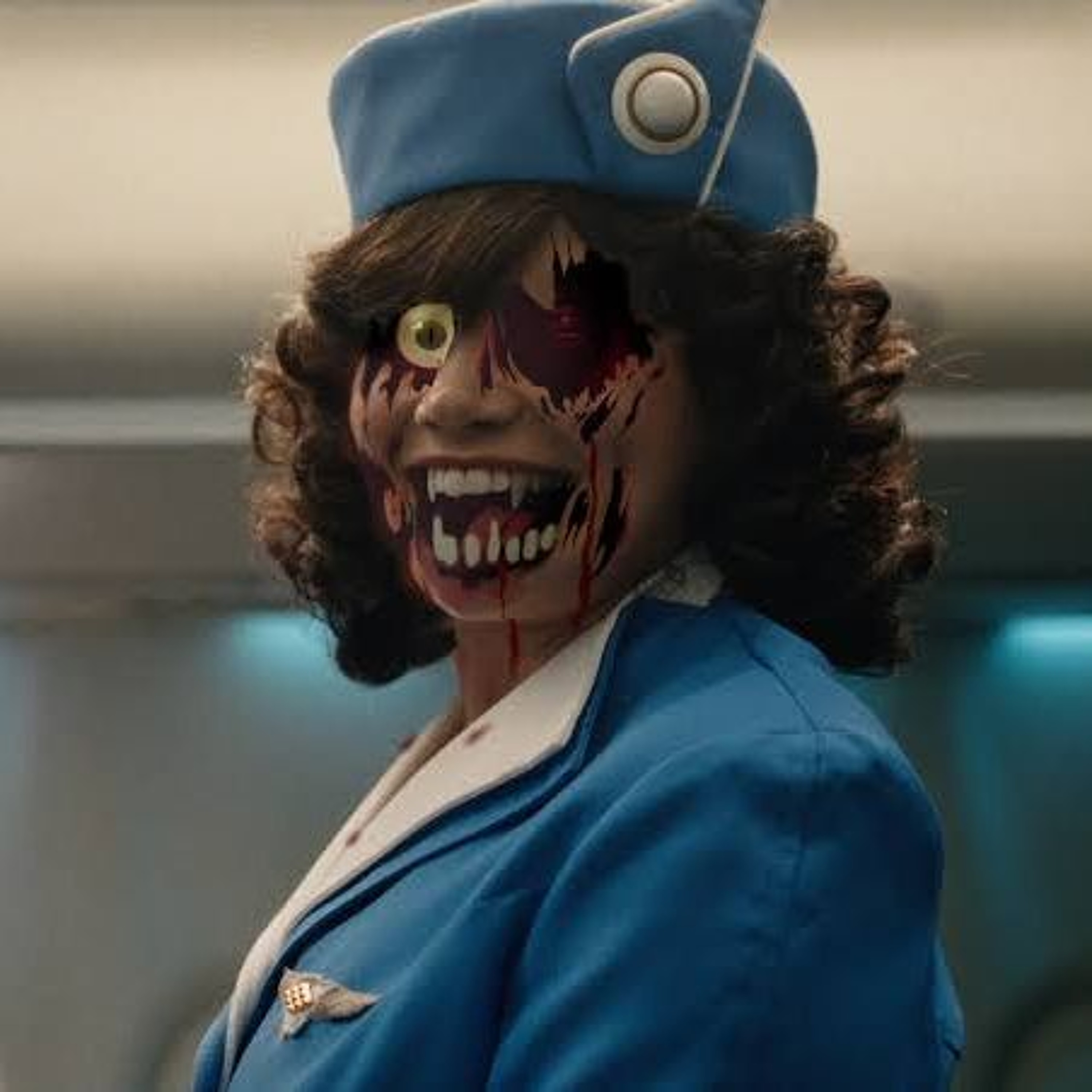
3w ago00:55:20Tap to summarizeThere’s podcasts about movies (hello) and there are movies about podcasts. A podcast helping create a movie that is not itself about the podcast, but reflects its worldviews and the sense of humor that has become a kind of lingua franca among people in their 20s and 30s: that is novel. Thus: Chunks. If you’re a regular listener of Chapo Trap House, you’ve probably heard ads for the film proffered by the show’s producer Chris Wade, who has also taken up producing duties on this film, which is a comedy anthology that moves between public-access TV, animation, live-streamed poker, and more straight-ahead narrative projects that still reflect something of screen life and the modern dystopia. Chunks was spearheaded by Amber A'Lee Frost, a longtime contributor to Chapo who has since started ColdFeet, a production entity that previously supported Eephus. It was my pleasure speaking with Chis and Amber about Chunks, translating the Chapo sensibility to cinema, and ColdFeet’s forthcoming projects. Music courtesy of Lex Walton: “Love Theme from an Unreleased Film” from the album Giving It Up.
Transcribe →
The B-Side Ep. 188 – Michael Mann (with Blake Howard)
3w ago02:10:46Tap to summarizeWelcome to The B-Side! Here we talk about movie directors! Not the movies that made them famous or kept them famous, but the ones that they made in between. Today we discuss the great Michael Mann! Our B-Sides are The Keep, Public Enemies, Blackhat, and Ferrari. Our guest is the iconic Blake Howard of One Heat Minute Productions. We discuss the troubled making of The Keep, as well as that incredible Tangerine Dream score. The legendary Twilight Zone episode “The Howling Man” also comes up. There’s also mention of how many movies about the French-Indian War there are (spoiler alert: not many!) Blake, Conor, and Dan Mecca discuss the legacy of Mann and his recent output of underappreciated films. Why is it that Michael Mann’s films are often released to lesser success than their long-term reputations suggest? There’s celebration of Mann’s ever-evolving digital aesthetic, conversation about the contentious star-director relationship on the set of Public Enemies, and his demanding, exacting instincts. As legendary producer Amy Pascal once put working with the director: “You forget about the pain of childbirth too. I mean, whatever you go through, you still want another baby. It’s like that with Michael too.”
Transcribe →
The B-Side Ep. 187 – Christopher Nolan (with Blake Howard)
Jul 1601:46:02Tap to summarizeWelcome to The B-Side! Here we talk about movie directors! Not the movies that made them famous or kept them famous, but the ones that they made in between. Today we discuss perhaps the most popular filmmaker alive today: Christopher Nolan! Our B-Sides are Insomnia, The Prestige, and Tenet. Our guest is the legendary Blake Howard of One Heat Minute Productions. We chat about late-period Al Pacino, the unexpected success of Batman Begins, and those other magician movies that came out around The Prestige in 2006. There’s appreciation for the unique Nolan commentary for Insomnia and that Entertainment Weekly cover for Batman Begins, and the great character actor Martin Donovan.
Transcribe →
Emulsion Ep. 24 - Yasmina Tawil on BAM's Electronica
Jul 1000:34:33Tap to summarizeLike the old song goes: summer’s here and the time is right for dancing in the street. While the theater has its benefits as a restrictive space, and we do not encourage interrupting those to your immediate left and right with heavy movement, one appreciates, at times, the excuse to tap your feet. Or at least a reminder that theaters aren’t just about a big screen, but a sound system better than the built-in speaker situated behind your TV. Hence: Electronica. It’s a new series running at BAM from today, July 10, to July 14, featuring an "amalgam of films from across the globe boasting electronic-heavy soundtracks." Some titles you might know chapter and verse; others, I think, have not played in New York for at least the decade I’ve lived here. I was glad to speak with BAM’s Yasmina Tawil about Electronica, but what follows is really a discussion of programming in its finer points: when to screen and why; when you can’t screen but really want to; what attracts an audience, and how you attract the audience with something they don’t necessarily want; and how this is seemingly the one realm of cinema where people reject monetary offers. I hope you enjoy, and see something in Electronica as it’s running. Learn more: https://www.bam.org/film/2026/electronica
Transcribe →
The B-Side Ep. 186 – Julia Roberts (with Joe Reid)
Jul 102:12:30Tap to summarizeWelcome to The B-Side! Here we talk about movie stars! Not the movies that made them famous or kept them famous, but the ones that they made in between. Today we discuss America’s Sweetheart: Julia Roberts! Our B-Sides include: I Love Trouble, America’s Sweethearts, Full Frontal, and Larry Crowne. Our lovely guest is Joe Reid of Vulture and the This Had Oscar Buzz podcast. We discuss Julia’s frequent career peaks and valleys, that ridiculous People Magazine cover in 1993, the tumultuous production of I Love Trouble, and the aftermath of a difficult Hook shoot. There’s talk of the giant comeback that was My Best Friend’s Wedding and Julia’s knowing, clever subversion of the rom-com leading character in it. We make time for the rise and fall of Revolution Studios, Joe Roth’s passion project that had a tumultuous first seven years. Scooter gangs and the 2008 Recession come up in talking about Larry Crowne (naturally), and there’s debate over how successful Julia has been over these last couple of decades in her “legend era.”
Transcribe →
The B-Side Ep. 185 – Steven Spielberg (with Bilge Ebiri)
Jun 1802:10:01Tap to summarizeWelcome to The B-Side! Here we talk about movie directors! Not the movies that made them famous or kept them famous, but the ones that they made in between. Today we discuss one of the greatest film directors to ever live: Steven Spielberg! Our B-Sides are 1941, Hook, Amistad, and The Adventures of Tintin. Our guest is dear friend and incredible writer Bilge Ebiri! As of this writing, he just published his piece The Raider of a Lost Art, an oral history about Spielberg in conjunction with the release of his new film Disclosure Day. He’s also discussed Spielberg with The Film Stage before! We chat about Spielberg’s early start and the difficult production of 1941, his stratospheric ‘80s, the successful failure of Hook, and his underrated Amistad. There’s a celebration of Spielberg’s improbable millennium run of films, from Saving Private Ryan through Munich. The three of us dig into why Bilge loves Hook so much, he speaks on some additional, unpublished gems from his oral history piece, we appreciate the genius of John Milius, and the impossible camera that injects so much energy into The Adventures of Tintin.
Transcribe →
The B-Side – In Conversation with John Sayles Part II
Jun 900:47:43Tap to summarizeThe thing about filmmaker John Sayles is that he has done everything. Do you love Steven Spielberg's E.T. the Extra-Terrestrial or Tobe Hooper's Poltergeist? Sayles' unmade screenplay Night Skies is a piece of the source code for both classics. How about The Big Chill? Sayles' lovely Return of the Secaucus 7 (which he wrote and directed) investigated the curdling of the baby boomers' American dream long before Lawrence Kasdan took a crack at it. The man has been essential to the evolution of nearly every genre of American film, in one way or another. Ahead of TIFF Cinematheque's retrospective Declarations of Independence: The Cinema of John Sayles (curated by Adam Nayman and beginning this Thursday), we spoke with Sayles about this series and how they selected which films to screen. We also touch on his (hopefully) next film I Passed This Way, working with James Cameron, and which noir classics he's caught up with recently. Read more: https://thefilmstage.com/the-hard-work-is-in-the-screenwriting-john-sayles-on-resourceful-filmmaking-james-cameron-and-his-tiff-retrospective/
Transcribe →
The B-Side Ep. 184 – Goldie Hawn (with Jen Johans)
Jun 501:45:35Tap to summarizeWelcome to The B-Side! Here we talk about movie stars! Not the movies that made them famous or kept them famous, but the ones that they made in between. Today we discuss perhaps the most likeable movie star alive: Goldie Hawn! Our B-Sides include: Butterflies Are Free, The Duchess and the Dirtwater Fox, Seems Like Old Times, and Deceived. Our guest today is dear friend Jen Johans, host of the superb Watch With Jen Podcast! We chat about Goldie’s hot start on Rowan & Martin's Laugh-In and the early Oscar she won for her dynamic, engaging performance in Cactus Flower. It was her first film role and she was still on Laugh-In! Hawn quickly became a commercially-friendly representation of the counterculture movement, as evidenced in Butterflies Are Free. There’s debate about Goldie on the production of Jonathan Demme’s ultimately troubled Swing Shift (though she did officially meet Kurt Russell on set, so a huge silver lining!) and how much it hurt her reputation. We celebrate the TV Specials, how Goldie Hawn is her given name, and her autobiography. We enjoy the absurdities of Deceived, posit that maybe Protocol was a proto-Ishtar, and admire the shagginess of the stars in 1970s movies. There’s mention of Goldie’s 1972 album! Her charity comes up! How huge of a star Neil Simon was in the ‘70s and ‘80s comes up! There’s a lot to chew on in this episode. Enjoy!
Transcribe →
The B-Side Ep. 183 – Laurence Fishburne (with Mitchell Beaupre)
May 2202:17:10Tap to summarizeWelcome to The B-Side! Here we talk about movie stars! Not the movies that made them famous or kept them famous, but the ones that they made in between. Today we talk about a truly underrated star: Laurence Fishburne! Our B-Sides include: Bad Company, Fled, Hoodlum, and Biker Boyz. Conor and guest host Mitchell Beaupre discuss Fishburne’s early work, his movie star run (the mid-90s, of which three of our B-Sides are a part of!), and the roles he passed on over the years. They debate whether or not Kevin Hooks’ Fled (a ‘90s take on The Defiant Ones) is worth the watch, if Oliver Parker’s Othello works as a movie, and that other time Fishburne played a character based on famous gangster Bumpy Johnson (that would be Francis Ford Coppola’s underrated The Cotton Club). There’s a celebration of Bill Duke’s directorial career (the legendary actor made Hoodlum and also Deep Cover, both starring Fishburne) and a conversation about Biker Boyz internal conflict in being a Fast & Furious movie.
Transcribe →
The B-Side Ep. 182 – Eddie Murphy (with Nicholas Gray and Alvin Keith)
May 701:56:23Tap to summarizeWelcome to The B-Side! Here we talk about movie stars! Not the movies that made them famous or kept them famous, but the ones that they made in between. Today we talk about one of the most successful performers of all time: Eddie Murphy! Our B-Sides include: Metro, Holy Man, Life, and I Spy. Our guests today are filmmaker and returning guest Nicholas Gray and incredible actor Alvin Keith. We discuss Eddie’s stratospheric rise, the perceived failure of the underrated Harlem Nights, and his underwhelming ‘90s output. In 1987-1988, Eddie’s stand-up special Raw was one of the most financially successful theatrical releases of the calendar year. There’s the tonal strangeness of Metro, the fact that Eddie is not the lead of Holy Man, the subtle brilliance of Life, and the tired, cynical result that is I Spy. We talk about how Eddie only ever auditioned for Saturday Night Live as an actor, as well as his famous moment at the Academy Awards in 1988 in which he called out the lack of Black representation. There’s this great quote from Carmen Ejogo about working with Eddie on Metro: “He was utterly charming but... did he tell me this? He gets told, "There's this script, it's a bit shitty, are you interested?" "No, not really." "Well, you know, we're going to give you $30 million to do it." "Yeah, all right then." And that's where he's at. He's not doing it to be the next Poitier. It is what it is for him, and that's what he's like on set. He's just showing up and getting paid, whereas I was like, ‘What's the motivation here?’” We debate Eddie’s inherent softness (and also his edge) and how it works to his advantage, him turning down Rush Hour in favor of Holy Man, and his music career!
Transcribe →