
Podcast
The Fine, But Not Fine Podcast
Hosted by Fine, But Not Fine · EN
Fine, But Not Fine is a podcast for anyone navigating the messy, frustrating, and often invisible challenges of rare diseases, chronic illness, and the healthcare system.
Hosted by Kelly Paul, who has lived with Mycosis Fungoides (a rare form of Cutaneous T-Cell Lymphoma) since 2015, this podcast dives into the real-life struggles of managing an incurable condition while still trying to live a full, meaningful life.
Resources: Cutaneous Lymphoma Foundation (https://www.clfoundation.org), International Society for Cutaneous Lymphoma (https://cutaneouslymphoma.org), Lymphoma Research Foundation (lymphoma.org), National Organization for Rare Diseases (rarediseases.org).
27episodes
Episodes
Newest firstAll episodes

Treatment Fatigue: Doing the Hard Thing Forever With No Finish Line - Ep. 34
2w ago00:08:30Tap to summarizeMost hard things come with a finish line — six rounds, twelve weeks, "get through this and you're on the other side." I don't get that sentence. My treatment doesn't end; it just continues, for as long as my body needs it. This episode is about treatment fatigue, not the kind where one appointment is brutal, but the kind where the hard part is the forever of it. And how I've learned to carry that without letting it stop me.
Transcribe →
High Liver Enzymes on Interferon: Why I Had to Stop Treatment - Ep. 33
4w ago00:13:25Tap to summarizeWhen you treat a cancer that can't be cured, you don't just manage the disease, you manage what the treatment does to the rest of you. My liver numbers climbed high enough that I had to come off my medication entirely. This episode is the cascade that followed: the referral, months of waiting, vials of blood, a FibroScan, and the relief of an answer.
Transcribe →
150 Appointments: What Rare Disease Treatment Actually Costs - Ep. 32
Jun 1100:10:01Tap to summarize150 in-office treatment appointments in a single year. Three days a week, every week, driving to another city because there's no NBUVB light where I live — or where I work. In this episode, I'm talking about what treatment actually costs: the miles, the time, the scheduling, the money. And the harder question underneath all of it — whose job actually lets them do this? Because not everyone has the flexibility I do. And that matters.
Transcribe →
Two Days in the Halls of Power - Ep. 31
May 2800:20:41Tap to summarizeWhat does it actually look like to walk into a state legislature and fight for rare disease patients? This episode, I share what I learned from two days advocating at the NC Legislature with the Everylife Foundation for Rare Diseases — what surprised me about how state lawmakers think, why the knowledge gap isn't what I expected, and what a single staffer's comment about a stack of one-pagers taught me about what advocacy actually requires. Plus: three NC bills that still need your voice.
Transcribe →
Inside Rare Disease Week: Taking Advocacy to Capitol Hill (Part 2), Ep. 30
Mar 2400:08:06Tap to summarizeIn Part 2 of my Rare Disease Week experience, I take you inside what it’s actually like meeting with lawmakers and their staff on Capitol Hill. I talk about how patient stories influence policy, how advocacy conversations unfold, and why showing up matters for the rare disease community.
Transcribe →
Inside Rare Disease Week: A Patient Advocate on Capitol Hill (Part 1), Ep. 29
Mar 1000:09:26Tap to summarizeI just returned from Rare Disease Week in Washington, DC, where patients, caregivers, and advocates come together to push for change in the healthcare system. In this episode, I share what federal advocacy actually looks like—from packed briefing rooms to meetings on Capitol Hill—and why these conversations matter so much for people living with rare diseases. I talk about what surprised me, what I learned, and why patient voices are essential in shaping healthcare policy.
Transcribe →
Going to DC for Rare Disease Week - Ep. 28
Feb 2400:09:57Tap to summarizeThis episode is the “before.” Before I head to Washington, DC for Rare Disease Week on Capitol Hill, I share why I said yes, how I’ve prepared, and what I’ll be advocating for as a rare disease patient. We talk about insurance denials, the Protect Rare Act, and how advocacy can look different for each of us—at the national, state, or local level.
Transcribe →
One Year Anniversary of Fine, But Not Fine - Ep. 27
Feb 1000:09:04Tap to summarizeOne year into Fine, But Not Fine, I’m reflecting on why I started this podcast, what I planned for, and what surprised me along the way. This episode isn’t a highlight reel—it’s an honest look at living with chronic illness inside a healthcare and insurance system that asks too much of patients. I talk about anger, advocacy, learning to live with uncertainty, and the quiet truth that even when things are hard, life keeps on living.
Transcribe →
The First Time Cancer Interrupted My Job - Ep. 26
Jan 1300:09:40Tap to summarizeIn this episode, I share a day that looked fine on the outside—but quietly changed something in me. A cancer treatment and a work crisis collided, and for the first time in ten years, I couldn’t keep my illness and my job in separate lanes. Nothing broke, but the fear did. This is an honest reflection on capacity versus commitment, the invisible stakes of health and work, and what it feels like when the margin you depend on suddenly disappears. There’s no takeaway—just the truth of sitting with it.
Transcribe →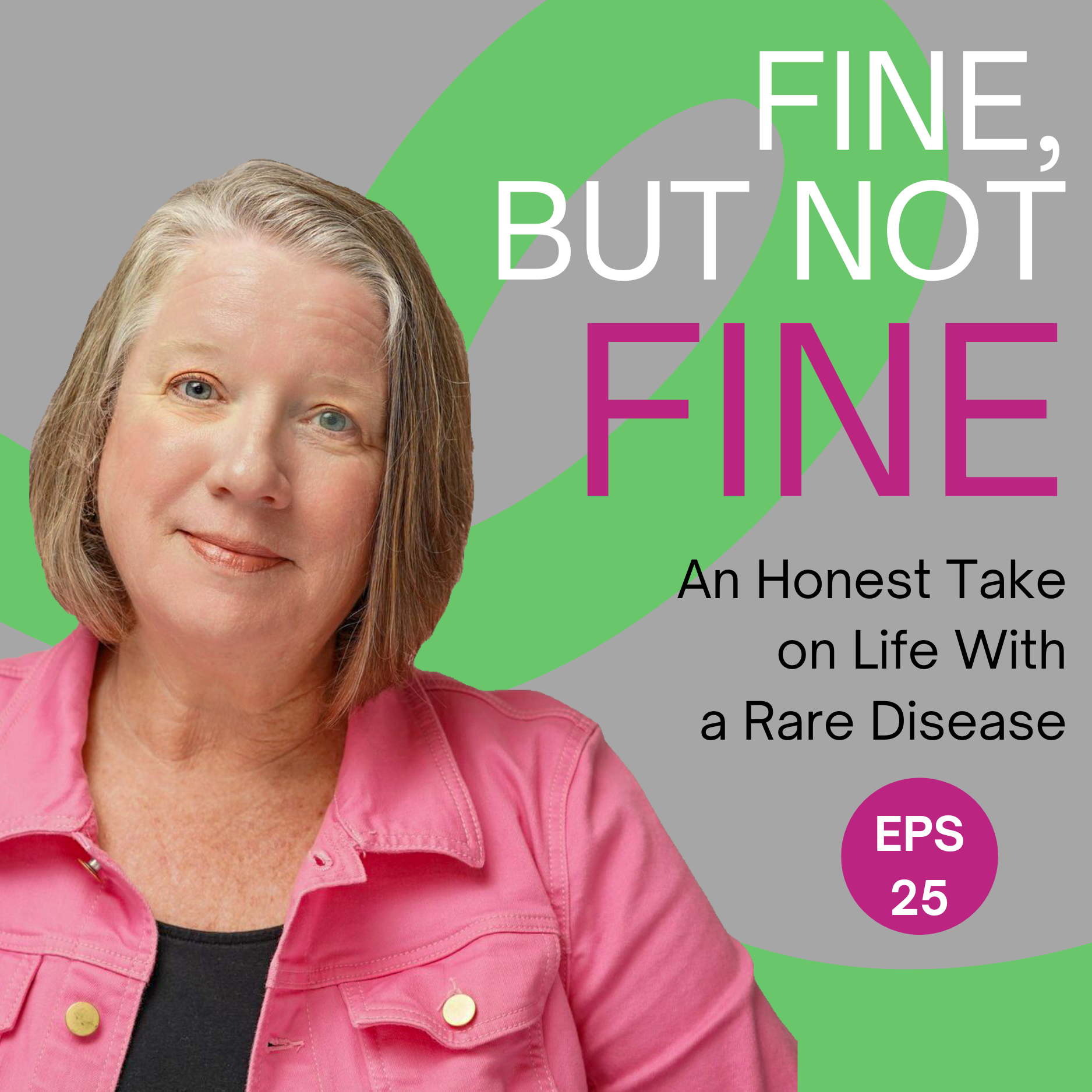
Managing Multiple Doctors - Ep. 25
Nov 2500:16:41Tap to summarizeManaging multiple doctors with a rare disease or chronic illness is complicated, confusing, and honestly, exhausting. In this episode, I talk about what it’s really like to juggle doctors who don’t talk to each other — from conflicting advice and duplicate lab tests to the emotional toll of telling your story over and over again. I share the strategies that help me stay (somewhat) sane, like keeping my own records, maintaining a master medication list, and advocating out loud — even when it feels pushy.
Transcribe →