
Podcast
The FreightFA Brief Podcast
Hosted by Freight Flow Advisor · EN
Turning market volatility into competitive advantage for shippers and brokers. Global carriers publish an enormous amount of financial and market data. Most shippers never see it in a form they can actually use.
This publication bridges that gap.
freightflowadvisor.substack.com
freightflowadvisor.substack.com
56episodes
Episodes
Newest firstAll episodes
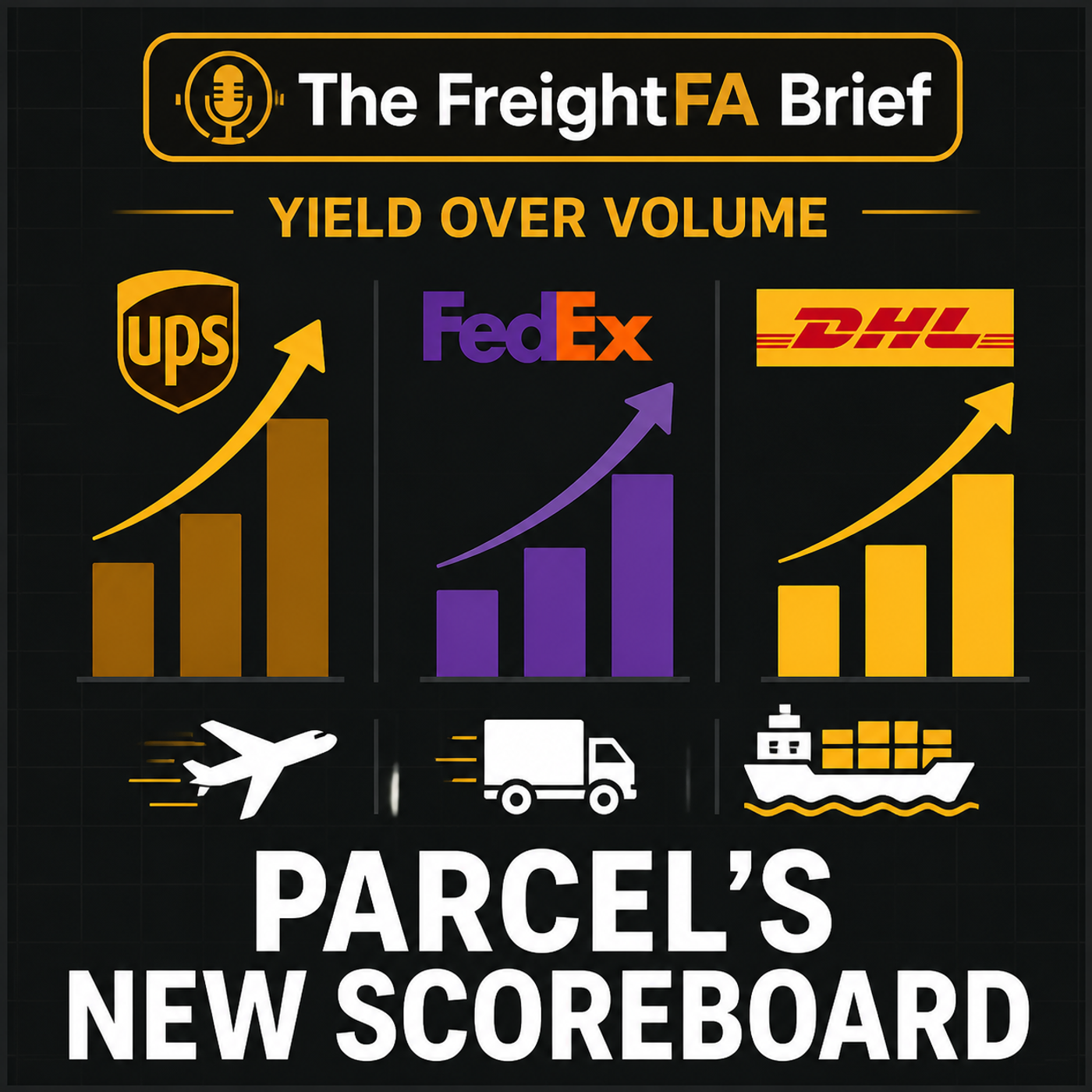
The Yield Era: UPS, FedEx, and DHL
Yesterday00:10:43Tap to summarizeThe Freight Flow Advisor Brief podcast delves into the recent earnings reports of UPS, FedEx, and DHL, highlighting the industry's pivot towards yield and mix as the scoreboard. The specialized segments in the industry are thriving due to disciplined pricing and selective volume, while the generalist low-margin approach is no longer effective.TakeawaysParcel and express industry pivot towards yield and mix as the scoreboardSpecialized segments in the industry are thriving due to disciplined pricing and selective volumeDiscipline is paying, and volume for volume's sake is now dead moneyChapters00:00 Introduction to Freight Flow Advisor Brief01:19 Earnings Reports and Industry Trends04:28 UPS: The Cleanest Example09:13 FedEx: A Strangely Similar Story13:25 DHL: The Most Bullish Number19:48 The Pivot in Parcel and Express Industry
Transcribe →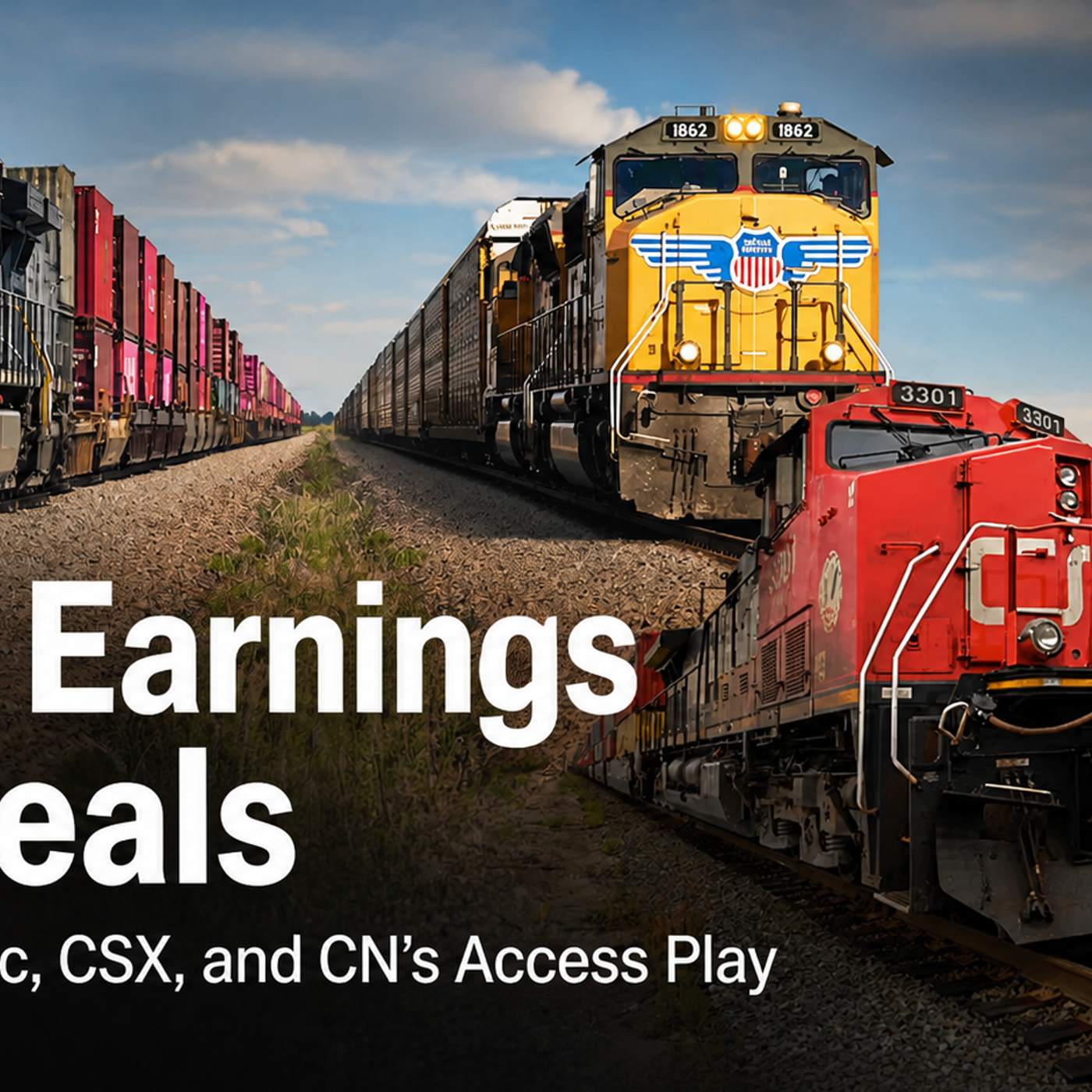
UP and CSX Earnings + CN Agreement
1w ago00:11:11Tap to summarizeThe podcast covers the latest rail earnings performance, focusing on Union Pacific and CSX. It also delves into strategic agreements and mergers in the rail industry, providing insights for shippers and executives.TakeawaysRail Earnings PerformanceStrategic Agreements and MergersChapters00:00 Rail Earnings Performance14:23 Strategic Agreements and Mergers
Transcribe →J.B. Hunt Earnings: The Upcycle Has Arrived
2w ago00:13:37Tap to summarizeDiscover the latest insights from JB Hunt's Q2 2026 earnings report and what it means for the freight market. 🚚In this episode, we break down the key takeaways from JB Hunt's impressive performance, including a 19% revenue increase and a significant shift in the freight cycle. Learn how these changes impact your logistics decisions and what to expect in the coming months.Key takeaways:* Revenue growth of 19% year-over-year* Operating income up 32% and EPS up 45%* Intermodal volumes in the East increased by 31%* Dedicated pipeline at record levels* Insights on the supply-driven upcycleTimestamps:00:00 Introduction00:30 JB Hunt Q2 2026 earnings overview01:00 Revenue and operating income highlights02:00 Intermodal performance03:00 Dedicated services growth04:00 Market implications for shippers and carriers05:00 Conclusion and next stepsWhat's your biggest challenge in navigating the freight market? Drop it in the comments!Subscribe for weekly insights on freight and logistics trends.#FreightMarket #JBHunt #LogisticsInsights👉 Read more stories: https://freightflowadvisor.substack.com/
Transcribe →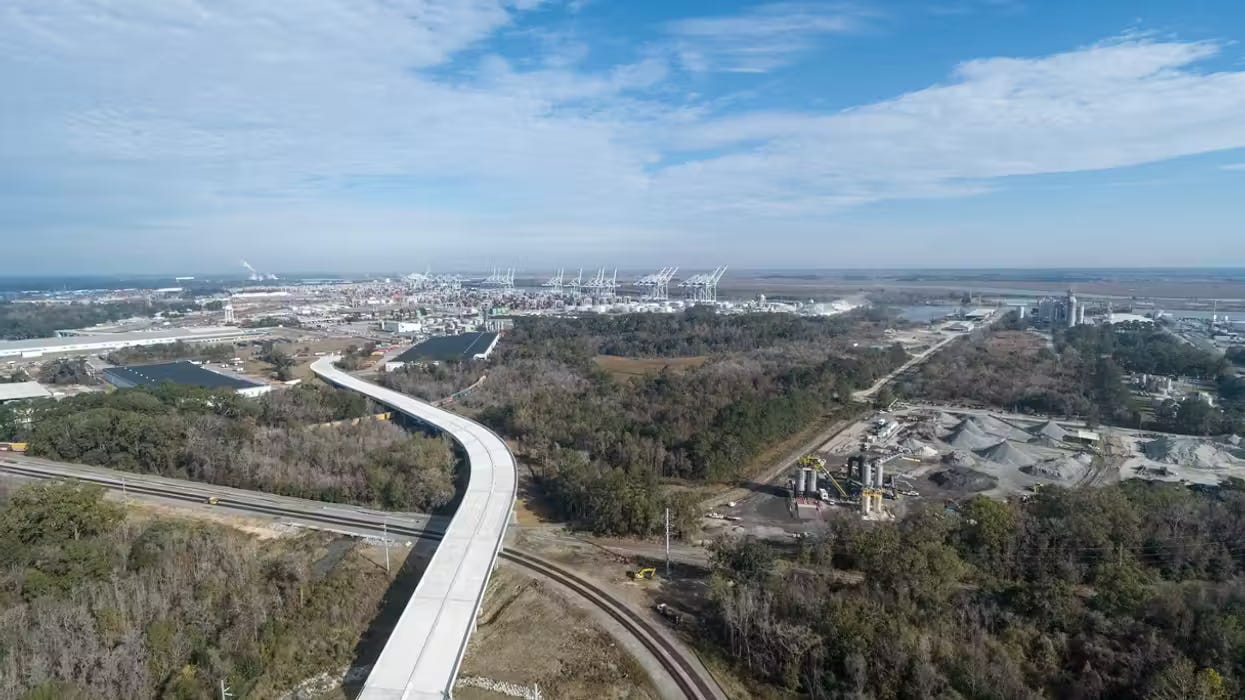
Savannah Just Completed a 12-Year, $600 Million Bet on American Freight
2w ago00:11:21Tap to summarizeFreight Flow Advisor Brief: Savannah’s New Freight AdvantageEpisode SummaryIn this episode, we break down a major infrastructure shift in Savannah, Georgia: the opening of the Brampton Road Connector. This new trucks-only highway links the Port of Savannah’s Garden City Terminal directly to Interstate 16, removing local congestion, improving truck turn times, and strengthening the port’s role as a key East Coast gateway.We also look at the bigger picture behind the road project, including Georgia’s long-term investment in rail, inland ports, and terminal expansion. Together, these moves are positioning Savannah as a more reliable, scalable freight platform for shippers, carriers, and global supply chain planners.Key TakeawaysThe Brampton Road Connector creates a direct, faster route from the port to Interstate 16.The project is designed to reduce friction for drayage operators and carriers.Savannah has spent roughly $600 million over 12 years building out its cargo beltway.The port’s infrastructure stack includes mega rail, inland ports, and terminal expansion.Savannah is targeting about 12.5 million TEUs of annual capacity by 2035.Improved landside reliability strengthens Savannah’s position as a primary East Coast gateway.The port’s growth has implications for routing, trade lane choices, and regional distribution strategy.Why It MattersThis is more than a road project. It’s a coordinated infrastructure strategy that combines highways, rail, inland terminals, and port expansion to reduce congestion and increase throughput. For supply chain operators, that means better predictability, improved efficiency, and a more competitive East Coast routing option.Notable Topics CoveredBrampton Road ConnectorGarden City TerminalGeorgia Ports AuthoritySavannah cargo beltwayMason Mega Rail TerminalOcean Terminal expansionHutchison Island terminal plansGainesville Inland PortEast Coast gateway competitionTariffs, nearshoring, and regionalizationLooking AheadWatch for:Improved truck turn times at Garden City TerminalVolume trends through late 2026Progress on Ocean Terminal Phase OneConstruction and permitting updates for Hutchison IslandIncreased rail share as Gainesville Inland Port ramps upClosing ThoughtSavannah is no longer just expanding capacity. It’s building a more resilient freight network that could reshape East Coast port competition for years to come. This is a public episode. If you'd like to discuss this with other subscribers or get access to bonus episodes, visit freightflowadvisor.substack.com/subscribe
Transcribe →
The Housing Law That Just Rewrote the Freight Demand Playbook
3w ago00:13:13Tap to summarizeShow Notes: Freight Flow Advisor BriefEpisode OverviewIn this episode of Freight Flow Advisor Brief, we break down the 21st Century Road to Housing Act and why it matters far beyond housing policy. Although it passed quietly, this new federal law could shape freight demand, construction activity, and capacity planning for years to come.Key Topics CoveredWhat the 21st Century Road to Housing Act isHow the bill passed into law without a presidential signatureWhy housing policy is a freight storyThe impact of manufactured housing changesCommercial-to-residential conversions and freight demandThe Build Now Act, innovation funding, and housing incentivesThe investor ban on large single-family rental ownersWhat freight leaders should watch nextMain TakeawaysHousing is one of the most reliable drivers of freight demand.The new law could increase demand for flatbed, drive-in, LTL, intermodal, and drayage freight.Removing the permanent chassis requirement for manufactured homes may lower costs and expand output.Incentives for commercial-to-residential conversions could create more multi-month, multi-mode freight campaigns.The legislation pushes capital toward new housing supply, which supports future freight volume.Real freight impact is likely to show up over the next12 to 36 months.Signals to WatchTreasury guidance on the 350-home thresholdHUD appropriations in the next budget cycleManufactured housing and modular production volumesReside grant awards by regionFlatbed construction freight rates across key corridorsResources MentionedFreight FA:freightfa.comSubstack: searchFreight FA BriefSocial:@the Freight Flow Advisor on LinkedIn, Instagram, and FacebookListen on Apple Podcasts and SpotifyWatch on YouTube:The Freight Flow AdvisorClosing ThoughtThis bill is not just housing legislation — it’s a multi-year freight demand story hiding inside policy. This is a public episode. If you'd like to discuss this with other subscribers or get access to bonus episodes, visit freightflowadvisor.substack.com/subscribe
Transcribe →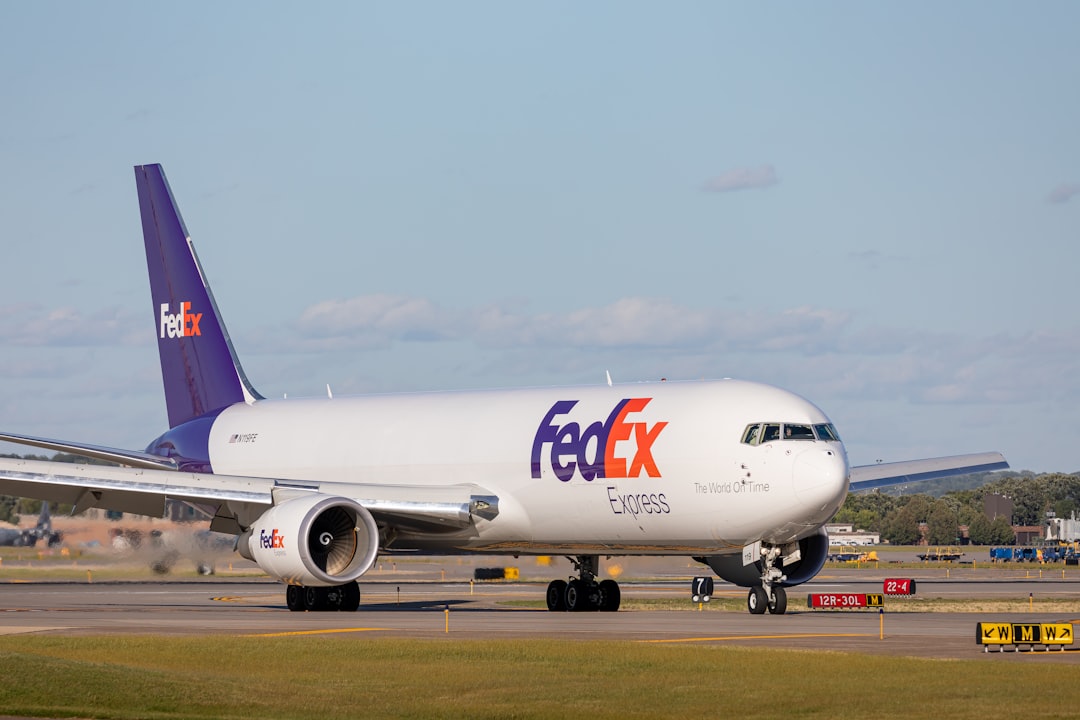
FedEx Tariff Refunds: What Every Shipper Needs to Know Before August 10
4w ago00:11:17Tap to summarizeFreight Flow Advisor Brief — Fedex Tariff Refund Show NotesIn this episode of the Freight Flow Advisor Brief, we break down one of the most quietly important stories in global freight right now: FedEx returning roughly $800 million in tariff refunds to customers. At first glance, it sounds simple — tariffs were paid, ruled unlawful, and now refunds are going back out. But for logistics, finance, and procurement teams, the real story is much more complicated: who actually gets paid, how fast the money moves, and what the refund process reveals about shipment ownership and data control. We explain how the refund process works, why refunds are first sent to the importer of record, and why that matters in small-parcel and express shipping, where the carrier or customs broker may hold that role. We also walk through the timeline: the legal ruling, FedEx receiving refunds from CBP, the launch of a customer portal to match shipments, and the beginning of customer payouts. The episode goes deeper into the operational challenge behind the headline. If your customs data, shipment records, and invoicing systems are clean, you can trace a tariff charge from entry to shipment to customer and recover the money efficiently. If your data is messy, refunds can get trapped in manual reconciliation and exception handling instead of becoming usable working capital.We also cover the practical steps companies should take now:Audit importer of record responsibilitiesPull ACE reports and review CBP Form 7501 dataConfirm ACH details are set up for refundsMake sure there is a clear filing plan for CAPETighten the link between shipment, entry, invoice, and customer recordsFinally, we look at the bigger lesson for global supply chains: tariff intelligence is becoming just as important as freight rate intelligence. As trade routes diversify and regulatory complexity increases, the companies that understand their own data will be the ones best positioned to recover money, reduce friction, and make better decisions.Key TopicsFedEx tariff refundsImporter of record strategyCustoms refund workflowsACE and CAPEFreight data visibilityTariff intelligenceTrade policy riskManual reconciliation vs. automated recoveryMentioned in This EpisodeFedExU.S. Customs and Border Protection (CBP)ACE portalCAPE filing processFreight Flow AdvisorTakeawaysRefunds often go first to the importer of record, not the original shipperClean shipment-to-entry data is critical to recovering moneyDigital trade infrastructure is now part of supply chain operationsTariff changes can create major cash flow events for logistics teamsIf you found this episode useful, share it with a colleague and follow Freight Flow Advisor on LinkedIn, Instagram, Facebook, YouTube, Apple Podcasts, or Spotify.For deeper analysis, visit the Freight FA Brief on Substack. This is a public episode. If you'd like to discuss this with other subscribers or get access to bonus episodes, visit freightflowadvisor.substack.com/subscribe
Transcribe →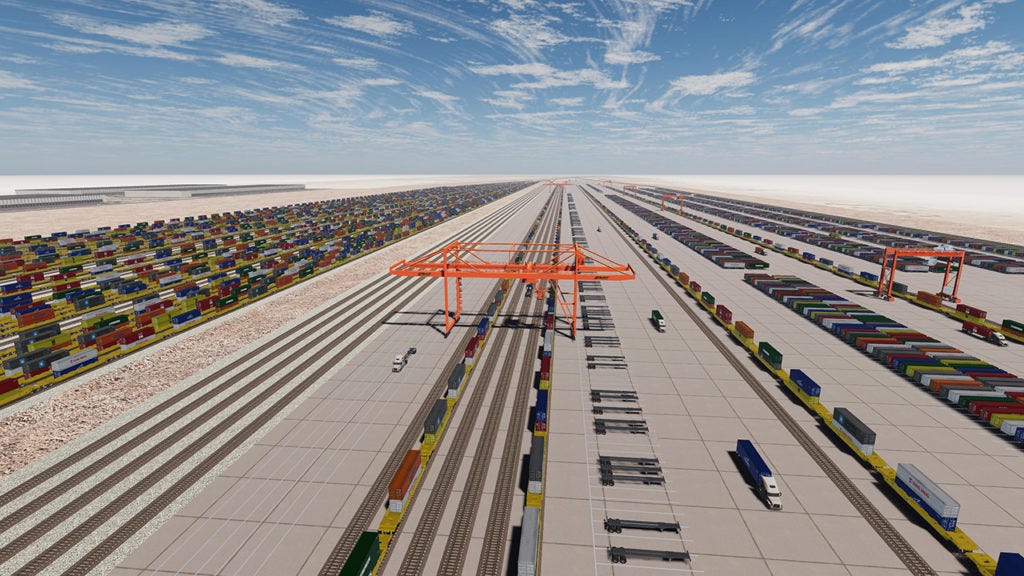
Same Goal, Different Game: How BNSF’s Barstow Gateway Counters the UP–NS Megamerger
Jul 200:13:22Tap to summarizeTitle: How Rail Infrastructure and Mergers Are Reshaping Freight NetworksIn this episode: We explore the strategic moves within North American rail, focusing on BNSF’s monumental inland port project and the potential UP-Norfolk Southern merger. Learn how these developments could influence freight costs, delivery reliability, and global supply chain resilience.Key topics:The contrasting strategies: BNSF’s inland gateway versus UP and NS’s coast-to-coast networkDetails on BNSF’s Big project: a $4 billion inland rail gateway at BarstowHow the Barstow Intermodal Gateway aims to reduce truck miles and congestionThe proposed mega merger: UP and Norfolk Southern’s plans for a unified transcontinental networkHow infrastructure investments signal competitive positioning for railroadsThe regulatory landscape and resistance to rapid consolidationThe implications for port dependency, intermodal competitiveness, and network planningThe importance of infrastructure as a strategic asset in supply chain resilienceHow shippers can leverage tools like Freight Flow Advisor for scenario planningKey milestones and signals to watch in rail infrastructure and merger developmentsTimestamps: 00:00 - Introduction to North American rail strategy shifts00:27 - Overview of BNSF’s Barstow Intermodal Gateway project01:22 - How Big aims to transform inland freight movement03:00 - Details of the container transloading process at Barstow04:55 - UP and Norfolk Southern’s merger plans for a transcontinental rail05:23 - Comparing gateway-focused and network-focused rail strategies07:19 - Visualizing freight routing: gateway versus entire network models08:23 - BNSF’s approach to competing without a mega merger09:01 - How freight professionals can utilize Freight Flow Advisor for scenario planning12:21 - Infrastructure as a strategic tool for railroads13:21 - Regulatory challenges and efforts to reshape the map14:11 - Risks tied to port dependency and intermodal competition15:39 - The importance of network flexibility and proactive planning16:00 - Regulatory risks of rail consolidation and market power concerns17:25 - The significance of tangible infrastructure investments over regulatory battles17:54 - Timing and market impact of big projects and mergers19:02 - Key signals to monitor: project milestones, regulatory stance, network strategies20:42 - Closing thoughts and resources for decision-makersResources & Links:Freight Flow Advisor: https://freightfa.comFreight FA article on Substack: https://substack.com — search “Freight FA brief” for deeper analysisBNSF’s Big project details: https://bnsf.comSTB regulatory information: https://www.stb.govConnect with the host:LinkedIn: https://linkedin.com/in/leondanielsYouTube: https://youtube.com/c/FreightFlowAdvisor This is a public episode. If you'd like to discuss this with other subscribers or get access to bonus episodes, visit freightflowadvisor.substack.com/subscribe
Transcribe →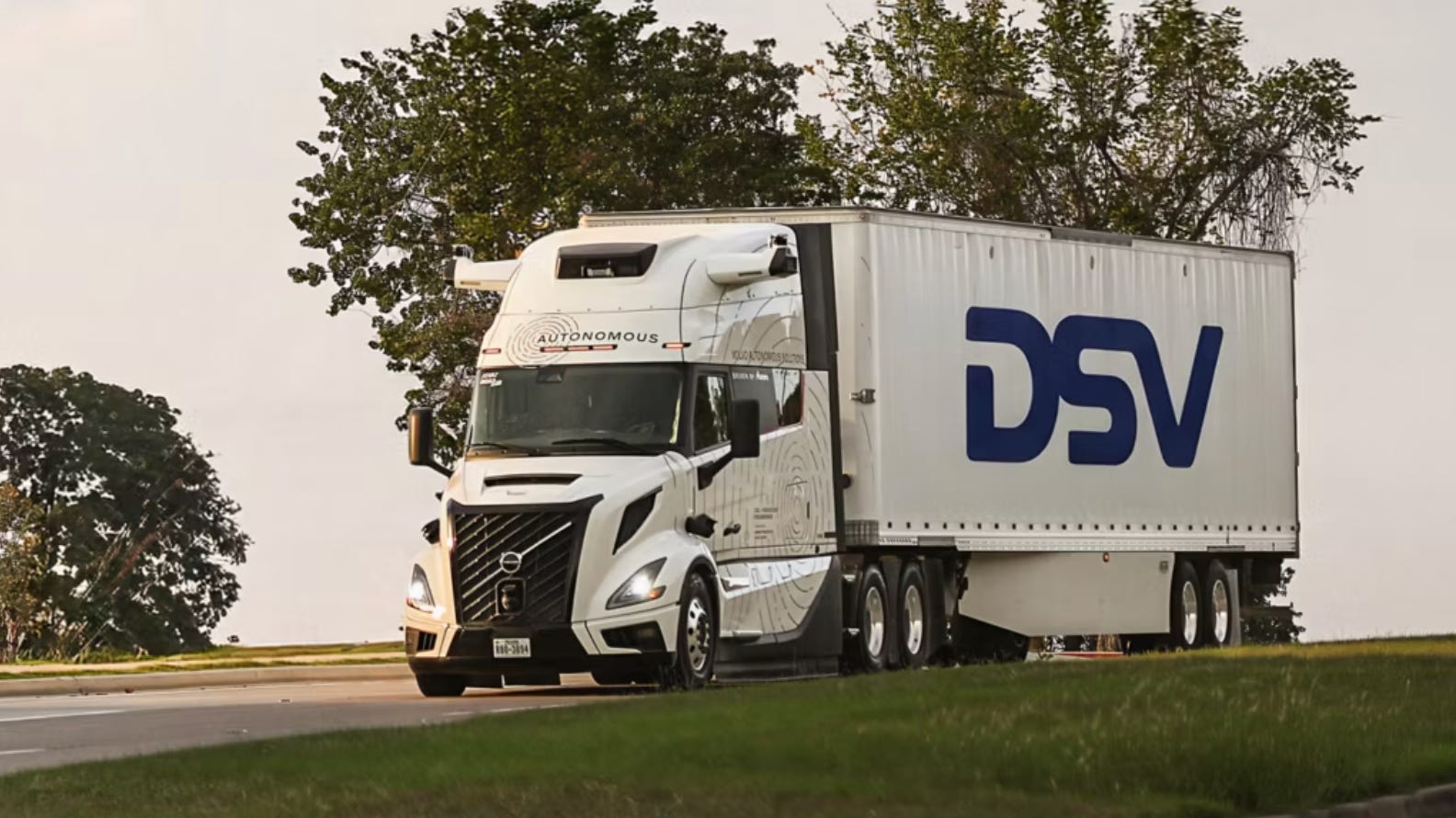
From Brokerage to Control Tower: Why 4PL Economics Are Reshaping Logistics
Jun 3000:11:44Tap to summarizeTitle: From Brokerage to Control Tower: Why 4PL Economics are Reshaping Logistics The Shift in Logistics: From 3PL to Control Tower and 4PL**In this episode, we analyze the evolving landscape of logistics, especially how margins are tightening and the role of third and fourth-party logistics providers (3PLs and 4PLs). Understand why the industry is moving towards a more integrated, control tower approach and what that means for brokers, carriers, and shippers.In this episode:The fundamental differences between 3PLs, brokers, and 4PLs, and why the industry is shifting towards orchestration.How margins for freight brokers have been compressed from high teens to under 10% due to transparent rates, increased competition, and market softening.The strategic moves of major players like DSV and C.H. Robinson in acquiring and reorienting towards full supply chain management.The significance of control tower concepts, technology integrations, and global logistics expertise in the new supply chain paradigm.How tariffs, customs, and sourcing complexity accelerate the transition from transactional to strategic logistics roles.Practical advice for brokers, carriers, and shippers to adapt to this shift, including questions to ask and new service expectations.A look at tools like Freightflow Advisor that enable network orchestration and decision-making beyond simple load movements.The importance of building reliable, data-driven partnerships that support network design and risk management in an increasingly complex environment.Timestamps: 00:00 - Introduction: Market noise to actionable insights in logistics00:32 - The rise of the control tower and 4PL models01:02 - Quick definitions: 3PL, freight broker, 4PL01:16 - Core functions of a 3PL versus a 4PL02:14 - Why logistics companies are shifting from moving freight to running networks03:50 - Decline in brokerage margins: numbers and reasons04:37 - How rate transparency, competition, and soft markets are eroding margins05:51 - The move up the value chain: consolidation and strategic acquisitions07:20 - Major deals exemplifying the control tower shift (DSV, Schenker)08:37 - The role of AI, orchestration, and technology (C.H. Robinson)09:46 - Competitiveness for mid-market brokers and regional 3PLs10:22 - Impact of tariffs and trade policy on supply chain complexity11:13 - How regulations and customs influence the move towards network management12:29 - The growing importance of orchestration and decision-making tools12:52 - Introduction to Freightflow Advisor: enhancing network planning and quoting15:55 - Different strategic approaches for brokers, carriers, and shippers16:11 - What it means for freight brokers: beyond spot rates16:50 - Carriers and asset owners: becoming preferred partners in the network17:41 - How shippers and supply chain leaders can leverage this shift18:41 - The two paths forward: transactional vs. orchestration-centered logistics19:16 - Deepening your understanding with additional resources and articlesResources & Links:Freightflow Advisor[C.H. Robinson](https://www.chrobinson.com)DHL DSV Acquisition AnnouncementSchenker and DSV merger detailsGartner Magic Quadrant for 3PL/4PLSubstack article on logistics transformationConnect with Leon Daniels:LinkedInTwitter This is a public episode. If you'd like to discuss this with other subscribers or get access to bonus episodes, visit freightflowadvisor.substack.com/subscribe
Transcribe →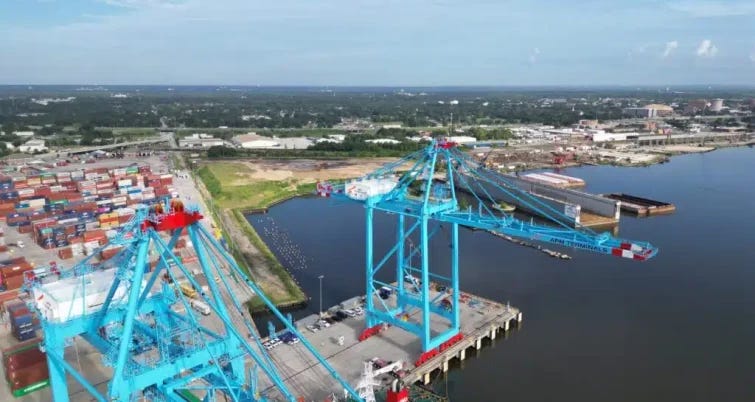
Mobile’s Next Export Bet: Why Ray-Mont’s Gulf Coast Move Matters More Than It Looks
Jun 2500:10:16Tap to summarizeMobile Alabama: The Emerging Freight Gateway Reshaping Gulf Coast ExportsThis episode dives into the strategic developments at Mobile, Alabama, revealing why this port is becoming a pivotal hub for exports, especially in resin and forest products. We explore the investments by RAY MONT Logistics and how port upgrades are positioning Mobile as a significant player in global trade.Key topicsThe strategic importance of Mobile’s deepening channel and expanded berth capacityRAY MONT Logistics' new export-focused transloading facility and its impactHow port infrastructure investments enable Mobile to handle ultra-large container vesselsThe significance of cargo specialization in port infrastructure planningThe role of inland connectivity and rail access in supporting export flowsTiming, reliability, and how these investments influence supply chain resilienceThe integration of new gateways into freight routing models and network planningPractical implications for trucking, drayage, and procurement strategies in the Gulf CoastTimestamps00:00 - Intro to the show and its focus on innovative freight analysis01:08 - Why Mobile is emerging as a key export gateway02:19 - Details of RAY MONT Logistics’ new export facility02:51 - The broader port upgrades supporting Mobile's rise09:04 - Projected export volume through Mobile and its significance09:29 - The port’s infrastructure investments—berth extension and deepening channels10:28 - How Mobile’s port improvements support larger vessels and more container throughput11:15 - Why cargo specialization and infrastructure coordination matter13:20 - Resin and forest products as key export drivers for Mobile16:19 - The importance of inland rail connectivity for export success17:32 - Enhancements in port reliability and vessel turnaround times18:02 - The long-term value Mobile's port investments aim to create19:41 - Introduction to Freight Flow Advisor and its role in freight modeling20:13 - How the tool helps stress-test routing scenarios and market shifts22:09 - The implications of Mobile’s rise for freight routing and market share22:58 - Effects on drayage, trucking, and local short-haul opportunities24:00 - How new infrastructure investments influence pricing, procurement, and network design25:16 - Bull, base, and bear scenarios for Mobile’s future impact26:50 - Strategic significance of Mobile beyond its current size27:29 - Practical tips for integrating these insights into your freight planningResources & Links:Freight Flow AdvisorRAY MONT LogisticsMobile Port AuthorityAPM Terminals MobileConnect with Freight FA:LinkedInYouTube This is a public episode. If you'd like to discuss this with other subscribers or get access to bonus episodes, visit freightflowadvisor.substack.com/subscribe
Transcribe →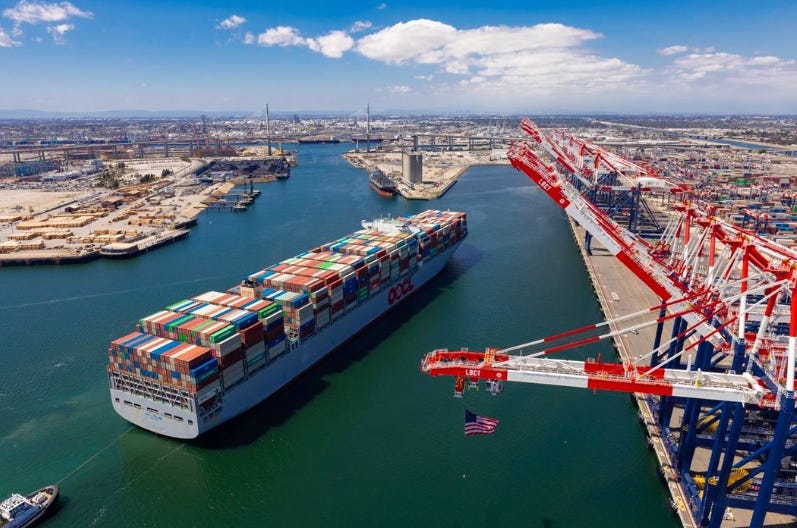
Port of Long Beach’s Green Corridor Is a Real Freight Network Bet
Jun 1800:10:46Tap to summarizeUnderstanding the Future of Green Truck Corridors: Long Beach's Bold Experiment This episode dives into Long Beach's pioneering green truck corridor, exploring how infrastructure, policy, and market forces are shaping the next generation of freight lanes. It's essential listening for anyone involved in logistics, transportation, or sustainability strategies—because this isn't just about greener trucks, it's about the future of freight flow control.Key topics covered:The significance of the Long Beach to Central Valley corridor as a case study for zero-emission freight infrastructureHow a strategic corridor shifts freight flow leverage towards operators, shippers, and inland hubsThe role of infrastructure investments, including Tesla semi trucks and charging stations, in enabling electrificationThe implications for different stakeholders: carriers, shippers, and inland logistics hubsThe potential scenarios for wider adoption, challenges, and what this means for transportation networksHow technology like Freight Flow Advisor simplifies complex decision-makingLong-term trends: the rise of green premium corridors and the gradual exit from diesel networksPractical insights for fleet management, capital allocation, and network planning in a changing landscapeTimestamps: 00:00 - Introduction to Long Beach’s green truck corridor project 00:17 - The ambitious experiment involving Tesla Semis and charging infrastructure 00:33 - The importance of the corridor for port-to-inland freight movement 01:13 - The strategic significance of a 150-mile corridor connecting key economic hubs 01:33 - Why this corridor matters for operators and shippers 02:25 - The collaboration between Long Beach port, Lincoln Transportation, and others 03:02 - Details of the memorandum of understanding and project scope 05:19 - The corridor's actual freight volume: over 300,000 containers annually 05:51 - The role of Lincoln Transportation as the lead trucking partner 06:27 - Initial Tesla semi truck orders and deployment timeline 07:34 - Infrastructure readiness at ports and inland hubs for heavy-duty EV charging 08:24 - Port CEO’s vision of the world’s first port-powered green truck corridor 08:42 - The environmental and economic benefits of linking agriculture and port complexes 09:53 - The shift in freight flow control and strategic access to key lanes 10:37 - The economic weight of Long Beach port and Central Valley exports 11:01 - The competitive advantage for carriers operating reliably on this lane 11:14 - The importance for shippers to lock into structured, high-volume, green corridors 13:15 - The future: green premium lanes vs. traditional diesel networks 13:57 - How procurement may differentiate between green and conventional lanes 14:24 - Introduction to Freight Flow Advisor, the AI-powered freight analysis tool 14:38 - Practical capabilities: rate expectations, scenario planning, and simplified analysis 15:11 - How Freight Flow Advisor integrates with decision-making on corridors 15:32 - The tool’s role in budgeting, pricing, and strategic bids 16:22 - The accessible pricing tiers for using Freight Flow Advisor 16:35 - Encouraging fleets and shippers to leverage the tool regularly 17:00 - Action step: visiting freightfa.com to explore corridor insights 17:10 - Returning focus to Long Beach’s infrastructure and strategic considerations 17:34 - How electrification strategies are becoming corridor-specific rather than fleet-wide 17:47 - Identifying core lanes with high freight density and reliable infrastructure 18:27 - The importance of integrating core lanes into electrification planning 19:20 - Market opportunities at inland hubs like Shafter for future competitiveness 21:08 - The optimistic view: early Tesla trucks, smooth operations, and volume growth 22:40 - The baseline scenario: gradual rollout with operational complexities 23:09 - The cautious outlook: bottlenecks, economics, and slower adoption 24:23 - The strategic takeaway: corridors are here to stay for ESG, air quality, and competitiveness 24:52 - The importance of scenario planning and data-driven decision-making tools 25:20 - Wrapping up: the need for precise network planning in this evolving landscapeResources & Links:Freight Flow AdvisorTesla SemiLong Beach PortLincoln Transportation ServicesShafter Inland Logistics HubConnect with the expert:FreightFA | LinkedIn This is a public episode. If you'd like to discuss this with other subscribers or get access to bonus episodes, visit freightflowadvisor.substack.com/subscribe
Transcribe →