← The Fundraising Masterminds Podcast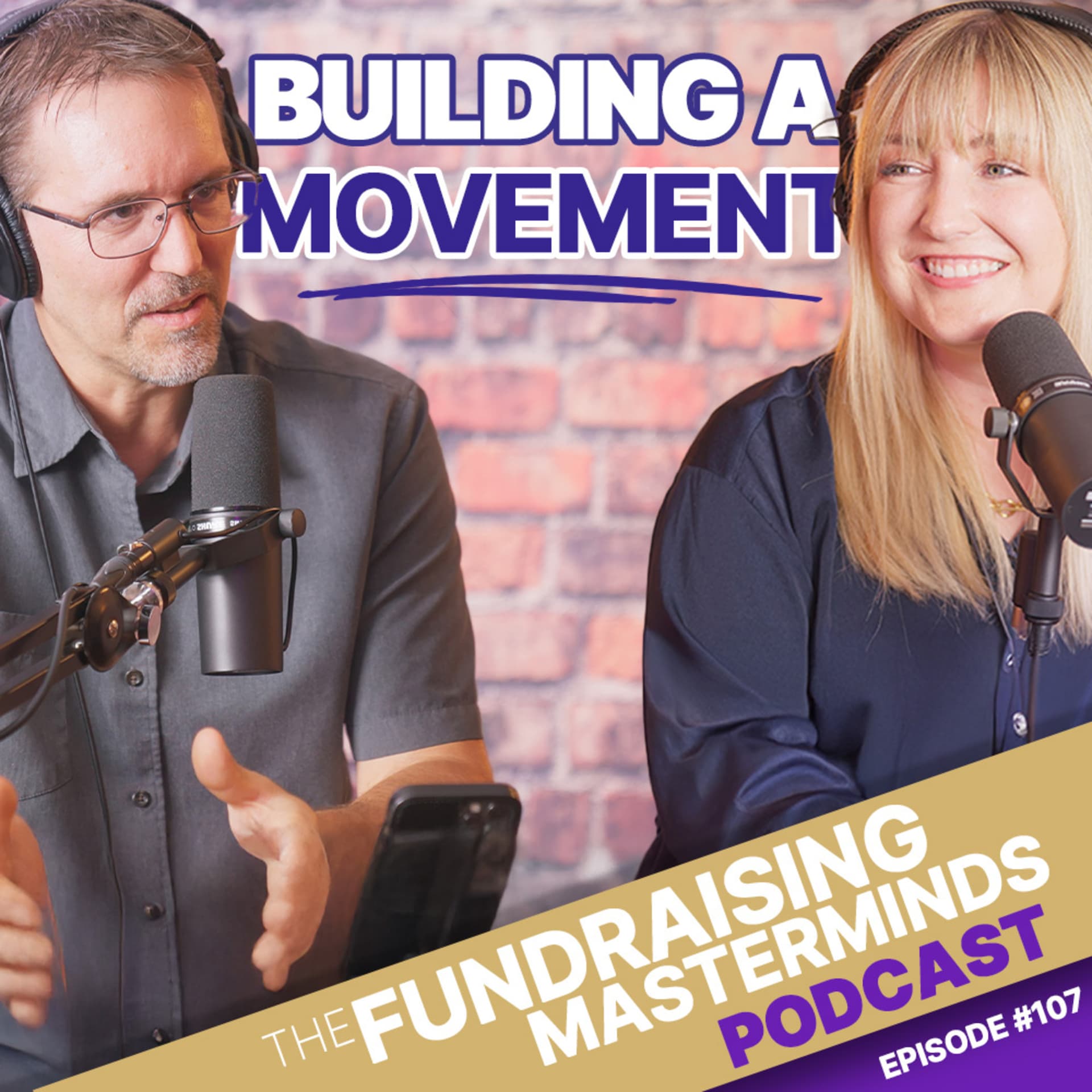
The Fundraising Masterminds Podcast
107. Building a Movement: Scaling the Fight for Life Across Michigan
00:30:45
Loading summary
Transcript136 lines
- [00:00]
A
You're listening to the number one podcast for nonprofit leaders getting your nonprofit fully funded. This is the Fundraising Masterminds Podcast.
- [00:11]
B
When you combine, hey, we know where we're going with the impact that they feel when they actually talk to someone who changes their mind. Those are two powerful things. You get a taste of what it feels like to change the world. I mean, that's why I'm doing this work, because I get to go out and do those outreaches and see people change their minds.
- [00:34]
A
Welcome back to another episode here at the Fundraising Masterminds Podcast. My name is Jason Galasinski and with me, my co host, Jim Dempsey.
- [00:40]
C
Hi, Jason and Jim.
- [00:42]
A
We've got a special guest joining us today.
- [00:44]
C
We do.
- [00:44]
A
We had this guest on a few weeks ago.
- [00:46]
C
She's back.
- [00:47]
A
And she's back for another one. So our guest on today's show is a director from Protect Life Michigan. Yes, Kristen Polo. Kristen, it's good to have you on.
- [00:57]
B
Thanks for having me.
- [00:58]
A
And Kristen has been involved in this organization for about 11 years. And really from the very days, early days of college, you know, going all the way up to now, you've been involved in this and helping it get to where it is. And we had you on a few weeks ago and you were telling us your story about how the Perfect Vision Dinner really got you to the next level. We saw you grow significantly last year. We saw you grow from 325,000 to about 690,000. That's pretty.
- [01:28]
B
That is good.
- [01:29]
A
Pretty mind blowing things happening through the Perfect Vision in our mentorship program. So if you want to hear Kristen's story on what happened in her personal journey with the Perfect Vision Dinner, definitely go back and check that one out. But the ideas that we want to cover on this episode has more to do with building a movement. What is the mindset required to go from? I'm running a kind of a small organization. We're kind of in our little corner doing our own little thing to becoming a movement that grows and kind of becomes like almost like its own living organism, you know, where it just kind of spreads on its own. And I know you probably don't feel like you're there there quite yet, but. Yet. But you're trying to impact the entire state of Michigan. Right. So it is part of one of your goals. So I thought, you know, having Jim here with some of his experience and some of the movements that he's been a part of and with you being here, I thought we could have a great conversation about that. So if you are Brand new to nonprofit work, or you're involved in a nonprofit as a director or leader, board member. Uh, and you just found this podcast, this is definitely the place for you. Uh, hit that subscribe button and let us know what you think of this episode. But you're definitely not gonna wanna miss any future episodes. And be sure to go back and check out the past ones as well. Well, Jim, I'm excited to get into this conversation. So, Kristen, tell us a little bit more about Protect Life Michigan. And, uh, tell us just what is your vision, uh, at at large for your organization?
- [03:02]
B
Yeah, Protect Life Michigan's been around for about 20 years, but we've had an expl. Growth really in the last three years. Our vision is to make abortion unthinkable in Michigan. And we do that by recruiting, equipping, and deploying generations of young people to change public opinion on abortion.
- [03:22]
A
So making abortion unthinkable, that's a different kind of approach.
- [03:26]
B
Right?
- [03:27]
A
Because what is the abortion conversation nowadays? In the pro life movement, we really.
- [03:33]
B
Believe that this issue starts in people's hearts and minds. And so what we're trying to do is actually reach people who disagree with us and transform their thinking on abortion. So we're constantly, every single day, deploying teams of young people to high schools and college campuses and communities all throughout the state to have conversations with pro choice people in the hopes of changing their position. And over the years, we've gotten pretty good at it. Actually, right now, 34% of the Pro choice people that we talk to self report to changing their position on abortion in one conversation with us.
- [04:11]
A
Like, what in young people are you finding that just a lot of young people are just not growing up in Christian homes or they're just not. Are they just indoctrinated with the abortion mindset? Or like, where. How. How are young people gaining? Because I, I guess what I'm trying to say is when you're a child, you probably naturally don't think that it's okay to kill another child, right? So something happens in the heart of a young person, and how do they get to that point where you feel like you have to reshape their mind?
- [04:43]
B
It's a great question because the culture that we live in is very persuasive and it seems to permeate even Christian households. We specifically go into Christian schools to give presentations because there are many young people there who think, oh, you know, this is what my parents believe, and, you know, I'm going to figure it out for myself. So we want to reach People of all backgrounds and beliefs with this message to make sure it really takes root, even in those households that are teaching their children.
- [05:16]
A
Where do they get those ideas from though? Like, why do they think that that's an outdated view?
- [05:21]
B
I think the culture on the Internet is one of the strongest ways that a lot of young people end up off course. When we think about a college campus, for example, we're often the only place that these young people are hearing the pro life message because they're hearing something very different from their professors. Sometimes they're Planned Parenthood. The nation's largest abortion provider is in their classrooms in high school and middle school as well. And so there's a lot of messaging coming at them from social media, from movies, pop culture, from academia. The idea that we can't make a moral decision for anyone else, that really cuts to the heart of the message that they're hearing. You're welcome to have your beliefs, Jason, but you can't put those beliefs on anyone else and you certainly can't put that into law. But in fact, that's what we do every day on so many other issues.
- [06:15]
C
We legislate morality every day. Even though people say we can't and shouldn't.
- [06:19]
B
We are so in our conversations and with outreach we do, we're trying to create a paradigm shift where they see things differently than that.
- [06:27]
A
Give me an example of that paradigm shift.
- [06:29]
B
Well, we use something called the human rights argument. So we'll ask a student on campus to do you believe in human rights? And they say, yes, of course I do. So we'll ask them who should have human rights? And everyone says everyone should have human rights or humans should have human rights. You get one or two answers. And through that conversation, essentially we are leading them to a discussion about if we know that abortion is taking the life of an innocent human being, how do you fit that into your worldview that says that violence is wrong and that human rights are for all human beings. And it creates this light bulb moment because there suddenly thinking about this issue from a very different perspective and it's very eye opening for them.
- [07:13]
C
Do you also impact legislation or are you about changing, just changing hearts and minds?
- [07:20]
B
We are not impacting legislation. It's something that we would love to be able to do, but unfortunately, a few years ago, Michigan passed a constitutional amendment that was one of the most radical in the country, allowing abortion through all nine months of pregnancy. Pretty much repealed dozens of pro laws in our state. And so that's now in our constitution. So we have a 15 year vision that we are working on right now to change public opinion in Michigan significantly enough that we could get rid of that constitutional amendment. Okay, so somewhere down the road, you know, maybe that'll be us leading that campaign, maybe it'll be somewhere else. But we want to help be the ones set to set the state up for the repeal of the.
- [08:00]
C
So are you C4 or C3?
- [08:02]
B
We do have a 501. C4.
- [08:03]
C
Oh, you have a separate.
- [08:04]
B
We're 501 C3.
- [08:05]
C
Okay, got it. Yeah. Okay.
- [08:06]
A
Now, most people your age are certainly directors of local ministries, and I could see you kind of working in your local area to maybe reach certain schools or influence certain things, but you really have a vision to reach all of Michigan. And I know you said off mic that, you know, your husband is really the visionary. You're like the systems girl. But, like, what is your big vision, you know, in. In 10 years from now, what do you hope to see God do?
- [08:32]
B
Yeah. I want to tell you a bit of the story for how we ended up there. In 2022, when this abortion amendment was passed in Michigan, we started a political branch in order to be able to help fight that. We knocked 200,000 doors with 2,500 volunteers, and unfortunately, we lost. And it was so devastating. I have never faced anything more devastating in my work than that loss and the whole state and really now the whole country, because this has happened in so many other states as well. But the whole state was looking around saying, now what is the pro life fight over? Are we done? Do we pack up and go home? And we took that to the Lord in prayer and really reflected on what is going to be our role from here on out. And my husband Trevor, who's the executive director of our organization, was really the one who said, we're not going anywhere if abortion doesn't stop, neither do we. And we started putting together a plan for what's going to be our role. How do we get our state back? How do we change our laws? And knowing that that starts in people's hearts and minds, we're never going to see legal victories if people don't reject abortion in their own hearts.
- [09:46]
C
Wow. Wow. So instead of giving up, you got up and moved and things along because you said the real change, the real growth has come in the last three years that would go back to 2022. So that means, I think so many.
- [09:59]
B
People were looking for answers. And, you know, especially people who love the Lord, they're like, they don't want to give up.
- [10:05]
C
They want to keep fighting.
- [10:07]
B
And so they're looking, where do we go from here?
- [10:09]
C
So was it a reality check? Did it get people off their couches?
- [10:12]
B
It did for sure.
- [10:13]
C
That's so neat.
- [10:14]
B
And it was incredible to see, even in that loss, what God has done. And it's been powerful to have a vision for the future and to be able to direct people on a path of this is where we're going. And that's not even just been felt in Michigan, but there's other states now around the country that are coming behind us in the work that we're doing, trying to roll out similar visions in their own states.
- [10:38]
C
Wow. Isn't it just like the Lord, things that, that Satan meant for. For evil, God made for good. So I love it. Go ahead.
- [10:45]
A
So give us an idea of what the next 10 years looks like. If, you know, trusting God for big things. What do you guys. Where do you want to see yourself in the next 10 years?
- [10:53]
B
It's going to be a lot of hard work. But we are building a movement in every sense, from the number of young people that we train up and deploy every single day to go have these conversations, to the base of supporters that we build up as well who are playing their role in fund this outreach that's happening. We're looking at all facets and all angles for how we can build this movement up. Staff, volunteers, students, supporters. It takes everybody.
- [11:24]
C
Give me an idea a little bit about the growth. So. And you know, I don't need specific numbers, even percentages or whatever. 2022, you decide. We're going to really ratchet this up and start to rally students. Give me an idea what you started in 2022, how that, you know, I went to 23, 24. Can you, do you know any numbers on how that.
- [11:44]
B
We had never utilized a volunteer before and then we ended up with 2,500 of them knocking doors in a matter of two months. That was incredible. We had a team of maybe 10 staff members part time and full time. Now we have over 50 people on our team that are working. We have 26 full time interns. So things have been really growing in that regard. And then we started with just six college campuses that we're working on. And now, now we're on more than 20.
- [12:12]
C
Wow. Wow. How many students involved?
- [12:15]
B
Thousands.
- [12:17]
C
Okay, so you went from zero students to thousands of students in three years?
- [12:21]
B
Yeah, well, we had a number of students the first, you know, 15 years of ministry. But essentially there wasn't, wasn't really a fire in anyone's Belly. Because we weren't, we didn't, we weren't aligned behind an inspiring vision.
- [12:35]
C
Right.
- [12:35]
B
And so when you combine, hey, we know where we're going with the impact that they feel when they actually talk to someone who changes their mind. Those are two powerful things. You get a taste of what it feels like to change the world. I mean, that's why I'm doing this work.
- [12:51]
C
Absolutely.
- [12:52]
B
Because I get to go out and do those outreaches and see people change their minds.
- [12:56]
C
Gen Z, perfect generation, they want to see change. They want to be change makers.
- [13:00]
B
They want to be a part of it.
- [13:01]
A
Now you really zoned in on the college campus as your primary battleground. Right. What caused you to. Yeah. Kind of zone in on that.
- [13:10]
B
Yeah, that was our flagship when we started 20 years ago. It started with our college program. And we have stuck to that over the years. We've found through studies we've done internally that young people under the age of 29 are two to five times more likely to change their beliefs about abortion. We also know that college students are figuring out what they believe about the world. And they also happen to be concentrated in these small geographic areas that are pretty easy to reach with our message.
- [13:37]
C
That's what we saw with crew. That's why we make the difference with college students.
- [13:41]
B
So we know that the college campus has the ability to make an enormous difference in the world when all these young people are sent out across the state. And so we want to start there and reaching them. And we've expanded to high schools and middle schools as well. We even work with young professionals. But the college campus is really where it's at.
- [14:00]
A
Oh, Jim. There's a common denominator here because CREW started with Bill Bright was one guy in California. His vision was to reach all college campuses for the gospel in the world. In the world. I mean, that's a pretty large vision somewhat.
- [14:16]
C
Yeah.
- [14:19]
A
Help me connect the dots here.
- [14:20]
C
Okay.
- [14:21]
A
How can we take some of Bill Bright's vision and translate that into what Kristin's.
- [14:27]
C
I'm certain Kristen and her husband had a similar conversation. 70 year old men and women make a difference to the world. 18, 19, 20 year olds make it. I think we're gonna go with the younger ones who are gonna be there. Bill Bright saw that college students were the leaders of the future. They were going to. The future is not with 7 year olds. People that look like Jim Dempsey. They are. They are young leaders and they're gonna make a decision. They're gonna be our future legislators. They're gonna be Our future pastors, our future business executives, future content creators on social media.
- [15:07]
B
For us specifically, this issue is disproportionately impacting college students. Something like 46% of abortions are performed on college age women. So we know that these are decisions that they're facing and their friends are facing every day. And we want to break through the noise that they're hearing in the culture with the truth.
- [15:26]
C
And ours was similar in a way because we found that about 70 to 80% of individuals make decisions, decisions for Christ before the age of 18. And so in a way similar that, yes, it's nice that we reach a 70 year old with the gospel and they make a decision for Christ, but we're going to have a greater impact than the younger ages.
- [15:49]
A
Now, Bill Bright started with one college campus, right?
- [15:51]
C
Right.
- [15:52]
A
It was ucla. Ucla, yep. If Bill Bright was at this table right now and he could share some insight on like the more the logistics of how do you start a movement? How do you, how do you br. Breach into areas that you don't know People.
- [16:08]
C
Yes.
- [16:09]
A
But you know that there's people there that resonate with your message. How, how would he, what would he say his principles are?
- [16:15]
C
First thing we do is grab Kristen's hand and get on his knees and we both together would be praying for this. That was Bill Bright's number one. He'd be, he'd be on her, in her knees, first of all, because he knew that he couldn't do it without the Lord. There's just no way. And so that would be. He would, he would spend hours on, on his knees praying for that as first thing. But finding those individuals that God had, you know, has brought this issue to their heart and finding those individuals who are catalysts. So you know, you always. It, you know, the old song takes just a spark to get a fire burning. You've got to find those little sparks. Those sparks are in there. And we have to. A movement doesn't always just start with one person and okay, it's great. Now it's from 1 to 25 and 25 to 50 and 100. It could be that one person and then three months later we're replacing that person. And there's a lot of starts and stops. And in college, of course, the one big thing with college is that people graduate.
- [17:14]
B
The turnover rate.
- [17:15]
C
Turnover rate is high. It's exactly right. And that's if they graduate a lot, just drop out. And you're counting on someone. I found someone. And then the next semester they're gone. And they never come back and you never hear from again. And you got to start the whole process over again. So it's not easy. And I, I give you a lot of credit.
- [17:33]
B
I've seen a lot of that last ten plus years. And you learn.
- [17:38]
C
Yes, you learn exactly. To roll with it. One of the things we, you know, any organization has their acrostics or acronyms and their funny stories about each other and the inside jokes. And one of our speakers, and we just had a crew conference this last summer in July, and all 5,000, 4,000 staff in the United States all got together. Well, those of us in the campus ministry who understand these principles, one of the speakers was kind of little inside stories and everything, but he said the one distinctive, the uniqueness of crew, we start things. And that is what it's about. You have to be self starters. You have to be able to start. And sometimes, and that was the other half of the coin, is that sometimes we don't always finish in that sometimes you just have to keep starting over and over and over again till it finally catches on and then you can move from there. So there's a lot of disappointments. But then when you do strike some successes, that's the fun part.
- [18:41]
B
And there's blueprints even to that. Like we have, we've learned the way that you spark something in a young person. What is it that makes them want to go deeper and get more involved? And so as we've gotten better at doing that, we've seen the movement continue to grow.
- [18:55]
C
We've got the same kinds of things. Yeah, yeah. Training up those young leaders.
- [18:58]
A
Okay, so now let's pivot to like the Vision Dinner. I know you, you know, you joined the Vision Dinner program about a year ago. You did your first perfect vision Dinner in the spring of 2025. You did really well. You ended up going with two towns. You know, you did one in Lansing and one in Grand Rapids. Grand Rapids. They went really well. I'm sure, you know, your husband is thinking, okay, how can we do three dinners? How can we do four dinners? How can we do five dinners?
- [19:31]
C
Yeah, settle down there. Calm down, Calm down, big guy.
- [19:38]
A
But I wanted to, I did want to talk about how. Because the thing with the Vision Dinner is it doesn't, they don't always have to be 600 people. You can have a Vision Dinner with 50 people. You can have a Vision dinner with 100 people. It doesn't have to be a lot, right? So the idea is that you're just, if you've got A little spark, you know, can you take a relationship in, you know, a different town, maybe Detroit or something? You've never been there before. Kalamazoo or Kalamazoo. Right. And can you. Can you take a little spark of a couple or two couples and can you ask them, hey, let's do a small name storming party with these two couples and see if we can name Storm 5 tables or 10 tables and just do a little gathering and pitch the vision and start that spark growing. Is that something that you can use as strategy to kind of build out the movement?
- [20:29]
B
Absolutely. It's funny you bring this up because someone just recently said to me, oh, I'm not gonna sign up for the perfect Vision Dinner course. We don't have enough supporters yet, enough donors to be able to have a Vision Dinner. And I'm like, whoa, no, that's. That's not right. Like, go for it. You definitely should sign up because you're right there. It can start with a small team. In fact, we have had like this motto for years of saying, we're going to turn 10 into 10,000. And that's our movement on campus and in everything that we do, trying to build this army of people coming behind us. So, yeah, it absolutely can. In fact, I. The first year we did a dinner in Grand Rapids, it was two years ago, I was calling our supporters there saying, like, will you host a table? Actually, will you host two tables? And what about three? Because I don't have a lot of friends over in Grand Rapids and I'm gonna need your help. And thankfully they did. And we started to build that base there because of it.
- [21:24]
C
Right, exactly. Well, you've got to a degree, and this is a little bit different perspective, Jason. I'm actually seeing the merging of two movements because you've got students over here and you've got your partners, and that's a movement in itself that's building.
- [21:38]
B
Yes, we see it. So absolutely.
- [21:41]
C
And the fun part is that if you could figure out ways to merge those two movements together, in other words, maybe there's some partners that you could take onto the college campus with you so they could actually live life with you and see what your ministry is like, that actually might make them better partners. And of course, you already. Now you just. You shared with us in the last episode, you brought some real life students to the dinner. It's the merging of those two movements, which I believe will make the you.
- [22:09]
B
We have seen already beautiful examples of that. We had a couple who sponsored our summer internship at the Vision Dinner. Come and shadow a day.
- [22:19]
C
There you go.
- [22:20]
B
And they were both crying.
- [22:21]
C
Oh, man. Seeming to be at next year's training for sure.
- [22:24]
B
And they said that that vision dinner was so wonderful and they were so moved by it. Obviously they gave so generously, but it was such an even different experience being there in that room with all of those young people. And so of course, that day I'm like, how do I make this happen for everyone? Because I want them to really feel the difference that they're making. That's a beautiful thing.
- [22:46]
A
It really is a difference between transactional giving and transformational giving.
- [22:49]
C
Right. Jason, you should coin that. You really should.
- [22:52]
A
That somebody else already has.
- [22:55]
C
That's a great way to be thinking. Exactly.
- [22:57]
B
Yeah.
- [22:57]
A
Well, it's, it's transformational for the partner.
- [23:00]
B
Right.
- [23:00]
A
Because they actually got to experience how their gift is making a difference. Right. So they're. You're taking them on a journey as well. We're not just, we're kind of robbing them from a major blessing from the Lord. If we just take their money and say, thank you very much, you stay there, I'm going to go do my thing. We keep them out of the picture. They really miss out on a lot of blessing there.
- [23:23]
C
Yeah. One of the things that we talked about was that individuals really in a way, need a reason to exist, reason to go to work, a reason to get up every morning. And I shared a story about an individual who came to a conference, a major donor conference that we did, and he had just sold his business, just decided he was going to retire. His wife and I and he were going to travel. And when they heard the impact the crew was making, he decided to forego his retirement. He wrote on a card, I'm going to give a million dollars and when I reach a million, then I'll retire. He took that card, put it up on his mirror, and every morning when he shaved, he looked at that, looked at that and said, that's why I'm going to work. He committed that every dollar.
- [24:10]
A
He actually went back to work.
- [24:12]
C
He actually went back to work. Every dollar. He. So he never took a salary from that point on. And every dollar was going to go towards that million dollar goal to make a difference for the kingdom. Just this last April, I had the privilege of being there when his million dollar gift was fulfilled. You know what his next words were? I'm going for the second million now. And so he's staying on. Yeah. And here he is. That's what, that's what you did for those people. You made Their life significant and when they could see the impact and. And you got many more people that are doing that as well, too. Their life, you help them see why they work so hard, why they work late at night and get there early in the morning.
- [24:55]
B
True value of partnership is it takes everyone doing their part. Whatever God has called us to. For some people, it's going out on campus and having those conversations. For others, it's funding that so that it can happen.
- [25:07]
C
Yeah. Because there's a lot of people that will not go on the couch. Yeah, there's scared to death to do that. But you know what? I can fund that. I can make sure that. And that's what it. It's. It's the kings and the priests example. In scripture, God gave the priests to be part. They were set aside, but he asked the kings to raise the money. They funded the efforts of the priests in scripture, and that's what they're doing. So those people are working to help to fund your efforts. So that's neat.
- [25:35]
B
Yeah.
- [25:36]
C
Well, cool.
- [25:36]
A
So what? Just trying to broaden this out to our listeners. So if we have someone who is listening, they're thinking, you know, I think what I'm doing maybe could be a movement. How? Like, what would be like a good litmus test to know, like, you know, what. What am I, you know, how do I know whether I should take my ministry on the road and expand to different.
- [25:58]
C
They could have a pregnancy center. Want to start a second or a third pregnancy center.
- [26:01]
A
Or maybe I'm running a camp or mobile.
- [26:03]
C
Right. I want to start a second camp. Camp. Or I'm a CEF chapter and I want to move to open up another one. What? Yeah, yeah. What are those. What are the signs that they need be looking for?
- [26:12]
B
Yeah, I think first and foremost, we have to go to the Lord in prayer and ask for his vision. I think a lot of times we look at, okay, I've got, you know, 40, 50 hours a week. What can I do in that time? Or I have this much money in the bank, what can I do with it? Instead of first starting with God, what is your vision for this organization and for this ministry that you. You have put me in charge of? That is a scary prayer to pray because in our case, it's given us a vision that we feel like is so beyond our capabilities. But I have seen every step of the way. He has provided for that vision in every aspect. It constantly strengthens my faith so that I think that is the first place to start. But I know specifically when it comes to the life issue. There is such a need for more in every aspect. And I've talked to Jason before about how, how I see ministries who are really struggling. They are not sure. Maybe it's a pregnancy center, another pro life organization, not sure. You know, what are we supposed to be doing? How are we supposed to be going about this? We feel like we're stagnant or we're facing these challenges. And then at the same time, there are so many supporters out there who are so excited to be able to be a part of this life saving work. And for us, the Vision dinner was one way to bring those two things together. We need help. There are people out there who want to help and it's fueling this momentum towards building this movement that we're trying to create in our state, both through supporting the students we're working with, but also allowing those supporters to engage in the blessings and the impact of using their finance as well.
- [27:45]
A
Well, that's really great. And I, I think it's time to wrap it up as we're coming to a close. But we've talked a lot about the Perfect Vision Dinner and how you can use the Perfect Vision Dinner to, to take that little spark and grow it into more of a movement. And you know, we've seen countless peoples in our program who have, you know, done lots of dinners around. I remember there was, you remember this Pioneers Bible. Do you remember Pioneer? Oh yeah, Pioneer Bible Translators.
- [28:14]
C
Right.
- [28:15]
A
Remember he joined our program and he was like, we do like three or four vision dinners in three or four different towns. We're going to test it on this one and if it does really well, we're going to start doing them everywhere. And of course he raised like three times more than he ever did. And he was like, we're definitely doing this everywhere, you know, so if you're interested in learning more about this Perfect Vision in our mentorship program, I've got great news. Enrollment closes in two days. Two days from now, we're shutting the doors. So the enrollment deadline is October 24th. So now is the time to jump in. I'm going to put a QR code on the screen. So scan that code or click the link in the description and book a call with one of our team members, fill out an application, and let's have a conversation and see if this would be a good fit. But we're gonna have to move quickly.
- [29:01]
C
Yeah, there's limited spaces, limited. There's all of our class.
- [29:03]
B
You can text board members. It doesn't, you know, two Days is plenty of time. Send a text.
- [29:08]
C
Amen. Amen. She speaks the truth.
- [29:11]
A
Yeah.
- [29:11]
C
Yeah.
- [29:12]
A
Just, you know, Kristen, real quick, was it worth taking the perfect Vision dinner, or was it kind of not so.
- [29:19]
B
Worth it in every regard? If you're on the floor, fence, jump in. This has made such an enormous difference for us, and I know that it will for you as well. I've learned so much. It's fueled our ministry in ways I couldn't even imagine before starting the course. And it was a valuable resource from the very first second. I logged on and had access to the materials and then to these guys here today.
- [29:42]
A
Awesome. Well, thank you, Kristen. It's been just a joy and a privilege to be able to have you on the show. And. And I know now you're in the winner circle, so we get to work together for another three years.
- [29:51]
B
It's going to be me.
- [29:52]
C
Yeah.
- [29:52]
A
It's going to be awesome. And I know God's got big things for you guys. We're going to.
- [29:57]
C
We're.
- [29:58]
A
Hopefully Jim and I are going to get to see you expand and grow from two dinners to three dinners. I think we're going to be talking about that maybe three hours. Oh, five. Okay.
- [30:09]
C
We.
- [30:10]
A
We'll talk about that on our next coaching call.
- [30:13]
C
I'm calling your husband next. He's. He's going to be with me. Yeah.
- [30:15]
B
Please don't.
- [30:18]
A
Well, thank you, everybody, for joining us. I hope you enjoyed this podcast episode. Definitely subscribe for future episodes if you haven't already. And as always, we look forward to seeing you next time.
- [30:28]
B
Take care.