Loading summary
Transcript168 lines
- [00:00]
A
You're listening to the number one podcast for nonprofit leaders getting your nonprofit fully funded. This is the Fundraising Masterminds podcast.
- [00:10]
B
You got a table full of people who have no interest in giving, and you've got a table host who doesn't see a need to give. Right. That's a recipe for disaster.
- [00:22]
A
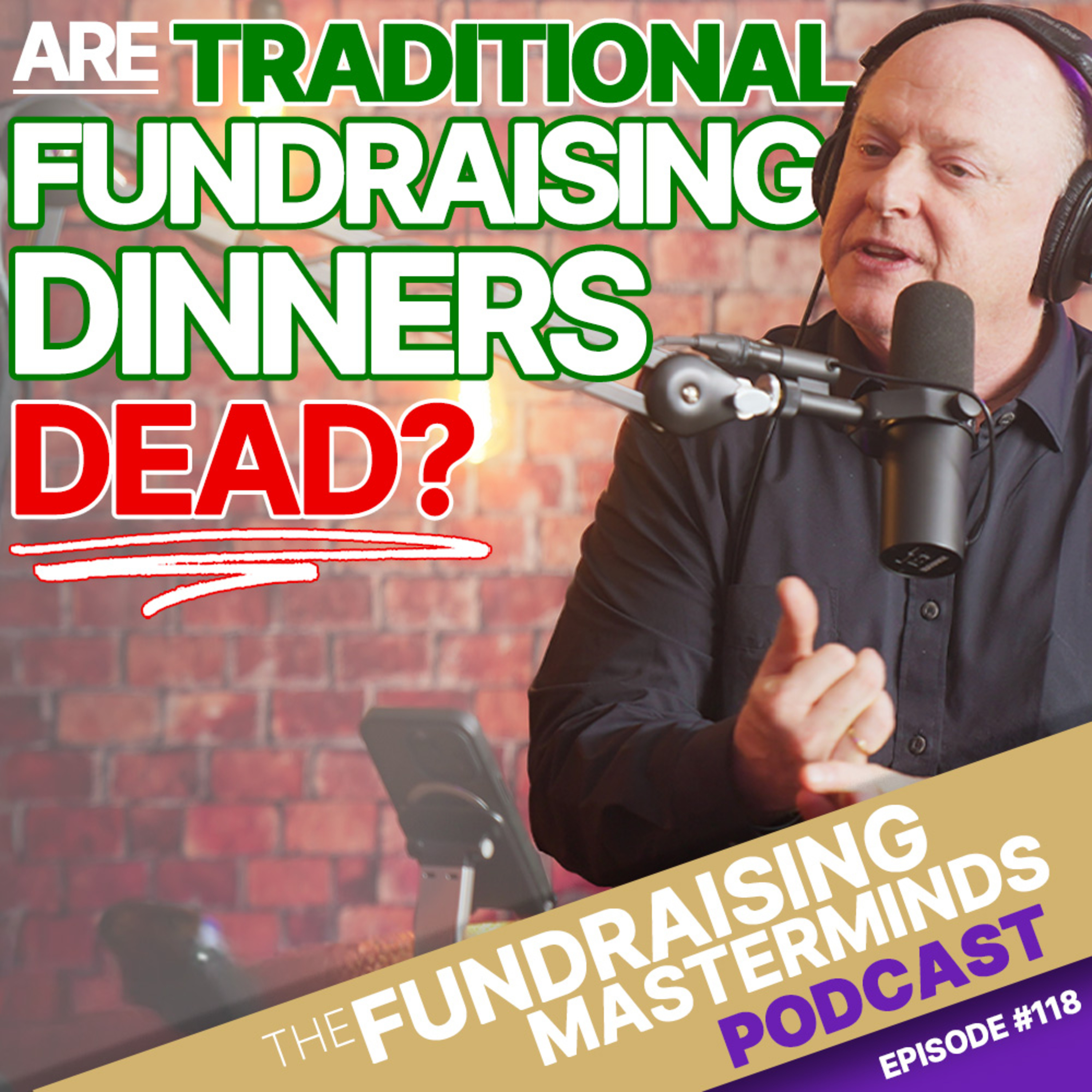
Are traditional fundraising banquets dead?
- [00:24]
B
Jason, the answer is unequivocally yes.
- [00:27]
A
Fundraising banquets are dead.
- [00:29]
B
They are dead.
- [00:29]
A
Somebody in the audience is saying, well, Jim, I did that model and I raised 150,000 and I netted 100,000. So what do you say about that? I made my 100,000 doing that.
- [00:40]
B
I wish that you would have been introduced to the Perfect Vision dinner because you would have had to do less work, probably would have raised three times more.
- [00:53]
A
Welcome back to another episode of the Fundraising Masterminds Podcast. My name is Jason Galasinski. I'm with my co host, Jim Dempsey.
- [01:00]
B
Hi, Jason.
- [01:01]
A
Well, how are you doing today, Jim?
- [01:02]
B
It's great. March. I mean, we're not too far into where it's almost spring, so I'm optimistically looking past winter into the spring coming.
- [01:13]
A
So, yeah, we are six weeks away from the next cohort starting.
- [01:18]
B
We are now.
- [01:19]
A
You know, remember, we do have the pre course accelerator.
- [01:21]
B
We've got a number of people already
- [01:22]
A
kind of people in there ready to go. But, you know, may first week away, we're going to turn on that fire hose, and, you know, you just better be prepared. We're safe enough to have a really good class going into the fall. Yeah. And I'm really excited about that. Jim. I wanted to ask you a question as we start this episode.
- [01:39]
B
Yes.
- [01:40]
A
Are traditional fundraising banquets dead?
- [01:42]
B
Jason, I'm going to have to say yes.
- [01:45]
A
Why are we always doing perfect fish and dinners and if the banquet is dead?
- [01:49]
B
Because it really comes down to the definition, and we are not doing the B word.
- [01:57]
A
The B word?
- [01:58]
B
Yes.
- [01:59]
A
You're not allowed to say the word Word.
- [02:00]
B
I am not allowed to say the B word.
- [02:03]
A
Why aren't you allowed to say.
- [02:04]
B
I have made a commitment to a handful of people around the United States who I have helped coach and I've helped teach, and I have told each one of them, if you catch me saying the B word, I will pay you into a jar $5 every time I use the B word, and I will not.
- [02:27]
A
All right?
- [02:28]
B
In this entire.
- [02:29]
A
Someone, someone, someone, keep count. All right? We're gonna. We're gonna hold you accountable to that. So if you hear Jim say the BW in this episode, gentlemen, if he
- [02:37]
B
tries to get me to say the bw. I need your help.
- [02:41]
A
No, I need your help. You're gonna put in the timestamp on the video when Jim says the bword. I'm gonna make it my goal.
- [02:50]
B
Thank you.
- [02:50]
A
Say the B word.
- [02:51]
B
During this episode, Jason, There is a reason why I don't say the B word, and it's because I believe that those particular events are dead, and I don't want anything that I'm part of to be aligned with those things. There are things that go on at Bees that I do not agree with and do not like.
- [03:15]
A
Yeah, yeah, yeah. Well, let's talk about those things so. Because I think, you know, we're talking about Perfect Vision dinners all the time and Perfect Vision Dinners. If you were to take a picture of a Perfect Vision dinner the night of the event and you were to take a picture of the traditional banquet.
- [03:30]
B
You can say the B word, Jason.
- [03:32]
A
I can say it all day long. I'm going to try to pull you in. They might look similar in the sense that there's people sitting around round tables, and maybe there's some people. There's a bunch of people in the room. They're eating dinner. There's. It might look similar. Right.
- [03:49]
B
Have you. May I remind you of some certain events that you went in Tennessee where you were sitting with plastic tablecloths, on plastic chairs. Right. Folding chairs that were about ready to collapse? Would you say that? And that was a B. Would you say that those were anything like the events that I do? May I ask you to rephrase that?
- [04:14]
A
All right, I concede. I think we should probably just not even compare the Perfect Vision than our two. The B word. Okay. But there's different ways to do the B. I'm trying to justify the B. I don't know why I'm trying to justify it.
- [04:26]
B
You didn't make a commitment to anybody to not say it. I did. So you're fine. Go ahead and say it.
- [04:31]
A
Well, Jim, why don't you define what a traditional banquet is?
- [04:35]
B
Yeah.
- [04:36]
A
Well, what are the elements that make it up?
- [04:37]
B
Yeah. To be honest with you, unfortunately, it has really gotten. Well, I hate to say I. On one hand, I hate to say it's gotten a bad rap, but it's got a. It's justifiable, that bad rap. What we're talking about typically is a church basement, a fire station, a Knights of Columbus hall, a very damp, dreary room that has absolutely no excitement.
- [05:05]
A
A church fellowship hall.
- [05:06]
B
It could be a church basement. And I don't say that to knock any particular churches, but that's typically what it can be. And you're talking about walking in and seeing plastic forks, plastic tablecloths, plastic utensils, chairs, and just very cheesy decor. Decor that is not modern in technology.
- [05:32]
A
What does all that stuff have in common?
- [05:33]
B
Cost. It costs. All those things save money. And people love to give the impression to their partners, their donors that we are frugal and we save money. We hardly spend anything on you. And what we're doing, that's the whole reason why they're doing it. And they serve the official bird of the Christian ministry, and that's the rubber chicken. And they lock the doors so that nobody leaves. And somebody stands up there with a big thermometer. And every time someone gives, they run that envelope up front and they see that thermometer move and someone is standing up there making them feel guilty about not giving because the thermometer is not going up enough. That's what we're talking about. And that that event goes on and on and on until madness happens and
- [06:36]
A
people, the perfect people, break through the doors.
- [06:40]
B
And that is what we see. And all that happens on a weeknight, on a Thursday night when people have to go to work the next day. And that event is close to midnight ending, and there's five people left in the room. And then they wonder, why didn't we raise any money? That is what the be now is like.
- [07:02]
A
I'm listening to you describe this, and I don't know if you were born in the 1980s or something, but, like, that's not how I do my galas. I mean, I. I don't know if you've been to a modern gala at all, but, like, you know, I do this thing called silent auctions.
- [07:14]
B
Oh, right.
- [07:15]
A
We do these. Everything is digital.
- [07:17]
B
And do you do an auctioneer where somebody's.
- [07:19]
A
No, no, the auctioneer is old school. We do. We do. We do silent auctions.
- [07:24]
B
Okay. We do.
- [07:25]
A
Everything is on the mobile apps. Haven't you heard about Give Butter and all these different apps? You know, you can. You can start working on your silent auction before you even get to the event.
- [07:34]
B
So I could buy a gaudy vase, or I could stay at a resort somewhere and use my don money to purchase a weekend. Is that what your event looks like?
- [07:46]
A
Well, I'm just saying, you know what? You're just. What you are describing sounds like a miserable, musty, nasty place to go. And I'm saying
- [07:56]
B
has improved.
- [07:57]
A
Well, I'm saying that there's this new thing called a gala.
- [08:00]
B
Okay.
- [08:01]
A
And the gala is more upscale.
- [08:03]
B
Okay.
- [08:03]
A
Do them in hotels just like what you recommend.
- [08:05]
B
Wow.
- [08:06]
A
You know, but, you know, they're. They, you know, we got to do an auction.
- [08:09]
B
You know, people expect auctions and entertainment, I'm sure. Do you do some kind of. Maybe a comedian or.
- [08:15]
A
Well, we bring in a band. I mean, we try to do it elegant. You know, we try to make it elegant. We try to accommodate our guests. You know, we bring in a nice speaker. You know, we usually.
- [08:26]
B
45 minutes to an hour and a half, maybe. I mean, we have alcohol, $50,000 on the speaker because that's the only way you can get people to come to your event.
- [08:37]
A
Yeah, that sounds about right.
- [08:38]
B
Sounds about right. Okay. Right. Okay. Okay.
- [08:43]
A
So you're saying that's dead, too. That falls in that category.
- [08:46]
B
I believe that model is dead.
- [08:48]
A
Yeah. Well, I don't know if I agree with you, because I did that model. I did that model, and I'm talking for the audience. Somebody in the audience is saying, well, Jim, I did that model and I raised 150. I grossed 150,000, and I netted a hundred thousand. So what do you say at that? I made my 100,000 doing that.
- [09:11]
B
Jason, I am extremely proud of you. I really am. That was a lot of work. I am certain of that. And I really wish and hope that that was satisfactory for you for all the work that you put in. I wish that you would have been introduced to the Perfect Vision Dinner because you would have done. Had to do less work and raised quite a bit more money than that.
- [09:39]
A
Right. Well, tell me about how much more I would have raised.
- [09:43]
B
I would say you probably would have raised three times more than that. Three times more have done it the right way.
- [09:50]
A
Wow. Wow.
- [09:51]
B
Yeah.
- [09:51]
A
I don't hear a lot of organizations doing the 1980s church basement, lock the door, you know, kind of thing.
- [09:58]
B
There are some that do, but I'll give it. And give you that one.
- [10:01]
A
I feel like that's phased out, you know, quite a bit. But the popular thing nowadays is a gala.
- [10:07]
B
Right.
- [10:07]
A
But the gala tends to be focused on, you know, getting underwriting, selling tickets, selling tables, having auctions, doing paddle raises, having entertainment, and on and on and on. But how is the Perfect Vision Dinner different from that?
- [10:22]
B
Jason, I can't tell you how off the Modern Gala is, because there are so many different reasons why each one of those things are wrong. Number one, we have found over the years that when you sell tickets, you're actually working against yourself, because what Happens is most people don't have the proper concept of what it costs to have a dinner at a upscale hotel, and they don't know what that meal would cost. And as a result, when you charge for a ticket for that dinner, you are using that. Most organizations are using that as a starting point, hoping that individuals will give a gift the night of the dinner. So in other words, purchase a ticket and make a donation. The problem is that the mindset of the donor is that that ticket price also includes my donation. So at the end of the night, when you ask for a gift on top of that, people are actually offended because they say, I thought I gave my money when I purchased a ticket. Now you want to also make a donation as well too. They actually are offended.
- [11:48]
A
Yeah. I can illustrate this point a little bit. We went to a recital. It was a drama recital for one of my kids. They're in high school and they were doing a play and we had to buy tickets to go to it. I can't remember the price, but it was probably $10 or something, a person. So we're all in there, we bought our tickets, we're at the seat, and right at the very beginning, before the show starts, this lady gets up there and says, welcome to the show. We're so excited for you to be here. And by the way, this production costs a lot of money to put on, essentially. I mean, she didn't say exactly like this, but essentially what she said is this production cost a little bit more than we anticipated. And essentially we are short blank amount of dollars.
- [12:35]
B
Wow.
- [12:36]
A
And if you wouldn't mind donating on way out, that would really help us, you know, pay the bills for this production.
- [12:46]
B
Right.
- [12:47]
A
You know, and unfortunately, as I was walking out my way, I took a look down at the bucket and I saw maybe ten $1 bills.
- [12:57]
B
Wow. Wow.
- [12:58]
A
That's the mindset. Right. It's like. Well, I mean, what I was thinking when she said that was, why didn't you just charge like $20 a ticket? I would have paid 20.
- [13:08]
B
Right.
- [13:08]
A
I would have, you know, like, to me, it's telling me, it's telling the audience members like, I don't know how to plan for a production. But you assume that the people have figured out surely it's covering the cost of the production and they're making money in addition.
- [13:25]
B
Right. And also too, what you would hope that this event would accomplish, you would hope that it's going to be an exposure event for people, that you would have a lot of people who are new to your Organization and exposing and frankly, one of the most difficult things to do. And if you could imagine this scenario, if I was on the board of an organization and I was asked to sell tickets, I would have to say to someone, jason, I know you and Jennifer know nothing about this organization, but we want you to hear about what we're doing and we'd like you to purchase a ticket that with, that's $25 a piece. Would that, would you take, would that be cash or check? You'd be like, jim, I don't even know about this organization. You're wanting me to pay a price, Right. You've completely eliminated a whole group of people that were going to be your lifeblood. So you say, okay, I got it. We, we can't sell tickets, but how about if we sell table? So what do you do? We normally look at the business owners. Normally what we do is we get our best people. The people that we know love us. We ask them to buy a table. And normally the average typical price is going to be somewhere between 250 and $500. Well, we ask some of our best people who are the most qualified. They agreed to purchase a table. That's, you know, you think about that and you're gonna ask your best people to do that. Well, number one, they may say, I'll be happy to purchase a table, but the problem is that most of the time we don't give them a good reason to invite the right people there. So this is the kind of thing that we see on a bulletin board in the lunchroom at XYZ Company that we purchased a table at XYZ Organization for their dinner. And we've got 10 seats. If you've got a pulse and you can breathe, we would love for you to sit down. It has nothing to do with interest. And all it's doing is ringing the dinner bell for anybody who wants a free meal on that XYZ organization.
- [15:36]
A
And the business owner also thinks, well, I did my part. You know, I bought the thousand dollar thing. So obviously that's going to help them. And then of course, when they go to the dinner.
- [15:48]
B
Yes.
- [15:48]
A
And the appeal is given or the bucket is passed, guess what the table purchaser is going to do?
- [15:54]
B
They sit on their hands, right. Or cross their arms and say, I did my part. Yeah, that's my part.
- [16:01]
A
It's up to you guys.
- [16:02]
B
So somebody who had the potential of giving 5 or 10 or even 20 or $25,000, you just significantly under challenged that person. So you got a table full of people who have no interest in giving. And you've got a table host who doesn't see a need to give.
- [16:21]
A
Right.
- [16:22]
B
That's a recipe for disaster. Now what do we do? On top of that, we also invite a big name speaker and we pay that person 25, 50. A hundred thousand dollars. Tim Tebow charges a hundred thousand plus.
- [16:40]
A
Wow.
- [16:40]
B
In fact, Tim Tebow's mom charges a hundred thousand to come in.
- [16:44]
A
Obviously I'm not going to have Tim Tebow at my event, but there are
- [16:48]
B
a lot of people who do have speakers that large and they think it's going to help. Well, what ends up happening?
- [16:53]
A
Why do they think that's going to help?
- [16:55]
B
Because they think that it's going to be a draw and that it's going to bring in a lot of people. And of course, certainly those people will give a lot of money. But what we find is that less than 50% of those people that come to a big name speaker give anything at all, let alone give a significant gift.
- [17:13]
A
Well, because it's probably a ticketed event.
- [17:16]
B
Well, it could be, but I'll tell you, even when it's free of charge, they still give very little. So you're getting a lot of the wrong people at that event. And what we end up seeing is that individuals who are may are speakers like that, they don't want to just speak for 19 minutes. They want to go an hour or an hour and a half because they feel an obligation to give you money's worth if you paid 100,000. I'm going to deliver an hour and a half message because that's what people have. And I can tell you an hour and a half message on any night, especially on a weeknight is going to kill your giving at the end of the night.
- [17:58]
A
Another thing that, you know, traditional banquets do or galas do is they have corporate sponsors.
- [18:04]
B
Right.
- [18:05]
A
So you've probably seen, you know, the platinum and the gold and the silver sponsors. And what do those sponsorships usually entail? Yeah, what is the obligation that the. There's usually some kind of bargaining.
- [18:19]
B
Well, absolutely. I mean, there is an obligation that they're going to have their name in the program. It's going to be on the screen. Sometimes we have those people come up and speak and talk about their product. And sometimes most of the time those individuals go long and they go on and on and on. And you feel like you just went to a sales pitch and not an opportunity to be part of a
- [18:47]
A
successful another component. I mean, we could go on and on. I think the Point is that we actually did an episode for every single one of these things. So if you want to learn more about why a ticketed event is not great, or you want to learn more about why we don't do underwriting, if you want to learn more about why we don't sell tickets or tables or do auctions, you can just type in the search, like fundraising masterminds, auctions, fundraising masterminds, selling tables, selling tickets, all that stuff. We did a separate episode for each one of these things that we go like 30, 40 minutes on, deep into that. We're just kind of scratching the surface in this one. But the Perfect Vision Dinner is a little different. Right. You said at the very beginning of this episode, you said the traditional fundraising banquet is dead.
- [19:34]
B
Correct.
- [19:34]
A
But the Perfect Vision Dinner is alive. Now, what makes the difference between the Perfect Vision Dinner and the traditional banquet?
- [19:41]
B
Well, it may seem funny, but the traditional dinner, I say it's dead because so many of the principles, even though they're done by a lot of organizations, that doesn't make them right. And our model, the Perfect Vision Dinner, is so different. It's actually out of the ordinary now. And because of that, it has actually become progressive and not traditional. So we actually are looking at a model that's more up to date, more effective, without a doubt, than any traditional model. So.
- [20:22]
A
Oh. Because what's really interesting is you've been teaching the Perfect Vision inner model for 40 plus years.
- [20:29]
B
Right.
- [20:29]
A
So that's taken you back to. And I don't mean to date you too much, but back. You started. You cut your teeth back in the 1980s. In the 1980s. So, I mean, and I don't really know if the Perfect Vision really kind of became mainstream back then. Well, Jim, you've been doing this since the 1980s, and I know, you know, the. The general idea of presenting the vision to the right people at the right time, that kind of thing was something that, that you and your team kind of pioneered back in the 1980s. And obviously it's progressed and gotten better every time. We, every year, you know, we're fine learning, we're fine tuning. We're still fine tuning it.
- [21:06]
B
But I think what you're trying to say is this, that the principles that we started out of, the principles of friend raising versus fundraising, of transformation versus transaction, it's still the same. It is. All those kinds of things are the same, right? Yeah.
- [21:24]
A
Going back to the 1980s. So it's kind of strange earlier because you could almost say that our model is the traditional model. In a sense, yeah. But it's been kind of hijacked by the world and there's all these, these other alternatives.
- [21:38]
B
Our model is now the more modern, more progressive. Yeah. Because it is so out of the ordinary. Yeah. But it is without a doubt the most effective.
- [21:47]
A
Yeah. Well. And I think one of the reasons why it is effective is because it's built on the principles of God's word.
- [21:54]
B
That's right.
- [21:54]
A
And we're very quick to point this out in the perfect vision that our mentorship program, that this isn't something that Jim and Jason pulled together. You know, we're not smart enough to come up with these ideas. These are principles that have been discovered in God's word. As we look at, you know, how God deals with money, as we look at how David built the temple and Solomon built the temple, and there is a fundraising campaign in the Old Testament for that. And we were able to extract out some principles that we found in God's word. And we've been able to apply those principles to the perfect vision. Then I think that's why even in
- [22:33]
B
our appeal, we use the words and the practices that Paul used in 2nd Corinthians. 2nd Corinthians 8 is the basis for our appeal process.
- [22:44]
A
Yeah. So I think that's why, although the technology has changed, lighting has gotten better, cameras have gotten better, the mediums have improved, improved.
- [22:55]
B
You know, venues have improved.
- [22:57]
A
We don't watch videos on VHS anymore. You know, we, we have led walls and things.
- [23:03]
B
Don't watch 13 and 15 minute videos anymore. We don't have videos any more than three minutes because. Attention span.
- [23:10]
A
But the principles are still the same. They are, they're still. We want to get the right people in the right place with the right presentation, the right vision presentation with the right appeal, coupled with testimonies and all these things make up the recipe for a successful vision casting event. And when we do it correctly, when we follow the recipe, we typically raise a minimum of $100,000. And that's why we say we have the perfect vision. Inner challenge, which is, you know, you raise a hundred thousand dollars and we'll give you the perfect vision in our award. And, you know, you might have. If you go to our social media account right now, you just, just, just look us up. Fundraising masterminds. You will see a bunch of people holding awards. They're these black things. And you might be like, what are those things? Well, those are. Every time you see someone holding that little black thing, that's an award that they. We recognize that they raised 100. They did the Perfect Vision in her, and they raised $100,000.
- [24:09]
B
And we have some people that have raised 250 and 500. And last year, 2025, we had a million dollar. We had a platinum Platinum award winner.
- [24:18]
A
So we actually have five awards. We have the bronze award for 100,000, we have the silver award for 250, we have the gold award for 500,000, and we have the diamond award for 750, and then finally the Platinum for a million. And it's just really fun to give those out. You know, it's something that we do as part of the program. And, you know, we put these out for our class members as a challenge to say, let's go for one of these awards. And people love it. You know, they're very competitive, so they're very proud of those awards when they get them, you know, because a lot of people, they join the Perfect Vision Inner mentorship program, they're like, there's no way I can raise, you know, $100,000. Like, I've barely been able to raise 20. Yeah, well, if you're listening to this, you're like, well, this sounds great. How do I get into the Perfect Vision Inner mentorship program? Well, first of all, I want you to understand the Perfect Vision inner is a 21 week intensive training program. It's designed to take you from not knowing much about anything related to doing a gala or event and getting you all the way through to the very end where you're pulling off your own perfect vision there. What I love about it is it's very practical. So you're not, you're not learning how to do it in theory. And then we're like, goodbye, have fun. We actually walk you through the process and we actually help you plan the event. Meaning that we, we help you do the name storming, we help you put together your appeal, we help you put together your accelerators, we evaluate all, we evaluate terms. Yep, we actually have a pretty large team of people who are backing fundraising masterminds to help you plan all these events. And we review. There's like five or six different things that we review actively during the program to make sure that you're doing everything right. And so by the time you actually get to your event, you've had everything looked over, you've had everything checked over, you're good to go, you've had masterclasses and coaching calls, and you are ready to go. And that's why we have a 92% success rate. That's can you believe that 92% success rate?
- [26:25]
B
How much was raised just last year, Jason?
- [26:28]
A
Oh, my goodness. Well, I know the last class raised close to 20 million.
- [26:32]
B
Right.
- [26:33]
A
And that I think we're on track for this class to probably raise 25 or 30. Unbelievable. So, yeah, it just keeps getting bigger and bigger every year. So if this is something that you would love to be a part of, I know, you know, you can hear these things and you can hear us talk about it, and you're like, well, you know, I don't need to pay for that. I'll just watch. I'll just binge watch all their episodes. Surely I can figure this out myself. You know, we've had people try that, that there's an episode, how to do a vision dinner in 20 minutes or less. You remember that one?
- [27:06]
B
I do.
- [27:06]
A
And we. We kind of went through everything. There's like 380 steps or something, and we kind of went through them all really fast. And, man, that really stressed me out, just going through all that in 20 minutes, you know, but there's. There's a lot of little things that we can't. There's no way we can cover it.
- [27:23]
B
Right.
- [27:23]
A
You know?
- [27:24]
B
Right.
- [27:24]
A
The only way we can cover it in sufficient detail is for you to do it over 21 minutes. That's exactly why we do it that way.
- [27:31]
B
Now.
- [27:32]
A
We don't even really trust people to just watch the videos. We actually do live calls. We have accountability sessions. There's, you know, we.
- [27:39]
B
Community group. There's.
- [27:41]
A
We really hold you accountable. Because what we found is it's not enough to just say, here's 120 videos. Just go watch them.
- [27:48]
B
Right.
- [27:49]
A
Do you know how many people would watch 120 videos if you gave them 120 videos?
- [27:52]
B
Yeah.
- [27:53]
A
Like, you know, 2%.
- [27:54]
B
Yeah. And, you know, I found a lot, Jason, of what we're having to do, unfortunately, is break bad habits. There's. There's a lot of people with bad habits out there. And when we say, would you please send us your printed materials? And we even give them templates and the things that we get back on there about, we're going to be hitting you up for money, or here is. Here is your opportunity to donate whatever it is. I mean, there's just. Just so many bad habits ingrained that we have to help retrain people in how to do things correct.
- [28:32]
A
Well, if you're listening to this and you're thinking, wow, I want to be a part of something like this. This sounds exactly like what we need. Well, I've got good news. In six weeks, our next cohort is starting. So if you want to get involved in this, I know a lot of you have to talk to your board and you have to, you know, figure it out, but you've got six weeks, okay? So it is possible to pull something together and make a decision in six weeks. So scan the QR code on the screen or click the link below. That'll take you to an application, and then from there, you can book a call with one of our teammates, and they will be more than happy to walk you through, answer any questions you may have, and help you understand how the perfect vision enter will work. Well, Jim, before we wrap up this episode, I want to check the comments because I want to know how many times you see said the B word.
- [29:17]
B
I did not say the B word even one time.
- [29:20]
A
Jason, please, if you heard Jim say the B word, you put it in the comments because I don't know if I trust that answer.
- [29:28]
B
Oh, man. Jason, there is no way you're gonna convince me, even the last couple seconds, that I'm gonna say the B word. I owe too many people. I'm gonna owe too much money, and my wife will not be happy with me.
- [29:39]
A
All right.
- [29:40]
B
If I have to put $5 in a jar for saying the B word.
- [29:44]
A
All right, well, I'll be looking at the comments.
- [29:46]
B
There we go.
- [29:47]
A
Well, speaking of the comments, you know, not only should you let me know when Jim said the B word, but I would also love for you to subscribe to this podcast. There are a lot of great episodes coming your way. You're not going to want to miss it. So hit that subscribe button. Whether you're on Apple or Spotify or YouTube, definitely subscribe. And thanks again for tuning in. I hope that this episode was helpful for you, as you were probably going into the episode wondering why the traditional banquet was dead. And hopefully we kind of explained a little bit why, where we're coming from and how you can pivot to something that's more effective. So thanks again for tuning in, and we'll see you next time. Take care.
- [30:36]
B
It.