← The Fundraising Masterminds Podcast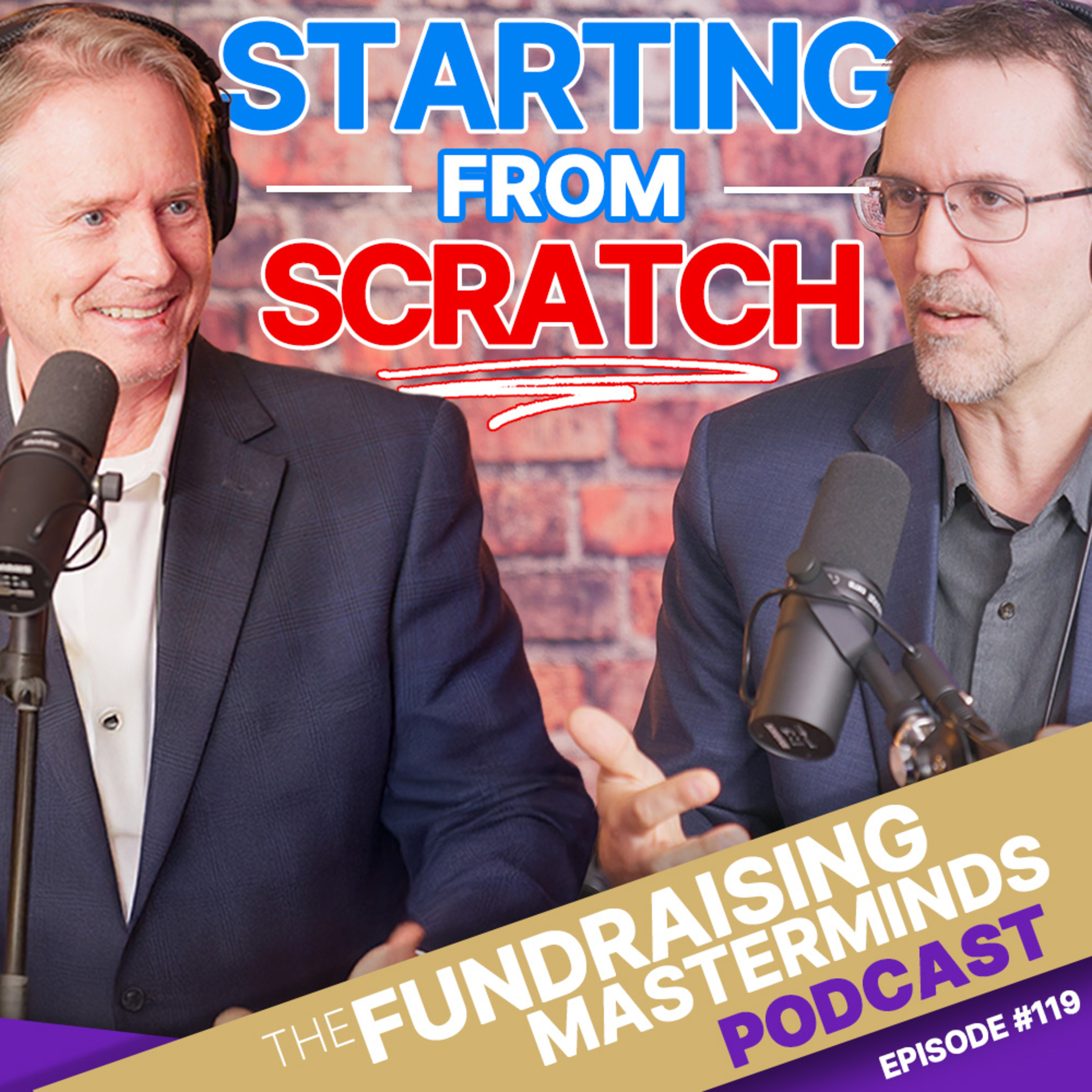
The Fundraising Masterminds Podcast
119. Why You Don’t Need a Network of Support to Start Building One
00:39:22
Loading summary
Transcript163 lines
- [00:00]
A
You're listening to the number one podcast for nonprofit leaders getting your nonprofit fully funded. This is the Fundraising Masterminds Podcast.
- [00:11]
B
We met as a board and things were rolling. We couldn't pay our bills. 12 to 15 donors to the ministry, none of which came from me. After that dinner, one dinner, we had over 180 donors to the ministry. They were compelled by what they heard. Not by the way, little sales of this and sale of this and buy this T shirt, all the little distractions. No, this vision dinner was all about a dinner around a vision of what God was doing. And that's what they sewed into. You could not ask for a better moment, first impression than that night.
- [00:51]
A
Well, welcome back to this episode of the Fundraising Masterminds Podcast. My name is Jason Galasinski, and with me, my co host, Jim Dempsey.
- [00:57]
C
Hi, Jason.
- [00:58]
A
How are you today, Jim?
- [00:59]
B
Good.
- [01:00]
C
Yeah. It's a terrific April, I'll tell you. Yeah, April 1st. April 1st, exactly. I don't think there's any jokes heading our way today, but we'll keep going.
- [01:09]
A
Yeah, yeah. So, Jim, we've got a really special episode lined up for today. We're going to be talking about why you don't need a network of support to start building one.
- [01:19]
C
Yeah. I think everyone goes into the Perfect Vision dinner strategy thinking, what, this is going to just be so easy. All I need is just a network of people, and that's what I need. But in reality, because that's a fear that everybody has, is that I don't know anyone and the only way to succeed is by having a whole network in there. Well, we've got to get through that.
- [01:42]
A
Well, that's a common misconception. The common misconception is I need to have my house in order. In order to do the Perfect Vision. Right. So we often, you know, a lot of times people talk to one of our team members and, you know, they learn, like, oh, there's these four key roles and there's, you know, name storming, and there's, you know, there's costs involved in booking a room. And. And so they have a team of volunteers, and they. And they think at the, you know, like, eight months out that I've got to have everything put together. Like eight months out and I'll call
- [02:17]
C
you when everything's perfect.
- [02:18]
A
Yeah. And they. And so they think, well, I, you know, I, Jim and Jason, want us to have 300 people at the thing. Well, I don't know, 300 people. So what's the common thing? They think, well, I'll wait Until I have my network built, and then I'll do the perfect Biz dinner. Right? And they don't realize that we actually help them do that first step. That's right. So we actually brought on a special guest. We have a special guest with us right now in the studio. And what I love about this guest is that he actually did a Perfect Vision dinner knowing, like, five to eight people, and he joined the program with, like, hardly any relationships. And I actually went to his dinner because it was in Nashville. It was, like, an hour, hour, and 15 minutes away. I went there to support him, and he had 300 people in the room, and I was like, can you believe this?
- [03:10]
C
And he started with nothing. I can't wait to hear nothing. He started with nothing today. I think everybody's gonna enjoy it.
- [03:16]
A
I really wanted everyone to hear his story because, you know, we always say, you know, if Evan can do it, you can do it, you know, so. So Evan Chase, everybody.
- [03:25]
B
Evan.
- [03:26]
C
Than.
- [03:27]
B
I'm that guy.
- [03:27]
A
Yeah. Evan is the executive director of Child Evangelism Fellowship of Nashville.
- [03:33]
B
Yes, sir.
- [03:34]
A
And. And really, I would love to hear, you know, kind of where you were at before you. You came into fundraising masterminds before you did the Perfect Vision there. Just kind of set the stage, go back in time, and kind of share your story of where you were at and kind of how things were going right before fundraising masterminds.
- [03:56]
B
So I'm gonna. I'm gonna steal a comment. It's a feat for the women, so women will get this. The men won't shut me off right now. It's. I was a hot mess. Yeah, I was a hot mess. Truthfully, when I heard about fundraising masterminds, there was a lot going against me. The backstory behind that is I came with years experience running a couple nonprofits, and then having started a Christian private high school with a small group of. In those early years, the first nonprofit I ever did. When I first started, I didn't even know what a nonprofit was. Literally, I was clueless of what a nonprofit was. I was my first stab at fundraising, and I was a complete failure. I mean, I. And if my wife was here, she'd, you know, agree with that one, right? She'd say, yeah. And I worked three jobs because in that fundraiser, in that nonprofit, I could never raise enough money to support myself and the ministry. So I constantly had two and three jobs. So fundraising, my background was. And that those first 12 years, failure.
- [04:58]
A
Yeah. Well, what. What were some of the things that you were trying to do to raise the Funds.
- [05:02]
B
Good question. I got a lot of advice, right? So we got a lot of coaching, but I'm a. I'm a visionary leader and I'm really not strong in the details. So honestly, I would get a lot of ideas. So we got some good advice, but it was always overwhelming. Right. So I ended up just doing mostly one on ones, mostly one on ones. Never really attempted anything big. It was just like relationally trying to raise the money, which I failed. Which I failed. The second nonprofit I was a part of, I hired somebody. So because I knew my background, I'm like, I'm just going to hire a development director, pay her a lot of money in commission. And she did great. Right. But I completely handed it off to her. So that, that was good. But I didn't have to get involved at all, any of the details. The third one was I was part of a small group and we started a private Christian high school. And I wanted to be far from the fundraising, of which I never volunteered to do the fundraising, but we had a fundraising team and the fundraising choice was dinners. So to raise money for the school, obviously there's tuition. And we did these dinners. And I sat back in kind of fear and trembling watching them put together these dinners and all the details, all the volunteers that was involved. Honestly, for me, it was really, really overwhelming. The event was fun. I get to show up and eat a good me rubber chicken.
- [06:23]
A
And of course, honestly, it was.
- [06:25]
B
It was rubber chicken and it was fun the night of. But I also know how much we actually raised.
- [06:30]
A
Yeah.
- [06:30]
B
And in the end of the day, the amount of. In my opinion, the amount of work that went, evolved, the amount of volunteers that were frankly fried, they're exhausted, burnt out, and the amount of money we raised, it just didn't make sense.
- [06:43]
A
What was it? How much did you raise?
- [06:45]
B
Thousands. I mean, we would. We would raise. No, not even 10,000. Maybe over, you know, after many, many years of working at it, we would raise over $10,000. But the first five, six, seven years to raise $10,000 was a great dinner.
- [06:58]
C
And you mentioned it didn't make any sense earlier that the profit margin was just so thin.
- [07:03]
B
Yeah, I was. Yeah, I didn't.
- [07:05]
A
You were funding the venues. You weren't funding your ministry.
- [07:08]
B
Correct. I mean, it was a. We're funding a good experience.
- [07:11]
C
Yeah.
- [07:12]
B
But. But really it was, in my mind, it wasn't worth it. Yeah, it wasn't worth the burnout factor for all that was put into it. The return on investment was pitiful.
- [07:22]
A
And J. That's Why? A lot of people are turned off. You know, they. They hear us talking about the perfect vision, and they're like, oh, perfect vision, banquet, gala, whatever you want to call it, it's all bad.
- [07:35]
C
Lot of work for little gain.
- [07:36]
A
Yeah, I've done it before. Been there, done that, never want to do it again. And. And they're thinking of what you're describing, right? Like, you know, you know, auctions, tickets, you know, did you. Did you guys.
- [07:48]
B
We did all of it. Oh, yeah. Auctions, tickets, baskets. I mean, it was just a hodgepodge of everything we can throw. Corporate sponsorship, corporate sponsorship, you name it, we. We did a little bit of everything. And it was like we did a whole lot of nothing. And the results were just.
- [08:02]
A
Yeah. So how did you, like, start working with CEF of Nashville? Tell me about that.
- [08:08]
B
So another one of the challenges, even before cef, so all that backstory is in California. So I had 30 years of different types of ministry in California. God called us out to middle Tennessee in 2023 for. For a career. So that was a short lived stint. Economy changed. They let me go. I was the new guy, low guy in the totem pole with a big salary. So they let me go. So now I'm in middle Tennessee with no family, no network. I didn't know the people in my own church. I barely knew the names of the people in my home group. And now I'm without a job. Fast forward, I get introduced to, because I'm on a job search to cef. See, this gentleman said, have you ever heard of child evangelism Fellowship? And I'm like, well, no. So I'd never heard of that ministry before. So to make long story short, again, I get hired, right, for this ministry. One, I didn't know anybody.
- [08:57]
A
They were looking for an executive director.
- [08:59]
B
Yes. So I came on it. Yes, as an executive director. And I was just learning, actually the ministry in and of itself.
- [09:06]
C
Right.
- [09:06]
B
Then they told me, when they hired me from day one, they said, listen, we got a donation from the past. We still have some money left. We can pay you for three months and then it's on you.
- [09:16]
A
Wow.
- [09:16]
B
So that was the situation.
- [09:18]
A
Raised your own support.
- [09:19]
B
Yes, of a ministry that I was just learning myself. No experience with no experience, no history and no network.
- [09:26]
A
And you said yes to that deal.
- [09:28]
B
Well, you were desperate, weren't you? You know what? You know what, Jim? That's a fair question. It wasn't desperate, honestly. It was obedience. I had absolutely clarity that the Holy Spirit was leading me step by step in this journey of faith. And so I just submitted even the job. When I took the job, it was 40% of what I made when I got recruited out here. So I took this job at a deficit. I was on the path for bankruptcy even when I said yes to this job, but I felt like God was in it. And my job was to find clarity in that and obey.
- [09:59]
A
So you're in a new town, you know, like five people barely, you barely even know the ministry that UTs got hired for. They tell you you've got three months before you've got to raise your own support. You're seeing the clock ticking down. I mean, are we getting the picture here? This is, this is a little bit intense. Yes. You know, and there might be some people listening who are like, I feel like, you know, my bank account is
- [10:25]
C
sticking down even now. Beads of sweater coming on Evan's face. I can just see he's remembering those moments.
- [10:31]
B
So my wife remembers them more than you do.
- [10:34]
C
Our wives are, their security is an important issue.
- [10:37]
A
Well, and then honestly, you know, there's so many organizations that could benefit from something like the perfect vision. And sometimes they just allow the financial peace is like, it's like a blinder. Like, they, they just think there's, I, I, I would love to do that, but there's no way I can even afford that. So I won't even, like, consider it, you know, but, but you were in that place where you were financially not able to support it too. And what, what we usually tell people is if you feel like God wants you to step out and do a perfect vision in her, then we'll figure the money out. Because guess what? We know, right, that if you do it right, right, you're going to raise a hundred thousand dol all be able to pay your bills in the end of the day. So we usually work with the organizations to figure out the money piece to make it manageable. And I believe that's what we did with you guys.
- [11:29]
C
But you took a step of faith. You had to trust these two knuckleheads that they knew what they were doing. And a little bit of a step of faith there, I would think it was.
- [11:37]
B
But it was an educated step of faith because we did our homework. We made a decision as a board. Right. And we looked at your experience. You guys have the statistics to back up your promises.
- [11:51]
C
Right.
- [11:52]
B
And I'll add one more thing to my journey based on my background. If you'd have gave me a hundred things to do to raise funds, number one is like the Best. The most thing that I could sink my teeth in, number 100 would have been a dinner. It was the abs. I'm not joking, guys. It was the absolute. I'm a visionary. I'm not a detail guy. I don't know anybody. There is no way in God's green earth am I going to take the weight of a vision. It wasn't even on my radar until your son sent me a little text message, says, oh, by the way, my dad does dinners to help fundraisers raise money, nonprofits raise money. And I looked at that text, and I was just like, please, God, no.
- [12:38]
A
I don't even see your track record with Dennis. I was terrified.
- [12:42]
B
It was terrifying. It took me a couple days just to click that and watch your videos, but it was compelling. And again, it wasn't theory. I did my homework. I've made phone calls. I called other chapters in different environments, and I felt like the opportunity was real. I felt that the Lord said, go for it. But you're right. We didn't even have the money either. So the only reason I'm here today is because I think you and I talked on the phone. You give that counseling session, and I said, here's the reality. We can't afford it. Is there a way we feel like this is what God is calling us to do and you help us out? Yeah.
- [13:15]
A
So when we do that initial call, you know, we really try to get a sense for where an organization is at. And, you know, I remember that call, and I remember. I remember thinking, man, this guy has the passion, the energy. He's going to do a great dinner. And I remember not feeling worried at all. Maybe you were feeling worried, but I was like, man, if he gets in there and he'll be great.
- [13:37]
B
He could be on a podcast if we get this guy through.
- [13:40]
C
But you guys thought creatively, right? You had to be creative.
- [13:44]
A
And we. We talked through the financial part, and we. We figured it out, you know, because we know that if we. If you follow the recipe, like we always say, if you follow the recipe, you're going to do well. You're going to raise that 100,000.
- [13:54]
C
And our.
- [13:55]
A
Our goal is a hundred thousand and 100 people. Right? 100 new partners. Right. And. And so we know that that's going to work out in the end, that the person. You're like, in your shoes, you're like, I don't know if this is going to work out, but trust me, when you do something 200 times a year, you kind of know. You kind of. You Start to recognize the patterns of, like, the people who do well versus the people who don't do well. And usually the people who don't do well, which is like 5%. We have a. Did you know, I looked at the numbers recently, I totaled up because I was curious to know, like, out of all the orgs that we've trained in the last, like, two, three years, what, how many actually hit the 100,000 mark? It's 92%.
- [14:34]
B
Wow.
- [14:35]
A
92% success. And, you know, the ones that are the 8% that don't hit it, we can usually tell within about two weeks because they're usually the ones that are going, but, Jim, we do it like this. Why should we do this?
- [14:55]
C
We can't possibly change.
- [14:57]
A
And the whole program, they're the ones questioning everything, recommending that we reconsider our system. And they're the ones that, going into the week, they're. They're typically the ones going, thank you for that appeal script. But we've rewritten it and we've removed this and we've. And we're like, well, we have a little, like, temp email, you know, thing. It's like, you can do that, but we are not going to guarantee the results of your dinner. That's right. You want to just go ahead and not raise 100,000. Right. And then they're the ones that typically, you know, don't do well. And then, of course, you know, on the debrief call, it's my fault somehow, you know, so that's how it goes.
- [15:40]
B
Unfortunately, I had enough failure in my background that I just. I had nothing to lean on. I was all in.
- [15:45]
A
Yeah.
- [15:45]
B
You know, and I trusted your experience. And you guys, for a guy who's also not a detailed person, you mapped it out. There's accountability, there's weekly progress. It was literally step by step. That was tremendous. So not only did I survive, I could actually lead because of what you guys laid out and had done in advance. And I'll tell you this, we didn't do it perfect. You know, we were here to talk about my lack of network. I didn't even really recruit the four main people. Right. When I look back at our dinner, there was two of us. There was me, and I had my chairman of my board. We. We drove this whole thing. Two of us. I didn't have the four. And eventually we did, but most of those roles were almost on the day of anyway, so there wasn't a lot of back work to do. So two of us. Yeah, really push this Thing trusting the process with you guys and your experience and leaning in. And
- [16:42]
A
it really makes it a lot easier when you, I would assume, you know, coming from your perspective when, you know, when we go week by week.
- [16:50]
B
Yes.
- [16:51]
A
And we just give you, like, here's five things you got to do this week. Here's 10 things you got to do this week. Just don't worry about everything else. If you could just do these five things, you'll be good. Then come back next week, we'll tell you the other five things. You know, that really takes the load off, Right. Because then you can focus. You're like, okay, I don't need to worry about matching gifts right now. I just need to get my. I just need to get my board together to do a name storming, you know, and you might have questions like, well, what is a matching gift and how's that going to work? But we always say, like, don't worry about that. We'll talk about that on week 12. You know, we trusted that process.
- [17:22]
C
Yeah, yeah, yeah, exactly.
- [17:23]
B
And everything that we needed to do, all the network of people that are going to, like, the AV companies, the graphic designers, all the little pieces, right. You stagger them in an intentional order. And I didn't have any network for any of those people. So I'm really glad that you broke it down week by week and didn't give me everything right up front because it would have been absolutely overwhelming because I didn't have the network for any of the pieces that were coming. So I thought that was very wise to give it to me in bite sized chunks.
- [17:51]
A
Some people do want it up front.
- [17:52]
C
Oh, and Jason gets pushback all the time. Why can't we see everything, every element?
- [17:58]
A
We just joined the program and we noticed that all the weeks are locked. And why can't I want to see week nine, want to learn about that?
- [18:08]
C
I think it's why God doesn't tell us, you know, what our life is going to be like 12 years from now, because it would scare us to death. And it's kind of the same reason.
- [18:16]
B
That's good.
- [18:16]
C
Yeah, that's good.
- [18:17]
A
Actually, if you would have told me when I was in high school that I would have started two businesses and had 10 kids, I would just be like, freaking out.
- [18:25]
C
Right.
- [18:26]
A
But, you know, God leads us step by step and he just asks us to trust him. And I think that's how we tried to build the program, is just, you know, trust the 40 years of experience. We're going to guide you through it. But some people Have a hard time, you know, trusting. But the people who do well are the ones who just kind of go with it. Right.
- [18:46]
C
Follow the recipe.
- [18:49]
A
So, so let's, let's go back to your story. So, because ultimately I was at your dinner.
- [18:55]
C
Yes.
- [18:55]
A
And there are 300 people there and you guys raised over 100,000.
- [18:59]
C
Yes.
- [18:59]
A
So how did you get from I have no connections, nobody. To having 300 people in the room? How did that happen?
- [19:07]
B
I followed your recipe honestly. I recognized the leverage points to fill the room.
- [19:13]
A
You didn't know anybody. I mean, like, don't you need to know people to. How did you, how did you get 300 people in there?
- [19:19]
B
So this was a decision I made to trust the process. So of the. I figured I could fill my table of 10, but I realized if I could get those five couples to have their own table of 10, then instead of having one table of 10, I have potentially five tables totaling 50 people. Right. The risk was one, I don't really know anybody else. I literally approached them not to join my table, but to host their own table, knowing that I don't know who's going to sit in my table now. And then two, the other challenge I had was they hadn't really heard about the ministry. So I was asking people who barely knew me to host a table of a ministry that they had never really heard of. And I was new at, so I had all the. But what I believe I had, one thing I do have is when God is leading me, a pretty strong conviction that God was in this. Right. So I could speak with conviction without a long history. And I knew our mission was good. I knew the history of this ministry was significant, solid. Absolutely. So I leaned on somebody else.
- [20:34]
A
Is like a 50 plus year old ministry.
- [20:37]
B
Over 80.
- [20:37]
A
80? Yeah, 80 years. So I mean, you've guys got statistics, you've got backing, you've got videos, you can show people.
- [20:46]
C
You've got good programs, good plans.
- [20:47]
B
Yes.
- [20:48]
C
Good leadership.
- [20:48]
B
Yes. And that. And I had to lean on all those things. And they're great, they're there. So our ministry has those resources and has the story and the history and the statistics. And so that's what I did. And so I recruited table hosts. And yes, they did not sit at my table. And of course God did provide. I filled my table up and they filled their table up. And then you were there the night of. We had this packed, beautiful Hilton hotel and I didn't know barely a soul. I mean, and it's people and it's magical.
- [21:17]
C
I mean, when you Think about it. How neat is that?
- [21:20]
A
Right?
- [21:20]
C
Right.
- [21:20]
B
And I'll tell you this, even, even the month before this is God just didn't let us off the hook. The month before we met as a board and things were rolling, we couldn't pay our bills. But honestly, you guys anticipated we built a budget anticipating not to pay all the bills up front. So that helped us. We really would have been underwater, but we had kind of one of those emergency board meetings to saying, hey guys, if we don't bring some money in right now, we can't pay our bills. And this was a couple weeks before our dinner. So God provided we show up to that dinner. God provided I'll share a little statistic for me that is phenomenal as far as our network. So I went in with Probably, I think 12 to 15 donors to the ministry, none of which came from me. They were just faithful couples who loved this ministry. And long before I was on the scene, they were giving because they just believed. After that dinner, one dinner, we had over 180 donors to the ministry in one and over. Yeah, I don't have the exact number, but I'm being conservative, so it was near 200 new donors. And I think I did the stats too, that 90% or something like that had really never even heard of the ministry. But I felt like you guys did such a great job on setting us up to not be a bunch of bells and whistles, to focus on the mission and the ministry and the vision of what God is up to, that they were compelled by what they heard, not by the little sales of this and sale of this and buy this T shirt, all the little distractions. No, this vision dinner was all about a dinner around a vision of what God was doing. And that's what they sowed into.
- [23:06]
A
I remember listening because I was in the room and I remember listening to your ministry update. And that's that 13 minute vision presentation. We do that fairly early in the program. And you know, we help you craft all that, right? Like we don't, we don't just teach you, you know, here's what, here's what you should do. Have fun. Go do it on your own. It's more like we help you. We kind of like spoon feed all the little components, right? And then we help you put it all together into a package. And part of that is like the three accelerators. And then the three accelerators help you write the ministry updates and the ministry update helps you write the giving opportunities and the appeal and everything kind of feeds off of that. So we kind of work through all that. And I remember our team. We have a bunch of writers on our staff, and we review everything. So we're not just teaching you what to do, but we actually. You submit your homework to us, and then we have a team that reviews everything and checks it over and makes sure that you're following the procedure. So by the time you actually get to your dinner, everything's been checked. Everything's been cross checked. There's been at least three or four eyes, you know, that have said, yep, yep, yep, looks good. And then the moment of, you know, Evan Chase getting on the stage and actually delivering it, because, you know, having it on in writing and delivering it are two different things. And I just remember sitting in the back of the room and just being like, wow, this is one of the most exciting presentations of CEF I've ever heard. Like, it was. It was incredible. Like, you had the passion. You explained, you know, the history. You explained, you know, what CEF was. And then you launched into the vision, and you were just, like. You were just so passionate about the vision and where you wanted to go. It was very specific. It was very targeted. And I was like. By the end of that, I was like, we don't even need any testimonies or anything. I'm ready to write my check right now. You know? And then. Then we went on to hear some testimonies, and then Jeff Nichols, the vice president, cef, was there. He flew in and he gave. He gave a great presentation. And I just remember at the end of it just being like, wow, that was one I was inspired by that night, you know, and just knowing the background of where you came from, it was even more meaningful to me, you know, because I knew where you had come from, and I knew what was about to happen. I know you didn't know what was about to happen, but I was really excited for you. So. So let's do a little drum.
- [25:31]
C
Well, but hold on.
- [25:32]
A
Let's just for a second.
- [25:34]
C
Come on. I just. I want to remind. I want to remind our audience, what was your typical net profit when you've done dinners?
- [25:42]
B
10 grand.
- [25:43]
C
10 grand.
- [25:44]
A
Okay, I think you said eight.
- [25:45]
C
Eight.
- [25:46]
B
I'm being generous.
- [25:47]
C
There you go.
- [25:47]
B
Okay.
- [25:47]
C
10 grand on a good year.
- [25:49]
A
10 grand.
- [25:49]
C
Okay, now, drum roll. What did we see from this year's dinner?
- [25:54]
B
Over $125,000 on the first dinner. And think about this, Jason. You guys say this in the training. If roughly 90% were new to the ministry and all that you just went through and all that you explained. And let me tell you, I was fired up because of that backstory. And I walked in staring at a packed room. So I had so much confidence in the Lord, that he was in this and that he was the sail beneath my wings. So those 90%, that was their first impression of this ministry. That was it. You could not ask for a better moment, first impression than that night. And that just rolled us going forward. I mean, it hasn't stopped. Guys, we hired you full time after that. But I'll be honest with you, that was the plan all along. Because you guys didn't. Here's what else I appreciate about the program. You didn't say, let's just do a dinner, you know, wipe our hands and do, and we're done. You guys laid out a five year plan and so we, we stayed on board with you guys. And now it's not just dollars in the bank. It's not just 180 new donors. It is 180 new relationships. And then you guys have coached us through now what, what do we do with all these relationships? So we have not just got dollars, we've got board members, we've got new churches, new schools. I mean, so many resources of human contribution beyond the dollar have been birthed from this one and very first vision dinner we ever did.
- [27:25]
C
I love that.
- [27:26]
A
Well, you know, it just reminds me, since we're talking about building a network, right, so many of us think you've got to build the network before the dinner, but it's actually the dinner that builds the network 100%. And I just love your story because it's like, it's more, what you're describing to me is more of a walk of faith. It kind of almost reminds me of like the Israelites walking through the Red Sea. You know, it's like they had to trust God that he was going to hold up that wall of water and it wasn't going to fall on them. Right. To get them across that Red Sea. And you know, it started with, you know, I, we've made this point a few times. I've observed in the Old Testament, anytime God asks anyone to do something crazy, like you're going to go into the Jordan and it's going to split or strike, you know, speak to the rock or, you know, some, one of the battles, you know, with the sons.
- [28:17]
B
Jericho.
- [28:18]
A
Yeah, or Jericho or anything. It's, you know, it's like you always wonder like, well, if God wanted Jericho's walls to fall down, why didn't he just say fall down and they just fall down, you know. But anytime God wants to do something great, he always asks his people to step out in faith first. And we have to obey and trust him first. And then as soon as that toe goes in the water, or as soon as we walk around that wall a few times or we do whatever it is that he's asking us to do, then the miracle happens. And that's what I feel like your story is like. You felt the Holy Spirit saying, I need to do this. You didn't know how it was going to happen, but you did your part. And then God followed in with his rest. He did his part. So. And that's just so consistent with what we see. Well, Jim, this has been a very encouraging episode. And you know, we've talked to a lot of nonprofit leaders over the, over the months and we keep sending them Evan's way. We, Evan's kind of like part time working for our poster child.
- [29:19]
C
We say that, but.
- [29:21]
B
No, but it's like desperation.
- [29:22]
C
Yeah.
- [29:23]
A
There's so many people who are in your shoes. And that's why we wanted to have you on this episode, because I wanted the audience to hear your story. Because sometimes I think people just think, oh, Jim and Jason, they just, they bring in these perfect ministries. And of course, yeah, they were already raising a hundred thousand before, you know, so of course they're going to raise a hundred thousand. No, that's not the case. You know, most of the time they're organizations that are in your shoes that are. They've been trying to fundraise for a while or they've just given up. Like with just. People are just like, I'm never doing a dinner again. It's just way too much work.
- [29:57]
C
How can you ask somebody to be a table host who knows nothing about your ministry? That doesn't make sense. You can't possibly do that. Evan did it.
- [30:05]
B
I get it.
- [30:05]
A
Yeah. Yeah, yeah, yeah. So, Evan, I'd love for you to speak to our audience. We've got perfect vision. Dinner enrollment is closing in four weeks. We've got the next cohort starting beginning of May. We're here in April. We've got a 30 day window. You know, there's a lot. There's one more board meeting that's going to happen this month. I'm sitting here thinking, maybe this is something we should do. Maybe we should do it.
- [30:28]
C
What do you say to the ministry that is on the fence? They're contemplating, should I really do this? Is it worth it? What do you say to them?
- [30:35]
B
I say Absolutely. If you're watching this podcast, this is part of the answer. This is part of the confirmation of the Lord, if nothing else, to take that next step. And for us, there was a lot of little steps that added up to the final decision. And so take that next step. I think you'll find that the evidence for what we're talking about is there, and there's many, many stories beyond mine. And there's proof in what you guys are saying, I'm just the most recent one or I'm just another one. But I would say to those who are watching this podcast that this is part of the confirmation for you to move forward.
- [31:10]
C
Wow. So good.
- [31:12]
A
Well, if you would like to learn more about that, I've got a QR code on the screen. You can scan that with your phone or there's a link in the description. Click that. It's going to take you to an application where you can just fill out a little bit of information. We just want to check out, make sure that you're a legitimate nonprofit, which I'm sure you are, and then from there, it'll take you to a spot where you can book a call with one of our team members. And you know, it's a 45 minute to an hour call. You have plenty of opportunity to ask questions. You can say, I was listening to this podcast about Evan and you know, I feel like I'm right in his shoes. And you know, they'll walk you through, answer any questions you might have, work through, you know, how to make this work for you. Because we honestly, we really want to help you where you're at to achieve the perfect vision and we're willing to work with you in whatever way possible. So don't let any of the fears or unknowns get in your way. Obviously, you know, Evan, you had a lot of obstacles that we worked through, right? And we, we were able to do it, you know, all the way up and you know, you hit that 125,000 mark, now you're in the winner circle and we're preparing for dinner number two. And I know we've already set the goal, but what, what are the. Tell the audience what the goal is
- [32:29]
B
for dinner number number two, quarter million dollars, $250,000. We're following your path. And I will just add this, that it didn't, the money raised didn't end at the dinner. You guys have walked us through giving Tuesday, end of year, and we've had a hundred percent increase in the non dinner aspects of just raising funds throughout the year. So it is beyond paid for itself.
- [32:50]
A
So we've, you know, like we said, the dinner is the win, remember? Going back to win, keep and lift, right. We're winning new partners for our cause through the vision dinner, through vision casting. That introduces us to a bunch of new partners which then in the winter circle we can start to cultivate those relationships. And there's just opens up unlimited possibilities, right? Like we don't know. It would be silly for us to presume what God could do. But you just don't know who's in the room. I mean, you might have a business owner in the room that has been waiting for you to say what you've been saying, you know, and you don't know that, but God knows that and he puts the people together, right?
- [33:29]
C
And that's the keeping in next, this next dinner, you get the opportunity to lift some of those people to higher levels of giving. So I'm excited.
- [33:36]
A
What are some of the relationships that have come out of that first dinner that have, that you've, that have really been meaningful to you? Like describe how, how the, how the dinner was kind of the starting point for some of these people.
- [33:49]
B
So yeah, one of, one of the things after the dinner, you guys coaches through a real detailed, thought out plan of relationship building. So we went through that plan, started making phone calls, writing letters, doing face to face with a group of donors. So the backstory for this quick story is we needed more board members because we don't know anybody. I don't know anybody. And I was asking God, God, will you give us a board member who has an experience taking a small nonprofit and seeing it grow, you know, to a medium size? You know, this was on my heart. Well, I go just building relationships, thanking the donors, meeting them face to face, which was actually beautiful because I got to sit across the table from people and this one in particular and say, we don't just want your money, we want to build your friends. Why did you give what's your story? What's on your heart? And it's actually very authentic and really beautiful. And in the course of this one conversation, she just begins to share her story. I said, who are you? What's your story? What do you do? And she comes to tell me in sharing her story that, oh, I've helped run a couple nonprofits and these two, I said, tell me about those nonprofits, what's the story? And she just so happens to tell me these two stories of taking these small nonprofits and how they grew under her leadership. You know, Being part of it was a team leadership. And I just said, wow, this is going to be forward thinking here. I said, I don't know how this is going to come across crossed, but I said, you're exactly what I'm looking for from my board. I said, this is not why I brought you here. I didn't know you, I just met you. But can we pray about having you come join our board? And that resulted. That was one of two brand new board members and they were literally exactly what we were asking the Lord for. And now 2026, they're on the board, committed to our board and they're part of the team building the dinner for 2026.
- [35:33]
C
I love it.
- [35:34]
A
What would have happened? What would have happened? Like so many people, they do a fundraiser and they don't even send a thank you letter. Can you believe that? Like they, they just not the money and they're just like, well, I mean, well, time to get to work. Like what. Can you imagine how many opportunities you would have left on the table by. By just. I can see ignoring.
- [35:52]
B
Yes. Well, you be because not a detail guy. That kind of follow up stuff is overwhelming. You know what I mean? It's, it's like too much. But because again, you guys, not just for the dinner, give a step by step, strategic thought in advance, thought through in advance. Strategy of what to do next. Really helped us, you know, as a whole do the thank you letters. You gave us a template, right? What to say, what not to say. You guys just mapped it all out. So we're just literally still following your. Your plan through the Jordan.
- [36:23]
C
That's awesome. I love that. I love that. Oh, golly. Well, let me, let me ask if someone wanted to reach out to you and find out more about your ministry and even, especially if they're in the Nashville area, they want to give, they wanted to help, you know, be with you.
- [36:40]
A
Thank you.
- [36:40]
C
Where. What, where should they reach out? What's your website?
- [36:43]
B
Yeah, the website is cefmetro nashville.org cefmetronashville.org wow.
- [36:51]
C
Wow. Okay, great.
- [36:52]
B
Thanks guys.
- [36:53]
A
Well, evidence, really great to have you on the program. Thank you so much for sharing your story. We really appreciate your honesty and your integrity. And I know that God's got great plans for you. Obviously he had you go through that pain to learn some lessons, which of course he always does. Right? He always. There's that passage of scripture I'm thinking of that God is able to take all things and use it for his good. And even our pain and our Mistakes and our. In the struggles that we had. God uses all that. And that's part of your story now. And now here you are sharing that with 4,000, 10,000. Who knows how many people are listening. So many others, you know, so. And. And there's going to be a lot of people who are encouraged to maybe take a step of faith, you know, as a result of this.
- [37:39]
B
To God be the glory and for his kingdom.
- [37:41]
C
Amen. Amen.
- [37:43]
A
Well, thank you guys for tuning in. If you enjoyed this episode, let us know in the comments section below. We love to hear your thoughts. Send a word of encouragement to Evan and let us know if you resonated with that message. Let us know what you're struggling with, and we would love to reach out and get in touch with you through that as well. While you're in there and making a comment, go ahead and hit that subscribe button. Whether you're on Spotify or Apple or YouTube, wherever you're at, hit that subscribe button because there are a lot of great episodes coming that you're not going to want to miss. We'd love to see you in the future. But, Jim, any final words that you want to say about this topic of building a network with very little.
- [38:27]
C
Well, it. I mean, Evan's story was just remarkable. To build something out of nothing. And I just. It. It's remarkable. I think it. I hope it ends any of the questions and his skepticism of. I just, just everything's got to be perfect before I do this. You know, I. I used to say that before I had kids, you know, I have to make sure everything's together. My house is all in order before I start kids. And you know what? No, you just need to step out and in faith. And it's exactly the same way with this.
- [38:55]
A
So thanks, Evan. Yeah. Well, thank you, guys. Thank you for being on the program. Great to have you on.
- [39:01]
B
Honored.
- [39:01]
C
Appreciate your time.
- [39:02]
A
All right, well, thank you for joining us, too, and we'll see you next time.
- [39:05]
C
Take care. It.