← The Fundraising Masterminds Podcast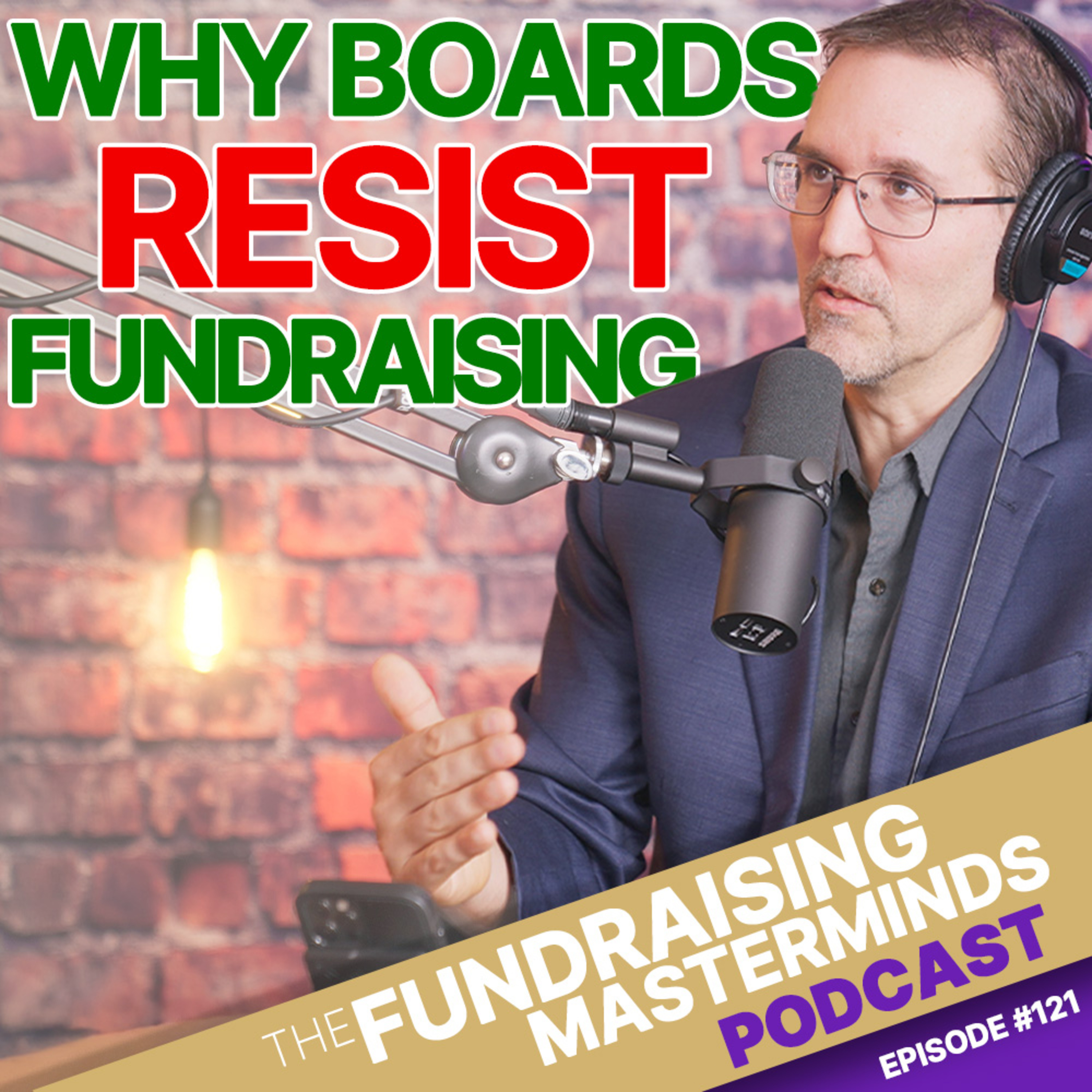
The Fundraising Masterminds Podcast
121. Why Most Nonprofit Boards Resist Fundraising (and How to Get Yours Involved)
00:31:35
Loading summary
Transcript156 lines
- [00:00]
A
You're listening to the number one podcast for nonprofit leaders getting your nonprofit fully funded. This is the Fundraising Masterminds Podcast.
- [00:10]
B
I think there's people who still believe that George Mueller actually just prayed in his money. And when you do the research behind it, George Mueller wrote 2,000 letters to people. He had sermons where he talked about what he did. He sent out his kids out into the streets.
- [00:31]
A
He turned over 45 countries.
- [00:33]
B
We love to say, well, George Mueller just prayed it in. And that's what we need to do.
- [00:38]
A
A busy person. Welcome back to the Fundraising Masterminds Podcast. My name is Jason Galasinski, and with me, my co host, Jim Dempsey.
- [00:48]
B
Hey, Jason.
- [00:48]
A
Jim. Welcome to the show again. It's another great episode last week of April. Can you believe that already?
- [00:54]
B
Time is just flying by. I'm glad we're kind of getting out of the winter and heading into summer.
- [00:59]
A
I'm looking forward to it. Yeah. Well, one really important note that I wanted to say just before we get into our episode is we're actually starting our new Perfect Vision in our cohort next Monday. It's the first Monday of May, and super excited for it. We've got tons and tons of great orgs lined up. Yeah. And it's going to be fantastic.
- [01:20]
B
Well, this should be our biggest class ever. Don't you think, Jason?
- [01:23]
A
I think so.
- [01:24]
B
I mean, I agree.
- [01:25]
A
We raised over $14 million last fall. Fall.
- [01:28]
B
Right.
- [01:28]
A
And in the spring, it's, It's. I mean, the numbers aren't fully in yet, but I think we're getting close to 20 million.
- [01:33]
B
Oh, absolutely.
- [01:34]
A
And I'm really looking forward to seeing what the next class is going to do. So it's. You're not going to want to miss out on the Perfect Vision Dinner. So if you've been listening to this podcast for a while, you've been getting our emails, and you're like, I. I'm like, I really want to do it. I'm just not sure for whatever reason, I mean, now is the time to jump in, guys. I mean, this. We. Every time we do a cohort, it's just getting better and better, and you're going to want to jump in. You know, the best time to. To start is just to start.
- [01:59]
B
Yeah. Don't put it off any longer. Make the decision. It's the right one.
- [02:03]
A
And I know as we were just talking this morning about different orgs that are kind of on the fence about it, you know, sometimes people, they just think, you know, like, well, it's the Perfect Vision Dinner. So I Have to have the perfect everything.
- [02:15]
B
Everything needs to be right.
- [02:16]
A
I've got to have the perfect team, and I've got to get the perfect people, and it's got to be 300 and it's got to be big.
- [02:21]
B
Yeah.
- [02:22]
A
And it's like. No, honestly.
- [02:23]
B
Right.
- [02:23]
A
It doesn't need to be perfect. I mean, what's. When we say it's the Perfect Vision Dinner, we're not saying we're going to help you put together the perfect event. What we're saying is the framework is the perfect vision. Right. We're going to give you the. We're going to give you the perfect plan. It doesn't mean that your event has to be perfect in order for you to succeed.
- [02:42]
B
Gets better and better and better every year.
- [02:44]
A
Well, if you're new to this podcast, you know you're at the right place. This podcast is for nonprofit Christian leaders who are looking to fund their mission, their organization. And Jim and I, you know, we've been doing development for over 60 years together, combined experience. And what we want to help you with is we want to help you get fully funded. And we've, we've come across a lot of different strategies over the years, but we've really narrowed in on what we believe is like the best major donor development framework on the planet. And we call it, you know, it's not the Perfect Vision Dinner. The Perfect Vision Dinner is the starting point. But we really have developed a full five year program that is going to teach you how to find major partners, how to cultivate those relationships, and how to build them to the point where they're giving you, you know, regular income, they're giving you major gifts, you know, all that kind of stuff. It takes time, but that's.
- [03:42]
B
Dinner is just the gateway.
- [03:43]
A
Yeah, the dinner is. The dinner is not. I know we talk a lot about the Perfect Vision Dinner, but it's just the beginning. It's like the Billy Graham Crusade is the starting point for a lot of people in their Christian faith, but it's not the end. You know, the Billy Graham Crusade is just the beginning. And the perfect Vision is like the Billy Graham Crusade for your organization. It's just a starting point.
- [04:03]
B
Right.
- [04:03]
A
So anyways, I'm super excited about this. We're going to be jumping into a new cohort next week. So you've got like five days to make a decision. So if you're just thinking about it, just jump in. Let's get you fully funded. Well, let's pivot over to today's topic. Jim, why most Nonprofit boards resist fundraising and how to get yours involved.
- [04:24]
B
Yeah, absolutely.
- [04:25]
A
So we've seen this a lot, that there's. Boards are an interesting topic, right? Like we, we've seen so many issues with boards. It's actually one of our number one topics on this podcast. People are always asking about, you know, how can I improve my board? How do I, what do I do if I have bad board members? How do I, you know, how do I get my board involved in fundraising? And one of the things that we've seen a lot of is where boards are just resistant to fundraising in general. Like, they literally just kind of go into convulsions over like, if you say like we want to do a fundraiser, they're just like, why, you know, like why can't we just, why can't we like, you know what, Jim? We, we do something better than fundraising. You know what we do?
- [05:08]
B
What's that?
- [05:08]
A
We trust God. He knows what we need. We just present the needs to God and then he, he will just provide. Yeah. So why do we need to like this whole, like, why do we need to have a strategy? Why do we need to like that sounds so worldly. Like, why can't we just pray and ask and God will just bless it. He knows what we need. He knows our needs. So why do we need to fundraise it all?
- [05:30]
B
Yeah, well, you know, I've said this so many times over the years, but if God wanted to, he could just plop you on your couch as a nonprofit leader and he could send people to your door just and knock on the door and say, I don't know why I'm supposed to give, but I am. If God wanted to do that, he could do that. But he doesn't choose to do that. He wants us to step out in faith, wants to trust him for big, big things. But you're right, too many non profit boards just think that, hey, it's just going to come in almost like osmosis, you know, that, that nothing, you know, you don't need to do anything. It's just going to come in. But there are so many deep rooted problems with that and what lead to that and that's we're going to talk about today.
- [06:10]
A
Well, I mean, does that really work in the church? I mean, if it, like I would say the majority of churches out there that are, you know, trying to be intentional, they, they want to fulfill the Great Commission. That's, that's one of the big reasons why a church exists, right, Is to, you know, make disciples, you know, so to, to evangelize the loss and make disciples of the ones who are, you know, just starting in their walk.
- [06:34]
B
Right, right.
- [06:34]
A
So, I mean, do church, does your church just say, well, you know, we're just gonna have, does your church just have prayer meetings? And you know, they, people just get together and pray and then they just kind of like wing it?
- [06:45]
B
Yeah. Well, here's the difference, Jason. A church is so different from a nonprofit organization. I mean, a church acts as a family. A church in a lot of ways provides a service and the members, they are part of the family, so they collectively come together and help to support the family. But there is somewhat of a quid pro quo in the sense that you get blessed by the staff and by the volunteers and you want to give back. It doesn't just exist that way in a non profit organization. It's a lot different. They don't necessarily feel like they're being given something. So it's got to start somewhere. And it generally starts with a deep relationship.
- [07:28]
A
Maybe that's where this idea comes from. Actually, it just kind of dawned on me that maybe a lot of people on boards are, you know, they're looking at the church model and they're saying, well, we don't do fundraisers for church.
- [07:41]
B
Right.
- [07:42]
A
I mean, we just, we just kind of trust God and you know, we do the best we can to get people involved in the church. And then like the money just kind of comes, it just kind of flows. But, but yeah, like you said, it's. The nonprofit is so different than the church.
- [07:58]
B
It is. Well, and you brought up a really great point, Jason, on maybe not even knowing that you brought it up. But there's a training and people's mindset. People come in to a board and onto a board with very little training of what it means to be a board member, what their role in responsibility is, what especially what's their role in fundraising. And that is that, that, that's a big difference from that. And sometimes they're going to bring in their business mind, sometimes they're going to bring in their church mind. But that is one of the greatest deficits, is that we don't train our board members well. And we're going to talk about that in a little while as well.
- [08:36]
A
Yeah, well, I mean, we, we do talk about that in our programs. We actually, in the winner's circle, on the second year of the winner's circle, we spend a whole year going through boards, how to train boards, how to get boards involved with leadership. So there's, there is literally a ton of things that boards should be doing.
- [08:56]
B
Are you referring to the Winner's Circle program, which is our advanced level program that exists?
- [09:01]
A
Well, I know we don't talk about the Winner's Circle too much on this podcast, but basically, you know, for those of you who are listening, you're like, what's the Winner's Circle? Um, so we have a, a little challenge for everyone who joins the Perfect Vision Enter to raise a hundred thousand dollars, you know, in their first Perfect Vision Enter. That's our, that's our challenge to you. Um, and if you hit that goal, which I would say we have about a 92% success rate in hitting that goal for our, for our class, then you qualify to join the Winner's Circle. And the Winner's Circle is a three year program where Jim and I teach you how to take the 20% who gave 80% of the funds. At your dinner, we start to teach you how to develop the relationships of these potential new major partners. So it's really a major partner development plan, but we're going a lot deeper into development strategy with boards going into strategic planning, like really going deeper into. How do you actually do development as an organization?
- [10:03]
B
Well, the Perfect Vision Dinner is like your undergraduate degree when you get invited and challenged. Not everyone goes from undergraduate to graduate school. You have to apply, you have to qualify to be in the graduate program. The exact same thing happens with the Winner's Circle. You have to be successful in the Perfect Vision Dinner to be challenged and qualified to be part of that.
- [10:23]
A
Everyone that's in the Winner's Circle has done a hundred thousand dollar dinner and is like fully involved, like, fully engaged in, like. I want to learn as much as I can from, from Jim and Jason so that I can maximize my development.
- [10:37]
B
They have embraced the strategy in the model. Yeah.
- [10:40]
A
Well, Jim, going back to our topic, I was really just thinking through kind of a fictional story. We do hear this a lot, but I didn't want to use like real names or words. But just picture in your mind that there's this man named Luke and he believes that God has called him to start homeless ministry in his school. He's seen a lot of homeless people around town. And, and so he just kind of thinks to himself, he kind of has like this mindset of like, well, I just, I, you know, if God wants me to do it, then he'll. He'll bring the people, he'll bring the funds, like everything. Like he has kind of this mindset that we're talking about that All I need to do is pray and trust God, right? So let's say that he does that, right? He goes in his room, he prays, and he's just like, God, you know, I really want to do this. I really want to start this ministry. I'm just going to trust that you know my heart, you know that I want to do this. And you know that it's going to take some funding. You know, I don't have $50,000 to do X, Y, Z. So I need you to provide this. Da, da, da, da. And so he's just praying. He's praying and praying. He hasn't told anybody other than maybe his spouse.
- [11:42]
B
Right.
- [11:43]
A
Nobody knows that Luke wants to do this. Nobody knows at all. There's no website, there's no social media. He's just praying. He's just in his room praying. Well, what's going to happen? Like, that's prayer is going to help him. His heart is going to be prepared.
- [11:59]
B
Right.
- [11:59]
A
And God will be working his heart.
- [12:00]
B
Yeah.
- [12:00]
A
But after a month or two, Luke starts to get frustrated and he's going to his Bible study. He goes to, like, his men's Bible study, and he just, you know, his men are going around and like, how can we pray for you? And he's like, well, you know, I'm just. I'm just. I've been praying about this, and I've been. And I've just. I really believe God wants me to start this thing. And I'm really. I. I can't get it started unless I have 50,000. And I. I just don't know where it's going to come from. And I've been praying, you know, every day I've been praying, and I just haven't heard anything, you know, But I really have this conviction that God wants me to do it, and I'm ready to go. And then, like, two weeks later, guess what happens?
- [12:37]
B
God provides a gift.
- [12:39]
A
There's a $10,000 check that shows up in his door, anonymous.
- [12:42]
B
Okay.
- [12:42]
A
Doesn't know. Doesn't know who it came from.
- [12:45]
B
Right.
- [12:46]
A
But he's. The prayer worked, but he's suspicious.
- [12:50]
B
Okay.
- [12:50]
A
And I. I would conclude that probably someone in his Bible study that he made that, you know, he was kind
- [12:57]
B
of complaining, they wanted to encourage him or something. Right.
- [12:59]
A
Well, like, my point is, is that somebody there. Yeah. Like, heard about this for the first time and was like, I could solve that problem. Or, or like, maybe the Holy Spirit put on their heart to write a check.
- [13:10]
B
Right.
- [13:10]
A
Or maybe they told a friend who had the Ability to write a check.
- [13:14]
B
Yeah.
- [13:15]
A
But the point is, is that Luke could interpret that gift as like, wow, my prayers really worked. But the reality is, and I don't want to downplay, you know, having faith and trusting God, because we're all about that here. But the reality is that because Luke made the need known to a small group of people, then the word kind of got out in a little, like, it was like, oh, I didn't even know you were doing that.
- [13:43]
B
Right.
- [13:43]
A
You know what I mean? And so because the word kind of got out, then the Holy Spirit worked on the heart of somebody who heard it and was like, wow, I really want to support him.
- [13:53]
B
Yeah.
- [13:53]
A
You know what I mean? So God did answer Luke's prayer, but he answered it through telling, you know, the. Giving people the opportunity to answer it.
- [14:03]
B
Right.
- [14:04]
A
You know what I mean? Because when God answers prayer, he doesn't usually send fire from heaven. He doesn't usually rain money from the sky. Right. Like, who does he use to answer prayer?
- [14:14]
B
Usually people. Yeah.
- [14:16]
A
And how do people. Like, what did. What did Paul say in Romans 10? Do you remember Romans, chapter 10, verse 14? He said, how then can they. How then can they call upon whom they have not believed? How can they believe if they have not heard? And how can they hear without someone preaching? So that whole idea. Right.
- [14:35]
B
Yeah.
- [14:36]
A
And so the, the whole. The. The church understands this, like, well, people aren't going to come to faith in Christ if there's no preacher saying the gospel. Yeah.
- [14:45]
B
Nobody sharing the message.
- [14:46]
A
Like, I'm sure Jesus could show up in people's dreams and, like, just reveal himself, but he doesn't typically do that.
- [14:52]
B
Right. So are you saying, Jason, then there needs to be activity, there needs to be action that is involved with the prayer.
- [15:02]
A
Right. So I'm saying, basically my point is that as soon as Luke, whether he intentionally or not intentionally, kind of made people aware.
- [15:11]
B
Right.
- [15:11]
A
That he needed $50,000.
- [15:14]
B
Right.
- [15:14]
A
And he kind of. I mean, he did it in kind of an aggravated state, but because he kind of like made it known to a small group of people, then it was like those small group of people, like, the Lord could use that request, you know, to answer.
- [15:29]
B
Work down their hearts. Yeah, right, exactly.
- [15:31]
A
And that's. That's a small illustration.
- [15:33]
B
Yeah.
- [15:34]
A
And all I'm trying to say is that's what we're trying to do with the perfect vision dinner.
- [15:37]
B
Right.
- [15:38]
A
You know, it's not a twisting of the arm. It's not a, you know, manipulation tactic or a name it and claim it kind of thing. It's just all we're trying to do is get the right people in the room, right. And we're trying to show them the vision of what it is we're trying to do. Because most people don't know that your nonprofit exists.
- [15:58]
B
Right, right.
- [15:59]
A
They don't know what your vision is. They don't know what the problem is. They don't know why they should even give you money. You know, but then if you make the vision, like, compelling and you. And you show them why they need it, right, Then you're giving them the opportunity. You're giving the Holy Spirit the opportunity to work on their hearts. And then some people might write you a check. That's really basically the bottom line of what we're trying to do with the perfect vision. So, Jim, why do you think board members are so afraid to step out in faith like this?
- [16:33]
B
Yeah, Jason, I think there's a lot of reasons. You know, first of all, I think there's just something oogie about fundraising. You know, it's that ickiness that I think there's a lot of board members that just don't want to get involved in that they're doing what they're doing so they don't have to do fundraising. And there's just something about that. There's an uncomfortableness in there, frankly. I think a lot of it has to do with self confidence, self worth, and nobody likes rejection. We just don't. I mean, we like to be in situations where we're positively affirmed and if we. We avoid like the plague a situation where we're going to be turned down by anybody for asking for money. So, you know, it's just one of those kinds of things that we'd rather not get. So what do we do? We default to just prayer, you know, well, maybe we could do it in some alternative way or some creative way. Let's, you know, that's why I think a lot of board members that they'll go to the hokey kinds of things, such as, you know, car wash or tortilla sales or something like that to bring in money because they want to avoid what really is going to bring in money. And that's that face to face communication with someone and to challenge someone for that, that's where I think there's problem.
- [18:00]
A
Yeah, well, and why do you think. Why do you think, like, in a sense, like they're. The board is kind of over spiritualizing their ability not to fundraise, you know what I mean? Like, they're like, well, we don't need to do a fundraiser, Jason. I know that you have this, like, great big strategy, and you make all this money, and. But that's just. It's such a worldly way of looking at it. So we're gonna do the. We're gonna take the high road, and we're gonna just pray and trust God. And it sounds so right to say that, but what.
- [18:32]
B
Right. Why is it, Jason? You know, it's a lot like the. The mindset of George Mueller. I think there's people who still believe that George Mueller actually just prayed in his money. And when you do the research behind it. George Mueller wrote 2,000 letters to people. He had sermons where he talked about what he did. He sent out his kids out into the streets.
- [18:57]
A
He toured over 45 countries.
- [18:59]
B
He did tour over 45 countries. And those are the kinds of things that we love to say. Well, George Mueller just prayed it in, and that's what we need to do.
- [19:08]
A
Busy person. Yeah, we actually. We actually looked it up. You know, all the things that he did. And, like, he spoke publicly.
- [19:14]
B
Sure.
- [19:15]
A
Like you said, he sent his kids on the street. He published donation reports.
- [19:19]
B
Yes.
- [19:20]
A
I mean, the guy was very active. He shared stories with people, you know, incredible stories of what. What God was doing. But, like, he was very active in sharing what God is doing.
- [19:33]
B
Right.
- [19:34]
A
And sharing, like, the impact that he was. That God was having through the orphanage. But, like, it was. It. It's very similar to that story I was saying of the person at the prayer meeting who was just making his need known. Right. Like, George Mueller did not go into a prayer closet and just pray.
- [19:51]
B
Right.
- [19:51]
A
Although a lot of us like to think that he did.
- [19:53]
B
Yeah, well, I. I don't want to just diminish the importance of prayer. We believe that prayer is huge in our. Even our perfect vision dinner strategy. We think prayer is an important part of that. We pray, but not to say pray alone. And so that's the big thing. I still believe that God does his part and we do our part. And our part is stepping out in faith and actively trusting God for big things.
- [20:22]
A
Well, whenever you look at a miracle in the Old Testament, whether it's like Moses splitting the rock or Moses parting the Red Sea, or whether it's Peter, you know, getting out of the boat and walking on water, like, whatever. Whatever it is, whenever God asks his children to do a miracle, right, He. It always is. We have to take the first step. He says, you know, Moses, you're going to split the Red Sea. But then he asked Moses to put to get into the water and put his staff down, right? So Moses could have just been like, well, God, like, just split the Red Sea. Now, like, why do I need to get in the water?
- [20:59]
B
Right.
- [21:00]
A
You know, same thing with the Israelites when they crossed the Jordan river, right? Like, what did God ask them to do?
- [21:05]
B
He asked the priest to put their foot in first. He could have parted it. Then they put their foot in, but he said, no, put your foot in. And then it parted. Yeah.
- [21:13]
A
And you look at, like, Jesus feeding the 5,000.
- [21:15]
B
Yeah.
- [21:16]
A
I mean, he asked the disciples to bring him some fish and some bread, right? And then he used what they had, right? And he even, like, prayed for it and then said, like, here, go send it out. And we don't know exactly when the multiplication happened, but you kind of get this impression that, like, they were kind of like, okay, I'm gonna go, you know? And then, like, as they were going, right, the miracle happened.
- [21:40]
B
Yeah. They had to start passing out the fish and loaves that they had.
- [21:44]
A
Right.
- [21:45]
B
And all of a sudden, God just did it. And. And I really believe that it's that faith component. It. You need to, you know, like, you see your example, the Jordan river, you know, it doesn't take a lot of faith when the river parts and you stick your foot in. Where it took the faith was you're sticking your foot in this water that they could drown, and all of a sudden it parted. So it's.
- [22:06]
A
Well, that's. That's what we see a lot of attitude, you know, towards when we're. When we're talking to people about the vision dinner and stuff, they're like, well, I'll do the vision dinner when I have, you know, when I. When I'm ready, you know, like, everything's perfect. When I have, you know, enough money to do it, then I'll do it, you know, or when I get the right people, then I'll do it. Or when I have the perfect team, then I'll do it, right? And it's like, you're never going to have the perfect team or whatever. What you really need to do is you need to just step out in faith and just trust God and the people who join the program and they do that. That we see God do amazing things, but it literally is. It's like what you said. It's. We do our part, and then God shows up and does his part. So we're not saying just trust God. The prosperity gospel mindset is kind of like the pry in the money kind of thing. Like, name it and claim it. If you just believe hard, then it'll just happen, you know, and that's not what we're saying. We're saying, you know, there's, there's certain things that we know that God works in a certain way. Just like Billy Graham knew that if he could like explain the gospel in a certain way, that it would resonate with people. We've learned that if we can get the right people in the room and we can give them a presentation that makes sense and it's explained in a way that they, they understand, then we know that the Holy Spirit will use that. But then there is a trusting, there is a faith component that we don't exactly know how it's going to play out. So we do have to trust God. The dinners that do really, really well in our program are the dinners that are on their face before God, asking him to provide. They're doing the steps and they're following things, but they're also praying and asking God. It's kind of a both.
- [23:48]
B
They're doing it according to his will. I think one of our alumni, Michael, and he said, by his own admission, he said he'd in ministry for 43 years and he went through decades of just futility and just was not seeing success. And he finally stepped out in faith and tried the perfect vision dinner strategy and followed the formula that we have for him. And he has seen incredible success. And these are some of the richest, most fruitful years of ministry. And I just, every time he gets on the winner circle phone calls with us, I get inspired because he's got
- [24:29]
A
a weight has lifted off.
- [24:31]
B
He's got a new life to him now. I, I feel like, you know, he's, he's 20 something years old and he really is in his love for development now, where he went decades and didn't. So I think that's part of stepping out in faith.
- [24:46]
A
So, Jim, let's talk about how we can get board members excited. Because, you know, I mean, we could tell them to listen to this podcast, but they may or may not listen. But there are some tangible things that you can do to get your board excited. And one of the things that I'm super excited about, I know that the timing isn't great as far as right now. If you're listening to the podcast right now, you know the program is starting in like five days, right? So it's not great timing. But we did add a new pre course to the Perfect Vision Enter this year we're calling it the Pre Course Accelerator Right. And this is for orgs that are joining. You know, they're, they're coming in like a few months early. They want to get kind of a head start, right. They want to kind of make some preparations before, before the 21 week program starts. So this is a new thing that we're doing and it's pretty, pretty exciting. One of the things that I really, really like about the pre course accelerator is that we work with boards more.
- [25:38]
B
Right.
- [25:39]
A
So one of the big topics is how do I get my board excited about a perfect visionary.
- [25:45]
B
Right.
- [25:45]
A
Because a lot of times people buy into the program and then they're going through the program and they're like, wow, this is, you know, they're learning all this stuff and they're trying to do it and their board is sitting there like, well, call me if you need me, but good luck.
- [25:57]
B
You know, alignment.
- [25:59]
A
Or they're, or they're just like, well, you can do that if you want, but we'll just go to the dinner and we'll just do the bare minimum. And so one of the things that we cover in the pre course accelerator is, you know, just trying to get the boards on board.
- [26:14]
B
Right.
- [26:14]
A
With the perfect vision dinner and really helping them realize that this is a great opportunity for them to present their mission and vision and values to a group of people in a very exciting way.
- [26:25]
B
Right.
- [26:26]
A
And it's a way for them to get involved with their labor, with their influence, with their finances and with their expertise, which is what board members should be doing.
- [26:34]
B
Absolutely.
- [26:34]
A
You know, so yeah, so anyways, we have a PDF that we put together called 9 Ways your Non Profit board should be involved in your annual dinner or your annual banquet.
- [26:44]
B
Right.
- [26:45]
A
And you know, we don't like the word banquet that much, but it is an industry standard term.
- [26:49]
B
So.
- [26:51]
A
But I would encourage you guys to, you know, if you're listening to this and you're like, you know, my board really should be involved in this more. What are some 9 practical things we can do? Download this PDF. We're not going to go through it right now because we're running out of time, but download the PDF, it's going to give you like nine practical things your board can do in a perfect vision inner. It's like how to use the perfect vision in order to get your board involved.
- [27:15]
B
Right.
- [27:16]
A
And so that you're doing your part and then you're trusting God with the rest.
- [27:20]
B
Yeah. Well, Jason, clearly alignment is a big part of it getting your board. Like you said, it's the difference between a player and, you know, a starter and a. And also ran. In a sense, in any sporting event, you want your board on the field with you as an active player, not someone who's sitting on the bench. It's so important in anything, not just your perfect vision dinner, but anything related to your development efforts. You need the board in the game with you.
- [27:51]
A
Yeah. And Jim, are we. Are we saying in this podcast episode that prayer is just a hogwash thing to do? Like, it just. I can't believe that people would just pray and trust God. Are we diminishing prayer in any way? Safe or formal?
- [28:03]
B
Not even a little bit. Jesus, prayer is important. It is. Prayer is critical. And if any of our listeners are at all thinking that we're saying prayer is not important component, please get that out of your mind. Prayer is the number one thing we can be doing. But I believe strongly that God wants us to step out in faith and to trust him for big things. Faith is like a muscle. We've said that many, many times. It's got to be exercised. And the only way you can do that is by stepping out in faith. But LinkedIn with prayer.
- [28:34]
A
Yeah. If you believe that God is calling you to split the Red Sea or part the. Part the ocean or feed the 5,000 literally in your town, you know, get, get homeless, off the street, whatever it is that God has called you to do. He wants us to start with prayer, but then he always asks us to step out in faith before the miracle happens. And so we would just encourage you to think about that. Just a reminder, the perfect vision that our mentorship program is starting next week. So if you want to jump in, you still got time. I would encourage you to take a close look at it because, you know, in this 21 week program, Jim and I are going to, in a sense, kind of push you out to sail. A lot of people are like, I don't know, you know, what should we do? We're like, just get in the water and start walking.
- [29:24]
B
You know, we're not gonna push you in the deep end. We're going to. We're gonna walk through those steps into the pool, into the water. But we are gonna make you go into the water. And that's the scariest part.
- [29:34]
A
Yeah, but we've seen God use this so many times.
- [29:37]
B
Nobody's drowned Jason, based on using that analogy with our program. And that's the exciting part.
- [29:43]
A
Yeah. Well, thank you guys for tuning in. If you like this episode, definitely subscribe. We've got a lot of episodes coming. Make sure you give us a comment. Let us know what you think of the episode. Share it with your friends and family, post it on social, share it with other co workers. All that good stuff. It really just helps us get the word out so we can help more nonprofits. And again, we appreciate you guys for listening. I hope that this was encouraging for you and looking forward to seeing you in the Perfect Vision in our mentorship program. If you want to know more about that program, book a call with our team. You can scan this QR code. It'll take you in. There's a quick little survey that we do just to qualify you. Make sure you're a legitimate nonprofit and that you're serious about growth. And then from there, you'll have a call with our team. You can ask any questions. You know, just get comfortable with the process, learn more about it, and we can get you enrolled in the Perfect Vision Dinner. So hopefully we'll see you in the program next Monday. Well, Jim, any final words that you wanted to share about this topic?
- [30:45]
B
Well, you know, I think this all comes down to faith, Jason. It really does. And I believe that God has used us either in this podcast or in our Strategy Perfect Vision Dinner strategy course. I believe he's used us as one of his instruments to challenge people, help people to grow in their faith. And if that's all this does, is to help you believe in God for big things, then we've accomplished a lot. So I'm excited about that for you and for your board, that God is going to move in a mighty way.
- [31:14]
A
Thanks for tuning in to this episode of the Fundraising Masterminds podcast. We will see you next time.
- [31:18]
B
Take care.