← The Fundraising Masterminds Podcast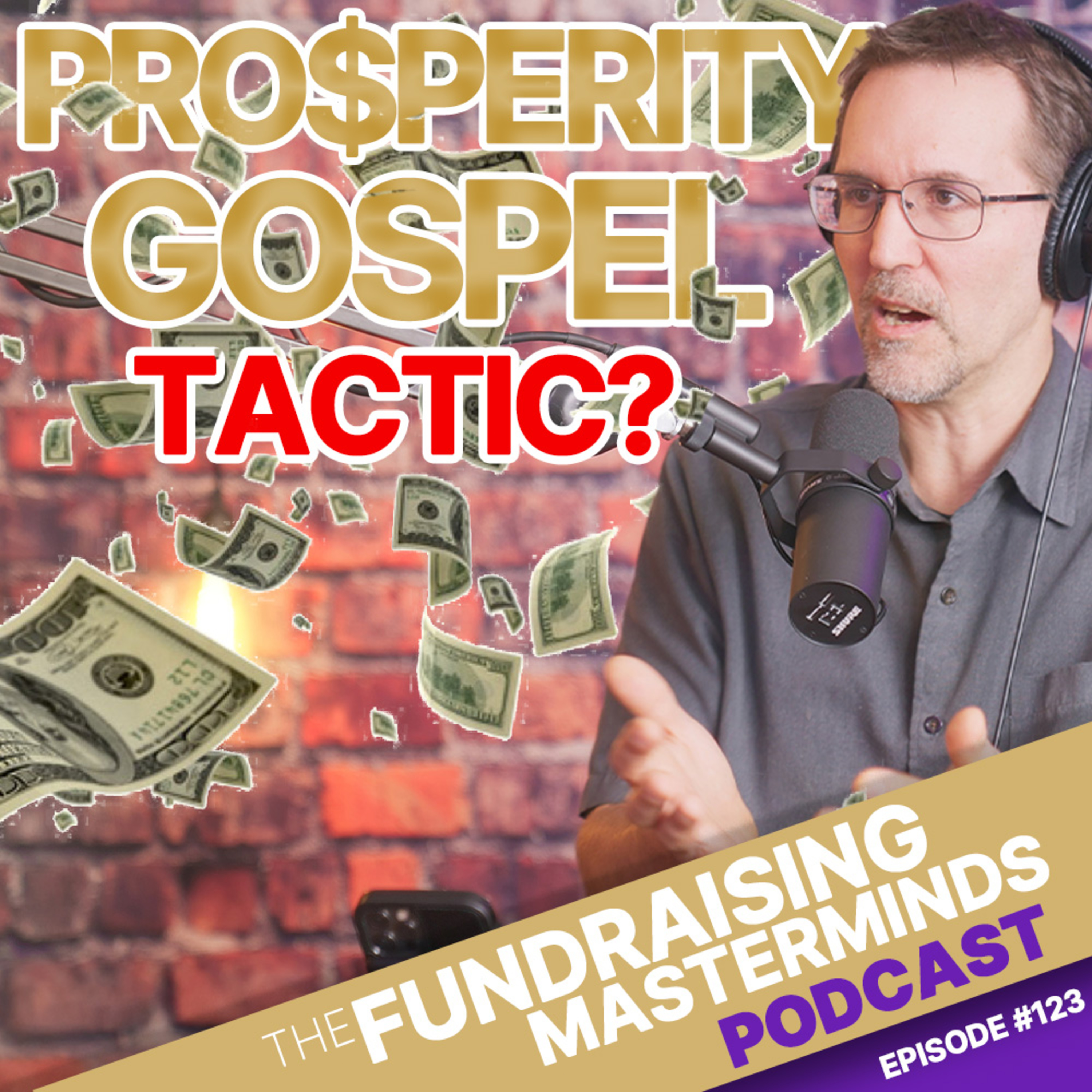
The Fundraising Masterminds Podcast
123. Is the Vision Dinner Model a Prosperity Gospel Tactic?
00:41:19
Loading summary
Transcript168 lines
- [00:00]
A
You're listening to the number one podcast for nonprofit leaders getting your nonprofit fully funded. This is the Fundraising Masterminds Podcast.
- [00:10]
B
In fact, if God isn't part of it, I don't want to be part of it myself. People bathe this event in prayer. Some of them desperately have to pray. I see people with almost no faith whatsoever, but they have the faith of just even a little mustard seed, and they put that in the ground and God blesses it. I love that they learn development, knowledge, but to be honest with you, I almost love it more that their faith grows.
- [00:41]
A
Well, welcome back to another episode here at the Fundraising Masterminds Podcast. My name is Jason Galasinski, and with me, my co host, Jim Dempsey.
- [00:48]
B
Hi, Jason.
- [00:49]
A
Well, how are you doing today, this end of May?
- [00:52]
B
Yeah, it's beautiful. And this is a great time of the year. I love it in Florida in May. One of my favorite months when we start to get to the summer. It gets hot, but I love it.
- [01:01]
A
Yeah. Yeah. Well. Well, we're two, three weeks into the course, the perfect vision that our mentorship program kicked off. Beginning of May. We're already getting the name storming stuff going. We're already working through the initial breakout groups and things, setting goals. We got a lot of people in the program and super excited about what's going on with that. And I hope that you, if you've been listening to this for a while, I hope you were able to jump into the perfect vision inner, because God is going to do some great things.
- [01:34]
B
Yeah.
- [01:35]
A
But you know, Jim, what's really interesting is, you know, we've got a. A good team that answers calls and does questions and things like that as we get. Unfortunately, because we get so many requests and people have so many questions, we try to streamline things a bit. We can't always, you know, jump on and answer everyone's individual concerns or questions. So we, we try to streamline things and we have a team of people who, you know, try their best to answer and get on calls with people. But sometimes, and this has been happening a lot more recently, you know, people on the Internet, they see ads or they see things, and they just immediately think the worst.
- [02:18]
B
Right?
- [02:18]
A
They just, they just think this is a prosperity gospel thing. Jim and Jason are false, whatever profits. And, you know, we're just all, you know, anything that's like, Christian and money. And you put that together and you think of Benny Hinn or you think of whatever. And we've just had all kinds of people say stuff that, like, they know us, right? And yet they haven't talked to anyone on our team. They haven't asked any questions. They just send some nasty email or put it out there. And so, you know, you and I have been. We kind of just laugh at these kinds of comments as they come in, and we're like, man, these guys don't even. You know, it's like, you don't even know anything about us for the most part.
- [03:05]
B
I discount it. But you're right. There's some that kind of stick at you.
- [03:10]
A
Well. And we try our best to do episodes to address some concerns or whatever. And so we thought, you know, one of our team members said, you know, this topic of the prosperity gospel has come up a few times. Do you have any material that addresses that particular issue? And we said, actually, no. So hence, we have a new podcast episode entitled, Is the Perfect Vision Dinner Model a Prosperity Gospel Tactic?
- [03:44]
B
Wow.
- [03:45]
A
So we're gonna talk about what is the prosperity gospel? Is this something that we promote in the Perfect Vision Dinner? Is this something that we teach in the Perfect Vision Dinner? Let's talk about it. Best way to talk about a topic is just to get out in the open and have a discussion. So here we go. So I think we're gonna. This is gonna be a good one, you know, for at least our team members to be able to send to people, and hopefully we can address some of the concerns that people might have. Right. Well, Jim, let's. Let's talk about what the prosperity gospel is, just so that we can define some terms and make sure that we're on the same page with what the listener thinks. Absolutely. Because you say things like prosperity gospel, and it's like, I might be thinking one thing and they're thinking something else. So. Yeah. What do we mean by prosperity gospel?
- [04:34]
B
Well, in so many ways, prosperity gospel, you know, I. I tend to call it, name it and claim it, because the prosperity gospel is all about positivity, positive thinking. It's all about, say this and God will do it. It's all about, if you have enough faith, God will move on your behalf. What a lot of those ministries that prom that are forgetting is that one little element. If it is according to God's will, and when you don't just claim that God is going to provide a million dollars, if that's God's will for me to have a million dollars, terrific, I will have a million dollars. But in most cases, it's not God's will. And definitely I don't want to be claiming anything that's not God's will. I do not have an abundance of. Jason. I am not all powerful, all knowing, and I don't know if that surprises you, but I am not. I know the listeners are not surprised, but I do not presume upon the Lord on anything. And as much as I might think in my mind I would love to have a million dollars, it may be God's plan for me not to have a million. It might be better in the long run for me not to have a million dollars. No, I mean, it may be that God int. Is keeping me from having a million dollars just because he doesn't want what it will do in my life. It might corrupt my life. It might cause me to stumble. It might cause me to go down a wrong path. But in a way, it's exactly. If. If I'm looking at what you were trying to say is that, you know, I am going to need to trust God for things. And if I get money in advance that I'm not supposed to have, y. I. I would rather trust God for something big than that.
- [06:38]
A
I think maybe a lot of times when people see, you know, big numbers. Right, Right. And they see churches or Christian ministries, they just think, oh, man, they're just milking everything. They're using religious guilt or they're using, you know, tactics, or they're, you know, I. You know, we see all this crazy stuff on Facebook, you know, because we. We run Facebook ads to try to promote our services, and people, you know, say ridiculous things on there that are just not true. They don't know. They don't know anything about us. But, you know, they ask, you know, the thought is kind of like, isn't this, like, about money for money's sake? Or isn't this just manipulating people? Or, you know, you guys are just milking, you know, people under the name of God, you know.
- [07:30]
B
Right.
- [07:31]
A
Or is this about promising blessing in exchange for giving? You know, like, yeah, like, if you give, you know, God will bless you if you give. Those are all things, you know, like, the prosperity gospel has kind of these ideas of, like, if you give money or if you. If you raise a lot of money, you are blessed.
- [07:50]
B
Yeah.
- [07:50]
A
If you don't raise a lot of money, you are a curse kind of thing.
- [07:53]
B
Right, Right.
- [07:53]
A
Or God is in your ministry because. Because of all the money you have. So, like, is any of that stuff. Stuff that we're promoting in this course?
- [08:01]
B
No. And, Jason, I mean, to a degree, I can somewhat see the concern because unfortunately, there are unscrupulous individuals out there that are trying to milk people. You know, we've seen ministers, pastors, charlatans who are out there promoting and trying to get it. And when they see us put dollars out there of the success. If you didn't drill down, you could think that quite possibly we would be one of those organizations. When you see 500, 600, 700,000, a million dollars, that people from our event, you could think, oh, this is. They're just making these numbers up. They're not really true. Or they're advocating, you know, manipulating people. But nothing could be further from the truth, from ours. That's not where we're headed with any of the things that we do.
- [08:55]
A
Well, actually, you know, whenever this comes up on a call and I'm talking to someone and they kind of raise their eyebrow or they're kind of skeptical.
- [09:02]
B
Yeah.
- [09:02]
A
I immediately just pull up the spreadsheet and I say, look like we debrief with every single customer. I spend an hour to an hour and a half going through, you know, how they did at their dinner. We write down all the numbers, we record all the metrics, and I just show them the raw numbers, Right? And then, you know, they're usually like, that's usually like, enough. But if they're still skeptical and they're like, I don't know, you could have just made that up or whatever. Like, I'm like, here's their number, here's their email. Just call them and talk to them yourself.
- [09:33]
B
That's right.
- [09:33]
A
You know, I'm not not paying anybody to say anything. That's right. You know, just call them and ask them, you know.
- [09:38]
B
Well, and Jason, I get it. I mean, in a way, when you look at those numbers, you could think it's too good to be true. I mean, you could. And I get that.
- [09:47]
A
I mean, especially if you're used to raising 10,000 a year, think, how in the world would anybody raise 200,000 in one night?
- [09:54]
B
Well, and Jason, to a degree, and I say this with all humbleness, I almost feel like it's too good to be true, in a sense. I have to think, thank God so often that he gives this. I mean, why should God decide to bless us and bless the ministries that we have? And the only thing that I can come back to is that everything we do, we give glory to God. We put God first, and we do it in a biblical manner. And we don't go through manipulation or trickery or, you know, guilt. You know, that's not what we do. So in a way, I can understand that they seem too good to be true.
- [10:35]
A
Right.
- [10:36]
B
But they're not.
- [10:36]
A
Well, it's because, you know, what people. I think what people see, you know, on Facebook and stuff is, you know, with marketing, you have to put a lot of flash in front of people to get their attention. Right. The whole point of. Of the ads or the marketing is to just get your attention, grab people, because you're. You're seeing a million things in a day, and something's got to grab your att attention. Right? And so the fact that you saw that and you're like, whoa, you know, is this real? Or, oh, that's not real, or whatever, it doesn't really matter. It got your attention. It got you to stop scrolling. And then, you know, the goal is that you would engage us and have a conversation with our team members, right?
- [11:16]
B
Yeah.
- [11:17]
A
And then that's where, you know, you can drill down, you can ask questions, and then you can. If you're skeptical or you're not sure, then just say. Just be honest with them and say, you know, I. These numbers seem too good to be true. Can I talk to somebody who's been through this? And we. We have tons of references, like, hundreds of references. Hundreds. We can. We can just give you, like, 10 random ones. We can close our eyes and just say, you picked the list, you know, and you can pick them out who you want to call. Right. But, you know, it's just. It's hard for people to wrap their head around some of these numbers. Like I said, I have a hard time. Like, I. Sometimes I see the testimonies. I'm like, can you believe that these are the numbers we're getting? Because it's like, people are going from. Like. We interviewed Evan Chase on the program recently, and he talked about, like, the most he ever raised was $10,000. Then he took our program, raised 126,000. Going from 10 to 126 is a massive increase.
- [12:18]
B
Or Brian, who went from 187, which was amazing, his first dinner, to $1.5 million. I mean, you just. By human standards, you don't see those things happen.
- [12:30]
A
It just seems like that is not humanly possible is what it feels like. And we would agree it is not
- [12:37]
B
right because we don't want the credit. We want God to get all the credit. And I think he is on display and he is honored and he is lifted up, and that's what we want to do.
- [12:46]
A
Well, and I think, too, maybe sometimes the reason why. Maybe some people think prosperity gospel is maybe because of our name, because maybe people see fundraising Masterminds. And they see, you know, us with our arms crossed or something and they think, oh, these guys are just, or they just think they're so wonderful egomaniacs.
- [13:04]
B
Who's a mastermind? You know, it's just, and, and it's, it is a, it's, it's a term we chose to grab people's attention a bit. And we're, we don't see ourselves as the be all or end all or that we don't admit that there aren't millions of people smarter than we are. We know there are. It's just that, you know, we have 60 years of development experience and we use those. But we don't say the mastermind perfects. We're not, we're not perfect.
- [13:37]
A
The prosperity gospel says if you give, then God owes you, essentially, you know, or if you do certain things, you will be blessed.
- [13:44]
B
It's a quid pro quo. You give to God, God gives to you.
- [13:48]
A
Right, Right. So let me be super clear and I hope that this is clear for everybody. But I wanted to be clear that, to say we do not teach that if you do a perfect vision, enter that God will bless you financially. That's point number one. We don't say that if you follow this model, you will get rich. Right. We don't teach that if you raise less than $100,000, that for some reason you just didn't have enough faith. Right. But I could see how people could say that because we're always talking about trusting God for big things and well, I guess if I didn't get my 100,000, then I didn't have enough faith. Jim. But ultimately what we believe is that there's our part and then there's God's part. So we know, based on just experience that if you present the vision to the right people in a compelling way, there's a compelling way to do something and there's a non compelling way. Just like the movie industry of figured out like there is a recipe to a good movie. Right.
- [14:56]
B
Think about Hallmark. We use a Hallmark because there's a lot of Christians who watch Hallmark movies at Christmas time. There is a corny pattern. Yeah. Businesswoman goes back to small town, meets a, a young man who owns a tree farm. They haven't seen each other in 15 years. They connect together, they get upset with each other, they get back together, they get married. That's, that's the formula.
- [15:22]
A
Yeah, and it's cheesy and everyone knows, but there's some kind of comfort.
- [15:25]
B
But everyone watches them. Sure.
- [15:27]
A
Yeah, yeah. And. And same thing with action movies. Same thing with superhero movies. They all have a general.
- [15:33]
B
Yeah. Format protagonist and an antagonist.
- [15:36]
A
And the reason is. Is because it works. You know, like, if you're Hollywood, your goal is to make a movie that makes money, you know, or you. You want something to. You want to recoup your expenses, you want to make a profit. Right. That's. At the end of the day, what they're trying to do. And so what we've learned over the years is that if you get up and just say, hi, everybody, my name is Jason Galasinski, and I am so glad that you are here at my fundraising dinner tonight. Now, I have a few words I'd like to say, and I'd like to introduce the board, and if everyone over here could stand up and I'd like to recognize you and thank you so much for supporting the blah, blah, blah initiative. And, you know, if I just go on and on and I'm just.
- [16:21]
B
Please give money. Yeah, we need it. Please give.
- [16:24]
A
Yeah. And just our doors open. You know, in order for us to keep our doors open this year, you know, we have a deficit of blank amount. And, you know, we really need your help to, you know, we really need to close in the red or we really need to close in the black this year, and we really need, you know, a new carpet, and our roof is falling apart. We really need.
- [16:44]
B
And if you.
- [16:45]
A
50,000.
- [16:45]
B
Don't forget, we're going to shut the doors down.
- [16:47]
A
And if. Yeah. And if you don't give, then, you know, all the children that could have heard the gospel are not going to hear the gospel.
- [16:56]
B
Starve at our rescue mission or whatever it is. Right.
- [16:58]
A
Like, that's. We don't do that. Okay. That we've learned, you know, through a lot of trial and error and watching other people, we've learned that that doesn't work very well. Right. And you might say, okay, Jason, that's kind of silly. You know, you're being overly dramatic. But, like, whatever it is, whatever. Whatever way you think you should do the appeal, there is a reason why that probably won't work very well. And we've be. And the reason why we know that is because we've done 3,000 dinners, and we've tried them all. We've tried all the different ways. And when you do something, you know, if I'm a wedding planner and I plan 3,000 weddings, I'm gonna know, like, hey, when the bride comes in the front, you know, she's more likely to get to trip over someone's feet or something, you know, and it's a. It's just not a very good reveal. You know, it's better to have the bride. The bride. Oh, be revealed in the back and have her come down. It's just more dramatic and everyone can stand up and there's like, why do we all do it that way? Well, because it's enjoyable. It works. Right? Right. It would be silly if every wedding, you know, the bride, you know, came in a different thing and nobody knew what was going to happen. And, you know, and we could say that about everything. My point is, is that when you've done something 3,000 times, you kind of
- [18:16]
B
learn what works and what doesn't work.
- [18:18]
A
You kind of learn like, hey, when we kind of do it like this, people respond better than when we get up a boring guy who's never read a script before, you know, so we shouldn't do that. We should do the thing that people respond to better. Right?
- [18:33]
B
Yeah.
- [18:34]
A
And that's just called common sense.
- [18:36]
B
It is.
- [18:37]
A
You know, and so the perfect vision, then. If I could just sum it up. A perfect vision. Dinner is 40 years plus 20 years of you and I working together.
- [18:48]
B
Right.
- [18:48]
A
And really trying to craft and hone, like, our part in it. Like, how can we make this the best event possible so that people have a great first experience being exposed to your ministry.
- [19:03]
B
Right, that's exactly.
- [19:04]
A
Because that's what it's all about. It's all about inviting people in to learn about your organization.
- [19:10]
B
Right.
- [19:11]
A
Now, Jim, if I. If I was, you know, going to a job interview, right. You know, and you were interviewing me, you know, am I gonna. Am I gonna impress you very much if I show up with my hair all messy and, you know, I don't really have a resume and.
- [19:27]
B
No, I'm just kind of like, whatever,
- [19:29]
A
back all slouched over, and I'm like, yeah, I'm job, you know, and. And you're. You're trying to get to know me as an individual, and I'm just like, you know.
- [19:38]
B
Yeah.
- [19:38]
A
Acting like I already have the job. You know, you're gonna be like, man, who's this guy think he is? He just. He's kind of out there, right?
- [19:45]
B
Yeah, but you don't care less one way or the other about things.
- [19:49]
A
But, yeah, that's. How often do non profits kind of act that way at their fundraisers?
- [19:54]
B
Every weekend. Yes. Right.
- [19:55]
A
And so, like, why don't we put our best foot forward? Why don't we, you know, not that we're trying to Impress them. You know, to the point where we're manipulating, but, like, just make your organization seem exciting.
- [20:07]
B
Well, Jason, who do we serve? We serve the God of the universe. We are representatives. We are ambassadors for the kingdom. God owns it all. We need to be representing him. And he is not on his last dime. But yet we have dinners all around the country where people almost make it look like God's on his last dime because he chose a church basement with paper napkins and paper tablecloths. We want to exude excellence. God is a God of order and God is a God of excellence, and we need to be representing that. So, Jason, can I. Would you mind? I want to address another issue out there.
- [20:52]
A
Sure.
- [20:52]
B
I, I think sometimes people think because we say we're going to help people get a hundred thousand dollars, I think people may actually think are there guaranteeing and something unspiritual that we guarantee. We don't guarantee $100,000 to anyone, but we do say if you follow our plan and follow our recipe, there you are. Well, along the way, we know completely that it's in God's hands. If God is not part of this, you aren't going to get it. Doesn't matter how much you follow our plan. If God isn't part of it, you're not going to get 100,000. But I know we emphasize God being part of it, and I think that's why we see $100,000 come in is because of that. But it's not like we do name and claim it or guarantee you're gonna raise 100,000. You will never see guarantee in our ads.
- [21:49]
A
Right, right, right. I'm kind of a numbers geek. My dad used to run a company, a statistical process control company. You know, do you remember those ISO training courses back in the 80s and 90s? My dad was one of those consultants that would go around to Coca Cola and different companies and he would train statistical process control.
- [22:13]
B
Wow.
- [22:14]
A
And, and, and really what it is, is it's all about measuring the manufacturing process and measuring all the little nuances of, of how, you know, you know, how the shape of a gear is made and how just being off by like a slight nanometer can, like, affect, you know, wear and tear, collaboration or whatever, calibration. And so he was all into statistics and numbers and, you know, tracking data and everything like that. And, you know, that definitely rubbed off on me because I'm a. I'm. Well, number one, I care about quality a lot, really want things to be done well.
- [22:51]
B
Right.
- [22:52]
A
So the perfect vision There is a quality program because we want, we want to be the best, you know, we want to be the best we can be. You know, if, if you're gonna, if you're gonna join the perfect vision. That's right. And we're gonna walk you through a 21 week process. We are gonna do everything in our power to help you raise that hundred thousand. You know, we'll do, we'll move heaven and earth if we have to. But you still have to. You show up and do your thing, you know. Yeah. My point is, is that, you know, because I'm kind of a data nerd and I like numbers. I have a massive spreadsheet where I track everything about, you know, every little thing that everyone's doing, like how much, how people registered, how many people canceled, how much did they pay per meal, how much did they pay for this, you know, how much money was raised with cash, how much money was, was given monthly, how much, you know, and I, I have all that mapped out for every single dinner. Hundreds and hundreds of dinners of data.
- [23:47]
B
Yeah.
- [23:47]
A
And if you just look at the numbers, right. And you look at before, after, before, after, and I, I go through and I say, okay, how many, how many of the people who went through a training over the years raise a hundred thousand? You know what the number is? It's 92%.
- [24:04]
B
Unbelievable.
- [24:04]
A
92%. Now that's just, that's just the facts, right? Like, I could take you and, you know, it might fluctuate up and down, you know, a percent or 2. But generally speaking, the people who go through a program, they follow the recipe. 92%.
- [24:18]
B
Yeah.
- [24:19]
A
Raise a hundred thousand or more.
- [24:20]
B
And I venture to say, Jason, not a hundred percent of those people did it with perfection. No, but they still. 92%.
- [24:29]
A
Yeah.
- [24:29]
B
And I think if we looked at the 8%, I think we'd find that they barely did anything. They push back. They had negatives, they. We don't do it that way in our organization.
- [24:40]
A
We have, we kind of have a running joke on our team that, you know, we, we always know there's going to be about a 5 to 8% of the class that is going to be fallen into that category.
- [24:50]
B
And you usually scripture, like when you're the scripture of the sewing, you know, some fawn, bad ground, and unfortunately, it's
- [24:59]
A
so easy to spot. Like, we just know we're getting used to it now.
- [25:04]
B
Yeah.
- [25:04]
A
We just know who it's going to be probably within the first call. I mean, Jim, if someone told me if, if I were to Buy Apple stock right now, I have a 92% chance it's going to double.
- [25:16]
B
Right.
- [25:16]
A
I'm going to buy it now. You know, like that's a pretty good percentage, you know, good investment. It's a good investment. So yeah, we're not name it and claim it, but what we found is that 92% of the class does raise a hundred thousand. The majority of the class actually raises a lot more. But that's kind of a challenge. So we call it the perfect vision in our challenge. And it's not like we're saying you're going to get 100,000 or we're going to guarantee it. We're not saying that if you trust God and if you pray enough you'll get a hundred thousand. We're just saying statistically speaking, statistically speaking, you know, the people who follow this plan, they tend to do more than a hundred thousand. So let's, let's focus on following the plan. We'll teach you what the plan is. You know, and we, and part of the plan is praying and trusting God. Yes. You know, so it's not, that's another, that's another thing is maybe people think that you and I are, you know, that it's, you know, you've got to do it our way and God's not a part of it. But actually we invite God in. That is part of our plan is that God is in it.
- [26:29]
B
Well, and if God isn't in it, we aren't going to have success. This is not a man made formula that we say it's going to succeed honestly if God isn't in it. In fact, if God isn't part of it, I don't want to be part of it myself. People bathe this event in prayer. I believe our people get that part of it. And some of them desperately have to pray. And what I love, Jason, is the faith gap that we see. I see people with almost no faith whatsoever, but they have the faith of just even a little mustard seed and they put that in the ground and God blesses it. And then next time their faith grows even more. That to me, I love that they learned development knowledge. But to be honest with you, yeah, I almost love it more that their faith grows. That's going to carry them through a lifetime of knowing that God's going to Bless Jason. For 42 years I've had to trust every paycheck that I've ever gotten to the Lord. Not once has Campus Crusade for Christ ever put a dime in a way to pay me I mean, the paychecks come from them, but it's all 100%. Every dime that's ever come into our personal account has come in because the Lord provided it, not because crew provided it. So I. I had to have faith. I had to grow. I worked for. And you always talk about this. I worked for Bill Bright, who was faith person extraordinaire. I learned great faith. And you and I, we want to teach people to have great faith as well.
- [28:03]
A
Yeah, yeah. Now, there's another aspect to, you know, the negative eeyores that are coming our way where they, you know, this is another kind of objection, but I think they say, okay, it's not health and wealth gospel or it's not the prosperity gospel. But you know what? I'm just going to, you know, I don't need the strategies. I've got a great relationship with God, and God knows my needs. I'm just going to pray and trust him.
- [28:29]
B
This is the George Mueller approach.
- [28:31]
A
And he's going to provide for me. And I don't need to plan an event. I don't have time to plan an event. I don't need to figure out how to get people in the room. I'm just gonna pray and I'm gonna trust God.
- [28:44]
B
Right.
- [28:44]
A
And so it kind of has, like. It almost sounds more spiritual to say that.
- [28:48]
B
Sure. You know, like, oh, wow.
- [28:50]
A
You know, wow.
- [28:50]
B
He's like, believing God for something great. He's gonna sit on his couch and just let God bring the money.
- [28:56]
A
I'm not gonna sit on my couch. I'm gonna. I'm gonna pray.
- [28:59]
B
I gotta pray on the couch. I pray on the couch as well. Yeah, no, but. And, and remember, as I mentioned George Mueller for the George Mueller Mueller fans, Remember, if you do your research, George Mueller wrote 2,000 letters to people talking about his ministry. He maybe didn't say, will you prayerfully consider a gift of. But he also sent his kids out into the streets to talk about things and sell products.
- [29:25]
A
And he also went to 42 countries, spoke publicly.
- [29:29]
B
He wrote books. Yeah.
- [29:31]
A
He published articles in the newspaper. He was very public and he was very active, and he was very active in his speaking. Now, did he ask for money?
- [29:41]
B
No. He had conversations about his needs and his opportunities, which translated to gifts coming in. He was in a different world. In those times, trust was very high. People trusted ministries. They didn't have the Jim Bakers, the Jimmy Swaggarts, the individuals who proved to not be as reliable. You mentioned Benny Hinn. Those kinds of things did exist. People trusted so they gave it to.
- [30:08]
A
It's. It's hard to imagine a world without social media and the news and TV and all that now, but, like, go back 100, 150 years when we didn't know everything about everybody and we didn't see people running around shooting and killing and burning cities down or whatever. You know, there. There is a lot more optimism. In a way, I wish we didn't have any of that stuff, because it's like it kind of, you know, you. You can have a great day and go through your day and have a wonderful day, and then you turn on the news, and then you're just depressed at the end of the night. And the. And the thing that you're watching is, like, in, you know, 500 miles away or maybe even 2,000 miles away, and it doesn't affect me at all. There's nothing I can do to change it.
- [30:52]
B
But negativity sells, Jason.
- [30:54]
A
Yeah, but I'm saying it still affects us.
- [30:56]
B
Oh, sure it does. Absolutely.
- [30:58]
A
So we see these things that are far, far away, and then we apply that, and, you know, we kind of, like, bring that in and we say, well, maybe these guys are. You know, I don't know. You know, there's a lot more skepticism.
- [31:09]
B
Yeah.
- [31:10]
A
But honestly, you know, we are here to answer questions, and. And ultimately, you know, we're just trying to be transparent with you guys. Right. So, you know, we're. We're. We're creating this episode to create a discussion, and, you know, we wanted you guys to hear Gemini's heart, where we stand in the issue. But we actually believe that we have to do our part and God has to do his part. And so in order for the Holy Spirit to work in people's hearts, because ultimately, we believe that if we can get the right people in the room and we give them a compelling vision, that will get them excited. Ultimately, what we want to do is we want to present opportunities for them to invest, but then we back off and we let the Holy Spirit
- [32:04]
B
help
- [32:04]
A
them decide what he wants them to give.
- [32:06]
B
Right, right.
- [32:09]
A
We don't twist their arm or say, you know, hey, I got a thousand over here. Who wants to give 2,000? You know, we don't do anything like that. We just simply let people know of the opportunities. Very similar to George Mueller, you know, letting people know, honestly, this is where we're headed, and you have an opportunity to be a part of something exciting, and then just letting the Holy Spirit work in their hearts, if God wasn't in, would just fall flat on its Face. But more often than not, what we see is we see God, convict or prick people in different ways, and they feel compelled to give.
- [32:47]
B
Not because we out of obligation, not out of manipulation.
- [32:51]
A
Because again, again, when we're focused on getting the right people in the room, what that means is that we're getting people in there that are missionally aligned with your mission.
- [33:00]
B
Right.
- [33:01]
A
So we're not just filling a room with random people. You know, like, if I am passionate about orphans in Africa, and I fill the room with a bunch of people who don't even care about Africa, they care about, you know, Cookeville, Tennessee, or, you know, then they're not going to give to Africa. That's not where their heart is. So we want to get people in the room that have the same alignment, that have the same burden that we do.
- [33:24]
B
Right.
- [33:24]
A
And then, you know, have you ever been in a situation, Jim, where you've. Where you've met someone brand new? Maybe you went to a conference or, you know, like, you know, my wife and I used to go to, like, homeschool conferences a lot when the kids were little. And you meet people at these conferences. Right, right. And you know that you. Have you ever had the experience where you've, like, met someone and it feels like five minutes later you knew. You've known them for 20 years?
- [33:50]
B
Oh, sure. You have an immediate connection. Absolutely.
- [33:52]
A
And the reason is, is because you're aligned. Initially, yes. You're at a writing conference, they're at a writing conference. You're at a homeschool conference, they're at a homeschool. You're trying to figure out parenting. They're trying to figure out parenting, whatever the issue is. And because you have a common interest.
- [34:08]
B
Right.
- [34:09]
A
You're just instantly aligned. You know, just instantly feel like you're.
- [34:12]
B
And your backgrounds could be completely different, but because your mission's focused.
- [34:16]
A
Right.
- [34:17]
B
You're on the same page.
- [34:17]
A
Now imagine getting 300 of missionally aligned people who are just as excited about your mission and your vision as you are, and you present that to them in a compelling, exciting way. What do you think's gonna happen?
- [34:33]
B
Yeah. Or think about some individuals who wished they had an organization that they were missionally aligned with. They get invited to your event, and all of a sudden it's like. Like the world. Something opened up and they were like, finally, there's an organization that has the same burden I have. Oh, honey, get that checkbook out. Because I want to. We gotta give to this organization and get involved. Yeah.
- [35:00]
A
We always say we're looking for partners of labor, influence, finances and expertise. So the dinner isn't always about the finances. Sometimes people come up to you after the dinner and say, I would love to serve. Do you have any job openings? Or can I, you know that accelerator that you talked about, you know, you said you wanted to hire a marketing expert. I'm a marketing expert. Can I. Can I get involved?
- [35:22]
B
Can I apply or whatever? Yeah, like what?
- [35:24]
A
You know, so it just opens the doors of opportunity. Right. And it's very similar to George Mueller in the sense of, like a lot of people said, George Mueller never asked for money, but yet still he inspired people and told stories, and that inspired people to give.
- [35:40]
B
Correct.
- [35:40]
A
And so, you know, that's.
- [35:41]
B
That's ultimately he had a very clear need. Complete, clear opportunity. We're the same.
- [35:47]
A
We saw the results.
- [35:47]
B
Yeah, absolutely.
- [35:48]
A
So, yeah, anyways, I hope that this was helpful. So, you know, again, we were talking about, is the perfect vision inner model a prosperity gospel tactic? Are we name it and claim it people?
- [36:00]
B
Jim, we are not.
- [36:01]
A
We are not name it and claim it people at all. Yeah. We just believe that. That we, the God that we serve, owns everything. And you know what, if you look up in the sky and you look up in a really, if you go into a rural area and you look up and you see the stars, there are billions of stars out there. And you know how many trillions and trillions of natural resources that are out there? There's probably gold and platinum and gases we don't even understand that are in different galaxies just floating around just because God decided to make it for his glory, you know, and it's like, yet we have a hard time trusting God for $100,000. Like, that's like a dollar to him.
- [36:45]
B
Yeah.
- [36:45]
A
So, I mean, God owns it all, guys. You know, if. If you don't understand how it's going to happen, you might be putting God in a box, you know, because in many ways, the vision dinners that we do that where you know, we're surprised, they're surprised, it's usually because God did something we didn't expect. And you can't. You can't know. But we do know that if there's an environment out there that God tends to use, then we're gonna push that.
- [37:13]
B
Well, if you're ready to see your faith stretched and see God do big things.
- [37:17]
A
Yeah.
- [37:18]
B
The perfect vision dinner is for you. If you just want to live in mediocrity. I hate to say that, then maybe there's other models out there, but we, we are not Naming a claimant. But we are, if, according to God's will, for your dinner to see a hundred thousand boy, we want to be part of that will.
- [37:37]
A
Well, if you want to learn more about the Perfect Vision dinner mentorship program, there's a QR code on the screen. You can scan that code. It'll take you to an application. It's just a few questions. We just want to make sure that you're a legitimate nonprofit. And then from there, you'll have an opportunity to book a call with one of our team members. Take advantage of that call. We take that call very seriously. We're going to ask you some questions. You get to know us, we get to know you. And ultimately the goal of the call is just to find out if you really would be a good fit. Yeah, I mean, we don't want you to sign up for a 21 week mentorship program if you're not a good fit. We want to make sure that you're a good fit and that you're. You understand what this is? It's worth the 45 minute call just to learn more about it. And, you know, and then from there you can take the next step. Steps. So, you know, we do two cohorts a year, one in the spring, one in the fall. But we also have a new thing called the pre course accelerator. And the pre course accelerator allows you to jump in now and get a head start. So it kind of prepares you for the cohort. So it's, it's a way that we've been able to kind of help start, you know, people on their journey right away.
- [38:50]
B
So it's an on ramp, Jason. You know, it's a lot of times, times people have said to us, you know, wow, your course moves pretty quickly, pretty fast. So you, we, in the normal program, we hop onto the freeway pretty quickly. Yes, this is, this is an on ramp. This allows you to accelerate slowly at your own pace and you are well prepared by the time you hit your, your accelerating at full speed.
- [39:16]
A
When you, when we start hours. Yeah. So. All right, well, if this is something that you want to look into, scan the QR code. If you enjoyed this episode, if this was helpful, maybe help share some context. Well, let us know in the comments below. We'd love to hear from you. And while you're there, feel free to hit that subscribe button while you're listening to us on Spotify or Apple Music or YouTube or X or wherever podcasts are found is usually where we are. But subscribe on your favorite platform so you don't miss mix the next episode. We do episodes fairly regularly and it's all about. We don't usually talk about the perfect vision dinner for a whole episode, do we? We usually talk about development advice and strategy, but we really wanted to address this particular issue. So thank you for bearing with us and giving us a chance to help, you know, clear the air, hopefully, and, you know, just address an issue that's been coming up a bit. Right. And, you know, know, just know that, you know, when we post numbers and you see numbers and you see awards and things, we are just super excited for these orgs because we know that this is life changing. You know, we going from 10,000 to 100,000 or going from 50 to 200 in one night is a life changing event. And so for a lot of these orgs, you know, and, you know, 90% of them would tell you it's not even about the money. I learned so, so much. My faith grew so much. You know, you guys, like, pushed me to the point where I was like, I had to go before God.
- [40:43]
B
Right?
- [40:44]
A
You know, we're like, good.
- [40:45]
B
Yeah, yeah.
- [40:46]
A
You know, so it's a. It's an experience. It grows you, it stretches you, and you're going to learn so much from this. So I hope that you guys take the time to check it out. And thanks again for tuning in to this episode of the Fundraising Masterminds podcast. We will see you next time.
- [41:02]
B
Take care, Sam.