← The Fundraising Masterminds Podcast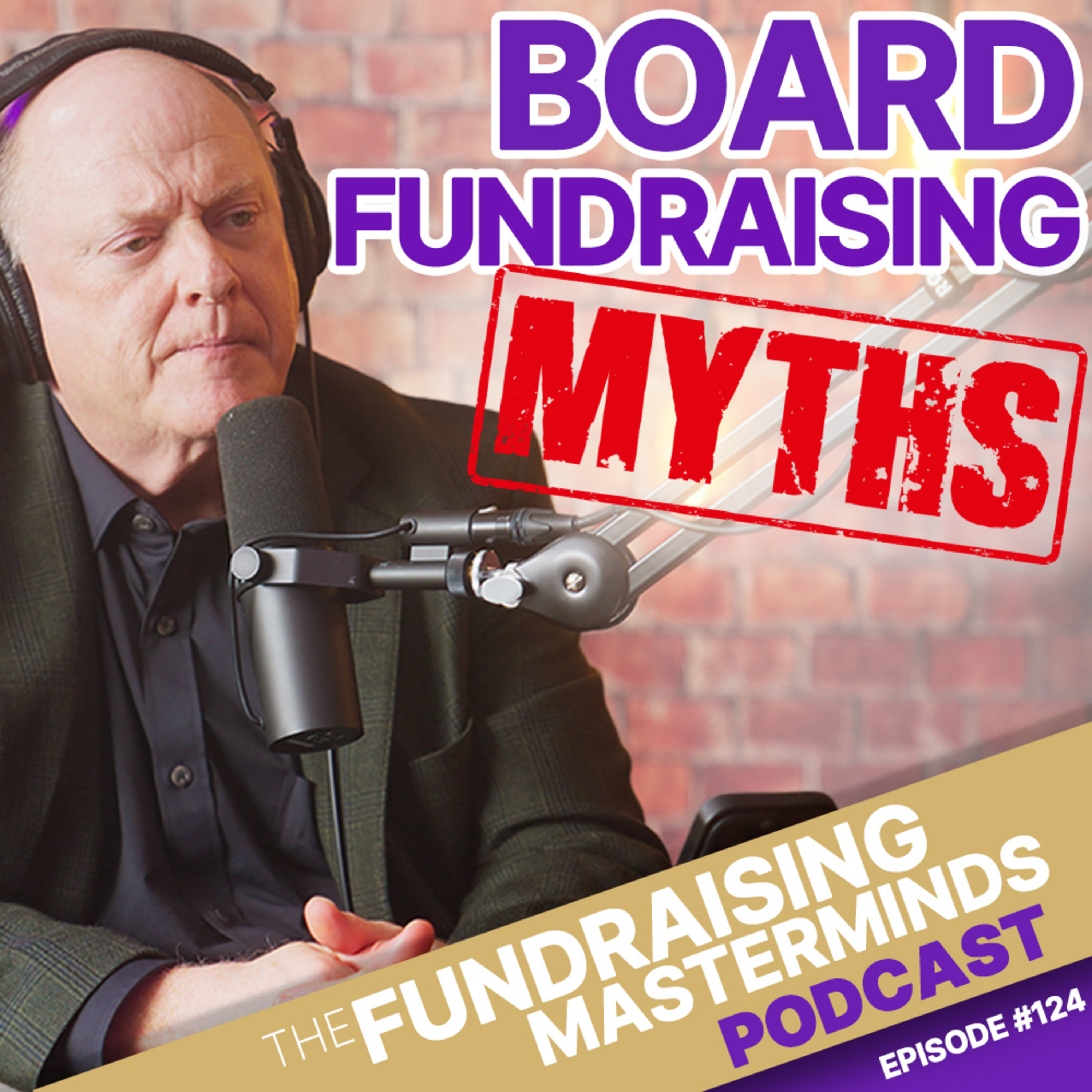
Loading summary
Transcript141 lines
- [00:00]
A
You're listening to the number one podcast for nonprofit leaders, getting your nonprofit fully funded. This is the Fundraising Masterminds Podcast. Just because the government says, you know, check this box, this is what you need, doesn't mean that you should just consider it like a box. Check.
- [00:18]
B
Who are the best board members as a whole who are going to represent us well in labor influence, finances, and expertise. If you don't have the right people, replace them. Give, get or get off.
- [00:36]
A
Welcome back to another episode here at the Fundraising Masterminds Podcast. I'm so glad that you've chosen to tune in today for this episode. My name is Jason Galasinski, and with me, my co host, Jim Dempsey.
- [00:47]
B
Hi, Jason.
- [00:48]
A
One of our most popular topics is the topic of the board. Just seems like everyone is always struggling with the board or they want to know how to get the board more engaged or they want board advice, you know, and I think that's because boards kind of run nonprofits.
- [01:02]
B
Right. That's what I heard.
- [01:03]
A
We're required to have board meetings. And so what happens when your board meetings don't go very well, or what happens when there's no leadership or apathy in the board? Then things start to become frustrating to the people who are in the day to day.
- [01:16]
B
Right. Yeah. You want alignment with your board. It's so important. It's just like in your family, if you and your wife aren't on the same page in the direction, whether it be raising kids, whether it be your faith, whether it be your decisions on your budget, there's not a happy family. It's exactly the same way with your nonprofit.
- [01:34]
A
Yeah. So we named this episode the Three Most Dangerous Board Fundraising myths.
- [01:40]
B
Yes.
- [01:41]
A
And there are a lot of myths about boards, but these are the three most dangerous.
- [01:45]
B
Right.
- [01:45]
A
And the reason why they're dangerous is because if one of these three exist in your nonprofit and they continue to exist, we think that it's just a matter of time before you either resign, you either replace your board, or you watch your nonprofit fall apart.
- [02:01]
B
Yeah.
- [02:02]
A
So these are. These are kind of major things that we're talking about. And so if your nonprofit is in that place where you feel like, man, I feel like I should resign, or if you feel like I need to replace my board or you feel like your nonprofit is losing momentum, it might be because of one of these three things that we're going to talk about on the program today. So. Well, Jim, the first myth, and probably one of the most dangerous ones, is board members don't need to be involved in fundraising.
- [02:30]
B
Wow. Jason, that is probably, as a whole, out of the three, the most important at this point in time, we have found that this all comes back to improper understanding of what the role of the board is. They may have come on the board without any instruction whatsoever. And I hear that all the time, is that I did not come on the board to raise money. I did not not come on the board to help to fill a table at a Vision dinner. I did not come on to help wash cars or be part of a walkathon. I came on to give my opinion and not to be involved in these kinds of things. And that always goes back to improper training. That the expectations, which the fundraising aspects or the development aspects should have been one of the most important things that were highlighted in the recruitment during that time. And unfortunately, too many boards are created and people are recruited to boards because they've got a pulse. You know, do they. Do they have. Do we have a mirror? Do we put it under the nose of the person? And if they're breathing, we allow them to be on the board. And that's one of the last reasons they should be current partners already, financially. But they also should be someone who is interested in the development aspect. So I always use the phrase give, get or get off. And that is so important. We want them to be giving themselves. We want them to be getting, helping you get money. And if those two aren't there, then getting off is an important part. So that is one of the biggest misconceptions.
- [04:15]
A
So really, we want the boards to be engaged in the organization. We want the boards to care, you know, we want the boards to be giving of their labor, their influence, their finances and their expertise. That's right. And so they need to be contributing. We talked at a podcast recently, I can't remember the name of it, but there was a recent podcast episode where we talked about board members as co owners.
- [04:38]
B
Right.
- [04:39]
A
And just that aspect of, you know, if you had five shareholders of a company, then if you get a shareholders meeting together, those five shareholders that own the company are going to be discussing, like, what can we do to grow the company? How can we. What can we do to improve systems? What, you know, and it's all about growth.
- [05:00]
B
Right.
- [05:00]
A
And everybody's engaged. Everyone wants it to grow because they get benefited or they get rewarded because they own the shares. Right. Of the company.
- [05:08]
B
Right.
- [05:08]
A
So it's in their best interest if they make it happen. Right, right. It wouldn't really make sense if, like, all the shareholders of Apple just got together and just kind of threw their opinion, but just kind of had more of a. Whatever. It's fine, you know, do whatever you want to do. But you know, here's my opinion. And then they just leave.
- [05:28]
B
Right.
- [05:29]
A
Like that really wouldn't be a great shareholders meeting.
- [05:32]
B
No.
- [05:32]
A
So if you approach your nonprofit board meeting like you would a shareholders meeting of a business, then that's kind of the mindset that we need to have.
- [05:42]
B
Yeah, well, and they need to understand that they have a fiduciary responsibility. And I oftentimes find, find that that's never communicated. We think that our board understands that. And a fiduciary responsibility doesn't just mean that we spend the money properly. That's important. But it also means that they're responsible for the success of the organization as a whole. And success means are they helping the organization to be funded and are they making sure that the funds are coming in the door? So if they are washing their hands or saying, I'm hands off in this, they're violating their number one responsibility.
- [06:24]
A
Well, Jim, so why is this so dangerous?
- [06:27]
B
Well, first of all, it falls number one on the responsibility of the executive director. Then that means they're on the tip of the spear. And it also opens them up, the executive director, to more scrutiny, to criticism, because you're doing it and the board is left with will critique the way that you're doing it when you're co owners together, as you mentioned.
- [06:54]
A
Oh, so you don't think it's a great board. Meetings shouldn't be critique meetings.
- [06:58]
B
They should never be critique meetings. That's exactly right.
- [07:00]
A
But that's what it is. I mean, that's what I mean. I show up to my board meeting, I have to justify everything to my board. Or the board is like, well, why did you do this and why did you do that? That wasn't a great idea. And you know, so it's like a judgment. Maybe a lot of executives kind of feel like they're being scrutinized on every little thing they can ever please the board, you know?
- [07:19]
B
Yeah. Well, if your board is that way, you need to look for number two option that you mentioned earlier was find another board. Because if your board is made up of individuals who just want to criticize the executive director, you could fall into number one, which is resign. But I don't think you want to do that. So you may need to slowly start looking for new board members. But honestly, your best answer is to actually educate them and get them to understand what their role is.
- [07:48]
A
And if they're not Willing to be educated. Then they need to be.
- [07:51]
B
Then they need to step off. Yeah. Then they need to be replaced.
- [07:53]
A
I like. I like what you said.
- [07:54]
B
Get, give, get, or get off.
- [07:56]
A
Yeah. Give, get, or get off. Yeah, I like that. That's good.
- [07:59]
B
Yeah.
- [08:00]
A
That really helps. Yeah. Well, let's talk about myth number two. So the second myth, and this is kind of a slippery slope thing. I know that when I started my own nonprofit, you know, and a lot of people, when they start nonprofit. Well, let me say what the myth is. So the second myth is also equally as dangerous. And the second myth is it doesn't matter who's on the board.
- [08:25]
B
Yes.
- [08:25]
A
Now, this is kind of coming from. I mean, I even did this when I started my nonprofit. So, like, it's just. It's one of those things that people. They have an idea, they want to start a nonprofit. They don't know a whole lot about it.
- [08:39]
B
Yeah.
- [08:39]
A
And so you're filling out the paperwork.
- [08:41]
B
Yeah.
- [08:41]
A
And you're just kind of like, okay, I need a mission. I need this. I need a budget. And you're just going through. And it's like, okay, everything's great. And then it's like, now you need to have a board, and you're like,
- [08:49]
B
oh, and officers, and. Yeah.
- [08:52]
A
And then you're like, oh, well, what do I have to do? What does that mean? You know, and then you're like, well, a board is five people that. And you just have an annual meeting. And what a lot of people think is, oh, it's just an annual meeting. So I just pick my five best friends.
- [09:05]
B
Fred's my good friend. We got to get along on a board.
- [09:08]
A
And, you know, I'll just pick my best friends or my best, you know, my people at church or whatever.
- [09:13]
B
Family members.
- [09:13]
A
Family members. And I'll just. I'll just have, like, five random people. And it doesn't really matter because, like, I. I get to do what I want to do. And then as long as we just have an annual meeting and they just, you know, rubber through the emotions.
- [09:26]
B
Right. They'll just.
- [09:27]
A
Yeah.
- [09:27]
B
Do what I want them to do.
- [09:28]
A
So it really doesn't matter who's on the board. That's what people kind of conclude is as long as I just have five breathing souls, like you said.
- [09:35]
B
Right.
- [09:35]
A
Then it's fine, you know? And then I can run it the way I want, and then my board can just rubber stamp everything.
- [09:41]
B
Right. Right.
- [09:42]
A
And the part that's kind of scary about this is that it actually does work at the beginning. Right. Like, you know, because you don't know
- [09:52]
B
better, they don't know better.
- [09:54]
A
Right.
- [09:54]
B
And you just kind of exist.
- [09:55]
A
So, like, for the first couple years, it might be fine because you're just like, okay, sweet, I'm head to the ground. I'm just doing my thing. And they're just like, oh, yeah, we love it. But eventually, as your ministry starts to grow and your organization starts to grow and you start wanting to get into different things, like, maybe you start off with just. It's just you doing stuff, but then you realize, like, well, we need to get a building or we need to get, you know, we need to launch this program. Well, now, now, suddenly the board needs to be involved in a decision, right? And if they don't understand, if they're not fully trained and how to be boards, then they're not going to know why to make that decision or how it works or anything like that, or
- [10:36]
B
fully immersed in the mission or what the direction is, strategic planning, those kinds of things. If there's not alignment.
- [10:44]
A
Yeah, yeah. So then what tends to happen is the executive director, as they get more and more vested, they start to realize, like, I can't do everything myself, right? I need help. And then they start realizing, you know, probably from listening to our podcast, like, oh, my board needs to be involved. So they go to their board and they say, you really need to be more involved. We need to do this and we need to do that. And the board's like, hey, I didn't sign up for this, right? You know, like, what are you asking me to get table hosts for? And, like, why do I need to give a matching gift? And, you know, so like, just kind of walk through, right. That slippery slope with me, Jim.
- [11:19]
B
Well, and a lot of times when we talk about maybe you've gotten beyond the just warm bodies, but, you know, it's so normal to say, oh, I want to include my pastor. We probably should have an attorney on the board. How about a university professor? Those kinds of people certainly should be on the board. And I chose those three intentionally because those can be three of the worst possible board members. And we don't have all the time to extensively talk about why they are the worst board members. But you've got to make sure that you've got board members who are on the same page. Typically small business owners, people who have had to start an organization or a business from scratch, understand how to serve on a small organization's board. Board or an individual who has had to raise money themselves in the past makes such better board members. Pastors typically are so divided because they've got their own budget to raise. And to be honest, many of them will tell you they maybe took 30 minutes of their seminary degree to learn how to raise money. Attorneys tend to argue with you and complain and nitpick every single item, every decision.
- [12:46]
A
We can do that because of this little.
- [12:48]
B
There's a legal nuance the IRS wouldn't want this, or something's not on there, or you didn't dot this I correctly. Whatever it is, because they're always. They were taught to look for the negative side of everything in life. And so. But we make the same mistakes, too. The board needs to reflect our audience. We need to make sure that we've got individuals who are people of color because of this or that, rather than looking at who are the best board members as a whole, who are going to represent us well in labor influence, finances, and expertise. So you've got to look very proactively at who is our board and who do we want on the board. And once again, if you don't have the right people, replace them.
- [13:39]
A
Well, we wrote down these four things why this myth is so dangerous. Four things. Number one, board members aren't being chosen for their leadership or skill. Number two, they aren't excited about your mission or vision. Number three, they aren't given any expectations of what their roles and responsibilities are. And number four, they don't feel any responsibility for the outcomes of the nonprofits. They're just warm bodies that show up and check a box. And that's a very dangerous place to be because although it might pan out at the first year or two eventually, and we work with a lot of people like this, they're wanting to do the perfect vision there. They're wanting to grow. They're wanting to get to the next level, and that's when their board starts to push back.
- [14:26]
B
Right, right, right. Well, Jason, we discussed the first three earlier, but this last one I really want to camp out on for just a minute. It's taking on the responsibility, because I've seen this happen so often, especially with our Perfect Vision dinner. A board member wants to step up and do an appeal, but they don't want. They want to do it their way. They don't want to do it the way that we recommend, or they feel like, oh, I've done appeals before. I know how these things could go. But you know what? It isn't them who in the. In the. In the end really have to live with the decisions that are made. It's the executive Director who's getting paid, who's getting a salary, who has to live with a dinner that doesn't raise much money. I can tell you this, that if a board member botches an appeal, they go home and sleep fine. If the board member bots the appeal, the one who suffers is the executive director, because they have to live with that and potentially a loss of income. Staff who are upset, donors are upset. So it is so important that you have people that, that do own and take responsibility for the outcome.
- [15:37]
A
Yeah. So if you're in this situation where you just realize, I just got bad board members, I picked my family. And they really don't. They're really just rubber stamping, or maybe they're not even showing up to board meetings, you know, and so they're just going through the motions. Well, you know, how do you get out of a board or how do you replace your board if your board doesn't show up for board meetings or they don't want to vote themselves off, you know, they don't want to be replaced for whatever reason. They. It's a privilege. Or maybe they just want to make your life miserable.
- [16:08]
B
Right.
- [16:08]
A
And they just don't want you to have good board members, you know. So we came up with three ways or action plans that you could do to kind of rotate your board. So what. What are those, Jim?
- [16:18]
B
Well, Jason, I will tell you that any board I get on, especially when I come on and they board members are on for life. One of the things that I decide immediately from the beginning, I incorporate term limits. Term limits really allow you to reinvite individuals who are very good active board members and just allow those who aren't good board members to sail off right off into the sunset and we give them their gold watch and they move on.
- [16:55]
A
Well, and that's really a bylaw thing, right? Well, because when you're setting up your
- [16:59]
B
bylaws, establish your bylaws. Right.
- [17:01]
A
Because that's something that, you know, it may not be in a standard template.
- [17:05]
B
Right.
- [17:05]
A
You know, a lot of times when we're creating a nonprofit, we just kind of find some generic template like, oh, this is fine. You may not have the wisdom or forethought to think, well, I should put something in my bylaws that auto rotates board members. But that's really what you're saying is we should have something in our bylaws that has term limits with board members. So some people do like every two years, some people do every three years. But having something where, you know, board members just rotate Off.
- [17:34]
B
Right.
- [17:35]
A
And that's, that's the, that's definitely the easiest way to replace your board.
- [17:39]
B
Yeah, yeah.
- [17:40]
A
But if you don't have that, you know, then your next best option is just to kind of stack the board. Right. Where you just kind of say, I'm going to recommend that we bring in so and so and so and so you just kind of start growing the board to where you've got eight or nine or 10 board members and then they can start voting board members off.
- [17:59]
B
Yes. You can outnumber essentially the bad board members. Or I mean, a much easier way is to have the board chair have a conversation with individuals and say, you know what, Fred, it seems that we don't have the best fit in here. We're not delighted at having to battle for everything. You aren't delighted to battle with everything. How about you consider just stepping off and make this an easy experiment for us?
- [18:30]
A
Yeah, well, that's definitely the easier.
- [18:32]
B
That is the easier. Now that it is also easier said than done because you may have very obstinate board members and I have faced that before, but the bylaws tend to be your best way. If you can have that established early on, and I typically recommend three year term, then be challenged for a second consecutive three year term and then you have to be off for at least one year before you can be asked.
- [18:55]
A
Okay. Yeah, that's good. Yeah.
- [18:57]
B
All right.
- [18:57]
A
The third myth is a subtle myth, but it is board members don't really need to give.
- [19:04]
B
Yeah.
- [19:05]
A
They're just board members. Right, Right. So now this sounds subtle, but it is actually very deadly. And can you kind of walk us through why this is deadly?
- [19:15]
B
Well, Jason, you mentioned earlier about board members being co owners, and that is so true. And if you thought about a board of a for profit business, a publicly owned, publicly traded company, not one of those board members, I have never once found a board member on any of those companies who did not own shares in the company. And essentially you're asking individuals to be on who if they're not giving, they don't, they aren't really owners of the company. They need to be invested. They need to be invested. And if they aren't, then they really are not ownership. They really are not part of that. Now, we're not asking everyone to give equally. We're not asking someone to give $50,000 to be on the board if they don't have the capacity to do something like that. But there isn't a board member that can't or shouldn't at least Give something. And I always like to use the term not equal giving, but equal sacrif. And so if everyone on the board is equally sacrificing. And I'm really excited that now more and more foundations are requiring that if to get a grant from the foundation, 100% of the board members need to be giving, because that just instills in every board that the concept that, you know, giving is equal to ownership, and that's why that's so important. And if people wash their hands and say, you know, I'll give in another way through my time, that's. That's a nice gesture. But remember where your treasure is. That's where your heart will be also. And so that goes back to Jesus. And we know that that is a sound principle, that if you aren't giving, your heart's not there.
- [21:06]
A
Yeah, well. And really, when you look at all three of these myths, there's really kind of all three of them have one kind of general root issue, and that root issue is basically that they're rooted in the belief that the board is just a legal requirement that needs to be checked off in order to create a nonprofit. Right. So if your view of the board is it's just a legal requirement, I just need to go through this little exercise to check the box so that I can have my nonprofit, then you're missing the whole point of, you know, why the board exists in the first place. Right? So, you know, the government kind of like the food parameter or something, Right? Like the. They. They. They tell you what you should eat, but then you still have to, like, understand how food going into your body affects you, you know, so it's like the legal requirement is just them saying, well, we've decided that, you know, you need to have a board, you know, to have a nonprofit, because you shouldn't have a nonprofit by yourself.
- [22:08]
B
Right.
- [22:08]
A
But then it's up to you to figure out, well, what. What is a board and how does it work, and how can I use the board as a tool? And if you don't know how that works, I would recommend that you just search the fundraising masterminds podcast for the word board or board meetings or board members. We have probably four or five really good episodes. There might even be more now on the board. And there's all kinds of things. Ideas that we've talked about in the past on how boards can be involved.
- [22:37]
B
Right.
- [22:37]
A
So it's not just a legal requirement.
- [22:40]
B
Right?
- [22:41]
A
There's a lot more to boards than a legal requirement.
- [22:44]
B
Well, Jason, I mean, it. You Know, I love your food pyramid example because in reality, I mean, if you are following the news nowadays, we just flipped the old food pyramid and we took the things that we said to not eat much of now, you need to consume a lot of. And the things that we said consume a lot of, you want to be reduced. And unfortunately, what happened in the old pyramid, what we lived in for decades, was that we never actually looked to see the implications of what those food would have on the body. Just because Kellogg's called and said, I want Kellogg products on the top of the food pyramid and it's part of a complete breakfast, that meant that we should have sugar Frosted Flakes every morning as part of a complete breakfast. Which that was insanity to do those kind things. And we've actually reversed that. And instead of making meats and cheeses and butter public enemy number one, now they're the things that we need to be thinking about. Good fats for a healthy body. It's exactly the same way with the board members. Instead of just checking off the box like the old food pyramid, we need to reverse that and start seeing the importance of the good.
- [24:04]
A
Well, and if you knew anything about food and nutrition or whatever, you would have discovered the truth, you know, like even 20 years ago. Right. Everyone, the people who are the nutritionalists and who really understood the body, knew what the body really needed.
- [24:17]
B
But unfortunately, money talked. And you know, those contributions from Kellogg's too, you know, the, the right sources were able to reduce that.
- [24:26]
A
Yeah, but what I'm trying to say is, you know, just because the government says, you know, check this box, this is what you need.
- [24:33]
B
Yeah.
- [24:34]
A
Doesn't mean that you should just consider it like a box check.
- [24:37]
B
Correct.
- [24:37]
A
You should take the time to research.
- [24:40]
B
Right.
- [24:40]
A
What is a board actually supposed to do?
- [24:42]
B
Right.
- [24:43]
A
And actually we spend a considerable amount of time training the board in the Winner's Circle program, which is our three year program after the Perfect Vision Inner,
- [24:52]
B
it's kind of our advanced course for those individuals who wants more advanced training.
- [24:56]
A
Yeah, and it's really, really great program. We don't talk about the Winner's Circle a whole lot on the podcast, but it is that next level. So everyone who goes through the Perfect Vision Inner, and you know, we've had people actually ask us like, can I just get into the Winner's Circle? I just want to. I just want development or even buy
- [25:13]
B
their into the winner circle. And the answer is no.
- [25:16]
A
Yeah, we always say no. And that's because the starting point to every great development program is winning the right partners to your cause. So you can't just start in the middle. You have to first learn how to win people to your organization. And the best way to do that is the perfect vision enter.
- [25:33]
B
That's right.
- [25:33]
A
So we always start with the perfect vision enter, and then we move to the winner's circle. But the winner circle is where we, you know, really dive into the board. We actually do a whole year on evaluating your board, revamping your board and all that stuff. So it's really deep dive. We go through several books and talk about it in great detail. So the, the episodes that we have talked about the board on the podcast are like just scratching the little itty bitty surface.
- [26:03]
B
They were a pinprick in the whole spectrum.
- [26:06]
A
But if you. If you want to learn more about the boards, check out episode 13, which talks about who you know, who to have, who not to have, and how to find board members. You could also check out podcast episode 15, which talks about, it's kind of a part two of that same series, the role and responsibilities of the board. You could also check out episode 45, which talks about nine ways your board members can be involved or should be involved in fundraising. In episode 86, nine ways your board members should be involved in a fundraising event such as the Perfect Vision Dinner. But, yeah, there's a lot out there about boards. There's a lot of confusion about boards. But, Jim, let me ask you this final question. If I'm listening to this episode, I'm listening to Jim and Jason talk, and I am feeling like, man, they're just describing me. Perfect. I've messed up. I've got. I just checked the box. I'm, you know, what you're describing is like, my life, it's horrible. I want to get out. Like, what? Give me some final, like, action steps that I can do right now to help me get myself out of this pit.
- [27:14]
B
Well, first of all, don't resign. Don't. Your life is not over. There is hope out there, but generally it's going to take time, Jason. It really is, because you may have to have a complete shift with your board in direction in who is on your board. But start with the elements of training your board. Go there first. Believe, pray. Start with prayer and believe that God maybe can turn the hearts of your board members around. But it may just be that your board members simply just didn't understand and didn't know what was the word. The expectations were right and we just need to inform them and let them know who knows, they may Just embrace it and say, wow, this is great. We get it. We'll start doing some adjustments. If they push back, then you can look at utilizing some of the other options which are changing to them. Change the shape, the course, the direction of your board. Yeah, exactly.
- [28:13]
A
Well, I think just making your board members aware that, hey, I know when I started this thing, I was in this kind of place of life and, and you've really helped me to get this off the ground. Thank you for your service. But you know, we're really wanting to move in a different direction. We're really wanting to take this organization to another level. And we're looking for board members that can do this and this and this and this. And you know, we want you to fill that. But if you're not at a place where you feel like you can make that commitment, then, you know, I think it's the honorable thing is to resign and let us help fill your shoes. Right. But if they don't want to resign, the next best option is just to say, well, we're going to bring on new board members that are going to help us, you know, accomplish this goal.
- [28:59]
B
Yeah.
- [28:59]
A
Kind of with or without them.
- [29:00]
B
Yeah. And you don't have to say we're bringing them on to replace you, but essentially that's what you're doing. Right. And. And I can't tell you how many organizations I've worked with that have outgrown their board. When they first started out, some of their board members weren't very knowledgeable, but they were, were the right people at the right time. But then the board grows fast and the board is just left behind. And some of the board members actually are grateful when you say to them, you know, maybe you've reached this point where we need to take on someone else to take us to the next level.
- [29:34]
A
Yeah, yeah, yeah. Well, if you're listening to this and you're like, well, honestly guys, like, how do I get into that, like year long board training program. What did you call that again? The Winner's Circle. How do I, how do I get into that? And you're like, well, unfortunately, let me just kind of explain how the Winner's Circle works. So the Winner's Circle is a graduate program of the Perfect Vision Dinner. So everything that we do here at Fundraising Masterminds, we are focused on training nonprofits on the best framework to raise major partners for your organization. Ultimately, Jim and I believe that the best thing to sustain your ministry is not tons of fundraiser events. It's major partners really is what's going to sustain you. In fact, you say in our programs that, you know, a third of your money should be coming in through vision dinners and 2/3 of your money should be coming in through major partners, major partner efforts. And a lot of people, you know, they're kind of bringing in the majority of their income through just fundraiser, fundraiser, fundraiser, fundraiser. Maybe like, like 5% is a major partner, but it's not 2/3. So if you really want to take your organization to the next level, really build a movement that's going to last, you've got to get major partners involved, which then becomes, well, how do I get major partners involved? You could certainly take something like a training program, but it's just all going to be theory. We want to actually take you through a process where you actually get major partners involved. And so we feel like the best way to do that is to start with the Perfect Vision Inner. I know I literally say that in like every episode, but it's true. Right? Like if you think about it logically, you've the best way to get new major partners interested in your organization is to share the vision with them and share, give them opportunities to get involved. Right. And that's exactly what we're doing at the Perfect Vision Inner. We're having them come in, we're sharing it in a compelling hour and 15 minute program and we're giving them a starting point for you to get to know them more. And honestly, it's better to lead out with something for your board to do than it is to say, hey, I bought this year long training program. Who wants to go to that?
- [31:53]
B
Yeah.
- [31:54]
A
Oh, when is that again?
- [31:56]
B
You're going to be forced to have to take.
- [31:58]
A
Yeah, right. Like, so honestly, we're. It's better to lead out with action. Right? The Perfect Vision Inner gets your board involved, it gets them engaged and then they see like, whoa, we just raised $100,000.
- [32:09]
B
This was not as difficult as I thought it was going to be.
- [32:11]
A
And then, and now we have their attention. Now they're interested in like, okay, how do we do this again? And then. So this is just the model that we've determined works the best. And if you want to get involved with the Perfect Vision Inner mentorship program. I know, you know, we have two cohorts a year. We do one that starts in the fall, that's for spring dinners. We have one that starts in the spring for fall dinners. But guess what, we've got a new pre course that allows you to get started sooner. And we're really super Excited about this. We call it the Pre Course Accelerator and it's available every month it starts. Okay. So every month we start a new one. And the purpose of the Pre Course accelerator is to give you a jump start so that you don't have to wait until October to get into the perfect vision Enter. You can start next month, you can start in five days, you can start in 10 days. Whenever it is that your board decides they want to start. We have a pre course accelerator starting every month. And so this little program is designed to kind of give you a leg up and to prepare you, and it really does focus on boards. Like one of the things that we talk about in the pre course accelerator is how to prepare your board for a vision dinner. And we actually have a board party. We get the board together, we talk about the nine ways that they can be involved. And the goal of the Pre Course accelerator is really to give you a head start so that by the time Jim and I start the cohort with you in October, you're already like, way ahead of the game. You've already picked out your venue, you. You've already got your board excited. Everybody's kind of ready to go. Right, right. Because so often when we start a cohort, you know, people are just playing catch up. You know, it's like they're, they join and we're just like turning on a fire hose and just like open up your mouth, Jim.
- [33:59]
B
Yeah, yeah, it's an all out sprint.
- [34:01]
A
Yeah.
- [34:02]
B
And this allows you to kind of start at a slower pace, to jog before you get to the sprint.
- [34:06]
A
Right, right. And so, yeah, this is, this is a new thing that we started in 2026 and, and it's been well received. So. So yeah, if you're interested in joining the, the program and getting started, you can actually book a call with our team right now and they can tell you about the program and get you signed up for the pre Course accelerator, like starting immediately, and you can start learning and prepping and then that'll work towards, you know, the, the cohort starting where Jim and I are involved in October. So really great. And yeah, well, if you enjoyed this episode and you want to learn more, you want to get more episodes like this, just know that this fundraising Masterminds podcast is for Christian nonprofit leaders. So if you are a nonprofit leader, you want to learn more about development, development strategy, how to get fully funded as an organization, then you are in the right place. So hit that subscribe button. Whether it's on Spotify or Apple or YouTube or wherever you are, subscribe to the Fundraising Masterminds podcast so you don't miss the next one because we got another one coming out and you're not going to want to miss that as well. And if you got a lot out of this or you want to add an opinion or ask us a question, just put that in the comment section below and we will see that. We'll consider it and we really enjoy hearing from you. So thank you for reaching out that way as well. Well Jim, any final words about the three most dangerous myths?
- [35:28]
B
No. From my standpoint, it really just comes down to understanding your board, understanding role, understanding the responsibilities and make sure that you are getting your board in line because you're going to fall in in a bad place if you don't have the right board members who understand what their roles are.
- [35:49]
A
Right. Well, thanks Jim and thank you for tuning in. We'll see you next time on the Fundraising Masterminds podcast.
- [35:55]
B
Take.
- [36:00]
A
Sam.