← The Fundraising Masterminds Podcast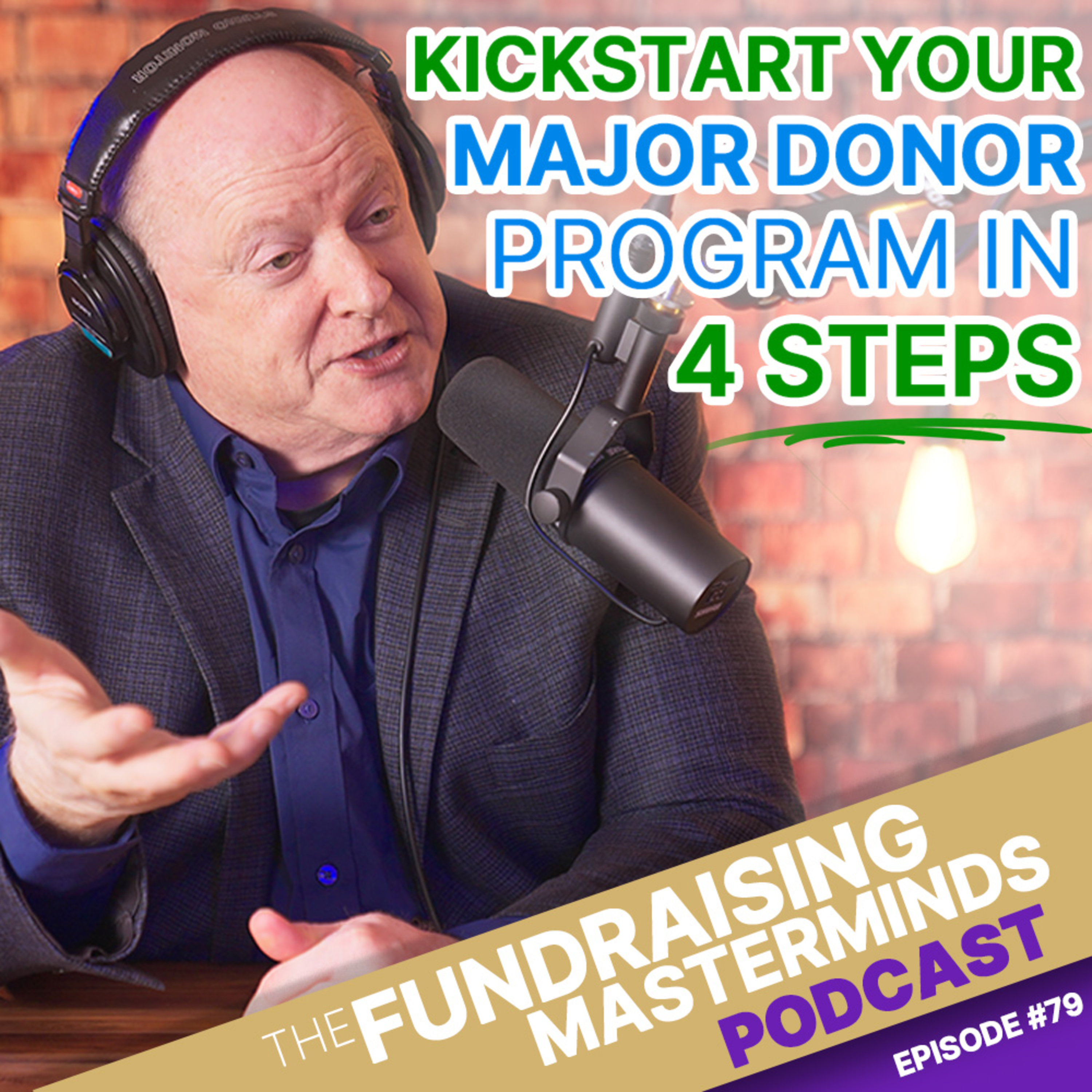
The Fundraising Masterminds Podcast
79. Four Things You Can Do Right Now to Kickstart Your Major Donor Program
00:27:31
Loading summary
Transcript170 lines
- [00:00]
Jason Galasinski
You're listening to the number one podcast for nonprofit leaders getting your nonprofit fully funded. This is the Fundraising Masterminds podcast. Hook them in with some kind of really good event that they would want to go to.
- [00:15]
Jim Dempsey
Right.
- [00:15]
Jason Galasinski
Use that as an opportunity to build relationships, do the appeal, do a presentation.
- [00:20]
Jim Dempsey
Then you get them to invite their friends to come to event, and you start the process with their friends.
- [00:27]
Jason Galasinski
This is not complicated. Right. This is a fairly simple just building friendship. Well, hey there. Welcome to another episode of the Fundraising Masterminds Podcast. We are so excited to see you and have you join with us today. I'm your host, Jason Galasinski, and with me, my co host, Jim Dempsey.
- [00:45]
Jim Dempsey
Hi, Jason.
- [00:46]
Jason Galasinski
And together we have over 60 years of development experience working with thousands of nonprofits all over the world. We are so excited that you're here. You know, if you are a non profit leader, executive director, development director, or involved in nonprofit leadership, then this podcast is for you. And today is no exception. We've got a great topic lined up for you today. And today is no exception. We've got a great topic lined up for you. We're going to be talking about major donors today.
- [01:16]
Jim Dempsey
Yeah. This seems to be one of our hottest topics always, Jason. People tend to flock to our videos when we talk about major donors.
- [01:24]
Jason Galasinski
So today we're gonna give you four steps of what you can do right now to kickstart your major general program.
- [01:30]
Jim Dempsey
Absolutely.
- [01:31]
Jason Galasinski
And they're very simple things. These aren't complicated things. Okay.
- [01:34]
Jim Dempsey
Right.
- [01:35]
Jason Galasinski
So the main goal is we want to be focused on building relationships. So we need to get into a relational mindset, Right?
- [01:43]
Jim Dempsey
Absolutely.
- [01:43]
Jason Galasinski
What can we do to build foster relationships? So if you think about back in your young days when you. Before you were married, and you were probably thinking along the lines of, wow, someday I'm gonna get married and.
- [01:57]
Jim Dempsey
Right.
- [01:58]
Jason Galasinski
And who am I gonna marry and how am I gonna find this person?
- [02:01]
Jim Dempsey
Yeah.
- [02:01]
Jason Galasinski
You know, there's. There's things that you do to cultivate relationships, to get to know people.
- [02:06]
Jim Dempsey
Right, Right.
- [02:07]
Jason Galasinski
You don't just start a program and say, well, the Jim Dempsey dating program has begun, and I'm gonna be.
- [02:13]
Jim Dempsey
I'm gonna be done with this by this date. I'm gonna have a spouse chosen by this date. Yeah.
- [02:19]
Jason Galasinski
And I'm gonna date 10 girls a week until I find my perfect whatever. You know, like, you can't just go into it systematically.
- [02:27]
Jim Dempsey
Yeah. There needs to be some intentionality, but yes. You can't just put a. Just run it through a process.
- [02:36]
Jason Galasinski
Right, right. So that's that's what we're trying to get at here.
- [02:38]
Jim Dempsey
Right?
- [02:38]
Jason Galasinski
This, these steps are relational steps, relationship building steps. And really, if you've been listening to our podcast for any length of time, you know that we're all about friend raising and not fundraising. In fact, we did a whole podcast episode on the differences between fundraising and fundraising.
- [02:54]
Jim Dempsey
Right, right.
- [02:55]
Jason Galasinski
So we're not trying to just get dollars. We're not trying to treat them like ATMs, right?
- [03:01]
Jim Dempsey
That's right.
- [03:01]
Jason Galasinski
We want them to be long term, long term partners, long term friends. So, Jim, why don't we get into these four things?
- [03:10]
Jim Dempsey
Yeah, absolutely. Well, the first thing is really finding a hook and engaging with people. We need to find out what are some things that they have an interest in. When you and I were talking about this particular episode, I started sharing with you one activity or that really surprisingly. And I say that in that it kind of surprised us. Yeah, that has really been a game changer for us. And within the major donor effort, within the campus ministry of crew, one event really made a big difference, and that was a dove hunt. Now, I know right now we may be sending up a few red flags with some people that, oh, I hate to talk about hunting or killing animals or something like that, and put that.
- [03:55]
Jason Galasinski
Thought on hold for you.
- [03:56]
Jim Dempsey
I kind of start by apologizing in the sense that, you know, this is a particular activity that happened to resonate really well with people. Jason, we came across an individual in Houston, Texas, who over a number of years has become a very, very dear friend of our organization. And at one point he said to us, I own a ranch. And a typical weekend at that ranch for people who come in and hunt is about $10,000 in a weekend. But I'm going to offer that to you free of charge to any individuals who you want to bring there who are prospective donors to the organization.
- [04:40]
Jason Galasinski
Wow, that's a pretty big deal.
- [04:42]
Jim Dempsey
It is a really big deal. And the individuals who we started inviting knew it was a big deal. We provided them an opportunity to be able to do a trip of a lifetime, essentially. And those people saw that, hey, I get to go with a friend of mine, essentially, who we had begun to start at least some relationships with some people. So we saw the opportunity that we could invite these people. They would have a good time, and at the end of the day, we'd have an opportunity, kind of sit around and talk a little bit about what we did. Well, it really surpassed our expectations. We weren't sure exactly what to expect with some of these, but when you speak, spend a day with an individual, you know, riding in Jeeps all over West Texas and, you know, just essentially in sport with someone and roughing it. It's a neat experience. And at the end of the day, we would sit around in the cabin, in the lodge and have a fireplace and just start to talk about things. We talk about life. We talk about challenges they were facing in their. And then we would shift over to the mission of our organization, and we would, In a very warm and friendly atmosphere, we get to talk about what we do and how we do it.
- [06:13]
Jason Galasinski
That's really nice, actually. Can I go on one of those trips?
- [06:16]
Jim Dempsey
You sure can. Absolutely. But it really opened the door. And what that said to me, Jason, it isn't that particular event or opportunity that made the difference, although it certainly helped. But we have found a wide variety of activities like that. Other hunting opportunities, we do a few pheasant hunt episodes, but we also do a golf outing. We do a wide variety of things.
- [06:46]
Jason Galasinski
The. The take the principle of what we're saying, not don't copy it, not the actual activity. Right, right. So it. The main thing is that it. The activity was something that was valued.
- [06:57]
Jim Dempsey
Right.
- [06:58]
Jason Galasinski
At something that a major donor would appreciate.
- [07:00]
Jim Dempsey
Right.
- [07:01]
Jason Galasinski
So it wasn't like a trinket thing.
- [07:03]
Jim Dempsey
That's right.
- [07:03]
Jason Galasinski
But it was like, oh, wow, this is a really good deal.
- [07:05]
Jim Dempsey
Y.
- [07:05]
Jason Galasinski
You know, so if your major donors like golfing and you can get a really nice reputable VIP golf course to give you a weekend tournament or something free of charge or something like that.
- [07:18]
Jim Dempsey
Right, right.
- [07:19]
Jason Galasinski
To where people would actually want to fly across the country.
- [07:22]
Jim Dempsey
Right.
- [07:23]
Jason Galasinski
Or take some time out of their busy schedule to go to.
- [07:26]
Jim Dempsey
Right? Absolutely. Well, and. And some of those who are. Are in our audience are listening, saying, well, this tends to be a male heavy activity. We've done the same thing with our ladies. There's a resort in Tennessee called BlackBerry, which is a very prominent resort. And I had no idea until some of our ladies said, hey, can we do an event at BlackBerry? I find that Ellen DeGeneres, Oprah Winfrey, these are the kinds of places that they like to go to. The BlackBerry resort is a lavish resort from the standpoint that it's a rustic setting, but they treat their people well. Like, you go on a hike and they've got stations where you build s'mores and you have. And they're doing these things for you and just providing great treatment for people. And once again, we found a partner, a major donor, who are willing to help us offset the Cost of a weekend for our ladies. We did the exact same thing in New York City at Christmas time. Christmas time is a busy and a joyous time in New York City. The lights, the billboards, Broadway. We did an event there at Tavern on the Green. Take took individuals to the Waldorf Astoria Again. Once again, what we're saying is pulling people to a hook event that will get them connected.
- [08:54]
Jason Galasinski
Right. So the. The main principle here is that we want to hook them in.
- [08:57]
Jim Dempsey
Right.
- [08:58]
Jason Galasinski
With some kind of things that are.
- [08:59]
Jim Dempsey
Appealing and attracting to them.
- [09:01]
Jason Galasinski
Yeah. And then while they're there.
- [09:03]
Jim Dempsey
Yes.
- [09:03]
Jason Galasinski
We're gonna. We're not gonna just ask them for money.
- [09:06]
Jim Dempsey
No.
- [09:06]
Jason Galasinski
Right. No. We're using this as an opportunity to build a relationship with them.
- [09:10]
Jim Dempsey
That's right.
- [09:11]
Jason Galasinski
To know. That's right. To pray for them, to find out what they. What they care about.
- [09:16]
Jim Dempsey
Yeah.
- [09:16]
Jason Galasinski
And that's really kind of the next point that I want to get to is find out where their heart is, find out what their passion is. That's really the next step in building a major donor program. So the first one is hooking them in with a nice event, getting people together so you can connect.
- [09:32]
Jim Dempsey
Yep. Feel comfortable with us in our organization.
- [09:35]
Jason Galasinski
The second thing is that you want to find out what their passions are, what they care about.
- [09:40]
Jim Dempsey
Yeah. And we've talked about this a number of times on our broadcast is that you want to find out what interests them. And it may start with things like, what are your personal interests? But then when it gets to the bottom line, what makes you weep and pound the table? What are the things that you're passionate about? And I always say, Jason, you want to try and find that intersection between what they're passionate about and where your organization's mission is. And hopefully, you will find an intersection there where you can say, this is where I want to pinpoint this, because this may be where we. Together, we can accomplish a goal.
- [10:19]
Jason Galasinski
But you're really not necessarily doing that at the event.
- [10:23]
Jim Dempsey
Oh, no, no, no.
- [10:25]
Jason Galasinski
Get to know you kind of thing.
- [10:27]
Jim Dempsey
You said it well. But I want to make sure our audience understands this is. This is something that happens over time. It's. You know, you. I've used this analogy before as well. You didn't ask your wife. I didn't ask my wife to marry us on our first date. And it's exactly the same way. It took a period of courtship before we actually asked our spouses to marry us. It's exactly the same way. And unfortunately, well, I came out of the old school so much in development and I was taught initially, take, you know, strike while the iron's hot. Take advantage of that opportunity. And those things may still exist out there. I may try for six months to get an appointment with someone and I feel like if I, if I don't ask on that appointment, I may not get another appointment. And those do happen, but they're getting more and more rare. You want to look at what can we do over time to build a relationship with people. So, so you may have two, three, four meetings with someone to understand where is that, that connection with them before you actually ask. Yeah.
- [11:36]
Jason Galasinski
And that's kind of leading into our third point, which is getting an appointment with them, where you're meeting with them and communicating more one on one.
- [11:43]
Jim Dempsey
Right.
- [11:43]
Jason Galasinski
This, of course, is happening, you know, maybe days or weeks after the event or months or months.
- [11:49]
Jim Dempsey
Yeah, right, exactly.
- [11:50]
Jason Galasinski
So think of this as a long term thing, right. Where you're first inviting them to event, you're learning about who they are, you're following up with some thank you notes or maybe some phone calls. Right. And you're trying to find ways to connect on more of a personal level.
- [12:04]
Jim Dempsey
That's right.
- [12:04]
Jason Galasinski
Right. So the next step is you ultimately want to get to a point where you can make a presentation.
- [12:10]
Jim Dempsey
Right, right.
- [12:11]
Jason Galasinski
And that's our next step is present a case for support.
- [12:13]
Jim Dempsey
Yes.
- [12:14]
Jason Galasinski
But you can't just like say, hey, Bobby, you know, thanks for coming this weekend to this thing. Are you available tomorrow so I can come in and give you a presentation.
- [12:22]
Jim Dempsey
Right.
- [12:22]
Jason Galasinski
You know, unless they're really ready for it. You know, most people, I think, are. You got to warm them up. Well to this idea.
- [12:30]
Jim Dempsey
Yeah.
- [12:30]
Jason Galasinski
And, you know, help them get to know you and build that trust and. But eventually you want to get like you talk a lot about with major donors specifically.
- [12:38]
Jim Dempsey
Right.
- [12:38]
Jason Galasinski
You want to get face to face.
- [12:40]
Jim Dempsey
Right.
- [12:40]
Jason Galasinski
With them.
- [12:40]
Jim Dempsey
Exactly. Yeah. Well, again, using our marriage analogy, which I use quite often, is that, you know, I, I know for a fact Diane would not have married me if I asked her on the first date. I would venture to say Jennifer probably was the same way. A lot of our partners, it does take time and courtship to get to that point.
- [12:59]
Jason Galasinski
And you probably wouldn't marry your spouse if you didn't spend lot of face.
- [13:03]
Jim Dempsey
To face time time with them.
- [13:05]
Jason Galasinski
I mean, just, you know, you can't marry a person over letter writing.
- [13:08]
Jim Dempsey
That's right.
- [13:09]
Jason Galasinski
Can't marry a person over a phone call.
- [13:11]
Jim Dempsey
That's right.
- [13:12]
Jason Galasinski
You do have to make an effort to get face to face and.
- [13:16]
Jim Dempsey
Well, and, and Jason, you Asked me in the course of this discussion beforehand, you said, how do you, how do you develop a relationship with people outside your local area? Major donors? And I had to explain to you that a lot of our, our guys do take the time to get in a plane and go visit somebod, fly from Boston to Houston or from Boston to Chicago or from.
- [13:39]
Jason Galasinski
You just gotta do what it takes.
- [13:40]
Jim Dempsey
You do? Yeah. And, and yeah.
- [13:42]
Jason Galasinski
Is that kind of, that shows the person that, you know, wow, if this person got on a plane and to come and visit me, that means they really value me.
- [13:50]
Jim Dempsey
They value the relationship. Yeah. And they care. Well, and yeah. And you may say, oh, that's Gonna cost me $400. Well, what if you've got an opportunity to get $25,000? Would you invest 400 to get $25,000? Yeah. And, and it's never certain that you're someone in, when you go to meet them, but it, you know, your, your odds greatly increase. I can tell you that very rarely do you get money from someone when you don't ask them for that. The great philosopher Wayne Gretzky once said that you miss 100% of the shots you don't take, and that is by not getting in that plane and going to meet those people. Yeah, right. You're, you're missing that opportunity.
- [14:32]
Jason Galasinski
All right, well, the fourth step is, seems obvious to me, but after you've made a case for support on that one on one appointment. And by the way, I'd like to say that if you're kind of wondering, well, wait, tell me about that one on one appointment. Like, how do you actually do that? Right. How does that work? What do you say? How do you put together a case for support? Well, if you want to learn more about all that stuff, we've actually put together a full scale online course called Major Donor Mastery. This is really taking everything we know about major donors. How to develop a major donor plan, what to do with major, how to find major donors, how to book appointments, what to say at an appointment. Like, it's like really detailed stuff. And we've packed all this into a course called Major Donor Mastery. You can scan the QR code on the screen and check it out, you know, but I would recommend that we, I mean, there's like hours and hours and hours of footage in this course, so we don't have time to go into it in this program. Yeah. So I mean, really the case for support is, involves the whole, like meeting face to face.
- [15:40]
Jim Dempsey
Right.
- [15:41]
Jason Galasinski
You know, making the presentation and asking for support.
- [15:44]
Jim Dempsey
Right.
- [15:45]
Jason Galasinski
So once we finish the case for support, we really want to get into follow up. And that's really our fourth thing that we can do in our major donor program is following up with them after the case for support.
- [15:55]
Jim Dempsey
Yeah. Well, Jason, if you have done your job right, and of course, you know, you, you mentioned that we doing it right is in the major donor mastery.
- [16:05]
Jason Galasinski
Yeah.
- [16:05]
Jim Dempsey
But if you've done your job right, you're going to challenge someone to something big. Most of the time, if you do challenge someone, right, they're going to say, jim, I need to think about this a little bit. I need to process through, need to talk to my accountant, need to talk to my wife, whatever. You know, your spouse, you always say.
- [16:24]
Jason Galasinski
If, if they write you a check on the spot, you know that you.
- [16:27]
Jim Dempsey
You'Ve asked them for too little. Yeah, yeah, exactly. Yeah. And so you'll follow up with them and find out what have they decided and you can work through all the details. In this day and age, there's a lot of details involved in those things. A lot of times it's, how will the money be funneled to us? Do they need to sell some stock or donate some stock to us to be able to do this? But that is what needs to happen and you need have that discussion.
- [16:54]
Jason Galasinski
You always say most major donors have like 90 or maybe 95 of their wealth in assets.
- [17:00]
Jim Dempsey
Assets, right.
- [17:01]
Jason Galasinski
So if you challenge them, right, you know, and they think, okay, how do I make this happen?
- [17:07]
Jim Dempsey
Right.
- [17:07]
Jason Galasinski
You know, they're thinking not in terms of how do I get, you know, dollar signs out of my bank account. They're thinking more along the lines of, okay, what things do I need to move around? How do I, what, what things do I need to shift? What could I sell? I do have this thing over here. I don't really use that very often. Maybe I could get rid of that and that'll pay for this. Or, you know, so they're, that's what they're thinking about and they need time to sort that through.
- [17:31]
Jim Dempsey
Yeah, absolutely. Well, and in fact, without sounding crass, if we are getting a gift out of their liquid assets, we probably have asked for too little as well, too. So if we make a significant gift and ask them to make a real investment, they're going to have to tap into those assets and we can even show them ways to, to do that and to be involved. Now, again, follow up also includes after they've said yes, sending a thank you and helping to follow up and follow through with reports to them. If, if I made an investment. If I bought some stock, I want to find out what was the return on investment with that stock. How did it do over the last six months? How did it do over the last year? Exactly the same thing with our partners. They want to know how was my money used and what kind of a return on what was the outcome of that. So that's also part of our follow up process.
- [18:29]
Jason Galasinski
Right, yeah, makes sense. And that's really the four things that you can do to kickstart a major donor program.
- [18:35]
Jim Dempsey
Right, right, exactly.
- [18:36]
Jason Galasinski
You know that we've. We've kind of got like jokingly a fifth point, which is just repeat, you know?
- [18:41]
Jim Dempsey
Right. Well, Jason, I mean, if, if you followed this, if you're our audience and you've been following and tracking with us, you'll notice there's somewhat of a cycle with this. So you're starting with hooking them, then getting to know them, and then you're talking about putting a case for support, challenging them, following up, and you finish the cycle with them giving a gift to you. Well, I always like to say this is similar to rinse and repeat, because then you get them to invite their friends to come to event and you start the process with their friends. We have a lot of the people who have come to this dove event, the dove hunt event that I mentioned. These individuals, this has really impacted their lives. Many of them said it's one of the most impactful weekends they've ever had. Because we do go deep with them. We find out where the heart is and they want to invite their friends. The invitation is kind of like, Joe, I went to this weekend, this dove hunting weekend with crew, and I'm going back again this year. I'd like for you to come with me. I know you like hunting as well too.
- [19:51]
Jason Galasinski
Yeah.
- [19:52]
Jim Dempsey
And it allows us to get to meet their friends.
- [19:54]
Jason Galasinski
When you do something you enjoy, what's the first thing you want to do? You want to bring your friends.
- [19:58]
Jim Dempsey
Bring your friends. Yeah. You got a restaurant that you like to go to, you invite another couple to go with you. Yeah. And that's what this is. And so really what happens is it starts a cycle where, yes, we do invite new people ourselves, but after a while, once the momentum starts to go and the ball gets to. To start rotating individuals will invite their friends for us, which really helps.
- [20:21]
Jason Galasinski
Yeah, yeah. And. And I hope that as you're listening to this, you can see this is not complicated. Right. This is a fairly simple.
- [20:29]
Jim Dempsey
It's building a French. It's just building friendship.
- [20:32]
Jason Galasinski
Building a friendship. So we've got, you know, hook them in with some kind of really good event that they would want to go to.
- [20:38]
Jim Dempsey
Right.
- [20:39]
Jason Galasinski
Use that as an opportunity to build relationships, follow up with some phone calls and letters and thank you notes and try to get to the point where you can get face to face with that person. Do the appeal, do a presentation, we call it the case for support. And then just follow up with them.
- [20:56]
Jim Dempsey
Right.
- [20:57]
Jason Galasinski
You know, and then invite them and their friends to the next event.
- [21:00]
Jim Dempsey
Right.
- [21:01]
Jason Galasinski
You know, start the process over with new friends.
- [21:03]
Jim Dempsey
Yeah.
- [21:04]
Jason Galasinski
That's maybe happening over the course of a year. Right. Or six, six months or, or honestly.
- [21:10]
Jim Dempsey
We'Re building long term relationships, so it could take longer than that.
- [21:13]
Jason Galasinski
But how often do you do a major donor event?
- [21:15]
Jim Dempsey
We do probably three to five major donor events a year.
- [21:20]
Jason Galasinski
Right. But you don't invite the same people to all five, do you? Not necessarily.
- [21:26]
Jim Dempsey
Yeah, they pick and choose. Right. Exactly. And, and of course it's. It's based on interest. Now in one of our other videos, we talked about a major donor weekend where we actually use the whole weekend to present who our organization is. The dove hunt is one of the best springboards to get people to that event if they like this. We start to hype up our weekend where Joe, it's a different kind of event. We're not hunting at this event, but I think it would allow you, if you like the little bit of information we gave you about crew, we're going to tell you more in a greater.
- [22:06]
Jason Galasinski
Way just for our audience to know. The major donor weekend is a full on presentation weekend where.
- [22:12]
Jim Dempsey
Right.
- [22:13]
Jason Galasinski
You bring people in. It's a very intentional program Friday to Sunday.
- [22:17]
Jim Dempsey
And we're talking, we're unpacking all the key elements, everything from giving a Friday evening to talk about the problem. The problem. Then unpack our strategies and plans in the morning, talk forward.
- [22:31]
Jason Galasinski
The point is, is that it's like an investor weekend. So it's way different.
- [22:35]
Jim Dempsey
Right.
- [22:36]
Jason Galasinski
You know, a dove hunt than a dove hunt.
- [22:37]
Jim Dempsey
Right.
- [22:37]
Jason Galasinski
You know, but you are still focused on building relationships.
- [22:40]
Jim Dempsey
You are even at that. Yeah. And in fact, really, that even goes deeper in a lot of ways. But this, this all comes down to, you know, if you, it'd be similar to if you moved into a new community, you started a new church, you'd want to build friends in that church community. And it's, it's the same kind of way. You're just trying to be genuine with people. When you move into that community in that church, you're starting genuine relationships you need to look at genuine relationships as opposed to manipulated relationships. Or I only want to get to know this person to get into their pocket. Our investors, our partners will. They can sniff that out in a heartbeat, that our intentions are not genuine. So go genuine with those people.
- [23:29]
Jason Galasinski
Right, right, right. Well, there you have it. There's four steps you can do right now to kickstart your major donor program. And again, if this is something where you're like, wow, this is really great, I understand, but I want to go deeper. I want to. And believe me, there's a lot more that you could be doing. You know, we just gave you the framework of getting started, in a sense.
- [23:50]
Jim Dempsey
Cliff note version.
- [23:52]
Jason Galasinski
But, yeah, there's a lot more things and a lot more specifics of how do you do this actually. How do you put together a major donor weekend? Or how do you put together a. A presentation for a major donor? How do you book a phone call? What do you say? What. What should you be doing when you go into that appointment?
- [24:11]
Jim Dempsey
How do you address their concerns?
- [24:12]
Jason Galasinski
How do you address their concerns? And how do you do follow up? And we have a. We have a specific communication guide in the program that we call three three, three Skip. And we talk through that, implementing that, building a team of people around your major donors. And so there's. There's a lot of things that are involved in the major donor that. That's beyond the scope of this episode. But if you are interested in learning about that, you can learn about that through our major donor mastery course. And so scan the QR code, click the link in the description, and check it out, because it might help you a lot. And, Jim, I know, you know, the ministry that you work for is a worldwide organization. It's a large organization, but you probably get. Most of your giving comes through major donors, right?
- [25:01]
Jim Dempsey
Oh, without question.
- [25:02]
Jason Galasinski
So imagine, you know, trying to run, you know, Campus Crusade for Christ without major donors.
- [25:08]
Jim Dempsey
I couldn't even.
- [25:09]
Jason Galasinski
It would be really hard.
- [25:10]
Jim Dempsey
I couldn't even imagine. Yeah.
- [25:12]
Jason Galasinski
So is it worth the investment to learn how to implement a major donor strategy? Yes, it is, because it's going to return tenfold, 20 fold in return in the long run. And so it's gonna. It's the main thing that's gonna move your ministry up a notch. So I definitely recommend that you take a look at the major donor mastery class. And while you're out there checking us out, if you wouldn't mind subscribing to this podcast, we release weekly episodes for nonprofit leaders, development directors, executive directors, anyone who's involved in leadership with nonprofits. This is the podcast for you. We talk about stuff like this all the time. You know, major donors strategy, fundraising tips, fundraising events, how to raise capital. We just recently did an episode on a capital campaign. So there's all kinds of stuff that we talk about nonprofits. We like to say this podcast is about all things nonprofit. Right. Where we're really focused in on the friend raising side of things, building relationships, which we call development.
- [26:16]
Jim Dempsey
Right.
- [26:17]
Jason Galasinski
And we're not really trying to treat people like ATMs. You know, we don't want to just get in their pocketbook. We want to focus on long term relationships. So if that's something you're interested in, subscribe to this channel. And Jim, any last, final words that you want to say about kickstarting a major donor program?
- [26:34]
Jim Dempsey
Well, I, you know, just always have to come back. It's about relationships and make sure that you are going in this with a genuine heart, genuine intention to start a friendship with people. And it will snowball as you get to know one, you'll get to know others and more. And that actually will be the program in a way. It creates itself, like you said. I mean, there are certain steps we have to take, but you'd be surprised. Surprised how the program will build momentum in a sense, start itself.
- [27:06]
Jason Galasinski
Yeah. That's really good. Well, thank you again for joining us on today's episode of the Fundraising Masterminds podcast. We will see you again next time.
- [27:14]
Jim Dempsey
Take care.