← The Fundraising Masterminds Podcast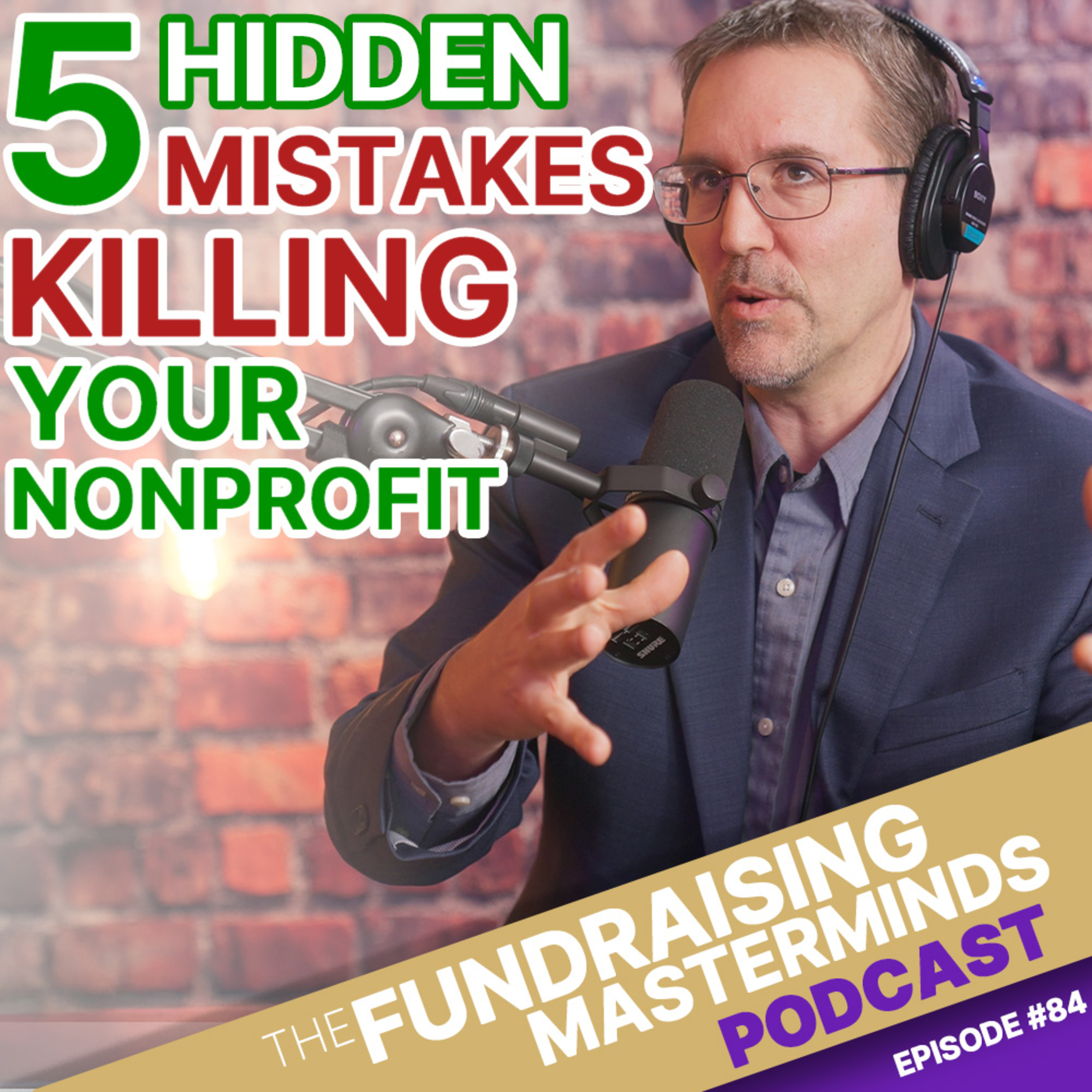
Loading summary
Transcript190 lines
- [00:00]
Jason Galasinski
You're listening to the number one podcast for nonprofit leaders, getting your nonprofit fully funded. This is the Fundraising Masterminds podcast. What do you actually feel called to do? Most people don't feel called to just go to the office and turn on the computer and check their email and, you know, all that stuff. Right. So what is it that actually makes you get excited about what you do?
- [00:25]
Jim Dempsey
Because people want to give to a big vision. They want to give to an organization that has a plan, has a strategy. Unfortunately, there's too many organizations out there that have no plan, have no vision. Their major goal is survival, and nobody wants to give to an organization that's just surviving.
- [00:46]
Jason Galasinski
Welcome back to another episode here at the Fundraising Masterminds Podcast. My name is Jason Galasinski and my co host, Jim Dempsey.
- [00:52]
Jim Dempsey
Hi, Jason.
- [00:53]
Jason Galasinski
How are you today, Jim?
- [00:54]
Jim Dempsey
Oh, I'm great. We got a great topic today.
- [00:57]
Jason Galasinski
We're going to be talking about five mistakes that your nonprofit makes without realizing it.
- [01:02]
Jim Dempsey
Yeah. I tell you, mistakes seem to be just. They pile up, and a lot of times people don't even know that they're happening. Jason.
- [01:10]
Jason Galasinski
Yeah.
- [01:10]
Jim Dempsey
When those mistakes are being made, all of us just get so busy doing ministry that we tend to just pass over some important things.
- [01:20]
Jason Galasinski
Yeah. And we. We actually see this quite a bit in a lot of the organizations that come to us.
- [01:25]
Jim Dempsey
Yes.
- [01:25]
Jason Galasinski
And they don't even realize that they're making these mistakes.
- [01:28]
Jim Dempsey
Well, they're having problems raising money, and they don't know why, and it's because they're making these mistakes.
- [01:35]
Jason Galasinski
Well, before we get into it, go ahead and hit that subscribe button on YouTube. And if you're listening to us on Spotify or Apple, you can subscribe there as well, because we have a lot of episodes coming. We usually do about one episode a week. And if you're a nonprofit leader, you're joining us for the first time. This is the podcast for you. So go ahead and hit that subscribe button and let's get into the episode.
- [01:57]
Jim Dempsey
Yeah.
- [01:57]
Jason Galasinski
So the first mistake that nonprofit leaders.
- [02:00]
Jim Dempsey
Make, Jim, is that they don't have someone focused in on helping to direct the development or fundraising efforts.
- [02:09]
Jason Galasinski
Yeah. So when you say development, do you mean like coding on the computer?
- [02:13]
Jim Dempsey
That's exactly what I mean. There's no one focused in on coding.
- [02:18]
Jason Galasinski
Did you mean like building. Development of developing.
- [02:22]
Jim Dempsey
Of buildings and housing and land. And land development. Absolutely.
- [02:26]
Jason Galasinski
Some people. Some people call it advancement. Do you like the word advanced?
- [02:30]
Jim Dempsey
I hate the word advancement because it's focused towards higher education. And we. They are. They tend to like it because it talks about advancing the cause. But I don't believe that it, it focuses more on a, the process and not the end results, which is developing long term relationships with people. I'm not out to advance relationships with people. I'm out to develop relationships with people. So we even internally have some or parts of our ministry that use the term advancement and I'm not a big fan of advancement.
- [03:15]
Jason Galasinski
When we say that you don't have someone focus on, you know, development, what we mean is that essentially you're busy doing your ministry. Right. We see this. So some examples of this might be that you're a Christian school and you're just busy running the school. You've got classes, you've got students that you're grading, you've got all kinds of activities going on.
- [03:38]
Jim Dempsey
Chapel, you've got, you're taking them to march for life or taking them to missions, efforts overseas, whatever it is.
- [03:46]
Jason Galasinski
Yeah, but you don't actually have someone focus on developing the funds for the organization.
- [03:53]
Jim Dempsey
Right. And then all of a sudden at some point the rubber meets the road and all of a sudden it hits you, I don't have the money to finish the school year or I can't accomplish those things that I need to accomplish until I've got money. And then all of a sudden ministries panic and they start to do things that they shouldn't be doing. That's when they start doing car washes, they start doing bake sales, they start selling cookies, they start going door to door with things, all the things that they shouldn't be doing. Development is a long term process, Jason. It is a, it is a cultivation effort. Taking them through a journey with your ministry, a journey of getting to know you more and more. A period of, of lifting, a winning, keeping and lifting. And it's so important that you plan ahead for that. That's not a run as fast as you can then hit a wall and decide that you need money and then do something.
- [04:57]
Jason Galasinski
So we work with a lot of schools, right? What would you say is a common thing that schools need development for? I mean like, don't they, don't the tuition pay for everything?
- [05:08]
Jim Dempsey
Well, no, in fact, actually one of the biggest things that are the ministries, the schools that we work with is, is helping to make up the gap. What they call the gap. The gap between what actual expenses are and what tuition costs are. That is one of the biggest scholarships for individuals who can't even afford the tuition is a big element. Then you can also go on to expansion, kind of efforts. If you want to build a chapel or build a science lab or you want to music. Music or a sports program, all those kinds of things need money. And that's what, that's what we're.
- [05:48]
Jason Galasinski
So it's really important that you have someone that's focused on forward thinking.
- [05:53]
Jim Dempsey
Yes.
- [05:53]
Jason Galasinski
And really thinking about, well, how are we going to develop partners that are going to buy into the vision that we want to have.
- [06:00]
Jim Dempsey
Right, right.
- [06:00]
Jason Galasinski
I think a lot of times, honestly, why people don't have this is because they just don't have a vision. Like, they're just. Their vision is just surviving dayto day, you know, but they're not forward thinking.
- [06:10]
Jim Dempsey
Yeah. Well, Jason, you know, I've used marriage oftentimes too, as a. And to kind of talk about how similar it is to development. And it would be the equivalent of you just deciding through all your 20s and all the way into most of your 30s. And all of a sudden it occurs to you that, wow, I'm getting kind of old here and I have not dated. I am. I've got to, if I hope to have kids, I need to go ahead and start to process that. I've got to meet someone, developing a relationship with them and it's waiting in the last minute and then all of a sudden expecting to walk out the door and ask someone to marry them. That's essentially what we're trying to do when we just do fundraising and that's the last thing that we want to do. You've got to be thinking long term, how do I develop a long term relationship with someone that I can eventually date them?
- [07:09]
Jason Galasinski
Right.
- [07:10]
Jim Dempsey
Go through the courtship and marry someone?
- [07:12]
Jason Galasinski
Well, that leads us to mistake number two quite nicely, which is you are thinking about getting funds the wrong way, right?
- [07:19]
Jim Dempsey
Well, yeah, Jason, it's, you know, it's. It's the old fundraising versus fund friend raising. Or as I've talked about so often, it's transactional versus transformational. People oftentimes when they get put in a corner, as I said, they get boxed in a corner and they need money. All they think of is, how can I raise money as quickly as possible? So instead of thinking about a transformational relationship, they think about the transactional. I've used so many times the analogy of the atm. An ATM isn't important until you need money. Then all of a sudden you scour the earth to find an atm, you get your money and then you don't worry about an atm. Again, that is the way that we tend to treat our partners and they see that they know that when we only care about them for their money. And that is one of the. That's one of the biggest mistakes that a lot of ministries make.
- [08:16]
Jason Galasinski
You know, there's a. There's a music school in our town that is actually quite loved and used by a lot of people. They have probably hundreds of students that go through the door every day, but they're in this small little building, and they're always kind of acting like they need more money. Right.
- [08:33]
Jim Dempsey
They're barely surviving, probably.
- [08:35]
Jason Galasinski
I mean, they're. They're doing okay. I. Yeah. I don't get the sense that they're, like, you know, dying.
- [08:39]
Jim Dempsey
Yeah.
- [08:40]
Jason Galasinski
You know, but I mean, they just have a lot coming in and. But they. They really could use more space. It would be nice if they had a bigger building or, you know, I mean, they would thrive a lot with a bigger building.
- [08:51]
Jim Dempsey
Right.
- [08:51]
Jason Galasinski
But they just don't have anyone, you know, that's focused on how can we grow and expand this. They're just busy every day just, you know, turning up music lessons and doing all the. All the stuff. And I think the people that are doing it love working with the students, and they love doing the thing, but there's no one actively trying to grow and expand.
- [09:14]
Jim Dempsey
Right.
- [09:14]
Jason Galasinski
You know, which takes effort. So how that relates to mistake number two is that they do fundraisers from time to time, but it's more of a, oh, no, we're running out of money.
- [09:24]
Jim Dempsey
Right.
- [09:24]
Jason Galasinski
You know, let's pull something together. And it's usually twice a year or something like that. And. And it feels like. Well, I mean, they have it built into a rhythm. So they do several fundraisers a year, you know, selling tickets or doing different things, and they usually try to work in some performances or whatever from the music school, but there's nothing actively dedicated to growing and expanding and forward thinking.
- [09:49]
Jim Dempsey
Yeah, I talk about managing momentum. That's what a lot of ministries are doing. They're just barely surviving. They're one step ahead, and they're not, man. They're. All they're doing is managing momentum. The momentum is. Is continuing to drive things, and they can barely keep up with the momentum itself. And so it doesn't allow them to plan for going ahead well, and then.
- [10:15]
Jason Galasinski
When they finally do a fundraiser, it's a fundraiser.
- [10:17]
Jim Dempsey
Right?
- [10:17]
Jason Galasinski
Right. They're selling tickets, they're doing something, and they. They. I don't know how much they make, but it's probably not very much, you know, maybe a couple thousand dollars or maybe 10 or 15,000 here and there. You know, it probably helps a little, but what we want you to think about is fundraising versus fundraising. Right. Fundraising is instead of focusing on raising funds, when you run out, you're constantly thinking about, how can I develop partners that will buy into the vision of this organization and be with us for the test of time?
- [10:51]
Jim Dempsey
Right.
- [10:52]
Jason Galasinski
That's where the real growth it is. I mean, we've exponential. I mean, we're. We're seeing people going through our programs, raising 1000-002000-00500,000. Big, big numbers. But it's because they're focused on. Well, number one, they've got someone actually doing development.
- [11:11]
Jim Dempsey
Right.
- [11:11]
Jason Galasinski
But then, number two, they're focused on building partners for their organization that are going to buy into the vision of their organization rather than just, hey, let's do a fundraiser to fill in a little gap here and there.
- [11:25]
Jim Dempsey
That's exactly right.
- [11:26]
Jason Galasinski
Okay. So that leads me to the third mistake, which is that you're not actively looking for new partners. Yeah. This might be something where maybe you are, you know, doing some fundraisers.
- [11:39]
Jim Dempsey
Right.
- [11:39]
Jason Galasinski
Maybe you are doing a little bit of development. Like we. There's quite a few ministries that come to us who are kind of stuck.
- [11:46]
Jim Dempsey
Right.
- [11:47]
Jason Galasinski
So they're. I'm thinking of some pregnancy centers and some CEF chapters that we've worked with in the past. Right. Where they. They're doing some kind of level, basic level of development, but they're. And maybe they're doing an annual dinner, maybe they're doing a walk for life, but they are stuck.
- [12:04]
Jim Dempsey
Right.
- [12:05]
Jason Galasinski
They don't have new partners coming in.
- [12:07]
Jim Dempsey
Right. Yeah. Typically what happens is that names are going out the back door faster than they're coming in the front door. They're not netting. Having a net gain of new donors that are coming in. They're not focusing in on new donor acquisition. We certainly need to keep the names that we have. That's vitally important. But we've also got to make sure that we're bringing in people faster in the front door than we're looking. Losing them out the back door. I talk oftentimes about shutting the back door, but making the front door wide open. And that's what we need to do so often.
- [12:43]
Jason Galasinski
Yeah. So it's really important as an organization that you have a way of actively getting new people in the door all the time.
- [12:51]
Jim Dempsey
That's right.
- [12:51]
Jason Galasinski
One of the things I love about our Perfect Vision Dinner mentorship program is we teach you how to bring in new people every time. Right. Like, one of our goals with the Perfect Vision Dinner is that we're trying to get 50% new people in the room.
- [13:05]
Jim Dempsey
Yeah.
- [13:05]
Jason Galasinski
Every single year.
- [13:06]
Jim Dempsey
Yeah. And oftentimes we can see as many as 60 and 70% of new people every year. But yeah, we love at least 50% of the people in the room.
- [13:14]
Jason Galasinski
And so that's the goal of the, of that particular program is to win new partners to our cause.
- [13:21]
Jim Dempsey
That's right.
- [13:21]
Jason Galasinski
And if you don't have a way of winning new partners to your cause.
- [13:25]
Jim Dempsey
Right.
- [13:25]
Jason Galasinski
You're making a big mistake.
- [13:27]
Jim Dempsey
That's right.
- [13:27]
Jason Galasinski
You know, because you could have someone dedicated to development and you could be doing friend raising.
- [13:34]
Jim Dempsey
Right.
- [13:34]
Jason Galasinski
But if you're friend raising with old relationships, like, I know there's a lot of CEF chapters that have a lot of great partners and they've been supporting them for 50 years.
- [13:45]
Jim Dempsey
Right.
- [13:46]
Jason Galasinski
But they've got no new partners.
- [13:48]
Jim Dempsey
Right.
- [13:48]
Jason Galasinski
And so how is that going to work, you know, 10, 15 years from now, Right.
- [13:52]
Jim Dempsey
When you have sending out prayer letters to people or newsletters to people, you know, that's nice. But if you aren't constantly asking someone to consider opportunities with you or to lift them to a higher giving level, you're you. Chances are the attrition rate is, is going to come back and bite you because chances are you're going to be losing more people than you're bringing people in the door.
- [14:16]
Jason Galasinski
So maybe you do have someone focus on development, maybe you are focused on fundraising and maybe you are winning new people. Let's see if you're making mistake number four, which is you are not cultivating relationships throughout the year.
- [14:29]
Jim Dempsey
Absolutely.
- [14:30]
Jason Galasinski
So much of development is relationships, you know, and so often what we do is we do an event like a walk or we do an event like a dinner.
- [14:41]
Jim Dempsey
Right.
- [14:42]
Jason Galasinski
And then it's exhausting. And we just, we kind of get our fill of people and we just think, okay, we got the funds, got.
- [14:49]
Jim Dempsey
That done with, don't need to do it again for a long time.
- [14:52]
Jason Galasinski
Right. And let's go, let's go back to our ministry.
- [14:54]
Jim Dempsey
Right.
- [14:55]
Jason Galasinski
And then they go back and they just start getting busy with things and they are not actively building relationships.
- [15:02]
Jim Dempsey
Right. Year round. And, and what happens is, I see so often is that people get done with their dinner. They may do a thank you letter, they might also even make a thank you call. But then the partner doesn't hear from that ministry leader for eight months until it's time to start recruiting for a table. And you feel used, you feel taken for granted. Nobody want that to happen.
- [15:26]
Jason Galasinski
Right. One of the things I Love about our Perfect Vision Dinner mentorship program is that we actually have an award. And when people raise $100,000, which is kind of our bare minimum.
- [15:37]
Jim Dempsey
Right.
- [15:38]
Jason Galasinski
When you join the program, our goal is to teach you in a 21 week period how to plan and execute a Vision Dinner from start to finish with the goal of raising at least 100,000.
- [15:49]
Jim Dempsey
Right.
- [15:49]
Jason Galasinski
Or if you're already past that, you know, our goal is usually double what you're currently raising because we believe that we've seen it time and time again, that if you follow the recipe, it works. But one of the things I love about it is after the Perfect Vision Dinner is over, after you've hit that target, we have another program that we don't talk about a lot on this podcast called the Winner's Circle.
- [16:11]
Jim Dempsey
Absolutely.
- [16:11]
Jason Galasinski
And the Winner's Circle is a three year program only available to our Perfect Vision Dinner graduates.
- [16:17]
Jim Dempsey
You have to, it's by invitation only. And the only way you can be part of the program is by reaching certain levels. You have to have taken the Perfect Vision Dinner mentorship program and you have to hit certain financial goals that are established out there.
- [16:33]
Jason Galasinski
But one thing that I love about the Winner's Circle is that the whole point of it is to focus on how to develop those long term relationships. So where we focus a whole entire year on just building regular communication. So we take all your new partners, we put them into a strategic plan, and then we teach you how every month to be communicating and to be building strategic relationships. So we have a systematic way of making sure that you're building relationships with everybody that is important to your organization and that is like super important that you're doing that because that helps them to feel like they are engaged with you in the ministry. That's what we want. We want them to not just give us money, we want them to partner with you in the organization.
- [17:21]
Jim Dempsey
Absolutely. Yeah. That's great.
- [17:23]
Jason Galasinski
So I love that. And if you're not actively building relationships, Jim, just for our listeners perspective, like, what do we mean by actively consistently building relationships? Like, what does that look like?
- [17:36]
Jim Dempsey
Well, Jason, we've put together what we refer to as a three, three, three skip program. And it's talking about three letters, three phone calls and three visits throughout an entire year. So it is proactively, not reactively, but proactively trying to look for ways to develop a relationship with someone. So some people prefer getting emails and getting letters from people. Some people prefer phone calls, others prefer personal visits, sitting down with them and sharing those things with them. All those things will help you develop a long term relationship with someone. It ensures that you don't take it for granted and ensures that you focus in on proactively getting to know people better.
- [18:24]
Jason Galasinski
Well, and we teach you all that in the Winner's Circle. And the thing that I love about our Winner's Circle program is that, you know, so often people know the right thing to do, but we really hold you to actually getting it done. So that's the whole point of our programs, right, Is we, we. You could go to a webinar on a weekend and learn how to do a gala, or you could learn all the things you're supposed to do. But then how many times do people just, they just go home and they don't do anything, Right? That's right. And our programs are really focused on every single week we give you, this is what you need to do. We do regular calls, we do regular check in and we're asking you, are you doing this?
- [19:00]
Jim Dempsey
Yeah.
- [19:01]
Jason Galasinski
Are you getting it done? And so, yeah. So just holding their hand and walking them through the process is really what people love.
- [19:08]
Jim Dempsey
Yeah.
- [19:08]
Jason Galasinski
Well, let's talk about the last mistake, which is you don't have a strategy to challenge your partners.
- [19:16]
Jim Dempsey
Right.
- [19:17]
Jason Galasinski
And what do you mean by that?
- [19:18]
Jim Dempsey
Well, if you aren't strategically challenging people to move from one level to the next, then your people will go stagnant and you'll keep people at a plateau. And trust me, after a while, if people aren't challenged with new challenges and new opportunities, they're going to fade away into the sunset. Because people like to be actively challenged to give more. And so if you aren't putting bigger and bigger challenges before people, they're not going to give. We know that so many of our large donors, our major donors, mega donors, ultra donors, all give because they are challenged to give to something that's bigger than what they would normally be involved in. It helps them to be part of something exciting that's making a difference in our world. So it's so critical. And too many organizations go two, three, four, five years without challenging someone to give more.
- [20:21]
Jason Galasinski
Yeah, it's actually almost like the opposite where it's like, hey, this person's given 50amonth. I don't want to call them because if I call them, they might change their mind. Yeah, they'll be like, oh yeah, I forgot I was giving you 50amonth. Let me cancel that.
- [20:35]
Jim Dempsey
Yeah.
- [20:36]
Jason Galasinski
You know, how often does that happen?
- [20:37]
Jim Dempsey
It doesn't. But in, in our minds, though, we tend to think it will happen.
- [20:41]
Jason Galasinski
Yeah, we kind of, we kind of think like, oh, just leave them alone, you know, like, as long as they are fine, you know, that they don't know and I don't know and I don't want to remind them.
- [20:49]
Jim Dempsey
Right, right.
- [20:50]
Jason Galasinski
You know, so. But that's because you don't have a relationship with that person.
- [20:54]
Jim Dempsey
That's right, yeah.
- [20:55]
Jason Galasinski
If you did have a relationship with the person, you probably wouldn't be thinking that, right?
- [20:58]
Jim Dempsey
Well, sure, absolutely. And getting back to the dating analogy, if you go into three, four, five, six, seven years of being engaged and not taking someone to the next level and marrying them, you're going to probably end up losing that person. And it's exactly the same way.
- [21:13]
Jason Galasinski
Well, those are the five mistakes. Jim, you want to review them real quick for us?
- [21:18]
Jim Dempsey
Yes, I'd be happy to. The first one is that we want to make sure that you've got people focused in on development. Number two, we don't want to be asking in the wrong way. We want. We don't want to be focusing in on fundraising. We want to be talking about focusing on fundraising. We want to make sure that we are bringing in new donors all the time. Number two, we want to make sure we are cultivating the people that we currently have. And lastly, number five, we want to make sure that we are challenging people to higher levels of giving.
- [21:52]
Jason Galasinski
Yeah, we actually kind of boil that down into three simple words to help you remember. We call it win, keep and lift one of the winning new partners to your cause. We want to be keeping them through cultivating relationships and we want to be lifting them to higher levels of giving over time.
- [22:08]
Jim Dempsey
Right.
- [22:09]
Jason Galasinski
So that's really what you should be focused on as an organization. And if you're not actively doing that, then you probably are going to go flat and you're probably going to whittle away over time.
- [22:21]
Jim Dempsey
That's right.
- [22:21]
Jason Galasinski
Because an organization that isn't growing is stagnant. And a stagnant organization will eventually fade.
- [22:28]
Jim Dempsey
Right.
- [22:29]
Jason Galasinski
And so we have to be really focused on the future. Right. We have to. And that really starts with a vision. I'm very big into telling my kids, if you don't have a goal for this year, you're probably not going to get whatever you're planning to get done. Right, Right.
- [22:47]
Jim Dempsey
So it's like if you fail to plan, you plan to fail.
- [22:50]
Jason Galasinski
Yeah, if you fail to plan, you plan to fail. That's exactly right. And so many organizations, we just get stuck in the day to day.
- [22:58]
Jim Dempsey
Right.
- [22:58]
Jason Galasinski
And we don't take time to Just sit and think about, well, where do I want to go?
- [23:04]
Jim Dempsey
Right?
- [23:04]
Jason Galasinski
You know, so just a really good takeaway if, if you, if you haven't thought about this at all for your organization, it's just take some time to maybe find a coffee house or just somewhere that's a different location. Maybe go to the library or something and just find a quiet place with a pen and paper and just ask yourself the question, what would be my dream vision for this organization in the next five years if God opened up a floodgates of money, if the right people just started donating all the money.
- [23:40]
Jim Dempsey
I needed, my school, what would my ministry, what would my youth effort look like in five years?
- [23:46]
Jason Galasinski
Yeah, like what, what do you actually feel called to do? Right? Like most people don't feel called to just go to the office and turn on the computer and check their email and you know, all that stuff. Right. So like what, what is it that actually makes you get excited about what you do as an organization and where do you actually want to go? Yeah, you know what, what is the big vision you want to accomplish?
- [24:08]
Jim Dempsey
And because people want to give to a big vision, they want to give to an organization that has a plan, has a strategy. Unfortunately, there's too many organizations out there that have no plan, have no vision. Their major goal is survival. You know, they, they go paycheck to paycheck, don't really accomplish any major things. They might set a goal from here to there. They're a pregnancy center. They saw 600 women last year. They might want to get to 6:50, or they might want to buy an ultrasound machine. But there's no big vision to purchasing another center, to, you know, expanding their medical efforts, going out to a local college or university and opening up a center nearby there. There's just so many things that they're not looking at and nobody wants to give to an organization that's just surviving right now. Jason, these five things, is there anything out there that could help accomplish and ensure that we don't make these five mistakes?
- [25:11]
Jason Galasinski
There is actually. We offer a program called the Perfect Vision Dinner Mentorship program. I've heard of that. And I mean, we talk about this a lot on the podcast, obviously, but it's actually, if you're listening to this and you're thinking, gee, I. This all sounds great, but I just don't know where to start. The Perfect Vision that are mentorship program, seriously is the place to start.
- [25:35]
Jim Dempsey
Well, let's take them one at a time, Jason. What, what, how's, how is that. Let's start with the first one. How does it keep your development efforts focused?
- [25:45]
Jason Galasinski
Well, one of the things we do in the mentorship program is. Well, first of all, it's a 21 week intense. I kind of refer to it as like a college program. Right. So it's not like just a video course that we just, you know, send you on your way and do it.
- [25:59]
Jim Dempsey
And hope you do well.
- [26:00]
Jason Galasinski
Right? No. So this is a mentorship program where we are, we are. You're joining a community of people. It's an intense 21 weeks where we walk you through the very, very beginning to the very, very end. And the goal is to bring you and your board and your team together and help you find and cultivate that bigger vision. Like what we were saying, you got to have a five year plan.
- [26:26]
Jim Dempsey
Right.
- [26:26]
Jason Galasinski
We always say, how do you eat an elephant one bite at a time? So the perfect vision dinner gives you that ability to eat that elephant one bite at a time because you've got.
- [26:35]
Jim Dempsey
Somebody who comes along, takes your hand and walks you down the journey of accomplishing this so that you do have that perfect vision dinner.
- [26:43]
Jason Galasinski
Right, Right. So the goal of the mentorship program is to give you that vision, to give you some training on the fundraising model. Right, the fundraising model. We're gonna work with your board to help them find the right people to come to this. Because I always say, you know, we're not trying to get 300 of just anyone who can breathe, but we're trying to get 300 of the right people in the right room with the right program. You know, 2 hour and 15 minute program. And, you know, the goal of the program is to plan and execute Vision Dinner to raise at least a hundred thousand dollars. That's, that's our goal for you, is to raise at least a hundred thousand. The cost of it is generally around. It's about a 10 to 1 return on investment is what I say. So it's about a tenth of what you bring in.
- [27:35]
Jim Dempsey
But if I'm an organization that last year raised 300,000, you're going to try and take me to, you know, another 50 to 100%.
- [27:43]
Jason Galasinski
We see organizations joining the program that are stuck. They're not bringing in new partners. So they're coming in and they're saying, well, we're trying this and we're trying that, but we just, we're not getting any new people. How do we get new people? So that's a, that's a big piece of what we do. So every element in here, the winning, the Keeping and the lifting. We have three programs to help you with that. Win, Keep, and lifts. So the Perfect Vision Dinner is what I call the winning program. It helps. The focus of the Perfect Vision Dinner is to win new partners to your cause.
- [28:15]
Jim Dempsey
Right.
- [28:16]
Jason Galasinski
Right. 50 to 60% new people coming in the door who have never heard you before. And it's an annual event, so we do it every year. So, like, the first year, you're gonna get a bunch of new people in, and then we're gonna put those kind of in our development system, which is the keeping. We're gonna teach you how to cultivate those relationships in the winter circle. And so while you're going through that and. And building those relationships, we're going to do another Vision Dinner, like the next year. And so we're going to take some of the critical few of that one, and we're going to use those relationships to invite more people, and we're going to get 50% more. And so every year, we keep growing and growing.
- [28:52]
Jim Dempsey
It sounds like you're building an enterprise, Jason.
- [28:55]
Jason Galasinski
I mean, that's kind of the goal, right. Is to.
- [28:58]
Jim Dempsey
Absolutely.
- [28:59]
Jason Galasinski
To get you to the point where you're not surviving, but you're actually throwing thriving. That takes effort to get there. It takes partners and resources, but it can be done. We've seen it over and over and over. In fact, there is one organization that you worked with. I won't mention the name, but it's a. The. The organization that works with the girls.
- [29:17]
Jim Dempsey
Human trafficking.
- [29:18]
Jason Galasinski
Yeah.
- [29:18]
Jim Dempsey
Organization.
- [29:19]
Jason Galasinski
I mean, we worked. You've been working with them for like, eight years. It started kind of small. Right. With just a husband and wife. And we've. We've built that up to the point where, like I always say, the first year, you know, you raised like a hundred thousand. Then the next year you raised like 250. Then we moved to 300. Then, you know, seven years later, they had an $800,000 goal.
- [29:39]
Jim Dempsey
Yeah. With nearly a thousand people in the room.
- [29:41]
Jason Galasinski
Right, Exactly. So, I mean, that's. That's how the Perfect Vision Dinner can really help you grow.
- [29:45]
Jim Dempsey
Right.
- [29:46]
Jason Galasinski
Year over year. And if you implement everything that we're teaching in our programs, your organization can get to that point as well.
- [29:52]
Jim Dempsey
Yeah.
- [29:52]
Jason Galasinski
So if you're at a place where you are really wanting to take the next step and really get started and go to the next level, I would recommend that you check out the Perfect Vision Inner mentorship program. There's a QR code on the screen that you can scan. You can also click the links in the description, but it's a great place to get started. We only offer the program twice a year. Okay. And it's an application only kind of thing. We get a lot of people applying now. It's quite a popular program. It's turned into our flagship program and there's a lot of interest. And so I would recommend that you would check that out. There's a lot of videos and resources on our website that will give you the information for that. But if you're interested in joining that program, you can fill out the application. It's free to apply, and then we'll set up a call, we'll make sure that it's right for you. We always.
- [30:43]
Jim Dempsey
Jason, class sizes are limited, aren't they?
- [30:45]
Jason Galasinski
Yeah, the space is limited. We only train a small amount of organizations every class. So get your application in and hopefully we'll see you in on the next program.
- [30:56]
Jim Dempsey
Yeah. Well, and this last year, I mean, it was amazing. In 2024, over $10 million was raised through the ministries that we helped. So $10 million went into the kingdom, which was so exciting.
- [31:10]
Jason Galasinski
Yeah. And most people in the program got the perfect vision in our award, which means they raised $100,000 or more.
- [31:16]
Jim Dempsey
Yeah, we had some 6, 700,000 or more.
- [31:20]
Jason Galasinski
It is definitely possible, I would say probably 80 to 90% of the people that join our program hit the a hundred thousand mark. And the organizations that don't, that's usually because they're not taking the program very seriously. Unfortunately.
- [31:35]
Jim Dempsey
Unfortunately, we don't have many of those, which is good.
- [31:37]
Jason Galasinski
We don't. Well, if you're interested in that perfect vision inner mentorship program, we are six weeks away from the next one starting, I believe the next course starts May 5th in 2025. We do two a year. We usually do one at the beginning of May. That takes us through to the end of September. And the goal of that is to do a dinner in October and then we start another program end of October, and that takes us through to the end of March. And we usually are doing a bunch of dinners in April for spring of 26 already.
- [32:08]
Jim Dempsey
Unbelievable.
- [32:09]
Jason Galasinski
I know, Jason.
- [32:10]
Jim Dempsey
Last time I looked, a lot of the spaces were already taken. And so I think it's really important that people move quickly on this one.
- [32:18]
Jason Galasinski
So don't wait. It does take some time, you know, to get your board on board and, you know, so get onto our website, check it out, fill out the application. Once you fill out the application, we will get in touch with you, make sure the program is right for you. So there's a whole process. And then of course we got to get the board involved and stuff like that. So it takes some time, but it's worth it. So get that process started as soon as you can. So if you like this podcast, remember to subscribe on YouTube. Also subscribe on Apple or Spotify if you're listening to us there. If you know any other nonprofit leaders who run organizations you think might benefit.
- [32:54]
Jim Dempsey
From this, there is challenge with fundraising and struggling with the things we just talked about.
- [32:59]
Jason Galasinski
Yeah, help them out by hitting that share button on YouTube or Spotify and just send them a quick text and say, hey, check out this podcast. I think you'll learn a lot. We'd really appreciate that. Jim, any final words that you'd like to say about this?
- [33:12]
Jim Dempsey
No, I'd say, you know, bottom line is that fundraising over fundraising and transformational over transactional. We've got to make sure that you focus in on the long term and not just the here and now. And that's what fundraising does. And so you want to make sure that you are looking for those long term relationships. That's where the big money is going to end up coming from. Those long term relationships.
- [33:37]
Jason Galasinski
Well, there you have it from the man himself. Well, that's it for this episode. We'll see you in the next one.
- [33:42]
Jim Dempsey
Take care.