
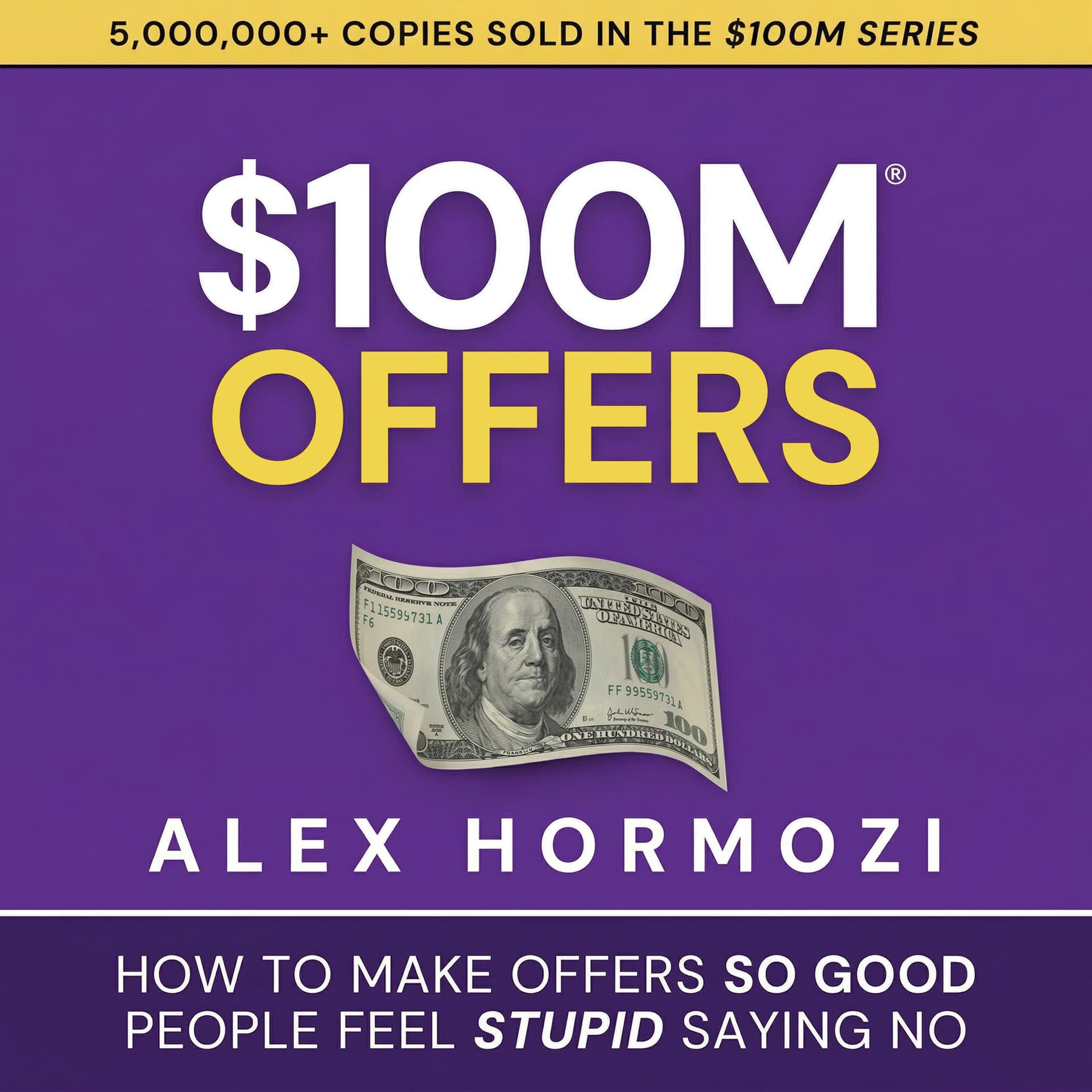
The Game with Alex Hormozi — $100M Offers Audiobook Part 5 Episode Summary (March 26, 2026)
Episode Overview
In this episode of “The Game,” Alex Hormozi continues narrating the audiobook of "$100M Offers," delving into offer enhancers—particularly, the psychological tools of scarcity and urgency. Alex demystifies these concepts, sharing stories from his own entrepreneurial journey and detailing actionable strategies for ethically boosting customer desire and driving sales through offer positioning rather than altering the offer itself.
Key Discussion Points and Insights
1. Understanding Scarcity and Urgency
-
Definitions & Distinctions
- Scarcity: Limiting the quantity of an offer available (the “how many”).
- Urgency: Limiting the window in which the offer is available (the “when”).
- Proper, ethical use leads to sustainable demand and higher profits.
- “If you use these incorrectly, long term, you'll lose money. So definitely use it the right way and make more money.” [00:01]
-
Context:
- Scarcity pulls on the fear of missing out (FOMO).
- Urgency leverages deadlines to spur action.
2. Story: Arnold Schwarzenegger’s Fundraiser—A Masterclass in Scarcity
-
Elite-level fundraising event, $25,000/ticket, limited to 100 attendees.
-
Auctions with unique items, where cutting supply (fewer tickets) and raising prices increased demand and revenue.
-
Social proof and exclusivity foster greater desire to participate and donate.
- “People want what they can't have. People want what other people want. People want things only a select few have access to.” [03:33]
- “They had raised an extra $1 million that night before the event had even started, by cutting the supply of tickets and raising the prices.” [05:13]
3. The Psychology Behind Scarcity and Demand
-
Desire correlates with unfulfilled wants; as soon as people have something, desire for it dissipates.
-
Increasing demand means intentionally offering less than what the market can absorb.
- “Desire comes from not getting what you want... we only want things we do not have. As soon as we have them, our desire for them disappears.” [12:50]
- Naval Ravikant quote: "Desire is a contract you make with yourself to be unhappy until you get what you want." [13:09]
-
Example Comparison:
- Selling ten $500 workshop slots (fulfills all demand) vs. selling two $5,000 one-on-one workshops (leaves demand unsatisfied and heightens future desire).
-
Hormozi Law:
- “The longer you delay the ask, the bigger the ask you can make. The longer the runway, the bigger the plane that can take off.” [17:40]
4. Offer Enhancers: Shifting the Demand Curve
-
Using scarcity, urgency, bonuses, guarantees, and naming to:
- Increase demand: More people want it.
- Decrease (perceived) supply: Fewer can have it.
- This combination achieves higher sales volumes and premium prices.
-
“The process of enhancing your offer is designed to do both... so you can sell the same products for more money than you otherwise could and in higher volumes.” [10:30]
5. Tactical Scarcity: Real-World Application
-
Physical Products:
- Limited releases (flavors, colors, designs) and public 'sold out' notifications boost desirability and future urgency.
- Example: Musician drops 100 limited edition hoodies, never to be made again.
-
Services:
-
"Total business cap": Agency or business announces only 25 client slots; creates waiting lists and increases price leverage.
-
"Growth rate cap": “We only accept 5 new clients per week—3 spots already taken!”
-
"Cohort cap": Limited seats per class/cohort, helps operational cadence and sales urgency.
-
“Provide limited access for higher ticket services... Pairing them with clear scarcity or fixed amounts, seats, or spots will rapidly drive up demand.” [37:55]
-
-
Extreme Scarcity:
- One-on-one access: Very limited, high-priced, non-returnable if left—a strategy especially effective with high-tier clientele.
-
Honest Scarcity:
-
Simply state real capacity. If you can only reasonably serve 10 clients, tell prospects you have ten spots, update on percent full.
-
Social proof emerges organically as you fill up slots.
-
“The most ethical scarcity... is honesty. Wait, what? Let me explain. I'm sure right now you probably couldn't handle a thousand clients tomorrow, right?” [45:51]
-
6. Urgency: Deadlines Drive Decisions
-
Cohort-Based Rolling Urgency:
-
Regular start dates (e.g., every Monday). “Sign up now or wait a week to start.” More potent if less frequent (e.g., quarterly).
-
“If you sign up today, I can get you in with our next group... otherwise you'll have to wait.” [53:12]
-
“The biggest sales on a week-long campaign happen in the last four hours of the last day, up to 50 to 60%. That means the last 3% of the time allotted creates 50 to 60% of the sales.” [57:25]
-
-
Rolling Seasonal Urgency:
- Promotions with seasonal themes and dates (New Year’s, Valentine’s, Spring, April Fools’). Allows repetition and novelty while keeping urgency authentic.
-
Pricing or Bonus-Based Urgency:
-
Temporary discounts/bonuses encourage action before a cutoff. Announcing coming price increases cleans out your prospect pipeline.
-
“Never raise your prices without letting people know. It shows a position of strength and gives you a nice little influx of cash…” [1:06:10]
-
-
Exploding Opportunity:
- Limited-time opportunities where delay leads to vanishing or decaying value (e.g., arbitrage, investing, new platforms).
-
Ethical Use:
- Real deadlines, not fake timers.
- If someone just misses a cohort, offer special onboarding or payment plan.
7. Summary & Action Steps
- Scarcity and urgency, used correctly and consistently, dramatically increase conversions and raise willingness to pay—without altering the actual offer.
- Scarcity is best when honest and visible.
- Urgency should be real (deadlines, start dates, bonuses, or price changes).
- These strategies stoke pent-up desire, social proof, and premium positioning.
- Next episode: Deep dive on bonuses and guarantees.
Notable Quotes & Moments
- "The perfect profit combination is lots of demand and very little supply or perceived supply." [10:12]
- "People are far more motivated to take action to hoard a scarce resource than they are to act on something that could help them. Fear of loss is stronger than desire for gain." [27:35]
- "If you don't hate money, sell a very limited supply of one-on-one access...cap at a tiny number, price it very high, then tell people. You will make more money than you thought possible." [51:06]
- "Deadlines drive decisions. Scarcity is a function of quantity. Urgency is a function of time." [52:11]
- "The person who needs the exchange less always has the upper hand. It's one of the negotiating and pricing principles that has best served me in my life." [32:55]
Timestamps for Critical Segments
| Segment | Timestamp | |------------------------------------------------|------------| | Episode theme and definitions | 00:01 | | Arnold’s fundraiser and applied scarcity | 03:30–08:20| | Psychology of desire and supply/demand | 10:12–17:45| | Scarcity strategies for products and services | 27:00–51:30| | Honest scarcity and social proof | 45:51–49:12| | Urgency tactics and deadline psychology | 52:11–1:13:15| | Quote: Hormozi Law | 17:40 | | Quote: Fear of loss > desire for gain | 27:35 | | Quote: The upper hand in negotiation | 32:55 |
Final Notes & Resources
- Visual resources, checklists, and video tutorials on offer enhancers, including scarcity and urgency, are available for free at acquisition.com/training/offers, no email required.
- Scarcity and urgency are powerful because they focus buyer attention and action—make sure to use them ethically and consistently for compounding effect!
- Next up: Two more offer enhancers—Bonuses and Guarantees.