← The GaryVee Audio Experience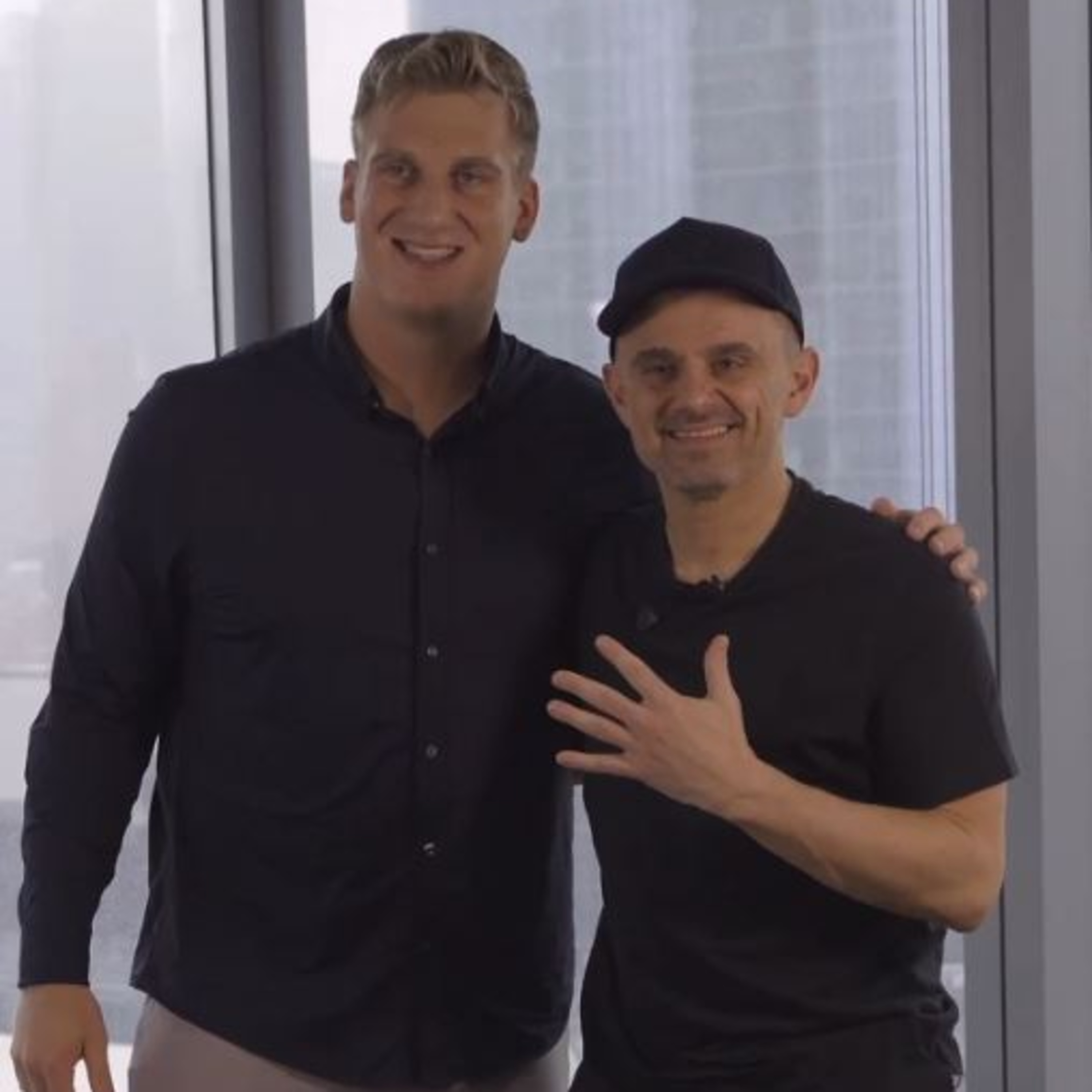
The GaryVee Audio Experience
From Family Business → Building Million-Dollar Companies (and What's Next with AI)
00:42:25
Loading summary
Transcript99 lines
- [00:00]
A
Podcast nation. Before I get you into today's podcast, big announcement. As you probably heard at this point, because I had John from Stan on the show, I am an investor advisor to an incredible startup called Stan. Stan Store. I'm sending you right now to GaryVee.com, garyVee.com Stan, go check this out. We've done a GaryVee Stan store challenge, which actually has a weekly call with me. This is built for everyone who's been affected honestly by my overall content. The tech stack, all these features, and the minimal costs per month that Stan Store has built is really the tool that was needed for this world that I envisioned when I wrote Crush it, when I wrote Crushing It. And this overall thing I'm thinking a lot about lately, which is the individual empire, right? This creator entrepreneur slash entrepreneur creator economy that I think is gonna eat up the oxygen. Very honestly, the. The thing that so many of you want in your life and the reason so many of you are not there yet, is you've got the strategy for me. You've got the ambition within yourself, but you don't have the tools for you to fully maximize it. And I believe you can find that at Stan Store. Stan Store. But specifically, I want you to sign up for it through my challenge because I wanna get access with you. And plus, there's a bunch of cool things. So if you wanna go see those cool things, go to garyvee.com Stan S T A N Now to the podcast. This is the GaryVee audio experience.
- [01:30]
B
I was a all American football player, was a, you know, the youngest coach in the country at Arizona State. And when I got fired at Arizona State, I was. Got a couple months of doing nothing. And I listened. I was listening to Gary V. All your experience every day and was hearing you talk about TikTok, decided, Hey, I have all this experience in football, I should start making TikToks. So started it three years ago and it has grown into something kind of big. So if it wasn't for that and hearing you talk about it, I wouldn't be here doing media. So I'm excited to have you on.
- [01:57]
A
Well, I'm thrilled to be a small part of your journey and I'm thrilled to be on.
- [02:01]
B
Appreciate it. I wanna start with this. We're at VaynerMedia headquarters, VaynerX headquarters. Just think about how much you've built in your career. What's the most defining moment of that journey so far? Is there one moment that you said that wouldn't happen? We wouldn't be here.
- [02:13]
A
There's a lot of those when I think about defining moments. Thank you so much. I don't think of it from a standpoint of, like, oh, like this day that I just. This moment when I went on YouTube and started the wine show, when Google bought YouTube for $1.7 billion, which at the time, to give you all context, would feel like a $500 billion exit today, like, just to give you inflation. Just like, how, like, no one could believe this number. I remember promising myself that was a defining moment, even though it kind of didn't involve me at all. I promised myself that the next time I would see something big, that I would invest in it, not just use it. Because I was right about email. I was right about.com, i was right about search, I was right about YouTube, MySpace. And so I saw Twitter and I invested in it. And I would say that in a lot of ways, that moment was defining, but I would say that that's kind of like my fake answer, meaning that's the right kind of answer in the context that I think you asked it. I think the defining moment, probably for me in my career was calling my mom in college, freshman year, and crying to her that I didn't want to go into. Since I was 14, I said, I'm going to go into the family business and blow it up. And then at my freshman year of college, I had this moment. I've never really shared this story, so I'm giving you some alpha. I kind of had this moment where I was like, damn, I know I can do my own thing. Am I willing to pay this sacrifice? Cause it's not gonna be my own thing. And even at that age, even though I've always been confident, there was a part of me that said, well, will people be like, even though I know I'm gonna build this business for my dad, but I'm never gonna get my own credit. You know what I mean? And so that conversation, I think when you asked, it put popped in my head. You know, I have a very unique career. I spent every day of my life from 22 to 34 building a huge business for my dad and left it with nothing. That's weird. Like, I don't see that story out there. I see a lot of immigrants just stay in their family business and eventually inherit it. So, you know, there's a lot of moments, like, you know, showing up on Dig Nation when that was, like, the biggest Internet show in 2007, put me on the Twitter map. The Conan o' Brien appearance. I was kind of one of the first Internet people to make it to, like, television. AJ walking into my office and saying, he's quitting, when I always thought he would be the one that would run this. And I would go on to do something, you know, which led to Vayner Sports. You know, I mean, there's so many brother.
- [04:54]
B
When. When you, when you were in your family liquor business, did you know that when you. That when you left to start your own business, it was going to be an agency that whole time or you were going to be in the media space or that came from your kind of exposure?
- [05:05]
A
I had no idea when I would leave. Yeah, you know, probably 1% of me didn't even know if I would leave. I knew my brother was growing up in a manner where he did not have the same level of relationship with my dad. I knew that he didn't want to be in the business. I knew I wanted to be in business with him. He was 11 years younger, so 29 was, you know, watershed moment. 30 and then ultimately 33. Like, really? Because that's when he was actually done with school. That's when we started Vayner. No, I didn't know what it would be like. I just, I mean, I never even thought I would be known. You know, unlike being an athlete where, like, when you were growing up being this great athlete, you knew there was a potential that if you achieved your dreams that you would be known. I wanted to be a businessman. In the 80s and 90s.
- [05:57]
B
None of them were known.
- [05:58]
A
None of them were known. The world was so different for the kids under 35. You can't even comprehend what, like, life was pre Internet. Everything was 100% different. Like, in a way that you can understand, like in a way that AI is about to teach all of you. Like, in 15 years, you'll be like, how did we live in a world without AI? So, no, I had no clue what I was going to do. But I really didn't think about it again after that phone call when I was 18, until I was about 28 when I had, you know, my first marriage. And like, I was like, oh, I'm a grown up now and like, I have another family to take care of. And I realized I had no value, like, meaning, like, when I went to go get an apartment, they were like, yeah, we're not giving you a loan. I'm like, but I built wine Library from 3 to 60 million. They're like, that's nice. Your dad owns that. You own nothing and that was like a. That was a watershed moment where it's like, fuck. You know, I was so obsessed, brother. You know, like, the athletes that actually make it to the league, there's an obsession. I was obsessed with building a business for my parents. Nothing else mattered. Not my life, not my. I'm being serious. Not like friends, not like my own joy. I got into this really cool place where, like, I just super appreciated what my parents had done for me, and I thought I was super talented. And I believe in the shit that I pump to all you kids. Like, I believe in patience. I didn't think, like, if I gave up my 20s, that I was ruined. And I, you know, and I took a lot of judgment, you know, like, my high school buddies coming to the liquor store when I was 25, and, like, you work for your dad.
- [07:31]
B
Like, they're all making some money.
- [07:33]
A
They're all starting to make a little money. They're all kind of, like, looking down at me like, I'm the help at my dad's store. But I had, like, a real vision and a real game plan.
- [07:42]
B
When you think about the first couple years of vaynermedia, when you and AJ started it, what's the biggest lesson you learned during that time?
- [07:47]
A
That I was unstoppable. I'm being dead serious. The first two years, I was barely involved in the business, and we did 1.7 million in revenue. And the first year I ran it, we did 11, and next year we did 27. I'd done it at Wine Library, but to do it again, I was like, okay. Like, honestly, I know that's a weird answer, and I kind of keep it humble, but, like, I feel comfortable giving you the truth. What did I learn in the first couple years that I was that guy that, like, whatever the fuck I was going to do, it was always going to work. I knew nothing about advertising industry. I knew everything about advertising, but not about the industry. Not about Madison Avenue, that is no question. Those first couple years, especially 2011 12, when I ran, when I became the CEO, instead of, like, still doing Wine Library, still starting to build Gary Vee and working with aj, I. That was it. I was like, you know, like, anything when you do something great or good, when you do it a second time, you're like, okay, this is not luck. This is not serendipity. And now I was doing it, starting it from scratch, you know, so even that level of doubt, like, can I do it from 0 to 3? Was put to bed.
- [08:57]
B
What was the process like of getting those first few major clients at Vayner. Were you like, hand to hand combat?
- [09:03]
A
Yeah, hand to hand combat, yes. I had customers from Wine Library who were buying expensive wine. I'm like, you're rich. Do you have marketing needs? It was kind of like that. I was already known for marketing Wine Library. Like, the way I became liquor store industry famous was I was the most progressive marketer. I had the first website, I did email first. I did YouTube show. So, you know, just hand to hand combat, serendipity relationships, drinking wine, networking, emailing people. Straight hustle grind.
- [09:32]
B
Yeah. If you go back right now and give yourself advice on those first couple of years, knowing what you know now, what would it be?
- [09:38]
A
It's a more macro answer. I would tell myself that what you've done poorly at Wine Library is what you're gonna do poorly at Boehner, and the sooner you fix it, you'll be better. And that is you need to be able to deliver bad news to employees you like. I was not canderous enough in the first 20 years of my career. What would end up happening is people would be surprised when they got fired. My greatest joy, the thing I'm most proud of, is that I'm big on eliminating fear. It's like, why we have such a good culture. People are not scared. But having that day when I realized that people not knowing if they were gonna get fired at the senior levels actually led to fear was one of the most humbling days of my life. Truly, brother, like, one of the most humbling days of my life where I was like, fuck, you take so much pride in this. And one of your flaws in your personality is actually creating this. So I would tell that person, like, get your candor game up. You're great at candor as Gary Vee. I shoot it straight as fuck. In this environment, on stage, every piece of content. All you have seen, I fucking crush in real life, Gary Vaynerchuk, if he likes you, which I like everybody, like, the more you've been around, you know, I struggle with that.
- [10:51]
B
Yeah. How'd you change? So how'd you become more candorous? You just.
- [10:54]
A
You started being more honest professionally and personally. I realized that candor was leading to all the things that made me sad and all my unhappiness and all my negativity and all the things that weren't working for me. And I decided to fucking change it. Like, the same way I decided to change my health at 38. I was like, okay, this is gonna lead to, like, death. And, like, you Know, like, let's get to the gym and let's eat better. And that doesn't come natural to me, nor does being canderous. But I put in the reps and I work and I practice. And by the way, I put myself on blast. I put it out on here. You know, what I'm doing right now is suffocating me, you know, so you have no choice.
- [11:31]
B
You gotta do it.
- [11:32]
A
Yeah. I think a big way to change everything in your life is to tell everybody around you and anybody that's willing to listen your shortcomings. That will put you in the corner in a real way.
- [11:44]
B
As far as the business operation here at VaynerX, I'm fascinated by how you've structured everything, how you have, you know, we walk through here, you have every kind of. Every wing of this place is a different entity or different business operation. Can you give me the breakdown of VaynerX, the businesses underneath it and kind of how you decide what falls under VaynerX? What falls outside of VaynerX? The holding company like Vayner Sports, from what I understand. Right.
- [12:06]
A
And Vayner, why, which is a TV production company. Vayner Sports was necessity. The only investor and partner I have in Vayner X is Steven Ross. He owns the Miami Dolphins. When you own a football team, you can't own a piece of an agency. So Vayner Sports would have been inside of Vayner X had it not been that situation. Under Vayner X is VaynerMedia, which is the mothership. Then there's something called Gallery Media Group, which owns PureWow.com, which is a women's. And Covetour, which is like women's lifestyle magazines on the Internet. Experiential agency, stopped work in there. But as a publisher, kind of like Conde Nest, Hearst, just smaller Vayner speakers. Our speaking bureau sits under there. Vayner Commerce, which is an E commerce specialty agency. The Sasha Group, which is an agency that originally why it's named after my father. Sasha was intended to service small businesses. Now it's just become another VaynerMedia. In fact, I'm contemplating a name change. It's become another VaynerMedia. So Vayner Commerce, the Sasha Group. And then there's Tingly Lane, which is a barter media company where like you take assets and you turn into media even. No, Sadom, which is Madison Ave spelled backwards, which is a thank you, which is a production company. They all sit under Vayner X. Then there's Vaynersports and Vayner Watt, which is a TV production company where Steven, actually Ross is my partner in it because we blend a little bit, but it's not because Eric Wattenberg needed equity. It sits outside. Then there's the VCR group, You know, my great club downtown, the Fly Fish Club, and Little Maven and Ito and all our restaurants. So that's a restaurant group. I'm the V VCR that sits outside of Interx. V Friends sits outside of Interx. My pickleball team, the Fives, is another big part of my life in major league pickleball. That sits out of it, and then all my investing sits out of it.
- [13:59]
B
So when you think about a new business vertical, you have kind of spun up a different business for that underneath the holy cow. As opposed to kind of just keeping all. All under the VaynerMedia brand.
- [14:08]
A
Yeah. I think there's times, and I debate. I debate it all the time. Should I consolidate in. Should I spin out? There's just times where things make sense sitting in. We had an innovation company called Vayner3. Did NFT work, blockchain AI. But we spun that back into Sasha and VaynerMedia because we thought it was core. Yeah, I mean, I think different times, sometimes it's because of executives. If you have somebody super talented that you think can run something, that's what Vayner 3 was with Avery, who's our CMO now. So, you know, I moved. You know, I hate Bill Belichick so much, so I hate using this analogy, but I remember when Bill Belichick took wide receiver Troy Brown and converted him late, late, late in his career to play some plays in the secondary. I just remember thinking, like, fuck, that's so smart. You know what I mean? If you can, why not? And so I do that with executives. I definitely do not. Textbook stuff by reverse engineering. I assume in that scenario, Troy Brown showed Bill things in practice or in film work that he could do it. I look at the same way. If I think someone could do it, I'm willing to contemplate it. Even though the world doesn't think that's like, the way you do it.
- [15:23]
B
One of the things I'm curious about, you mentioned the executive piece. One of the biggest roles you have is hiring, is identifying talent, right?
- [15:30]
A
Yeah.
- [15:31]
B
What's the best hire you've made in the last couple years?
- [15:34]
A
That's a great question. What's the best hire I've made in the last couple years? I can tell you that the best restructure I'VE done is putting jt John Torena and Marcus Krazak, my former chief of staff to run international. I made a real switch to create president roles inside of VaynerMedia. That has really worked. I elevated Kaylin McNamara from account to new business and now she's our chief business officer. I think Avery into the CMO role has been very effective instead of like running latam. So I've made a lot of switches that I'm really happy with. Hires Net New Grace, our creative lead in Canada. Good hire for sure. Jessie, her boss who runs the Canadian office. Good hire. Casey Karen, she runs Australia. Good hire. Oh Victoria. My head admin was a great hire. Really has shaped up that universe for me in a great way.
- [16:39]
B
What do you look for when you're hiring people? What tells you ahead of time that I think they're a good fit?
- [16:44]
A
A mix of like do I think they're nice? Like I really struggle with people that are overly political. I look for my intuition on are they nice? Are they confident? Because if you're insecure, many people are nice but they're insecure which then creates political behavior. Are they capable? Like do I subjectively guessing think they're capable of doing the job? Do I believe they have a solid work ethic? I don't expect people to work like me but like if you're jonesing in your seat at 4:30 and can't wait to like punch out at 5, like that's not it. Do they understand if they get in here it could be the beginning of like a 40 year career in 10 different companies and that I create lanes from. I was a DNF student. I was a kid from the muck. Like I don't care. I don't even know. I don't. Do you know I have no clue what college any of my employees have gone to outside of their big sports. Like I know Ross went to LSU because he fucking wears an LSU jacket every day. But. But like if you told me give me $43 trillion to tell me right now where Mike went to college, I have no. Did you go to college? Yeah, like no clue. No clue. So I'm not really looking at resume shit. I'm looking at the conversation and do I feel good about that to be.
- [17:56]
B
Able to do a lot of different things. It sounds like you've built some really unique admin support to handle. I mean even just scheduling this where assistants and chief of staffs and different that support it. What's that look like? It's a pretty big Operation.
- [18:09]
A
Yeah, I have three full time admins or two full time admins and two full time chief of staffs. One's the head of the admins and then Hannah. So I have four full time people just on my logistics. Yeah, I mean it's four full time people who like really work. No, nine to five life. So yeah, it's. And then we're using AI more and more to be more efficient. Every minute counts.
- [18:33]
B
When people talk about Gary Vee, I feel like you're synonymous with hustle, culture and grinding and, you know, sacrificing to get where you want. But as you've, as you've gotten older, what have you learned about balance and how the impact it has?
- [18:47]
A
You know, it's funny, you know, honestly, if you go read, if you go look at my content in 2009, 10, 11, 12, I think people like when I scream about that stuff. But like, I don't know, like there's a lot of people that make fun of me of like being too foo foo. Like, I don't know, I've been balanced. Like, I don't know, I've. I sleep seven, eight hours a night my whole career. I check the fuck out anytime I feel like I want to. I take seven weeks of vacation. I just go super hard when I'm awake. Like. And by the way, who gets to decide balance? Me. You? God. Who's in charge of balance? Actually, here's a good question. No bullshit. How old are you?
- [19:28]
B
30.
- [19:29]
A
And you're single?
- [19:31]
B
Girlfriend.
- [19:31]
A
Girlfriend, no children. Real talk for fun. Because I think this will be helpful for your audience. What do you feel balance is for you, work wise at this point in your life. I want you to define balance in hours of working. In a week.
- [19:45]
B
I'd say if I can be 50, 60 hours a week.
- [19:52]
A
Yep.
- [19:52]
B
I'd say if I can be done working at like seven o'.
- [19:54]
A
Clock. Nice. And when do you start? Nine. Yeah. And that's five days a week, right? I think nine to seven Monday through Thursday for sure. I don't know how you deal with your Friday. Like if that gets a five versus a seven. Yeah, right. Life events with a girlfriend. Like, I don't know. I mean, that feels to me, that feels light for me by the chemicals in my body. Not ultralight, just a tad light for me. By the way, for a lot of people watching, that felt too much. They're like, what are you doing? Like, you're gonna regret that. They think you should be 9 to 5. Maybe even 9 to 5 Monday through Thursday. I Don't think I'm right. I definitely don't think they're right. I think you're right for you and I think that's awesome. I don't know, like, who gets to decide? Does your girlfriend think you're balanced or does she think you work a little too much?
- [20:47]
B
I think she, she knows I work a lot, but understands and I think, I think the difference too is like to me that is what I would identify as balance. But I'm in a phase of my life where I don't need to be balanced right now, you know, I'm building, you know, so.
- [20:58]
A
No shit. Why do you, why do you think I feel it's light? Yeah, that's my point of view. But I don't think I get to be right on you. I don't think I'm like, like. I also don't know you well enough to know how big your ambitions are. How big are your ambitions?
- [21:10]
B
Pretty big.
- [21:11]
A
Meaning? Give me something.
- [21:13]
B
I want to build a 100 plus million dollar media company.
- [21:16]
A
9 to 7 Monday through Friday might be a hair light. Are you super checked out on the weekends or are you in it?
- [21:22]
B
I'm working more than that. I would say that's what I would identify as me being balanced.
- [21:25]
A
I am not balanced. Respect.
- [21:27]
B
I'm saying that if I wanted to be balanced, I'd be heard. But I'm working weekends, I'm working.
- [21:32]
A
Heard, heard. Makes sense. You're trying to build a hundred million dollar thing. Fuck man. I respect that. Got it. Note. Now I would say, it's funny, you and I are similar. I would say Monday through Friday, 9 to 7 is balanced to me too. Like, to me that's like the kind of like watermark. If you're like trying to be like upper middle class of the world. I don't mean upper, like just like if you want to build something, if you're doing something like as an employee where you've got like a, you're a country club person and you have a second home and you have a pool, like work is like a thing. But by the way, I'm also very big believer that the people that go nine to four, like the French movement, like I actually, people are stunned when I talk about this in detail. I'm like, good for you. You don't think I can feel in my body what it would feel like to be a 9 to 4 guy with a 1 hour lunch and like enjoy the shit out of that? Like, I was lazy at school, I didn't do shit in college. Like, I know what the leisure life feels like. It's good. I just like what I do too much. Like, you know, to me this is playing a sport every day, right? It's like playing a game. So yeah, for me I agree. But I don't think a lot of people would agree with us that 9 to 7 Monday through Friday is balanced. I think they think, I think most people think 9 to 5. And to be frank, I think with post Covid, a lot of people even think a half day Friday in there, a work from home where you're actually working three hours. And by the way, again, I will say this, I just want incredible clarity. Good for them. The only thing that I say to a lot of them is like when you go to the gym, if you do a real workout for an hour proper seven days a week, including in those seven days, two days or stretching, like the right shit, and I go to the gym and I lally gag three days a week, we shouldn't have the same muscles. And that's how work is. So if you're gonna go for leisure, shut your mouth about what you feel like you're entitled to because that's just how life works. And like, I know a lot of people were mommied and daddied real nice, but like, that's not it.
- [23:41]
B
I'm a big believer in life. Life's all about momentum, especially in business.
- [23:46]
A
And I'm a big momentum guy too.
- [23:48]
B
And you're in. Once you have momentum, you have everything to keep it. And as soon as you lose it, you got to get it back as fast as possible. Are there any moments where you've lost momentum? Yeah, I got to get it back.
- [23:56]
A
Y. I lost momentum at 28 because I think I went through a period where I fell in love. And I mean, this was in work, I mean, in life it was great. Falling in love, that's great. But I was starting to build a little resentment towards my dad. Right. Because as you can imagine, as I started to become into another relationship with like, I'm going to build my own family kind of all that, you know, I built a business from 3 to 60 million and made nothing, nothing, nothing. And I worked 100 hours a week actually. You know, 9 to 10 Monday through Saturday, 12 o' clock to 5 o' clock Sunday. Real talk. So you can imagine when people are like, I'm like, okay, you know, like, I feel like I lost momentum on the Gary Vee brand last year. I was so head down building Vayner X and Vee friends In fact, why I'm even doing this is this. I'm starting to get back out there. So that's been fun. Like, I like losing momentum because I like the restart. I don't beat myself up when I've been eating well and working out well and then have a bad four months. I'm not like, oh, I fucking blew it. Four years for like, people do that shit. I'm like, no, no, no. Like, I can get this back. And I like that challenge.
- [25:05]
B
I feel like I see and feel a direct correlation between when I'm popping off the most on content, the business things, the opportunities, the money make opportunities, they start to just come out.
- [25:15]
A
Well, why the fuck do you think I've been yelling about it for 15 years?
- [25:18]
B
But when you say you, you left also met him on the Gary Vee brand. Do you feel the impact of that on other businesses?
- [25:23]
A
No, because. Because there's a different version of Gary Vee. There's the operator. Right. So, like, in a lot of ways, I feel the momentum of it because I was head down making the businesses sound, staffing, restructure. I just met. Right. So, yeah, by the way, I do feel it, like, less speaking opportunities. Like, if I'm like, anybody who's out of the attention graph is going to have less things. I feel it, I feel it. But it's so easy to get back if you're good at it. Again, a great. I don't love the gym, but someone who's actually in shape and always, again, actually, you've probably gone through this journey in a real way between 22 and 30, right? You've probably had ebbs, but when you decide to fucking crank it, it doesn't take long for you to get there. Cause you got the foundation. Same with me. I got the Gary Vee Foundation. I go do six podcasts and three shows and decide to, like, vlog for a week. And I'm fucking way back. I'm fucking Kai Sanat, you know, so I can get real back real fast.
- [26:22]
B
When's the first moment you realized you were rich?
- [26:25]
A
When I made $100,000.
- [26:27]
B
Felt like a shit ton of money.
- [26:29]
A
Yeah, that was my number when I was 14, 15. I grew up in the 80s 90s. In the 80s 90s, a million was like fucking way out there. 100,000 was the way the kids now think a million. And now I hear kids like, like actually thinking it's more than that. Like, I love when I see these clips like, oh, man, if I don't make 10 million, I'm poor. I'm like, you guys are so fucked like this. You know, the youth, you know, there's so many ninjas in the youth. I always love when people are like Gen Z. So this I'm like, man, I know unlimited gen zers that are working their fucking faces off. Fucking gangsters. Emotionally strong, all that. But inflation and just like all the content that pounds kids. Like we used to have MTV cribs and lifestyles of the rich and famous. But like, the level of materialism, like the fact that young men feel like they need a Lambo and a watch is really fucking us up. I mean it, it's really fucking it up. Like, I say it crudely, but it's actually quite profound. Like every human. You know, when you're a male, you hunt like you're looking for either love or you're looking for a good time, but you're on the offense and if you feel like you can't unless you have money, which is what this generation now feels in a way that hasn't been historically true, it's just led into like. And then that leads to people fucking taking shortcuts and trying to get money fast. And like, they don't get it. I wish like every 23 year old dude, new 25 year old dude knew, like, you can get those pretty girls at 35, 40 and 50 easy. Like slow it down, do it right. It's too bad.
- [28:04]
B
Are you more aggressive or more conservative with your money now than you were maybe five, 10 years ago?
- [28:09]
A
I've always been overly aggressive. I'm not really using money to amass money. I'm not trying to amass money. Even though I have this great dream of buying the jets. It's a little bit of like a fun thing more than like my actual like obsession. My obsession is to love my life. And if I get much more joy out of investing in a high risk startup than I do in a safe real estate play, because I'm not trying to maximize money, I'm trying to maximize joy. And I think too many people don't do that. And so I wouldn't call it gambling, but I would call it high risk investing and adventures. And I feel like when I'm 90, I'll be happy with the way I did it because I'll have plenty, my grandkids will have plenty. And I'll be happy that I played, that I tried veefriends, that I invested in all these companies that went to zero and can have the war stories like, and listen, a lot of people enjoy Building huge empires around finance and real estate. And that's awesome. I cheer for them. For me, I'm more creative and more looking for that thrill.
- [29:20]
B
I was curious to ask you about how you balance personal and business relationships as you're building companies, as in, you know, I've experienced it as I built kind of media operations around me. I've hired a lot of my friends that brought in. I started a content agency with my brother, Marvello Media. He runs as a CEO. But you also have to make tough decisions. I mean, you gotta hold people accountable. It's about the business.
- [29:45]
A
I fired my best friend at the time, when I was 24, that I was hanging out with every day from work. Charles. Charles. Love you. It's hard. It's fucking hard. That's why I struggle with candor, because I make people friends fast. You know, I'm one of those people, like, you know, I was that person, like, first day of school, like, ah, let's get on, you know, like, I'm that person. So how do I balance it? By realizing if, you know, when your parents over coddle you, you just become a loser. When a company over coddles its employees, it goes out of business. I just have not. Thank God that I have a last gear before things go out of business. I'm willing to fire my family. You know what I mean? That's just real life. Because there's other family, right? You're picking a family member, AKA friend, someone you've been with for seven years. Not like your actual family, though. My father fired my sister in the liquor store. Big shout out to Sasha and Liz. I'm willing to fire to save everybody else.
- [30:47]
B
A big part of my content. This podcast, I interviewed a lot of head football coaches around the country. Big football audience. College sports has gotten so crazy, right?
- [30:55]
A
Yeah.
- [30:55]
B
If you were a college football head coach right now, what would you be doing to build your program's brand?
- [30:59]
A
I would be making content. I'd be making content about the people around the organization. And honestly, I would build a reputation of what we've been talking about here, which is a lot of coaches pander to talent and lose the team. I have a lot of thoughts on coaching. It's very much like building a big business. My number one piece of forget about fucking marketing. My number one piece of advice for the coaches here is bench your best player if he's a fucking idiot. People like too many. Like, I talk to these kids, you know, we obviously have a sports agency, plus, nil. Like, we're deep. These coaches A lot of them have become too similar to modern parents. They're over coddling their best players because.
- [31:41]
B
They'Re afraid they're transferred.
- [31:43]
A
You got it? The problem is, and I get it, like the counter a coach would be like is like, that's cute, Gary, but talent matters. I'm like, no shit. Recruit better on talent that can accept a benching now again, then they would counter and be like, hey Gary, that's cute. But these are 18 year old kids. I'm like, fair, but like create some fucking resemblance of when the inmates run the asylum. It's game over. And so shit, if there's a transfer portal, let's get into trading. If I was a coach at Michigan State, I'm just using that random and my best player's a bozo. I'm gonna fucking trade them to Arkansas State. I think that. And then to attract the talent, I would be in the trenches. I told Jordan Schultz a long time ago, like get in the DMs early. And that's really worked for him. I think coaches should start building relationships with kids younger and social media is the platform.
- [32:43]
B
There's a bunch of players now in college football that are making, even in high school now making $400,000 to go to a school. You got quarterbacks making millions of dollars before they get to college. What, what's some. But I say this in the context that I've seen hype and money kill talent a lot of times and can kill.
- [33:01]
A
Yeah, money, money, Money exposes who you actually are. Yeah, that kid would have lost anyway. Money just accelerates the truth. There's plenty of kids that got a lot of money who are going to go on to be NFL hall of Famers, you know. So I think that's, that's truth, but I think that that's what happens there. But go ahead. You were gonna say.
- [33:24]
B
Well, I was gonna say, what advice would you have for a young kid who is 17 years old comes it comes across all this money now still has to go perform. And all the dynamics of in recruiting, every coach is telling you how amazing you are and that you're gonna save their program. You're the best thing since sliced bread. And I think it's an interesting dynamic now when you throw the money into.
- [33:42]
A
The fold, you know, I mean, look, this is some real fucking talk. The first thing I would say is tune your parents out for 90%. You know this. For 95% of them, tune your fucking parents out. The parents are the problem, not the coaches in the program. Mommy and daddy get in your pockets. And by the way, you're talking to a kid who was obsessed to make mommy and daddy money because he loved them so much. So I also know there's a ton of kids right now, like, fuck you, Gary. My single dad, my single mom, my grandma, like, I gotta put. And I'm like, of course that's not what I'm saying. Take care of your fam, but pay attention to what you want. Like, and do you want this? My big thing with these kids is like, are you okay if this is your last bag? Because as you know, for a lot of them it will be their last bag because they won't go to the next level, they won't transfer portal because they'll fuck up everything between their senior year and their freshman year. Right? We've seen it. You and I have both seen it. So, you know, I would say to tune the noise out, including your parents. Do the right things by the people who deserve it around you. You know, this is a tough one for a 17, 18 year old kid. Don't use money to fix fractured relationships. I see a lot of these. Yeah, I see a lot of these kids. Use it to. If it's something as silly as like a former girlfriend or if it's something as real as a mom and dad kind of abandoned them and they're kind of. That dynamic has changed. Like, be thoughtful. Get into your therapy mindset, get into your positive thinking, get into your grounded. Get into your. This right here, what I just did. I can't hear you, by the way. This right here, what I just did is the single best move a young kid that gets money can get. And by the way, that same shit's gonna help you when you're in a big house and 100,000 people are booing you. And that shit that I just did is gonna be the same thing when fucking an analyst says you suck. And that shit's gonna work for you when Mel Kuyper says going into the draft that you're not gonna translate to the next level. And that shit's gonna matter when you start minicamp your rookie year in the NFL and you realize you're playing with men now and you ain't ready for this shit. And that shit's gonna matter when you find you're 23 and you got drafted by the Giants and you fucking are out in this city and those 30 year old girl your money and they just want your fucking money. And like that shit. This is the most important thing a fucking human could ever do.
- [36:17]
B
You Talked a lot about AI. I heard some takes you have on it. What do you think? Realistically, 10 years from now, what do you think AI looks like in our.
- [36:25]
A
Everyday life in a way that would make every person in this room very uncomfortable? It's big. Big. It's the biggest thing that's happened since the Internet. I think that if I wanted to compete with you on your content, I can create a human AI and write the copy. And if I'm better at content, I can compete with you even though I don't have the visual. I think that AI is gonna reorder all of our clothes, all of our food. Like, everything will become passive. We won't have to think about things that you would never like. I think Internet of things and AI meaning, like, your shirt will know when the button's starting to get. Like, literally, your shirt will know when it's starting to wear and tear and reorder itself for you.
- [37:06]
B
Yeah. I got pitched the other day on an AI influencer that could model me and basically just like, create all the content.
- [37:13]
A
Yeah.
- [37:13]
B
Looks just like me.
- [37:14]
A
Of course.
- [37:14]
B
It could be. It could just.
- [37:16]
A
Yeah. And I promise you, because I'm looking at all that stuff. That shit's not there there yet. Whatever you looked at is not there there. But I promise you, in seven years, it will be. It is crazy. It's big. It's big, and it's resetting everything. I mean, nobody's gonna use Google anymore. Like, I don't fucking use Google. I don't search on Google. Feels like the Yellow Pages are ready already. Already prompt engineering. Human people like me being able to build an app in one day that used to cost, like, a drillion and not. I'm not a cto. Like, shit's about to really hit the fucking fan. AI athletes. Like, why not? The robots are close. Yeah. I mean, the Megan Fox movie. Like, that's gonna happen. Like, our grandkids are gonna marry AI robots. Like, real talk. Like, that will happen. And actually, I believe that people will marry AI robots that look like humans within the century for sure. And actually, I think that there'll be sports leagues. I think that AI robots can change the entire complexity of sports. I think there's a better NFL and NBA with AI robots as athletes. I think that's possible. And that's crazy to think about. Like, I don't say that lightly. I know that's gonna get everybody into a tizzy. But, like, I don't know. Like, the governments are making AI. Like Russia, China, America, like, AI Army Is here AI police.
- [38:42]
B
You think we'll be walking down New York streets and we won't be able to tell if someone's an AI human.
- [38:46]
A
Or a regular human in our lifetime? Probably, like, I'd like to live another 50 years. Like, probably, brother. Did you see the clip of the. Of the AI robot woman where the guy was, like, grabbing her waist and she, like, reacted to the way he was touching her? I just saw that yesterday, like, straight up, like, the female AI kind of robot, the gentleman was like, put his hands on her waist, and she, like, reacted to it like, that's incredible. What? Yeah, man. I think it's a whole new world order. Just like the Internet was. The Internet changed everything. You know that, right? Everything. So, yeah, I mean, Hollywood music, like, videos of you and I saying things we never said. They won't be able to tell if it's true or not. Like, I mean, I don't know. Vince Lombardi could come back to life. Could you imagine that? I mean, let's go into your world. Like the family of Vince Lombardi. If they own the name, image and likeness. An AI robot that is Vince Lombardi uploaded in the AI is everything Vince Lombardi has ever said publicly and trained to now act in today's world. Like, is Vince Lombardi coming back? Is Walt Disney coming back? I mean, these are. And again, for everybody who's listening, I'm not an advocate of this. I'm not an advocate of this. I'm just pondering, and I'm pondering things that I think people are not spending a lot of time thinking about. AI is big.
- [40:10]
B
What's the number one way that whether your employees, people watching this, that should implement AI right now, tactical advice in their life.
- [40:18]
A
They should have an AI agent, you know, app, ChatGPT, perplexity, Gemini, something like that. And they should be using it every day, and they should be asking it, what AI, other apps should they be using and they should download it and use it. Anybody who's under the age of 30 that's watching this right now, under 35, who's not using AI for an hour a day. And in my opinion, if you want to be advanced, not using AI to ask about what other AIs they should be using is making a huge fucking mistake.
- [40:48]
B
When you evaluate businesses, entrepreneurs, top 1% of entrepreneurs out there, what are the things that identify? This is going to be an elite operator to you?
- [40:58]
A
Obviously, the first one's very easy, which is, have they done it before? And let me analyze it. If it's a First time person, you're purely guessing. You spend an hour or two time together and you try to ask those questions. You try to get a sense of her or his fire in the eye. You know, I've been right a lot. Zucks at Williams with Twitter was the reason more than Jack Dorsey. For me though, Jack was a beast. I think like animals like you can sniff your own. Because I know what I am. I can sense it on others and different levels to it. And so that's what I look for.
- [41:29]
B
You have a heart out, I have a heart out. Last question, please. You can leave your kids one piece of advice. What would it be?
- [41:35]
A
God, there's so many things I like. Here's what just ran through my mind to give you the real answer. I was going to go back to this because that leads to happiness. I was going to say to leave more than they take. I think when you're giving more than you're taking, it also leads to a lot of success. And then finally, like, you have to live your passion. You have to. I don't care how much money you make or don't make. Left, right, center. If you don't like what you do every day, stay at home, dad, stay at home, mom, sportscaster, cook, chef. Like, if you don't like it, it eats up. Besides sleeping, it's what you do. It's life. I don't understand how people don't get this. You have to do something you like, otherwise you'll be unhappy.
- [42:21]
B
Love it. Appreciate it.
- [42:22]
A
Thanks, man.
- [42:22]
B
Thank you so much.
- [42:23]
A
Thanks so much.