← The GaryVee Audio Experience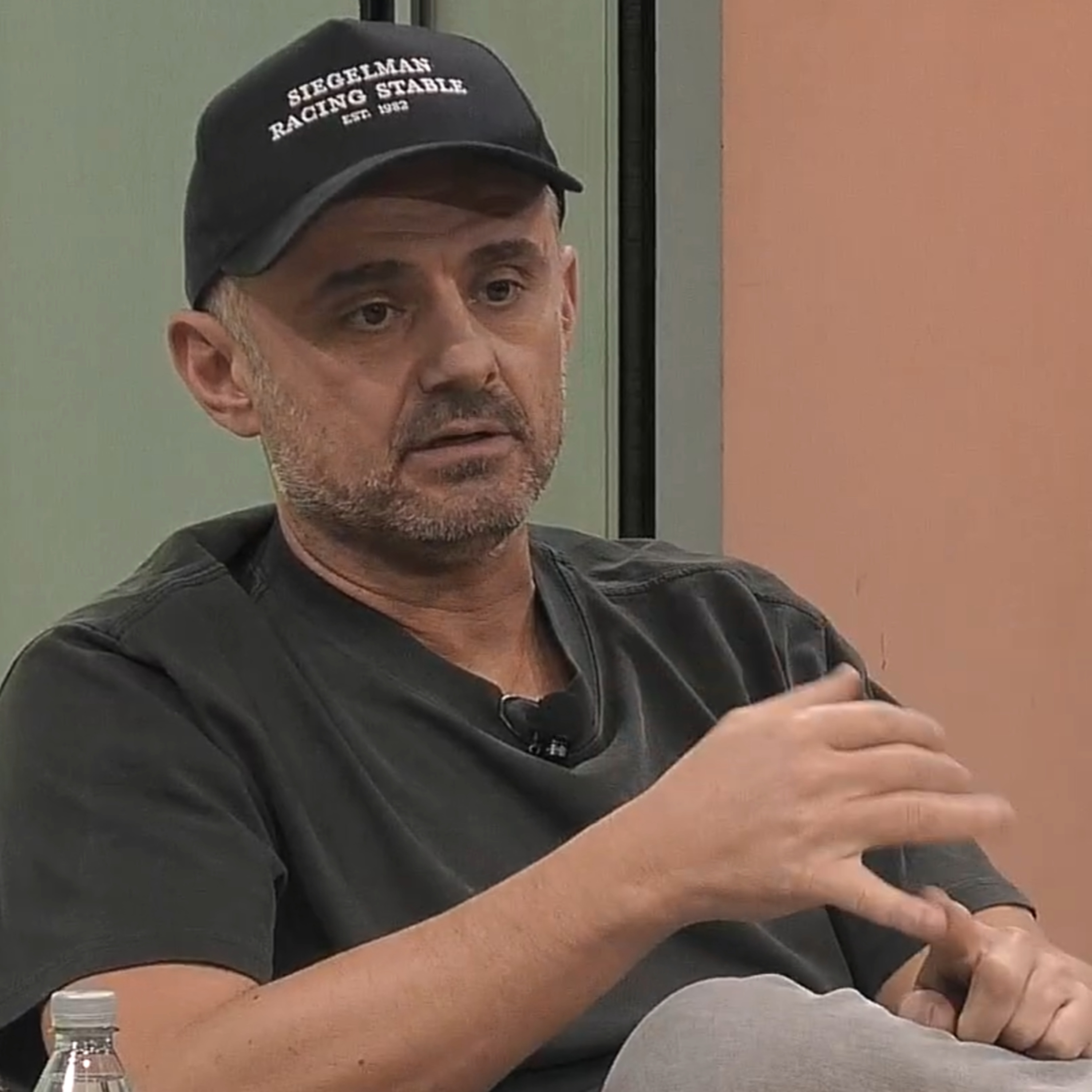
The GaryVee Audio Experience
Redefining Leadership and Emotional Intelligence in Business 2025
00:19:42
Loading summary
Transcript34 lines
- [00:00]
A
Hi, everyone. What a beautiful crowd.
- [00:03]
B
Hi.
- [00:03]
A
So many familiar faces. Beautiful faces. This is kind of a cute crowd.
- [00:08]
B
I would say that they are attractive.
- [00:09]
A
Yeah. And there's a lot of diversity, gender diversity, which is exciting. I love a room with a lot of men and women in it. So we are here to talk about a very important topic. It is urgent. Important, but also difficult. It is how do we raise good men in a fast paced, changing world? And I can't think of a better person to discuss this with than Gary V. You've been one of my heroes for a really long time. It's such an honor to be here with you and talk about this. You're always ahead of the curve. You predicted Dochi's Grammy. I don't know if you know that. Before we even knew how to say her name, he was like, you're gonna win. And then it happened. So let's help us predict what's gonna happen to men. Small task. Are you down for it?
- [01:00]
B
It's gonna be okay.
- [01:01]
A
It's gonna be okay. Okay, great. We can go. I think we fixed it. But do you think that's important? Like that optimism.
- [01:10]
B
So I was an atrocious student, but for some weird reason, I was really good at history my whole life. Like, my report card was actually D's and F's and then like B plus in history. And, you know, yes, it's because I paid attention more and I was interested. But what was fascinating for me as my career evolved, a lot of what I do well about, I don't think I predict. I think things. When I put Dochi in that video four years before she won the Grammy, she already was getting listens on Spotify. I'd already seen the patterns of how she was making content. There was historical reference points to the way she was storytelling from Lauryn Hill or Missy Elliott. Like, history gave me a chance to see understanding. I would say to everybody here, I understand we're all living during this time, but technology adversity is an incredibly strong, consistent undertone of the flight of men and women. When everyone's like, it's never been worse. I'm like, the Black Plague was fucked up. You know, and so, you know, I would argue, in fact, a counter. I would say, things are so good that we can be in midtown Manhattan at a bougie conference talking about this shit. It's worth the debate, right? Like, I think, you know, if this was 1941, at this exact moment, the women would be building shit on the west side and east side for wars. That the men would be fighting, like, I don't know, like, no shit. There's problems. There's always problems. We're all trying to find the middle. Like, you know, what do I think? I think it's gonna be okay. I am incredibly optimistic about human beings. Back to history. An atomic bomb was dropped in the world. We dropped it, by the way. And if you were sitting around and having dinner and pontificating about where the world's gonna be in the late 40s, early 50s, now we know that the USSR has an atomic bomb like I don't think a lot of people would have predicted for the next 70 years, not one more time would that be used. That would have been impossible to believe on the backdrop of just coming from World War II, which was following World War I, not too many minutes before that. And if you know your history, the late 1800s wasn't a picnic. Like, it wouldn't have been easy to be optimistic that we would have had the capacity, the restraint and the humanity to not drop another bomb. I actually argue that, that one of the great mistakes we're all currently making is we are spending way too much time on the 0.000001% that is bad in society. And we are completely dismissive of all the incredible civility and neutral and positive energy that's going in the world. And that's on us.
- [04:11]
A
I love that optimism and I'm an optimist too. But if you look at some of the data out there, it does seem.
- [04:18]
B
Like word, but yeah, is the weapon of the not optimist.
- [04:23]
A
So, okay, and.
- [04:28]
B
That'S a fair transition.
- [04:30]
A
Well, cause I think just from the female perspective, right? Like I have seen so much evolution with men. I've seen so much evolution when it comes to our dynamics, to our relationships. But I've also seen some things that worry me, some trends where they. Things don't seem like they're going.
- [04:48]
B
Of course. Because anytime you say men or you say women, or you say Hispanics, or you say Jews, or you say anything with that big of a wide gap, you will have the entire spectrum of the greatest and the worst. I've seen unlimited bad behavior in the last decade of women, but I know unlimited 99% of the women that I'm watching in culture or in real life are remarkable or awesome or solid. So of course you feel those things, Liz.
- [05:27]
A
Well, I don't feel them. I like, see the data.
- [05:29]
B
Right.
- [05:30]
A
So like Gen Z, men are more likely than older generations to think that.
- [05:33]
B
Women should make a sense Of. Let's double click into that data.
- [05:36]
A
Let's not. What?
- [05:37]
B
Let's double click into that data. The data is incredibly interesting, right? Like, how many people are we interviewing? Like, there's data that conflicts data all day long. I'm sure we're all living through it. There's unlimited data. Like, we're in a place where many surveys have their agenda. To the left, to the right, to the center, to the up, to the down. You know, by the way. By the way, I'm not delusional. I'm not, like, blindly optimistic. You know, I mean, there's incredible bad behavior in the world going on at all times. Do you know how many people live in North Korea? They're completely in a jail of a country. I was born in a jail of a country. I was born in the Soviet Union. It was a jail. Many of you don't realize that from 1917 to 1991, you weren't allowed to leave the country. This isn't Iran, where it's like, you can't get into a lot of places because of your passport. This is North Korea, where you're not allowed to leave. There's incredible bad behavior. You can rattle off 800 surveys and data points and I will accept all of them. But I'm struggling to think. When you look at history, I do not believe we are backwards from where we were in 1975. I do not believe we are backwards from where we were in 1950. That keeps me optimistic. The data's way more clear to me of where we are in 2025 than 2000, than 1990, than 1965. And so we may not be progressing as fast as we all want. Who in here wouldn't want the world to be remarkable? And everybody loves everyone who would not want that. But there's so many circumstances of insecurity. In fact, modern parenting has made so many kids so deeply insecure with over coddling and things of that nature. There's a lot of issues to talk about here.
- [07:30]
A
Yeah, yeah, yeah. And that's a really good point, right? So things are better than they've ever been. But if you look at mental health, right, a lot of young men feel depressed. A lot of young men feel anxious. Obviously, mental health issues happen for women, too. Like, why do you think that that. Do you think that that is just them? Yeah. What is that? If things are so good, why do men feel so bad?
- [07:55]
B
When people committed suicide in 1973, everybody lied and said they died of a heart attack. And notice how some of the OGs in this room shook their head, but the young kids don't know. Again, I think we struggle with history. Like, you know, mental health has been weaponized. Mental health is in the ether and I'm pumped we're talking about this. I think it is remarkable. Back to being better than ever. I love that men and women can talk openly about going to therapy. In 1984, you go to a psychiatrist, you're crazy. I mean, this is like, again, I really believe that this matters. I'm not saying this to paint an overly bright picture. There's unbelievable stuff going on. But why do I think. I think that we've become way too materialistic. I think capitalism out of whack is a problem. I think people think that you need to make a million dollars and have three homes and have a million followers. I think we've become deeply materialistic and I think that that creates insecurity.
- [09:01]
A
And how do you think that we can resolve that? What do you think? You have so many young men following you and you talk to so many of them. What do you think that they need? That they don't know that they need so many things.
- [09:14]
B
How do we fix it? Look, people like myself, others, there's so many incredible people in the world. This is the thing about like everybody's now mad at social. We used to think it was. I heard a piece of the last talk. We thought it was nirvana in 2007 and amazing. Now that was too far here. Now we're too far here that it's all bad. You know what's all bad? Mainstream media content is all fear based and negative. Social has a ton of that because it regurgitates, but it has a ton of positive and optimistic. At least it has. It's decentralized. Right? You have a chance. I think parenting needs to start focusing on thumbs instead of fingers. I think modern parenting has become remarkable at blaming everyone. The iPad, Zucks China and everybody else. We have teachers, bosses, corporations like their mother. All we do is blame. I think when parenting gets into accountability and realizes you don't like the iPad, you're allowed to limit it. Parents of my generation didn't like, you know, nudie magazines and alcohol and cigarettes. And parents of my generation spent a lot of time demonizing, grounding and holding kids accountable when they were found with a Playboy, a cigarette or a Budweiser. Parents today do not do that. We definitely don't smack in the butt or the face, but we don't even ground. You know, again, I'm generalizing. Many parents ground. But what do I think? I think that people are insecure at scale and I think true self esteem comes from being purple, not red or blue. And I think we have, I feel like we've, we're struggling. We're collectively and we all know it culturally, politically. I think, you know, that's what I'm sensing and the data that I go off of, the opinions, you know, listen, I sit here with like I'm just one person. This is my subjective opinion of what I'm gathering. I've been getting 10,000 direct messages from, from people between 15 and 25 consistently on a daily basis for almost a decade now. And I read a lot of that stuff and now I'm putting it into LLMs. And I think that that's my perspective. But if somebody else was here and completely was on the other side of what I'm at, I deeply respect that. I think one of the things we have to think about is the audacity of thinking that the world should be the way you see it or that you're right in the way that you're interpreting it. You know, I'm sharing my thoughts and you know, kind of my observations and my perspective. You know, I'm the byproduct of such a world class mother that I like, you know, I know everybody loves their mom if they're lucky enough to have that kind of relationship. But like I got really fortunate and I got really fortunate on circumstance, you know, we came up so poor and you, you become very grateful and entitlement's a real poison, you know. And so I just wanna, I figure I'd take a commercial break here and say like, hey, this is what I'm observing from my purview. I really respect other people's opinions on this, but I do feel comfortable. I spent a lot of time thinking about this and have spent a lot of my career putting out content to youth culture. And a lot of those people have grown up, you know. You know, we were all in our 20s and now we're all getting closer to 50. So it's been an interesting 20 years of consuming the consumer. Right. You know, for context for some of you, I run and started a advertising agency that does an enormous amount of social listening at scale and deep analysis of that. And you know, so this is like my world and all my clients world and all other people analyzing the people that see the world very different than me, similar to me. And so it's fun to think about, but it's very complex. It's above everyone's pay grade in here and you kind of try to just.
- [13:17]
A
Do the best you can and what's the trend? Right. You've been getting these messages. Yeah. For 15, 20 years. Like is there something that you're seeing with young people that's different?
- [13:28]
B
I'll throw a curve. I'll throw one that's very real to me that I see very little talked about. I am stunned. And this was like a stunner when I started to observe it. I think there's a real issue when parents are still paying for the lifestyle of a human being that's over 22 years old. That's been. I got a really interesting insight. I have consumed an enormous amount of one on one interaction with a lot of people over the last, especially the last five years. It started to really bubble up. There's a lot of well intended parents in here who are paying the rent or the Uber or the Equinox or the Uber eats bill for their 26 year old. Right now. It's well intended, like you know, But I will tell you that the stunner, I would have never seen this until I consumed it and went deep. If you're 26 year old, male or female, and mommy and daddy are paying for everything, they are telling you in a way that we, that you know, I know inflation, we all listen to everything. But I'm telling you the way the kids feel is that their parents think they're losers now. They're hypocrites, these kids. Cause they're taking the money, right. It's a hypocrisy. And when I interact, and I interact a lot one on one, as you know, Liz, I'm like, hey, don't take the money. And they're like, well. And I'm like, oh, it's kind of one of those. But I would say the trend or an emerging trend that I think is very worth thinking about for a lot of people here. And it's a pretty. I'm looking around, it's a fairly young crowd. I'm not anticipating that many people are in the part of their life where they have a 24 year old. But I would say I think 8th place trophies did a lot of damage. I really do. Liz. I think the reason a lot of people are unhappy is that indifference is the seed of depression. When you don't think things matter, you get caught. I think a lot of us, again, what's so fascinating about parenting is it's so well intended. Like who do you like, how many people are a parent just for Context, you guys. The love is so uncomfortable. You'd kill yourself right now. It's so amazing. It's the best. I have it in two directions because I got so much of it. It's been so fun to deploy so much of it. It's incredible. Real goosebumps, life. But, man, you know, there's a great Russian saying that translates to, everything's at its best when it's balanced. And I think there's been a lot of overcorrection by a lot of us to the way we grew up. And, yeah, I think eighth place trophies were a problem. I think merit matters. I think consequences matter. I think competition matters. I think sports is really nice. Like, I really, you know, I love sports now. I'm like. Now that I'm caring about bigger issues or I've lived life enough to realize, whoa, sports is really good. Because we're in a place in life where there's very few things that are left that are pure merit. It pisses me off. But the fucking Knicks lost. It pissed me off so much that I'm literally. Literally. I don't know if you know, this. This talk was moved up by a little bit. I was supposed to be a little later. Cause I am flying to Oklahoma City right now to boo the Pacers. I knew that would work in New York anyway. I would say merit matters. 8th place trophies. I'll tell you, the one that's really dangerous to me, Liz. The one that's really hurt me is by just genetics. Parents have a very competitive kid, but they themselves, as parents aren't. It's just, you know how genetics work, the grandparent thing, you know. And you have a kid. I actually think a kid who's 4, 5, 6, 7, that cries right after losing a game is very blessed. They care. Like grit and tenacity and giving. It really does matter in life, I think. No matter. I'm incredibly socially liberal, but that stuff matters. I don't know what else to tell you. Sorry, it's real. And then you have these parents who are trying to talk them out of it. Out of this gift they were given. I'm just telling you right now. If you're lucky enough to have a child who cries every time they've lost, you birthed the fucking winner. I really believe that. I believe it now. Again, this is why I'm kind of like talking the way I'm talking this anything out of. You know, if you have a super competitive kid who, when they lose, punches a girl in the face, physically, that's bad. Like, of course, everything. You know? And again, I think we've gotten into too much absolutes. Like, this is good and this is bad. Everything in life is nuanced. Everything but I think indifference and over coddling. And, like, this is the generation of parents that goes to teachers and fights and tells them that their kid got a B, should get an A. Yeah, like, what are we doing? We're, like, fighting teachers on a subjective. On grades that don't actually matter in real life anyway.
- [18:47]
A
Why?
- [18:47]
B
Cause you want your kid to go to Duke? Because you care what people think about you based on your kid's accomplishments. That's the way to be the worst fucking parent. That's another trend kids know. Kids know when you're pushing them to something that you care about. You want them to go to Riverdale.
- [19:08]
A
Okay, we have one minute. Really? I know, I know, I know. I'm getting signs to stop, but I want to ask you one last question, please, really quickly. What is one thing that you. Cause this is the fatherhood summit. What's one thing that you want your kids to remember about you as a father? Not based on what you've said, but on what you've done that I, at.
- [19:28]
B
Every turn in my time with them, cared about what made them happy, not what they could do to make me happy?
- [19:36]
A
All right, thank you, Gary.
- [19:37]
B
Thank you, all of you.
- [19:39]
A
That was amazing.
- [19:39]
B
Thank you for having me. Thank you. Bye, everyone.