Loading summary
Transcript1 lines
- [00:00]
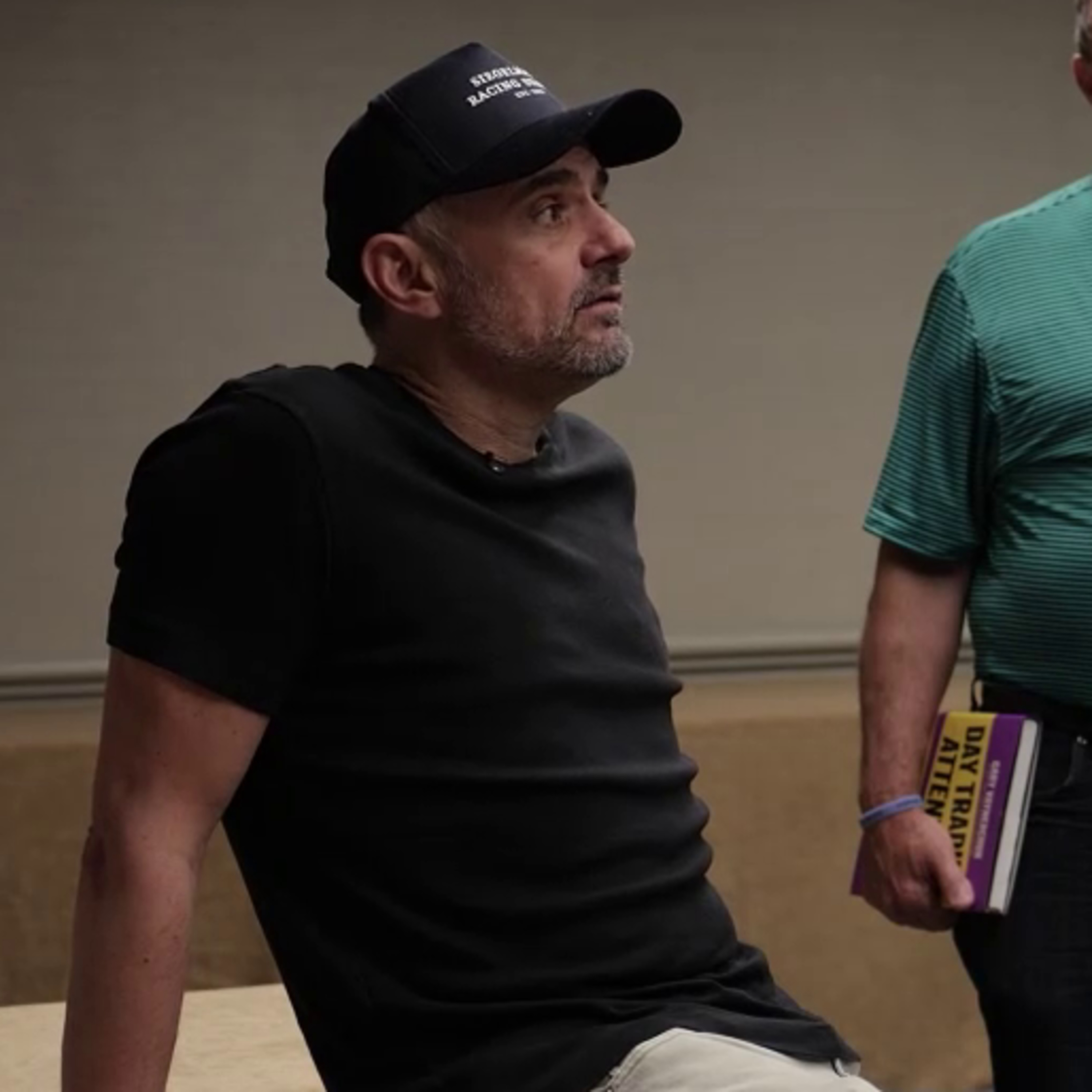
A
Question for you. Please talk about personal brand. Yes. Yeah. So we. The front line run is 65 people. Yes. So talking about both from the Stanford, I don't know personally, the recruiting side. We do some of the stuff from a recruiting perspective. Maybe start a podcast specifically for that. Nice. But we talked about it's more of an. And from the personal. Yes. In the company. Yep. Is there a certain person you see is provide more value from the business side brand versus the personal side? Not necessarily. You know they really could be anybody. It could be. You know what's amazing about how humans do business? It could literally be about the intern. Yeah. Like the truth is what, what this is all based on is being aware of something like at the end of the day I can't do business with your firm if I don't know it exists. Right. Absolutely. You know, and if your intern's there and he does a prank video. Yep. You know you're Talking to a 49 year old high net worth individual who if I was in the consideration of making a switch. Knowing that a firm like yours allowed the intern to make that video is a much bigger variable of why I would do business with you than you telling me you do 100 billion in bookings. That's me now. I'm irreverent and things of that nature that may not that would have worked for my dad or for half this room. But why that's an important call out is you don't actually know the answer of why someone's gonna do business with you. Which is why limiting what you put out or in what form or having the humility to realize there's no really right answer. Yeah. That's the key. There's no right answer. No. Because yes, it may be a testimonial like no shit, some people may work with you. If I see some 60 year old guy who's like I've worked with these guys for 30 years and they've done right by me. That will work for some. Definitely doesn't work to me because I'm like, ah, they got paid for that testimonial. I don't, you know like. And that's where you know. And that's where you fall in love. And I said it to that young lady and versus or right. The model is predicated. You know, when you read this book, if you or somebody in your team reads it, what I talk about day trading attention is there's day to day tactics that will get more views on videos. But at the top line thesis, look at everybody what everyone's wearing right now or what we all chose to eat last night or what show we're watching on Netflix. We. There's this inherent misunderstanding that there's some sort of right answer for everyone. The reality is it's completely the opposite. It's marketing and decision making is not vanilla, which is how people thought about it because television was a driving medium and everybody thought of it too. Academically. It is about creating different reasons why someone would say yes. And in the weird. And now I'm doing this for the rest of the group that's catching tail end of this. In the scenario that I said to you where an intern makes a funny video of something in the office, for me, that would be more likely of why I would work with you while recognizing that's not true for 90% of people. But you want my business. And so like, you know, that's. And I think that's the game. Gotcha. You know, so letting people cook, you know, and definitely the people in your. Like, for a lot of you, you may not maybe you have a three person company and you might be the most introverted of the bunch. And by the way, I think the most introverted people should make content because yes, you may not get a million views for your charisma or your humor, but if you know your shit, like especially in this business, that's going to resonate for a certain crew. And so even if that video gets 17 views, all you need is one of those views to matter. So I think stopping anyone from making the content is the mistake and I think that's the framework and the strategy that people need to implement. Okay, Makes sense. Do you have 30 seconds to video with me? Sure. Will you do it? Yeah, yeah, yeah, not a problem. How are you? I'm doing great. I'm doing great. Email. Hey guys. Lisa Denisio. Oh, okay. Hey guys, it's Lisa Denisio with Paxa CPA and I am at right now and I just got to hear Gary Vee speak. Thank you, Lisa. And any words of wisdom? Yes. For my seven social media followers. Yes. Stop wasting money. Start saving money. That is my tip of the day. Gary told me I need to do two videos a day. We're going to shoot for two a month. So this is number one. I think she can do two a day. I can see it already. She could do two a day. Please leave a comment to encourage her to do two a day. Thanks, Lee. Thank you. Good for you. You know, Lis, let me. And now let me. And let me. Let me I want everybody to hear this, Lis you included. Here's how crazy the algorithms are getting. So four years ago, if Lisa posted that and she had seven followers or whatever, the number is, a percentage of those seven, people would see it. So that video would get three views. Even with having some like me in the content today, if she posts that video, the way the algorithms now work is I would argue that we don't even live in social media anymore. We now live in interest media. I'm sure all of you have noticed this in your feeds. You're now seeing content of things you like, not who you're following. If you're into knitting or if you're into bowling or. That's what TikTok brought to the industry. And now all the platforms follow that. So she can post that now. And what will happen with that video, especially on TikTok and Instagram, is. And YouTube shorts, is it will service this video to people that are fans of me because I'm in it. And it can visualize the technology, knows it's me. So I don't have to tag you. You don't. Okay, you can. But it would be helpful if I did. Not really, because people are not really hitting tags. And remember how tagging worked. Like, how many of you are hitting tags now? Well, that's why won't matter as much, right? But the algorithm, not only will its service serve to people that follow me or like my content, but it will serve to people that like entrepreneurship or maybe the New York jets or wine. It will try to find the right audience. Every piece of content for Facebook and TikTok and YouTube, their job is to keep all of us on their platform for as long as possible. So what has happened is, and this is wild for people like Monica and I, for the first time, distribution is aligned with the people advertising on it. They want to keep the people on. They want to keep you on there. So instead of doing what Socho used to do, which is we went to college together and we followed each other because we were in tangential friend groups, but nine years later, we like, and you're seeing my stuff, you don't care. And then that meant. But people were not unfollowing people. It's like, not how we work, right? We don't unsubscribe from spam. We just archive it. We don't unfollow people. We just move on. So what has happened is they realize that they'd rather show you fishing video or cooking videos or Ohio State football videos to keep you on this is a very big deal because your content will now find the audience and it creates a level of merit and opportunity that is pretty profound and very impactful. Because the thing I didn't say up there is you can do what I'm telling you to do and it will work. The 25, 50 mile radius stuff will really work. And then one day you're going to make a video that just goes viral for no reason and it will really work. Like when you wake up and you post a video that's as mundane as what we just did and for some reason. Now the key for a lot of you is to make sure your profiles are right. So I wish I said this up there. The key is on your Instagram you need to have a phone number, an email, a link to your website on your business. Because when you make a golfing video and someone's like, oh, I like, you know, John, Caleb, I like golf too. When they look at your profile and they're like, local accountant in town, phone number like, oh, actually my accountant just moved. You've got to make it very easy for someone to convert into you. But we actually serve clients across the US and we have a high rigor mud team. So how would you adjust the social, you know, like what you're doing? If you're not trying to get the local marketing, you're trying to get something big. In that scenario, you're more like a national player and you're just posting stuff organically. And when it does, well, let's say most of your videos get 50 views. Talking real numbers now. But this one for some reason gets 4,000. You take that one and you run it, you know, $500 worth of ads against whatever target you want, meaning you know your business, even though you're dispersed, there might be pockets. What's an ideal client profile? That age, gender, race, income level. There's so many things you can target on. I don't, I don't think again, this is why I write the books. Like there's details to this. Like for example, even that main thing I focused on the whole time with all of you. It's very detailed. Like I don't think people think in terms of I'm going to post the video and then I'm going to spend. Notice how like I was very specific of what I was trying to do there. $50 is not going to scare anyone here. So I'm going to spend $50 within five miles. Because I'm a local business, I don't think people understand how well that will work when you don't understand. When you run $50 on a five mile radius of, you know, if you run a five mile radius in New York City, you got a problem. But if you're in a church, where even in a town like Nashville, you will get in front of a lot of people for 50 bucks. And then if you're smart and you got the phone number there and the email and you know, you're all business people, it doesn't take much. You spend 50 bucks and you get three leads, three phone calls, three emails. You're like, wait a minute. And it becomes a dick. Then it's like, what's so exciting for me is when I do this is getting the email from someone here a month later and being like, I cannot believe how real this is. But this is that real. This is changing local businesses. You know what's really good about marketing is all you can ask is the create like it's. It's creative in media, right? It's a very, it's a very basic business marketing. There's the creative and then there's the distribution, right? There's. You're welcome, Chris. There's how I grew up, which was print, There was. Which newspaper would you put this ad in? For me, it was the Star Ledger in Jersey versus the New York Times versus the Wall Street Journal. And then how would you make the ad visually to make people come in? I think you need to ask people. Here is what I'd like to happen. This is what you tell me. Someone like me, I'd like to get 10 more customers, a million more, right? Where would you send these messages and what would the messages be? And then you use your common sense of business knowledge too. You know, when I bring up like golf and tennis and cooking, you know, if you and I met for the first time and I said that to you, I said, actually, I'll do it in real life. What are some of your favorite hobbies? Salsa dancing. That's incredible. But we gotta see it. You gotta see it. That was amazing. So I'm from Miami. Exactly. I get it. I'm taking it out of the town. So one, I think, you know, I really mean what I'm about to say. You making a video of like, why salsa dancing is something you do to reset, you know, during tax season. Why? Like those kind of, those kind of things. If I explained to you in a meeting that if you put that out and if your profile was right and it had your information, the business information, and I explained to you how the algorithms worked and why somebody may hire you because they associate with that common interest. That would not be far fetched to you as a professional. You could logically understand how that could be true. I'm energized to hear about the video and things like that. I think someone had made a comment how, you know, accountants don't, a lot of accountants don't have the personality to do that. Do you think there's a threat if you target or you have someone in your firm younger do it and that becomes your company brand? I don't think it's a threat. I understand what you're saying. Look, in what I'm hearing, I think that people think of it too much in production days when I hear don't have capacity and to your point, just even spending a little time with you, I'm looking for you to do it before you start your car in the morning. From the car with literally one minute's worth of information. This is not about hiring the young kid. This is not like literally one minute worth of video. Again, I believe the biggest way all of you will get clients is by talking about things that are happening actually to your clients within your field. Right. Like again, I brought up a lot of these in there and I'm bringing it up again. Things, you know, that are a little more under the radar, you know, you know, this for a small business that is considering to use you. If you say one thing that would have saved them $600 in taxes this last April and they go back and realize their guy or gal didn't do that, it's game on. Right? That's why I love that move the most. Because they're like, you know, I see it in my feed. Literally, you start the video with, do you know that you could have saved $700 on your taxes this year? There was a new code that was passed. If I take that video and I'm like, hey, Fred, did we do this? And he's like, no, we didn't. That's the beginning of the first day of me considering to work with you.