← The GaryVee Audio Experience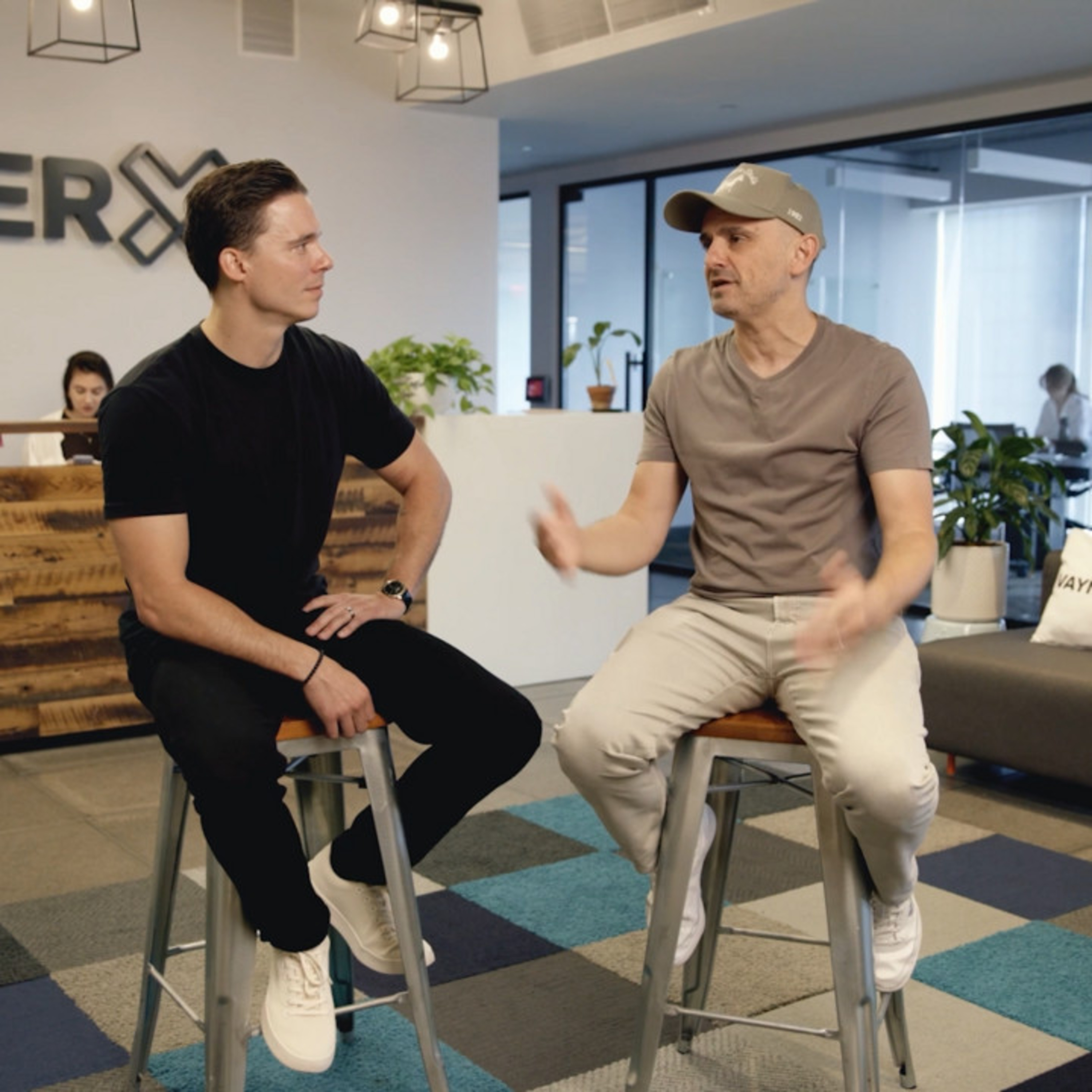
The GaryVee Audio Experience
What It Really Takes to Build and Lead a Company in 2026 l The CEO Series with William Salvi
00:36:40
Loading summary
Transcript154 lines
- [00:00]
A
Podcast nation. Before I get you into today's podcast, big announcement. As you probably heard at this point, because I had John from Stan on the show, I am an investor advisor to an incredible startup called Stan. Stan Store. I'm sending you right now to GaryVee.com, garyVee.com Stan, go check this out. We've done a GaryVee Stan store challenge, which actually has a weekly call with me. This is built for everyone who's been affected honestly by my overall content. The tech stack, all these features, and the minimal costs per month that Stan Store has built is really the tool that was needed for this world that I envisioned when I wrote Crush it, when I wrote Crushing It. And this overall thing I'm thinking a lot about lately, which is the individual empire, right? This creator entrepreneur, slash entrepreneur creator economy that I think is gonna eat up the oxygen. Very honestly. The. The thing that so many of you want in your life and the reason so many of you are not there yet, is you've got the strategy for me. You've got the ambition within yourself, but you don't have the tools for you to fully maximize it. And I believe you can find that at Stan Store. Stan Store. But specifically, I want you to sign up for it through my challenge because I want to get access with you. And plus, there's a bunch of cool things. So if you want to go see those cool things, go to garyvee.com Stan S T A N Now to the podcast. This is the GaryVee audio experience. The levels of giving a shit of what anyone thinks of me, it doesn't really penetrate very high. I'm really not playing for anyone else. Enjoy eating shit. I know something about business. Business is not education. Business is not the political system. Business is not parenting businesses. If you. If you over coddle and you over entitle, you go out of business and everyone gets fired.
- [01:54]
B
Do you think there will be almost like an adverse effect of all this generative AI stuff or something like that?
- [01:59]
A
No. No. Cause I think it's like actually fundamental.
- [02:02]
B
What matters to you the most?
- [02:03]
A
Who I am when nobody sees me.
- [02:05]
B
Who are you when no one sees you?
- [02:06]
A
A really nice boy. Aw. In real life, I will, like lay my body on the street for an old lady in the middle of the street to cross in competition. I would punch that lady in the face.
- [02:17]
B
There's a lot of entrepreneur bros. They're preaching business and then they sell you some bullshit corpse. I think they are a negative for the business community.
- [02:26]
A
Selling something you do not believe in is always bullshit. Everybody plays it different. This is how I play it. I have always and to this moment, respect when people do not like what I do.
- [02:38]
B
In hindsight may be a good thing.
- [02:39]
A
It's always a good thing when you're fucking talented, when you are a true entrepreneur and it's your baby, it's fucking real. The only thing I believe more than the sun will come up tomorrow is that winners fucking win.
- [02:52]
B
All right, we are in New York City. It is one of my favorite cities in the entire world. It's second to Chicago because that's my favorite city in the world. But we are at Hudson Yards. It's this beautiful area with whatever the hell that building is, but it's great. I love looking at it. We're going to be talking to Gary Vaynerchuk, the chairman of VaynerX and the CEO of VaynerMedia. He is a business personality. He's one of the OGs of YouTube, quite literally. He started a wine show on YouTube in 2006, and now he's become a business titan. We're going to be talking to him all things media, all about the dynamics of his business and of course, his collectibles, sports. And he's got a lot of predictions on everything in business. End of life. My name is William Salvey, and this is the CEO series where we have real conversations with real CEOs. And don't forget to subscribe to our YouTube channel, Executive House. It is the best content on executives. We get people like Gary Vee, CEOs of Fortune 500 companies, CEOs of startups, all different types of executives subscribe. Let's go talk to Gary.
- [03:56]
A
Get 30 interns. Start interacting with your community and you make much more roi. You want to do something cool? Let's zoom in over here. We have 125 people watching me on newstream. How many of you read the newspaper every day? Go, no, no, no, no, no. Hell, no. No, no, no. Yes, yes. No, no. When they start embracing social media marketing, it's really going to explode.
- [04:14]
B
All right, we're at the CEO of VaynerMedia and the chairman of Vayner X, Gary Vaynerchuk. Gary, thanks for joining us.
- [04:21]
A
Thanks for having me.
- [04:22]
B
Awesome. Well, I'm actually interested because unlike most CEOs that we've interviewed, it's like, hard to find out what exactly you do and how many entities you own and operate with. So I'm interested. Like, tell me a little bit about all the companies that you work on and Basically your day to day.
- [04:39]
A
Yeah. So VaynerX, which is the holding company where VaynerMedia and five or six other marketing service production companies sit under is no question my primary. You know it's a 2000 person global company. We're an HQ here in New York, but you know, hundreds of people in LA and in London, Amsterdam, Singapore, Tokyo, Mexico City. So it's a very large marketing organization. You know, probably the pioneer in social media marketing for Fortune 500 companies. On the back of what I did for my dad's liquor store and my personal brand. We started this in 2009 with my brother. The other main, main, main thing I work on is veefriends, my Pokemon, Marvel, Disney, like intellectual property started as Digital collectibles and NFTs, trading cards, comic books, squishmallows.
- [05:30]
B
Are you into that stuff or are you into the tech?
- [05:33]
A
I'm into both.
- [05:34]
B
Yeah. Because I'm. I just played Pokemon first gen again.
- [05:37]
A
Yes.
- [05:38]
B
I was like a child on my phone.
- [05:39]
A
Yeah, it was great. I mean do you know Pokemon's worth $100 billion?
- [05:43]
B
Yes. Isn't it the most like I don't.
- [05:45]
A
Think people valuable ip, right. It's like that is a profound number.
- [05:48]
B
Yeah.
- [05:48]
A
Like worth more than multiple, multiple, multiple sports teams. So very fascinated by intellectual property businesses accelerated by the AI world. I think IP and copyright are one of the few places you can feel comfortable in this incredible disruption. The other places where I put energy are vaynersports. So vaynersports is a very large sports agency that my brother AJ is the co CEO of. I'm the chairman, I'm pretty active in that, you know, recruiting players, signing athletes. Vaynersports is within striking distance now of becoming one of the major players in sports representation and marketing. The two other businesses that I have my thumbprint on pretty significantly is the VCR Group which is a restaurant hospitality business. Fly Fish Club, which is our big win down in downtown. But seven or eight other restaurants, mainly in Vegas and New York. Vayner Watt, which is with Eric Wattenberg and Nima Vand, is a key player in that company. That's a TV production company where that will start hitting a lot of people's radars because we've sold a bunch of shows and as those shows start to show up on Netflix and Hulu and other places and that Vayner Watt logo comes in the beginning, I know I'll get some tweets and emails like what's this? And then let's call spade a spade. You know, this Most of the world thinks I'm an influencer. I'm Gary Vee and I day trade attention. I think I'm a positive entrepreneur. Some may think of me as a creator. Many people just only know me as Gary Vee. But Gary Vaynerchuk is the active chairman and CEO of Vayner X and of Veefriends. But I think the greatest title that I hold is Nice Guy. That's how I. Motivational speaker.
- [07:35]
B
Yeah. So do you ever get sick of that? If someone sees you on the street or they start talking to you?
- [07:39]
A
I'm flattered. Like, I'm humbled by people getting value out of the words I speak.
- [07:46]
B
How often are you filming content?
- [07:48]
A
I'm just getting back into it, actually. From 2015 to 2019, I filmed every minute for four years of my life. Then Covid came and I never really got back on the saddle. Cause I've been really right here. I've been less Gary Vee for the last four years than I've. Do you miss it Enough that I think October 1st, I'm coming back. Yeah.
- [08:10]
B
We all know you, or a lot of people know you as the personality. The personal brand is very strong, but on the side of it, you have this very Strong brand of VaynerMedia and Vayner X. How did you actually build and scale the business while also leveraging the personal.
- [08:27]
A
Brand by doing both? Well, to your point, it wasn't like my personal brand. Like, in fact, my personal brand was a detriment early on for Vayner.
- [08:35]
B
How so?
- [08:36]
A
Well, the corporate world in 2013, 14, 15, was.
- [08:42]
B
They weren't used to something like this.
- [08:43]
A
They weren't used to something like this. Especially someone cursed. I mean, do you know how many companies, literally Fortune 500 companies that were ready to hire VaynerMedia and then a board member or CEO saw some shit that you did, Saw some shit that I said with three curses in two seconds, and they're like, fuck that.
- [08:58]
B
Do you still get it? Or now they've transcended.
- [08:59]
A
I think culture has changed. Right. Like, the things that I kind of was ahead on, cursing, dressing down, they've become the norm.
- [09:12]
B
Do CEOs need to be more. Just more themselves? I think. I think.
- [09:16]
A
I think so. Like, back to your audience of what this is about. I think so, but I'm empathetic. Let's. Oh, by the way, you think you hate CEOs. Good news. They have bosses. It's called the board. You know, I'm empathetic. I sit on boards. I Know boards, I am getting courted for boards and board people that are on the boards of the biggest companies in the world are often in their 60s, 70s and 80s. And I, by the way, I have always and to this moment respect when people do not like what I do. The reason CEOs are not themselves is they're scared to get fired.
- [09:54]
B
Which makes them maybe they're not as effective as they need to be because if they were super effective then they'd be more willing to and if they.
- [10:01]
A
Were super duper effective, maybe they would have their own business and have no ability for someone to fire them. The only reason I'm fully the way I am, it's because no one has.
- [10:10]
B
Say it's a blessing.
- [10:12]
A
Like I have complete freedom. Like I will never ever ever run a business where people have say yeah, I'd rather not have a business. Just put in work and enjoy that. Enjoy eating shit and dirt and bleeding and the grind and don't give a fuck about what anybody else thinks. Have four jobs, fucking Wendy's, Walmart, your side hustle work. Okay, so in less than eight years, when I'm a millionaire by 25, I'll come shake your hand, I promise you. That statement itself made me 100% guarantee that you won't.
- [10:52]
B
So we've talked to a lot of CEOs and I would say a lot of them seem to a fair amount of the larger company CEOs seem to have more of a mask on. And I think CEOs need to be a little bit more authentic. I think you're very forward with that. Do you think there's a little too much out of business leadership where they're just trying to change, chase profits versus preaching like passion and go after what you're good at?
- [11:16]
A
Yeah, I mean I think there's a couple things there. The reason I'm smiling is actually not passion versus cash. It's that most CEOs of big companies are not entrepreneurs. Most of the people you've interviewed are executives. The boredom in which runs through my body when I jam with some of the biggest CEOs in the world is extraordinary. Not because they're bad or not smart. Some of them have 50 times more skills than me and they 50 important areas. But they are not inherently creative, risk tolerant, playing outside the lines, seeing in color.
- [11:51]
B
I have a question about being a CEO generally, please. And CEOs also, generally. Yes, I think they are viewed negatively. One of the reasons big company CEOs one of the reasons why we do this show is because There are a lot of CEOs out there that do things with integrity. They, they have good cultures, they run good companies. They're performers as well.
- [12:12]
A
Yes. The headlines of the 17 CEOs who get such massive salaries, who are dick faces, get all of youth culture to believe there's something wrong in that and they're horrible tyrants. I think that that is just as lazy as saying all Mexican people do this or all women do that or all Italians do this. So mainstream media has. And which then leads to social media has overly focused on the 0.01% of CEOs and 99% of CEOs are running mid size and small size companies and even the large CEOs. There's a lot of people who are incredibly noble and wonderful. I want to run this place wildly positive and good and I feel great about the culture we have. But at the same token, if I let it get too far to any side, you, it breaks. And if it breaks, we go out of business. Yeah.
- [13:05]
B
And then more people suffer.
- [13:06]
A
Yeah. The whole, you know. And listen, you're talking to someone who disproportionately his kryptonite and disproportionately the F on his report card as a CEO, entrepreneur and business owner has been his inability to fire people. For a lot of you, this is going to be a really tough next three, four, five months because it's going to be the first time that you're ever going to. Who have to fire someone, lay them off, be heavily compassionate, understand the score. The reality is if there's layoffs, they're starting, you know, it's gonna be harder to get another job and people are gonna be struggling out there. And the most you can do is be gracious and as kind as you can be. So laying off 800 people, that is not like people don't do that for. Ha ha ha. For fun. Every single CEO in the world is sitting around right now and saying, if I don't tighten up and get AI put in place, a company I'm competing with will do that. They will beat me. And I'm gonna lay off 8,000 people, not 800 people.
- [14:05]
B
To get philosophical here, have we gone a little off with the business world and business leadership where it's growth at all costs and profit and that's all you must do. Do you think that's.
- [14:19]
A
I think we're in the. No, I actually think we're in the nicest place we've ever been. Do you know what 1984 looked like? I think Culture has become so ridiculously entitled and soft and we cry about ludicrous things at the same token. To your point, I do not believe fear is the useful weapon of choice to get things done. So I think both can be true.
- [14:42]
B
Yeah, because you're pretty positive on your in your messages.
- [14:45]
A
I'm incredibly positive. But I also deeply believe that entitlement has become a disease.
- [14:52]
B
What's the way out?
- [14:53]
A
The way out is consequences. See, the reason I don't worry about it is I know one thing about business. Business is not education system. Business is not the political system. Business is not parenting. Business is not all these other things. Businesses. If you over coddle and you over entitle, you go out of business and everyone gets fired. I now run in circles where it's a players hanging out with a players, right? These fucking A players are just a bunch of fucking sixth grade girls. I'm stunned by how many titans that everyone here looks up to that seemingly look like gangsters on podcasts and the Internet. How many of them are ravaged with envy and jealousy of some other guy or gal that's making a couple of more bucks. And at these dinners where people get into fucking talking shit about other winners, I am the most consistent voice. I let it go for a little while and then somewhere in about 20 to 30 minutes in, I will always find my opening. I'm like, yo, just real quick, like you talking shit is not going to stop that person. And in fact all you're really doing is you're looking like an inferior player. The only thing I believe more than the sun will come up tomorrow is that winners fucking win.
- [16:11]
B
Number one. It's hard to research a person like Gary just because of how much content he has on himself on the Internet. It's like, what? What do you choose? He also says quite a lot. So I don't know what, you know, what to specifically research or talk about because he talks about a lot of things he has. I wouldn't call him hot takes, but he's got takes on a lot of different things. And he's, he's a trendsetter, I would say, versus a trend follower. Hence his YouTube show in 2006, hence his getting into personal branding and utilizing his personal brand for his business. But I don't think people quite realize how big his companies are. I mean they're doing, they have 2,000 employees globally, multiple office locations in Tokyo and Chicago and London. They're doing hundreds of millions of dollars in revenue. And then on top of that, that's just VaynerMedia he's got a lot of different companies that he does, and it's really astonishing to see his energy level and how he utilizes his personal brand, how these companies, some are in the thick of it and thriving, others are getting started. And he makes so much content. I mean, Gary Vee is a dynamic business person. We have a couple of fun segments. One of them is the most Googled questions I chose. How did Gary Vee become rich?
- [17:38]
A
I guess ultimately two things. He, even though he made $65,000 a year through his 20s, on average, he lived a $28,000 a year life, which meant he had, after about nine, 10 years, somewhere in the ballpark of 80,000 to $150,000 in savings. And when he saw the moment to invest in Twitter and Facebook, he did.
- [18:00]
B
What does Gary Vee do?
- [18:01]
A
I think that's a fun question because I do think that I'm a renaissance man. I think I'm a preview, not the anomaly. I think there will be many more businessmen and women like me because they're gonna realize, go for your joy, not for your money.
- [18:16]
B
How did Gary Vee build the wine Library from 3 to 60 million underpriced attention.
- [18:24]
A
The in detail. Launching a website as one of the first five websites for a liquor store in the country. First five stores to do email marketing. First store to buy Google AdWords on the word wine and all the big terms. And then finally, the first person to start a wine video show.
- [18:42]
B
Is Gary Vee going to buy the Jets?
- [18:45]
A
Will Gary Vee buy the New York Jets? No one knows. Gary Vee will try very hard for the rest of his life to pull it off. And Gary Vee will be unbelievably content with the effort against it, because the joy of chasing it has been and will continue to be a lot of fun.
- [19:03]
B
You'd be a good owner.
- [19:04]
A
I would be a great owner.
- [19:05]
B
You'd be a good owner.
- [19:05]
A
I'd be a great owner because I think being a great owner is picking good people and empowering the fuck out of them.
- [19:18]
B
Tell me about what's behind you. Give me. Give me some.
- [19:21]
A
Give me some of this.
- [19:22]
B
I got wine, you got jerseys. Yes.
- [19:24]
A
This is probably in a lot of ways a good reflection of, like, how I see the world and what I'm interested in, like, a lot of veefriend stuff right now. This is really fun. Like, you know what's really cool about this is this is how I think about veefriends. I think it's cool that you two in 16 years over dinner will be like, man, we were fucking there and we really didn't take note of Veefriends. Like, we didn't appreciate what Gary was. And he said that he was doing it and we didn't. Like, there's this almost subconscious disbelief that I'm getting from the world of like what I'm telling them I'm actually gonna do. They think it's all just a game, a bunch of toys, lifeless trinkets. Little do they know it's so much more than that.
- [20:22]
B
Sorry. Quickly describe it if you could.
- [20:24]
A
Veefriends is an intellectual property business. It is literally no different than Pokemon, Marvel.
- [20:31]
B
And you're eventually going to start doing like live trading, shopping, everything.
- [20:36]
A
Literally everything you can imagine. I mean, I'm doing it already, but like, think even bigger. Like there will be a Veefriends amusement park in your lifetime. There will be Veefriends on Ice, touring circus or Ice Capades. There will be feature films like a V, Friends in movie theaters. It is an incredibly prolific part of my career. These vending machines. There's hundreds and hundreds and hundreds of these vending machines around the country in stores like, I cannot wait for your 11 month old when she's 5 to be wearing Veefriends pajamas, reading Veefriends books. We have an incredible kids book that's crushing. A YouTube kids channel that's crushing. I am desperately trying to build the next Pokemon, Marvel, Disney ip. Ip.
- [21:35]
B
Yeah. What's been the highest growth sector of your business? Subsidiary of your business?
- [21:49]
A
Vaynermedia.
- [21:50]
B
Vaynermedia.
- [21:50]
A
Vaynermedia's ripping hot.
- [21:51]
B
Are your main competitors Edelman, Leo Burnett like those types of companies or is it different?
- [21:57]
A
Yes, but those companies are so grounded in yesterday. With all due respect, that Social first is eating up. Traditional pr. Edelman, Social first is eating up. I mean, who wants to spend that kind of money on a television commercial?
- [22:13]
B
What are your thoughts on like traditional communications with specifically with like C Suite? Because we, we have strong opinions about this. I think it's shit.
- [22:22]
A
We think it's shit too. We think that we're going to be the winner of it. We think that. We think if you win on social and on crisis, like actual crisis, because they are going to care about that. So there's a little bit of a traditional. But pitching editors and hoping, the Wall Street Journal getting on cnbc, that's like, no.
- [22:44]
B
Do you want to scale your company to a point where it just keeps growing in size or do you have a point where you're Like, I don't need it to get that big. I think that would take away from what I'm doing day to day.
- [22:52]
A
No, we're long past that.
- [22:54]
B
Yeah. Okay.
- [22:55]
A
Like we're now in growth in perpetuity. I'd like to build a private equity firm on top of the agency. So my belief is that everything is going to be commoditized in the world except the ability to communicate. That's how much I believe in communication and attention. I am building a communications infrastructure that can actually bring attention and successful marketing to any politician, any B2B business, any B2C business, any, any aspect of anything in the world. I want to be the emperor and I want to be in control of the Death Star. And whatever I pointed to, I can take this ecosystem and point it towards that and then thus rendering that dramatically more successful, dramatically more known, dramatically more capable of getting attention and conversion and sales. And so that is kind of the real secret master plan of Vayner is to build that infrastructure and that capability because I believe that that is the ultimate leverage in the world we now live in.
- [24:12]
B
We like to preach authenticity. And when you're a business leader, it's really important to be yourself like, and, and it will do wonders for you as a business leader. I believe that he walks the walks the walk and talks the talk and he's clearly like, he's. You could argue that he's too authentic because he is just exactly who he is. It was great talking with him on camera and off camera. It's exactly who he is that you see on the videos that you've watched of Gary Vee. But I can't stress this enough. He's not just a personality. He's got a lot of, of great businesses and trend setting businesses that I think he's not only onto something because the proof is in the pudding, but he's done a lot of great things within his own company. And it seems like he's got all the energy in the world to keep going.
- [25:04]
A
When my life was 85 human beings in New Jersey that were the bigwigs of the liquor and wine business in New Jersey, and I was telling them in 1990, 1996 that I'm gonna launch a website, this Internet thing on the world Wide web and I'm gonna build one of the biggest wine stores in the country, I could see on their faces like, okay, kid, cool.
- [25:27]
B
Yeah.
- [25:28]
A
Like, in fact, when I launched winelibrary.com and it cost like $10,000 to make the site, which was like a Billion dollars for us as a small business at the time. A lot of my dad's contemporaries who cared about my dad because they watched.
- [25:41]
B
It, they were like protective of this decision.
- [25:43]
A
Correct. They were like, hey, man. Correct.
- [25:45]
B
Yeah.
- [25:46]
A
They're like, open a second store. That's how you build it. Right? When I started Wine Library tv, my best friend Brandon and my father after the first episode are like, what are you doing? Like. Because I had never not worked on the business, so now I'm taking an hour to make the video. And then I was spending all my hours at night replying to all the comments. Something I really understood in hindsight was that attention was the most important asset. I kind of understood money my whole life. I was like, money's fake, meaning America can keep printing it. The asset in the world. How do you make it bigger? You get more attention. How do you get more attention? You dominate social media. The end.
- [26:29]
B
Social media is currently not being utilized enough in your eyes by many, many.
- [26:32]
A
People, by almost every human, including me on earth. And I produce 40 pieces of content a day.
- [26:37]
B
Yeah. What's something that instead of saying like, oh, you know, social media is untapped or AI is going to explode, what's a prediction you have for the market and media?
- [26:47]
A
I love experiential.
- [26:49]
B
Yeah.
- [26:49]
A
Like events physical, like the rise of digital creates the opportunity. I think all of us are yearning for more, for more real life stuff. So I'm very, very bullish on experiential.
- [27:01]
B
Do you think there will be almost like an adverse effect of all this generative AI stuff where people are like, you know what? I'm actually interested in the.
- [27:08]
A
No, no. Because I think it's like actually fundamental. But I do think there's an opening for real life to be like a good side dish. I think the AI, the digital that is now the main course.
- [27:18]
B
Yeah, it's here, it's here.
- [27:19]
A
But the amuse bouche, the appetizers, the side dish, the dessert, there's cool stuff there. I believe that live social shopping is disproportionately one of the biggest opportunities in business right now.
- [27:32]
B
It's a big thing in China, right?
- [27:34]
A
It's a massive thing in China. The QVC ification of social media is an inevitable outcome here in the West. If you sell something physically, I think it's grossly negligent to not be spending real hours in understanding how live social shopping on TikTok shop and whatnot are now happening. And I fully expect many of the other large platforms to jump on board and we're already seeing Amazon, Walmart, ebay really start to play. I believe collectibles as a cultural genre, as a lifestyle genre is about to go into the same stratosphere that sports, fashion, music.
- [28:16]
B
Why?
- [28:17]
A
I think it's inherently human. Like your great grandfather, your great great grandfather collected stamps, coins humans collect, cavemen collected shiny rocks. And now I think it's like the taboo is off of it. Like when I was a kid collecting comic books or toys or video games, you were a nerd and got like your underwear pulled up and punched by a jock. Now I think that's cool. Now the coolest rappers in the world are wearing a fucking Pikachu T shirt. So I think that the taboo has come off. You're seeing much more bigger numbers of gen alpha girls and boys collecting. And I think it's a human truth. I believe in 10, 15 years One of the topics of conversation of a 40 year old, three 40 year old couples is what's everyone collecting and how's it going? I think it's that close. 2042, I'm gonna stand right here and be like you idiots still do social media. I mean it. Day trading attention means that you do not put anything on a pedestal. I've never no romance to social, to Google, to Facebook, to TikTok, to myself or anything I've done prior to my career. I care about today, right now and what is overpriced and underpriced behavior to make the thing that I want to happen happen, period.
- [29:28]
B
How was it working with your family and still working with your family today?
- [29:31]
A
The greatest thing I ever did in my career was dedicate 12 years of 100 hours a week to my father and mother and build a business for now.
- [29:39]
B
How old are they now?
- [29:41]
A
They're 71 and 69 or 70.
- [29:43]
B
Similar to my parents.
- [29:44]
A
My parents both lost a parent extremely young. My mom lost her mom when she was 5 and my dad lost his dad at 15. And I had a real fear of my parents dying as a kid. I would actually argue that a lot of my joy and optimism and happiness that I that is in me and what you can pick up on in person through all the videos has a lot to do with the fact that I think when I got to 18 and it didn't happen, I was like, yes, like just hyped to some level. And so. But here I am as a 49 year old man and I'm even getting emotional right now. I just don't want it to happen, you know, I don't want it I don't want it.
- [30:30]
B
Hey, you spent a lot of time with them.
- [30:32]
A
Yeah, you know, my parents are 20 years older than me. Me. You know, they're my friends.
- [30:36]
B
Yeah.
- [30:37]
A
They're not even my parents, you know, like.
- [30:39]
B
And you spend a lot of, like, quality time with them, like working. Yeah.
- [30:43]
A
Like, I'm very integrated with my parents.
- [30:45]
B
Yeah. That's nice.
- [30:46]
A
My mom is, like, tough to describe, you know, like, she's just different. I'm different because of them and the circle. Like, it was just a perfect storm. I had very unique parents, an incredibly unique mother. And then I had unique circumstances, you know, like if I had my parents. But again, their parents came over and I was now gen 2 or 3. I would have been born into an upper middle class or even rich family, knowing the DNA of our family. And so I just wouldn't be me. So the combination of them and then the combination of just how gritty my upbringing was, like it was, you know, again, you know, you can only go. Only immigrants in real immigrant environments in today's age can really even capture the essence. I worked 100 hours a week, like every day. I had no social life in my entire 20s. I worked every single Friday to 11pm and Saturday to 11pm in a retail store of my entire 20s. Like, it was immigrant shit. With my father, it was wildly complicated and incredibly, incredibly fruitful. And fuck, man. And you know, it's so cliche. And I think I've been an old soul my whole life. I think I knew at 22 that at 49, I would sit here and know it was the best decision. But, you know, I took my Dad's business from 3.8 million a year to $65 million a year, never made six figures, and left at 34 to start this company and had to work out of someone else's conference room. Cause I literally had no money. So it's funny when people are like, oh, well, you, your dad. I'm just like, motherfucker, I built my dad's business for him and got massively underpaid along the way.
- [32:44]
B
Have you ever brought it up with him?
- [32:45]
A
Oh, he knows everyone here. All of you. You all know that with your family, things don't need to be said. Everyone knows I can't really fully go there with my dad. It would upset him. He's a prideful fucking man. What am I? You know? And by the way, I've said it a thousand times to him because no question, even though it's the greatest gift, you know, there's definitely feelings does this.
- [33:07]
B
Give you a different perspective on entrepreneurialism and how the US Is with business?
- [33:12]
A
And of course, we all do. This is why I don't judge anyone. Like, this is my perspective because I lived it and I know this truth. Someone else was born into a generationally wealthy family, and that's their perspective. And by the way, I actually have a lot of empathy for those kids. If I was born with my chemicals into a highly successful family, that would have fucked with me because it would have been always like, no matter what I do, I know I'm so fucking great, but no matter what I do, everyone's gonna be like, well, you were born on third and a half base. I'm thrilled. Would never switch with anyone that is born into the opposite situation. To me, my number one wish for every person on earth is that they're born into a family with very little but ridiculous levels of joy and love in the house. Because by the time they're 10, 20, they. Whether they realize or not, they have been taught that money has absolutely no impact on happiness.
- [34:19]
B
You ready for the fire round?
- [34:20]
A
Always.
- [34:24]
B
Outside hobby.
- [34:25]
A
Pick up basketball. Watching jets and Knicks is assets.
- [34:29]
B
What was your first job?
- [34:30]
A
Definitely lemonade stand was the first thing I did to make money. But the only job, I guess I only ever had was when I was 14. I started working at my dad's liquor store.
- [34:39]
B
Top vacation destination.
- [34:40]
A
I'm really high on spending a lot more time in Japan.
- [34:43]
B
Top three movies of all time.
- [34:45]
A
Rocky IV, Star Wars 1, and Forrest Gump.
- [34:49]
B
Great choices. I love that he started getting real about his family. You know, he seemed to get pretty emotional when talking about his mom, especially parents obviously mean quite a bit to him. He worked for his dad for quite some time, but he was real about his dad and his relationship with his dad. I mean, he. He said he fought a lot with his dad. They headbutted, but that's just the reality of business. So I. I have that experience with my brother. We're. We're best friends. But you care so deeply about the success of your company that you started together. And so when he was talking about his dad. Dad and the importance of his family, it resonated with me big time. And I just really, really enjoyed hearing that about it because you. You see these business personalities, you see these people online, and you almost expect them to be different in person. But Gary was not different at all. So that's great. It's refreshing. Well, Gary, you're the man. Thanks for doing this.
- [35:43]
A
Thanks for having me.
- [35:44]
B
It was fun meeting you.
- [35:45]
A
Thank you.
- [35:45]
B
Thank you. I hope you watch this episode of the C series.
- [35:50]
A
I won't. I've never watched a single thing I've ever done because I lived it. Yeah, I did watch it while we did it. I remember what we did there, there and there. And so. But I. But I really like what you guys are up to. Like, I think it's going to work. I think it's needed.
- [36:03]
B
You don't have to have a card, do you?
- [36:05]
A
Or you're a business card.
- [36:06]
B
Yeah. You're like, no, I don't fucking do that. I figured when I asked. Get me the news. What's the first line in the Frank Sinatra. Did you get to watch an episode or two?
- [36:16]
A
I didn't.
- [36:16]
B
Damn.
- [36:17]
A
I'm sorry. It's okay.
- [36:18]
B
Don't be sorry.
- [36:18]
A
We had a fight over scattergories in 2010 that is 50 times bigger than any fight we've had in our 15 year career together. I'm not your fucking kid's dad. Winners fucking win. Regardless of what the comments say, I.
- [36:38]
B
Feel like we got it.