Loading summary
Transcript188 lines
- [00:00]
Martha Beck
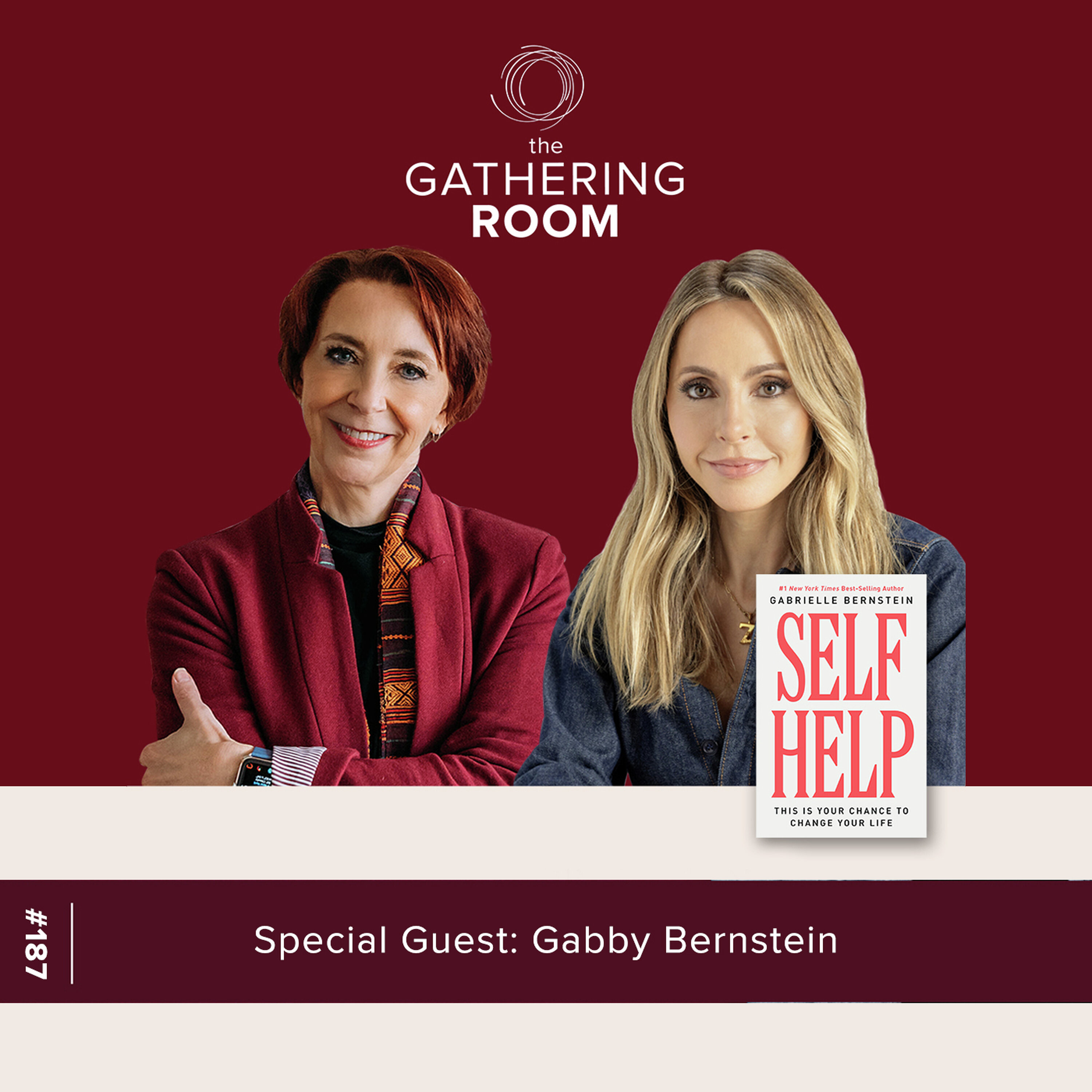
Hello, the lovely peoples. This is Marty, Martha, inviting you to a free masterclass that I have made called Five Paths to youo Purpose. Probably the most common question I get from people is, how do I find my purpose? Why don't I feel that I'm on purpose? Well, it turns out there are certain things you have to do to find your purpose, and I broke them down into five and I made a little masterclass about it. So if you'd like to see it, just. Just go to marthabeck.compurpose and you will be able to watch it without any charge at all. Welcome to the Gathering Room Podcast, the audio version of my weekly gathering Room broadcast. I'm Martha Beck. Hi everyone. Welcome to the Gathering Room. This is a special episode, so I'm not coming to you live. I am recording an interview with Gabrielle Gabby Bernstein, one of the best self help writers going, and she has recently read written a book called, and you'll never guess it, Self Help. This made a lot more sense to me, having studied internal family systems therapy, which I've referenced many, many times on this podcast, because self help means something different once you've become familiar with ifs. And, and Gabby's book is all about making the principles of ifs incredibly accessible and powerful for each of us in our own little houses with our copies of her book. Could you hold up the book, Gabby? Yeah, I've been reading it online. Go get this book.
- [01:51]
Gabrielle 'Gabby' Bernstein
I love you.
- [01:52]
Martha Beck
So, Gabby, I'm going to just get going and, and have you. You lay it out so beautifully. Your logic is so sequential in the book. It's so easy to follow. And I've been yearning for an easy to follow guide to ifs that I could give to people because I desperately want them to find. Find it because I found it so powerful and I am not an IFS practitioner, but I've had. I. I immediately got one for myself when I read about it. I was like, I got to know about this. And I've been doing ifs with my therapist and for myself ever since. What I'd love you to do now is to just, from your perspective, give the briefest description of what ifs studies and the whole concept of self help as you've written about it here.
- [02:44]
Gabrielle 'Gabby' Bernstein
I will absolutely do that. And I'm really proud to be able to democratize this work for our beloved friend, Dr. Richard Schwartz, our friend Dick. And it's work that's similar to what you just shared is. It's transformed my life, Martha, even up until this past week, just the radical Shifts inside that I have had the privilege of experiencing as a result of this model.
- [03:14]
Martha Beck
Okay, so wait, wait. I just have to know what happened last week and last week. Can you tell us?
- [03:19]
Gabrielle 'Gabby' Bernstein
We're going to give the promise of this before we even teach it. Okay, so I've been doing ifs, and I'm going to give you the breakdown in a second, but I've been doing this practice for probably close to a decade now with different therapists, and now I have two very seasoned, amazing ifs, therapists and couples, and personally, both referred by Dick, which is incredible. And the miracle that happened last week was I was in that typical partner riff, right? The. The. The. The riff that we get into with our beloveds and the parts of us that get activated, the triggers that get activated inside of us, we call these protector parts in. In ifs. And normally my husband will, you know, go with a blame and shame part, and I'll have another part that I call Knives out. Knives out will come out, and Knives out will, you know, cut you.
- [04:07]
Martha Beck
Sounds fun.
- [04:08]
Gabrielle 'Gabby' Bernstein
And it's. It's. It's violent. It's not good. And energetically it. And so by the grace of God, the work set in, and it settled, and I was able to stay in self, which in ifs is our resourced, undamaged, adult inner parent. It's like the God within us and the source within us. And I was able to truly be in self and be present and compassionate towards myself and all of these activated parts of me inside. And stay steady.
- [04:39]
Interviewer/Moderator
Yeah.
- [04:39]
Gabrielle 'Gabby' Bernstein
And just simply reply back and say, are you sure you would like to say that to me in that way instead of. I'm not wrong.
- [04:50]
Martha Beck
So just to clarify, there's a part of you that is self, and Dick uses eight words that all begin with C. Shall we quiz ourselves to see if we can come up with all of them?
- [05:01]
Gabrielle 'Gabby' Bernstein
I always miss one or two, but we.
- [05:02]
Martha Beck
I know.
- [05:03]
Gabrielle 'Gabby' Bernstein
Yeah. Let's start with defining self. Let's do that, and then we can define the parts. Okay, so we'll start with the good news. It's all good news, because there's no bad parts of us. But we'll start with the miracle, which is that we all have inside of us an internal, resourced self. And this is a spiritual space. This is actually. This will go down in history, by the way, is my favorite podcast interview, even before we started, because one, it's you, and two, the listener is the receptive listener for this content. Right. So I'm so excited.
- [05:33]
Martha Beck
Yeah.
- [05:33]
Gabrielle 'Gabby' Bernstein
This is. And then we can just like go there.
- [05:35]
Martha Beck
So let's just go there.
- [05:37]
Gabrielle 'Gabby' Bernstein
So we all have. So when we talk about God within us or our Buddha nature or the spiritual connections that we know and begin to rely on and trust the inner guidance system, our inner wisdom, this is what's, this is self. Self is made up of 8C qualities as, as Dick shares. It's confidence, courage, clarity, curiosity, creativity.
- [06:04]
Interviewer/Moderator
Yeah.
- [06:05]
Gabrielle 'Gabby' Bernstein
Did I leave? I left two.
- [06:07]
Martha Beck
Connectedness.
- [06:07]
Gabrielle 'Gabby' Bernstein
Connectedness.
- [06:08]
Martha Beck
Did you say compassion?
- [06:10]
Gabrielle 'Gabby' Bernstein
And compassion?
- [06:11]
Interviewer/Moderator
Yeah.
- [06:11]
Gabrielle 'Gabby' Bernstein
There's just too many eights you can't remember.
- [06:13]
Martha Beck
I know, I always forget. At least everyone.
- [06:15]
Gabrielle 'Gabby' Bernstein
So does Dick. I was in an audience with him once and I had to like scream it out to him. So we have these, these 8C qualities of self. And a beautiful quote from a great self help ifs practitioner was self is like the sun behind the clouds.
- [06:32]
Interviewer/Moderator
Yeah.
- [06:33]
Gabrielle 'Gabby' Bernstein
And the clouds are there, but, but the sun is always behind it. And the clouds that we build up are protection mechanisms that block the presence of self. So I'm going to simplify this and keep it, keep it, keep it simple, do what I do best. Have you ever said to yourself, there's a part of me that gets super activated when my co workers do this? Or a part of me wants to lash out on my partner when they act like that. And it feels often like a protection mechanism. This is what in ifs we call protector parts. And protector parts can be managing our lives. There's one kind of protector that's like the manager controlling or you know, over hyper vigilant.
- [07:19]
Interviewer/Moderator
Right.
- [07:19]
Gabrielle 'Gabby' Bernstein
Perfectionistic, perfectionist. Um, then there's the extreme protectors. In my case, I'm a recovering addict, I've got 19 years sober. So I had a cocaine addict part that was just an extreme firefighter, which is the put out the fire protector that's super extreme. And then you've got these ways that you're constantly protecting yourself and they've been going on for most of your life. They're, they're, you might call them bad habits, you might call them addictions, you might call them protection mechanisms. You might not even call them anything. You might call them yourself. You might say, that's just who I am, that's how I am. And in ifs, they're actually aspects of who we are, they're parts of who we are.
- [07:57]
Interviewer/Moderator
Right.
- [07:58]
Gabrielle 'Gabby' Bernstein
And who are these protectors protecting? That's the big question. And they're protect. This is the big, this is the money question here. These protection mechanisms or protector parts are protecting very, very young parts of who we are. And in ifs, they're called exiles. And all of us, in some way, shape or form as young people, experienced extreme or big T or small t traumatic events, events that our little brains and little lives and few years of life really had the ability to process in those moments. We did not have the ability to process it. And in many cases, in most cases, we did not have an adult caregiver to give us the safety and the connection and the compassion we needed to process it. So there was no one there and we were left with it. Yeah, we were young.
- [08:52]
Martha Beck
And so sometimes even people I've worked with who have been traumatized in their adult years, they've been through war, genocide, that kind of stuff. They have exiles and firefighters and protectors that are, wow, really big stuff.
- [09:06]
Gabrielle 'Gabby' Bernstein
Exiles can come at any age. That's exactly right. But I think that the, the exiles that we have as children actually can even be reactivated in these later traumas.
- [09:16]
Interviewer/Moderator
So true. Yeah.
- [09:17]
Gabrielle 'Gabby' Bernstein
And so these exiles are really like little, little, little children. Inside of us are parts of us that were extreme, experienced extreme trauma, and we couldn't process it. And we said to ourselves, unconsciously, I never want to feel that again. I never want to touch that again. And I'm going to do whatever it takes to unconsciously protect myself from that feeling. And so we build up these vast protection mechanisms. Protector parts.
- [09:45]
Interviewer/Moderator
Yep.
- [09:46]
Gabrielle 'Gabby' Bernstein
And just to give some examples, and maybe you can share some of yours too, Martha, but for me, I had. I experienced sexual trauma as a child.
- [09:56]
Martha Beck
And I didn't there done that.
- [09:57]
Gabrielle 'Gabby' Bernstein
Been there done that. We've been there. But for, for me, I didn't remember until I was 36 years old. And so the part of me that dissociated from that memory was a protector part, a really strong one. In fact, I would call that a firefighter.
- [10:15]
Martha Beck
Yeah. And you describe it in the book of being so completely checked out. It is like a. It's like a superpower run amok.
- [10:24]
Gabrielle 'Gabby' Bernstein
It's a superpower run amok. And that is actually is a really beautiful way to think about these protectors because oftentimes we think about these protection mechanisms or these habits or behaviors that we think of as very extreme right. Addiction or dissociation or control. And we often will blame and shame ourselves for these behaviors. But the beauty of ifs is that we can befriend these parts of ourselves and we can recognize them for the hard work that they have put in, the extreme effort that they have put in to keep us safe. And as I just celebrated last week, 19 years of recovery. I can look back at that cocaine addict part and say, thank you, girl, you did good.
- [11:12]
Martha Beck
Is she still around? Just not doing the cocaine thing anymore.
- [11:16]
Gabrielle 'Gabby' Bernstein
So it's cool because when she stopped doing the cocaine thing, she picked up other forms of protection. Right. So it was workaholism or controlling. And now as the years have gone on and I've developed such a relationship to these parts of myself, and I've done extraordinary work doing ifs, getting trained in ifs and really caring for my system just as you have. I can say that the cocaine addict, controlling behavior, that cocaine addict, the addict part is actually really in a beautiful role now in my life. She can do a lot of things at one time.
- [11:56]
Interviewer/Moderator
Yeah.
- [11:56]
Gabrielle 'Gabby' Bernstein
She can manage a lot of different balls in the air. She wrote, you know, 10 books in 14 years. Right. She's done a lot of good things and. And she's showing up and she doesn't have to do it in such an extreme way anymore.
- [12:11]
Interviewer/Moderator
Right.
- [12:11]
Martha Beck
No bad parts. Right. She was always well meaning.
- [12:14]
Gabrielle 'Gabby' Bernstein
Yeah, always well meaning. And so. Yeah, go ahead. That was. That's the overview there.
- [12:20]
Martha Beck
Yeah. So the idea is that you're going to. And in the book, you're very careful to say you don't go deep into the exiles, because that should be done in a. A safe space, usually with someone who knows what they're doing.
- [12:34]
Gabrielle 'Gabby' Bernstein
Right, that's right. Yeah. So, I mean, it's important for me to say that I had the blessing of being one of the last people to go through the IFS Institute training, level one and level two. Then I went to go apply for my level three, and they said, oh, we're not welcoming anyone else that's not a therapist. And I thought that was genius because there's a long, long list of therapists that need this training and want this training. And so, you know, the Gabby Bernsteins of the world, we need to get out of the way and let the therapist get trained. Because for me, I know it was God's work to get me trained because I had to do it in this book, but I think really we need the therapist doing that one on one heavy lifting with us. So I was blessed. I kind of got. Got in there, got my training, and I was able to really recognize that this was something that I was going to do in a way that was going to be broader and for a audience and potentially for people to introduce them to ifs and help them get into ifs, or to give the miracle of ifs to those who may never find their Way to it in a therapist setting.
- [13:36]
Martha Beck
Yes, exactly.
- [13:37]
Interviewer/Moderator
Yeah.
- [13:38]
Martha Beck
I'm so excited this is available. And one of the things I love in the book most is I think it's your own invention, the check in.
- [13:48]
Gabrielle 'Gabby' Bernstein
Yes, it is. It's a self help practice that's ifs informed, so.
- [13:52]
Martha Beck
Right. I loved it and I was, I was really hoping that you might put us like walk us through a check in so that everybody out there can start immediately, right now to take advantage of this.
- [14:04]
Gabrielle 'Gabby' Bernstein
Yeah, this is our. I'll give you the check in and then I'll unpack it. Let's do it as a meditation and then I can unpack it and explain it. So we talked a little bit about these protection mechanisms. So let's begin just by noticing when I talked about that and I mentioned these protectors, whoever is listening, if something came to mind, if you ever think of there's a part of me that gets really activated or there's a part of me that's triggered, or maybe you feel something that's currently activated inside that you're struggling with today.
- [14:38]
Interviewer/Moderator
Right.
- [14:38]
Gabrielle 'Gabby' Bernstein
Maybe you woke up this morning and you were fighting with the spouse and you're struggling with that experience and that reaction. Notice any one of these aspects of yourself and just make the choice right now if you feel called to check in with this part of you.
- [14:53]
Interviewer/Moderator
Okay?
- [14:54]
Gabrielle 'Gabby' Bernstein
Now the first step here before I begin the meditation is to choose to check in. And I really want to be gentle with this. If this doesn't feel ready, if you're not ready for this, you can just follow the guidance and just relax with my voice and come back to it.
- [15:11]
Martha Beck
Okay?
- [15:11]
Gabrielle 'Gabby' Bernstein
But if there's a part of you that's ready to check in, let's take that first step and just notice focusing your attention inward. You can close your eyes if you're not driving and just send your attention inward right now. And notice in your body where that part of you is present, notice any feelings or sensations that might be attached to it. Just give it a little bit of breath, breathing in and just let that go. Just becoming even more curious about this part of you inside. What do you know about it? And don't overthink the responses. Just let the answers come to you. How old is this part of you? How long has it been around? Focusing even more curiosity, just noticing again where it might live in your body. And if there's any feelings or sensations or even any thoughts or images that are attached to this part of you, let it reveal itself naturally. And if there is a physical body Part where you notice that sensation of this part of you, maybe it's your chest, your stomach or your shoulders, maybe place your hand on that part of your body and just give it a little bit of breath, a nice breath in, maybe feel into that feeling a little bit. And then on the exhale you can let that go. Just checking in a little bit more, noticing anything else that you need to notice about this part, anything else that it wants to reveal to you. And with this connection now to this part, ask it with compassion and connection, what do you need? And just listen. Try not to judge what comes forward. Just be open and listen. Now breathe more deeply into that space where you feel that part of you and just acknowledge what it needs, giving it a little attention and saying, yeah, I get that, I see that. And notice for a moment. Now if you can check in for some of those se qualities of self, do you feel a little bit calmer? Do you feel some connection to that part of you? Do you have more clarity about it? Do you feel a little courage there? Any creative energy or a buzziness inside? Do you feel a commitment to knowing more or a curiosity to learn some more? Just notice what you notice. And even if you notice a slight sensation of one of those sea qualities, just give yourself a little bit of pause and breathe that feeling inside of you now and just define that feeling for yourself. Just make a little commitment to this part of you that maybe you'll come back and visit it again. Maybe when you have the book in your hand or once you're done with this podcast, you might come back and just check in again, let it know that you're there. When you're ready, you can open your eyes and come back to Gabby and Martha. We're here with you and your part, all of your parts.
- [19:49]
Interviewer/Moderator
So.
- [19:50]
Martha Beck
Oh, that was brilliant. So you basically want to look at. This is what I tell people when I train coaches. Look at the area of least satisfaction or the most negativity. So you basically find a part of you that's not feeling as good as the rest of the. And you focus on that during the check in. Am I right about that?
- [20:10]
Gabrielle 'Gabby' Bernstein
Is that what I'm getting? I think that the way that I use this and the way that I hope that the reader will use it is that as they develop that four steps, which I can unpack that whenever they notice any sense of agitation or triggered or sensation, just like you said, a sensation that is just feels extreme, right? Or even if you. It may not even be the sensation first, it might be the Behavior first. It might get off of a zoom call and be like, wow, it's a real asshole to my team just now. I think I should check in about that. Right. Because you may feel justified in those feelings whenever you have enough awareness to unblend even slightly. Because the thing that happens, Martha, and you know this, but we get very blended with these parts.
- [20:55]
Martha Beck
Yeah, I love that concept.
- [20:57]
Gabrielle 'Gabby' Bernstein
You become them.
- [20:59]
Interviewer/Moderator
Yeah.
- [20:59]
Martha Beck
As you say in the book, especially the anxious, fearful parts of us, they cannot believe that there is more. Like they really feel like I believe the truth in this sphere is real and valid and self never, never feels anxious and self is always behind the clouds. So I love the way you, you gently move people out of their anxiety because most people these days are so blended with their anxiety.
- [21:28]
Gabrielle 'Gabby' Bernstein
Yeah. I mean there's a whole chapter called anxious Parts.
- [21:30]
Interviewer/Moderator
Right.
- [21:31]
Gabrielle 'Gabby' Bernstein
And, and, and again, I think that one of the things I really referenced throughout the book is if they're dealing with clinical depression or anxiety, that's when I say bring in the professionals. Because this work can actually maybe even activate you more if you bring too much attention to it. So I want to be mindful that the parts that we work with here today and on our own in our self help setting. Now we understand why it's called self help. Because self is always there to help. Would be the parts that are, that are the day to day agitations. The, the day to day extreme patterns. The. Yes, it can be anxiety, but maybe it's not the debilitating anxiety because debilitating moments. We, we can't even acknowledge that there is even a possibility of checking in.
- [22:17]
Interviewer/Moderator
Right, Right.
- [22:18]
Gabrielle 'Gabby' Bernstein
There has to be something that's some somewhat accessible, a part of you that's somewhat accessible.
- [22:23]
Martha Beck
And, and that whole process, I'd love to hear the four steps just B bip. B bip. Because that means that if I'm blended with a part that is angry or sad or afraid, there's always somewhere to go. Like if you have a process. And for so long mine has just been to remember to watch my breath because I've meditated for years and you'd think I would have got it by now. It's not a complicated instruction, but I could just, I just think, oh, oh to the breath. And you use breath a lot as one of the ways to approach self. But I love this check in. I think it's, it's something, it's like a tool someone can pick up in a moment when they're feeling distressed.
- [23:05]
Gabrielle 'Gabby' Bernstein
I gotta tell you, I've used it. I Use it all day long. And it, it's, it's. And the more that you practice this type of check in, which I'll define now, the more we practice this, the more second nature it becomes. And you start to remember in any given moment, oh, I have somewhere to go. Yeah, there's help inside. Exactly. Self is there. And you begin to start to build trust in self. And that's actually the last chapter is trust in self.
- [23:31]
Interviewer/Moderator
Yeah.
- [23:31]
Gabrielle 'Gabby' Bernstein
And so the steps are simple. The first one is just simply choose to check in. Remember, parts are like little children. And so I have a six year old and if he, if I can see he's agitated and I'm like, ollie, what's going on? How, how can I help you? You know, and I dive in with the curiosity. He's like, no mommy, you know, hand in the face, no mommy, I'm not ready. And so the first step is to just get permission from that part of you. Like with, I would say Ollie, you know, are you open to talking about this? And sometimes it's late at night when he's a little bit more open and, and it's getting that buy in from the part. Because if you're just walking around just being like, okay, well I, Gabby Bernstein said I have to check in and Martha's my coach and I got to check in and I do whatever Martha tells me to do. Right. It's like it just sort of becomes another form of control.
- [24:22]
Interviewer/Moderator
Right, right, right.
- [24:23]
Gabrielle 'Gabby' Bernstein
And so choosing to check in is the first step. And that's where those moments when we have enough distance or enough pause and I would even add in your step first, which is breath. Right. So you start with that breath or even a prayer. There's a whole spiritual chapter here in this book which is you can start with a prayer. Like when you notice yourself in just chaos and you don't have the bandwidth to check in or do any kind of self help work. First step would be take a breath.
- [24:50]
Interviewer/Moderator
Yeah.
- [24:51]
Gabrielle 'Gabby' Bernstein
Say self or inner guidance or universe or God help me shift this. And that opens up your capacity to start to see beyond logic and reason.
- [25:05]
Interviewer/Moderator
Right.
- [25:06]
Gabrielle 'Gabby' Bernstein
And with a little bit of space you can choose to check in. And that's step one. And that's when you focus your attention inward.
- [25:14]
Martha Beck
Beautiful.
- [25:15]
Gabrielle 'Gabby' Bernstein
And it may not, you may not even know what part of you this is. Maybe it's just a feeling or a being, you don't have to name it. And then become curious is step two. And that's where you start to offer it these questions of curiosity and very Simply it's, are there any feelings, thoughts, sensations or images that come to mind when I focus my attention towards this part? What is the part want to reveal?
- [25:41]
Interviewer/Moderator
Right.
- [25:41]
Gabrielle 'Gabby' Bernstein
Some people are very visual. They'll see something. Like I, sometimes I'll see myself as a kid or sometimes I can really physically feel it.
- [25:49]
Interviewer/Moderator
Yeah.
- [25:50]
Gabrielle 'Gabby' Bernstein
You can hear like an inner knowing.
- [25:53]
Interviewer/Moderator
Right.
- [25:54]
Gabrielle 'Gabby' Bernstein
You can even go as far as to kind of ask the part how old it is or if it has a gender. And I guide that through the book. But really just asking the part to reveal whatever it wants you to know.
- [26:04]
Interviewer/Moderator
Right.
- [26:05]
Gabrielle 'Gabby' Bernstein
And then as soon as you have that little bit of connection, this could be like 30 seconds a minute later once you have a little bit of that connection to that part. The third step is to compassionately connect to the part. And that is with the simple question, what do you need?
- [26:22]
Martha Beck
I love it.
- [26:23]
Gabrielle 'Gabby' Bernstein
It's just, what, what is it? What is it? What do we all want someone to say? What do you need? How can I help?
- [26:29]
Interviewer/Moderator
Right.
- [26:30]
Gabrielle 'Gabby' Bernstein
And then the final step is to check for those se qualities and if. Did you have a little curiosity? Did you have a little bit of connection? Did you feel a tinge of compassion? Do you have a little bit more clarity or creativity or courage or commitment? These, these clarity, these sea qualities spontaneously reveal themselves when you let self help the part.
- [26:53]
Interviewer/Moderator
Yeah.
- [26:54]
Martha Beck
Oh, that's brilliant. That's so helpful. I think a lot of people out there can start right now, as I said, using it that way. And it's fascinating the, the way the mind starts to be able to find self energy. And one of the terms that I've heard use is sustaining connection to a critical mass of self energy so that you start to feel things on the periphery that used to be your whole world. You know, you used to be tossed around like a rag doll. Now there's someone and Dick says in his book no Bad Parts, he says after doing this work with thousands of people, they, they get, he'll be looking at their parts and talking to their parts and then self comes in and this is sort of how he discovered the concept. And they'd say no, this is a really different energy. And the C words would come in and he'd say, okay, so what part is that? And they'd say oh no, this isn't a part. This is who I am. This is what I am. And the more you do the check ins, the more you follow the procedures and Gabby's book, the more you realize that your true self is this calm, compassionate, connected, courageous, fabulous thing. And you can start to let it steer the car, as it were. So you talk about it and we, we can go past half an hour if you, if you.
- [28:20]
Gabrielle 'Gabby' Bernstein
I would love, Martha, whatever you, I would love to be with you all day.
- [28:23]
Interviewer/Moderator
You.
- [28:23]
Martha Beck
Okie dokie. I love the check in process and I'm so glad that, that you went through it so carefully because to me, that was the big golden nugget in the book that I was not yet familiar with at all. So. But then you talk about journaling as a way of connecting. Could you just touch on that a bit? Because that's another really pragmatic thing that people can do by themselves.
- [28:47]
Gabrielle 'Gabby' Bernstein
Yeah. This chapter is called Let it Out. And it's, it's actually a practice of journaling with the part. So the same four steps that I took you through just now, you can do with a journal. So you can, or you can do the four steps and then just do some journaling after that. But I love the idea of just sitting. Sometimes I'll just write down, I'm gonna choose to check in with this rage that's up with me right now or whatever it might be. And then I'll become curious, you know, what do I know about you? What do you want me to know? How old are you? How long have you been around? Where do I feel you in my body? And I'll just let the pen flow and, and then I'll just free write a bit. Like, just let it, let the part talk, let the part reveal itself. And then when I write down, you know, what do you need? It will be so clear, it will just come out like this beautiful fluid sentence. You know, I need to rest. Right. Or I, I need to speak up for myself or whatever it might be. And often these parts, when you ask them what they need, they just say, I need to play or I need to dance or I need to be free. Because what do they want? They want to get back to their original role, which was just being a healthy, happy child.
- [29:54]
Interviewer/Moderator
Right.
- [29:54]
Gabrielle 'Gabby' Bernstein
And that's what we all really want. And then I, you know, I'll let it write and I'll just do this for as long or as little as I need. And sometimes I'll listen to binaural music while I'm doing it, because you have the benefits of that bilateral brain stimulation and you're just, you're just in it. And, and if you are someone who does well with journaling, then this would be a great way to start.
- [30:14]
Interviewer/Moderator
Yeah, yeah.
- [30:15]
Martha Beck
And you, you could probably do it also with images or Even playing songs, finding songs that express the parts needs or there's. There are any number of creative ways that you, you could access it. But there's a lot of research that shows that journaling is really powerful, whatever your modality. And I think it's especially powerful with ifs. So I love that in the book there's so much useful stuff, so. And then there's actually changing your life. You know, all of this is, it's really, it's fun and easy to say I'm going to sit in my room and I'm going to find myself and I'm going to make everything better and it will all be easy and there will be no dramatic changes because change is frightening to almost all of us. But you talk about the radical, courageous changes that you've been able to make. Did you touch on those a bit?
- [31:07]
Interviewer/Moderator
Yeah.
- [31:08]
Gabrielle 'Gabby' Bernstein
And they're happening in real time, Martha. I mean the, the controlling part of me has, has had a miracle in the last week as well of just sort of stepping back and listening more. I work, you know, we work with people, right. People are people are. People are hard. People are people. Yeah.
- [31:23]
Martha Beck
Yes they are. I noticed that.
- [31:25]
Gabrielle 'Gabby' Bernstein
Very triggering for our parts. People trigger us all day long and particularly people that work with us or the people that live with us. And yeah, so, so I, I've. I've learned to be more of a. I've. I've allowed myself to become more of a self led leader. It has emerged quite naturally as a result of doing this work and because I became so aware of my controller part which carried a belief that if I don't do it, no one else will.
- [31:56]
Interviewer/Moderator
Right.
- [31:56]
Gabrielle 'Gabby' Bernstein
So that part would show up to work and be like, well, here we go again. I have to do everything and it's not a very pleasant energy.
- [32:02]
Interviewer/Moderator
Right.
- [32:03]
Gabrielle 'Gabby' Bernstein
And the more I started to do this work and develop more and more faith in self and a greater awareness of my ability to tune in and check in with myself. My inner world has shifted. So much so that my external world has shifted.
- [32:19]
Martha Beck
Say more about that.
- [32:20]
Gabrielle 'Gabby' Bernstein
We attract what we believe. You know, you and I have been believing in teaching this for a long time. So we attract what we believe and also we, we are often met with the energy that we are currently resonating in. And so as I started to resonate with more self, certain people who, who were no longer a match for my new energy. Right. Being in self energy rather than the triggered energy just were no longer. It wasn't going to work anymore. It just because the clarity was revealed Oh, I don't do that dance anymore. So let's stop dancing.
- [32:58]
Interviewer/Moderator
Yeah.
- [32:58]
Gabrielle 'Gabby' Bernstein
Stop dancing.
- [32:59]
Interviewer/Moderator
Yeah.
- [33:00]
Gabrielle 'Gabby' Bernstein
And so people would shift out and then the people who are still around will let. Will rate, will elevate up. Because self begets more self.
- [33:09]
Martha Beck
Exactly.
- [33:09]
Gabrielle 'Gabby' Bernstein
You know, being with you, it's like, oh, my God. Just being. Just getting on the zoom. I was like, I am marinating in this presence of this person who has committed her life to devotional work of yourself.
- [33:20]
Interviewer/Moderator
Right.
- [33:21]
Gabrielle 'Gabby' Bernstein
And it's such a privilege. You're talking to Dick yesterday on the phone. It's like he. This is a 73, 72 year old man. He feels like I'm talking to a teenager.
- [33:29]
Martha Beck
Yeah. I was gonna say he's 73, 70. Something comes across, like in his 20s, I would have.
- [33:35]
Gabrielle 'Gabby' Bernstein
In his 20s, he is so. His energy is so young and so youthful and so spirited. And that's self. That self.
- [33:46]
Interviewer/Moderator
Yeah. Yeah.
- [33:48]
Martha Beck
I've had. I was so disappointed with. With life after starting ifs therapy because I would. Every time I get outraged at someone and I get angry and like, they've done horrible things and it's just obvious that they are bad. And I bring that to a therapy session. And my therapist would say, okay, connect with self. I mean, like, all right, she says, what does self see in this person that is just dead to rights? Horrible self loves them and feels compassion and connection and wants to reach out to them and be nice. And I'd be like, but there's a part of me that just loves the outrage. So then we'd talk about that part of me and calm her down. And the whole life became very anticlimactic. No big fights.
- [34:36]
Gabrielle 'Gabby' Bernstein
Right.
- [34:36]
Martha Beck
It's like all the drama goes away and you're just sort of like loving everyone, which has its own kind of deep, rich inner drama. But it's not what most people encounter in daily life in our culture.
- [34:51]
Gabrielle 'Gabby' Bernstein
I think that it's. It's such a habit that we have acquire. And I think anyone listening to you, following you has already raised their hand in this lifetime and said, I'm ready to do big work. And so this is a. Whoever's listening, this is a habit that you can acquire and it will change your life. Just like you and I are both sharing. Because as you start to develop that greater inner awareness of self and you start to let your parts off the hook.
- [35:20]
Interviewer/Moderator
Yep.
- [35:21]
Gabrielle 'Gabby' Bernstein
And give them the space to be seen and heard rather than shamed and shunned, you have a tool that works.
- [35:31]
Interviewer/Moderator
Yeah.
- [35:32]
Gabrielle 'Gabby' Bernstein
You have a practice that very slowly titrates into the pattern and then gently comes to resolution. One step at a time.
- [35:44]
Martha Beck
Beautifully put. Oh, my God. So we've talked a bit about. We've been talking about the psychology of distress, but there's one chapter in the book that I really, really resonated with, and it's a difficult subject to broach because it's about the. The physical body and the amount of pain that. That our parts may. May experience as they struggle with a buried emotional sensation. So I've had many autoimmune things, lots of what I call neuroplastic. Well, what scientists called neuroplastic pain. And the pain is very real. And I've had, like, surgeries that showed that repaired it. And yet I also believe that the mind body connection was very, very active in this, that those illnesses and injuries. And so without ever saying you're imagining your pain, you're making yourself sick, you created your disease. I don't believe that at all. But I do believe that when your body's hurting, your mind is interacting with it in a very powerful way. And I love the way you talked about that. Could you just touch on that? Because I know many of my listeners are struggling with physical challenges as well as emotional ones.
- [37:05]
Gabrielle 'Gabby' Bernstein
Yeah, yeah. Well, from an ifs perspective, physical challenges are parts too. And that doesn't take away anything from the pain. Right. The pain is a diagnosis that's very important that you share that. And I'll say the same, that you do have the inflammation, you do have the herniated disc, you do have. But the thesis here is that when we have psychosomatic conditions, that these conditions are also psychosomatic conditions, and they are often either a result of or perpetuated by impermissible feelings of shame, rage, anger, just all the feelings that we suppressed in those exiled parts.
- [37:54]
Interviewer/Moderator
Right.
- [37:55]
Gabrielle 'Gabby' Bernstein
This is actually. This is also really similar to the body of work of Dr. John Sarno.
- [37:59]
Interviewer/Moderator
Yes.
- [38:00]
Gabrielle 'Gabby' Bernstein
Of recognizing that these physical sensations are, like I said, either manifestations or perpetuated by the deep, deep, deep core wound.
- [38:15]
Interviewer/Moderator
Yeah.
- [38:15]
Gabrielle 'Gabby' Bernstein
And I mean, if you think about it like this, I had gastro issues all my life. Right. And so I could see, well, number one, from a psychosomatic perspective, what am I? What. What's happening? I'm living in a hypervigilant state because I've trauma that was unresolved in. For 30 years of my life, 36 years of my life, I didn't remember it. So I'm living in a constant state of fight flight. I'm constantly in this place of hypervigilance. The stress response is at false extreme. What is one of the first things to get affected by stress? The gut.
- [38:49]
Interviewer/Moderator
Right, Right.
- [38:50]
Gabrielle 'Gabby' Bernstein
So your viscera slows down. I mean, it just becomes a disaster. You get bacteria in the gut. So, yeah, I'm having a physical issue. I'm having gastritis. I' Right. Sibo. I'm having whatever it might be. But what's the core? Where did it come from? And it came from the hypervigilance. It came from the. This extreme stress. And the stressors that we put on our body are often defense mechanisms against impermissible feelings. So if we have these core wounds and we don't want to ever have to face them again, then where else could we project that pain? Onto our back, onto our jaw. I've. You know, TMJ is such a trauma response, right?
- [39:29]
Interviewer/Moderator
Yeah.
- [39:30]
Gabrielle 'Gabby' Bernstein
Into the gut.
- [39:31]
Interviewer/Moderator
And.
- [39:31]
Gabrielle 'Gabby' Bernstein
And so, so much of the. The. The pain, the back pain, the neck pain, the gut pain, the jaw pain, these are often psychosomatic experiences.
- [39:41]
Martha Beck
And could I just say that psychosomatic does not mean fake. It does not mean imaginary. It means equal, like with energy that pertains both to the psyche and this and the body.
- [39:51]
Gabrielle 'Gabby' Bernstein
So the body is having an experience. Experience. Because, you know, from a Sarno perspective, the. The. When you're in these moments of. Of fight or flight, you. You stop sending. You stop sending blood flow. You stop sending. Yes. To. To the gut or to the back or wherever the focus may be. And so you are creating inflammation, and there is tension. I remember sitting with Deepak when I was in my. My 30s. I was at. Doing a retreat with him, and my husband was dealing. My husband had just left his job of 10 years at JP Morgan to come run my business, our business. And so for a year, his back was out. Like, man was on the floor for a full year. And I was talking to Deepak about him. Like, Deepak, like, the guy's up all night, like, I don't know what to do. And he said, you could line up 40 men the exact same age as Zach, the exact same build as Zach, with the exact same herniation, and half of them will have pain and half of them won't.
- [40:43]
Interviewer/Moderator
Right.
- [40:43]
Gabrielle 'Gabby' Bernstein
And the half that will will be going through some kind of distress, some kind of impermissible emotional distress that they need to. That they need to face.
- [40:52]
Interviewer/Moderator
Yeah, yeah.
- [40:54]
Martha Beck
And I have experienced that. And this book, I think, is going to help a lot of people who are there. And that is something that you're letting people out of a very, very Dark prison when you can help them and the physiological symptoms. And I really believe that you. That this book can help people do that. Before we finish, there's just. We've talked about you. You have a chapter on self forgiveness. And it strikes me that through this conversation you've talked about how you had a part that was a cocaine addict. You had a part that made your gut be horribly distressed for years, and you've had a part that fights with your husband and you. We all have these parts. And often what'll happen is that there is a part that is, for example, angry at your husband. Another part will come up and say, don't be angry. Don't ever be angry. And drive it into the gut. Right. So there are parts having this dialogue inside you about what's okay and what's not. When you reach self, when you get the clouds to part and the sun is there. None of the stuff that your parts have done. If you have an addiction, if you have broken your own moral val. You know, values, if you have hurt someone else by omission or commission, self is not condemnatory of any part. So. And the other parts are very condemnatory of each other often. So you really have to drill all the way into self before forgiveness happens. And I love the way you discuss it because you don't get into that sort of religious judgment thing where it's like, it's time for you to forgive. You gotta forgive. Now, please, please describe for us very briefly the. The way forgiveness feels when you've accessed self.
- [42:46]
Gabrielle 'Gabby' Bernstein
Well, I always. Throughout my career as a spiritual teacher, I've always taught that forgiveness is something that's bestowed upon us. It's this. It's this experience that can spontaneously happen. It's not something we have to do. It's not something we have to go get or exercise. And if you just say, oh, forgive, forgive. I mean, listen, you can. You can pray for forgiveness, but really it's a. It's a spiritual experience.
- [43:07]
Interviewer/Moderator
Yeah.
- [43:08]
Gabrielle 'Gabby' Bernstein
And in my experience with ifs and ifs, and you and I both agree, this is a spiritual practice. I mean, yeah, it's. It's even. There's studies. It's. It's got all kinds of beautiful reviews, but it is. It's a spiritual practice. And when. When I. When I really began to connect more and more to self, I started to establish that quality of compassion, that sea quality of compassion. And as that c. Quality of compassion started to expand, Expand and expand inside of me and become so. So present. I could only see my parts through that lens. And even in the moments when I'd feel even a tinge of shame, when I got off a team call and I was kind of annoying or rude or I maybe feel shamed for getting mad at my husband or whatever, I could just, just very quickly adjust and check back in. And so by being in that connection and communication, rather than condemnation, it's connection and communication, I could just recognize each of these parts just doing their role, doing their job, just trying to keep me safe. And that shift alone is so major. You know, I think that shift, even just that level of thinking in the book I talk about, I was a fellow at a recovery center the year that I was writing this book. So it was really timely. And I would go in every month to a new group of like 100 new people. It's a 21 day program or 28 day program, you know, new group every time. And these are people with one or two days clean. And one of the first things I would say to them is, can you contemplate that your addiction has been protecting you?
- [44:47]
Interviewer/Moderator
Right.
- [44:48]
Gabrielle 'Gabby' Bernstein
And then I'd ask them how many of you experienced trauma? And every single person in the room, their hands went, Two hands went up, ten hands went up.
- [44:54]
Interviewer/Moderator
Yeah.
- [44:54]
Gabrielle 'Gabby' Bernstein
And I said, well, you've been using because you don't want to feel that.
- [44:57]
Interviewer/Moderator
Right.
- [44:57]
Gabrielle 'Gabby' Bernstein
And they'd all be like, huh, yeah, that's a really hard thing to want to feel. So can we maybe notice and have a little compassion for this, this addiction?
- [45:06]
Interviewer/Moderator
Yeah.
- [45:06]
Gabrielle 'Gabby' Bernstein
And. And many people in the room, not all, not all, but many of them could have walk out that day saying, wow, this is a protection mechanism. I'm not just a terrible person that's creating chaos in my life. I've been protecting myself.
- [45:20]
Interviewer/Moderator
Yep.
- [45:21]
Gabrielle 'Gabby' Bernstein
And that's a moment of forgiveness.
- [45:22]
Martha Beck
And what's really interesting to me is that the less you condemn yourself, the less you find condemnatory energy going toward the people around you. The more you fully accept yourself, the more you can see somebody else's misbehavior, or whatever you want to call it from that compassionate lens. As you begin to live from self energy, it forgives everyone. It doesn't allow people to do bad things or hurt each other, but it is, it just loves. No matter what we've done, we can love ourselves. No matter what other people have done, when we truly love ourselves, we find the most compassionate way to deal with them.
- [46:01]
Gabrielle 'Gabby' Bernstein
So it's really see people as, as their parts, not as a problem.
- [46:06]
Interviewer/Moderator
Yeah.
- [46:08]
Martha Beck
So finally you talk about self trust, which to me is I, it's like the Golden Fleece. This is, if you can sustain most of the time, a state of self trust, life becomes, it turns from being a frightening, chaotic feeling place to being really benevolent. So could you just send us off with a few thoughts about self trust?
- [46:36]
Gabrielle 'Gabby' Bernstein
Yeah. Again, I think that as we commit to whatever path it is, whether it's the one we're talking about today, whether it's all the transformational learnings that you've experienced from Martha, whether it's another form of therapy, yoga practice, whatever your journey guides you to, you are being guided to self. You are being guided to that connection.
- [47:05]
Interviewer/Moderator
Yeah.
- [47:06]
Gabrielle 'Gabby' Bernstein
And the more that you accept, I believe, I believe fully and completely that we chose these lives and we chose these difficult experiences to get back to self and to help others do the same. And so the more we accept, I think that's the word acceptance, that this is a journey, this life is a journey of remembering love and unlearning the fears. Then we can start to just one day at a time, just get a little bit more connection to self and a little bit more connection to self. And as that connection begins to expand inside and become habitual, trust is inevitable.
- [47:50]
Martha Beck
I love that trust is inevitable. And it's so interesting, when I talked to Dick, he was saying this is a spiritual practice. Not because he ever set out to make it a spiritual practice. He was starting from a completely secular education, completely down the line materialist, Western rationalism. And actually he kind of, he felt like the world wasn't ready for ifs, even though he came up with it in the 80s. And one of the reasons is as soon as you start doing this, your life takes on a spiritual dimension that is rich and beautiful and powerful and undeniable. It just. Your therapist doesn't have to say anything but what is that part? What do you think? And suddenly you are having a spiritual experience. I've never seen a modality take people into spirit. So in such a healthy, reliable, non religious, non fundamentalist way. And so I think that's why it's taking the therapy world by storm. And now with Gabby's book, I think it's going to take everyone's world by storm.
- [48:59]
Gabrielle 'Gabby' Bernstein
So very teary right now about this.
- [49:03]
Interviewer/Moderator
Yeah.
- [49:03]
Martha Beck
One of her parts feels, is feeling a little sad.
- [49:08]
Gabrielle 'Gabby' Bernstein
Not sad at all, just. Oh yeah, so thrilled. Because the way that you're defining the spiritual, the spiritual experience that people can have when they connect to self is just really moving to me. And. Yeah. And I'm just in such. All my parts are so grateful to be here with you today.
- [49:25]
Martha Beck
And all my parts are so grateful to be here with you. And I also feel like we're all part of one another when the one thing Dick says is the self is in all of us and it's all the same self.
- [49:37]
Gabrielle 'Gabby' Bernstein
Yes, exactly.
- [49:38]
Martha Beck
So as we become our own selves with capital S, we link with other people's selves and there is no more. Being connected is part of what self does. So the sense of being alone and isolated in the world also vanishes as you realize self is everywhere and in everyone, and you can always find it. And there could not be a clearer, more simple and profound instruction for this than Gabby's book, Self Help. So run out and get it. You know that inner voice that keeps telling you that your life has deep purpose and that you're meant to feel good? It's telling you the truth. But you need skills and tools to make your outside life match what that inner voice is telling you. So in Wayfinder Life Coach training, you'll learn those skills and tools. You'll learn how to align every part of yourself with your deep, deepest truth. You'll find and express your astonishing true nature. And then you'll be like a guided missile, constantly moving toward your best purpose and loving the ride. First you'll do it for yourself, and then you'll do it for others. And you'll add a huge amount of value to the world, which is how to attract abundance, joy, love, and every other good thing. So if your inner voice is telling you it's time to take this training, trust it.