← The Glenn Beck Program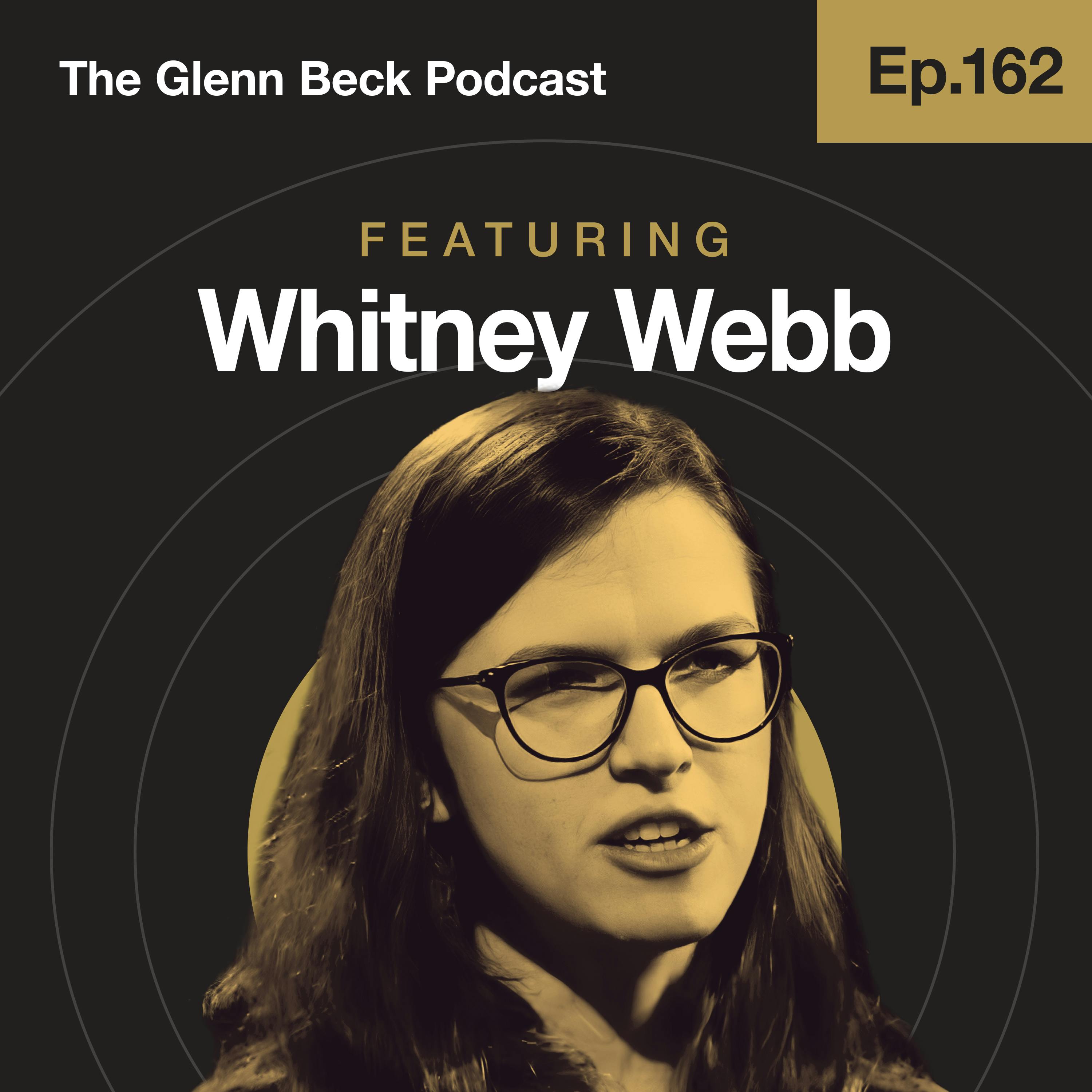
The Glenn Beck Program
Ep 162 | Epstein's SHOCKING connections to intelligence agencies | The Glenn Beck Podcast REPLAY
01:22:52
Loading summary
Transcript242 lines
- [00:01]
Glenn Beck
This episode is brought to you by.
- [00:02]
Whitney Webb
Amazon's Blink Video Doorbell. Get more at your door with the easy to install Blink Video Doorbell. Get more connections.
- [00:09]
Glenn Beck
Hey, I'm here for our first date. More deliveries. Hi, I have tacos for two. Oh, thanks. We'll be right down. And more memories, babe. Come down. I have a surprise.
- [00:22]
Whitney Webb
All new Blink video doorbell with two year battery, head to toe HD view and simple setup. Shop now at Amazon.com blink for just $69.99. And now a Blaze Media podcast. Hello America. You know we've been fighting every single day. We push back against the lies, the censorship, the nonsense of the mainstream media that they're trying to feed you. We work tirelessly to bring you the unfiltered truth because you deserve it. But to keep this fight going, we need you right now. Would you take a moment and rate and review the Glenn Beck podcast? Give us five stars and leave a comment. Because every single review helps us break through Big Tech's algorithm to to reach more Americans who need to hear the truth. This isn't a podcast. This is a movement. And you're part of it. A big part of it. So if you believe in what we're doing, you want more people to wake up, help us push this podcast to the top rate, review, share. Together we'll make a difference. And thanks for standing with us. Now let's get to work. A campaign of lies can hide anything. And with the magic of disinformation, mysterious deaths can be quickly brushed off as suicides, even when all of the details don't add up. And there's so many stories now that just don't add up. Public assassinations can happen right in front of you and you'll never know who was really behind it or why. As long as the powers that be push a great narrative. The same lie over and over and over again. Jeffrey Epstein infiltrated the highest ranks of every sector of power. You are going to learn a lot about the world today. He was into law enforcement, art, Wall Street, Silicon Valley, big business, real estate, philanthropy, media, academics and banking. He even wormed his way into high fashion. He hung out with Nobel prize winning scientists and billionaire arms dealers, movie directors, famous actors, journalists, and lots of politicians, including heads of state, not just here in America. And he has a very special bond with Bill and Hillary Clinton. We still don't know who took part in his many crimes, and they are vast. This is nothing short of political terrorism. Theater facilitated by the media. Today's guest, as you will hear, I just finished it and you will hear halfway through. I say, maybe it's halfway through. I said, I think this is the most important hour I have ever been a part of in broadcast. I've done this for 45 years. This is the most important person and hour you can spend. Today's guest has a gift for locating power and hunting it in its darkest corners. She realized that Epstein was not an anomaly. An anomaly. She is somebody who has written two volumes on just him. But you will see it is connected to entire networks of power and influence. A web of elites who operate under the principle that rules are for other people. Her two volume book, One Nation under the sordid union between intelligence and crime that gave rise to Jeffrey Epstein is out. Keep your eye on this one. She is sharp. She is a massive threat to powerful people. If people will listen and do their own homework and just explore what she's saying, the game is up. She's the kind of writer who reminds the elites that they're not actually above rules and we're not all a bunch of rubes. Please welcome Whitney Webb. Welcome. I am a huge fan of your work. You have covered some of the most important stories I think, in my lifetime.
- [04:54]
Glenn Beck
Wow, thank you.
- [04:56]
Whitney Webb
And you are so clear on all of them. And most of these stories are the ones you can't get answers on. They're all the stories that the big and powerful want to hide, want you to not see what's really going on. And it's so frustrating because it's clear that these things are happening and should be discussed. Are you worried ever about your safety? No.
- [05:27]
Glenn Beck
And the reason I say that is because I think, you know, a lot of what we're facing is an energetic and spiritual battle, I guess you could say. And I think in order, you know, if you're afraid of these people, you're giving them power over you. And I think really the only way to win this is to have your commitment to, you know, what you're fighting for. The good about humanity to be total. Right.
- [05:53]
Whitney Webb
Wow, Good for you. How old are you?
- [05:57]
Glenn Beck
33.
- [05:59]
Whitney Webb
You write and think and speak like you're 80 and very wise.
- [06:05]
Glenn Beck
Thank you.
- [06:06]
Whitney Webb
Must have a good parents. Okay, so I want to talk to you, if we can, in an hour. I want to mention bitcoin, get a little bit of that journalism, transhumanism, esg, the World Economic Forum. We're not gonna be able to get to all of it, but we have to start with Jeffrey Epstein, because the way you have written about him, it connects to a whole world of corruption yeah. Is he kind of the Rosetta Stone?
- [06:35]
Glenn Beck
Yeah, I think it's sort of like a meta scandal. You're looking at someone who really had, I guess, for lack of a better metaphor, had his hands in a lot of pies.
- [06:44]
Whitney Webb
Right, right.
- [06:45]
Glenn Beck
So he was sort of at the center of a lot of scandals, but not ne at the top. Right. I think he was more maybe middle management in a sense, but very central to a lot of these things going on that sort of. These networks in which he inhabits are involved in numerous acts of corruption simultaneously. And he was there involved in many of them, but not necessarily at the top level. Right.
- [07:11]
Whitney Webb
So was he a spy?
- [07:14]
Glenn Beck
I think he definitely had intelligence connections and there's a lot to suggest that was the case. I think one of the most. The earliest hints we heard of that was having a Secretary of Labor, Alex Acosta, under Trump say that one of the reasons he was pressured into giving Epstein a sweetheart deal during his first arrest in Florida was because he had been told by unspecified actors that Epstein belonged to intelligence. But that's kind of. What exactly does that mean? Was he an asset? Was he on the payroll? Which intelligence agency? Multiple intelligence agencies. When you have his close association with someone like Ghislaine Maxwell in the mix and her father had affiliations with numerous intelligence agencies, it really is an open question.
- [07:55]
Whitney Webb
He was kind of a bad guy reading your work about him and explain who he was.
- [08:02]
Glenn Beck
So Robert Maxwell was involved in many things, but he definitely played a major role in undermining US national security by selling bug software to nuclear laboratories in the United States. And this was directly facilitated by well known statesmen in US history, like Henry Kissinger, for example. And a lot of the people I think that enabled him, at least on the US Side, tend to be those that favor global governance and they kind of don't want the US to have that kind of monopoly on power because.
- [08:34]
Whitney Webb
All of his family, they were killed in the Holocaust.
- [08:37]
Glenn Beck
Right, right.
- [08:38]
Whitney Webb
And so he's in the West, England. He survives, becomes kind of William Randolph Hearst of England.
- [08:49]
Glenn Beck
Yeah. Media mogul. Sure.
- [08:51]
Whitney Webb
Yeah. And then betrays the West. And that's not because he was on the other. He wasn't on the Soviet side, he was on a global government side.
- [09:04]
Glenn Beck
Well, I think there you have to look at this network and they've evolved over time. Right. Rober Axel was very close to the Eastern bloc. He had a very close relationship with intelligence figures in the KGB and also Bulgaria. He had a relationship with British intelligence and Israeli intelligence and was involved in aspects of what later became known as Iran Contra, which of course involves aspects of US Intelligence. So, I mean, he had his hands in everywhere and everything. And I think ultimately people like him are interested in any deal they can make to advance their money and their power and their influence, they'll take it. So Robert Maxwell was very interested in having his family be like the Kennedy family, a political power dynasty. And that's part of why he started moving into New York City around just a year or two before he ended up dying. And Ghislaine Maxwell was sent to New York sort of to be his emissary.
- [09:54]
Whitney Webb
Wow.
- [09:55]
Glenn Beck
Into the US and he wanted her actually to marry a Kennedy. And this is attested to in past mainstream media reports. And you can see his efforts to get her close to, I think, one of the sons of Robert F. Kennedy, and also John F. Kennedy Jr. Trying to get her sort of in that social tier because he sort of saw that as, you know, would advance his power and also, you know, that of his children. And I think if you look a lot at the psychology of Robert Maxwell, he seems to have had narcissistic elements, and that could be because of the trauma of his past. And a lot of times narcissistic parents see their children as extensions of themselves. And so, you know, he's looking at how to build an empire and using his children to that effect. And you sort of see that with the psychology of Ghislaine Maxwell as well.
- [10:39]
Whitney Webb
So Ghislaine, was she part and parcel of from the beginning, or was she, you know, kind of a good girl, idealistic, comes over here, you know, knows that dad wants to put her into powerful positions, but not shopping women?
- [11:01]
Glenn Beck
I. I think it's a lot more complicated than that. You have to look at her early history. The favorite son of Robert Maxwell was originally Michael Maxwell. He was in a vegetative state after a car crash, I think was 15. And that happened shortly after, just a few days after Ghislaine was born. So her family members and she herself, have attested to that she was basically neglected for the first three years of her life and even developed childhood anorexia, things like that. And then, you know, a few years after she becomes the favorite child, so she goes from having this complete lack of parental attention to being sort of showered in it by Robert Maxwell. And that obviously is going to have a psychological impact on someone. And in addition, she was basically managed by her father from a very early age. He managed her, tried to manage her romantic life, he tried to manage what job she would have, and she was very dependent on him. So when he is dead in 1991, it makes sense that she would attach herself to someone with a lot of the similar. Similar characteristics. Right.
- [12:01]
Whitney Webb
So dad didn't know about. Jeffrey Epstein wasn't alive at that point.
- [12:06]
Glenn Beck
Well, the allegations have been made by people that worked with Robert Maxwell in the 80s that Jeffrey Epstein was seen in his offices frequently in the United Kingdom. And during that period of time, it was known that Epstein was active in the United Kingdom. He was allegedly being mentored by a British arms dealer named Douglas Leese with British intelligence connections.
- [12:26]
Whitney Webb
God. First of all, you wrote two volumes on this.
- [12:31]
Glenn Beck
A thousand pages. Yeah.
- [12:32]
Whitney Webb
I mean, that is crazy amounts of work.
- [12:35]
Glenn Beck
Yeah, I had. My son was born in the middle of it, so it was really crazy.
- [12:39]
Whitney Webb
You were there for that, I imagine, when your son was born. So tell me. 1,000 pages and there's no fluff in it. I mean, it is.
- [12:49]
Glenn Beck
It's dense.
- [12:50]
Whitney Webb
It's very dense. Why is it nobody else is reporting on this?
- [12:56]
Glenn Beck
Well, I guess I don't really know exactly why that would be, but the silence is very eerie about major aspects of the Epstein case. You know, it ended up being a thousand pages because as I was writing about Epstein, a lot of the connections that came up, I was just, you know, increasingly aware that a lot of people in the American public, you know, a lot of the names I was coming across, most people weren't going to be familiar with.
- [13:21]
Whitney Webb
Correct.
- [13:22]
Glenn Beck
You know, banks like the bank of Credit and Commerce International or bcci, the scandal that involved. Or even things like Iran Contra. People may have heard the name, but don't really know what it involved. So I figured I was going to have to go back and sort of explain that to people. So that type of context is volume one of the book, and. And also the history of sexual blackmail and how it's been sort of an undercurrent in some past political scandals in American history, and how in these sorts of networks in which Epstein was inhabiting that type of practice and exploitation, even of minors for those purposes, was actually disturbingly common. So Epstein starts to look less and less of a. You know, he's not an anomaly, basically.
- [14:03]
Whitney Webb
Right.
- [14:04]
Glenn Beck
By the time you get through with volume one, and so volume two is sort of my effort to dig up as much as I could, stuff that's publicly available, really, about Epstein and also his greatest benefactor, Leslie Wexner, and then also Ghislaine Maxwell.
- [14:21]
Whitney Webb
Okay, so this is just.
- [14:25]
Glenn Beck
There's a lot to discuss.
- [14:26]
Whitney Webb
There's a lot to discuss. Here on just this. Because this goes to the deep state, or you call it deep politics. And it's been going on for a long time. But people, I don't think, realize that the Bourne Identity, those Jason Bourne movies, that is a reflection of some people's real lives. I mean, it's a totally fictitious story, but those things do go on. And I tell you, I have felt for a long time just with the nsa, listening to everybody's phone calls, if you're important in Washington, they're gonna do everything they can to manage you, to manage you. So if you're not rock solid in who you are and what right and wrong really is, they gotcha.
- [15:21]
Glenn Beck
Yeah, but even they don't. You know, today, I think we've moved away from the type of model that Epstein used for sexual blackmail. It's an era of electronic blackmail, and you don't even have to do anything wrong. They can just plant it on your devices and play gotcha that way. So it's really an unprecedented sit. And a lot of these intelligence agencies, as I note in the book, really for decades, have been totally out of control. And I really start off the book talking about how intelligence agencies and organized crime in the US got in bed together. And really, that symbiosis, it was originally justified out of wartime necessity during World.
- [15:57]
Whitney Webb
War II fighting the Nazis.
- [15:59]
Glenn Beck
Yeah. But it never stopped. Right. And it's business is business. And some of these people in armed own national security state realized they could make a lot of money working with organized crime and really shielding them and getting in on the spoils.
- [16:13]
Whitney Webb
I guess you could say we think of. In my idealistic years of thinking about America, I thought, well, we did some bad things. Yes. And I'm not talking about slavery or anything else. I'm talking about things we did in war, but we had. We really didn't want to do those things. I'm not sure if any of that is true. Are the people involved in this stuff, do they recognize at all that this is evil, or is this just business?
- [16:43]
Glenn Beck
Well, I think when you're talking about intelligence agencies, there's hierarchies. So there's like, people maybe in different levels that may think what they're doing is right and advancing American interests, but then there's people at the top that aren't necessarily like that, and it's about advancing their own interests. If you look at a lot of controversial intelligence operations and decisions, coups, for example, of the past, a lot of it was justified as going against communist influence, trying to keep that from growing. But then some of these same actors, like the Iran Contra types, they ended up getting involved with the Chinese government just a few years later in the 1990s. And some of this blossomed into what a lot of conservatives today remember as Chinagate during the Clinton administration and things like that. So, you know, they really have no allegiance to anything except their desire to grow their own money and power.
- [17:31]
Whitney Webb
Are we ever going to find out who's in the black book?
- [17:33]
Glenn Beck
I don't think so. I think the FBI has been compromised from the very beginning. In the book, I talk a lot about J. Edgar Hoover. He was blackmailed by the mob. He realized the power blackmail had started using blackmail himself and increasingly the FBI. And I think it's very obvious to a lot of conservatives now comes in to cover things up and to go after figures that they don't want to advance in their careers or any sort of thing. It's very complicated. So what do we do as a country when there needs to be massive investigations of all sorts of stuff, Jeffrey Epstein being one, and the government is increasingly incapable of investigating itself, especially when you're looking at the FBI or something.
- [18:18]
Whitney Webb
Can we go through some names like Alan Dershowitz and Bill Clinton and Donald Trump? What were they involved in?
- [18:31]
Glenn Beck
So each of those cases is really different. But if I'm looking at, I guess the one that's gotten the most attention, obviously are the former presidents. Right. Trump and Clinton. As far as I'm concerned, the Clinton Epstein relationship is much more damaging than the Trump Epstein relationship. But there are obvious reasons for concern in both of them. And I don't think it's, you know, in trying to be objective, you know, I can't absolve one or the other.
- [18:57]
Whitney Webb
But are you saying. Are you saying one is more damaging? Because people don't understand it's not just the horrific, evil sex trafficking that was going on. It's also massive corruption and financial crimes and financial crimes.
- [19:14]
Glenn Beck
And that's particularly glaring with the Epstein Clinton relationship. You have someone like Jeffrey Epstein that described himself in the 80s as a financial bounty hunter. He was hiding or finding looted money for powerful people. That's coming from him. And he said this to numerous people. There's numerous sources attesting to this. So obviously, he was very comfortable with the offshore financial system, shadow banking and all of that. And then in the late 80s, in addition to becoming involved with Leslie Wexner's finances, he is involved in orchestrating one of the largest Ponzi schemes in U.S. history. The other person, he worked with in that Stephen Hoffenberg is arrested and goes. Goes to jail for that. In 1993, Epstein's name is dropped from the case and he ends up at Clinton White House fundraisers. And one of those fundraisers is involved Hillary Clinton's effort to. Alleged effort to refurbish the White House. And this makes a brief appearance in Vince Foster's quote, unquote suicide note. The only mention of Hillary Clinton in that suicide note is relating to her and Khaki Hawker Smith redecorating and how there was nothing wrong with the financing. Is there. If you're, you know, listeners are familiar with the Vince Foster situation and how Hillary Clinton, her office was involved in finding the suicide note when there was nothing in the briefcase and all of that later, it's very interesting. The only mention of her name would be in trying to absolve that particular fundraiser of, you know, any wrongdoing which would have been Foster's responsibility. And that's Jeffrey Epstein's, you know, one of his first interactions with the White House. There's a picture of him shaking hands with Bill Clinton at that fundraiser donor reception. And only UK media covered that when it came out last December. You know that one friend who somehow knows everything about money. Yeah. Now imagine they live in your phone. Say hey to Experian, your big financial friend. It's the app that helps you check your FICO score, find ways to save and basically feel like a financial genius.
- [21:10]
Whitney Webb
And get.
- [21:11]
Glenn Beck
Guess what? It's totally free.
- [21:13]
Whitney Webb
So go on, download the Experian app. Trust me, having a BFF like this.
- [21:17]
Glenn Beck
Is a total game changer.
- [21:21]
Whitney Webb
I gotta tell you, it's pretty stunning. I only see stuff that I kind of trust from UK Now I read any. If there's any scandal going on in America, I trust the foreign press more than I trust our.
- [21:33]
Glenn Beck
Well, isn't it stunning that there's a picture of. You know, the claim has been for a long time that the Epstein Clinton relationship only really began after Clinton left office. And then you have a picture contradicting that and it doesn't get any coverage.
- [21:45]
Whitney Webb
So how does.
- [21:46]
Glenn Beck
There's something else there. Obviously.
- [21:47]
Whitney Webb
I was shocked to learn from you that Ron Brown, I remember he was a guy who was on a plane going someplace.
- [21:57]
Glenn Beck
Croatia.
- [21:57]
Whitney Webb
Yeah, Croatia. And it crashed and everybody was like, it's another Clinton murder. And I've never really bought into the. I mean, you wouldn't have to push me far, but I'm a fact guy. You know what I mean?
- [22:09]
Glenn Beck
Yeah, yeah.
- [22:09]
Whitney Webb
Show me the facts.
- [22:12]
Glenn Beck
Well, it's a lot to unravel to understand the Ron Brown situation, because it's tied up with what I mentioned earlier, Chinagate, which was very difficult even for Congress to investigate. The man at the center of it, who was also the man that Jeffrey Epstein met with repeatedly at the White House, named Mark Middleton, he pleaded the fifth 28 times, including to the question is, was he a foreign agent? And pretty much every key figure they tried to subpoena also pleaded the Fifth. And there was just, you know, it was very difficult to investigate. And even the George W. Bush administration, the first invocation of executive privilege of Bush as president was, among other things, to block documents about Mark Middleton being made available to Congress. And then 911 happens and everyone forgets.
- [22:59]
Whitney Webb
Wow.
- [23:00]
Glenn Beck
It's very amazing because Mark Middleton was not a high ranking guy. He was an aide to Mac McLarty, who was chief of staff and then a senior advisor to Bill Clinton. So why are you having the subsequent president stepping in for Mark Middleton? There's obviously a lot going on there because at the same time that Mark Middleton is involved in Chinagate, he's meeting with Jeffrey Epstein. And Jeffrey Epstein in that period of time is arranging for the relocation of Southern Air Transport, the Iran Contra airline. Instead of going from Miami to Latin America, it starts going from Columbus, Ohio, where Leslie Wexner is based, to Hong Kong. Are those events connected? I make a case for that in the book. And if true, it's very, very disconcerting because basically, to summarize, China Gate, you have a mass transfer of sensitive US Military technology being made to China. It's being paid for by the PLA or the Chinese military. And Ron Brown was at the center of that because the Commerce Department was signing off on all sorts of.
- [24:04]
Whitney Webb
And so why was he then supposedly killed?
- [24:08]
Glenn Beck
He. Shortly before he was unexpectedly asked to go on a trade mission to Croatia, he agreed to cooperate with an investigation into this particular network that was executing China Gate. And the people on the US side that were facilitating China Gate were people that were connected to the networks of longtime Clinton benefactors, the Rioti family and Jackson Stevens, who were sort of political king makers for Bill Clinton when he was governor of Arkansas.
- [24:39]
Whitney Webb
It's crazy how much of what we think we know is wrong or how big of a role is what we think we know to what really is happening.
- [24:52]
Glenn Beck
Well, I think there's been a major effort to control the media and how much information gets to the American public about all sorts of things. If you look at the Epstein case, you're only allowed to talk about his sex crimes from 2000 to 2006. Don't look at his financial crimes or any of the thing he did. But before the year 2000 is pretty much how mainstream media handles the case. And that's pretty. There's a lot to find if you go back farther.
- [25:17]
Whitney Webb
So when you're looking. Let's just look at Epstein for a second. When you're looking at his circle of influence, he is somebody who's kind of recruiting, just getting people on tape doing horrible things or raising money, so they're in the pocket. Right. Is that kind of his role?
- [25:37]
Glenn Beck
I think that's part of it. But at the same time, you know, he's doing a lot of that. He's also involved in financial crime, you know, financial crimes pretty much throughout his career. I mean, that's the common thread from Epstein from the 70s until his second arrest.
- [25:50]
Whitney Webb
They would know that if he was working as an operation, that would kind of be over.
- [25:55]
Glenn Beck
I think it was known. I mean, even in January 2020, you have John McCain's wife, Cindy McCain, saying, We all knew what Epstein was doing.
- [26:02]
Whitney Webb
Right.
- [26:02]
Glenn Beck
And this is the wife of a senator with no direct connection to the Epstein scandal. So that means top people in our Congress and Senate knew what Epstein was up to and nothing was done.
- [26:14]
Whitney Webb
And so does that. I mean, is there a big body count around Epstein?
- [26:19]
Glenn Beck
Yeah, yeah, I think there is to an extent. Mark Middleton, who I just mentioned, was found hung by the neck by an extension cord in May with a shotgun wound to the chest, and it was ruled suicide in Little Rock, Arkansas. And a local court ruled pretty shortly thereafter that no video or photos of the scene could be publicly released. And this was only after Mark Middleton had been involved in China Gate and numerous other scandals. But that only happened just a few months after the visitor logs of him meeting with Epstein was released last December and published by the UK's Daily Mail.
- [26:56]
Whitney Webb
So that's one. But you.
- [26:58]
Glenn Beck
That's one. Recently. You also have Jean Luc Brunel, who was a major facilitator of his sex trafficking activities, particularly when it came to the modeling industry, turned up dead in his prison cell. You have Epstein himself. And then you have the son of Esther Salas, who was the judge overseeing the Epstein Deutsche bank case, murdered at her home.
- [27:22]
Whitney Webb
Let's not just gloss over Epstein and his death. Do you believe he hung himself?
- [27:29]
Glenn Beck
I think the official story is just. I mean, it's crazy personally, because, you know, he was a tall guy. He's supposed to have hung himself from something that's shorter than his standing height with like paper thin sheets. He would have had to curl up in the fetal position to hang himself.
- [27:45]
Whitney Webb
And he's, you're not gonna do that.
- [27:49]
Glenn Beck
It's logistically impossible. We're supposed to leave all the cameras malfunction that night. The prison guards were asleep. It's a lot of coincidences.
- [27:59]
Whitney Webb
So who would we have to believe? I mean, that would have to involve lots of government. Lots of government.
- [28:09]
Glenn Beck
But he belonged to intelligence. And if you look at someone like Robert Maxwell, he died off of his yacht. He had a lot of ties to intelligence. Things were, you know, the walls were closing in on him and his own daughter. Ghislaine Maxwell thinks he was murdered by rogue Mossad agents and Sicilian contract hitmen. And that's coming straight from his daughter that worked closely with him. So if you, if things get too hot, if you maybe did work for them in the past, but you become more of a liability than an asset, things sometimes happen.
- [28:45]
Whitney Webb
I don't believe in the Pizzagate conspiracy. You know, that there's an underground. However, I do think that there is real evil at the upper levels that we've been engaging in. And all of us dupes out in the center of the country are like, oh no. How prevalent is the massive corruption and the evil with.
- [29:19]
Glenn Beck
Well, like I mentioned earlier, the more you look at the people that were around Epstein, even before Epstein gets involved, it becomes very clear that what he was doing was not out of the ordinary for these particular groups, especially like arms dealers like Adnan Khashoggi. He had an alleged harem of women that he used to blackmail powerful people in the private and public sectors on his yacht and all other sorts of types of people. Robert Keith Gray, a PR executive that started working for Adnan Khashoggi around the same time that Jeffrey Epstein allegedly did, has an alleged history of sexual blackmail for the CIA. And then you have allegations of Roy Cohn, the well known New York mob attorney, also being involved in sexual blackmail stuff, working for Adnan Khashoggi in the same period of time in the 1980s. I mean, the more you look, it's quite prevalent, but how prevalent it is I can't really say, but it definitely does influence our politics and that's disturbing.
- [30:19]
Whitney Webb
Is the Clinton foundation involved in any of this?
- [30:23]
Glenn Beck
So I don't know exactly those types of activities. I have no evidence evidence for that and I haven't looked into it. So I'm not going to say it's not happening, but I just don't know Because I haven't looked. But like I mentioned earlier about the Epstein Clinton relationship, he goes from Ponzi schemes to Clinton fundraising. Then he's involved with a lot of the 1996 controversial fundraisers that were investigated by Congress. Clinton leaves office, he's flying around in Epstein's plane setting up the Clinton foundation and the Clint Health Access Initiative, and even credits Jeffrey Epstein back in 2020with designing a lot of the philanthropy that became the Clinton foundation, specifically the HIV AIDS program. So you have a serial financial criminal creating basically the Clinton political slush fund post presidency.
- [31:09]
Whitney Webb
Have you seen any connections in Ukraine? That's the hotbed of a lot of really nefarious players.
- [31:20]
Glenn Beck
Yeah, I haven't looked into it specifically because a lot of my timeline that I did for the book stops before years. There's like 2014, when there was this basically a coup with Victoria Nuland and some of these people from the Obama administration and all of that. So unfortunately, I haven't personally explored that. But I think it's. I mean, even mainstream media, before the recent conflict, there was pretty open about the corruption in Ukraine.
- [31:47]
Whitney Webb
So I don't know your politics, and it's not important to me. What's important to me is your character and your work, which is phenomenal. But I'm guessing you and I don't necessarily agree on policies.
- [32:04]
Glenn Beck
Maybe. I don't know. I just. At this point, I think my politics are I don't want the government to be run by organized crime. That's what I think. That's a starting point for most Americans. Let's start there.
- [32:16]
Whitney Webb
What I was driving to is there are big things on the table that no one's talking about.
- [32:27]
Glenn Beck
We're all focused on the little stuff they've used to divide and conquer us this whole time. And big things are happening, and basically we are being herded into a pen. Techno, feudalism, slavery. I don't know, there's a lot of different names for it going around, but it's not good.
- [32:43]
Whitney Webb
Right.
- [32:44]
Glenn Beck
And it's organized crime running the show.
- [32:47]
Whitney Webb
At the highest levels. And also evil. I mean, it's just getting so dark. And I'm to the point where. Can you give me nine of the top ten Bill of Rights? You know what I mean? Do you agree with those? Give me anything that is foundational. All being destroyed, all of them. They don't mean anything anymore. But those are the things that can bring us together, and they do. I mean, I'm sure you're called a radical conspiracy theorist. You know, there's a difference between conspiracy theory and conspiracy fact. So I would call you conspiracy fact purveyor.
- [33:34]
Glenn Beck
Yeah, I guess so. Because conspiracy is a real crime, and it's happening and it's been happening.
- [33:39]
Whitney Webb
Right?
- [33:40]
Glenn Beck
And, you know, a lot of us are sort of fed this, you know, when we're in school and stuff. Sort of this naive. I guess you could call it a fairy tale version of his history where there's no corruption, everything's fine. The mob disappeared decades ago. Nothing to see here. But that's not the real history of this country.
- [33:57]
Whitney Webb
Tell me before we leave Epstein, tell me why Maxwell's alive.
- [34:06]
Glenn Beck
Oh, I think it's pretty obvious. She's going to cooperate with the people that supported that operation, and she's not going to spill anything. She got moved from the prison where I think she was at, the same prison where Epstein died. And now she's what has been described as a country club prison in Florida. That wouldn't have happened unless she was like, yeah, just leave me alone, please. I'll do whatever you want.
- [34:32]
Whitney Webb
All right, let's. Let's.
- [34:33]
Glenn Beck
I think she knows from her father's death who not to double cross and who runs the show. Yeah.
- [34:39]
Whitney Webb
How does this involve the regular person? Why should the regular person care about.
- [34:44]
Glenn Beck
This kind of corruption in just talking about Epstein? The financial crimes there are very significant and are just sort of a microcosm of what has basically been the looting of the American public for decades. You look at people like Katherine Austin Fitz and Mark Skidmore, who have calculated about $21 trillion of U.S. taxpayer money that's just gone missing from the House of Urban Development and the Department of Defense. It's probably more than that. Where is it being.
- [35:14]
Whitney Webb
Where'd it go?
- [35:15]
Glenn Beck
Where'd it go?
- [35:15]
Whitney Webb
Yeah.
- [35:16]
Glenn Beck
Who took it?
- [35:17]
Whitney Webb
I remember.
- [35:18]
Glenn Beck
And it's still happening. And now we're having the standard of life in the US Being degraded, inflation's increasing, the squeeze is on, thanks to manufactured food and energy crises. And I think a lot of the stuff we're seeing being built for us, people are currently perhaps unwilling to accept, but when they're cold and hungry and desperate.
- [35:37]
Whitney Webb
You're exactly right.
- [35:38]
Glenn Beck
I think some people will be more willing.
- [35:43]
Whitney Webb
You're not improving my mood much.
- [35:45]
Glenn Beck
Well, you know, we have to understand what we're facing in order to, you know, solve it. Right. And a lot of people deal with it.
- [35:54]
Whitney Webb
I've been ringing this Bell for almost 20 years now and saying, wake up, Pay attention. Look what's happening. And it just keeps getting more and More obvious. And at times, there are times you're just like, how do you deal with it?
- [36:13]
Glenn Beck
Well, I'm a mother, and I just. I have to keep going. I don't know, I have to keep saying something because my kids are gonna live in this world.
- [36:20]
Whitney Webb
Right.
- [36:21]
Glenn Beck
And there's certain things that I just find unacceptable. And I think every parent probably does at this point. So, you know, it doesn't really matter anymore. And I think also, if you're looking at this from, like, the energetic, spiritual level, it matter. You know, we have to keep fighting because what's the alternative? And what does that mean for us even after we're gone?
- [36:43]
Whitney Webb
Yeah.
- [36:43]
Glenn Beck
Right.
- [36:45]
Whitney Webb
So let me. You know, I first ran into you and your work. I don't remember where I saw you, but you were talking about transhumanism. And this is something that, again, I think I was talking about this in the 90s and saying it's been going.
- [37:01]
Glenn Beck
On a long time, a long, long.
- [37:03]
Whitney Webb
Time, and saying that this is what life is going to head towards and it's not good. And we should probably have a conversation now. We are on the verge of this. This is happening.
- [37:18]
Glenn Beck
It could happen faster than ever.
- [37:19]
Whitney Webb
Yeah, yeah, it could happen 20, 25, 30, 35. It's here now.
- [37:25]
Glenn Beck
Yeah.
- [37:26]
Whitney Webb
Explain what transhumanism is and why it is so dangerous.
- [37:31]
Glenn Beck
Yeah. So I'll just probably start with the history of it. So there was a man named Julian Huxley. He's the brother of the famous author Aldous Huxley. He was president of the British Eugenic Society. The United nations is created after World War II. He is put in. In charge of UNESCO. In writing his vision for UNESCO, Julian Huxley says about eugenics, we need to make the unthinkable thinkable again. Ten years later, he coins the term transhumanism in a book.
- [38:00]
Whitney Webb
Did he read his brother's work?
- [38:03]
Glenn Beck
I'm sure, actually, that Aldous Huxley's work was influenced by the type of social milieu he inhabited, which would include his brother and, you know, sort of those intellectual circles where both of them grew up. Right. You know, this is the British aristocracy and really a lot of the idea of eugenics going back to Francis Galton and, you know, Darwinism and all of that seems to sort of emanate from there.
- [38:29]
Whitney Webb
Fabian Socialists and all of that.
- [38:31]
Glenn Beck
Yes, yes. So in a book in 1957, I believe, called New Bottles for New Wine, something like that, Julian Huxley coins the terms transhumanism and talks about how the new eugenics is going to be merging man with machine. So this is basically eugenics rebranded. And a lot of people that funded eugenics causes of the past, like the Rockefeller family, are big proponents of transhumanism today. And it's getting increasingly problematic. I would say if you look, for example, at the new head of the FDA who very few people have bothered to look into, Robert Califf. He's a former Google Health executive. Google Health has a joint venture with GlaxoSmithKline called Galvani Bioelectronics. I think the former head of that was Moncef Salaoui, who was in charge of operation warp speed. And their focus is what they call bioelectronic medicine, which is injectable nanotechnology that can manipulate your central nervous system. What are the implications of that? We have the person that just purchased Twitter making a brain chip company. He's also a major contractor to the US Military. He has a major conflict of interest with Chinese Silicon Valley equivalents like Tencent.
- [39:50]
Whitney Webb
He says, I love this. He says, that's one of the reasons why I want to get off the planet. He says his work is to find a way to a compete against the transhumanistic, you know, folly. You don't believe that at all.
- [40:09]
Glenn Beck
I don't. I don't buy it. No. If you look at that company, they had animal trials, many of them of the monkeys that was tested and died after the brain chip was put in. If that were my company, I would reformulate everything or shut it down if it was going to kill that many animals. But it's already moved into human trials. I mean, it's.
- [40:30]
Whitney Webb
Even though. So it's killing all the monkeys.
- [40:31]
Glenn Beck
Well, it killed many monkeys. Yeah. I forget the exact number, but a significant portion.
- [40:35]
Whitney Webb
See, this is where it gets frightening.
- [40:38]
Glenn Beck
Well, it's tied up with depopulation, Right. You have this being sort of the new path of eugenics. And so, you know, I don't think these people ultimately care about, you know, how many people are left. Right.
- [40:50]
Whitney Webb
You're so smart and.
- [40:51]
Glenn Beck
Right, well, eugenics is you. I mean, well, people like to act like eugenics disappeared and it hasn't. It's just rebranded. And if you look at the history, it's very clear and it's very disconcerting.
- [41:04]
Whitney Webb
That's why everything you're seeing that is coming out of policy all over the world. All of the World Economic Forum seems so malfunctioned.
- [41:14]
Glenn Beck
The medically assisted death originally was going to be for terminally ill people. Now people are pitching it to homeless people in Canada saying You're too poor to live. Do you want to kill yourself?
- [41:25]
Whitney Webb
How do we not remember what happened last time?
- [41:32]
Glenn Beck
Well, I think some of these people, you look at the Rockefellers, they funded what happened last time. Yeah. A lot of that money that was used to set up the Nazi eugenics program came from the Rockefeller foundation. And that's a matter of record. They've tried to go back and say, oh, we're sorry, but they're funding a lot of this stuff now.
- [41:48]
Whitney Webb
You've read IBM and the Holocaust.
- [41:51]
Glenn Beck
I haven't read it, but I'm familiar with the relationship there.
- [41:54]
Whitney Webb
He's a good, dear friend of mine. And, you know, it's the same thing. It's the same thing. Now giant corporations are in bed with all of this stuff, and someday they'll be hiding it and go, no, no, no, we didn't do anything with that. But I don't know if.
- [42:11]
Glenn Beck
I don't think they even have to now. I mean, if it really gets to the transhumanist point and they can just manipulate, you know, this is an attempt to manipulate consciousness. Yes, really. Really. So and memory and all of that. I mean, they don't have to even bother with it anymore once it gets to that point.
- [42:29]
Whitney Webb
I talked to Ray Kurzweil once and I said, you put the nanotechnology. Just help me out here, Ray. I'm a science fiction writer. You put the nanotechnology into me and you control it. Not me, you control it. And I start speaking out about things that you and the powerful don't like, why don't you just turn me off? Why don't you just, oh, you know what, and all that nanotechnology, and I just die.
- [42:56]
Glenn Beck
Sure.
- [42:56]
Whitney Webb
And his response was, because we wouldn't do that.
- [43:01]
Glenn Beck
Yeah, let's trust us. How has that gone for the past hundred years or so? Right. And if organized crime are the people in charge, are you going to trust them? I mean, they want us to trust them. If you look at the World Economic Forum or even the Biden administration and a lot of their policy documents, one of their main focuses are rebuilding trust with the public. And it's not working.
- [43:23]
Whitney Webb
Yeah.
- [43:23]
Glenn Beck
It's not maybe looking at drastic interventions to make it work. And I think if we're transhumanism to be shoehorned through, that could happen. And if you're seeing sort of these mergers because there's many of them, of Silicon Valley companies and big pharma, you know, they're framing it as healthcare, but it's eugenics being framed as Healthcare. And it's really terrifying. I mean, it's terrifying, it's crazy. There's a lot of words for it. But ultimately it has to be stopped. And unfortunately, Covid has set this precedent where it can be mandatory or where you can lose your livelihood, where you can not be able to travel, you can basically be placed under house arrest unless you agree to it.
- [44:11]
Whitney Webb
If you don't. I mean, in the grand scheme of where we've all been upgraded, we're all part of the upgraded.
- [44:20]
Glenn Beck
I don't think that's the intention. That's how they're selling it to people. If you look at this, for example, the British Eugenics Society, where a lot of this came from, you look at someone like H.G. wells, best known as a science fiction writer, but also avowed eugenicist. He predicted that in 100 to 200 years, there would be two human races. There would be the upgraded augmented elite, who were intellectual and attractive and, you know, were the ones that did everything. And then a dwarf like troll, like squat underclass that eats bugs.
- [44:54]
Whitney Webb
Rated T for teen. Each year, thousands of adults lose their shred. It's an epidemic simply known as shred loss. But it doesn't have to be this way, because rekindling your shredded is as easy as playing the new Tony hawk's Pro Skater 3 and 4.
- [45:07]
Glenn Beck
With new parks, cross platform, multiplayer, and.
- [45:11]
Whitney Webb
Sick new game modes, we can put an end to shred loss everywhere. Hit the new Tony hawk's Pro Skater 3 and 4 and show the world.
- [45:19]
Glenn Beck
That the shred's not dead.
- [45:20]
Whitney Webb
Get Tony hawk's Pro Skater 3 and 4 available now.
- [45:26]
Glenn Beck
And, you know, for people that have been paying attention, it seems like, you know, they're selling this as one way. It's all going to be a utopia, utopian thing if we all upgrade. I mean, that's how it's being framed, right? But if you look at how these people think, they don't want that. They're looking at feudalism. And how do you create a class of slaves that cannot even cognitively rebel ever again?
- [45:54]
Whitney Webb
It is why, I mean, you know, these teachers unions said, oh, we care about, you know, minorities and everything else. They did more damage to a whole generation of minorities, more than they did.
- [46:07]
Glenn Beck
White kids and children.
- [46:08]
Whitney Webb
But they put kids in general into the gears of the machine.
- [46:14]
Glenn Beck
I live in South America. The lockdowns there were brutal. Everyone was under house arrest. Basically, you were only allowed out of your house twice a week with papers that you had to show to police. Each paper was good for Roughly three hours. And my daughter goes to daycare. She's four. And she was thankfully shielded from a lot of this and was able to have interaction and stuff, but a lot of kids weren't. And a lot of kids her age and younger are nonverbal. They scream like instead of talking. I mean, they can. It's devastating. And the fact that these people, you know, act like it was for the children or for public health when the evidence increasingly comes out and it wasn't, you know, it was. It was for something else. And I think we're, you know, it's increasingly becoming clear what that something else is and was.
- [47:09]
Whitney Webb
What we're doing to farming. The ESG and World Economic Forum plan is evil. I mean, it seems an overused word, and it's one I swore off about five years ago. And I don't want to call things evil, because it has to be. Evil is a different level. But when you're talking about controlling and dumbing down and enslaving and destroying, I don't know what other word to use for it. And they've gotten away with saying this is conspiracy theory. Conspiracy theory.
- [47:52]
Glenn Beck
Well, they just, you know, I think that's, you know, since the term really entered the American vernacular after the assassination of John F. Kennedy, identity, it's been used to basically claim that if you think powerful people get together to discuss how to advance their power and keep it at the expense of everyone else, that they have any agency, you're crazy. It all has to be a coincidence. They never have any bad intentions. The people that are the oligarchs that fund our politicians and have ties with intelligence and have monopoly monopolies and, you know, the technology that runs our lives and stuff like that, I mean, it's, you know, I think at this point, you'd be quite naive to think that's actually the case, but.
- [48:38]
Whitney Webb
So how do people like the new governor, I think, of Alberta is standing up against esg. And the first thing, one of the first things she said was, anybody that brags about how they have controls and people in every government leader's office, if not the leader themselves, I don't think we should be doing any business with them. And ESG and World Economic Forum is out. How does somebody like that survive? Somebody like Klaus Schwab?
- [49:18]
Glenn Beck
You know, I think, you know, it's not just Klaus Schwab. I think Klaus Schwab is sort of a man who is there to facilitate. I mean, let's talk about the World Economic Forum for a second and what it is and what it's not. They describe themselves as the premier promoter of public private partnerships, for lack of a better word, that is fascism. So then you have the family history of Klaus Schwab, that his father ran a Nazi model company and funded the atomic bomb and all of that, and just very complicated stuff there. And you basically have him being in this position where he's promoting fascism on a global scale.
- [49:54]
Whitney Webb
I mean, he's a white kitty cat away from being a James Bond Superman.
- [49:58]
Glenn Beck
Well, but I think that's, you know, they want everyone to focus on him and think that it's just him and just the World Economic Forum. There's other organizations that are promoting this, too. And also a lot of the, you know, the Young Global Leader program, that's not exclusive to the World Economic Forum. You know, there's lots of other institutions with similar agendas, you know, that that sort of are related to the World Economic Forum, which seeks not just public private partnerships and fascism, but global governance. There's a lot of these organizations seating their people in certain places. So how do you fight against this? I think there are sort of factional infighting to an extent, and it's really hard to know how that's going at any given time. But there's an obvious effort by powerful interests to stop nationalist politicians from reaching the highest level.
- [50:55]
Whitney Webb
You think?
- [50:56]
Glenn Beck
Yeah, well, I think it's pretty clear.
- [50:58]
Whitney Webb
Yeah.
- [50:59]
Glenn Beck
Yeah. So how do they stop that? I don't know. I mean, unfortunately, you look at the World Economic Forum, a lot of the banks are very involved. And when you are in bed with the banks and the banks are in bed with you, you're fine. It's very hard to go against that in today's world.
- [51:15]
Whitney Webb
World.
- [51:16]
Glenn Beck
And, you know, they're making it even harder on the little people. People in Canada that protested with the, you know, the trucker protest, they were deplatformed not from social media, but from the financial system. And I think that's going to become increasingly common. It's already happening to a lot of people that I work with, taken off of PayPal, having trouble with their banks. Venmo. I mean, you know, and I think that's gonna, you know, become increasingly commonplace, and that's how they're gonna try and force compliance. And, you know, a big part of this move towards a central bank, digital currency and all of that at the same time, which is programmable money, the state decides whether you save or you spend. They decide what you can and can't buy and all this stuff and all the central Banks. Even in places like Russia, where Vladimir Putin talks a good game about nationalism and protecting our culture, they're going full steam ahead with that too.
- [52:08]
Whitney Webb
It's the way you control a population.
- [52:11]
Glenn Beck
Yeah. And I think all these governments are really interested right now in domestic control.
- [52:16]
Whitney Webb
So what does America look like at the end? China.
- [52:19]
Glenn Beck
That is the goal of a lot of people at the highest levels of Silicon Valley in our government. I would say, look, no. Oh, sure.
- [52:27]
Whitney Webb
I have friends who are industrialists and they would say to me 30 years ago, China's the new model. And I thought, that's a bad model. We don't want that. They would just flippantly just say, china's the new model. It wasn't until 10 years later that I started going, wait a minute. They mean that sincerely. That how it works there. All of it is coming here.
- [52:56]
Glenn Beck
Yeah.
- [52:56]
Whitney Webb
That's terrifying.
- [52:57]
Glenn Beck
That's been planned for a long time. We talked about Chinagate earlier. The origins of Silicon Valley are in that whole mix. And a lot of the most powerful people in our military industrial complex, including like Lockheed Martin, were involved with that and wanted that sensitive technology to go to China and undermine our national security. They're looking. There was something going on there then, and I think we're increasingly seeing it now. I wrote an article in 2020 about the National Security Commission on Artificial Intelligence. They basically say that in order to be competitive in artificial intelligence and secure economic and military hegemony for the United States, we have to go beyond China in terms of their implementation of surveillance technology, the use of artificial intelligence, moving away from private car ownership, which they refer to as a legacy system. In person, Dr. Visits to the AI powered alternative. This was in 2019, before COVID Covid comes along.
- [53:57]
Whitney Webb
Two years before that, I talked to the chairman of the board at General Motors and he told me by 2030 we won't be making cars as used know them today, will be making fleets because people will be.
- [54:09]
Glenn Beck
Uber. Yeah, it's, you know, Ubers you rent and you can't control where they go. And they're only going to be in the smart cities. You're not going between cities anymore. No more road trips, no more, you know, you decide, oh, I want to go over here today. I want to drive three hours to see my family or whoever, my friends. That's over if these people win. And the National Security Commission on AI was run by Eric Schmidt, former head of Google. The co chair was a top guy that works closely with Schmidt. That was at the Department of Defense. And it's the intelligence community, the military and Silicon Valley. And those are the people increasingly running the show. And they think if we don't go beyond China's surveillance system, its mega city, smart city model, we will fail. And then you have people like Elon Musk coming in and saying, I want to take over Twitter for free speech. And then he also says, I want to make Twitter into basically like WeChat, which is, you know, basically a surveillance app to use in China. That's for your finances, your social media on. Pretty much everything is on that app. They even call it the everything app. And that's his model. And the parent company of that, Tencent, is one of Tesla's shareholders and, you know, most active advisors. So is that data going to stay, you know, that he's going to get from Twitter, the new Twitter, when it becomes a WeChat equivalent? Where's that going to go? I mean, there's a lot. If you look at the China connection here, when I was writing before I wrote the book, I didn't realize the extent of the overlap, but it's very concerning. You have people with major conflicts of interest running our national security policy on things like AI that have conflicts of interest with China. Eric Schmidt just wrote a book with Henry Kissinger, and these guys basically argue, in order to avoid a war, a cataclysmic war with China, we have to make good and cooperate with China. And the model for that is basically the World Economic Forum. I mean, they argue the same thing. Global governance and technocracy, following the China model here. And it's very against everything most Americans are accustomed to. But they're, I guess, finding ways to manufacture consent for it. Whether the justification is climate change, it's Covid. It's a food and energy crisis that's been manufactured. You know, whatever they can, whatever will stick, they'll use. But the problem is you're having the people that control Silicon Valley behind this. They control where most people get their information, where most people socialize today, and they're increasingly censoring people from platforms. They're waging basically a war on dissenting that I've written about a few times. And it's getting increasingly Orwellian to the point where they'll label you misinformation or this is disinformation. But the Biden administration, if their war on domestic terror advances the way they've written it out, you say the wrong thing or you disagree with the state, even the official narrative, you're inciting violence, you're potentially a domestic violent Extremist. And that's happened in history before, not necessarily in the United States, but other countries. And it's pretty clear that once that type of policy gets implemented, things go downhill very quickly.
- [57:27]
Whitney Webb
Do you have hope at all that if the Republicans could win, it at least slows it down? I mean, I think people in the Republic, there's clearly people who go to Washington and actually believe it and then are turned or they go to Washington, they're already a dirtbag and they know what they're getting into. And then there's a few that go and stand and are trying to hold the line, but they're a minority, a big minority.
- [58:00]
Glenn Beck
Or they get forced out.
- [58:01]
Whitney Webb
Correct.
- [58:02]
Glenn Beck
If I'm not mistaken, Ron Johnson, right, was the one that challenged a lot of COVID narratives. And I mean, even mainstream media, media, npr, supposed to be objective, says, oh, he spreads conspiracy theories and his challenger's a rising star. And, you know, I mean, they're very clear about who they favor and who they don't. And if they don't want you to win, they'll gerrymander your district. They'll do. I mean, there's lots of tools that they can use to prevent you from staying in office, and who knows what we'll see in the midterm elections. But ultimately, you know, those type of people that are willing to stand their ground and actually fight for the American people are very few, even in. It doesn't really matter what party you're talking about. It's very small number when you consider the amount of votes needed to pass certain legislation. So I think ultimately the way out of this is for the American people to realize that we. Yes, this is a fight between good and evil. But if you're looking for the good guys, stop looking at people that are put on the TV screens in front of you and. And start looking at your neighbors.
- [59:08]
Whitney Webb
The answer is so clear. Local. Local. Local. Local. Local. Local.
- [59:12]
Glenn Beck
Absolutely. This is really us versus them. It's not left versus right anymore. We are so far beyond that, really.
- [59:21]
Whitney Webb
And it's amazing and very heartening how many people that I know and I interview that we would have been against each other 15 years ago. We would say, oh, you're. And now it's like, no, no, no, no. Forget all of that. And it's heartening that people are waking and starting to come together. Question is, do we make it fast enough? I've been saying for a while, this is going to be a photo finish. I don't know which one's going to.
- [59:56]
Glenn Beck
I don't think anyone really does. And I think it comes down to how much responsibility people are willing to take, take for their own lives and you know, how, how far communities are willing to go to ensure that they're self reliant in the things that they're facing.
- [60:08]
Whitney Webb
What does that mean?
- [60:10]
Glenn Beck
Well, if the banks are deplatforming people, you can't use their financial system. Are you going to go to the CBDC land where eventually you won't be able to spend money without like a microchip in your hand and all of this stuff? You know, there's obvious red lines people can't cross. How are you going to feed your family? How are you going to keep your house heated in winter? You know, basic needs. I think we should probably be taking some lessons from the Amish to be honest. I think.
- [60:35]
Whitney Webb
Right. You know, I think they got the Amish. They're going to be fine. They're going to be fine.
- [60:42]
Glenn Beck
We have, we have outsourced our needs to corporations that want to enslave us. So we have to start producing our own stuff at a local level. It's all about exit and build and that's what we have to do. And the more people that do that, the better off we will be. The real question is how accustomed are Americans to convenience and will we be enslaved by that convenience or not? And I think that's the ultimate.
- [61:11]
Whitney Webb
So far we have been.
- [61:12]
Glenn Beck
A lot of people have been.
- [61:13]
Whitney Webb
Yeah. Talk to me a little bit about bitcoin.
- [61:17]
Glenn Beck
So I'm not necessarily well versed on cryptocurrency. I do, I like bitcoiners because we tend to see a lot in common about the state of government today and the Federal Reserve, for example, central bank, central bank, digital currency and all of that. But because I'm not particularly well versed in it, I don't like to tell people how to spend their money. It's a very individual decision.
- [61:45]
Whitney Webb
Do you think it can survive?
- [61:48]
Glenn Beck
I think the central banks, the bankers and the government will do everything they can to prevent a currency that threatens their power from actually being able to be used. And I think we're already seeing major efforts to make that the case. They can make it illegal to turn it into something else illegal to use is tender. They're looking at a lot of different options. But some bitcoiners despite that think is totally possible. But I don't think I'm qualified to talk about that. I personally have in terms of my finances, like some people donate to my work in crypto. I Have a little bit of that. But I'm personally looking at trying to put as much of my money as I can and things that will keep me and my family self sufficient come what may, which in my case included investing in land. So I'm not renting, I own where I live. I have enough land to produce what my family needs in terms of food, stocking up on things that I can't produce, things like that. That's where my money is personally going. But I am not in the business of telling people giving financial advice beyond. But if the goal is to develop parallel systems so we're not dependent on the systems of the people trying to enslave us, whatever you think is a good way to get from point A to point B, that's probably where your money should be going. If Bitcoin's a part of that, if you feel that way, good for you. And if not, good for you too. I think ultimately what we need to do is try and create something so that we can be resilient and not have to. Because the system is just so unacceptable. I mean, it's an. It's really not just in. It's not just against freedom and all sorts of other values. Right. It's just, it's against nature, it's against life really. And so, I mean, if you're going to support that, you know, I think people have to realize the consequences that come with that and exactly what it means when you are willing to give yourself over that kind of system, the implications of that. And I think a lot of people don't really realize that or take the time to think about it. And I think they should.
- [63:58]
Whitney Webb
Are you God driven? Is God a center of you?
- [64:02]
Glenn Beck
Yeah, but I tend to think of maybe God differently than most Christians. I don't really see it as a person or as a man. I see it as maybe the universe or the creative force, you know, the energy that drives all life.
- [64:16]
Whitney Webb
George Lucas and the force. I mean, there's a lot of different.
- [64:19]
Glenn Beck
Ways, you know, to look. But ultimately, if you're looking at humanity, what do you like about humanity? It's the creativity, it's the vivaciousness. That's the stuff that I think we're fighting for. And a lot of the guys behind this want to eliminate that. I think a lot of transhumanism is aimed at creating a drone like workforce that will never be able to challenge their working conditions or ask for a bigger piece of the pieces. And it's amazing to me that more people on the left don't see that if they're all about workers rights and unionizing, all right, you have a chip in your brain. How's the, how's, you know, workers rights going to go?
- [64:57]
Whitney Webb
How is union. How are the unions in bed furthering all of this?
- [65:03]
Glenn Beck
Well, I would say that you just have to look back to the unions, you know, back in the 20s and 30s and 40s and how organized crime took them over, changed. So the biggest ones, I mean, you know, so it's, you know, a lot of those guys over the years have evolved to support these types of, of policies because it's more control and money. And what does the mob love more than anything else? Right?
- [65:28]
Whitney Webb
This episode is brought to you by Progressive Insurance. Do you ever find yourself playing the budgeting game? Well, with the name your price tool from Progressive, you can find options that fit your budget and potentially lower your budget. Try it@progressive.com Progressive Casualty Insurance Company and affiliates Price and coverage match limited by state law. Not available in all states. Why is the left. You know, I've always held libertarian. More libertarian views when it comes to social issues. I don't care who you marry. I don't care what you do. I don't care who you love. That's no business of mine. Shouldn't be any business of the government. That was a progressive idea to have a marriage license from the government. But we fought this. And I remember saying to my daughter, who was in college at the time, she said, dad, it's about love. And I said, I don't think it is. I think it's about control. And this argument, if we play it out, you can't stop polygamy. You can't change one factor without changing other factors. And everyone said these things were crazy. We are now transitioning kids because there's no gender identity anymore. We are sexualizing our youngest kids. Where is that coming from? It's such a force.
- [67:06]
Glenn Beck
If your ultimate goal is total control, you need to have a population that has no national identity, that has no identity, period. That that identity can be fluxed and can be moved whenever convenient for the people on top. If people have an identity and know who they are and know where they stand, they're a lot harder to control. And I think if you make all of that fluid at every level, it's a lot easier to exert your will over them because, you know, they. They don't have their feet firmly on the ground. Right.
- [67:43]
Whitney Webb
I thought of this several times during this podcast. I think this is the most powerful interview I've Ever done.
- [67:50]
Glenn Beck
Well, thank you.
- [67:51]
Whitney Webb
Yeah, I mean, I hope people listen and open their mind enough to go, that can't be true. I mean, I usually start my investigations on things going, no way, it can't be. I don't do that as often now because I'm seeing, oh yeah, it probably is.
- [68:16]
Glenn Beck
Yeah.
- [68:20]
Whitney Webb
Who were you before you started doing this? I mean, did you believe these things or have you found these things going, oh my gosh, and one leads to another?
- [68:30]
Glenn Beck
Well, I guess you could say that when I was younger and in my teen years, I had a major trust issue with adults and I just had a hard time. I just didn't believe what I was told a lot of the time I had to figure it out for myself and all sorts of things. I guess that's sort of, a lot of, some teenagers are like that. But I, you know, around the time I was in university, the last year or two, I sort of figured out a lot of things about American history that's sort of hidden from us. The government isn't exactly there to help necessarily.
- [69:08]
Whitney Webb
I don't know how we went from, hey, government is like fire with George Washington saying, if you're in control of it, it's good. If it out of control, it'll burn you to, hey, we're from the government, we'll educate your kids. How could you possibly think a government is going to raise kids who say, be skeptical of us?
- [69:29]
Glenn Beck
Yeah, well, it's not, you know, look at who has taken over our education system. You go back to things like the Rockefeller family or their role in healthcare. There's a lot of oligarch families that have very specific agendas that have really taken over government policy. And it's been like that for a very long time. And they're not elected. No one put them in charge. Actually, a lot of people used to hate the Rockefeller family until they started a major PR campaign to rebrand themselves as philanthropists that a lot of other unpleasant people have since followed and the long term consequences of that we are seeing today. But anyway, in terms of my background, I was 21, 22, and just looking around, I'm 33, so I'm a millennial. Right. And most people my age just, I could see a lot of this stuff were too dependent on corporations that have a lot of nasty agendas or do bad things. There's a lot of issues, a lot of illegal wars, no accountability at the highest levels of government. You know, if people my age don't start doing something, it's going to get really bad. And most, you know, most people are like, stop talking about that. I have Netflix and beer, so I don't care. Everything's fine as long as, you know, I'm comfortable. Basically, you know, screw your, your politics or screw your concerns. And I just. Then wait, I left the US after that.
- [70:57]
Whitney Webb
How can these same group of people, that generation, claim that, no, you have to be an activist, you have to be involved in climate change. And, you know, I'm going to sit down and glue myself to a wall like a moron, you know.
- [71:14]
Glenn Beck
Yeah, well, that's the activism that's put in front of young people today. And they're being told that that's what activism is and that that's the activism that's sort of in vogue because it's shown and treated by mainstream media as sticking it to the man. These people throwing tomato soup on paintings. But you look at those groups, I think they're called Just Stop Oil. They're funded by the Getty and Rockefeller families. And the Rockefeller family, you know, made their money off of oil. But, you know, they have a longtime interest in eugenics and funding, you know, people that basically helped create this sort of new environmental movement that downplays pollution and plays up carbon dioxide. And that's all we should be worried about. And, you know, it's the biggest. I think the quote from the Club of Rome is the biggest enemy of humanity is man. And furthering, you know, that narrative, not that, you know, it's not the corporations that pollute, or even the US Military is, you know, even by, you know, climate change metrics, the biggest contaminator of, you know, the planet and all of that. It's not about those guys, it's just about the regular people. But really what it's about is controlling how much energy people can use. And if you control how much energy a household can use, you control their economic activity. You also control how many family, how big their family can get. And I think that's ultimately what it's about. It's not about the environment for these people. And a lot of it is Wall street driven. You look at the United Nations, a lot of the people they put in charge of climate change policy. You have Mark Carney, former head of the bank of England and the bank of Canada. I believe he's one of the guys that came in to rescue HSBC when they were caught money laundering for Mexican drug cartels. Not exactly a good guy. It's very unlikely that he is driven by concern about the environment. And then the other person is Michael Bloomberg, former mayor of New York and billionaire guy. And so these are the people crafting the solutions. And just like Covid, you don't have time to think about what we're telling you. You just have to accept these solutions because if you don' something really, really bad will happen. And it's the, it's sort of a similar narrative to what, you know, was played out with COVID and everything.
- [73:25]
Whitney Webb
Guns, cars, everything.
- [73:27]
Glenn Beck
Yeah. So, you know, people are being, it's fear, fear driven to get people to accept policies they otherwise wouldn't accept because they're told this cataclysmic event is just down the line. And trust us, again, is the conclusion of that. So, you know, there's people that agree with the narrative about climate change and there's people that don't. And I'm not trying to really get in that space when I talk about this stuff. I'm trying to point out that the solutions are coming mostly from Wall street and they're things like carbon markets, they're things like debt for climate swaps, which back in the day used to be debt for land swaps. Not about climate change, about other stuff. And then you have people like Larry Fink of BlackRock and Michael Bloomberg and Mark Carney coming together and something like G fans saying, why don't we give Wal direct control of the IMF and the World bank for climate change? How can anyone on the left that's worried about climate change sign off on that? Why don't they talk about planting trees? Why isn't Bill Gates, the largest private landowner in the US now planting trees like crazy if he's so worried about carbon dioxide, he pooh poos. The whole idea of planting trees as a way to combat climate change. It's just carbon markets and going to electric vehicles and all of this stuff. But electric vehicles necessarily necessitates mass mining, and a lot of that mining is in places that use child labor or it's going to be so environmentally destructive you totally destroy the developing world, which these people on the left supposedly want to protect. You're going to totally destroy the environment. I live in the south of Chile, in the Andes. It's one of the only areas in Chile that's still forested and really nice. Not polluted water, any of that. Most of the mining in Chile is historically in the north, which has become very polluted and has a lack of water, among other things. And now the mines are starting to move south because of this demand for more and more minerals for electric vehicles and all of that. A lake that used to be used for tourism. There was some mineral, I forget what it is discovered in the lakeshore and then the water just disappears one season and now it's ready to be mining right next to a national park. I used to live and work in Peru. They were talking about putting a uranium mine next to Machu Picchu and all types of stuff. I mean, this is going, the mining stuff is not being talked about and electrical vehicles are being marketed as necessary, but it's going to come at a massive, massive cost. And I think that again, the environmental movement is focused on carbon dioxide. If they were really worried about the environment, they would also educate people on how destructive the system type of mining is and what it does to the people who live there and the environment, including in protected areas. There's a lot of species in this particular area of Chile where I live that are only there and they've been there for thousands of years. And they'll not exist if a lot of this mining goes forward. But if you ask people like Bill Gates for example, who has a joint venture with most of the other titans of Silicon Valley called Cobalt Metals, they say all, all of the world's reserves of lithium, cobalt and nickel must be completely mined if we even want to get close to the electrical vehicle revolution. So that means digging up the entire Andes, including areas that are national parks right now. And even if they do, with all the reserves that we know that we have, you're not going to be able to reproduce the amount of private cars in use today. It's going to be way less cars. And so they're just going to be. I mean, the model's already sort of been out there. They fielded it in the UK recently. You can't drive out, out of your district and all of that stuff. It's going to be much more controlled. The freedom of movement. Well, it's not really going to be freedom of movement. It's going to be controlled movement.
- [77:16]
Whitney Webb
Last question. Are you optimistic?
- [77:25]
Glenn Beck
So that's a tricky question. Sometimes you're working and writing on this stuff. I mean, it's ups and downs. Sometimes you feel inspired, sometimes you're like, oh my gosh, you know, I just wanna face palm. Yeah. You know, but ultimately there's really no other way to be except to believe totally in a better future. I mean, we have to be totally committed to that if we're going to do it and do it quickly. And, you know, I have a lot of hope that Americans when, when things get really rough will come together at least Most of us, I think so too, you know, but in the environment we're in right now, I think it's incumbent on everyone, no matter how small or big, your platform is to speak up about what is happening. I think we are past the time about worrying about what people say about you, about at work or at home or wherever.
- [78:21]
Whitney Webb
The president gave a speech last night and he. I don't remember what he was calling people. And I thought that just, that is so. I am so far beyond caring about, about names and labels that anybody, you know, and I think there are more and more people around the world that are like, I don't care. I don't care what you call me. I don't care, you know, what you do. I just know what's true and I'm just not going there with you.
- [78:48]
Glenn Beck
Well, the government wants to define what is true and what is not. I wrote a recent article about that in explaining some of the, the calls to basically make it such. And it's, you know, even if they try and do that and they try and say, this is the state, you know, the state is defining truth, and if you deviate from that, you are inciting violence and all of that. But the problem is people at a visceral level gravitate toward the truth. So they hear it and they're like, oh, that makes sense. Or they look at the sourcing, or they investigate for themselves and they realize what is true and what is not. So, you know, the state and Silicon Valley, there's really not that much space between them, to be honest, at this point. They can try and censor and manipulate and whatever, but ultimately people are going to gravitate towards what is true and there's going to be a point where they're not going to be able to really. The tools they have now will not work. I think a lot of that time will come once people stop trying to use these platforms that they are manipulating and start just going out and talking to people they know. We have to get offline and we have to do it quickly, maybe even get back circulating stuff that's printed. I mean, we really have to stop being so dependent on these platforms that they're obviously manipulating. I think everyone knows about it or they're censoring people from and they're using it to profile you. Stop giving them your data and start getting in the real world and telling people what's what. I mean, they may call you crazy, but the stakes are too high to not do it. That's how I feel. Thank you My pleasure. Thank you.
- [80:32]
Whitney Webb
Thank you. Just a reminder, I'd love you to rate and subscribe to the podcast and pass this on to a friend so it can be discovered by other people. From number one, New York Times best selling author Brad Edge of Honor Scott Harvath has faced enemies on every continent. But this time, the battlefield is home. The clock is ticking. The threat is real. The betrayal is already underway. Edge of Honor by Brad Thor. Available wherever books are sold.