← The Glenn Beck Program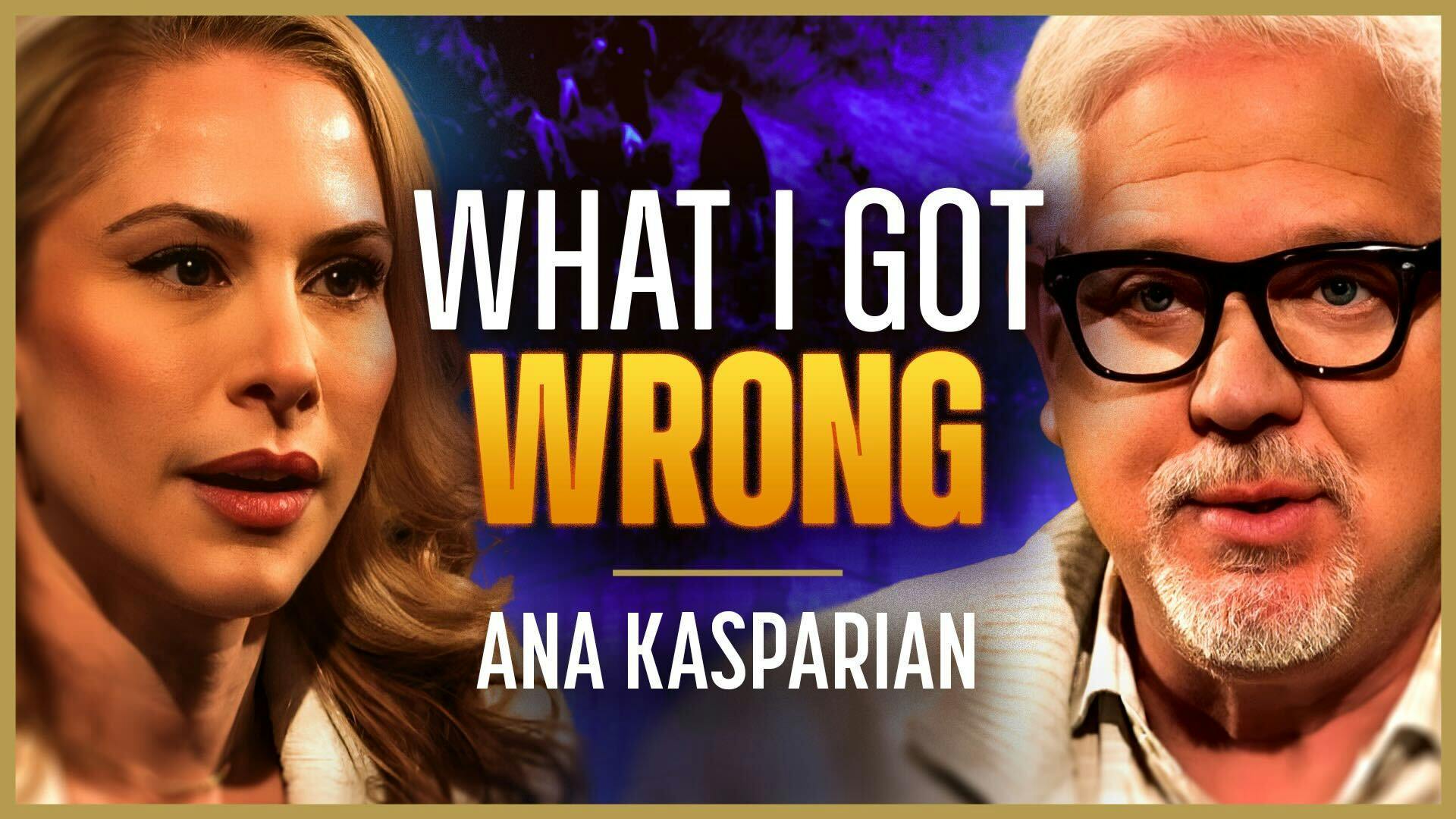
The Glenn Beck Program
Ep 237 | 'Young Turks' Host: Democrats Need to WAKE UP | Ana Kasparian | The Glenn Beck Podcast
01:09:39
Loading summary
Transcript233 lines
- [00:01]
Glenn Beck
Ryan Reynolds here for, I guess my hundredth mint commercial. No, no, no, no, no, no, don't. No, no, no. I mean, honestly, when I started this, I thought I'd only have to do like four of these. I mean, it's unlimited to Premium Wireless for $15 a month. How are there still people paying two or three times that much? I'm sorry, I shouldn't be victim blaming. Here, give it a try@mintmobile.com save whenever you're ready.
- [00:23]
Anna Kasparian
$45 upfront payment equivalent to $15 per month. New customers on first three month plan only. Taxes and fees, extra speed slower above 40 gigabytes. CD tails. And now a Blaze Media podcast.
- [00:36]
Glenn Beck
We are living at such an exciting time. Everything is changing. And strange times create strange bedfellows. More and more, I find myself sitting down and having actual conversations with people who even just five years ago would have never thought to talk to me or me talk to them in a million years. But things have changed in a good way. And people on the right, people on the left, and the people somewhere in between or nowhere at all are starting to agree. Hey, we have problems. And we have to stop this political division before it destroys us completely. Christmas is coming up and you'll probably be getting together here soon with a family member who voted differently than you. Can you bring that back together? That old friend that you had? Can they believe that you're not a fascist or a communist? How do we maintain the vision of E pluribus unum? How can we come back together? I think we can. To test my theory, I am joined today by a prominent political commentator from the left side of the aisle. Welcome, host and producer of the globally popular online news show, the Young Turks, Anna Kasparian. I can't wait to talk to Anna. And I hope you listen to this entire conversation because I think this is really important. And we're going to talk about abortion. At least I have it on my list. Let me talk to you about preborn. The left would like you to think that every woman who gets an abortion magically gets happier. And some people on the right want you to believe that they're magically evil. I don't know the people who want to shout their abortion that is evil. But the truth is women are trapped and babies die. And the only way we're going to change this is by changing people's hearts and their minds. The Ministry of Preborn is fighting for moms who are deciding between the life and death of their unborn child. First thing they do is they introduce the mom to their child on a free ultrasound. That doubles the chances that mom will choose life. Then they show those babies and mothers God's love by providing additional assistance for up to two years. Because many times these moms feel trapped and alone right now. You can make a big difference at the end of the year. Here, your tax deductible donation can be the difference between life and death. 28 bucks will buy an ultrasound. 15,000 will buy an ultrasound machine. 5,000 covers the entire thing for a day throughout the country. And through a generous match, your gift is going to be doubled. To donate, dial £250. Say the keyword baby. That's £250 keyword baby. Or go to preborn.com glenn that's preborn.com glenn Sponsored by Preborn.
- [03:40]
Anna Kasparian
This episode is brought to you by Etsy. Oh, hear that?
- [03:44]
Glenn Beck
Okay, thank you.
- [03:46]
Anna Kasparian
Etsy knows these aren't the sounds of holiday gifting. Well, not the ones you're hoping for. You want squeals of delight, happy tears.
- [03:56]
Glenn Beck
How did you.
- [03:57]
Anna Kasparian
And spontaneously written songs of joy.
- [04:00]
Glenn Beck
I am so happy.
- [04:02]
Anna Kasparian
Oh yeah.
- [04:03]
Glenn Beck
Oh yeah. Oh yeah.
- [04:04]
Anna Kasparian
Um, okay, the song needs a bit of work, but anyway, to get those reactions, make sure everyone on your list feels heard with handmade, handpicked and designed gifts from small shops on Etsy. Gifts like personalized jewelry, custom artwork, cozy style items, vintage pieces, and home decor to celebrate all of your favorite people and their specific kind of special. For original gifts that say I get you, Etsy has it.
- [04:44]
Glenn Beck
Anna, how are you?
- [04:45]
Anna Kasparian
I'm doing well, thank you. How are you?
- [04:47]
Glenn Beck
Very good, thank you. So for people who might not know who you are, how would you describe who you were? Because you've had some transition on some things. Who you were, how you would self identify yourself over the last 10 years?
- [05:07]
Anna Kasparian
Well, I would say that I was firmly identifying myself as a Democrat. I think that if you look at my policy prescriptions, for the most part I'm still pretty much left wing. There are some social issues.
- [05:23]
Glenn Beck
Hold on. Definition of left wing to you, is that Democrat or left wing? What does that mean?
- [05:28]
Anna Kasparian
Well, left wing in regard to, you know, I would say like one of my grounding political values is that workers should have better pay, better working conditions, a seat at the table. Unionized labor I think is incredibly important. Which, you know, it's something that's been decimated in recent decades in this country, but that's like my number one interest in politics. And that's not really something that has really been favored by the Republican party, traditionally speaking. And Historically, unionized labor was something that the Democratic Party looked out for. And I don't really see that as the case anymore. When it comes to the mainstream Democrats, they're certainly more corporate now. They're certainly captured by their corporate donors. I think that the way that this last election went down really does show you the kind of political strategist rot that exists, the corruption that exists. And there's real tension now between the voters who want very specific policy prescriptions in order to deal with the rising inequalities that we have in this country when it comes to wealth and income. And then you have the Democratic Party, which is heavily funded by corporate interests and moneyed interests. And what those donors want severely conflicts with what the base of Democratic voters want. And so this has been a growing issue with the Democratic Party and what I see, as you know, their campaign call is more and more culture war stuff and it gets more and more extreme every election cycle. And I think that they're pushing more and more people away by sticking to the corporate politics while also getting more and more maximalist when it comes to some of the culture war type issues.
- [07:26]
Glenn Beck
So as I look, because it is so hard what you do, what I do, there's so many words that come out of us every single day and then out of context or not worded exactly. Right. The way I look at the Democratic Party or the left is that there is the machine that is in bed now with big business, and that's just the crony capitalism, just the vomitous kind of corruption that we all hate in either party, any party.
- [08:09]
Anna Kasparian
Right.
- [08:10]
Glenn Beck
Then there's the average Democrat who might disagree on taxes or whatever, but they believe in the Constitution and they believe in the Bill of Rights and everything else. And I think that has been the majority, that is the majority of people.
- [08:26]
Anna Kasparian
Absolutely.
- [08:27]
Glenn Beck
And then there's this crazy left wing, Marxist, you know, destroy it all kind of group and that, I don't Even know, maybe 8%, 10% is that. And it's the middle people who have been either lied to so effectively by so many people, mainly mainstream media, but we're at the beginning in the Democratic Party possibly of those people waking up and going, I don't like either end of this spectrum.
- [09:03]
Anna Kasparian
Yeah, look, I take a little bit of issue with the use of Marxist in this context because honestly, I think that there's maybe a total of like five actual Marxists in this country. In reality, we're talking about individuals whose politics is mostly based on some fringe issue or some cultural issue that they have it's not just that they care about that issue. It's that they've taken that issue and they've made it part of their identity, the core of who they are. And it's almost like what you would expect from religious zealots, you know? And so there's a fundamentalism in the way that they treat these issues, and there's no room to negotiate. There's no room to maybe consider the thoughts and concerns of other individuals. And so as they become more and more kind of like, authoritarian in what they demand, they are pushing people away. And there are some issues in which the rights of one group might actually end up conflicting with the rights of another group, depending on what type of legislation you're pursuing. And so, of course, this is come up with the trans issue. And I've always been supportive of the transgender community, but when the rights of transgender people, particularly transgender women, start to cause some tension with the rights and freedoms of women or the perceived safety of women, well, let's have a conversation and avoid assuming the worst of the people who wanna have that conversation. Right. Because I think that in a country like America, where you have so many different people with so many different backgrounds, belief, people of faith, the only way this works is if we respect each other and actually engage in these conversations in good faith. And I felt that the left was able to do that back in the day. And I don't know what happened, but we've moved further and further away from being able to have those conversations in good faith without assuming malice toward individuals who have a slight difference of opinion.
- [11:05]
Glenn Beck
So, I mean, let me just ask you first, do you believe in the Bill of Rights?
- [11:12]
Anna Kasparian
Of course. Yes.
- [11:13]
Glenn Beck
All of them.
- [11:13]
Anna Kasparian
I love this country.
- [11:14]
Glenn Beck
Yeah.
- [11:15]
Anna Kasparian
I love this country. I love the idea of this country.
- [11:17]
Glenn Beck
I'm not questioning. I just want to note, do you believe in the Bill of Rights as written? Okay. That used to be our unum. We could all come together and disagree and live different lifestyles. As long as I'm not taking away your rights. You're not taking away my rights. I have a right to disagree with you. We can have conversations about anything and walk away and go, see you tomorrow, Bill. You know what I mean? That's what's happened to us. There's been this erosion of education of how important the Bill of Rights is. We're looking now at a population, especially younger population, that thinks that there's limits on speech.
- [12:00]
Anna Kasparian
Right.
- [12:00]
Glenn Beck
There's not limit.
- [12:02]
Anna Kasparian
Well, there are some limits. Right.
- [12:03]
Glenn Beck
What are. What are they?
- [12:05]
Anna Kasparian
Typical example is you can't yell fire in a crowded movie theater, no crew.
- [12:09]
Glenn Beck
That was actually written by the Supreme Court to prove against that.
- [12:14]
Anna Kasparian
Really?
- [12:14]
Glenn Beck
Yeah. It was not.
- [12:15]
Anna Kasparian
But you can't incite violence.
- [12:17]
Glenn Beck
Yes.
- [12:17]
Anna Kasparian
You can't engage in defamation.
- [12:20]
Glenn Beck
You can't say things that directly incite violence or panic. And it's very clear when we're gonna go kill him and we're gonna kill him now. That's the end of freedom of speech. Right, but without freedom of speech, where we can't say, I'm sorry, I respect this person, you know, I love this person. They can live their life, but if I'm taking them to the hospital, I am telling the doctor, that's a man, not a woman. Now they can call themselves whatever, I could even be totally cool with it. But we have to be able to have a civil, non hateful conversation about truth.
- [13:12]
Anna Kasparian
I mean, I agree with you on that. And the argument, and I think this is a decent argument that you'll hear from those who are more restrictive or wanting more restrictions on speech is, well, we want better terms of service when it comes to private companies. But free speech only has to do with the government. And if the government isn't violating your free speech, then why are we complaining.
- [13:37]
Glenn Beck
About, you know, that's not a problem if the government's not in bed with all of the business. You know what I mean? Interesting, interesting.
- [13:45]
Anna Kasparian
What do you mean by that?
- [13:48]
Glenn Beck
Republicans used to be the big business people, right?
- [13:51]
Anna Kasparian
Yeah, I think they still are to a large extent.
- [13:54]
Glenn Beck
I think the, remember we talked about those, the three with Republicans, there's that machinery, Republican, they're all in bed still. They're all in bed. That section, I hope comes to an end. But they'll always be those people. So I agree with you on that. But it was. When you're in bed, especially now, I don't know how you define fascism, but fascism, the technical definition of fascism is a public private partnership with the government and private industry. Communism doesn't let you have private ownership. Fascism says, no, no, you can have private industry, but you're going to do it our way and we'll let you have the company. And if you don't want to do it our way, we'll destroy you, take it away from you or whatever. That's. We've been headed that way for 100 plus years. Both sides have been doing it right now. The public private partnership, where the government says we can't do this, but you can, that's fascism. That's wildly dangerous and both sides have a propensity to do that because they both like power and both like control and money. But because of social media and Google and everything else, we are in a situation to where who's controlling whom? Which one is more afraid of the other? The government or Google? Who's afraid of who? You know what I mean? Who has more power?
- [15:42]
Anna Kasparian
Well, I would say right now it feels as though the corporations have more power. I agree with you, especially considering the fact that corporations, corporate interests fund politicians on both sides of the political aisle. And so they're completely captured by corporate interests.
- [15:56]
Glenn Beck
Correct.
- [15:56]
Anna Kasparian
And I think that that has happened to the detriment of the American people, regardless of whether they vote Democrat or Republican. And so what I see as a bigger problem when it comes to this speech question and how it's impacting private companies is that private companies are increasingly catering to niche audiences or one side of the political spectrum over the other. And unfortunately, and I understand this because I think I was also kind of in that bubble of seeking content or information that only validated what I already believed because it's comfortable. And I totally understand why people do that. I used to do that myself. I didn't do it consciously. It was like a thing that I think I was just doing because it's like, I trust this source because this source is reporting accurately, but it turns out, no, I actually trust that source because that source is telling me what I want to hear.
- [16:55]
Glenn Beck
Correct.
- [16:55]
Anna Kasparian
And so this is a huge problem because the divisions in the country and the inability. Because the divisions in the country and the inability to have conversations with people you disagree with I think is a product of the bubbles that we live in. Right. The media bubbles we live in. And I don't know how to fix that. I mean, one way that I've tried is by providing counternarratives and a different point of view or playing devil's advocate on tyt, or more importantly, if I've changed my mind, I wanna be as honest with my audience as possible.
- [17:32]
Glenn Beck
You have to.
- [17:33]
Anna Kasparian
And living in Los Angeles, living in California, which is completely controlled by the Democratic Party, it has allowed me to see some of the flaws in the policies that the Democratic Party is pushing for on a more national scale. And I don't want that to happen if I've experienced some of these policies and they have not worked out so well. But what's interesting is the resistance to any of that critique that you'll see from, you know, not everyone in the audience, not even the majority of the audience, but there's always that very loud minority of people who demand that you only tell them what they want to hear.
- [18:10]
Glenn Beck
I know.
- [18:11]
Anna Kasparian
And validate what they already believe.
- [18:12]
Glenn Beck
Or you're a traitor.
- [18:13]
Anna Kasparian
Or you're a traitor. Exactly. Yeah.
- [18:15]
Glenn Beck
Or a grifter, I think. You know, one of the things. Yeah, I love that one.
- [18:18]
Anna Kasparian
Yeah.
- [18:18]
Glenn Beck
I was against Trump in 2016. Very vocal about it.
- [18:22]
Anna Kasparian
I remember.
- [18:23]
Glenn Beck
And I was a trader and a grifter. I was just trying to make money. And then he did some things that I said he'll never do. And I agreed with the policies and I had said, if I'm wrong, I'll admit it. I did. And I was a grifter and a traitor again. I mean, it's just, there's no. In this, there's no way to win more with Anna here in just a second. First, we're all getting older and I don't know about you, but I have felt the aches and pains that come along with the kind of aging thing I even used to suffer from horrible pain in my hands. I went to every expert possible, every expert. Nobody could make the pain go away. And, you know, it was, well, I guess you just kind of live that way. And I didn't want to. To live that way. My wife told me, try relief factor. I honestly did not think it was going to work. It's 100% drug free. Okay. It's a supplement. Aha. That's going to work. I've been to the Mayo Clinic. Nothing's going to work. Well, I tried it. I take it every day. My hands work again. I can write, I can paint. I can use my hands without any pain. Over a million people have done what I've done. 70% of them have done what I've done again. And that is order it month after month. Three week quick start. 1995. Less than $1 a day. Try it and see how it can help turn the clock back on. Pain relief factor.com 800 for relief 800 the number four relief relief factor.com blinds.com's.
- [19:49]
Anna Kasparian
Cyber Monday last chance is happening now.
- [19:52]
Glenn Beck
Don't miss out on up to 45% off site wide. A blinds.com design expert can help you.
- [19:57]
Anna Kasparian
Make the perfect selection on your schedule. We can handle everything from measure to your whole home installed for one low cost.
- [20:04]
Glenn Beck
With over 25 million windows covered, Blinds.com.
- [20:07]
Anna Kasparian
Is the number one online retailer of custom window coverings. Save up to 45% sitewide plus a.
- [20:13]
Glenn Beck
Free professional measure right now@blinds.com Rules and restrictions may apply. Do you have hope that there's been a sea change. We're at the very beginning of it. But you know, it's strange. I was just talking to Donald Trump. I was doing a fundraiser at Mar a Lago a couple of days ago and I said, I think like we're like the cool kids now. I've never been at the cool kids table.
- [20:42]
Anna Kasparian
This is wild. Look, I'm gonna pause on saying the cool kids.
- [20:48]
Glenn Beck
No, no, no, I know, but we've never been even near the cool kids. We're at the agreement, we're in the hallway of the cool kids table. You know what I mean? I know that, but we've never. I mean. And he said ymca. How is YMCA suddenly cool?
- [21:06]
Anna Kasparian
It's not just about that. You know, Trump is. And the audience hates when I say this, but it's just demonstrably true. He's funny, he's an entertainer. I mean, he was an entertainer before, you know, he was a politician. That's for sure.
- [21:21]
Glenn Beck
That's what also causes trouble for him.
- [21:23]
Anna Kasparian
It does, it certainly does. But I think the reason why you're feeling, how you're feeling about the perception of the Republican Party now versus in the bullshira.
- [21:34]
Glenn Beck
Hang on just a second. I don't wanna say Republican Party, cuz that's not cool. That'll never be cool. There's this new coalition of Trump, Tulsi Gabbard, rfk, Elon Musk, people that are coming from all different points of view. It's the way America that I grew up in, it's the way America was. We disagree on a lot, but we have one central vision and that is in this case, end this corruption. End this nonsense.
- [22:08]
Anna Kasparian
Right, yeah, no, that's a great way of putting it. And the CEO and my co host, Cenk Uygur of the Young Turks, he is really trying to bring a populist coalition of people together and individuals, basically Americans who see the rot in our political system thanks to the corruption. And so it's been his top issue ever since I've met him. And so he's been trying to get money out of politics. So these politicians actually represent what the people want as opposed to what a small group of corporate executives want. And I think that's really the key in fixing what's broken in our political system. The other thing is, I mean, look, members of Congress really should see themselves as public servants, as opposed to individuals who are elected into office just to enrich themselves.
- [22:59]
Glenn Beck
All of them should be.
- [23:00]
Anna Kasparian
So we have to ban their ability to trade individual stocks. I mean, this is madness that they're able to do this.
- [23:08]
Glenn Beck
Ban the trading of stocks, do not allow them to go into any business that they had any regulation or anything.
- [23:16]
Anna Kasparian
Exactly.
- [23:17]
Glenn Beck
For at least 10 years.
- [23:19]
Anna Kasparian
I totally agree.
- [23:20]
Glenn Beck
This revolving door is obscene. Absolutely obscene. I say this kindly because I've been on the other side of the table. And I wish people had given me the benefit of the doubt, of being a decent human being. And actually. Meaning what I say, because I do. So I say this believing you're an actual decent human being. Okay.
- [23:56]
Anna Kasparian
Okay.
- [23:59]
Glenn Beck
The one thing that I look for in people who say I've seen the light is I know when I've changed and I've changed many big points of view and many big things in my life. But I can tell you what color the carpet was when I had that epiphany. I can tell you the time of day. I can tell you everything about that moment because it was like, holy mother, I'm wrong. And time stopped. And you remember it.
- [24:33]
Anna Kasparian
Right? Right.
- [24:34]
Glenn Beck
If you're sincere.
- [24:36]
Anna Kasparian
I don't think that's necessarily true. I think for some people, change comes slowly. And especially if your career and your life depends on a particular identity, a particular outward identity, you're going to resist internal change. And you're going to resist and resist and resist until you can't resist anymore. That's what I feel with me.
- [24:58]
Glenn Beck
Okay, so wait, wait, wait. So then what was. I think we might be saying similar things. Cause it's not. You know, the heavens didn't open up. You all of a sudden go, I can't do this. I can't say this anymore. So was there a time. Yes, it happened slowly, but was there a moment that changed you and said, I can't do this anymore. I can't do it anymore?
- [25:25]
Anna Kasparian
I mean, I would say the phrase I can't do it anymore for me applies to a handful of policy issues that the Democratic Party has been championing that I don't agree with.
- [25:41]
Glenn Beck
So there's no personal. There was no personal event or anything that happened in your life to where you went?
- [25:48]
Anna Kasparian
I mean, I was sexually assaulted by a homeless guy.
- [25:50]
Glenn Beck
Right. Okay. Okay.
- [25:51]
Anna Kasparian
Yeah, I was sexually assaulted. I was assaulted by a homeless guy in Los Angeles, in my neighborhood, as I was walking my dog.
- [25:57]
Glenn Beck
Oh, my God.
- [25:58]
Anna Kasparian
And it was awful. I mean, I've talked about it multiple times. And look, I don't wanna put myself in this position of being like this victim who's looking for empathy. But it is the moment where something very scary happened to me. And why did that happen? It wasn't just that that had happened to me. It was the reaction I received from a faction of the left. Okay. The social justice left, if you wanna call it that.
- [26:24]
Glenn Beck
Okay.
- [26:25]
Anna Kasparian
Who think that in some cases, the criminals are actually the victims and the victims are the criminals. It's insane. And I don't know how big this faction is, but they're loud enough to push me away. And so it wasn't that that had happened to me. It was the reaction of the left and how they were far more concerned with me talking about it because they felt that that was stigmatizing the homeless community. I have never gone out of my way to say negative things about homeless people. I mean, people who are living out on the streets are, in a lot of cases, victims who need help, right?
- [27:00]
Glenn Beck
Yes.
- [27:01]
Anna Kasparian
But I was victimized by a guy that was strung out on something. Could have been meth. You know, he was jerking around as he was walking toward me with his buddy and, gosh, I'm so sorry.
- [27:13]
Glenn Beck
I didn't.
- [27:13]
Anna Kasparian
Yeah, I'm sorry. It's okay. It's okay. But it took a while for me to get over that because I still have to walk my dog. And so multiple times a day, I literally have to think about that incident. And so I thought maybe it would help to talk about it. And then when I did talk about it, I totally regretted it because I was shocked at the way people reacted to me. But what that moment taught me was some of the characteristics of the quote, unquote left that I thought were good. Right. Like the kindness, the open mindedness, the willingness to go out of your way to look out for people who need help, like that kind of stuff. There's a portion of the left that has shed those characteristics. They've taken on a more nihilistic approach to things, and they don't even believe in reforms. They just believe that everything about every political system, every program we have, every institution we have is just worthless and we need to burn it all down. Okay. So that nihilistic nature, I think, leads to a lot of really bad ideas and terrible behavior online. And that's pushing people out, pushing people away. And like, I mean, you look at places like Los Angeles, for instance, Right. Or Cook county, which is where Chicago is. I paid very close attention to Cook county and what the election results were gonna be in Cook county because you have an influx of migrants going to Chicago. Right. You have a lot of anger among the black community in Chicago because they've been nickel and dimed by their local government.
- [28:58]
Glenn Beck
It's crazy.
- [28:58]
Anna Kasparian
And at the same time, their mayor, Brandon Johnson, is doling out the cash for migrants and justifying it. And so they're angry. And so I'm watching all of this happen and I'm just like, Democrats need to wake up. Because more and more voters feel like they're being abandoned by the Democratic Party, economically speaking. And everyone got mad at me. Everyone's like, you're anti immigrant. I'm not anti immigrant. I'm not anti immigrant.
- [29:25]
Glenn Beck
Immigrants built this country.
- [29:27]
Anna Kasparian
Yes. My parents are immigrants.
- [29:29]
Glenn Beck
Yes.
- [29:29]
Anna Kasparian
Okay, I am not anti immigrant. But I do have a problem with the Biden administration neglecting the border, pretending like there wasn't a migrant crisis at all, allowing these municipalities to be inundated with migrants without any federal resources to deal with the problem. And what we're going to pretend like that's not going to cause electoral harm. Of course it is. So when you look at places like LA, there was an 11 point swing toward the Republican Party. Kamala Harris still won LA county, but 11% toward Republicans. That's crazy.
- [30:06]
Glenn Beck
In Los Angeles, My problem with the policy there, again, I could be friends and debate and whatever with anyone if it's honest. Thomas Jefferson said question with boldness, even the very existence of God. For if there be a God, he must surely rather honest questioning over blindfolded fear. Honest questioning means if I ask you a question and you present me with an answer and I'm like, hmm, I'm open to changing. You know what I mean? We don't have honest questioning. We now have got you questioning. We have cancel you questioning. And beyond that, we have this system that props up lies and a government that is willing to engage in lies. If you wanted to bring people in and open the borders the way you did, and then move people with our tax dollars on airplanes. Two cities where you're changing everything in that city. Can we have that conversation? First part of the problem was they were saying it's not happening. Well, yes, it is. And you're doing it behind our back in the middle of the night.
- [31:33]
Anna Kasparian
Well, it's interesting because. And look, I can definitely be honest about my own flaws and my own mistakes because I bought the mainstream media narrative that there wasn't a migrant crisis. And yeah, I did believe it. I believe because, look, I was an idiot because, I mean, who do you trust in today's media landscape? I know, right? There's a lot of liars out there. And when it comes to mainstream media, the fact of the matter is they do play defense more. And More for the Democratic Party. And that's an issue because there was a time when that didn't happen. And so I still believed in their good faith reporting, even though it turns out a lot of these reports would omit really important details about what's really going on. And so it wasn't until Texas Governor Greg Abbott started busing or sending migrants to blue cities where that woke me up. That woke a lot of people up. And suddenly America realizes there is a migrant crisis.
- [32:33]
Glenn Beck
Why did that wake you up?
- [32:35]
Anna Kasparian
Well, because all of a sudden you're seeing migrants sleeping on the floor in the police department in Chicago because they don't have shelter for these people. Right. You're seeing, you know, these. I love watching streams of city council meetings because that's how you understand what's really going on in these cities. Right. These are real people who live there and they get their opportunity to speak.
- [32:59]
Glenn Beck
Chicago's been an amazing thing to watch.
- [33:02]
Anna Kasparian
Wild.
- [33:03]
Glenn Beck
Yeah.
- [33:03]
Anna Kasparian
I mean, I watch every city council meeting from Chicago because they're crazy.
- [33:07]
Glenn Beck
Yeah.
- [33:07]
Anna Kasparian
And for me, rather than relying on mainstream media reporting or any anyone's reporting, to be quite honest with you, what I'll do is I'll go out of my way and I'll watch, you know, the entirety of a government function, local government function. I talk to real people and I get a sense of where hearts and minds really are. And so on election night, I wasn't surprised at all. I knew what was coming. I totally knew what was coming. I knew that Cook county was gonna swing. I think it's about 8 percentage points toward Republicans. I knew LA county, and this is what I was surprised about. I did not expect Donald Trump to flip 10 counties in California from blue to red. But I guess I shouldn't have been surprised about that either. Because when you look at the conditions that people are living in in a Democrat controlled state, well, yeah, you can understand why people are turning their backs on the Democratic Party. You can understand why people are frustrated at the corruption at the loss of $24 billion that was allocated to help the homeless, when homelessness only exploded during that time. And that money is now unaccounted for. It was funneled to nonprofits whose executives get paid minimum 200, $250,000 a year. And they have multiple executives who are making at least that or more. And you just see the waste and you see the real grift. And so for people out there who are concerned about the grifters, take a good hard look at the systemic grifting that's Happening right now. It's disgusting.
- [34:47]
Glenn Beck
It is. Again, I think the problem with a public private partnership, 100%.
- [34:54]
Anna Kasparian
Yes.
- [34:55]
Glenn Beck
Stop it. These NGOs, let them raise their own money. Let them. If they're doing good, they will prosper. You know, people will find them. The government just funneling millions of dollars. It just. It's a money laundering. Ukraine. I don't know where he is down in Ukraine, but good God, man, that is just. That is a money laundering system. And millions are being affected and hundreds of thousands are in a meat grinder right now. For what?
- [35:26]
Anna Kasparian
I mean, look, I think that the UK and the US made a big mistake in discouraging Vladimir Zelensky from continuing or engaging in peace negotiations early on, early on in that war. So that's the strongest opinion I have about what has transpired in Ukraine. My heart goes out to the Ukrainians. They're trying to defend themselves. They were invaded wrongfully, obviously. But I feel that the way the United States has carried out its foreign policy, certainly starting in the Bush years, and it's only gotten worse from that, it's not really benefiting anybody, and it's certainly not benefiting the American people. Which is another reason why I think you're noticing a bit of a shift or realignment when it comes to our political parties. And look, it's bizarre. Trump came in and he just kind of like messed everything up in the Republican Party. And it's really weird to find myself in this place where you hear Republican voters take on this anti war identity and Democratic voters take on a more pro war, neoconservative type flavor.
- [36:40]
Glenn Beck
Kamala speech at the convention on. It was like, what are you, Dick Cheney? What is that?
- [36:48]
Anna Kasparian
Not Dick Cheney. But she was honored by who?
- [36:50]
Glenn Beck
Oh, I know, I know.
- [36:51]
Anna Kasparian
Which disgusted me, so.
- [36:53]
Glenn Beck
But I think there's something to be said that I think with conservatives, the definition of conservative, what I believe is the right definition, is we look at things that are happening. What's working. Save that, get that part out of here. Because it's corruption, it's corrupt, it's garbage, it's old think, whatever. And progressive should be. We're more anxious to move forward. Let's go. The two of those things together is what provides the balance, you know, totally.
- [37:30]
Anna Kasparian
You need that tension.
- [37:32]
Glenn Beck
You need that. It's important. It's an eagle can't fly with just one wing. But when you look at what has happened to the conservatives, I started changing 2006. I mean, I was all for the war. I was all for that.
- [37:55]
Anna Kasparian
Yeah.
- [37:55]
Glenn Beck
I was all for it because I believed that we could change things. I was dumb enough to believe that you can hand people freedom and they want it or it will just work. It barely works here. You know what I mean? You have to earn it, you have to want it. And I was also naive enough to think that we were the good guys.
- [38:24]
Anna Kasparian
That's a great point. I mean, look at Iran. I mean, we orchestrated a coup in Iran, which is part of the reason why you have this theocratic situation that we're now fighting against. Doing regime change is not a good idea.
- [38:42]
Glenn Beck
Not a good idea.
- [38:42]
Anna Kasparian
The US should be in the business of engaging in regime change wars, period.
- [38:46]
Glenn Beck
George, if we, I don't know if you've read his farewell address, okay, if we would just do that, we would have been fine. But the State Department for decades has been on this path of we're going to control everything. If, if you're a country that says we don't torture but will ghost plane you to some place that will torture, you're a monster.
- [39:15]
Anna Kasparian
100%, you're a monster. I can't believe I'm hearing you say this stuff.
- [39:19]
Glenn Beck
I've said this for years. I've said it for years.
- [39:21]
Anna Kasparian
Wow, that's awesome.
- [39:23]
Glenn Beck
But you have to be consistent with your principles. And I think there's a lot of conservatives and I'm so happy to see that now there are some Democrats that are doing the same thing. Like I was for Big Food, I was for Big Pharma, and then I saw it and I feel like saying to Democrats, guys, you were right. Now why have you abandoned that position? Because we now we would agree we could get so much done.
- [39:55]
Anna Kasparian
Can I ask you something? I'm genuinely curious what you think about this because I started to really sour on Biden when in my opinion he was pretending to fight for his agenda. And part of his agenda was to allow for our Medicare system to just simply negotiate drug prices with pharmaceutical companies. Believe it or not. And this is the most anti capitalist thing imaginable. Right? Because capitalism, you're supposed to have competition, you're supposed to welcome negotiation.
- [40:26]
Glenn Beck
Yes.
- [40:27]
Anna Kasparian
Our Medicare system not allowed to negotiate drug prices. So he was pursuing a provision in his build back better plan that would allow for the negotiations to happen. Well then they whittled it down, whittled it down to 10 pharmaceutical drugs. Oh, what can we do? You know, this is the thing, the Democrats like to play good cop, bad cop. So you'll have the majority of the Democratic Party in the Senate in particular pretend like they're all on board with Biden's agenda and the idea of having Medicare negotiate drug prices.
- [41:00]
Glenn Beck
We have the same problem in the Republican Party, by the way.
- [41:02]
Anna Kasparian
And then you'll always have the bad cops who are willing to raise their hands and basically torpedo that provision. And that's essentially what happened with Senators Joe Manchin and Kyrsten Sinema. But don't make the mistake of thinking they were the only ones, because sitting on the bleachers waiting were other corporate Democrats who would step in if they needed to to prevent the passage of that provision. And so I love watching Democrats celebrate themselves because now Medicare can negotiate the drug prices of 10 drugs. And sure, that's better than nothing, but, I mean, I'm not gonna give you a reward for whittling down a policy that made sense, that would have saved taxpayers in this country a lot of money.
- [41:52]
Glenn Beck
I think we could come to agreement on this easily. That's why I'm so excited about rfk. Get them out of government. Get them out. I don't want them anywhere around. I want our government to have that limited work of just who do you run to if the police are in part of it? You can't. You can't run to the press and say, hey, look, because the press no longer is protecting the little guy. They're protecting the pharmaceutical company or the government, which is the same.
- [42:30]
Anna Kasparian
The press was doing positive PR for the Democrats on this issue. Yes. As the Democrats essentially destroyed their own agenda. Okay. Like, it was ridiculous. So I just. If you're gonna run to the press to get accurate information about what's going on.
- [42:47]
Glenn Beck
I mean, what I'm saying, though, on that is there is no good cop. We are a system of checks and balances. Congress and the Senate, they're all backroom deals. I talk to congressmen and senators who say, what the hell am I even doing here? We don't debate anything. We don't talk about anything. They come out and say, here it is. You have 10 minutes to read it and vote, and you're voting this way. There's no checks imbalance the administration. It was. Does the president work for all of these administrators, or do the administrators work for the elected guy? You know, it's all out of control. And the one that was supposed to watch is the media. And the media. And now with Big Tech, they're all part of that system. We have to find a way to go back to the. I really feel like if we could have you tried turning it off and turning it back on again and reset it to its factory settings. You know what I mean? There are things that we need that we can't cut. There are things that we've got, but we have got to. It's rotted from the inside on both sides. We have to. I don't want to. The American idea is right. It's great. It's to create a more perfect nation, meaning we're never going to be perfect. And the mission statement in the Declaration of Independence, there's nothing more inspiring from any country in the history of the world than that. I want to try to create that, knowing we'll never get there. But we can make progress towards it. So we can't jettison everything. But we have got to go in with. I don't even know if you can do it with surgical knives anymore because it's so big and out of control. Just start chopping down some of the. Reshaping the tree.
- [45:01]
Anna Kasparian
Yeah. There's been a lot of attention focused on Doge, the Department of Government Efficiency and what they're gonna focus their energies on. You know, I'm cautiously optimistic, mostly because of the fact that a lot of the conversation is focused on the Pentagon and there's agreement on both sides of the political aisle that there needs to be a serious accounting for all of the resources that are being squandered on the Pentagon.
- [45:30]
Glenn Beck
But that also has to happen in things that you're gonna like. I mean, I believe the Pentagon is completely out of control.
- [45:38]
Anna Kasparian
Yeah. I mean, they haven't been able to pass a single audit. I mean, it's crazy.
- [45:41]
Glenn Beck
It's crazy.
- [45:42]
Anna Kasparian
Yeah.
- [45:42]
Glenn Beck
So I completely agree with that. But I believe defense is very important. You could go back and forth, but there's also stuff on the other side. We have squandered trillions of dollars. We don't even. How do we have a government that says, geez, where did we put that $2 trillion? How does that happen?
- [45:59]
Anna Kasparian
Yeah, it's crazy. It is. I mean, I agree with you. I think that even when it comes to. Look, I agree with programs that are meant to help the homeless. I totally am. So that's the type of. Those are the types of policies, if they're effective. But there's a lot of waste because the way that those policies are being implemented in places like California isn't really meant to help the homeless. It's about funneling taxpayer money to nonprofits. That's what it's about. And so when we talk about waste. Yeah. I'm open minded about taking a look at these government agencies and really questioning whether these massive bureaucracies make sense. Right. Whether the money is well spent on various programs. Let's do a little bit of testing to see if these policies or these programs are even effective in carrying out what their objective is.
- [46:53]
Glenn Beck
See, this is why I think the 10th Amendment is so important. It creates 50 laboratories. You want universal healthcare. Massachusetts, have it, do it, vote for it. You want it in California, have it, do it. If it works, we'll do it. If it doesn't work, you can't just say, we need bailout from the federal government. Why should I pay for something that doesn't work? You know what I mean? And if there's 50 laboratories, somebody's going to come up with something better, you know what I mean? But we have all of this federal regulation to stop people from trying things that might work, you know?
- [47:39]
Anna Kasparian
Yeah. So are you consistent on that issue, though, on the idea of states rights and allowing for the federal government to just kind of take a step back?
- [47:49]
Glenn Beck
It seems like a setup question.
- [47:50]
Anna Kasparian
No, no, it's not a gotcha or anything, but mostly because in conversations with Republicans or with conservatives or anyone on the right, yeah, they tend to have this idea of states rights when it comes to economic policies or things like healthcare, as you mentioned. But then it comes to some of the more conservative social issues where they do want the federal government to be involved and have a standard. Like, for instance, there's a small but loud group of people who are on Trump's case about not wanting to pursue a federal ban on abortion.
- [48:24]
Glenn Beck
Right.
- [48:24]
Anna Kasparian
I'm curious what your thoughts are on that.
- [48:25]
Glenn Beck
Federal government has nothing to do with it. The Supreme Court has ruled with it. I don't think you can legislate morality. I think the problem with the abortion case is on the right side. Forget about the baby for a second, Mom. Why is she in the. She is most likely not in this situation because she's like, I want to shout my abortion rights. They're in trouble. Something has happened, something has failed. They have no framework around them to help them. We cannot just say to that person, no, because they'll go someplace else. We have to care about the baby and the mother and help fix what's broken when somebody is using abortion for birth control. I don't even understand your moral sense, But I understand 80%, I bet, of people who are having an abortion. There's no law that will fix that. None. We have to find the way by working reasonably with each other. You know, I went to GLAAD and met with glaad this years ago when Iran was throwing gays off of the rooftop. I've always been for gay marriage. I'm more libertarian. I don't care. Marry who you want. Don't tell me and my church what I have to do. And I'm not going to tell you what you have to do. And I went to GLAAD and I said, look, we could argue all day long about wedding cakes. They're throwing people off the roofs because they're gay. This will be wildly unpopular with my audience, and it will be wildly unpopular with your audience. But why don't we come together and say we disagree on a whole bunch of stuff, but this we agree on. Life has meaning. They wouldn't do it.
- [50:36]
Anna Kasparian
Interesting. Okay.
- [50:37]
Glenn Beck
And until we have the guts to stand up and say, look, this is going to be unpopular on my side, it's going to be unpopular on your side. But we're both reasonable. Laws, when it's oppressive, when they're just forced on you, it feels oppressive. We have to change the hearts and minds. And the only way we're going to do that is by talking to each other and actually looking at the problem, not just saying, oh, it is the homeless. That means. My father used to say. I would say, dad, I want to talk to you about God. Okay, we cannot talk about God. What do you mean? Let us call him first. Cause God means something different to you than it does me. First. Cause we don't have any images in our head. So we start from there. When we say we want to talk about abortion, it means something to you, means something to me that's deeply seated in us. We have to find our way to the compassionate core of the human experience.
- [51:51]
Anna Kasparian
How do we get there? Like, what is your suggestion?
- [51:56]
Glenn Beck
I'm. I am. I have for so long waited for a fair interview on my side from somebody who doesn't agree with me. I can get fair interviews. I can get bad interviews from people who agree with me. And I don't mind somebody reporting something and me going, well, I don't think that's exactly true, but I can see how you got there. There's no such thing as a. It's all a setup. All of it is a setup.
- [52:35]
Anna Kasparian
Yep.
- [52:36]
Glenn Beck
And you now know it because you're on the other side. And I'm sure people on both sides right now with you. That's why when I. Before we started, the only thing I said to you was, you're in a safe zone. I'm not trying to get you. That has to happen. And the Only way that happens is back to Jefferson. Honest questioning. I really want to know how you got there. When, when, when we talk to each other. And I've got an agenda. Oh, you know what? I've got some people coming over for Christmas. I know exactly I'm going to say this and they're going to say that, and then I can get them to that. That's not honest. When you, when you say, I'm not going to talk to you because I disagree, what I'm actually saying is I'm smarter than you and you have nothing to teach me.
- [53:30]
Anna Kasparian
Yeah. And ironically, that's actually the dumbest way to proceed because one thing that I have noticed is as the left kind of avoids any debate or conversation with individuals they disagree with, well, their ideas don't really get challenged.
- [53:50]
Glenn Beck
Right.
- [53:50]
Anna Kasparian
Your ideas get challenged in a debate, in a good faith debate. I'm not talking about, you know.
- [53:54]
Glenn Beck
Right, right, right.
- [53:55]
Anna Kasparian
Gross, you know, rolling around in the mud type stuff. But, you know, I like when my ideas are challenged because it forces me to consider the flaws or a blind spot that I might have.
- [54:08]
Glenn Beck
Yes.
- [54:08]
Anna Kasparian
You know, and that. So I want to make good arguments.
- [54:13]
Glenn Beck
I think the left is so weak right now, so easy to take apart.
- [54:19]
Anna Kasparian
Yes, you're right about that.
- [54:21]
Glenn Beck
I've been thrown up against the wall for the last 20 years saying, you're a racist, you're a bigot. You can only have that said to you if you're a good, decent person. So long before you go, am I, what am I doing that makes me appear that way? What is it? And you self examine and you either fix or you become stronger. No one's thrown the left up against the wall. I don't think people have any idea how to defend what they think they're for.
- [54:51]
Anna Kasparian
I mean, it's interesting because I've been forced to realize this when I've been making arguments to my audience, to the left, in regard to, hey, you know what? We've implemented this criminal justice reform policy and it's actually not working out the way we expected. We need to tweak it here, recalibrate it there, and maybe this policy could actually work out really well. Let's fix these little gaps that we see. And rather than consider that I'm coming at them in good faith because I want these policies to work. All they do is just call you a grifter. Okay? That's it. That's the thing. You can call me whatever you want, call me a grifter if you want, but please try to contend with what I'm saying, like, debate me on this. I wanna have an actual exchange. If you just think that you're gonna call me a grifter and move along and that's good enough, that's not good enough. Okay? That makes you look weak.
- [55:51]
Glenn Beck
There are so many times I've said this for years. Please, please tell me not that I'm wrong, tell me how I'm wrong. I want to be wrong. I want to be wrong on some of these things, but we don't do that. So let me turn that question back to you. Nobody trusts anything, right? I mean, I'm a conservative. The FBI is a danger to our society. The Department of Justice. Yes, it is. And I used to be. Oh, God. Uh, I don't trust any of it anymore. And it's. It's American and responsible to not trust blindly.
- [56:36]
Anna Kasparian
Right.
- [56:36]
Glenn Beck
You know what I mean? But when you don't have anything and you're not even sure the people you're talking about are grounded in the Constitution, actually. Do not want a theocracy. Do not want a fascist state. Do not want a communist state. They do care and are willing to say, man, this kills me to say it, but you have the right to believe that. If you don't have that trust, how do we gain that trust back?
- [57:09]
Anna Kasparian
Honestly, we can talk about things like transparency, more accountability in the media, stuff like that, but I think a lot of what we're seeing in the country right now stems from economic frustration. And you have to think about it this way. When Americans feel like they have no stake in the game, that's where the nihilism comes from. When you feel like you have nothing to lose. That's what's gonna give you the type of mentality that's going to allow you to literally shoot and kill a United Healthcare CEO in cold blood in broad daylight. Okay, we have some real problems in this country right now.
- [57:52]
Glenn Beck
Right. But that's.
- [57:54]
Anna Kasparian
And I'm not justifying that that happened at all. But you have to think about what led someone like that guy to think it was okay to carry that out, like, in the morning. Okay?
- [58:06]
Glenn Beck
Right.
- [58:06]
Anna Kasparian
But it doesn't in New York City.
- [58:08]
Glenn Beck
I just want to be really, really careful because I know what you're saying, and I agree with you, But I want to be very clear on what you're saying. Nothing justifies.
- [58:19]
Anna Kasparian
No, no, nothing. I am not justifying it at all. That was murder. And even if I have deep criticisms of our health care system, me too. Okay? Deep, deep criticisms. However, the idea that carrying Out. Vigilante justice is the solution is laughable to me. What happened yesterday did nothing to reform our healthcare system, didn't even inch us closer to it. And at the end of the day, it just led to the murder of one individual who happened to be the CEO of one of the healthcare companies. That's not gonna fix or solve anything at all. So. But what I'm trying to get at is there's a reason why there has been this increase in political violence in the country, which I'm also not justifying, but I'm also not surprised by it, because people feel like they have nothing to lose, or more importantly, nothing to look forward to, nothing to build upon.
- [59:15]
Glenn Beck
So can I ask you a difficult question?
- [59:18]
Anna Kasparian
Yeah, of course.
- [59:21]
Glenn Beck
I believe in the American way, not the system we have. I believe in the founding ideas, and I believe we can be that. And I believe tomorrow can be brighter. And I believe my children can surpass me. It's going to be hard, very hard. And in this, if we keep going this way, no. But I do have optimism, and I do believe the individual chooses to chart their course. Some people need help, assistance, whatever. We're not born on a level playing field. We're all born equal. We all have the equal chance, but some of us need some help and et cetera, et cetera. What I hear, okay, from the left is you can't do it because that group of people are in your way. You are black, whatever color, you're a woman, you're gay, they hate you, they'll stop you. That leads you to a place of hopelessness.
- [60:30]
Anna Kasparian
I agree that there's a certain level of defeatist mentality on the left that I don't think is necessarily helpful. Right. We have to think a little more strategically about what type of, you know, systemic obstacles are standing in our way of helping people become what they want to become in life. Right. Get to where they want to get to in life. Look, the Federal Reserve put out data in 2021, fourth quarter of 2021, showing that the top 1% of this country owned 30, almost 31% of the wealth.
- [61:00]
Glenn Beck
I know.
- [61:01]
Anna Kasparian
Whereas the bottom 50% owned, like 2.3% of the wealth. Like, it was insane, right? Just insane. So I give you those stats because there has been a growing problem in the country of more and more of the wealth floating to the top. And, you know, when we talk about waste at the Pentagon, understand that one of the biggest redistributive policies that we have in this country, that takes money from the bottom to the top is the money that goes to the defense contract. It's a tiny, tiny group of people who have a lot of sway over our political system because of money in politics. And so our money gets redistributed from the lower end of the socioeconomic ladder, the tax paying, hardworking Americans, to this tiny group of executives.
- [61:48]
Glenn Beck
But I would say also, I mean, I'm not on the low end of the scale. Yeah, also for me.
- [61:52]
Anna Kasparian
Yeah, exactly. Middle class. I mean, it's getting harder and harder for people to hold on to middle class status. And I understand the frustration and anger in the country. I mean, I feel it time to time when you see what's going on. And so you think about the federal minimum wage. It's $7.25. I did the calculation earlier today because I was curious, what's the exact amount of money? I mean, you're barely making like $13,000 a year with that. Right. So there.
- [62:24]
Glenn Beck
I hate to say this, but I'm such a states rights guy.
- [62:27]
Anna Kasparian
Yeah.
- [62:28]
Glenn Beck
Why should it be $7 in New York City? That's like a dime.
- [62:32]
Anna Kasparian
Well, this is the thing. I actually think the model that you see in Scandinav, a lot more sense. They don't have federal minimum wages. You know what they have, they have unionized workers who get to negotiate working conditions and their pay with like, you know, collective bargaining, which is much makes way more sense. So for me, Donald Trump choosing, you know, a pro labor labor secretary was a big deal because voting in favor of the pro act, which does away with the intentional obstacles that prevent unionized labor from even forming, is important to me. And so I would rather have the workers have a say over what they're getting paid and what they're working commission.
- [63:17]
Glenn Beck
So let me push back because I actually, I know history. I actually think unions are important.
- [63:25]
Anna Kasparian
Yes.
- [63:26]
Glenn Beck
I think business is important. When one side gets the thumb on the scale, it's bad.
- [63:35]
Anna Kasparian
It is.
- [63:35]
Glenn Beck
Okay.
- [63:35]
Anna Kasparian
Yep.
- [63:36]
Glenn Beck
And FDR was very dead set against unionized federal workers. You cannot negotiate against yourself and knew that would cause all kinds of problems. He was a big labor guy.
- [63:52]
Anna Kasparian
He was. Yep.
- [63:52]
Glenn Beck
Not in the federal government. Okay. We have. I am all for, and especially now, I mean, I'm not a universal basic income guy, but I have been saying for 10 years, we have to talk about this because there's about 10 people that all of the money is going to flow to and you're going to be a serf and a slave for the rest of your life.
- [64:22]
Anna Kasparian
Definitely. Yeah.
- [64:23]
Glenn Beck
Because it's all going to Change. So I don't know what the answer is, but I do want a gig economy. I want an economy that if I'm a mom and I only want to work these hours, I can check in when I want check in. You know, say, limiting people's options is not good. Balancing and making sure you're not getting ripped off on either side is better.
- [64:53]
Anna Kasparian
Absolutely.
- [64:53]
Glenn Beck
So how do you achieve that when labor unions can give so much money to politicians?
- [65:04]
Anna Kasparian
We got to get money out of politics. And I mean that. I'm not just talking about corporate interests. I'm also talking about the power that unions have, both on a local level and on a federal level with the campaign donations that they engage in.
- [65:18]
Glenn Beck
Right.
- [65:18]
Anna Kasparian
Like, but how do you do that?
- [65:20]
Glenn Beck
You have the teachers union, Right? Teachers union keeping kids out of school.
- [65:25]
Anna Kasparian
Right. Why?
- [65:25]
Glenn Beck
Because it was a union. There was no science. We now know this. How do you do that?
- [65:31]
Anna Kasparian
You have to pass. I mean, look, Cenk Uygur, through an organization that he founded called Wolfpack, has been fighting for a constitutional amendment to get money out of politics. And it wouldn't just impact corporations. It would impact any entity that engages in these current legalized bribes. And I think that's the right course of action. Now, it's difficult because you need lawmakers on a local level, like states, to agree to a Constitutional convention, and that's been an incredibly difficult thing to accomplish.
- [66:04]
Glenn Beck
Amendment.
- [66:05]
Anna Kasparian
Yes, exactly. So. And you know, there are a ton of Democrats who don't like the idea because they're worried that it's going to be hijacked by, you know, Republicans and they're going to get their way. But I think that really, this is the only way that we're going to fix our broken system. Because otherwise, all of these politicians, they're not working on behalf of the American people. They're working on behalf of the individuals who have bribed them. It's that simple. And we've seen how it's been playing out. If we do away with money in politics and we pass laws banning members of Congress from trading individual stocks, which in some cases, it's obvious they're doing it with insider information they're getting from their close friends.
- [66:45]
Glenn Beck
No, no, no. Nancy Pelosi is just a genius. Genius, genius.
- [66:49]
Anna Kasparian
Yeah. She just outperforms the S&P 500. Consistently.
- [66:53]
Glenn Beck
Crazy. Well, I am thrilled that you are here.
- [67:02]
Anna Kasparian
Thank you.
- [67:03]
Glenn Beck
And I know there's probably a zillion things we disagree on, but you are a gracious and very smart woman.
- [67:13]
Anna Kasparian
Thank you.
- [67:14]
Glenn Beck
I'm proud to have you on the show. Thank you.
- [67:16]
Anna Kasparian
It's been a pleasure. Thank you for having me.
- [67:18]
Glenn Beck
You bet. Just a reminder, I'd love you to rate and subscribe to the podcast and pass this on to a friend so it can be discovered by other people.