← The Glenn Beck Program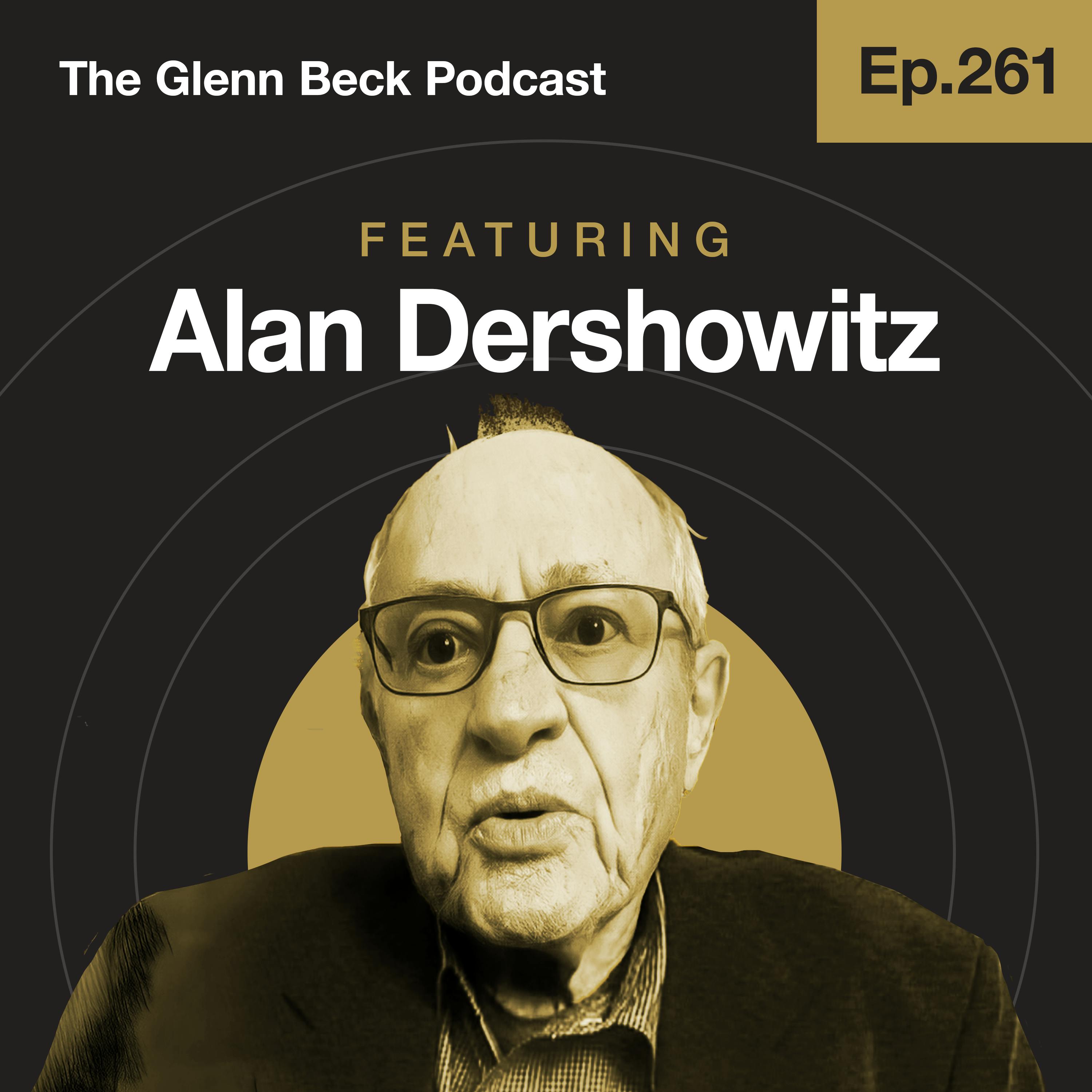
The Glenn Beck Program
Ep 261 | Epstein's Lawyer Makes SHOCKING CLAIM About Client List | Alan Dershowitz | The Glenn Beck Podcast
01:00:11
Loading summary
Transcript108 lines
- [00:00]
Glenn Beck
Amazon One Medical presents Painful Thoughts. I've been on hold to make a doctor's appointment for 23 minutes now. The automated voice has told me 47 times that my call is very important to them.
- [00:14]
Alan Dershowitz
Hmm.
- [00:15]
Glenn Beck
I'm starting to think that they don't think my call is important at all. With Amazon One Medical 24. 7 Virtual Care, you'll get help fast without having to remain on the line to make an appointment. Amazon One Medical Healthcare just got less painful.
- [00:32]
Podcast Announcer
And now, a Blaze Media podcast.
- [00:35]
Glenn Beck
Hello, America. You know we've been fighting every single day. We push back against the lies, the censorship, the nonsense of the mainstream media that they're trying to feed you. We work tirelessly to bring you the unfiltered truth because you deserve it. But to keep this fight going, we need you right now. Would you take a moment and rate and review the Glenn Beck podcast? Give us five stars and leave a comment. Because every single review helps us break through Big Tech's algorithm to. To reach more Americans who need to hear the truth. This isn't a podcast. This is a movement. And you're part of it, a big part of it. So if you believe in what we're doing, you want more people to wake up, help us push this podcast to the top rate, review, share. Together, we'll make a difference. And thanks for standing with us. Now, let's get to work. Joining me this week is one of the most celebrated lawyers in the world. He was the youngest full professor in Harvard Law School, Harvard Law School history, where he is now the professor of Law Emeritus. He is also the author of numerous bestselling books, including Guilt by Accusation and the Case Against Impeaching Trump. His latest book, the Preventative State, he says, is the most important book he's ever written. It takes a deep dive into the authoritarian tyranny that the left tries to enact on a daily basis. He is also the man with the most knowledge on the topic of every person in America that every person in America is dying to learn about. And that is Jeffrey Epstein. Joining me now.
- [02:03]
Podcast Announcer
Please welcome alan dershowitz@blinds.com it's not just about window treatments. It's about you. Your style, your space, your way. Whether you DIY or want the pros to handle it all, you'll have the confidence of knowing it's done right. From free expert design help to our 100% satisfaction guarantee, everything we do is made to fit your life and your windows. Because@blinds.com, the only thing we treat better than windows is you. Visit blinds.com now for up to 45% off site wide, plus a professional measure at no cost. Rules and restrictions apply.
- [02:48]
Glenn Beck
Alan, welcome to the program.
- [02:51]
Alan Dershowitz
Thanks for having me. I appreciate it. Nice to see you. Keep doing great things.
- [02:55]
Glenn Beck
Thank you. So, you know, with the shooting that happened this week in New York, I did a monologue right after the shooting where I said, you know, basically quoting Adams, this system is wholly inadequate for a immoral and irreligious people. We just have to have more and more monitoring, more and more laws, and that is not consistent with our Constitution and our way of life. I think, you know, there's so much mental illness I want to get into. What, what do we do to prevent, you know, that to stop. But also the red flag laws and your book, the Preventative State. Just the name of it scares the hell out of me, Alan.
- [03:42]
Alan Dershowitz
Sure. But it's intended to. Yeah, you know, I live just around the corner from where the shooting occurred. We live on 54th Street. This was on 52nd Street. I walk by that building every day virtually.
- [04:00]
Glenn Beck
So what's failing us?
- [04:07]
Alan Dershowitz
Well, what's, what's failing us is our inability to anticipate particularly what people who we don't understand will do to us. We have no way of comprehending a young man like this and what's going through his addled brain. It's just very, very difficult. And if we try to lock up everybody like that, we'll have a million people or more in prison. We used to have that. When I started doing my research on this back in the 1960s, there were more people in mental health detention than in prison.
- [04:43]
Glenn Beck
So that's one of the things I talked about is, you know, the President just said we need to put more people in through medicine, you know, mental health centers. And I remember what that was like in the 60s and 70s. I remember when Ronald Reagan, you know, shut those down and a lot of people went out on the streets and they. The state is not a good caretaker of people. I don't, I don't want to get back into that business with the state because it, that, that's a nightmare waiting to happen. Or is it? I agree, you do agree.
- [05:20]
Alan Dershowitz
We're, we're a country of extremes. We move from one extreme to the other. We moved from locking up many, many, too many people in mental hospitals, which became snake pits, to releasing suddenly onto the street without adequate concerns for how we might deal with them in a less compulsory manner.
- [05:40]
Glenn Beck
But what happened? I mean, you know, I remember when the streets, when Reagan first let people Out. And there were more, you know, mental, there was more mental illness on the streets. But it wasn't like it is now. I mean, you walk down the streets of any major city and it is, it's crazy central we're becoming in many cities. Gotham.
- [06:07]
Alan Dershowitz
Yeah. And people are frightened. I lived on the New York subways growing up. I went everywhere. For a nickel, you could go to Coney island, you could go to the Metropolitan Opera. The train, the subway was our life. Today, almost nobody I know takes the subway. They're terrified that they're going to be locked in this tin container with crazy people who will do crazy things. We saw what happened when this young Marine risked his life to try to save people on the subway. And he was charged with homicide. Fortunately, he was acquitted. But it took so much away from him to have to defend himself from that.
- [06:49]
Glenn Beck
So you talk about red flag laws in the book. Take us through that. Because that's something that people. This guy was known to be mentally unwell. So what's the problem with a red flag law?
- [07:03]
Alan Dershowitz
Well, there's no problem if you use the red flag law against somebody like that to make sure he doesn't get the gun. The problem is if you prevent everybody who has his symptoms from getting a gun, you're gonna interfere with the second amendment rights of ordinary have guns. So we have to strike an appropriate balance. And that's the difficult task that all governments have and that all governments fail. I, in my book, the Preventive State, I go through every conceivable issue of when the state steps in to take preventive action, ranging from mandatory inoculations to dropping weapons on nuclear facilities to trying to prevent climate disasters. And I would say the state never gets better than about a C minus in any of its activities. And you know, the goal of the preventive state is to move it up from a C minus to a B plus. We're never going to get higher than that. We're never going to get it perfect. We're never going to be able to create a situation where we stop all the potential killers without also confining lots of people that would never, never kill. We have to strike that balance. Look, this begins in the Bible with Abraham, argu with God. Can you imagine the scene? Here's Abraham, he meets his new God and he yells at him. He says in the Hebrew, Khalil alachah. It would be impure of you, it would be wrong of you. It would be unkosher of you to sweep away the innocent along with the guilty. How Dare you do that? What if there are 50 innocent people and then Abraham argues with God and gets him down to 10? But it's never perfect. It doesn't get them down to zero. God admits that you might have to confine 10 innocent people or even execute 10 innocent people to prevent the horrors of letting all those people go free. The people of Saddam.
- [09:06]
Glenn Beck
Right. Because we have always been a country that said, if you have to let 10 guilty people go for one innocent man, we've always been, you can't do that to the innocent guy.
- [09:19]
Alan Dershowitz
But yeah, we said it, but we haven't really meant it.
- [09:23]
Glenn Beck
Right.
- [09:24]
Alan Dershowitz
What we've done, you know, you tell a jury, look, if the guy is guilty but there's any doubt, you know, let him go free. Because it's better for 10 guilty to go free than one innocent to be wrongly confined. Most jurors are going to say, look, we want to know whether this guy did it. If he did it, we want to put him away. If he's going to do it again, we want to put him away for an even longer period of time. That's the way juries think. Yeah. You know, abstract philosophers sitting in Harvard's ivory towers couldn't write things like, better 10 guilty go free than one innocent be wrongly confined. But when you take 12 jurors off the street who have been on the subway or have been on the streets where crazy people are threatening them, they think a little differently than the abstract philosophers. Look, it was Thomas Jefferson who said, put a problem to a ploughman or a philosopher, and I'm more likely to go with the ploughman. Or Bill Buckley said he'd rather be ruled by the 101st people in the Boston phone book than by the Harvard faculty. And having been on the Harvard faculty for 61 years now, I tend to agree with him.
- [10:31]
Glenn Beck
Why? Why is that? What's the difference?
- [10:35]
Alan Dershowitz
Pure intellect of the kind that universities try to pick often do not include the most basic core comm. Sense. The reason your show is so successful is you're a guy who exudes common sense. You sit there and you talk, and everybody who listens to you says, we don't know what kind of grades this guy got in high school or college, but we recognize a man of common sense when we see him. And you exclude. Excuse. Exclude that you make it clear that you're a person who does things from a common sense point of view, and in doing so, you speak for the average American.
- [11:16]
Glenn Beck
It doesn't seem like we have any common sense left. I Mean, at least I don't know what it is. Ellen. I go all across the country and I meet people all across the country and people who disagree with me. But when they're regular people, they know this is right, this is wrong, this is right, this is wrong. And we're pretty close, lined up. Even if they vote differently, we're pretty closely lined up on what's right and wrong.
- [11:45]
Alan Dershowitz
I agree with you completely. I grew up on the streets of Brooklyn. All my friends were the sons and daughters of immigrants from Italy, from Ireland, from Greece, from even Norway, from Poland, from Germany. And we had different religious perspectives. We had different political views, but we all shared a sense of, we know what the heck's going on. Don't try to fool us. We can see through you. And that's kind of, you know, Brooklyn sensitivities and sensibilities that I think is very much closer to what people who grew up on farms and in rural areas have than what fancy people who grew up in high, you know, very, very high buildings with a close connection to the earth that they stand on.
- [12:39]
Glenn Beck
Yeah, I read something written in 1946 by. No, sorry, 1940, 43 by Dietrich Bonhoeffer. And he. He said that. I'm horribly paraphrasing, but basically, stupidity is the problem. It's. It's. It's. It's the stupid of the world. And he didn't mean not intellectual, not educated. He meant the people who had just assigned their critical thinking to someone else, to some ideology, or just stopped thinking. And he said, there's no way to argue with the stupid because they're no longer thinking or questioning.
- [13:26]
Alan Dershowitz
It's so interesting. I'll tell you a fascinating story about a man who you and I both admire. His name was Antonin Scalia, great Justice of the Supreme Court. And he and I were sitting with a glass of wine at a bistro not far from where in Jerusalem, not far from where Jesus had been crucified. And we both had a glass of wine, and we were good friends. And I said to him, nino, you know, you're the smartest guy I know in the world. I just don't know anybody smarter than you. Here we are right near where you say Jesus was crucified, buried, and then after three days, arose. I mean, how can that have happened physiologically? And I said, do you actually believe it? He says, I believe it with every fiber of my soul. I said, well, but you're so smart. How can you do that? He said, alan, you don't understand. When it comes to belief in Jesus. I am a fool for Christ. That was his exact words. Wow. I am a fool for Christ. I suspend my rational mind when it comes to my religious beliefs, he says. When it comes to everything else, it has to be completely rational, common sense. I will never believe anything like that about anything other than my deep faith in the resurrection of Jesus. And it was so different from the way I was brought up, but it was so enlightening and I really understood Justice Scalia better having had that wonderful conversation with him than I had ever understood any religious differences that I might have with people before. It was such a brilliant acknowledgment that there's one part of him that he won't subject to the kind of empirical, scientific null hypothesis analysis.
- [15:22]
Glenn Beck
More with Alan here in a second. When you think about preparedness, a lot of the time you focus on food, water and maybe a generator. But there is one critical piece people often overlook and that's medication. What happens if there's a shortage? What happens if prices skyrocket? It's not just a possibility, it's disgust. There's talk right now of a 200% tariff on some medications which would send prices through the roof and could get make get getting what you need a whole lot harder. Hoping it doesn't happen, but you know, we gotta do a little more than hope. You need to be prepared in case any of this stuff could possibly happen. This is why I love Jace Medical. They've made it really simple to protect your health and the health of your family. Their Jace case comes with 10 prescription antibiotics and other critical emergency medications and it's all in one easy, affordable package. And if you're looking to stay ahead of the potential shortages or price spikes, Jace daily lets you get up to 12 months supply of your regular prescription. So just go to jace.com enter the promo code BECK at checkout for a discount on your order. That's promo code becK-A-S-E.com Living with schizophrenia.
- [16:29]
Advertisement Announcer
Isn'T easy, especially when you're not getting relief from some of your symptoms. It can be hard when you're still dealing with symptoms like hearing voices or seeing things that aren't there, and negative symptoms like feeling unmotivated or avoiding social situations. If this sounds familiar, it might be time to talk to your healthcare provider and explore a different kind of schizophrenia treatment. Discover your possibilities@treatingscz.com Back to Dershowitz.
- [17:00]
Glenn Beck
Let's go to your book and let's talk about crime and the things that a preventative state can do or might do that might work out to not be in humanity's best interest. What are we looking at? Let's just start with crime.
- [17:20]
Alan Dershowitz
Well, we start with crime. First of all, as Thomas Jefferson once said, in order to define what a crime should be, you have to think of it as somebody running while reading a book. Running while reading. And he has to be able to read the criminal statute, and he has to be able to understand it so that he can act on it. So the first thing we need is clarity, and we don't have it. We have these laws, these conspiracy laws, these RICO laws. Take, for example, the crime that was charged against Donald Trump failing to disclose hush payments and instead listing them as legal expenses. You know, I've been teaching criminal law 61 years. I don't understand the charge against them. I simply don't understand it. And the first thing you have to have the law to work is, is absolute clarity. The law has to be written in simple terms. There's a story about an old emperor back in the day who was told he had to write the laws, but he wrote them in a hand so small and put them so high that nobody could read them. And that's the way tyrannies work. If you know what's illegal and what's illegal, if you know where the line is, at least you can do the Hamlet soliloquy. To be or not to be a criminal. I'm now crossing the line to criminality. But too many people cross that line inadvertently and accidentally. So the first thing we need is clear laws, and we need laws that are preventive in nature. For example, let me give you why do we prohibit good drivers from driving 120 miles an hour? They might not ever crash. But we want to prevent crashes. And so we reduced the speed limit to 70 in an effort to prevent. Now, the vast majority of people who go over 70 would never, ever have an accident, but some will. So we set a law. We pick a number. It's 70. And that's kind of a metaphor for how we have to decide what to prohibit and what not to prohibit. There are so many examples of. Of how we over legislate and also under legislate.
- [19:48]
Glenn Beck
So give me some over and then give me some under.
- [19:52]
Alan Dershowitz
Okay, yeah, easy. So prohibition was over, you know, between 19, what it was at 18 and 1932. We went into people's living rooms and bedrooms and told them they couldn't have a brandy after dinner, even though the vast, vast, vast majority of people who would have a drink wouldn't do anything, wouldn't do anything wrong. And we learned our lesson. And after realizing that Prohibition caused more crimes than it stopped, we, for the only time in our history, eliminated a constitutional amendment by another constitutional amendment. The area where we've under, for a while used to under criminalize, perhaps, was the easy availability of guns. We've now made it much harder, obviously, and we've had to compromise the Second Amendment to do that, just the way we've had to compromise a little bit on the First Amendment. When it comes to, you know, Congress shall make no law abridging the freedom of speech. Well, maybe some laws, if you incite people to immediate violence, even though it's by your words, maybe you can be prosecuted.
- [21:10]
Glenn Beck
So that is. But that is not as far as where I think people think that line is. You know, hey, you can't cry fire in a crowded movie house. Well, actually, you can, but if you cry fire, because I've done it on stage several times, unless it immediate incites violence and death, well, that's a pretty narrow path. It's not what everybody thinks it is. It's still very narrow.
- [21:40]
Alan Dershowitz
I think that's right. And I make a prediction here. I think in the next half a century, we're gonna see a little bit of a cutting back on that theory. I don't think people are gonna be allowed to engage in free speech that endangers human life under the standard of incitement to immediate violence. That. That test may not have worked. And it's the virtue of the Supreme Court and its vice at the same time that it can do things and correct its mistakes.
- [22:18]
Glenn Beck
So wait, so where do you think it should be?
- [22:21]
Alan Dershowitz
Well, I think it should be incitement, but not too immediate. Should be incitement if you.
- [22:28]
Glenn Beck
Boy, Allen, that scares the hell out of me because I have been blamed for the shooting on Gabby Giffords. I have been.
- [22:38]
Alan Dershowitz
But you haven't. You haven't incited that.
- [22:40]
Glenn Beck
No, but it depends on who's defining. It depends on the power shift. You know what I mean, what court it's in, et cetera, et cetera.
- [22:52]
Alan Dershowitz
Look, there are risks on both sides or to move it to the international. Look, we made a terrible mistake in 1935 by not attacking Hitler when he was still vulnerable while he was violating the Versailles Treaty. We were afraid that if France and England attacked Hitler, it would cause 10,000 deaths. And it probably would have caused 10,000 deaths, but it would say 50 million. 50 million lives. So we made a terrible mistake there. We probably made a mistake before 911 in not doing more to try to predict that kind of use of airplanes against us. And then we made the opposite mistake afterward. We went into Iraq when we should have gone into Iran. After the Second World War began. We put 110,000 innocent Japanese Americans in detention centers. That was an overreaction to the mistake we made in not being able to predict and anticipate Pearl Harbor. So we pay a heavy price. In the book the Preventive State, I argue that when we fail to stop and we fail to prevent a mass casualty attack, often we will overreact. People believe that Israel is doing that. Now. I don't happen to share that people believe that because Israel messed up and didn't prevent October 7, where innocent people were killed and 250 of them were taken captive, that now they're overreacting in Gaza. Well, you can agree or disagree with that, but it is clear that there is a relationship between the failure to prevent and taking extraordinary actions after the fact. So from every point of view, it's better to prevent if you can do it. Grandma was right when she said a stitch in time saves nine.
- [24:55]
Glenn Beck
I don't even know what that phrase means anymore, so maybe you can explain it. I know my grandmother used to say it, but I don't remember what it even means. But you know, you're. We're looking at a place and I'm. I'm not a conspiracy theorist. I actually have railed against conspiracy theories. Unless it's likely that there is a conspiracy going on, which it sometimes is. Sometimes it is. And it's. It's hard not to see the, the movement of the Uber left. I'm not talking about your regular Democrat. I'm talking about the Uber left in a way that it looks like the more chaos we can have on the streets, the better. Because then the. The regular people will rise up and cry out for more restrictions and you get a totalitarian state. I mean, it's what happened, I think. Was it Hungary?
- [25:53]
Alan Dershowitz
Yeah, the Bolshevik came up with that 100 years ago.
- [25:57]
Glenn Beck
Exactly right.
- [25:58]
Alan Dershowitz
The theory of the hard left, from the beginning create. You think the hard left really cared about civil rights in the south or gay rights? Now they don't care about any of those issues. They only care about getting people riled up in order to go against the government. And that's what we're seeing now. And that's why I left the Democratic Party. I cannot be in a party that features AOC and that features so many of these other radical left wing extremists that want to essentially overthrow the United States government and substitute what they call democratic socialism, but ultimately is Bolshevism. There's never been a successful democratic country. Ask the people from Venezuela that are pouring into our shores now want to come to America, hate Venezuela. Ask all the people from Cuba about the success of Mamdani's approach to socialism that he wants to bring to New York. And that's what we have to prevent now.
- [26:59]
Glenn Beck
But it seems as though, for instance, let's just go again to violence on the streets. And everything is so extreme that it is. There is this pull towards a preventative state. There's a pull towards, you know what? Shut it down. And that is, that's that I'm afraid in some cases could be on the horizon to where.
- [27:27]
Alan Dershowitz
No, I agree. Why I wrote the book. Now I've been working on this issue for. Since I started teaching more than 60 years ago, trying to figure out what the right formula is. And ultimately, at age I'm now going to be 87, in a short period of time, I decided I had to finally write this book and put it out as my magnum opus because we're living in such a terrible, dangerous time where the risks and the choices are between anarchy and authoritarianism. And I don't like either of those.
- [28:02]
Glenn Beck
I don't either. Nobody. I don't think the average American does. But they're not being presented with any information that says there's any other option. And I don't know what the other option is other than self control and self regulation.
- [28:19]
Alan Dershowitz
Yeah, I think politically the other option is to move toward the middle. And we had great people like Joe Lieberman who were doing that, who tragically died too young. But we don't have Joe Lieberman and people like that and Pat Moynihans and people who are prepared to cross party lines in order to bring us to the middle. The vast majority of Americans are common sense centrists, but the, the political system, particularly the primary system, where few people vote and you can get AOCs elected and other radicals, the primary system exaggerates, I think, the extremism of our country. And if you get a candidate like, you know, you could love them or hate them, but both Bill Clinton and George W. Bush represented the center of both parties and that's why they did so well. We thought Barack Obama, many people thought he represented the Senate. I was fooled into thinking that and I rejected him after his first term. But it's very hard to get people to vote in the center. People like it's kind of exciting to vote for extremists on both sides. And that's what we saw happen in Europe in the 1920s and 30s.
- [29:40]
Glenn Beck
So help me out because I've been called an extremist forever and I don't think I am. I am.
- [29:46]
Alan Dershowitz
You're not.
- [29:49]
Glenn Beck
I am extreme for the constitution. I'm extreme for civil rights. But you have people who are constitutional. When Mike Lee is known in the state of Utah as an extremist, something is wrong.
- [30:09]
Alan Dershowitz
Before he was born, Mike Lees father was my co clerk on the United States Supreme Court in 1962. His name was Rex Lee. He was one of the greatest lawyers of our day. He died too young and he was a Mormon and I was an orthodox Jew. So we both had restrictions on what we can eat and drink and so we always had lunch together. I wouldn't buy bacon and we were really good friends. And then when Mike Lee became a senator, I thought he was great. I mean because he put the constitution before everything. And you know, when you put the constitution first, it sometimes leads you to extreme views like you need to have incitement to direct violence before you can prohibit speech. Perhaps you can't require people to inoculate themselves when the risks of pandemic side effects are too high. There are all kinds of conclusions that the Constitution mandates that we might think. Or you have to let a murderer go free. A murderer go free if the search wasn't properly done. That's an extremist view, but it's in the Constitution.
- [31:26]
Glenn Beck
And without that, if we're not basing, if we're not basing our views on that, then what are we basing it on? And we're just.
- [31:35]
Alan Dershowitz
Well, you know, for people you can base it on the Bible. For constitutionalists you can base it on the constitution.
- [31:42]
Glenn Beck
For Bible was. I mean, you know this Alan. The bible was the most quoted book out of everything they read. It was like 28 or 32% of everything that came out of the Constitution came from the founders and their understanding of the Bible. I mean it's rich with bible.
- [32:02]
Alan Dershowitz
Oh there's no question about that. You just look at when I was bar mitzvahed at age 13. You are Bemisphit in a certain week and the week that I was bar misfit on had the portion of the Bible which dealt with justice and strucks the judges two things. Justice. Justice must you pursue and do not recognize faces which means no affirmative action, no dei, no basic decisions based on your race or who you are. Or how rich you are or anything like that that's in the Bible. It goes back so many, so many years, and it's been tested and proved to be correct. And why do we say justice, justice shall you pursue? Why not just justice once? Because procedural justice is as important as substantive justice. Not only do you have to do it to be just, but you have to do it justly. And I think if we were to go back to the Bible, both the Old Testament and the New Testament, and read it more thoroughly and apply it, we would be in a lot better shape than the anarchy and kind of woke approach that we have today in so many areas.
- [33:19]
Glenn Beck
I know that Arkansas and Texas, and I think. I think Kentucky is about to come on to put the Ten Commandments. If people present them in a certain way and they have to go into the school classrooms and everybody's having a hard time with that. And I'm like, you know, you could look at those as biblical. You look at those as messages from God, or you can look at them as the basis of all civilization. That is the basis of civilization. If you want to say, no, God before me, well, maybe that's your car. Maybe that's your job. It doesn't have to be the God of the Old Testament, but that's the entire basis of who we are is a Western civilization.
- [34:04]
Alan Dershowitz
But the problem is, even the Ten Commandments is controversial. Five of them probably aren't. The last five. Thou shalt not Murder. Thou shalt not. You know. But the first five are a little, you know, controversial. Do not take the name of the Lord in vain. God damn it. I don't like that one. But, you know, if that's the way.
- [34:23]
Glenn Beck
You read it, if that's the way you read it, I mean, I read. I can read that in a way that says, you know, the Lord speaks with power. He creates. He speaks. So don't speak. I mean, the Lord's name and, you know, the way I view it is I am. Don't say things. Follow I am with something that is negative. Because your words will create whatever it is. So don't take his name in vain means, you know, to me, don't speak things into existence that are negative, are bad, that are not good.
- [35:00]
Alan Dershowitz
Personal ideology. But I wouldn't make it the law. Yeah, I wouldn't allow the state force that. That's why I'm not in favor of the Ten Commandments being mandated for schools. I am in favor of parents teaching their children the Ten Commandments and churches emphasizing that and private institutions Emphasizing that. But I do believe in the separation of church and state. I think that's good for the church and it's good for the state.
- [35:31]
Glenn Beck
How would you constitute, how would you ask, how would you answer Thomas Jefferson allowing the Senate in his day to be church on Sunday? Isn't that.
- [35:41]
Alan Dershowitz
Well, there's no question that we never separated church and state completely. Indeed, the very concept that Jefferson said is not in the Constitution. It was a letter wrote to the Baptist Convention. But Jefferson himself, as you know, was a deist and he rewrote the New Testament to eliminate the miracle. The Jefferson which today is used as the official Bible of the Unitarian Church is something that has endured. So, you know, the founders were interesting people. George Washington drove his wife to church every Sunday, but mostly sat outside and read while his wife went to church because he felt that the church was a little too restrictive. On the other hand, others and John Adams said every American will ultimately be buried as a Unitarian. And as you know, Unitarians believe in at most one God. So, you know, we have to have religious freedom. We have to have our own ability from the time we're sentient human beings to think through these issues. Jefferson's letter to his nephew Peter Carr is one of the great documents.
- [37:00]
Glenn Beck
The best changed my life.
- [37:01]
Alan Dershowitz
Reading that I have to tell you that should be taught in every school. Yes, talk about thing that should be taught in every school.
- [37:08]
Glenn Beck
Especially his letter, especially when it comes to religion. Horribly paraphrasing if there is a God, question with boldness even the very existence of God. For if there is a God, he must surely rather honest questioning over blindfolded fear that one line just changes everything.
- [37:24]
Alan Dershowitz
You are a scholar and I used to teach a course at Harvard Law School just on the letters of Thomas Jefferson. You know, Thomas Jefferson never really wrote any books. He wrote a book on Virginia, but it's mostly farming and stuff like that. But his letters, his collected letters are almost the most brilliant pieces of American literature. Constitutional history. They're better than the Federalist Papers. And I didn't think anything could be better than the Federalist Papers. But I used to assign my students at Harvard Law School to read his letters. His last letter, the one just before he died, on the same day that John Adams died when he was asked to speak at the commemoration, the 50th anniversary of the Declaration of Independence. His letter declining his ability to speak because he didn't have the physical energy to do it. But his letter was so brilliant and it talked about how the Declaration was intended not only for America. But to free the world of what he called monkish ignorance. Just accepting things because people said they would accept them. So we agree. I mean, Thomas Jefferson. And yet look at Thomas Jefferson. He was a sinner. He did terrible things in his own personal life.
- [38:40]
Glenn Beck
So did Martin Luther King. That doesn't make him bad, it makes him wrong in certain areas. But we're all on the road somewhere or another to write.
- [38:50]
Alan Dershowitz
Okay, well here let me make a point that you might disagree with. I wrote a book called the Genesis of Justice about the Bible. And I say the difference between the Jewish Bible, the Old Testament and the Christian Bible is that the Jewish Bible is filled with flawed characters. Practically everybody in it is screwed up in some way.
- [39:09]
Glenn Beck
Always.
- [39:09]
Alan Dershowitz
You know, there's no perfect people. Then you get to the New Testament and there's Jesus, who could be a more perfect person than Jesus. He doesn't everything right. And so you have these two Testaments really having a very different view of the perfectibility of man.
- [39:29]
Glenn Beck
No, but you know what, I would disagree. There's only one character like that. The rest of them are, I mean, look at Saul Paul. He's so deep, he was killing the people that he suddenly said I'm gonna protect. I mean, deeply flawed. And I think that's, I think that's the beauty of it is none of these people.
- [39:52]
Alan Dershowitz
That's why I think it's so important for Jews to read the New Testament and for Christians to read the Old, study the Old, because we each can learn from each other's big time point of view. And both Bibles, by the way, engage in prevention. The Old Testament obviously talks about, in extreme terms about what you deal with, how you deal with a recalcitrant child. Stone him to death because he's going to grow up to be a criminal. That's in the ultimate. And Jesus saying to the people, he who was without sin cast the first stone. There are so many great lessons to be learned for each religion from the other's religion. And so I agree.
- [40:39]
Glenn Beck
Then I think Christians, I think Christians really miss the. Daniel Lapin is a friend of mine and he's always said to me, everybody needs a rabbi. And I think that's true. You read the Old Testament with a rabbi or somebody who actually knows it in Hebrew and it's completely different. The depth of it is just never ending.
- [41:03]
Alan Dershowitz
No, I agree with you. And I used to teach courses, non credit courses at Harvard on the Bible. Both the Old Testament, New Testament and the Quran course was called the Scriptural Sources of Justice. And A lot of what's in my book, the Preventive State. Remember I was a yeshiva boy. I grew up for 12 years studying Bible, Talmud, never eating an Abisco cookie because it didn't have the magic U that certified that it was kosher. I was, you know, a very law abiding, strictly orthodox Jew. So I know I'm not a rabbi, but almost all my uncles are. I study this stuff very carefully. And I don't think I ever taught a class in law at Harvard where I didn't make a reference to the Bible, to rabbinical teaching, to St. Augustine, to some religious source because of the 5,000 years of human sensibility. At least half of that, most of the intellectual material came from the church or from the synagogue, the mosque. So to ignore all that in the name of separation of church and state is ridiculous. So in the Preventive state, I borrow a lot. In fact, the last chapter is explicitly about the religious view of prevention. So if people are interested, go there, go there. One commercial for my book. So this is the best book I've ever written. I've written 58 books. Most important book I've ever written. The New York Times reviewed every one of my books until I defended Donald Trump on the floor of the Senate. Then it cut me off completely. The New York Times will not review this book. Has not reviewed any of my books since I defended Donald Trump. I have been banned from speaking at 92nd Street Y at various other places. And if you want to get even with these censorial people, go on Amazon and buy my book. I think that's the best way for Times. We don't care what you review. We care what's on the Glenn Becky.
- [43:05]
Advertisement Announcer
Sixteen years from today, Greg Gerstner will finally land the perfect cannonball. Epic splash, unsuspecting friends, a work of art. Only possible because Greg is already meeting all these same people at AARP volunteer and community events that keep him active and involved and help make sure his happiness lives as long as he does. That's why the younger you are, the more you need AARP. Learn more at aarp.org local.
- [43:34]
Glenn Beck
I will tell you, you'll have a very hard time getting on the Times list too. I mean, I, I was, I think, 4,000 books more than what they put at the number one on one of my books and I made it to number 14. I just made the list.
- [43:58]
Alan Dershowitz
Seven times before I defended Trump. My book Chutzpah was number one in the whole nation and my book Case for Israel was on the list for quite Some time. But since I defended Trump, I could sell a million copies. They won't put me on the list. They'll figure out some way of making sure that it's not sufficiently broad or something like that. So we have to fight back against that kind of censorship.
- [44:22]
Glenn Beck
Can we go to something that I think is pretty controversial, and that is you. In. In your book, you talk about, you know, there might be a case to have people, you know, be forced to take an injection if there is. If there's a, you know, pandemic. I think we've seen this, and it. It's. It was horrible. It worked out to be horrible.
- [44:56]
Alan Dershowitz
No, look, I agree. It's a tough problem. George Washington wrote to his troops in the middle of the Revolutionary War saying, we're not going to lose this war to Britain, but we may lose the smallpox. And so every single soldier has to be inoculated. In those days, by the way, the inoculation was very dangerous.
- [45:12]
Glenn Beck
Oh, yeah.
- [45:13]
Alan Dershowitz
All it was some smallpox from some people, some pus, and put it in a needle and inject it into you and hope that you would get only a small case of smallpox, not a big case, but every soldier had to do it. Of course, that's not a paradigm for citizens. Remember, the president is not the commander in chief of the people. He's only the commander in chief of the armed forces. And so I would not be in favor of compelled mandatory inoculation, except if we had a situation where the risks of spread of the disease was so great that it really endangered the future of the country. But the standard would have to be much higher than it was, for example, during the COVID What is the standard?
- [45:58]
Glenn Beck
What is the standard? Then we were told that millions were going to die.
- [46:04]
Alan Dershowitz
Yeah. It has to be very high. And then the question is, who decides? Is it a legislative. Is it an executive decision? Does the Supreme Court get to play a role in it? Who decides is the hardest question in democracies. It's a question I pose throughout my book the Preventive State. When you have this balance of avoiding too many false negatives and avoiding too many false positives, avoiding too many people who are improperly imprisoned and too few, you gotta make a decision. But who's gonna make the decision? Is it something that the legislature makes? And does it make it in broad terms? Is it something the executive authorities make? These are very, very hard decisions.
- [46:46]
Glenn Beck
You don't really present the answers in your book. You present. There are no answers. Yeah.
- [46:51]
Alan Dershowitz
The purpose of the book is to open a dialogue. Nobody has ever written a systematic book about the preventive state before. And so I raise all the questions, all the hard questions, and I provide some tentative answers, but they're only tentative because you have to make the decision as to where the ultimate decision gets made. I think ultimately it has to be made by the legislative branch. But, you know, the legislative branch of our government has not proved its ability to make the these hard decisions. So so many of the decision making authorities have been taken over by the executive. Look at President Trump's first half a year in office. He has taken more power than any president since. Only two before him really have taken more power. Jefferson, early on when he bought Louisiana and did all those things, and Franklin Roosevelt, Lincoln. But that was wartime Wilson. But Trump, Clinton didn't do that.
- [47:50]
Glenn Beck
No, Wilson, Wilson, Wilson, Yeah.
- [47:53]
Alan Dershowitz
No, Wilson did. But of course, that too was wartime. World war. But for a peacetime president, more or less peacetime President Trump has taken more power than any other president in history. And so far, he's done a pretty good job on most of these issues. I have some quarrels with, with some of his priorities on immigration and some of the priorities on health care, but certainly in terms of energy, no president has been more energetic in his first six months since, certainly since Roosevelt than President Trump, for better or worse.
- [48:32]
Glenn Beck
But is it lasting? I mean, one of the things conservatives say is until it is codified, until Congress acts and then he signs it in a bill, everything can be reversed, of course.
- [48:44]
Alan Dershowitz
And it would be. And look what happened with the Biden when Biden and Obama and the Treaty of Iran. And as soon as Trump came into office, he abrogated it. And the same thing would happen if a Democrat were elected three and a half years from now. We would see a lot of Trump's executive orders, particularly relating to immigration, rescinded. So legislation is much better. But legislation is hard. Even when you have both houses controlled by the Republicans and a Republican president, which makes the veto unnecessary, mostly, it's still hard to get legislation passed.
- [49:21]
Glenn Beck
So let me change the subject on this Epstein thing. Just will not go away. Will not go away. And you know, I was told by Kash Patel, I've seen the book, I know the book. I've seen the names. I've seen it there. I. That was before he was in office. Then when he gets office, I mean.
- [49:45]
Alan Dershowitz
I was his lawyer and I went to his academic seminars. So of course, when Ghislaine Maxwell said, alan, it's his 50th birthday, write something funny. I wrote something funny. I took cover of Vanity Fair and I called it vanity unfair. I don't know whether I did that or not. I don't remember. My wife says I would something like that. I asked the Wall Street Journal to send me a copy of my letter with my signature to authenticate and it. And they refused to. That raised the level of suspicion with me that they refused to send better so.
- [50:13]
Glenn Beck
But I now am to the place to where even if it existed, this thing has gone through so many hands, both Republicans and the Democrats. And you know, the one thing I'm certain of, if there was horrible things about any Republican, the last administration would have used it if it looked like Donald Trump was winning, of course.
- [50:37]
Alan Dershowitz
Oh, of course, yeah.
- [50:39]
Glenn Beck
So, but now we're, now we're talking about Maxwell possibly testifying. And I mean, how do you possibly believe anything she's gonna say when she is facing, you know, another 10 years in prison and would, I mean likely do whatever she has to do to get out of prison. And on top of that she's now petitioning the Supreme Court because she says she was caught up in the release for Jeffrey Epstein, that she wouldn't be held accountable for anything. And I don't know if that's accurate in more than one state. I mean, how do you read this?
- [51:22]
Alan Dershowitz
Well, it's very hard. First of all, you always need to corroborate anything that anybody who's in prison ever says. That's the basic rule. And I think the Justice Department lives by that rule. So what they're looking for is self proving evidence. They're not looking for name a name, they're looking for us give a document that proves that this person was on the island or something like that. So they're self proving evidence and I think Elaine Maxwell can give them that. I was part of the legal team that got the original deal for Jeffrey Epstein and it did include a statement that said the United States government will not prosecute any of Epstein's co conspirators. Now Ghislaine Maxwell was certainly a co conspirator. That's why she's in jail. And so the Supreme Court, if it grants review, probably won't because generally doesn't, but if it were to grant review, would have to deal with that issue. It's a very tough issue. Look, look, let me make two points that will be very controversial and you may disagree with them completely. Jeffrey Epstein was not a pedophile. That term has a specific meaning. It means people who are sexually attracted to prepubescent girls or boys. That is 1112 years old. That's the definition of all psychiatrists and of the law. Epstein was interested in 16 year olds, 17 year olds, 18 year olds. He was a bad person, did terrible, terrible things. The word pedophile is not a correct description of what he was. Number two, he was not a trafficker. Traffickers make money by selling and enslaving girls. What he did is he was a selfish guy who was having sex with all these sexual contact, at least with all these 16, 17 year olds, and maybe. Maybe lending them to people like Prince Andrew. We don't know for sure, but he was not a trafficker in the true sense of the word. That's why there's no client list. There were no clients. And the other.
- [53:21]
Glenn Beck
There was no money being.
- [53:23]
Alan Dershowitz
That's what I mean. Yeah. And the other. He didn't work for the Mossad. I know that because I debriefed him when I was trying to make a deal for him back in 2006. 7. And he would have told me if he had a deal, if he was working for the government, because it would have helped him get a. Get a clear, better deal.
- [53:44]
Glenn Beck
I will tell you that. Business Insider reported this week that four people have gone through every bit of it and they have come out and said he was clearly not intelligence. The idea that he was in intelligence was not said by the prosecutor in Florida, although it's attributed to him. It wasn't said by him. He said, I never said it. And it looks as though a. A newspaper took a quote from one anonymous sort that said, he's absolutely intel, he's deep with intel, and that's where that came from.
- [54:23]
Alan Dershowitz
So, no, I think it came from something else too. Ghislaine Maxwell's father, Robert Maxwell, probably was a source for intel. Yes, but I don't think that Jeffrey Epstein had any contact with Robert Maxwell. The chronology doesn't work. Maxwell died or was killed. Remember, he was on his boat and he's found Mediterranean. And he may have been an intelligence resource, we don't know. But that's what led people to say, oh, if Maxwell, then maybe through Ghislaine, he must have been too. If he had been in intelligence and worked for the government, the first thing he would have done is told his lawyers so that his lawyers could have used it to get an even better deal. He was furious at the deal, the sweetheart deal. He had to serve 18 months and get registered as a sex offender. When I helped him get that deal, he fired me, refused to pay my legal fees. And said I was the worst lawyer he ever had. Because he didn't think that was a particularly good deal. He wanted a better deal. He didn't want to have to register as a sex offender and he didn't want to have to go to jail. But he did.
- [55:29]
Glenn Beck
As they are saying, you know, release all the records, which I am for, release everything, open it all up. But I am also. I'm also torn. And it kind of goes to the theme of your book. We are such an irresponsible people that have just checked out. We don't. We don't ask critical questions. No critical thinking. If we see a headline that says so and so on the island, they could be there as a priest, you know, performing an exorcism on a tree or whatever, had nothing to do with anything. We would all say that priest is guilty because we would not look into it. We're too irresponsible, aren't we?
- [56:12]
Alan Dershowitz
Yeah. Let me give you two examples. There's a woman whose name is Sarah Ransom and she wrote 20 or 30 or 50 emails to the New York Post, a reporter named Maureen Callahan saying she had videotapes, literally videotapes of Bill Clinton, Hillary Clinton, Donald Trump, Richard Branson, all having sex with teenagers. So if you release that, that sounds terrible, but she then admitted she made up the whole story, that it was. There's no truth to it whatsoever. Or another woman named Maria Farmer who has blamed everybody. And it now turns out she's not only a complete liar, but she's a virulent anti Semite and Holocaust deniers. Her most recent tweet says, the Jews weren't killed, they killed all the Germans. And this is somebody who CNN puts on. CNN has put her on three or four times without revealing what a liar she is and what an anti Semite she is. So the people believe her accusations. And that's the problem. Unless you also reveal the credibility issues of the accusers, it would be unfair just to list the people who are accused without knowing that the accusers are people with long histories of lying. So that's why I'm in favor of everything being released. From day one, I wanted everything released. I've waived all my privacy rights, my legal lawyer client rights. I want everything out there so the public, even though I agree with you, the public will rush to conclusions, but at least everything will be out there. Right now we have selective releases which are unfair to everybody.
- [57:48]
Glenn Beck
Ellen, always good to talk to you. Thank you so much for everything you've done for the country over the years and for freedom and the Constitution. Appreciate it. God bless.
- [57:55]
Alan Dershowitz
Thank you so much for having me.
- [57:56]
Glenn Beck
You bet. Just a reminder, I'd love you to rate and subscribe to the podcast and pass this on to a friend so.
- [58:08]
Podcast Announcer
It can be discovered by other people.
- [58:10]
Alan Dershowitz
Bottom.