← The Glenn Beck Program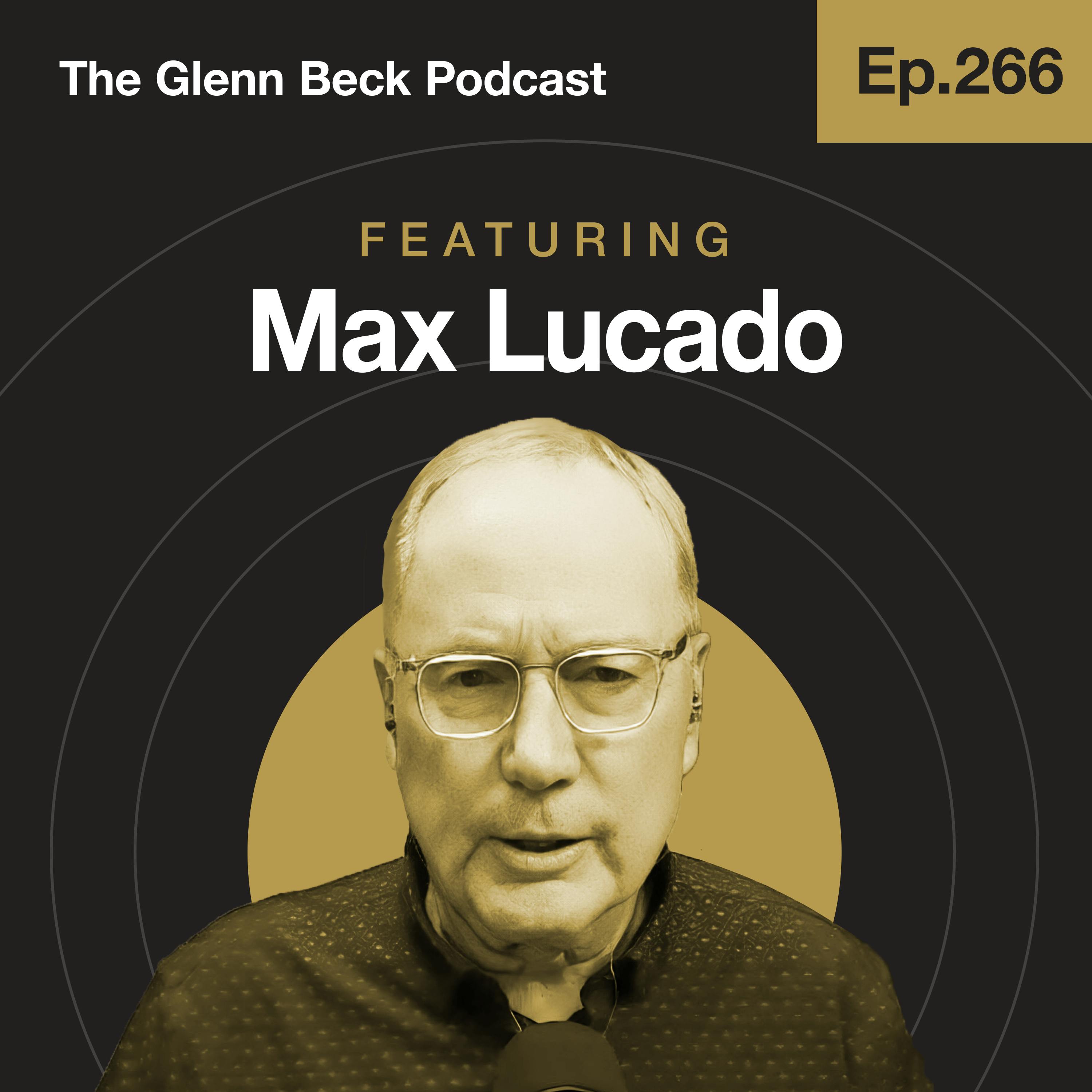
The Glenn Beck Program
Ep 266 | Max Lucado on Overcoming Grief in Dark Times | The Glenn Beck Podcast
01:20:19
Loading summary
Transcript123 lines
- [00:00]
Glenn Beck
Hey, it's Ryan Reynolds here for Mint Mobile. Now I was looking for fun ways to tell you that Mint's offer of unlimited Premium Wireless for $15 a month is back. So I thought it would be fun if we made $15 bills, but it turns out that's very illegal. So there goes my big idea for the commercial. Give it a try@mintmobile.com Switch upfront payment of $45 for a three month plan equivalent to $15 per month. Required new customer offer for first three months only. Speed slow after 35 gigabytes of networks busy. Taxes and fees extra. See mintmobile.com, and now a Blaze Media podcast. Hello America. You know we've been fighting every single day. We push back against the lies, the censorship, the nonsense of the mainstream media that they're trying to feed you. We work tirelessly to bring you the unfiltered truth because you deserve it. But to keep this fight going, we need you right now. Would you take a moment and rate and review the Glenn Beck podcast? Give us five stars and leave a comment. Because every single review helps us break through Big Tech's algorithm through to reach more Americans who need to hear the truth. This isn't a podcast. This is a movement. And you're part of it. A big part of it. So if you believe in what we're doing, you want more people to wake up, help us push this podcast to the top rate, review, share. Together we'll make a difference. And thanks for standing with us. Now let's get to work. Wars, rumors of wars. Political divides. Hatred over this, hatred over that. It's pretty much the cycle of news, isn't it? I mean, that sums it up. The way we think about our world, the way we think about ourselves, our lives sometimes isn't much better than that. I overslept. I didn't get enough sleep. I worked too hard. I sat around too much. I don't have this, I don't have that. I eat too much of this. The bills are due again. I'm such a loser. All of these things is common for all of us to think. But that's not how God made us to think. He gives us a choice. This week our guest has discovered how to reset our minds to factory settings. And it makes all of the difference in the world. Please welcome, for his third time on the Glenn Beck Podcast, best selling author, pastor and good dear friend, Max Lucado. This episode is brought to you by Progressive Insurance. Do you ever find yourself playing the budgeting game? Well, with the name your Price tool from Progressive. You can find options that fit your budget and potentially lower your bills. Try it@progressive.com Progressive Casualty Insurance Company and affiliates Price and coverage match limited by state law. Not available in all states. Max, you are. I mean, you're called America's pastor for a reason. I mean, you are right on the pulse, I think, of what is happening in the world. Last time I think you were on, were we not talking about end of days kind of stuff?
- [03:09]
Max Lucado
Yeah, yeah, yeah, yeah. We, we were talking about, you know, what. What the future holds according to a Bible, biblical worldview.
- [03:18]
Glenn Beck
Right, right. And. And I think a lot of people are going through is this what, where. Where are we in time? And I found it reassuring coming from you and that you could take us through is not somebody who is always saying, ah, the end of the world is here, because that's not really what it's about. And now, at least in my life, this book comes out. And you know, it's so funny because just two weeks ago I said to a friend, I've been wrestling with some things and I thought, you know, I wrote this down. This is how I have to start looking at things. Choose your thinking and change your life. And now your book. And it is exactly the same thing.
- [04:07]
Max Lucado
So it's the same idea.
- [04:08]
Glenn Beck
Let's get into this because I think this book is so important. Explain what your concept is.
- [04:15]
Max Lucado
Well, you just summarized it, Glenn, by the way. Thank you so much for the opportunity. But yeah, I, I really believe that we can determine our life by choosing our thoughts. And we do have the free will to select the thoughts that we have. Just because we have a thought, we don't have to think it. We don't have to believe everything we think. And so much of life just comes down to managing the thoughts. What we ponder, what we contemplate, what voice we allow to be. Go around and around inside our heads. That's really where our life is managed. I do believe that behavior is preceded by belief. And so if you want to change your behavior, go upstream a bit and deal with your beliefs. I'm glad this connected with you. I do. I think it's a struggle for a lot of people.
- [05:14]
Glenn Beck
Yeah, I think it's a. It's a way to reset a. Reset to factory settings in a way. I, I've been. I've been struggling to try to figure out because, boy, Max, my life is. I'm about. I'm making massive changes in my life. My kids are now all moved out of the house. We just let the Last one. Go. My wife and I just moved out of the house that was the kids, you know, childhood home. And, you know, I'm 62, and, boy, my mind is playing all kinds of games with me right now. And I'm thinking of things that I know are destructive. I'm thinking about the mistakes that I've made with my children and everything else. And. And I know that that is destructive. And I'm trying to figure out, why does that happen? Why are we like. Is that because it's a. It's a safety mechanism that we're always trying to look for the thing that might hurt us, and then it just spirals out of control. Is it also spiritual in nature? In nature. In nature. Why do we always choose the negative over the positive about ourselves?
- [06:23]
Max Lucado
You're not alone. I do the very same thing, Glenn. I've been at the same church since 1988. The church is doing wonderfully. We have. My successor is leading the staff. The church is growing. I preach, you know, a fraction of the number of times that I used to. I'm 70 years old. It was right, you know, to turn the leadership of the church. But Sunday morning, just a couple of days ago, I was sitting in the sanctuary. The place was packed, People were happy, young people everywhere. And what am I thinking? Oh, they don't need me anymore. I'm super, superfluous to this place. You know, I was. I just let my mind go down. So I have two answers to that. I'd love your thoughts. Number one, I do think it's a spiritual issue.
- [07:17]
Glenn Beck
I agree.
- [07:17]
Max Lucado
You know, the. The Bible talks a lot about thoughts. And there's a little phrase tucked in John 13 and verse two about the story of Judas that is often overlooked. And it's a little phrase. Satan placed the idea in the mind of Judas to betray Jesus. He placed an idea in the mind of Judas. And so I do believe there is a great God, a loving God, who care us, who loves us. But I believe there's an. A malevolent force, the devil who means us evil. And he places these thoughts in our minds. And, and that leads into a. A little more of a secular answer. And that is we all have proclivities to certain negative thought patterns. It might surprise people. I'm a bit insecure and, and. And I'm not surprised that Satan knows this and that he comes in a beautiful worship service in which I should be thrilled. And yet I allow myself to feel forgotten, neglected, because he loves to take our joy. What do you think, Glenn?
- [08:33]
Glenn Beck
I I agree with everything that you. You just said. I. I know. I mean, I gauge what I'm doing sometimes on the amount of level of attack I'm under, you know. You know, you're over the target when you're getting the most flack. I think Satan puts up his. His. His best spiritual punches at you when you are doing or about to do something important.
- [09:01]
Max Lucado
I agree.
- [09:02]
Glenn Beck
But I also. I also think there are these tapes that we grew up with, tapes that, you know, we heard from a childhood. You know, if I. I moved away from my home. Home at 18, and I moved across the country in a time when long distance phone calls were expensive and I was poor, my family was poor, I was poor, and I couldn't call. And I found, in retrospect, I find that time of my life so important because I didn't have the voice of others. I was no longer the little stinky brother. I was never. You know, I was allowed to be me and discover me. But at the same time, you know, we tell ourselves these lies over and over again. I'm fat, I'm ugly, I'm not smart, I'm. Whatever it is. And I can't figure out why that happens naturally to us, why we're attracted to the negative, other than it seems to be the way of the world with the Lord, the way he created us. Service to get me to do service is like pulling teeth until I'm there. And then I'm driving home and I'm like, why don't I do this every day? I feel so good. I know it, but it's hard to get there. It seems like the way we're designed.
- [10:26]
Max Lucado
I think you're hitting so many truths square on. I don't know which one to pick first. Maybe I'll start with what you said about our upbringing. We cannot overestimate. I'm sorry. Yeah. We cannot overestimate the importance that voices of authority have in our lives.
- [10:48]
Glenn Beck
True.
- [10:49]
Max Lucado
I mean, if it's a high school football coach, if it's a father, if it's a Girl Scout master, if it's an older sibling. But when you're young and you're so impressionable and somebody that is physically larger than you, older than you, perhaps, has a position over you like a teacher or a principal. And when they say things to you that hurt, those go deep. They embed themselves in our psyche, and it's. It's a. It's a challenge. In some ways. We spend all of our lives responding to the negative and positive voices that we hear. In our youth. That's why parenting matters. And that's why we have to understand that ultimately God is the only authority and people that we might have respected, they were limited in their understanding. And we even have to take their criticisms sometimes, especially take their criticisms with a grain of salt.
- [12:11]
Glenn Beck
You know, a friend of mine said, glenn, you want to understand how to be a parent. Imagine God as your literal perfect father, because you will see the pain that you have to go through for the best in the child. You'll see why they don't. He doesn't give you everything you think you want. He. You'll know how to discipline with true love and restraint. And I think that's true. But we look at our parents who are so flawed and at least until I started getting gray hair, you look at your parents in particular as people who. They're your parents. They're supposed to know better. And we're all bluffing. We're all bluffing.
- [13:08]
Max Lucado
Bluff, yeah, all bluffing.
- [13:10]
Glenn Beck
You know, and if we would just look for a higher. Instead of going to the experts, so called, go to the eternal pattern set by God, I think we're so much better off.
- [13:26]
Max Lucado
I agree 100%. And you're going through a lot of change right now in your life, it sounds like. And these times have changed. Relocating from one house to another, saying goodbye to our kids, wondering if we raised our kids, if we equipped our kids well. We tend to be our own worst enemy. During times like that. I came across some. Oh, go ahead.
- [13:53]
Glenn Beck
Go ahead. No, go ahead.
- [13:55]
Max Lucado
Well, Cleveland Clinic tells us, number one, that we have 70,000 thoughts a day. That's a lot of thoughts. Most of them don't matter, you know. Oh, I think I need to go to the restroom. Hey, I need to be sure and feed the dog. Oh, boy, it's hot outside. Most of them are neutral. But of those who have an emotional impact upon us, the Cleveland Clinic says, hang on to your hat. Four out of five are critical. Four out of five are critical. That is stunning to me. Our nature tends to beat ourselves up. Does that statistic surprise you, Glenn?
- [14:34]
Glenn Beck
No. And that's what I've been pondering. Why is that our nature? I mean, let me go back to something and ask you this question. I know what logos means, so I'm asking for a more of a surface answer. But in the beginning, there was the word, and the word was God to me. And especially if you understand logos, the living word that has power. All of our words, if we are. If we are truly sons or daughters of A heavenly Father. We have some, some of his power within us and his power comes from speaking it. And it becomes, and it's the one thing that we don't ever seem to concentrate on. We don't even pastors don't really connect that God creates through thought and word, not hammers and nails, thoughts and words. And it's the same with us.
- [15:34]
Max Lucado
Absolutely. I could not agree more. The 20. I was ordained in 1978 and like many pastors, I thought it was my job to tell people how to behave. And I would say, do this or don't do this. That was the essence of my work. Do this, don't do this. I was always focused on behavior. About halfway into my ministry of over all these years, it dawned on me that really the scripture always deals with belief before it deals with behavior. Someone pointed this out to me in the writings of the Apostle Paul that all of his epistles are dominated by at least 50. I'm sorry, 30% belief. And then the rest of the epistle will be behavior. Belief that God loves you, belief that you're saved by grace, belief that God will hear your prayers. He, he introduces his epistles by talking to our belief system, our thought system. He's, he's shaping a worldview. And then he begins talking to us about, you know, not getting drunk, about respecting one another, about telling the truth and all that's important.
- [16:58]
Glenn Beck
But, but it's easy. When you know who you are, you know the truth.
- [17:01]
Max Lucado
Absolutely, absolutely. Absolutely. Once you, once you have that belief system, once your worldview is healthy. One of the statistics I came across really stunned me and that is people who battled the HIV virus were asked, do you believe in the presence of a living and loving God? Those who said yes had a 300,000 times percentage greater odds of healing than.
- [17:38]
Glenn Beck
Those who said 300,000 times.
- [17:42]
Max Lucado
Thousand times. It was stunning. It's like the belief in a living and loving God activates something in our physical bodies, in our bodies that, that creates health. And conversely, the idea that there is no God, or if there is a God, he's ticked off at me, perpetually angry at me. That creates a, even saying those words can create a sense of heaviness in our lives. And so that's why I think if we're going to really tame our thoughts, we've got to begin to understand what thoughts it is, are best for us to think.
- [18:20]
Glenn Beck
So could I go secular here for you?
- [18:23]
Max Lucado
Absolutely.
- [18:23]
Glenn Beck
My, my father, he, he believed in God. He called God mind because he said if I say the word God, that is defined by each individual in their own upbringing and everything else. And it carries so much baggage. He says, so let's just. Let's just call it mind or universal spirit. And he said, let's look at it as an engine. And it works the same everywhere, all the time. And when I was really struggling in my 30s and I was sobering up, he said, I want you to keep a record of your thoughts. Keep a record of your thoughts just for one day. Take a notepad, put P positive on one side and on the other, put a line down the middle. And just don't judge the thoughts. Don't think of the thoughts. Just notice the thoughts and just count positive, negative, positive, negative. And I was overwhelmed with the negative. And he told me I would be. And he said, your problem is you are. You are building yourself, your life into what you don't. You say you don't want, but because you're thinking about that, that's the way you're perceiving everything, and that's what you're creating. And it's, It's. He said, you have to start thinking the other to believe the other. And I said, but, Dad, I don't. I don't believe any of those things. I do believe that I'm stupid. I do believe that I'm. Whatever it was. And he said, well, then you always will be. He said, you want to change? Then you have to say over and over, you got to say it 5 to 1. You have a stupid thought. You. You empower it on the other side, five to one. And he said, fake it until you are that. And I really didn't think that was going to work because I. Because I was saying things I didn't believe, you know what I mean, at the time? But there is something to that. It's. I mean, I believe it is the power of God within us that is creating. And this is the. The map of the. That engine he talked about. So I believe it is not secular. But you can understand it in a secular way, can't you?
- [20:42]
Max Lucado
Absolutely. And what is happening, Glenn, I believe, is that as you are speaking positive words to yourself, you are agreeing with that logos that you mentioned earlier. You're agreeing with the authoritative word that is spoken over the universe. Now, I, a person, can be absolutely secular, totally atheist, atheistic, and say things that God would say according to scripture and still benefit from them. You know, and instead of assuming this is going to be a terrible day, what if I get up and say, okay, I'm going to have a good day. Well, that is God's will for you and for me and for every person. He doesn't wish any evil upon people. And so when I say that even if I'm a secular thinker, I'm agreeing with that supernatural presence of God that's in the world and I am receiving his will in my life. Now, of course, as a pastor, that would encourage somebody. Jesus Christ is the only picture of God ever taken. He is the presence of God on earth. And so here's what he has to say about you. For God so loved the world that he gave his one and only son. So you're receiving the God's love into your life. And you were intended to lead a life in which you have harmony with him, harmony with others. And it all begins with the way that you think. And we know this by by the Garden of Eden story. When Satan tempted Eve, he just simply placed a thought in her mind. Did God really say and he just deposited that doubt. And that doubt spiraled into disbelief.
- [22:39]
Glenn Beck
Do you wake up every morning wondering how pain is going to affect your day? Michael from Connecticut used to, but not anymore. Let me tell you his Relief Factor story. Michael says he was dealing with elbow pain which made everything he used his hand and arm for really, really hard nothing. He tried work. So he started taking Relief Factor. Michael's elbow pain went away. His other aches and pains went away. And on top of that, he says, I just feel like I have more energy now. If you're living with aches and pains, see how Relief Factor, a daily drug free supplement can help you feel better, live better. Join the over 1 million people who turn to Relief Factor just like Michael. Call now. Try their 3 week quick start $19.95 less than a dollar a day. Don't let pain keep you from living the day the every day that you want to live the way you want to live it. Visit relieffactor.com call 1-800-for- relief 1-800-for- relief or relieffactor.com@blinds.com it's not just about window treatments. It's about you. Your style, your space, your way. Whether you DIY or want the pros to handle it all, you'll have the confidence of knowing it's done right. From free expert design help to our one satisfaction guarantee, everything we do is made to fit your life and your windows. Because@blinds.com, the only thing we treat better than windows is you. Visit blinds.com now for up to 50% off with minimum purchase plus a professional measure at no cost. Rules and restrictions apply. So let's go through some of the things you talk about. Anxiety, guilt, lust, being overwhelmed, pain. Let's start with that. I have noticed and I've really, I've really. I'm. I'm getting better every day at figuring this out, but I've. I've got bad back pain. I fell out of a two story window. I don't know when I. In my 30s. And it's just gotten to the point, Max, to where it's just, I can't take. I've gone to a doctor and the whole time and he said, I won't cut into you until you beg me. And I'm like, I'm begging, begging you now. And I have found. I have come to this place to where I thought I was a good. I was. I had solved the things that would lead me to be a man of good character. And pain can wring all of that out of you.
- [25:02]
Max Lucado
Yeah.
- [25:03]
Glenn Beck
And I'm trying to get a handle on how to deal with that and how to choose my thinking on that that will strengthen my character. So I'm not somebody who snaps at somebody.
- [25:20]
Max Lucado
Yeah, yeah. I would imagine. Can you that 9 out of 10 of people listening to this podcast could tell a similar story using a different part of their body. I just have a feeling that in my case it's a shoulder. I had a shoulder replacement surgery three months ago and. And it still hurts. It does. It woke me up last night, but there were days the pain was so severe that I found my thinking foggy and unclear. It's a real challenge, but I think it's the same.
- [25:59]
Glenn Beck
It's the same. Isn't it though, with like, with any kind of pain, Mental pain, mental anguish, you know, you're questioning, did I do enough for my kids? Did I do too much for my kid? All of that stuff just weighs down on you. So how do you get around that? How do you break that?
- [26:18]
Max Lucado
In this book, I unpack a couple of tools, three tools, actually, that are, I really think are helpful and. And one of them is to practice picky thinking. The scripture verse in the book of Second Corinthians says, take every thought captive. Every thought captive. So really the idea of standing at the entryway to the thoughts that come my way and determining, filtering out those which are unhealthy and receiving those which are true is. Is really essential. In this case, let's say, you know, that your back is really hurting. It's a fair thought. It's a true thought to Say my back is hurting. Would it be a true thought to say the second verse of that? I'm never going to get better. So there's where we have to filter. Yeah, my shoulder really, I mean, it sucks. It hurts, man. I can't. Oh goodness. In my day, I get it. Today is a little, is, is heavied with pain. But I have to interrupt the spiral on that and have to say, okay, I'm going to tell myself the truth. I'm going to practice picky thinking. I'm going to take that thought captive. And the rest of that verse says, make it submit to the authority of Christ. And the idea is to take a thought into the presence of God and say, God, I'm thinking that I really hurt. Now, that's true. But I find myself thinking spiraling or catastrophizing or assuming the worst. Is that from you or is that from the devil? And I know the answer to that. And that's where I'm trying to practice that discipline, Glenn, of interrupting that thought before it takes over and unfair advantage in my mind. Does that make sense?
- [28:16]
Glenn Beck
Yeah, it does. I, I, I look at it like I was very careful on saying how, you know, I was struggling with some of my thinking to, to rephrase it in. I'm really, I'm getting better every day at understanding some things that are troubling me. You know, being able to say things like that, you know, to say, I am really having a bad pain day, but I know something glorious is going to happen to me.
- [28:47]
Max Lucado
That's it.
- [28:47]
Glenn Beck
Because of this, something is going to happen. The Lord is not just saying, live with this pain. He is teaching me something. And it's really hard.
- [28:57]
Max Lucado
It's really hard.
- [28:59]
Glenn Beck
Yeah. We just have to find. Because he has a purpose for everything. I'm not saying he gives you pain. Our bodies give us pain. He created our body. He can heal our body. But sometimes he chooses not to heal our body for some reason. And then we have to find, you know, you. I find myself really having a hard time complaining about pain. When you just think of the nails being put into the Lord's hands, you know, my gosh, the pain that he went through, but he, he knew the good that would come out of it. And I think that's how he endured it.
- [29:36]
Max Lucado
Absolutely. For the joy set before him, he endured the cross. And Glenn, I think what you're saying is so spot on. I, I hope that we can transcribe this and make it required reading. Because what you're saying is this pain has A purpose. It's when we think our pain is random and meaningless that we begin to descend into a pit of despair. But if I can believe that, yes, I'm not. I'm not pretending. I don't hurt. I'm not glossing over. I'm not trying to be some Pollyanna. It really does hurt. But I really believe that God can use this. Maybe he'll use this to help me be more dependent upon him. Maybe I needed a reminder that I live in a mortal body and he's preparing me for something eternal. Maybe I needed a lesson on pain so that I can be more compassionate toward others. And see, that kind of thinking causes me to say, okay, it's. It really hurts. It's hurt for 12 hours. I was up all night. It's really hard. But Lord, I'm going to believe that you're going to use this either to shape my character for my good or so that I can be more compassionate towards someone else. And I trust that you hear me. Just like you said, Glenn, since Christ lived in a mortal body and experienced physical pain, then I can say, lord, I know you know how I feel and I ask you to help me. That's a far healthier thought process than one that would lead down into this quicksand of sadness and despair.
- [31:22]
Glenn Beck
I think that's Max. How you know it's true? I'm listening to you and I'm. I'm re figuring everything that has been going on in my life. And I think you know it's true. When. Because it's true that the truth will set you free. And that doesn't mean you're not going to have pain. That doesn't mean you're not going to have troubles. It's not going to. It doesn't mean you're not going to have regrets or whatever. But when you look at it that way, and you. When you were saying to me, because it will shape my character, it'll make me better. It's going to. Something good is going to come. I've been saying that to myself for a while, but when you just said it again. Authority figures. When you just said it to me and I heard it from you, everything in me changed. And I just know that it is true that the truth setting you free. I'm no longer. I don't have to be burdened by the crap that's in my head. The Lord is doing something with me that will make me freer and more like him. Does that make sense to you?
- [32:51]
Max Lucado
Absolutely. Absolutely. I think understanding the Sequence of these thoughts is really helpful, a tool that I use in my life and with others I call ufo. Ufo. And I'm not talking about aliens over Roswell, New Mexico, but I'm talking about how an untruth leads to a false narrative that leads to an overreaction, an untruth. The untruth would be God is this pain is a result of God's punishment to me. He's pissed off at me and my back hurts. That's an untruth, that's a lie. But that could be a thought in someone's head that then would lead to a false narrative. And that false narrative would be, God is against me, he's working against me. All the forces of the universe are against me. I'm all by myself. Glenn. A lot of people you see walking down the street, they have that kind of spiral going on in their head. And then that could lead to overreaction. You know, maybe I'm going to drink it away, maybe I'm going to spend it away. Maybe I'm going to exit life itself. You know, it could lead to an overreaction. So starting with that untruth and treating it with truth is really how we interrupt that cycle. And that's why understanding the truth that sets you free is so important.
- [34:29]
Glenn Beck
So U is under, under untruth, untruth. And then F is false narrative.
- [34:37]
Max Lucado
And a narrative is what we say to ourselves and the way we see ourselves. And that leads to an overreaction. An overreaction. So, and usually that's a type of outlandish reaction, a temper tantrums over unhealthy, unbudgeted spending anything trying to treat the pain, that only makes the pain worse.
- [35:02]
Glenn Beck
So let me try another. You're somebody who really believes in God, but you've dropped the ball on something. This is something that I think every parent goes through. But as my kids, I've been thinking we didn't read the scriptures every night. I knew that was important, important. And we didn't. And there were times that I cut the corners and there were times that I did this and I was tired and, and so you don't necessarily think God is mad at you, but the, the you, you have, you have this thought that I'm not worthy. That's your false narrative. You know, I wasn't enough for this situation. That's not true. You did the best you could. And then your false narrative is I'm not worthy. And then your outrageous action is deep depression, suicide, all of those destructive thoughts. Am I On the right pattern here.
- [36:07]
Max Lucado
Exactly. Exactly. And so to treat that the minute that untruth surfaces and you say I was a rotten parent, which I have a strong feeling you were not. But let's just say.
- [36:20]
Glenn Beck
But I think everybody kind of goes through that.
- [36:22]
Max Lucado
We all.
- [36:22]
Glenn Beck
Everybody.
- [36:23]
Max Lucado
I've raised three kids. I know it. Yeah, we all beat ourselves up. Right. We all could have done better. And that's true.
- [36:29]
Glenn Beck
Yeah.
- [36:30]
Max Lucado
Okay.
- [36:30]
Glenn Beck
Yeah.
- [36:31]
Max Lucado
So let me. Let me deal with that thought. That thought surfaces in my mind, and it says, you know what? I was a cruddy father. But rather than giving in to where the devil wants that thought to take me, what if I take that untruth and say, you know what, Lord? I fell short as a father, but I trust that you're a perfect heavenly father. And I believe what the scripture says, and that is that all things work for good, for those who love you and are called according to your purpose. And so I take that untruth and I turn it into a truth. And I say, lord, could you make up? Could you compensate? Could you. You're unbound by time. You can even minister in the past as well as the future. And I start think thoughts of faith, and that leads to a true narrative that says, all right, the story's not over yet. My kids, they're still. You know, they're still learning. They're still being shaped. And I did some things that were pretty good, dad Gummet. I did deposit some seeds by the grace of God. And then that leads to a healthy reaction. And that reaction might say, we're all still being created. We're all works in progress. God is. Loves those kids more than I love my kids. And so instead of freaking out, I. I trust. I release, and I trust. Does that make sense, Glenn?
- [37:55]
Glenn Beck
Yes, it does. It does. Let me. Let me take something else that I think a lot of younger people might be going through. I talked to a young woman last week, and she was telling me that, you know, she came from a rough childhood. Not rough, but a very tough childhood. She. Appalachia. And she worked so hard. Get out. And she went to school, and she did everything that she was supposed to do, and she had good grades and she worked hard. And then she got married to a guy she loved, and. And they've had children. And she's like, now I've done everything right, but now I'm stuck with this student loan. I can't get a job because that was. The whole college thing. Seems to her to be a lie. You know, I. I'm Trying to do the right thing, but we can't make ends meet. We're never going to be able to buy a house. We're never. And people just get bogged down in this place. And it's easy to see it now, Max. It's so easy to see how these. So easy to see how. I mean, I would not want to be 30 again in this environment. So you can see how it happens. How would speak to that person, how do you break that up? That it's because that leads to resentment and it leads to really destructive thoughts. And that this, that everything is against me and everything is wrong and it leads to, you know, the first rebel was Satan. Real rebellion.
- [39:29]
Max Lucado
42% of young people, high school age people today experience persistent thoughts of sadness and anxiety. And 22% have seriously contemplated suicide in six months prior to that particular survey. Now you're talking about somebody who's not a teenager. But that those statistics reflect that the day and age in which we live. And because we feel overwhelmed, we feel like we're facing overwhelming challenges. One of my favorite stories, I think one of the most popular stories in the whole Bible is the story of David and Goliath. Remember the shepherd boy who went up against the Philistine giants. And when you read that story, you might know that David only one time speaks about Goliath, but nine times he speaks about God. One time he speaks about Goliath and he calls him an uncircumcised Philistine. Not a very politically correct phrase. But then nine times he talks about the armies of the living God and what, who are you to come against the armies of the living God? And that phrase is repeated over and over and over. I think what David did there is an example for us, what we can do when we face these overwhelming challenges. Our own Goliaths. And that is we can be careful and say, okay, we are facing a giant, but my God created the heavens and the universe. He has solutions I know nothing of. But he does love me, he does care about me. And I begin to outweigh the thoughts of Goliath with many, many more thoughts of the goodness of God. That's why this whole idea of understanding that we do serve a living and loving God is so important. I, I can empathize greatly with your friend. I mean, the overwhelming challenges that she faces must feel like they're gonna toss her over the cliff. But it does no good for us to meditate on our misery. It does no good. It does us great good to meditate on the majesty of God because we contemplate him. We're kind of like Peter. Remember when he got out of the boat on the stormy sea and Jesus had walked on the water and Peter said, lord, if it's you, tell me and I'll come and walk. And. And Jesus said, come. Peter got out of the boat, he took a few steps, but then the scripture says he saw the wind and the waves and he began to sink. It's when we see the wind and the waves instead of Jesus that we begin to sink. But as long as our eyes are upon set upon him. And I know not all of our listeners today believe in Jesus. Understand that. And I'm not trying to do any side door evangelism here, but I am saying try. Try to set your mind on the idea of a God who loves you and knows you. Just try that. Talk to yourself. Allow yourself to entertain the possibility that there's a good God. Maybe you don't buy everything that preachers like me are always saying. I get it. But would you please at least consider the possibility that there's a living and loving God who has a great dream for your future and meditate on that possibility. Because Plan B stinks. If you stare at the wind and the waves, if you stare at the mortgage and the misery that's just going to suck you under. But if you'll open yourself up to the idea that there is a God who means you well and that you will never outrun his gr. Out sin his grace or outlive his love, I think you'll find that your heart and your mind begin to change.
- [43:28]
Glenn Beck
It's hard. It's. It's hard. Especially if you have. Especially if you've been raised one way or another. You know, I was raised Catholic and I didn't really believe in God. I realized I was 28, 29, 30. And I realized everything that I believed in God. I thought I had believed in God. But everything that I believed God was, I had just taken from somebody else. I'd just been told. You know what I mean? So none of it was personal. And, And I. I realized if God exists, he wants me to find him. He wants me to find Him. In fact, everything in the universe would be pointing to Him. You know, I thought of a. I thought as a dad, if I had my children and I for some reason needed them to be separate from me, but I wanted them to find me. I wanted them to know that I would exist. But I needed them to be on their own. I could make a round room that they were in where they didn't look like there were any doors or windows or anything. But I would be on the other side and I would be wanting them to find me. And so everything in that room would point to me. Everything would point to, yeah, there is a dad on the other side. All you have to do is X, Y and Z and, and you, you can find him. And so I, I took that and I dismissed coincidence. And then you find yourself, Max, in a place to where you will pile up all of these things. But then you're faced with a choice. I don't want to believe that. I don't want to believe necessarily that's true because it will change the way, It'll change my friends. It'll change the way I behave and I like doing some of the stuff that I do. You know what I mean? You'll come up with all these kinds of really stupid reasons, but it again comes down to a choice. You can investigate and investigate and investigate and do nothing, or you can investigate and really then make a pact with yourself before no matter what I find, I will pursue because I will find the truth. I am designed to find the truth. I have to do a lot of work, I have to do a lot of meditating. I got to do everything. But I am designed to find that truth. But will you accept it in the end when you find it? And I think that's another hard place for people to get by.
- [45:59]
Max Lucado
It really is. We call that faith, you know, trusting that there is a father on the other side of the walls and he has planted these signs in the universe calling upon us to look to him, that he is up to something that's really good. This is why the big question of life is who is my authority? Who is my authority? You know, when I was a kid, and then in middle school, and then in high school, and even in college, I played catcher on the baseball team. In college it was a softball team. I don't want to leave the wrong impression, but the point is, I spent a lot of time squatting behind home plate. And whether I was on the Little League, Pony League high school team or the college softball intramural team, the width of the plate never changed, never changed. The size of the players changed, the type of ball we were playing changed. But the 17 inch width of home plate never changed. It was unchangeable. It was immutable. I believe the reason that many people struggle to maintain their thoughts is because they don't have a home plate. They don't have an unchangeable standard in their life. Through scripture, God reveals himself as that authoritative voice. He says, I'm not going to change. I'm always going to love you. I'm always going to care for you. I'm always going to strengthen you. I'm going to allow you to experience the consequences of your bad choices. Well, these are truths. These are like home plates. And if you don't have that, if you feel that your truth is your truth, my truth is my truth. Nobody knows any truth. Well, then you're left. You're like a weather vane whipped about by the winds of fate and chance. You're subject to the economy or to the most recent election, or to your emotions or to your shoulder pain or back pain, that your truth changes all the time. That's why I really believe that the secret sauce for managing our thoughts is a deep faith in the God of the Bible. Because whether I like the things he does or whether I don't like the things he does, I must submit to him because he's in charge. He's the authority. And the truth is his authority says he's going to make everything work out in the right time, in the right way.
- [48:35]
Glenn Beck
Why, Max, is it we? We know. I think we probably know less about space than we do know about the character of God. You know, there's, there's dark matter. We have no idea. Most of the universe is made up of dark matter. We have no idea what that is, no idea what it is. And yet we'll go out into space, we'll take that leap of faith, we'll open up the airlock door, we'll dance around in it, we'll do all of these different things that we've done in space. And it's easy for us to. Even though we know a fraction of a percentage of what we need to know about space, we go there and we can accept that, but we can't seem to open that door on God so many times.
- [49:21]
Max Lucado
Yeah.
- [49:22]
Glenn Beck
Why?
- [49:23]
Max Lucado
I think we're inherently self centered, Glenn. I think for me to acknowledge that God exists as the center of the universe is for me to confess that I am not the center of the universe. If I will refuse to bow before God, then truly that's an issue of arrogance and what's another word, self sufficiency. That the person who says I don't need God is a person who truly is battling pride. But for me to acknowledge that there is a God and it's not about me, but it's all about him and he is creating for Himself, a people with whom he'll live forever. And if I am willing to humble myself before him, literally to get on my knees, to bow my head, to open my hands, all these physical things we do as we worship, then that's the healthiest thing I can do for myself. The most unhealthy thing is for me to live the Frank Sinatra song and says, I did it my way. You know, I may have screwed everything up, but I did it my way. That, that, that's, that takes us down a path of destruction, but the path that takes us to health is that humility based worship.
- [50:48]
Glenn Beck
I, I don't think there's any. Well, there probably is, but just off the top of my head, I don't think there's any other trait that is more important to man and his survival mentally and physically than humility.
- [51:10]
Max Lucado
I agree.
- [51:12]
Glenn Beck
You agree with that?
- [51:14]
Max Lucado
I agree 100%. Glenn. The Bible says that God hates arrogance. He hates it. He doesn't just dislike it, but he hates it. Not, not because we don't have a right to feel proud about winning a football game or, or, or, or, or building a house. That's fine. But it's that arrogance that says, I don't need God. God hates that because that's what keeps us from him. Whenever we have this sense that people exist to serve me rather than I exist to serve God. We get things back, we words.
- [51:50]
Glenn Beck
It's also, it's, it's, it's not just that I don't need God. I don't need anybody else. I'm smarter than you. Yeah, I have the answers. I have it worked out. And so you're cutting every other possibility out. You're, you are the source of all that's right. I think that's one of the problems that we have with our political system right now on both sides is it is either my way or the highway. My guy is 100% right and you are 100% wrong. And if you don't agree with my guy 100% of the time, then you are 100% wrong and we stop listening to each other. And so there's no way to grow. You know, the one thing that is so obvious to me on what's happening in our world is look how different the Lord made all of us. And how could somebody expect that we all would come to an agreement on the political route, you know what I mean? On really, you know, you can have great dreams on how to build whatever, a widget, but when you get somebody else that is thinking along the same lines has the same goal of let's make somebody's life better. And this could be the deal. You put people like minded together like that that have wildly different concepts of how to get there. You learn from each other and then all of a sudden it locks in and, and you do something far greater than any of you guys could have done. And, and that's what, that's what arrogance stops. Arrogance stops the. He put us together for a reason. We're all different for a reason. My wife is very different than me, but she has made me a better man.
- [53:46]
Max Lucado
You're far more politically savvy than I am, Glenn. So I'm going to be careful and not step out of my lane. I've read stories, it may be nostalgic, as we always get, but of how Ronald Reagan and Tip o' Neill would meet and they would literally share and swap. Ide is. And they both became better political leaders as a result of that. Am I misremembering?
- [54:16]
Glenn Beck
No, you're not. But, but, but here's the thing on that. And you know, at that time we agreed on universal principles. And so I have. We didn't agree on policies, but we agreed on the big things. All men are created equal, endowed by their creator with a certain inalienable rights. Life, liberty, pursuit. We agreed on the Bill of Rights. And so we could make policies and disagree on policies, but we knew in the end we both were trying to enhance that idea. And so there are times when I know I can sit with anyone on a different political view if they agree with the Bill of Rights. Do you agree that all men are created equal? That there isn't a Lord that just should lord their viewpoints and tell us exactly what to do? And we all have to do it. We all have to think alike. If you believe in the Bill of Rights, we can come there. But if you know, it's. Can a pastor of a Christian church and a Jewish rabbi get together and do great things? Yes, because their principles are the same.
- [55:32]
Max Lucado
Exactly.
- [55:32]
Glenn Beck
Can I do that with an atheist? Or worse yet, a guy who is, you know, believes that Satan is the answer? No, I can't. I can't compromise. I can't. I can't come. I can't sit in a room and work together on anything because we're the exact opposite in our core. Does that make sense?
- [55:55]
Max Lucado
A hundred percent. Our worldview. So how do we so diametrically opposed that they can't come together? Yeah.
- [56:02]
Glenn Beck
And it's not that our, our policies, but it is our Principles, the things that actually nobody ever talks about principles anymore. They're talking about policies, they're talking about whatever they're talking about. You know, your truth is everybody's truth, and you just have to get along with that. Well, I can't, I can't. Because if you don't agree on scientific proof, if you don't believe that there is an eternal system, I don't know what it is. I can't tell you what God looks like. I can't tell you what faith he's telling us all to go into to. But I can, I can show you evidence that it looks like at this point, it's this direction. Now I can get onto the other side and he could, you know, he could surprise all of us and go, yeah, that's not me. But it made us a better person. And we were headed toward, we were on the road of. Right. Just, I don't know how far down that road we are. You know what I mean? Yeah, but how do we, how do we have these conversations? How do we get back to that tip o', Neill, with people who don't believe in those, in those basic principles?
- [57:13]
Max Lucado
How could a political activist, in other words, glean from someone who has a different policy than they do so that together they are better?
- [57:31]
Glenn Beck
That can happen.
- [57:33]
Max Lucado
Policies. I think it happens when it matters more that the country is strengthened, then my party is victorious.
- [57:45]
Glenn Beck
Correct. Correct. And that's a lost art. But the question is, those who do not believe that America is good should be strengthened. But to restart, how do you, how do you find yourself? We're so far off the beaten path here. I'd like to go back to God, but how do you, how do you get back to that? How do you get back to that person? How, how would you do it? If I said to you, hey, there's this guy over here who believes Satan is the answer, you would most likely say, I'll pray for him, but I, I'm not going to spend any time with him. What would you say?
- [58:24]
Max Lucado
I, I, I would like to think, Glenn, that I would say, let me take him out for a cup of coffee. And during that conversation, I would, I would do my best to listen to him asking questions like this. How did you come to believe the way you believe? How did you end up here? Well, you're right. And, and I would respect, I would at least try again. I'm not saying I would do it, but at least in this conversation, you and I. Yeah. My ideal response.
- [59:00]
Glenn Beck
Right, right.
- [59:01]
Max Lucado
I think I would say, how how did you come to believe what you believe and. And honestly listen to him and do my best to at least respect him if there's any chance of dialogue. It has to. It has to have one person saying, tell me why you think the way you think.
- [59:29]
Glenn Beck
That's humility, isn't it?
- [59:30]
Max Lucado
That's humility. Yeah. Yeah. I had a great friend back in the 90s. He's passed on into heaven now, an African American pastor. And. And he said, max, the best way that racial division can be overcome is with this question. And that question is, help me understand. Help me understand what it's like to be you. Help me understand. And he said, max, if. If you would ask me an African American, help me understand what it's like to be African American in this day and age. And if I would ask you, Maxim, help me understand what it's like to, you know, be a white guy in Texas in the 1990s. I think we could have a dialogue upon which we could build a good friendship. I agree that may be oversimplifying things, but I think it's. It would go a long way toward helping us have dialogue with one another.
- [60:36]
Glenn Beck
Let me go back to the idea of the book and our words and the power of our own words and changing our thoughts. I know a lot of. I know a lot of preachers really don't like the. I think they're called prosperity preachers. You know, where they're. Yeah.
- [60:51]
Max Lucado
Okay.
- [60:52]
Glenn Beck
And I look at those guys kind of as a gateway drug in a way that they stop just there. But it. Isn't it the same rule? Aren't they applying the same rules that you're talking about? They're just not going any deeper than that.
- [61:10]
Max Lucado
Yeah, I mean, prosperity gospel or prosperity preachers is kind of a big term that refers to a person allegedly, who says, God exists to give you whatever you want. And primarily financially. Financially, I do believe that God will bless us. I do believe he wants us to prosper. It's just that sometimes prosper could be in terms of a paycheck. It could also be in terms of patience. It could be in terms of a better living situation, could be in terms of a better relationship with my spouse. But he does want us to prosper, and it's okay for me. So it's just, Lord, I'm. I'm financially stuck. Would you help me? Because he does love us, but he may not. His blessings may come in another way.
- [62:05]
Glenn Beck
So it's really. The problem is, is expecting the outcome you desire.
- [62:12]
Max Lucado
That's it. That's it. Okay. Bingo. Which gets us back to that question of are we here to make a big deal out of God or does God exist to make a big deal out of Max? And if I think God exists to make a big deal out of me, then I'm going to be off balance. I'm going to be out of kilter. You know, we don't have the. The phonograph records are coming back, aren't they? I, I see them every. But I grew up, you know, in the 60s and 70s. We, that's all we had one time I bought a big album and a record and they somehow the hole didn't get punched. So I went and got my dad's drill and I tried to think where the hole would be. Of course, I had no way of knowing. And I put the album, put the record on the turntable and it was, wow.
- [63:03]
Glenn Beck
Oh, that's so funny.
- [63:04]
Max Lucado
It didn't work because I was off center. And. And the reason we make. We have to continually say I'm here to make a big deal out of God is that's a centered life. If I think God exists to make a big deal out of me, things are going to get oblong and distorted. And so that's why we have to keep coming back to that big idea that God has created a people for himself. He's giving us a choice. And I exist to Billboard to advertise to reflect his goodness.
- [63:38]
Glenn Beck
One final segment with Max coming up. First, when Moxie Pest Control started, it was 25 years ago, and their goal was to raise the standard. In an industry known for being kind of hit or miss. Moxie isn't just a pest control company. They're trained problem solvers, pest experts that believe that small gestures matter. Things like actually closing the gate behind them, you know, wearing shoe coverings in your house, leaving a note on exactly what was done, what to expect if it's not turning out, how to get ahold of them again. And they'll show up. They show up on time, they do the job right, and they stand behind their work because they believe peace of mind is not a luxury. Every Moxie technician trains daily on leading edge techniques. And that's not just for show. It's. It gives you the confidence that you're going to get the best results every single time. So whether you're dealing with ants or roaches or spiders or something stranger, Moxie's approach is not patchwork. It's strategic, personalized, and it's built to help you love your home again. Moxie Kind, committed, competent. They do the right thing for their customers, their team, and their community. And Right now, celebrate 25 years in business with Moxie. You'll get your first pest control service for just $25. Visit moxyservices.com beck moxyservices.com Beck. Use the promo code Beck. I remember one time, Tanya and I, my wife, we prayed and prayed and prayed about some business deal, and we were very clear, that's what God wants us to do. And we get into it and it's not working. Not working. And we are praying every day, what are we doing wrong, Lord? And just. And I said to her at one point, I said, maybe, maybe we were wrong. And she's like, do not doubt what you know to be true. You know, God said this. Maybe we should begin to wonder, does he really. Was that the outcome was our image of, hey, it's going to be a success? Is that what he was planning? Or was he just saying, it's going to get you right to the place where you're supposed to be? He doesn't care about our success or failure in that way because he knows he's built us to endure whatever it is. And I said, I don't like that answer. It's right. It's right.
- [65:57]
Max Lucado
Don't you hate it when your wife. Oh, yeah, that kind of stuff all the time. I was bellyaching one time about deadlines and people who didn't believe, who didn't take my advice. I just had a long litany of things. And finally my wife said, max, is God in the middle of this anywhere? Wow. I said, honey, wow. Only your wife say that to me.
- [66:25]
Glenn Beck
I know, it's so great. You know, you were saying something earlier about how our thoughts, we have to control our thoughts. And the first thing that came to mind was I get up in the morning and I get up very early and I'm. I go right to the show prep. My producers have worked all overnight, and they send me all these stories. And the first thing I do is I go online and I'm reading those stories. And I know at times if I'm not reading those stories, I get up and the first thing I do is I go to Twitter or whatever somebody said to me recently, glenn, you are. Before you even allow you to have your own thought on what today is, what's you have in front of you, decide who you are, decide how you feel. You are putting all of these thoughts into your head. And do you ever come back to it? Do you ever Come back and do a reset. And can you do a reset that, I mean, I think we're living in a time now more than ever that first thought has to be scripture. And prayer is more important than I think ever before because you said 70,000 thoughts. Imagine just scrolling how much many more we're having than we've ever had as a people.
- [67:50]
Max Lucado
Absolutely. And they're coming at us from all angles. I know a fellow who, who went through a terrible tragedy. He, he had a son die in a four wheeling accident. And this son had, I can't remember, three or four siblings. And the father had to call them one by one and tell them that their sibling had died. And he said, I, I, when they answered the phone, I said, I'm about to give you some of the worst news you're ever going to hear. But before I share it, would you think of five things you know about God to be true? I thought that was so interesting. He said, before I share it, would you think about five things you know of God to be true? And he said like God is love, God is, God cares. God is coming for us. God is involved in the world and he would help the child. But, and we're not talking about five year olds, we're talking about.
- [68:52]
Glenn Beck
Yeah, I know, I know, I know.
- [68:53]
Max Lucado
Teenagers and twenties. And then he said once they had, what's a good word, kind of marinated their mind in those truths. He said, now let me tell you some really horrible news. I've never forgotten that. Because we tend to do the same. Maybe the best thing we could do when we wake up in the morning, even if, if we only have three minutes right before we have to jump into the assignment of the day, maybe the best thing we could do is say, okay, here's know to be true about God and just reflect, meditate on that just a bit and, and then step into the day.
- [69:33]
Glenn Beck
It's, what he's done is he's, he's put a frame around the picture he's going to show you.
- [69:42]
Max Lucado
Yeah.
- [69:43]
Glenn Beck
You know what I mean? He's, he's asked you to build a wall. That picture cannot get bigger than it is. So you're containing that news by that frame. God loves me. You're so, you're not hearing it and spiraling out because what he just asked you to do was build that frame around it to hold all of those thoughts that could go way off the road. Hold it into place. I think that's brilliant.
- [70:11]
Max Lucado
Yeah, yeah, brilliant. You know this, this, this idea of choosing what our Authority is in life. That's just so essential, right? And again, if I. If I am subjecting myself to an authority, that's my drinking buddy or my football buddy or the lady I play bridge with, they don't know any more than I do. I need an authority who. Who is high above who. Who has been here again. This is why we treasure the teachings of Jesus, because by faith, I believe he is. He was God on earth and that he came with absolute authority to speak into my life. He is that home plate that allows me to make decisions even when the circumstances of life are. Especially when the circumstances of life are so difficult. I have to choose to believe who I'm going to trust.
- [71:14]
Glenn Beck
That takes me back to the beginning. And Max, it takes me back to a horrible thought about me. Boy, I am just a dim bulb because it's taken an hour for me to realize. When you first said we look for a voice of authority, and authority can change us, good or ill. Now as you're saying that, I realize the only authority that we should be looking for is God. The only authority that can. That truly can change us should be that voice.
- [71:47]
Max Lucado
Absolutely.
- [71:48]
Glenn Beck
It's not all that only in an hour.
- [71:53]
Max Lucado
But, you know, people. People turn away from God because pastors get immoral or involved in scandals. I see that quite often. And I have to. I try to remind them. I don't know if I succeed, but I try to remind them that the only authority is the pastor of that pastor, the good shepherd, our almighty God, our loving Savior, Jesus. And yes, that pastor screwed up. And I know you're brokenhearted and disappointed, but don't let the misdeeds of that person turn you away from the great deed of our God who came and lived on the earth and died for our sins and rose from the dead. That. Don't. Don't make that mistake. So we do have to be careful what authorities we choose to speak into our life.
- [72:43]
Glenn Beck
And can. Can. Can I ask you to expand on that just a little bit? Because I have found God uses really flawed men sometimes for his toughest assignments. And. And I think that's because the really good men have too much to lose. You know, they're worried about, well, I'm my church, and I've got this or I've got my business that I have to worry, whatever it is. And so they come up with an excuse of, well, I can't do that because I can't risk it. And so God just goes down a list of, okay, well, he won't. Okay, I asked Him. I asked him. I asked him. Okay, I guess it's your turn. And so you get these really flawed men, and we begin to. We can tell, I think, when someone has an anointing on them. For instance, let me say something controversial to the world, but not necessarily to conservatives. Donald Trump, I absolutely believe, is being used by God, but that doesn't make him the authority. He is still the man and can make gross, horrible mistakes, but he will have flashes. And he could have. The whole thing could be great, but he's not God. He is the first guy that God asked, that stepped to the plate, that could actually do it and would do it, would get back up after he was shot in the head. You know what I mean?
- [74:16]
Max Lucado
Yeah, I hear you. The story that comes to my mind is the story of King David kid. The kid was a shepherd. He was the youngest of eight sons. He was out in the field when Samuel came to anoint the next king. Jesse didn't even bring him in out of this field. I mean, he was such the runt of the family.
- [74:39]
Glenn Beck
Yeah.
- [74:39]
Max Lucado
And yet Samuel anointed him. And then when it came time for David to carry food to his brothers in the valley of Elon, Goliath was there. There. Nobody else would go up against Elijah Goliath. But David said, I'll do it. I'll do it. And so David was that guy who was the last one you would expect. And as long as he kept that mindset, Glenn, he did. Great Israel was blessed. Their land grew. The temple, not the temple hadn't been constructed, but the. But the. The faith of the people was blessed and their coffers became full of gold. But remember the sin with Bathsheba when he was up on the balcony looking out over the city, and he should have been out to battle with his soldiers, but he wasn't. And you see a different David. And it seems to me that David was pretty proud of himself. And when he was proud of himself, he fell into temptation. When he was humble before God, he could fight Goliath death. And so the anointing was on. On David to do great things. But when David was more impressed with himself than he was with God, then he did very few things and did bad things, in fact, very bad. Very bad.
- [76:05]
Glenn Beck
Max, I just. You're such a blessing to me, my family, and. And to everyone who has ever run across your path. I thank you for so.
- [76:14]
Max Lucado
I am. I am super honored to have a conversation with you. Glenn. I love you. I pray God's richest blessings upon you. I. I Always want to remind everybody I'm a converted drunk. The Lord had mercy on me and two of us. I celebrated leaving alcohol behind and pursuing Christ this last spring, Glenn, by getting a tattoo.
- [76:40]
Glenn Beck
50 years. I saw that. I was going to say you. He.
- [76:43]
Max Lucado
Yeah.
- [76:43]
Glenn Beck
What does it say?
- [76:44]
Max Lucado
No, it says tetelestai, which is the Greek word for it is finished. What Christ said before he gave up his spirit when he hung on the cross, it literally means it is paid. It is paid. And when I was 20 years old, I was such a mess. I didn't think God could forgive me. And I heard a sermon on grace that Christ paid for my sins and that changed my life. Life. And so I commemorated the 50 year, the golden anniversary of grace by getting a tattoo. The tattoo artist said, you're the first 70 year old pastor I've ever tattooed. I said, I'll probably be the last and I don't intend to go to another one. Yeah.
- [77:28]
Glenn Beck
God bless you. Thank you so much.
- [77:29]
Max Lucado
God bless you.
- [77:30]
Glenn Beck
God bless.
- [77:30]
Max Lucado
Thank you, Glenn. You bet.
- [77:37]
Glenn Beck
Just a reminder, I'd love you to rate and subscribe to the podcast and pass this on to a friend so it can be discovered by other people.