Podcast
The Glenn Show
Hosted by Glenn Loury · EN
Race, inequality, and economics in the US and throughout the world from Glenn Loury.
glennloury.substack.com
glennloury.substack.com
28episodes
Episodes
Newest firstAll episodes
TGS Live: Karmelo Anthony and the Content of Our Character
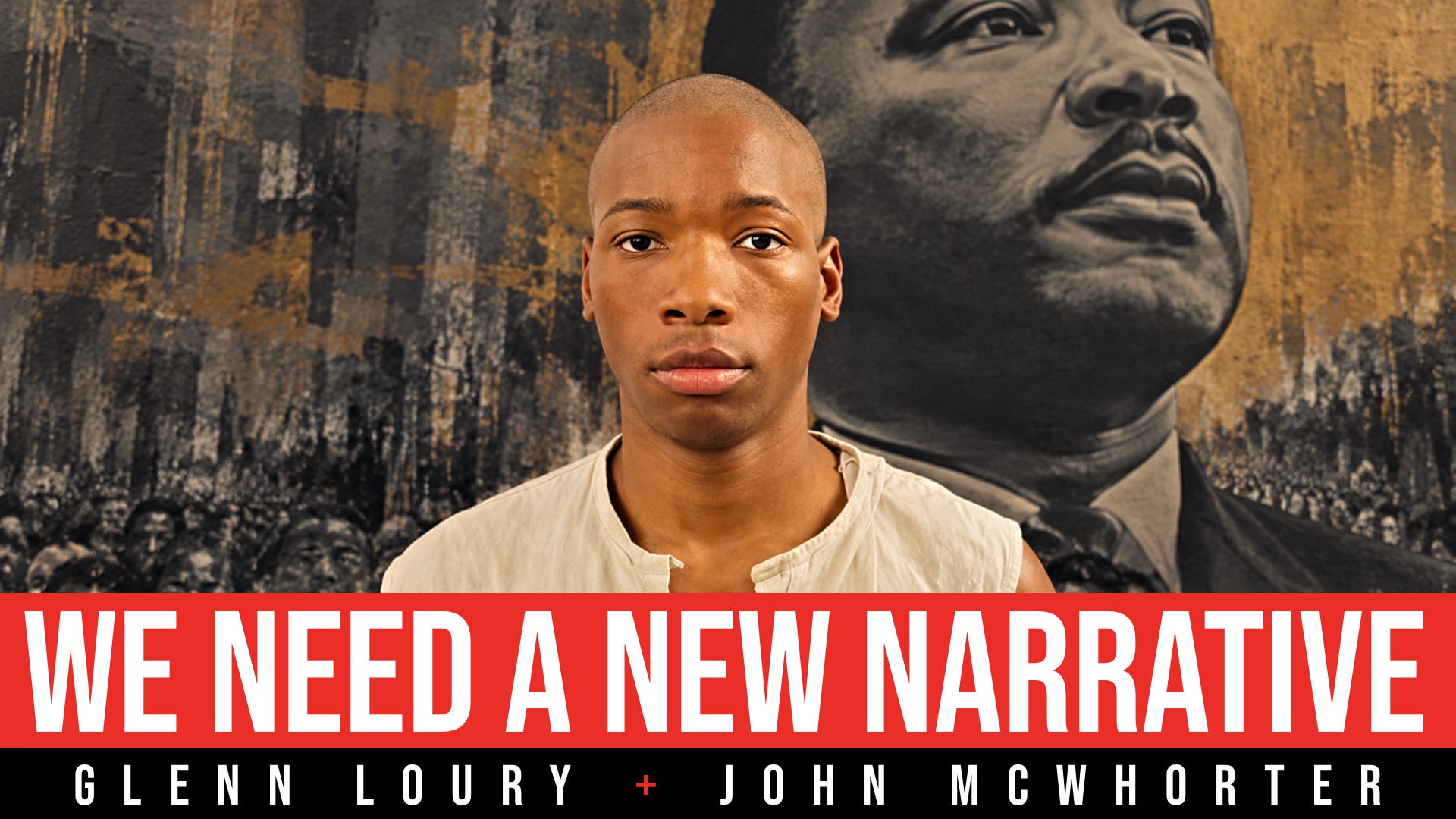
2w ago00:59:04Tap to summarizeSupport The Glenn Show at https://glennloury.substack.comJohn McWhorter returns as Glenn and John reflect on the nation's 250th birthday and the state of Black America. Both express disappointment — not at racism's persistence, but at cultural attitudes that continue to hold Black Americans back. Using the Karmelo Anthony case as a touchstone, they push back hard against victimhood narratives that treat race as a mitigating factor for individual wrongdoing. But Glenn and John diverge on colorblindness: while John laments the persistence of racial identity, Glenn argues that race as a positive site of collective identification — embodied in institutions like the black church — remains valuable and shouldn't be abandoned in the name of an abstract principle.The Glenn Show is almost entirely audience-supported, so to those of us who are already full subscribers, let me extend a heartfelt thank you. And if you’re not yet a full subscriber, please consider becoming one. The Glenn Show can only do what it does through the generosity of viewers and listeners. For a mere $6/month or $50/year, you’ll get access to weekly livestreams, monthly Q&A episodes with John McWhorter, commenting privileges, access to the full Substack archives, and other exclusive bonus content. This is a public episode. If you'd like to discuss this with other subscribers or get access to bonus episodes, visit glennloury.substack.com/subscribe
Transcribe →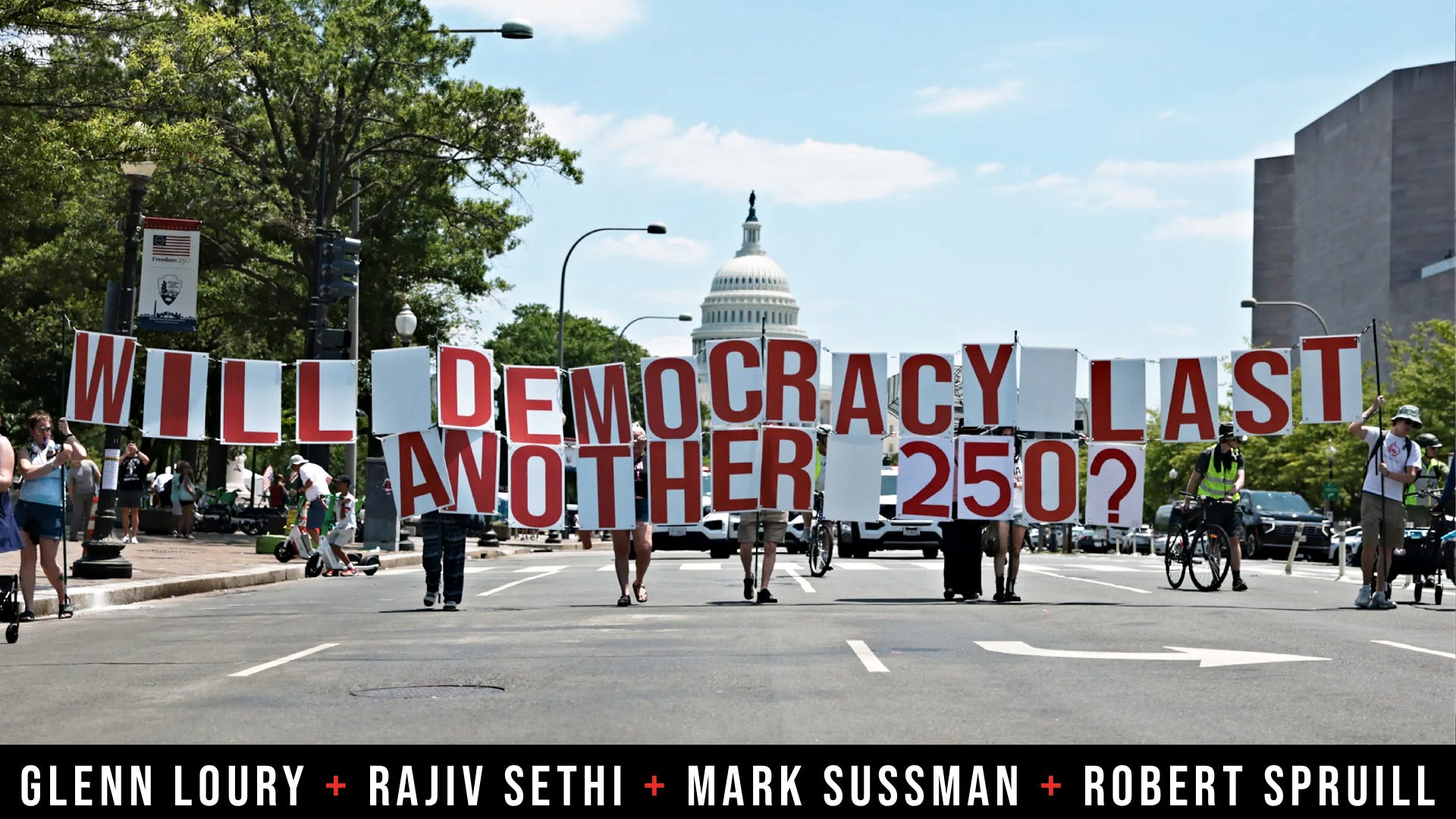
TGS Live: 250 Years of Contradiction with Rajiv Sethi
3w ago02:00:39Tap to summarizeSubscribe to The Glenn Show at https://glennloury.substack.comLast week’s Independence Day installment of The Glenn Show brought the team together—along with special guest Rajiv Sethi—to talk about American identity, broadly conceived, on the occasion of the nation’s 250th birthday. Who were we, and who are we? What face do we present to the rest of the world? What makes American culture “American”? How do we manage the social challenges facing a coherent nation comprising an uncountable plurality of ethnic, racial, religious, and political groups?The Glenn Show is almost entirely audience-supported, so to those of us who are already full subscribers, let me extend a heartfelt thank you. And if you’re not yet a full subscriber, please consider becoming one. The Glenn Show can only do what it does through the generosity of viewers and listeners. For a mere $6/month or $50/year, you’ll get access to weekly livestreams, monthly Q&A episodes with John McWhorter, commenting privileges, access to the full Substack archives, and other exclusive bonus content. This is a public episode. If you'd like to discuss this with other subscribers or get access to bonus episodes, visit glennloury.substack.com/subscribe
Transcribe →
June 2026 Q&A
3w ago00:01:17Tap to summarizeThis is a free preview of a paid episode. To hear more, visit glennloury.substack.comSupport The Glenn Show at https://glennloury.substack.comBB asks what Glenn and John think of Steven A. Smith’s political commentary. Russell Harvey wants to know what the role of debate is in our society, and whether a debate has ever changed Glenn's or John's mind on any substantial issues. Stan asks why college-educated white women support “wokeness” at such high rates. Jason asks whether Glenn and John ever had intellectual discussions with AI tools. Michael asks John for his opinion of Zohran Mamdani’s first six months as New York City mayor. Robert Redd asks how much damage Trump has done to conservatives’ image, and is it their responsibility to repair that damage. And finally, Max asks if Glenn and John have engaged with any arguments from natural theology, and whether they have intellectual—rather than spiritual—accounts of their own beliefs about the existence or non-existence of God.The Glenn Show is almost entirely audience-supported, so to those of us who are already full subscribers, let me extend a heartfelt thank you. And if you’re not yet a full subscriber, please consider becoming one. The Glenn Show can only do what it does through the generosity of viewers and listeners. For a mere $6/month or $50/year, you’ll get access to weekly livestreams, monthly Q&A episodes with John McWhorter, access to the full Substack archives, and other exclusive bonus content. Go to https://glennloury.substack.com
Transcribe →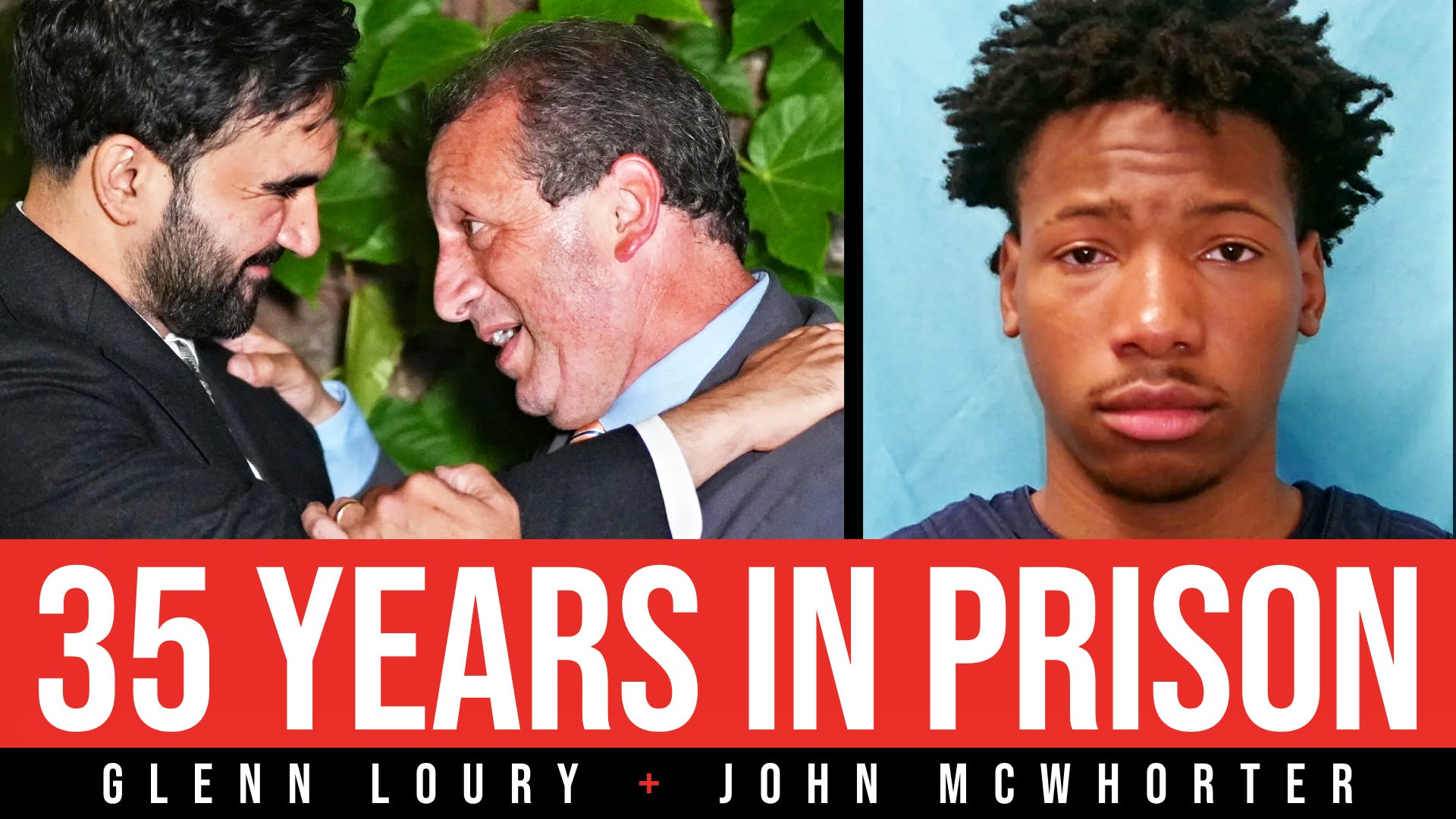
John McWhorter on Karmelo Anthony's Grand Narrative
4w ago00:59:35Tap to summarizeSupport The Glenn Show at https://glennloury.substack.comRecorded amid Glenn's vacation, this month's conversation with John McWhorter covers New York politics, crime, and culture. They discuss Mayor Zohran Mamdani's growing influence after his endorsed candidates swept their Democratic primaries, signaling a possible left-wing realignment within the party akin to the Tea Party's and MAGA's reshaping of the right. They also dig into the trial and sentencing of Karmelo Anthony for the killing of Austin Metcalf, weighing competing explanations — including a Sowellian theory of cultural inheritance — and Glenn's skepticism toward treating the case as fundamentally racial rather than personal and circumstantial.The Glenn Show is almost entirely audience-supported, so to those of us who are already full subscribers, let me extend a heartfelt thank you. And if you’re not yet a full subscriber, please consider becoming one. The Glenn Show can only do what it does through the generosity of viewers and listeners. For a mere $6/month or $50/year, you’ll get access to weekly livestreams, monthly Q&A episodes with John McWhorter, commenting privileges, access to the full Substack archives, and other exclusive bonus content. This is a public episode. If you'd like to discuss this with other subscribers or get access to bonus episodes, visit glennloury.substack.com/subscribe
Transcribe →
TGS Live: Robert Wright on an AI-Driven Global Community
Jun 2601:06:55Tap to summarizeSupport The Glenn Show at https://glennloury.substack.comLongtime friend of the show Robert Wright joins Glenn to talk about The God Test: Artificial Intelligence and Our Coming Cosmic Reckoning, which argues AI deserves serious attention — including from its doomers. Wright contends that responsible global coordination, however improbable it seems amid current geopolitical turmoil, is essential to steering AI toward humanity's benefit rather than catastrophe. He points to the near-miss global minimum corporate tax agreement as a hopeful precedent. Glenn reflects on how quickly once-speculative science fiction scenarios, like recursive self-improving AI, have become urgent real-world dilemmas.The Glenn Show is almost entirely audience-supported, so to those of us who are already full subscribers, let me extend a heartfelt thank you. And if you’re not yet a full subscriber, please consider becoming one. The Glenn Show can only do what it does through the generosity of viewers and listeners. For a mere $6/month or $50/year, you’ll get access to weekly livestreams, monthly Q&A episodes with John McWhorter, commenting privileges, access to the full Substack archives, and other exclusive bonus content. This is a public episode. If you'd like to discuss this with other subscribers or get access to bonus episodes, visit glennloury.substack.com/subscribe
Transcribe →
TGS Live: Harvey Mansfield on Where Harvard Went Wrong
Jun 1900:59:41Tap to summarizeSupport The Glenn Show at https://glennloury.substack.comHarvey Mansfield, the eminent political philosopher who spent over seven decades at Harvard, joins Glenn to discuss his new book, Where Harvard Went Wrong: Fifty Years of Commentary that Fell on Deaf Ears. Mansfield argues that Harvard has traded its commitment to truth for an overbearing political emphasis on equality — fueling grade inflation, racially discriminatory admissions practices, and the erosion of genuine academic standards. Glenn reflects on the irony that meaningful reform began only after Mansfield's retirement, and suggests that decades of ignored warnings may have contributed to Harvard's recent string of public embarrassments. A searching conversation about elite institutions, democratic values, and what universities owe the students they serve.The Glenn Show is almost entirely audience-supported, so to those of us who are already full subscribers, let me extend a heartfelt thank you. And if you’re not yet a full subscriber, please consider becoming one. The Glenn Show can only do what it does through the generosity of viewers and listeners. For a mere $6/month or $50/year, you’ll get access to weekly livestreams, monthly Q&A episodes with John McWhorter, commenting privileges, access to the full Substack archives, and other exclusive bonus content. This is a public episode. If you'd like to discuss this with other subscribers or get access to bonus episodes, visit glennloury.substack.com/subscribe
Transcribe →
TGS Live: Michael Poliakoff on Rescuing Civics
Jun 1201:00:04Tap to summarizeSupport The Glenn Show at https://glennloury.substack.comGlenn sits down with Michael Poliakoff, president of the American Council of Trustees and Alumni, to discuss the crisis facing American higher education. Despite the university system's extraordinary contributions to innovation and democracy, Poliakoff argues it is failing at a core mission: civic education. Students graduate without foundational knowledge of American history and principles, while faculty too often emphasize the nation's failures over its ideals. ACTA's new Broadside for the Nation calls for stronger trustee oversight and mandatory civics requirements. Glenn finds the recommendations promising, provided academic freedom is preserved — and offers a defense of genuine patriotism as something that includes, rather than forecloses, honest criticism of the country.The Glenn Show is almost entirely audience-supported, so to those of us who are already full subscribers, let me extend a heartfelt thank you. And if you’re not yet a full subscriber, please consider becoming one. The Glenn Show can only do what it does through the generosity of viewers and listeners. For a mere $6/month or $50/year, you’ll get access to weekly livestreams, monthly Q&A episodes with John McWhorter, commenting privileges, access to the full Substack archives, and other exclusive bonus content. This is a public episode. If you'd like to discuss this with other subscribers or get access to bonus episodes, visit glennloury.substack.com/subscribe
Transcribe →
May 2026 Q&A
Jun 700:01:59Tap to summarizeThis is a free preview of a paid episode. To hear more, visit glennloury.substack.comSupport The Glenn Show at https://glennloury.substack.comLast month, John McWhorter and Glenn explored the latest tranche of questions from full subscribers. They start off talking with TGS writer and editor Mark Sussman about Christopher Nolan’s casting of Lupita Nyong’o as Helen of Troy in his new adaptation of The Odyssey. Aaron Kara asks if diverse societies can sustain social systems in which racial identities bear uneven cultural caches. Glenn often says “Tolstoy is mine” as a way to exemplify our shared inheritance of the Western tradition. John Bingham asks if non-African Americans would be equally authorized to say “Frederick Douglass and Martin Luther King are mine.” As a new mother, Maddie Fontaine asks whether one ever truly gets over the fear that comes with letting your children become independent and move freely through the world. Martha Rodgers Boyles asks Glenn and John to discuss the influence of the late Robert Woodson Sr.Stan asks whether the country would react differently than it did in 2020 if there was another George-Floyd-type incident tomorrow. In the chat, Chris asks John to clarify a feature of Black English. TGS contributor Robert Patton-Spruill presents a clip of an actor reciting the prologue to Romeo and Juliet with a Southern drawl and asks John if it bears any resemblance to what an Elizabethan accent would have sounded like. Robert Redd and Clifton Roscoe have some comments about respectability politics. And finally, Yan Shen points out that, while tolerance for black grievance has decreased, tolerance for white grievance has increased.The Glenn Show is almost entirely audience-supported, so to those of us who are already full subscribers, let me extend a heartfelt thank you. And if you’re not yet a full subscriber, please consider becoming one. The Glenn Show can only do what it does through the generosity of viewers and listeners. For a mere $6/month or $50/year, you’ll get access to weekly livestreams, monthly Q&A episodes with John McWhorter, access to the full Substack archives, and other exclusive bonus content.
Transcribe →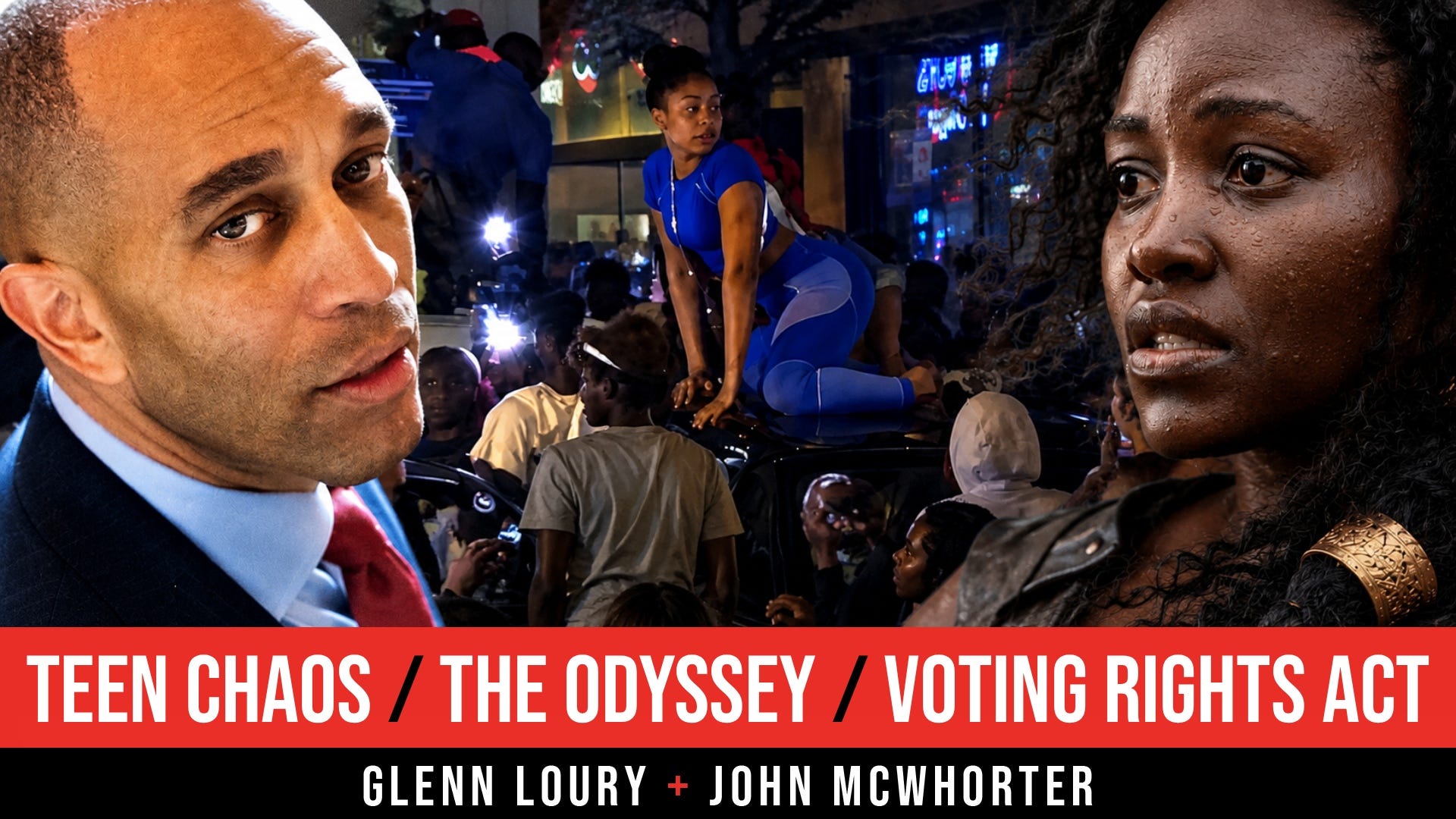
TGS Live: John McWhorter on a Black Helen of Troy, the Voting Rights Act, and Teen Takeovers in Chicago
Jun 500:58:21Tap to summarizeSupport The Glenn Show at https://glennloury.substack.comJohn McWhorter returns for another wide-ranging conversation, starting with his latest book-in-progress on American English dialects and his remarkable productivity as a writer. From there, Glenn and John tackle the social media controversy over Lupita Nyong'o's casting as Helen of Troy in Christopher Nolan's upcoming Odyssey adaptation, weighing in on race, casting norms, and where society should ideally be headed. They then take on the Supreme Court's ruling in Louisiana v. Callais and its implications for the Voting Rights Act — a take sure to generate pushback. The conversation closes with the Memorial Day "teen takeover" chaos in Chicago and Glenn's pointed criticism of Mayor Brandon Johnson's response.The Glenn Show is almost entirely audience-supported, so to those of us who are already full subscribers, let me extend a heartfelt thank you. And if you’re not yet a full subscriber, please consider becoming one. The Glenn Show can only do what it does through the generosity of viewers and listeners. For a mere $6/month or $50/year, you’ll get access to weekly livestreams, monthly Q&A episodes with John McWhorter, commenting privileges, access to the full Substack archives, and other exclusive bonus content. This is a public episode. If you'd like to discuss this with other subscribers or get access to bonus episodes, visit glennloury.substack.com/subscribe
Transcribe →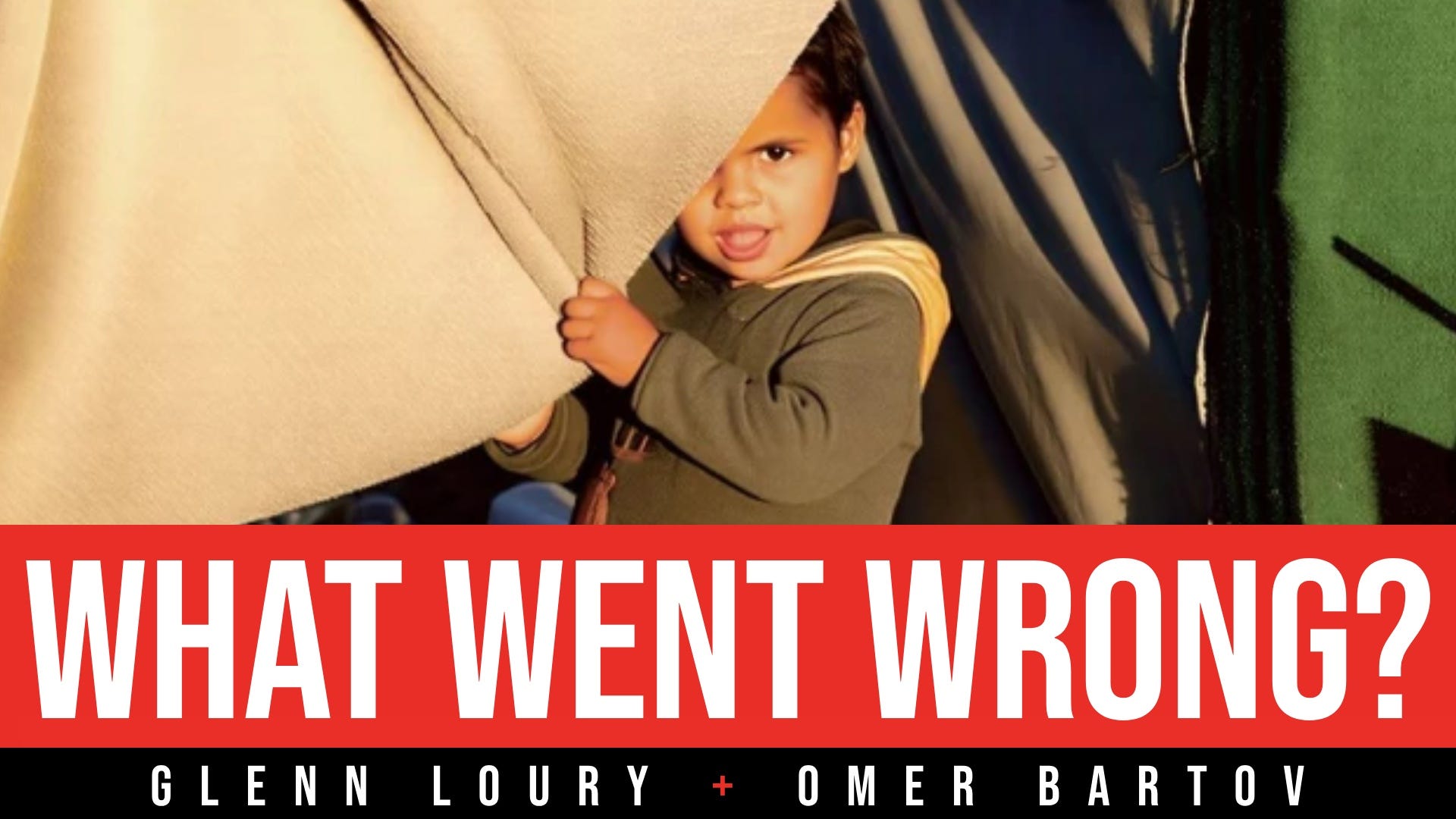
TGS Live: An Israeli Historian's Lament for His Country
May 2901:48:12Tap to summarizeSupport The Glenn Show at https://glennloury.substack.comGlenn sits down with Israeli-American historian Omer Bartov to discuss his new book, Israel: What Went Wrong—a rigorous and deeply personal account of the contradictions at Israel's founding and how they've shaped the country's present. Bartov traces the legal, political, and religious tensions that have fueled belligerence in the occupied territories and eroded democratic norms at home, all while grappling with his own complicated relationship to his homeland. Glenn, neither Jewish nor an expert on Israeli politics, finds in Bartov a credible and emotionally honest guide through an extraordinarily complex situation. Whether you agree with Bartov or not, his expertise demands serious engagement—and that's exactly what this conversation offers.The Glenn Show is almost entirely audience-supported, so to those of us who are already full subscribers, let me extend a heartfelt thank you. And if you’re not yet a full subscriber, please consider becoming one. The Glenn Show can only do what it does through the generosity of viewers and listeners. For a mere $6/month or $50/year, you’ll get access to weekly livestreams, monthly Q&A episodes with John McWhorter, commenting privileges, access to the full Substack archives, and other exclusive bonus content. This is a public episode. If you'd like to discuss this with other subscribers or get access to bonus episodes, visit glennloury.substack.com/subscribe
Transcribe →