← The Glossy Podcast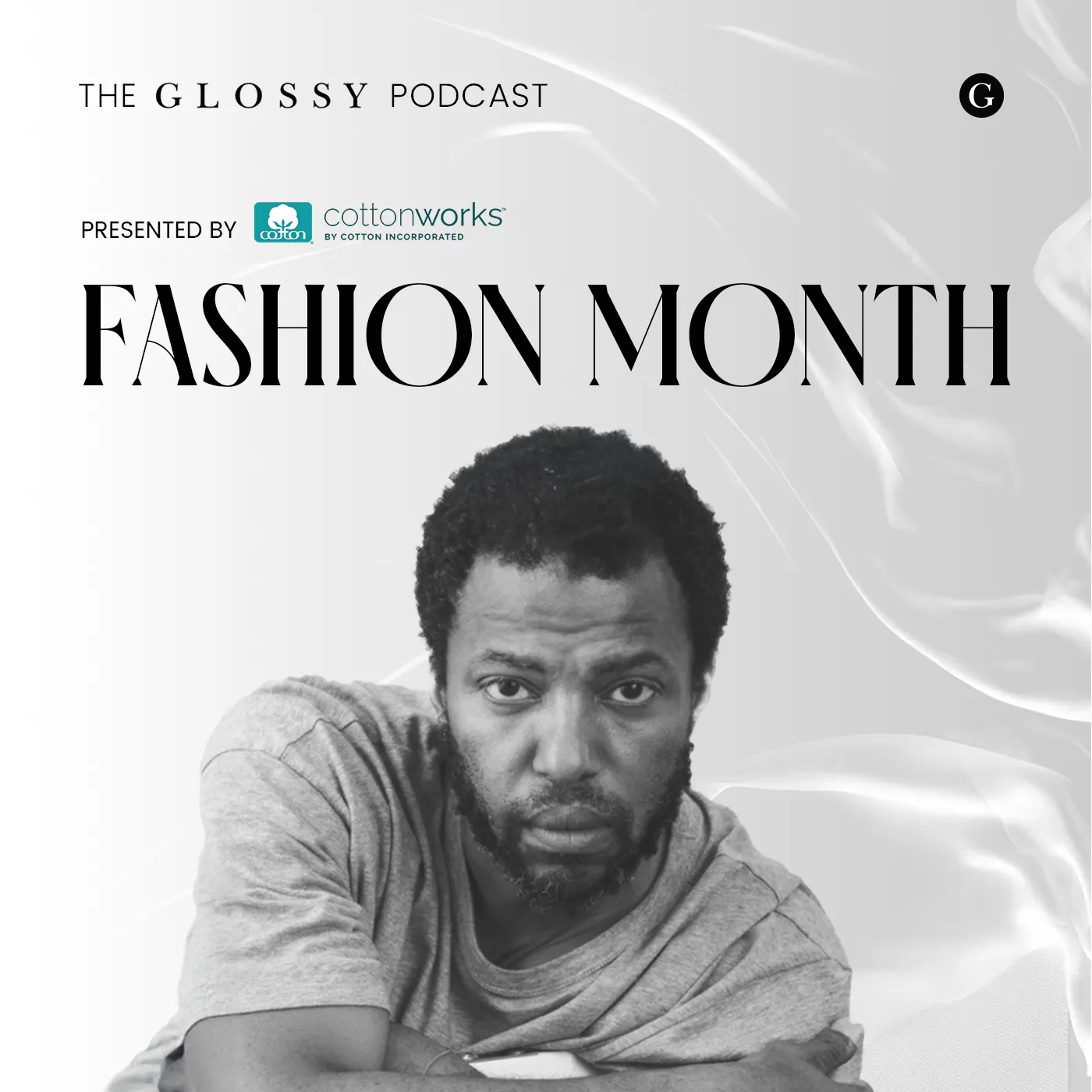
Loading summary
Transcript38 lines
- [00:05]
Zafirz Veglinska
Hi, and welcome back to the Glossy podcast, where we break down the biggest shifts in fashion and luxury, including Fashion Week. I'm Zafirz Veglinska, the international reporter for Glossy, and I'm your host for today's episode. Joining me is Edward Buchanan, a designer and creative director whose career has helped define modern luxury. He started as the design director of knitwear at Bottega Veneta in the late 90s under Thomas Meyer, before launching his own label, Sansovino 6, known for its innovative, gender fluid approach to knitwear. Now, as the Italian fashion director of Perfect Magazine, the Katie grand founded publication, he's offering a fresh perspective on the evolution of fashion and craftsmanship. And with Milan Fashion Week coming up soon, Edward shares his take on the state of Italian fashion, the decline of quality and luxury, and how manufacturing is changing behind the scenes. Plus the brands that he's keeping an eye on this season. Hi, Edward, how are you doing?
- [01:04]
Edward Buchanan
Hi, Sophia, how are you?
- [01:06]
Zafirz Veglinska
Yeah, good, thank you. It's so lovely to talk a little bit.
- [01:09]
Edward Buchanan
Nice to see you again.
- [01:10]
Zafirz Veglinska
Yeah, lovely to see you. I know that we've done a few things beforehand, and I'd love to talk a little bit more about Milan and its fashion scene. It's such a unique space and area. It's something that I think we've spoken to designers before, but maybe less so. People who are involved in, you know, the creative side of things, seeing things, you know, on the Runway as well. It's been synonymous with heritage, with luxury. How do you think that Milan Fashion Week has evolved today?
- [01:38]
Edward Buchanan
Wow, that's a big question. I've been living in Milan. I've been living in Milan for almost three decades, which is crazy, you know, as an American, so I've seen, you know, the beginning stages of where it was 30 years ago and to where it is now. With that said, Milano or Italian, Italy in general obviously has a really strong history in artisan workmanship. All of the factories, all the manufacturers, all the big houses, to the medium houses, to the small houses, manufacture in Italy. So there's a real history of artisan manual workmanship that happens in this country. You know, what's happening now is very interesting because there's a lot of questions and conversations revolving around price point in the luxury space. And that really relates also to manufacturing. In part with manufacturing. We have to consider this. We have to consider that young kids now don't necessarily want to do that type of manual work. A lot of factories, you know, starting up to 10 years ago, started closing in Italy. The Real hardcore, kind of like Veneto, or manufacturing facilities in Padova. A lot of them started to close down because there was no work, or people went to the Far east or they were going other places where they could possibly find some price changes or some price differences in what they manufactured. But I think that a lot of these factories are finding a hard time finding people actually to work in them. I think within the manufacturing sector, Italy is still as important as it was. There are larger manufacturers that work inside and outside. They bring a lot of workers, actually from the outside. A lot of the manufacturers here even have Chinese workers that are working within the factories. So it's still an important space for manufacturing as it was before, but it's changing a lot. There's definitely been a big shift, I would say, in the last 10 years.
- [03:32]
Zafirz Veglinska
Yeah, of course. And you're a designer yourself. You know, I think, like, getting younger workers back is proven to be quite a struggle. We've seen kind of mentorship schemes and kind of different programs offered by brands to try and bring in, you know, a new generation of craftsmen and craftswomen into the space. Is there anything from your angle as a designer that you think has been helpful to, I guess, blossom this part of the business?
- [03:59]
Edward Buchanan
Well, yeah, that's difficult. You know, I think it starts from ground up. You know, you always have to consider, if we talk about educational systems, you know, because, you know, designers, they graduate from high school or they want to be a designer, they graduate from high school and their career choice is to be a fashion designer, or their career choice is to be a fashion merchandiser. What have you at that stage is when, you know, companies are supposed to start to poach these talents. Going into college and deciding what your major is going to be. If it's fashion design, you get your training. If you can afford to get into school, get into school, you graduate, and then all of a sudden you're launched out into this workforce where there's very few jobs, very little opportunity, and you're hoping that you're going to get snatched up by a company that you admire. The big problem with that, I think, is disadvantaged communities don't always have that opportunity. Disadvantaged communities don't always have the funds to get into school if they don't find scholarship programs or someone to actually, let's say, maneuver or assist in helping them get into those schools. So there you already have a lesser percentage of opportunity that's happening in that space. But the more challenging thing is actually finding that first internship or finding that first job, getting from the college level into that first position. Because a lot of those positions are very low paid. If you don't come from, I don't know, independent or family wealth, you know, you need to find a job that's gonna assist in helping you pay rent and your living expenses. And I think the starting pay is quite low, you know, in design spaces. So it's become increasingly more challenging for young creatives to actually survive. We haven't even hit that area of young designers and independent designers that exist in this space. But even just as a designer, as an assistant or a first assistant, entering into a company has become quite difficult.
- [05:58]
Zafirz Veglinska
Yeah, I can imagine. Obviously, the kind of cost of living is affecting a lot of the creative spaces. And you know, you mentioned obviously that category of young designers, independent designers, what does that look like in Milan? Because I feel like there's always been a kind of correlation between these very big brands and the younger brands typically have had less of a presence or a kind of visibility. Do you think that's changing at all?
- [06:22]
Edward Buchanan
Well, yeah. Milan has always been known as a space that really supported institutional brands. You know, a lot of magazines and buyers that are coming into Milan specifically for Fashion Week are coming in because we have a lot of anchors. You know, you have those busty big Pradas and Diesel and those brands that, yes, do advertising have extremely enormous marketing budgets. So it's easy to kind of drive consumers or buyers or people that are interested in talking about Milanese fashion into the space because they have the capital to do so. And those are important, Those are very important to have. And they assist in keeping the movement of Milan as a fashion capital happening. But what ends up happening in the other end is that less attention and less opportunity and less funding goes to young independent designers as opposed to institutional. And why is that? If we look at, I don't know, market space now, I guess in stores, whether you're talking about department stores, whether they're less and less, or freestanding boutiques, which are less and less, less and less as well. There's very little space left now for independent brands to exist within those spaces. I think the price point of design, price point of independent design, as opposed to luxury design, are very similar in most cases. To be able to operate, build a brand show during Fashion Week, have a sales office, have a marketing team, all of those are enormous expenses. You know, if you're not doing it on your own via social media, it becomes really difficult to kind of exist in this space where not having those things can make it very Very difficult for you to have or obtain visibility. So there are support structures that are looking after young designers. I think within the Italian space, there are several. I know Camera Nacionale de Moda exists still, and they attempt to help designers. Afro Fashion association still exists and they help young designers. But that is not always a solution. The solution is really understanding from a practical perspective how we can allow space, how we can mentor to help them build businesses, and how can we also attract buyers and marketing and press from the outside that are going to support these brands. When you're fighting against a brand like. Such as Prada.
- [08:53]
Zafirz Veglinska
Yeah, of course. And, you know, I feel like you've had a very interesting kind of perspective on the Milanese fashion scene. Obviously, as an American in Milan and also as a black man there as well. There's been a lot of talk in recent weeks, obviously because of the kind of change in American presidential around DEI and Milan has typically had a similar kind of bad relationship, let me say, with both inclusivity and diversity in general. And I know that you've been involved in some things on the ground. Tell me a little bit more about what that looks like nowadays. Has there been any progress? Is there been a development or has there been a regression? I guess in terms of that?
- [09:36]
Edward Buchanan
Sure. Yeah. You know, this is always a long story for me, because I think when I arrived in Italy, I arrived in Vicenza. So I was hired by Bottega Veneta. And the first city that I arrived in was Vicenza, which is in the Veneto. There's an American base in Vicenza. So I saw other foreigners that existed in the space. But I slowly realized that working within the space when I came to Milan, that anyone that kind of looked like me or were selling Prada bags on the street or they worked in fashion, and there was no in between. You didn't walk into institutional or governmental spaces such as post offices or banks, and saw people of color. You didn't see black people that existed. So I was kind of this one of very few that were working in, let's say, the luxury space. That was a black foreigner. So that was odd to me. And my natural reaction to that was, how can I somehow figure out how to also invite others in? Because I think once you hold space and occupy space, you really and look around and see that there's no one else that looks like you. You have to kind of question why and then figure out how you can actually invite others into that space. 30 years later. It is the only thing for me in terms of the trajectory of my career and the space that I occupy now. It's the only kind of physical thing that I can imagine me being invested in for the future is to make sure that the space that I live in and the space that I work in has a priority of what it really means to be inclusive and diverse. And speaking about inclusivity and diversity is not a window display. It's not just hiring a model for an advertising campaign. It's not just necessarily even hiring a creative director. It starts from the inside out, and it's kind of a real umbrella effect. And I think you can't really, as a corporation, honestly speak in terms of we are inclusive and we are diverse. If you don't have inclusivity and diversity on the inside of the company, this is where the companies are actually lacking. Because even if they put up front a facade, which is a woman designer or a black designer, an Asian designer, and on the inside, it's all white. We're not finding any space there. So my investing into working with Afro fashion association and other organizations that really support the growth of young design, the growth of Afro Italians that are living and working in this space, it's so urgent for me. It's urgent for me because I can see a reflection also of myself in these young creatives, and they look lost. So whatever I can do in order to somehow guide them in the right direction, offer mentoring, offer my experience and the spaces that I work into them, then that's what I need to do.
- [12:45]
Zafirz Veglinska
Yeah, definitely. And do you feel like that has improved at all in recent years? I know that obviously there have been some changes among creative directors and other brands, but you personally, you're on the ground, you're seeing what the environment is like both during fashion week as well as outside of it. Has there been a change, or is it, as you said, the kind of white on the inside?
- [13:08]
Edward Buchanan
I think it has changed only in the sense that there have been conversations. If we just kind of step back a little bit to 2020, right prior to the pandemic, there was George Floyd in America, and, you know, everyone posted up those little black boxes on Instagram, and they said, we are with you. We are here. We believe in you. Color doesn't exist in the fashion space or the creative space. And we're going to hire and judge based on talent and all of those qualifications that exist exterior of sex and color and race. And we shortly found out that it was, in most cases, just a facade. And, you know, some placements were made. You know, there Are Maximilian Davis is at Ferragamo. You know, he's a black English man. There was at that time there was Sarah Hatt and Benjamin that were at GmbH. There were some very high profile jobs made or placements made in that time. And, and that was important to have those figures and to still have some of those figures at the forefront of the luxury fashion business. But, you know, one or two placements does not change the game and is, does not change. The question at hand is how can we honestly and with, with purpose make sure that these companies that are operating within this space are inclusive from the inside out? From the inside out. Because from a larger, even perspective, it's somehow proven that inclusivity and diversity from the inside out also changes the game in terms of profit for companies. Because you have people that can question things. You know, when you have large gaffes or mishaps that exist on the inside of a company, if there's no one there to question it, if there's no one there to say possibly, well, guys, maybe we should do it this way or maybe you should consider it that way. If there's no one there to call these things out, then it just goes, it just goes out and there they find themselves in trouble. So, you know, there's so many scales of why inclusivity is necessary and it benefits corporations. I really, I still can't understand why, you know, at this point, you know, in 2025, that we're even still having this conversation. But to really answer your question, I think that it's like two steps forward and one step back.
- [15:46]
Zafirz Veglinska
Yeah, I think that's, that's a great way to put it. And I have seen those studies as well, and it's just mind boggling in a way that, you know, that isn't a priority for brands when it does also extend their profits and their sales as well. Especially in a time when it's quite a tough space for brands to operate and you know, even the biggest luxury houses are talking about a kind of luxury decline or luxury freeze. Absolutely. Is that something that you're noticing as well with Milan? You know, in past seasons, has that space been tougher?
- [16:16]
Edward Buchanan
It has been tougher. And I think, you know, I consider myself and also a lot of my friends that work within the fashion space and also those who don't work in the fashion space, whether they be doctors or lawyers, and these are professionals that are around the same age as I am, and we would be considered in the bracket of consumers, luxury consumers, and those who possibly have the Funds to actually purchase. And I don't buy a thing. I don't buy a thing. I don't shop. I don't shop.
- [16:49]
Zafirz Veglinska
No, neither.
- [16:50]
Edward Buchanan
You know what I mean? I don't shop. It's not just. I don't shop because I don't like. Because there are obviously things that I like, but I don't, I don't, I don't know. I'm in this kind of stage in my life where I feel like I need to kind of release things as opposed to acquire things. There's this just kind of, I don't know, there's this somehow this, this feeling that I've had in recent times where I question why am I just consuming all of these things? Why am I collecting all of these things? And I think a lot of people surrounding me feel the same way. And then with that said, when you start to really look at the cost of luxury goods, you can see a panty in a store that costs €900, you know, and, and I know what these things cost in terms of real true cost from manufacturing. So I know what you pay for the yarn, I know what you pay for the fabric. I know what you pay to stitch it, I know what you paid to sew it. I know what the button cost. I know the time that you spend on making used to be 2.7. From manufacturing to wholesale costs to retail costs is sometimes 10 times what it costs to actually make the things. So what are we really talking about here? Does it serve really the long term business of purchasing to hike prices up so high so that your percentage of luxury consumers remains at 1%? And then everyone else there is, they just don't care about. There's really no interaction with who they are because there's always going to be those extremely affluent consumers that are gonna buy that product. But what happens to everyone else? And then we question, what are we doing here? Who are we manufacturing for? You know, it's a real, it's a real tailspin.
- [18:45]
Zafirz Veglinska
No, I agree. I think it's really interesting that first, obviously that kind of shift from buying things to experiences, but then also that aspect of, you know, these prices are so inflated nowadays that a lot of people don't see the value. And then I think the other thing that's come up recently, and obviously that's across both Milanese or Italian as well as French production, is whether the quality of the products has actually gone down as well. Do you think that that's the case? You're seeing things both from a manufacturing perspective as well, as kind of from the brand side. Has that quality gone down as well?
- [19:19]
Edward Buchanan
Well, I would think in some cases that that would make sense from a corporation perspective, because if you can pay less to manufacture something and keep it at the same price, why would you. Who doesn't want to profit? You know, and it's a shit show in a way, because this is where we go back to what we were talking about before in terms of being a manufacturer. You know, if a large company such as Zara approaches you and they tell you that they're going to produce 15 million pieces with you, possibly using the same fabric that any other luxury company might use, but they're just going to order a lot more of it, and they're asking you to do that for this price, which is probably, you know, 40% less, possibly 30% less than someone else. What are you going to say as a manufacturer? You're going to say, yeah, probably. You know, this is like, we're really not in the space and time to say no to business. So I think that for surely these things are happening, for surely we can question the quality in manufacturing, we can surely question the material and manufacturing. And I'm not saying across the board, you know, there are those companies that stand by quality and believe in quality, and it is what they do. But I think it's becoming more and more difficult to find real artisan quality workmanship that is balanced with the price of what they're charging.
- [20:59]
Zafirz Veglinska
You see that with some brands that have built up almost like mini manufacturing ecosystems just for their own brand, something like Brunello, Cucinella, for example, their own factories, their own workers. That kind of practice is becoming more common. And also among independent designers, they have unique relationships with one manufacturer or a small. And it's almost essentially like a question of human support. Do you think that that's a kind of a good model to go on, like forgetting about all of these big practices?
- [21:33]
Edward Buchanan
I do think it's a good model to go on because you have to understand that when we talk about sustainability, which is another conversation, sustainability and the idea of what is sustainable is not only related to what you're using to manufacture it and how you're manufacturing it, it's how you treat your people on the inside of your company. It's how many hours they're working within the context of a full day. You know, all of these things relate to really the work atmosphere, how things are being manufactured, how people are treating. You have to consider all of those things. So I have never worked for Brunello Cuccinelli. But I know people that have worked with Brunello Cuccinelli and they have nothing but great things to say about, yes, the working atmosphere, the quality of work that they do there and how they're treated. So if that could be a model for the future of any company that treats people well, pays people fairly and can in the end manufacture beautiful clothing, you know, that as actually from a quality perspective, seems to be worth what you're paying, I think that's a win win. And I would think that that would be a great model for any company going forward.
- [22:48]
Zafirz Veglinska
Yeah, definitely. Now kind of pulling it back to, you know, Milan Fashion Week and obviously what's, what's upcoming? You know, I guess like, what are you looking forward to when, when you're going to Milan Fashion Week? You know, you've got a kind of unique perspective as a designer, as a director, what do you look forward to when you're going there? And I guess like, what are you looking out for in terms of styles or conversations?
- [23:12]
Edward Buchanan
Sure, yeah. I mean, you know what, it's interesting when I found myself working in the editorial space because it's, I guess as a character, Edward Buchanan, you know, I'm really a behind the scenes creative. You know, I love to see the creative aspects of building up a collection. So I've always been backstage, but finding myself, you know, seated at a show for the last, what is it, almost a couple years now, has flipped the script and it serves me in both places and I really enjoy it. What's become really interesting about what my position is, for instance, working with a perfect magazine is I see the final product. You know, this is kind of like the finale of what we work on beforehand. So I can understand in a way what happens in the back end and then I see, you know, the presentation of what this becomes. And more and more, each and every season, I become more attracted to honesty and expression. And when I say honesty and expression as it relates to brands, this could be institutional brands or this could be independent brands. Honesty to me means that the core expression which you are attempting to get the viewer to really understand is based on a creative honesty. And I think that there are a few brands. Prada for me always has a creative honesty. You go to a Prada show and you kind of really know that you're going to walk into an atmosphere that's going to be intriguing, it's going to be thought about, it's going to be artistic. And I think, you know, the collaboration between Miucci and Raph they always end up giving us a presentation which is, yes, thought provoking. You are going to walk out liking it or hating it or loving it, but it's going to kind of create some kind of conflict. And I think they really, as a brand benefit from like this kind of. I don't know, there's this really interesting contrast. And, you know, I think it relates to. Someone told me a long time ago that a lot of times when Mutu is creating, she likes to take things that she dislikes and work with them and attempt to kind of, let's say, muchify those things that she dislikes in order to present them in her way. And I think that when I look at Prada as a company, I love that aspect. You know, it's. It's kind of working in a. From a perspective of, hey, you think you don't like this, but do you really not like it? You know, it's like a teasing hanging over.
- [25:43]
Zafirz Veglinska
Yeah.
- [25:43]
Edward Buchanan
Prada is one of those brands and Miu Miu is one of those brands that I always look for and I think that they, they drive you in. I'm really curious about Bottega Veneta. And of course, considering my history with this brand and I love this brand and I love. I've always loved the brand ethos of what Bottega Veneta as a brand stands for. And I think I'm excited that they hired a woman designer. And I think Louise Trotter, and I've watched her career and she's a beautiful, intelligent, sensitive and skilled designer. And she has a big one to follow because Matthieu was fantastic. But I'm really. We're not going to see that for a while, but I think that we're going to watch Bottega Veneta because I think there's going to be something really interesting to see there in Italy in terms of young brands after the men's collections that just happened. I'm really sold on Magliano and he's so fantastic. And when I talked about this kind of honesty before we were talking about Prada, he oozes this kind of honesty and confidence in the work that he does. And, you know, oftentimes I think a lot of designers look around at what others are doing before they kind of decide what they think that they should do in terms of presentation or how they build the brand as opposed to looking inside. And I think Magliano as a brand, it's very consistent in their. Their craft and their use of materials in the languidness and the building and the confidence and building the look, it's just. It's just so beautiful and fragile and I don't know, there's a chic that, that we haven't seen, especially in a menswear brand in such a long time within the Milano space that I think that he's a fantastic creative. I'm really excited about Adrian at Moschino, and I think Moschino, you know, I think he's had now three shows and I immediately liked his brand of creativity that he's. He's building with Moschino and the respect for Franco Moschino that he's been following. But what really sang to me is when I went to the store, I went into the store because a lot of times when you go into the store, obviously you don't just see the things that they present on the Runway. You actually see the real merchandise that actually goes into the store. And it was just so intelligent and it was quite a good price point as well. And he's a great creator and he has such great taste. And so that's another show that I'm quite excited to see in Milan as well. There's some things going on. I wish that there were more independence. I wish there was more platform for independence. And it's difficult. It's difficult to exist and have the capital to build independent spaces. And I think it's going to be important for industry wide in all cities to really focus on making sure that those creatives of tomorrow have a hand to assist in lifting them up. Because, you know, we can't continue calling Marc Jacobs a new designer. You know what I mean? There's gonna be a certain point when these designers that have been around for, you know, as fantastic as they are, you know, tomorrow's designers are gonna be others and we need to make sure that that space is protected and we give them what they need and a platform and space and a voice.
- [29:10]
Zafirz Veglinska
Yeah, definitely. I feel like, especially in times when there's like, financial issues or troubles across the industry, those independent designers are the ones that need the most support and the most visibility. So I'm very excited going into London Fashion Week to see how that shows up. But obviously we'll be following the scene with Milan as well.
- [29:29]
Edward Buchanan
Yeah.
- [29:29]
Zafirz Veglinska
And finally, you know what?
- [29:31]
Edward Buchanan
I'm sorry, I'm sorry to interrupt you, but there's, you know who I've been watching. Simone at Bali is so good. And he, it's, it's so, it's so chic. He's so, you know, he has a storied career. You know, he's worked at Gucci, he's worked at Christian Carol Pole. You know, he's been working within the design space, internal, in terms of working inside of companies for a very long time. But that's another one that really works with honesty. And from the first collection out, he kind of defined who he wanted to talk to as the Bali consumer, and he really stuck to it. And I think when you work in that way with a real focus on what you want this to be and how you want to create this, there's risk involved in that. And our industry doesn't always like risk takers. You know, they don't really encourage you to be risky. They want you to be, to follow the consumer as opposed to lead the consumer. And Simon is a leader, and I love what he's created. I mean, the last show was just so beautiful. He's going to have another one pretty soon here in Milan as well. And I just think he's a great, great creator. And I think, you know what, when I have conversations with creatives, my main kind of plug is to really get to understand from the creative what the meaning of Hallmark or what the meaning of honesty is within their collection, because that's where you figure out or you really understand what their ownership is in the brand that they're working for or the mark that they want to leave within the industry. And knowing what your brand ethos is and really being honest to that ethos and honoring that ethos in your design process is a very difficult thing to do. So when you find those designers like Magliano, like Simone Edballi, like Rachel Scott at Diotiba in New York, you know, there's so many of those brands that you see them and you're like, wow, you know, and it just sings and it. And it takes longer. You know, it's not always going to be, like, immediately up the escalator or the elevator. You know, they have to kind of walk up the stairs and slowly build those companies with honesty and truth. And those. Those brands, I think, really stick out to me.
- [32:06]
Zafirz Veglinska
Yeah, no, definitely. I think that strong signature is so important, as you said, for designers to look inwards rather than to. To kind of look outwards. And finally, if you had to sum up the energy of Milan Fashion Week in one word, what would it be and why?
- [32:23]
Edward Buchanan
Optimistic.
- [32:27]
Zafirz Veglinska
Love that. All the. All the doom and gloom.
- [32:30]
Edward Buchanan
I say optimistic because I'm invested in this space, because it's my home, and I've lived here longer than anywhere else. So I'm invested in approaching with my head up the walls that I run into every day. I'm invested in the change, the positive change. Because when there is change and when there is something that happens positively, I'm the first to raise my hand up and say yes. I'm invested in the creative process, in the support of creatives. So there is an optimism that I have about this being my home and being a creative that exists in my home. So I'm willing to keep punching. I'm willing to keep punching until the end. You know, I'm not going anywhere. They're gonna have to chase me out.
- [33:21]
Zafirz Veglinska
Oh, my God, I love that. Well, thank you so much, Edward. That is all the time that we have this week, but thank you again for coming on. It was a pleasure to have you here.
- [33:31]
Edward Buchanan
Thank you for having me. It's been enjoyed.
- [33:38]
Zafirz Veglinska
So that's it for today's episode of the Glossy podcast. Big thanks to Edward Buchanan for joining us and sharing his insights on Milan Fashion Week, the future of luxury, and the shifts happening behind the scenes. If you enjoyed the conversation, be sure to subscribe, leave a review and follow us for more deep dives into fashion, beauty and luxury. We'll be back next time with more from people shaping the industry. Thanks for listening.
- [33:59]
Edward Buchanan
Sa.