← The Goal Digger Podcast | Top Business and Marketing Podcast for Creatives, Entrepreneurs, and Women in Business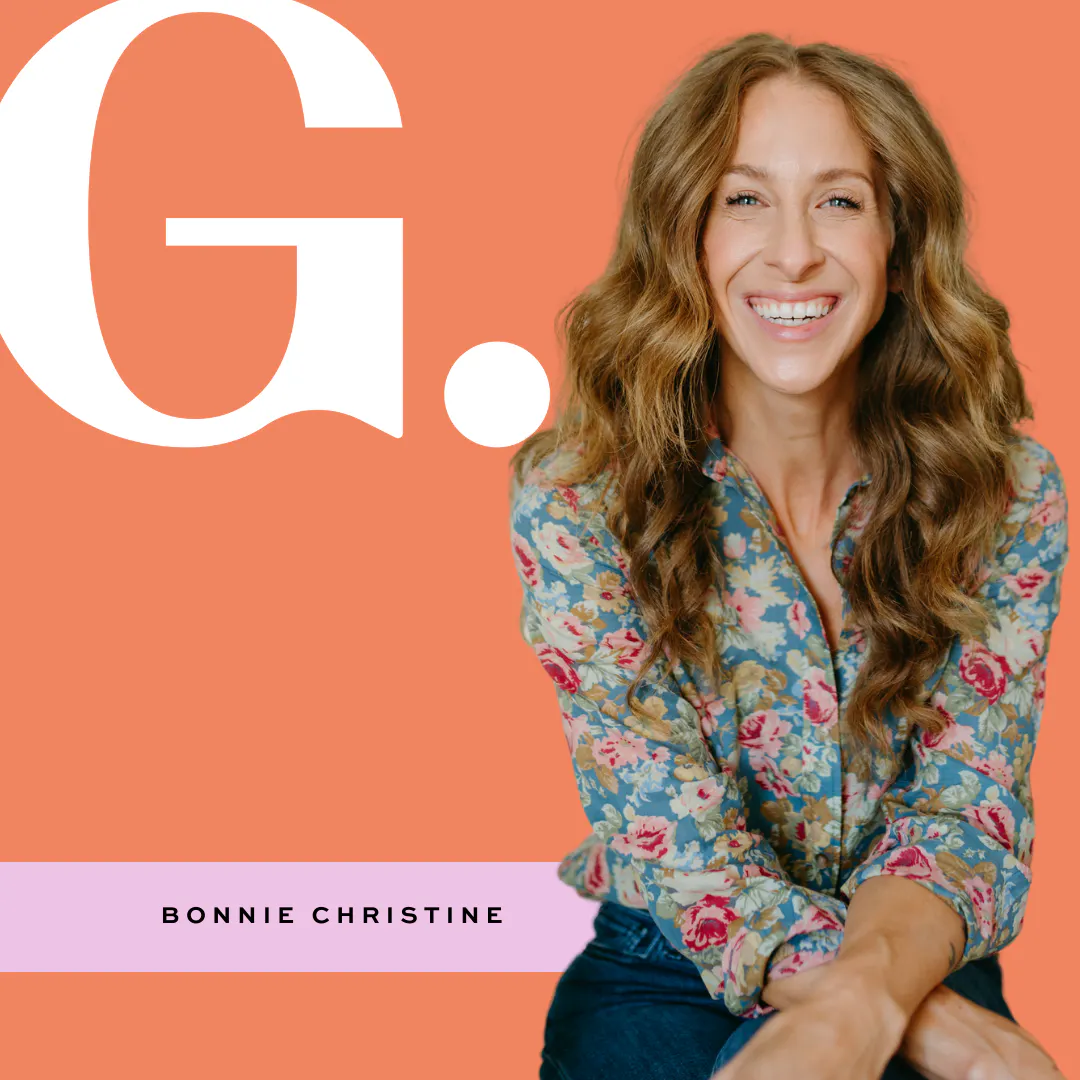
The Goal Digger Podcast | Top Business and Marketing Podcast for Creatives, Entrepreneurs, and Women in Business
849: Turning Creativity into Profit: How to Monetize Your Art
00:52:09
With Bonnie Christine and Jenna Kutcher
Loading summary
Transcript79 lines
- [00:01]
Jenna Kutcher
If you're running a business and you do not have an email list, you have just nailed down your biggest goal for this brand new year because without one, you're missing out on serving your audience, on making sales, and on growing an asset that you own and can rely on. It is time to focus on growing an email list and creating a direct line to your ideal clients and customers without being overwhelmed, wasting time, or playing the I'll get to that later card when things look difficult. That's where I come in. Save your free virtual seat to my live masterclass from zero subscribers to an email list of engaged buyers in three easy steps all about starting and growing an email list to finally reach the people who want to hear from you. I'll teach you what to say and how to say it all for free@growanemailist.com let's get that email list going so that the next time you want to promote your offers, you've got a list of eager buyers ready to launch too. Head to growinemailist.com to join me for free to learn how to algorithm proof your business with email marketing. That's growinemailist.com.
- [01:13]
Bonnie Christine
We are all creative. Even those of you who are listening, who don't feel it. You are. It is there. It may be expressed in a million different ways. It doesn't have to be art. But we are creative. I think we were created to create. We have that innate desire to build, right? To create. To make. To build.
- [01:34]
Jenna Kutcher
I'm Jenna Kutcher, your host of the Gold Digger podcast. I escaped the corporate world at the age of 23 with nothing more than a $300 camera from Craigslist and a dream. Now I'm running a seven figure online business that feels even better than it looks. All from my house in small town Minnesota with my family. Here, we value time as our currency. We mix the woo and the work and we are in the pursuit of building businesses that give us the freedom to live lives that we love. I've always loved turning big goals into reality and I'm here to help you do the same. This isn't just a peek behind the curtain. Come along with me and my guests as we tear the whole curtain down. Every week we tackle practical no fluff marketing strategies and host honest discussions on what works and and what doesn't. Join me and my expert guests for actionable insights to help you grow your dream business with confidence. Pull up a seat and get ready to be challenged, inspired and empowered. This is the Goal Digger podcast.
- [02:37]
Unknown
What if I Told you. There's a career where your creativity isn't just a side hustle, it's the main event. A career where your art can live on products worldwide, from fabrics to stationery to wallpaper, and you don't need a formal art background in order to get started. Sounds too good to be true, right? Well, it's not. Today's guest, my friend Bonnie Christine is living proof that big creative dreams are worth pursuing. Bonnie is an internationally renowned surface pattern designer, entrepreneur and award winning educator. What started as a leap of faith in her mom's quilt shop has grown into a multi million dollar business, helping tens of thousands of aspiring creatives turn their passions into thriving careers. In this episode, Bonnie pulls back the curtain on what it takes to transform.
- [03:21]
Jenna Kutcher
Your art into a sustainable business.
- [03:23]
Unknown
We'll dive into the biggest mistakes creatives make when trying to monetize their work, how to overcome imposter syndrome, and why she believes there's room for everyone in the creative industry. If you're ready to unlock your creativity, take actionable steps towards your dream and finally believe there's space for you in the world of design. This is the episode for you, and if you're interested in learning more about how Bonnie has built her incredibly successful business, you'll hear her reference her upcoming workshop. It's called you'd Pattern Design Playbook 7.
- [03:54]
Jenna Kutcher
Industry Secrets to accelerate your success as.
- [03:56]
Unknown
A surface pattern designer, you can save your seat right now@jennacutcher.com Design this in depth workshop teaches you how to achieve time, location and financial freedom through surface design. So whether you're dreaming of transitioning from a hobby to a full time career, breaking into the industry as a licensed artist, or simply discovering the endless possibilities within this surface design world, this workshop will give you the clarity, confidence and roadmap you need to make the next big step. Head to jennacutcher.com forward/design to save your seat. Without further ado, Bonnie Christine, welcome to.
- [04:31]
Jenna Kutcher
The Gold Digger podcast. Hey marketers, quick question. When was the last time you actually enjoyed marketing? If you're feeling overwhelmed juggling content creation, lead generation, campaign tracking and analytics, let me introduce you to a game changer, HubSpot. HubSpot combines the power of marketing hub and content hub and it's all enhanced by Breeze, their built in AI. Imagine taking just one one piece of content and instantly remixing it for every channel. Imagine identifying your best leads with AI powered scoring and having crystal clear analytics that simplify your reporting. HubSpot makes it easy to double your leads in just 12 months we're talking about 192% boost in web traffic, 46% more deals closed, and 31% more deals created all in one platform. Stop spreading yourself thin and start seeing big results. Visit HubSpot.com forward/ marketers to get started for free. With HubSpot, you can reconnect with what you love most about marketing. Being creative, building relationships, and most importantly, seeing results. That's HubSpot.com forward/ marketers.
- [05:42]
Unknown
Okay, today is a very special day with one of my favorite humans on planet Earth, Somebody who is sending daily text messages and just brightening up my life. And I want to start with a heavy hitting question for you, Bonnie, which is you have helped thousands of creatives turn their passions into sustainable businesses. And I want to know what is the biggest mistake you see aspiring creatives make when they're trying to monetize their art? And how can they avoid this mistake?
- [06:11]
Bonnie Christine
Okay. I think that one of the things that people struggle with so much is really rushing to kind of arrive. I think that we see so many really well established, seemingly perfect artists, like, crushing it, and we just want to arrive already. And so we kind of rush to that monetization. And really there's no rushing that part of it. It is so different when I see someone who has really put in the work to refine their work and then they kind of come to market and you can tell such an incredible difference in the quality of their work. You know, I think when we're talking about creative work and the output being so visual, right. That there's often like this. We call it the gap. Right. There's often this bridge that we have to cross between what we envision our work looking like and then what actually comes out of our hands or our mind onto paper. And there's this gap. There's this gap. For me still, today is like, that's not exactly how I envision that looking. And you have to work and work and work, work, but slowly. So I think sometimes people get comfortable with the gap and they just go straight to market. But if you sit in it, the gap will close and the work at hand will begin to more closely and more closely mimic what you really want it to feel like, what you really want it to look like. And then when you bring it to market, it's well received across the board.
- [07:41]
Unknown
I love that. I feel like you are a dark horse in the industry of what you do. How did all of this unfold for you? I am absolutely blown away by how you empower people to Learn surface pattern design and what that is. Like, give me kind of the background, because I'm so curious about it.
- [08:03]
Bonnie Christine
Yeah, Well, I think it really all stemmed from just my own experience, so I have always been creative. I know you have as well. So always felt like this creative kind of superpower in me, and I didn't know what to do with it. So kind of, long story short, went to business school, school, came back to my hometown, married my high school sweetheart, and then I started working for my mom, who owned a quill shop. And part of my job there was to meet with sales reps and decide what we were going to carry in the store. And so I had my hands on fabric and in collections, and then there was, like, this moment in time where everything stood still, and I was like, oh, my goodness, this is somebody's job. And, like, I want that to be my job. And then talk about a gap, right? There is this enormous gap from like, where I was to how could I possibly make that possible? And it was hard. This was back in 2009, and there were. There were no online classes. There were no. There was nobody kind of teaching this. And the industry was zipped up pretty tightly, and so I just dove in headfirst. I spent about two years kind of piecemealing it all together and wasting tons of time learning the wrong thing and figuring it out. And then at the end of that, I signed my first licensing contract as a fabric designer in 2012. And I came out of that experience completely changed, first and foremost, but also just with this huge heart of wanting to kind of crack the industry open and pave the way and share what I had learned the hard way and simplify it for other people. And that eventually kind of led where we are today.
- [09:44]
Unknown
Oh, my gosh. Did I tell you that I went to a quilting conference this year, and it was, like, the most magical experience ever? But my grandma was a quilter, and I was like, my grandma would be so proud that I'm here right now. I wanted to learn. And seeing people, people that were there were obsessed with you, first and foremost, but also, just, like, understanding that there are so many different niches out there that I think so many of us don't even realize. Like, we don't even know. So what is surface pattern design for a dummy? Like, talk to me like I am a third grader and explain what that is, because I'm sure there are people listening, thinking, okay, awesome. You create, you know, fabric design, but you can do so much more than that, too.
- [10:27]
Bonnie Christine
Yeah. There was also, like a moment in time where I learned that this was the thing. And I just feel like my whole world opened up. So we're gonna start at the top. So the very top level of this is an industry called surface design. And so surface design is when a design or a piece of art gets put, literally any surface. So if you want to close your eyes and imagine walking into Target or Anthropologie, you're seeing like Malamine dishes and rugs and tea towels and aprons and clothing and wallpaper and all of these things with design on them. And then. And kind of a segment of that industry is surface pattern design. And that is when you put repeating patterns on products that require it. So wallpaper, fabric, gift wrap, lots of stationary, ribbon, tape. So you think about that pattern that endlessly repeats. And that is, I teach from the top umbrella, like surface design. So you can do literally anything. But surface pattern design, when you get into the repetition is actually scientifically rewarding. Like there's something about seeing something put into repeat and then also when it happens to be something that you created, it is like joy to the max. So incredibly satisfying and also tons of fun.
- [11:51]
Jenna Kutcher
Minnesota winters are not my skin's best friend. The freezing wind outside the Sahara level dryness indoors will make anyone's skin cry for help. But I found a little miracle in a jar. It's called Osea's Andaria algae body butter. Now honestly, this body butter has become such a small but meaningful part of my self care routine. After my shower, I take an extra minute to rub it in. I breathe in that fresh, citrusy scent. It's like grapefruit and lime, but it.
- [12:20]
Unknown
Also has this cozy feel to it.
- [12:22]
Jenna Kutcher
It has this hint of cypress and mandarin. I seriously wish you could smell it through the airwaves. Osea's Andaria algae body butter is next level. It is thick, it's luxurious, and it absorbs so fast. Plus it is not greasy at all, which is huge for me because I absolutely hate feeling sticky. My skin feels so soft and hydrated. And I love that it's made with ingredients usually reserved for your face, like andaria, seaweed and ceramides. Treat yourself to clean clinically tested skin care from osea. And right now we have a special discount code just for our listeners. Get 10% off your first order sitewide using the code gold digger@ocamalibu.com that's O S E A Malibu.com use the code gold Digger. One of the most rewarding parts of running a business is taking care of your team, but it can also be one of the hardest. That's why my team and I switched to Gusto, the all in one platform that takes the pain out of Payroll, benefits and HR. Whether it's W2s, 1099s or small group health insurance, Gusto has you covered. And with their offer letters and checklists, your new hires will feel welcome from day one. Businesses that switch to Gusto save on average $2,600 a year, and 48 hours of their software is easy to use and accessible online from anywhere. Payroll is fast and easy, too. Gusto automatically files and pays all federal, state, and local taxes so you don't have to stress about paperwork. And if you ever have a tough HR question, Gusto has certified experts ready to help. If you've been waiting for a tool to simplify your business and make life easier, this is it. Right now. You get three months for free. When you run your first payroll. Head to gusto.comgolddigger to get started. That's gusto.comgolddigger I love that.
- [14:14]
Unknown
I mean, you have inspired me so much. It was funny the other day I got out our iPad and the Apple pencil and I was just like drawing and doodling, and I used to do that all the time. And back in my watercolor days, I used to paint all the time. And I was like, I feel like being in your world and your ecosystem, it is just so inspiring and it just brings out that creative in so many of us. I know so many of my listeners are like, wait, this is a thing. Like, I feel like so many of us have these creative gifts and desires, but we might not be leveraging them or using them or even understanding, like, how they could play a bigger role in our lives or in our businesses.
- [14:52]
Bonnie Christine
Yeah, 100%. I think something that's so fun about this is that you don't really have to be an artist. I think if you are an artist, you've got the easy road. But there are so you really just need to be creative. And so we take so many creatives and we teach them how to use simple marks. And, you know, I've licensed a design before, that came from scanning in a fern out of my yard and using it. It's like you need that creative eye to love composition and arranging things and playing with color. But beyond that, that's really all. And then the industry is so expansive. It's like every industry, every company, every brand in the world is using artwork on their products. And so there's really so many different kind of paths and routes that you can take. It. It's immense.
- [15:41]
Unknown
It's crazy to think about. One thing that I'm curious about is a lot of creatives feel really overwhelmed at the thought of monetizing their art. So I even know like when I had my watercolor print shop years and years ago, I just started painting to heal and cure my burnout. It was not a business endeavor. It was not meant to turn into anything that was monetized. But over time, that little print shop was actually paying our mortgage. And so what is your advice for someone who has a dream of like being an artist or monetizing art or starting a new branch of their business or making this their business? What is your advice for that?
- [16:19]
Bonnie Christine
You know, I think a lot of times creatives have a fear kind of baked in around monetizing what they do for joy. Monetizing what they do because they love it. And that's often because we have friends who have started to do this and they book their fall with craft shows every year. And Christmas is stressful and they're a slave to packing their Etsy shop orders. Right? Yeah. And so I get it. And also that's kind of where I was. So I started a little bit before all of this with an Etsy shop. I was making handmade aprons and tea towels and I was fairly successful. And I remember kind of calculating how much could I make in a year if I made as many aprons as I can in a day and then sold them out every time? And my calculations were about $40,000 a year. And that's not bad. But also I felt completely exhausted when I thought about doing that much. So that's kind of the age old trading time for money. Like I can physically only make this amount of product. The interesting thing about surface pattern design is that it's not based on time for money. And so the typical way that we do it is through licensing, which is where you basically rent your artwork, right? You own your artwork, but you get paid royalties for letting companies use it. And so you do the work once and then you can get paid for it over and over and over again. So I'm still earning royalties on artwork that I made 10 years ago and also licensed in kind of multiple industries. So it is this beautiful way to be creative anywhere, anytime you want, and then also earn income in a different way. I like to call it like with no ceiling to it because it's all based on percentages. So before all of that, to get Back to your question. I think that when you think about taking it and monetizing it, it feels really big. Like, for me, that was huge. It was an enormous dream. I thought, who did I think I was to even think I could possibly do something like this? And that overwhelm crushed me. It paralyzed me. So I spent about six months, like, knowing that this is what I wanted to do and not picking up a single finger, because I didn't. I didn't know how. Like, I didn't know how to start. I didn't know what I was doing. And so the way that I kind of finally came to that was, first of all, I got a little upset. I realized it had been six months, and I'm like, all right, today's the day. And so I got a little feisty, and I promised myself that I would start doing one thing every single day, to inch me forwards. And that helped me kind of take my gaze out from the long view to right in front of me. And I. I didn't know what I could do that day. And so that day, I started Googling, like, how to become a fabric designer. And I just promised myself that I would attend to it every day. And 15 minutes was my indicator that it counted. And I started tracking, and eventually I got so consistent. I mean, that day, I. I didn't skip a day for 18 months. And at the end of 18 months is when I signed my first contract. So this kind of breaking it down is part of what I'm so passionate about today, because I feel like the not knowing what the journey looks like is what is so overwhelming. So it's something that we do in our workshop where we break all of the different kind of milestones down into step by step by step action points, so that you can kind of not use any of your brain bandwidth for figuring out what to do and just get to the doing of your daily tasks.
- [20:06]
Unknown
Okay. I love that because I feel like for so many careers, people are. You're, like, looking around of like, is this good? Am I doing it right? Is it working? Am I making progress? It's like there are no little pinpoints in the map that are guiding us. And so it's like you really have no idea where you are on the journey, how close you are, how far you are, how to pace yourself. So I actually really love that, and I think that's a really interesting call out in terms of just entrepreneurship on its own, is that so many people have these really, really big, lofty visions, but they're not necessarily Setting themselves up for like the daily consistency that will get them there. Right. We see the end result, but we don't necessarily break it down into the day by day. So I love like the 15 minutes a day of like, I mean, most people could benefit from that, whether it's reading for 15 minutes a day, moving your body for 15 minutes a day, learning something new for 15 minutes a day. So I love that, Bonnie.
- [21:04]
Bonnie Christine
Yeah. I mean, 15 minutes a day is over 90 hours in a year.
- [21:08]
Unknown
Yeah.
- [21:09]
Bonnie Christine
So you can make this tremendous progress, but it's, it's not even so much about that. It's like the momentum.
- [21:14]
Unknown
Yes.
- [21:15]
Bonnie Christine
So when we just get into the habit of coming to the goal, the momentum will carry you way further. You know, I think that we, we so many times stand at the edge of a big goal and we want to get the answers and we want to figure out what it's going to look like and we want to make a plan and we want to clear our desk before we start. And. And the truth is that the knowing comes in the doing. You have to get your hands busy in order to even figure it out. And you and I, we all, everyone listening knows that starting is the hardest part. We need to kind of take the power away from that. We know starting is going to be hard and we know that as soon as we start, everything else is going to become easier right away. So just get started.
- [21:57]
Unknown
Yes. Oh my gosh, yes. Tell me what it was like. Like what was your first deal that you made? What made it feel worth it legit? We all have that, like for sale. So what was it for you? And walk us through it.
- [22:11]
Bonnie Christine
Yeah, it was huge for me. So at the end of this two year period of figuring out what all this meant, what I had to learn, what I had to do, I had created collections, I had finished a portfolio and I had started pitching it. So literally cold calling companies and saying, I was so nervous about this that I hand wrote a script and it literally said, hi, my name is Bonnie, I'm an artist. I would love to know if your art director is willing to look at my work or whatever. So incredibly nerve wracking. And so what I ended up doing was this is a bit unique, but there's a huge industry trade show called Quilt Market. And so I. It's a trade show specific to retailers. But interesting fact is that all the art directors for all the companies are under one roof at one time. So I started making appointments to meet with them in person at Quilt Market. And so I had about 12 appointments over the course of three days. And my very first top pick was on the second day. So again, I don't want to breeze over this because it was the most nerve wracking thing I've ever done in my entire life. I can't even order pizza on the phone. This was terrifying. And so I just, you know, put my boots on and went to work. And so I had had a lot of good meetings, a lot of feedback, a lot of kind of homework I was feeling like I was going to go home with. And on the second day, I had a meeting with my number one pick. And so I kind of sit down with my portfolio, I slide it across the table to the art director, and she starts flipping and she's a bit silent, which is, you know, terrifying. And she's just flipping through the pages. And towards the end, she starts to describe my work back to me in the precise way that I had hoped someone would see it. And I was thinking, my goodness, she gets what I'm doing. And so she closed the book and slid it back to me. And she said, if you'd be willing to cancel the rest of your appointments, I'd love to sign you with us today. And that was 2012. So I'm still with the same company. We've grown just an incredible relationship. And that was the moment that changed literally everything for me. I had just never had something so impossible come true. You know, burst into tears and ran to call my mom and all the.
- [24:38]
Unknown
Things, oh, my gosh, okay, I am dying. Like, going into an expo like that and speaking to people that, you know, kind of have your fate in their hands, that is terrifying. Is that the way that people still do it? If somebody was getting into surface pattern design and they're listening to this and they're like, wait, do I need to go do that? Is that still the way I think.
- [25:02]
Bonnie Christine
You could do it? But no, there are many, many ways. So actually, when I go back and look at my portfolio, it's really funny to see what I was kind of drumming up. And I don't think social media was really even part of my portfolio. And so more and more I have students who are not even pitching their work, but they're using their, let's say, Instagram account as a visual portfolio. And art directors are finding them and sending them DMs and starting the conversation that way. So it's been really fun to see almost how much more casual it's become. You can also email companies, of course. I always try to think about what could I do that's different than what everyone else is doing? And so everyone else is probably emailing the company. So what is one thing that I could do to just set myself apart? Like, maybe I record a custom video for that person, or maybe I send them something in the mail. I get the shipping address and send them, like a tactile analog version of something to go along with my digital portfolio. Or maybe I do call them on the phone. And I know that one is hard. It's the hardest for me. But every time I did it, the art director would say, wow, nobody does this. Nobody does this anymore. And it's that just voice to voice connection. Or if you can ever get face to face connection. There are also several trade shows that are specifically set up for surface pattern design. So lots of artists pay to have a booth. And then the people walking that trade show, like Print Source and Blueprint Surtex, those trade shows are being walked by companies specifically there looking to license. So there's tons of ways.
- [26:45]
Unknown
Okay, I love that. One thing that you touched on, and I want to go a little deeper in, is feeling like an imposter. And I think every entrepreneur faces this at some point, but I think that people in more creative fields face it even more often. Right. And staying creative, it's not even just about, like getting creative. It's like staying creative. So what advice do you have or what have you seen within your community of people overcoming imposter syndrome to actually make a go at this?
- [27:16]
Bonnie Christine
Well, there's no one who doesn't suffer from imposter syndrome. There's only people who do it anyways. There's only people who feel the imposter syndrome and show up anyways. And so there's no overcoming it. There's no getting over it. There's no not experiencing it. And so I think once you just normalize it, it's here. Oh, there it is. Hi. I'm going to show up anyways. You know, there's a lot of reasons why we have imposter syndrome. Like, we are comparing ourselves to people who we have no business comparing ourselves to. They're way ahead in their career or they've been doing it for five years and we just started, right? So we've got to make sure that we're. If we're comparing, we're comparing apples to apples, Right? A reasonable comparison. But I have reframed imposter syndrome because, again, it's something that I experienced all the time with signaling the fact that I'm growing. I think that imposter syndrome means that you have stepped out of your comfort zone. And the one thing that we know to be true is that you cannot grow and be comfortable at the same time. Growth actually requires you to step outside of your comfort zone. And so along with that, is going to be some imposter syndrome. Can we show up anyways? We can. And so we have to kind of learn how to wrestle with it, recognize it, and then continue moving in spite of it.
- [28:45]
Unknown
Oh, I love that. I totally agree, too. Where it's so interesting where I think people imagine that you just overcome it at some point and, like, all of a sudden it's gone and you feel super confident and, you know every next step, but the reality is it's always there, and it's like new levels, new problems. Right? And so I love that. Just getting comfortable with it and recognizing it as a sign of growth, I think that's so powerful. Okay. One thing I want to note selfishly for my own self is I feel like oftentimes my creativity can just get buried by life's responsibilities. Right? Being a mom, being a wife, running this company, doing all the nitty gritty email and copy and all those things. And so how do you guide someone to reconnect with their artistic side? That's likely already in them, but they might not be nourishing it in the way that they should.
- [29:38]
Bonnie Christine
Yeah. Such a good question. We are all creative. Even those of you who are listening, who don't feel it, you are. It is there. It may be expressed in a million different ways. It doesn't have to be art, but we are creative. I think we were created to create. We have that innate desire to build, right? To create, to make, to build. And so I think that sometimes we avoid it because it feels kind of big. And oftentimes that's because we want to like what we do. Right? And so you're, like, staring at this blank piece of paper or whatever it is, and you're like, I. I don't want to make something I don't like. I don't want to spend time making something that isn't what I envision. And so I think giving ourselves permission to play and create with no end result attached to it, right. Is really how you get back into the habit of creating. And then the habit is where creativity continues to grow. So you can't run out of creativity. That's why I say it's our superpower. It's an endless source. It will always be there, but it can be kind of tucked away. And so that requires a consistency. And so if you pull out, I love to think about habits and triggers, right? So if you pull out a trigger, let's say you pull out all of your art supplies or your kids art supplies, supplies and a blank piece of paper and just leave it so that you're passing it every day and so you can just trigger like I should fill that page with anything. And I play all of these tricks on myself. I promise myself I won't show it on Instagram. I sometimes I promise myself I'll throw it away. And the release of pressure that comes immediately from that allows me to just make marks for fun. And then when you begin to do that, it's like the well of creativity begins to beg you for more and more and more. And so if you're feeling that way, I feel that way as well sometimes. And it's always when it's been a long time since I've made anything. It's never when I made something every day for the last five days. Never, never do I feel that way when I've made something for 15 minutes for the last five days. It's only when it's been a while. And then it feels bigger and bigger and bigger and harder and harder and harder to come to. So just come to it with no feelings, no emotions, no guilt other than just permission to play.
- [32:11]
Unknown
I love that.
- [32:15]
Jenna Kutcher
It is so easy to lose track of subscriptions. Like we've all been there, signing up for free trials or services we barely use anymore, and then months later, realizing how much money is quietly slipping through the cracks. Those forgotten subscriptions add up fast, and that's where Rocket Money comes in to save the day. Rocket Money is a personal finance app that makes it incredibly easy to find and cancel subscriptions you don't need anymore, so you're not paying for things you've long forgotten about.
- [32:42]
Unknown
But that's just the start.
- [32:44]
Jenna Kutcher
Rocket Money also monitors your spending, helps lower your bills, and puts your savings on autopilot so you can focus on what matters most. Their dashboard is basically like a command center for your finances. You can see all your accounts in one place, set budgets, track spending trends, and even get alerts if a bill goes up. Plus, their new goals feature automatically sets aside money for things like paying off debt, saving up for a big purchase, or building your emergency fund. It's like having a financial assistant right in your pocket. With over 5 million users, Rocket Money has saved people a total of $500 million in canceled subscriptions alone. And members can save up to $740 a year using all the premium features. If getting your finances in order is a priority this year, start with Rocket Money, cancel your unwanted subscriptions and reach your financial goals faster with Rocket Money. Head to Rocket Money.com/Gold Digger today. That's Rocket Money.com/Gold DigGer. Rocket Money.com/Gold DigGER. It's 2025 and the B2B marketing world is noisier than ever. If your strategy this year doesn't include better ad targeting, your message could get lost in the shuffle. That's where LinkedIn ads come in. With LinkedIn's precise targeting, you can reach professionals by job title, industry, company and more. You'll have direct access to and build relationships with key decision makers. I'm talking about a billion members, 130 million decision makers, and 10 million C level execs. LinkedIn generated two to five times higher return on ad spend for the tech industry compared to other social platforms. No wonder 79% of B2B marketers say LinkedIn delivers the best results for paid media. So if you're ready to work with a partner who respects the B2B world you operate in, LinkedIn ads is the way to go. Start converting your B2B audience into high quality leads today. We'll even give you $100 credit on your next campaign. Head to LinkedIn.com goal to claim your credit. That's LinkedIn.com goal. Terms and conditions apply. LinkedIn the place to be, to be.
- [34:55]
Unknown
Drew got Coco this book and it was like how to draw anything. And it like walks you through step by step, just how to draw a dog or, I don't know, a paintbrush or different things like that. And so the other day we were all sitting at the table and just like drawing and it was just so fun and just like a reminder of like, oh my gosh, one, I can follow instructions, but two, I can add in my own flair, like, oh, this is just so fun. And so it's interesting too because I feel like the blank page is often the most intimidating piece. And it's like if you have that idea or that prompt or just like a starter, it gets you going. And so where do you find those? Or like how do you get past the blank page?
- [35:35]
Bonnie Christine
Oh, well, what you did is a perfect idea. I think one thing that that made me think of is how I feel like the entire universe is being pulled towards more analog experiences. In the whirlwind of high tech. We're begging for more, more reasons to be really present with what we can wrap our minds around, right? And we can wrap our minds around something super tangible, super analog. And then bonus points that we get to use it to earn income, right? And so I love that surface design pulls us into the real world and it allows us to kind of see everything that we do with these, these eyes for inspiration. It. It just slows everything down for a minute. And, and I love that. But I think prompts are a really good one if you want to make prompts, if you want to do it in a community. One thing that I love teaching, we're also teaching this in the Playbook workshop, is how to kind of come to a piece of work with a plan made first. And so I walk through this five step process of kind of naming it and then naming. I call it the story. But it can be like two sentences, right? Like, why do you want to design this? Why do you want to draw this? And then do a thumbnail sketch? And so a thumbnail sketch is where you fill in a 2 inch by 2 inch square with your idea in less than 30 seconds. It's not supposed to be good, it's just supposed to be validating. Like, okay, I have an idea here to work on. And then you've got that to come back to because there's always going to be that moment where you don't know what to do when you come to the blank page or you've already started and you've entered the messy middle. And the messy middle is something that every seasoned creator is very familiar with. But when you hit it for the first time or second time, you think, oh, no, it's all falling apart. Like, this is horrible. I should have never. What was I thinking? But once you hit the messy middle, you go back to your foundation. You're like, no, I. I do have an idea worth working on. And you push through. And as long as you push through, you always make it to the other side.
- [37:51]
Unknown
Yes. Oh, my gosh, yes. I want to know. Bonnie, tell me more about your community. Like, who are you teaching this to? Like, just talk to me about the people that you encounter, because this is still just so fascinating to me and it's so interesting. And so who are the people that you are teaching this too? And, like, tell me just a little bit more about them.
- [38:12]
Bonnie Christine
I love this person so much. My world is just filled with the most delightful, creative, kind people in the world. It is so fun because I think we have legitimately so much fun doing what we do. It's. It's a fun space. So obviously we're talking to artists, existing graphic designers and illustrators who have been trying or curious or familiar with surface pattern design, but not really sure, you know, the ins and outs of how to do it. Those are kind of a given. But this whole other segment of people that I adore are the creatives. One of like our most popular, I guess, audiences where people find us from is the Cricut community, you know?
- [38:58]
Unknown
Yes, yes.
- [38:59]
Bonnie Christine
So Cricut is a cutting machine or silhouette or Glowforge. It's like these. This incredible community that they, they're crafty, they're creative, they make their gifts for friends at Christmas time. Right. They got that pull. They love the composition aspect of things. Like, when I go back to my earliest memories, I. I think one of the indicators was that I used to love making signs in print shops. Like signs for my mom's store or like for the school or for my friends. And it was just clip art that I was like arranging and I loved it. And I'm like, that was the very first sign that I would do this. I just didn't know. I remember thinking, maybe I should be a logo designer. But logo design didn't excite me and it was this that was pulling me. So we get to kind of scoop up so many creatives, lots of sewers who have finally made the connection that they could be the ones who are actually designing the fabric as well.
- [40:07]
Unknown
Yeah.
- [40:08]
Bonnie Christine
Lots of moms who, you know, they can't just quite find the right nursery decor and so they want to design their own wallpaper for their kids rooms or something. Like it's all these kind of little niche communities that come together and end up being really incredible.
- [40:25]
Unknown
That's so cool. I mean, I just can't imagine if you like walked into a bedroom and you're like, I designed that. Like, I don't know. That's gotta feel so stinking amazing. When I went to the quilting conference, one of the gals had made quilts for both of my girls and she had designed the fabric. And I was just blown away by the amount of talent, but also just like the level of like, like care and customization. It was, I don't know, it's just probably one of my favorite gifts I've ever gotten for my children. It was just amazing. It's so cool.
- [40:58]
Bonnie Christine
I mean, if you are crafty, you know, that moment of being able to say like, thanks, I made it, you know, there's something deeply satisfying about that. And this just takes it to a whole different level. It's one thing to see your work kind of put out into the world. It's a whole different level when you see that someone you've never met and will never know chose your design for their nursery or their pantry, or to sew a quilt for their grandmother who's in the hospital or for their newborn. It brings life to your work because it impacts the stories of other people's lives. And for such an impactful way, like. Like, the things that we choose to surround ourselves with, they matter, and they're emotional and they carry on and they get passed on from generation to generation. And so it is. It's deeply reflective and. And soulful work as well.
- [41:57]
Unknown
I love it. What is something you wish you would have known when you were just starting out because you had to do things the long way, the hard way, the way of, like, figuring it out and piecemealing it all together. What is something you wish you would have known?
- [42:10]
Bonnie Christine
Hmm. I think I wish I would have known that it was just gonna work, that it was gonna be worth it. I think I spent a lot of time just worried that I was wasting time or it wasn't gonna pay off, and we had to, like, buy some time. When I was starting, my husband and I, we were living in California for. I don't know if you know this. We lived in California for, like, three years. We're in North Carolina now. But we were living in California when this was happening, so it was expensive. And we were living on a combined income of like $30,000. And we sold a car in order to buy me some time. And so I felt like I had a year to figure this out. And if I just had someone to kind of lead the way and say, like, it's going to work. You know, it's going to. It's going to be rewarding not only financially, but in your life as well. It would have changed, I think, how I came to it every day.
- [43:10]
Unknown
Have your kids ever designed something that you've put on to fabric?
- [43:14]
Bonnie Christine
Yeah, for sure. I. I always sneak in a little something to my designs that the kids have drawn or had my best friend, like, draw a leaf and I'll stick it in the design just so if, you know, you know. But one of the things that I have loved doing with both of my kids is when they were in kindergarten, I went and did a presentation for the kids, and I had everybody draw, and I took their designs, turned them into repeats, and we ordered notebooks and fabric with all designs on them. So it's super fun. And you can use your kids artwork or your grandkids artwork as well. It does not need to be something, you know, revolutionary.
- [43:51]
Unknown
Oh my gosh, I'm obsessed with that. I like, you know, when your kids draw like the silliest, like stick person or like, oh gosh, can you imagine? I am obsessed. I think that would be such a sweet gift though. Like just how cool is that?
- [44:06]
Jenna Kutcher
What is something you're excited about for.
- [44:08]
Unknown
2025 when it comes to the world of pattern design? Like what is something that's firing you up?
- [44:13]
Bonnie Christine
Wow. Well, I think we kind of touched on it.
- [44:16]
Unknown
Yeah.
- [44:16]
Bonnie Christine
Though I'll lean into this, right? Like, I think there's a lot of fear around art making. With the rise of AI y and there's all this question of like, is this a thing? Is it a dying thing? Is it going to be replaced? And I am kind of leaning in. I'm at the forefront of that whole conversation and really watching and I'm just feeling so incredibly compelled that it's pulling us into our artwork even more. Like, I don't think we're interested in art that wasn't created from experience. Like, we're very interested in the story behind the art. And so a huge thing that I teach is telling the story of why you did that. Right. Like if it's a butterfly, it's a butterfly. But maybe you saw the butterfly while you were taking your, your five year old on a walk. And it was the first butterfly of the entire season. And so it, it represented spring and new beginnings. Right. Like there's always something behind it and there's an experience to be told that's behind it. And that is something that we as humanity are really, really interested in. And we'll never not be interested in it. We're not just there for the final product, right? Like we're there for the unique human expression that our creation is. And so it will never go away, mainly because we will never stop creating. It's what we do. And so leaning into again that just expression of it this year I think actually means. I can't even believe that this is a phrase that we use now. But like human made art, I actually think human made art is going to be more valuable now more than ever. It's going to be rare, right? And the more rare something is, the more valuable it is. And so in a world where more people can create art without the skill set behind it, it means that what we are doing is going to be perceived in a completely new way. Way.
- [46:23]
Unknown
You and I are so Funny, because we're so much alike in that in one hour we could be like obsessed with AI and learning different things about it and how to use it in our business. And in the next hour we're like, I want to unplug. We're texting each other how to get chickens. We're talking about homesteading with our kids. And, you know, I just feel like we live in such a dichotomy right now. That so interesting. I think a lot of us feel it, especially like women entrepreneurs and especially creative people too. I think that we can see how the tech can benefit our creativity, but also how it can rob us of it. And so I love that we're touching on this because I do think this is something that a lot of us are grappling with and just trying to figure out, like, where do I stand in this and what roles does it play in my life and business?
- [47:09]
Bonnie Christine
Yeah, I think we all are figuring it out. I think I literally think everyone is. Even the people who kind of know are still like, what does this mean? And so here we are. We're gonna figure it out together.
- [47:22]
Unknown
Yes. Yes. Oh, my gosh. So you have an amazing workshop coming up. Tell us about it. For people that have listened to this conversation, they're curious about learning more. Tell us more about what you're doing because I will be there and I'm so excited to be there. So what are you going to be teaching?
- [47:38]
Bonnie Christine
Okay. I adore this workshop. I teach it once a year. It is the best thing that happens all year. It's so much fun. And so it's called your pattern design playbook. It's a week long event, it's entirely free. And what it does is pull you into this universe and help you get started. So it's four lessons. We also do four live sessions where I'm coaching and doing a Q and A, which is really fun as well. The lessons are broken down into really understanding, we touched on it today, really understanding what this industry is, what is possible in the industry and where you could fit in. And then the second lesson is where we're going to do my five step process where we make that foundation for your very first collection of prints, collection of patterns. And so it is a low barrier. You don't have to make art, you don't have to use the computer, but you do get to be creative. And it's going to be really, really fun to see what everybody's pulling together, pulling their ideas together. The third lesson is probably one of my biggest gifts to Give, which is the map. So we literally take everything that it requires from you to go from zero knowledge and experience to your biggest goal, which is likely being licensed or having a complete portfolio or having a product in the world with your art on it. And we break that down into six milestones, with daily action tasks in between each milestone so that you can kind of just put that to rest. You don't have to wonder what it looks like. You don't have to wonder what you're going to be doing next week or next month or in three months. We're going to map it all out for you, personalized and individually, so that you just get a really clear picture of what this looks like, and then you'll know whether you want to do it or not. Want. And then the fourth lesson, also a huge gift, which is how to earn income from your art. So what are all the different ways, all the different revenue streams that surface designers are using to create revenue in their business?
- [49:42]
Unknown
Oh, my gosh. I am so excited about this. I have been in Bonnie's ear for literal years of, like, I want to do this, I want to do this. And then Bonnie sends me this amazing Christmas present, and I could tell that you designed the wrapping paper, your little tags. I couldn't throw anything away. I, like, literally was, like, unwrapping it so carefully. Just seeing her art in the flesh, it just got me so excited. So if you go to jenna kutcher.com design, you can sign up for Bonnie's amazing pattern design playbook, and I will be there. I'm going to be attending and learning from the queen herself. Bonnie, thank you so much. Where can everybody connect with you, learn more about you, get into your world, Give us all the places.
- [50:29]
Bonnie Christine
Oh, Jenna, I can't wait to see your artwork. Just gonna put that out there. I am Bonnie Christine in all the places. And over at the professional creative podcast.
- [50:41]
Unknown
Amazing. And everyone needs to go check out Bonnie because she is Sarah Jessica Parker's twin. You could also have, like, a moonlight career of just being Sarah Jessica Parker's body double. So everyone go check it out. Do you get confused for her all the time?
- [50:58]
Bonnie Christine
I do, especially on the Internet. And so I've got that as my backup plan.
- [51:02]
Unknown
I love it. Okay, well, we've got a backup plan, but it doesn't seem like we're going to need it. Bonnie, thanks for coming on the Gold Digger podcast today.
- [51:08]
Bonnie Christine
Thanks, Jenna.
- [51:11]
Unknown
I've met a lot of creative women in my journey as an entrepreneur, but I will tell you that Bonnie is one of the most inspiring humans I have ever met. Whenever I am with her, I just want to soak up all of her wisdom and knowledge and I dream different dreams of having my artwork in different places, whether it's as a wallpaper or on a mug. I just think what she teaches is so incredibly inspiring. And maybe it's my watercolor roots that are coming out, but I love the idea of taking your creativity and being able to monetize it in a sustainable way.
- [51:46]
Jenna Kutcher
I just think it's it such a cool thing.
- [51:48]
Unknown
So again, if you want to attend Bonnie's workshop, it's Jenna kutcher.com design I'm going to be there learning from the Queen herself. And I am just so grateful that.
- [51:58]
Jenna Kutcher
This podcast gives me the opportunity to.
- [52:00]
Unknown
Host amazing conversations like today's. And I'm even more grateful that you spent your time with us today.
- [52:06]
Jenna Kutcher
Thank you so much for listening to.
- [52:07]
Unknown
This episode of the Gold Digger Podcast. Until next time, keep on digging your biggest goals.
- [52:13]
Jenna Kutcher
Thanks for pulling up a seat for another episode of the Gold Digger Podcast. I hope today's episode fueled you with inspiration, gave you information that you can turn into action, and realigned you with your true north in life and business. If you've enjoyed today's episode, head on over to gold diggerpodcast.com for today's show notes, discount codes for our sponsors, freebies to fuel your results, and so much more. And if you haven't yet, make sure you're subscribed so that you never miss a future show. We'll see you next time, Gold Diggers.
- [52:47]
Unknown
Please note, this episode may contain paid endorsements and advertisements, and individuals on the show may have a direct or indirect financial interest in products or services referred to in the episode. Your support through affiliate links or sponsored content helps us continue to bring you valuable content. Thank you for being a part of the Gold Digger community.